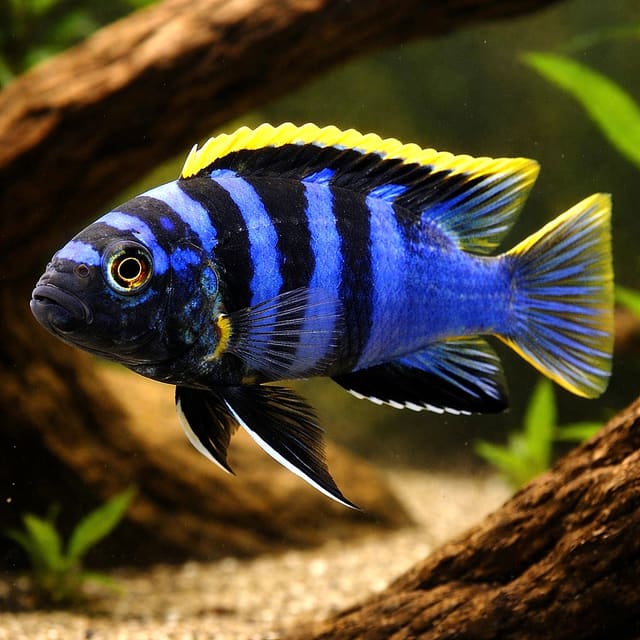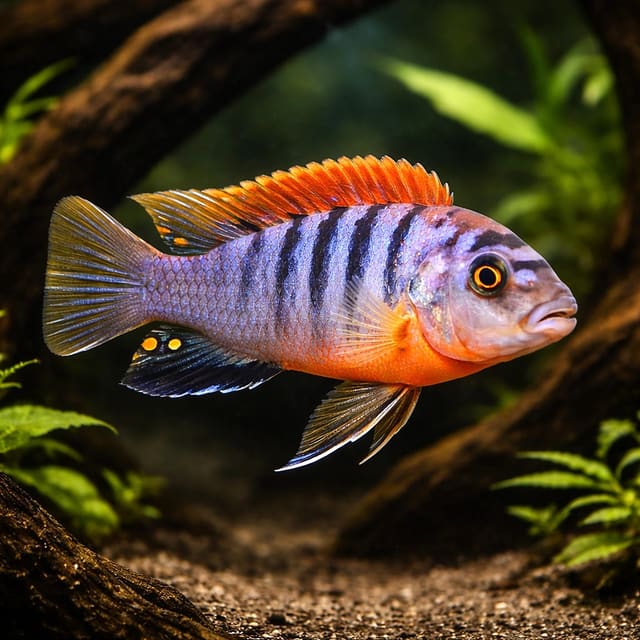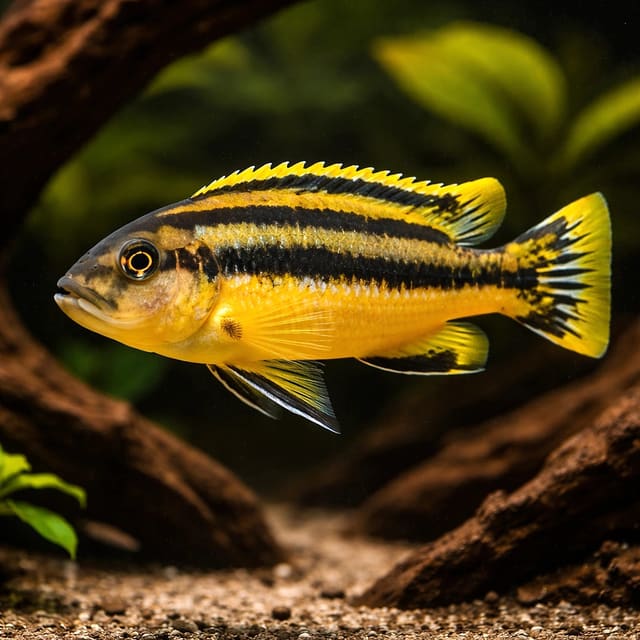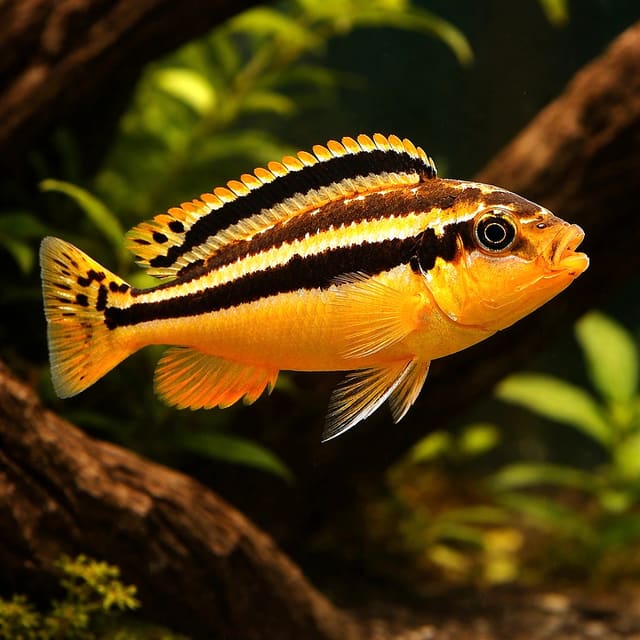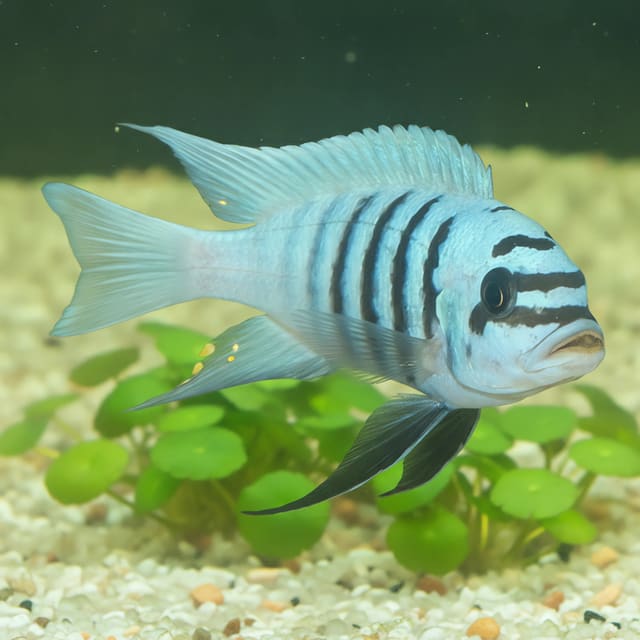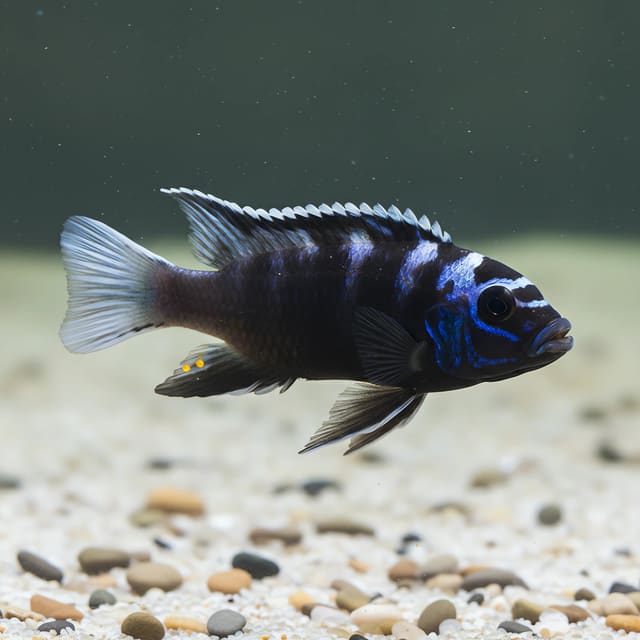
Moderate
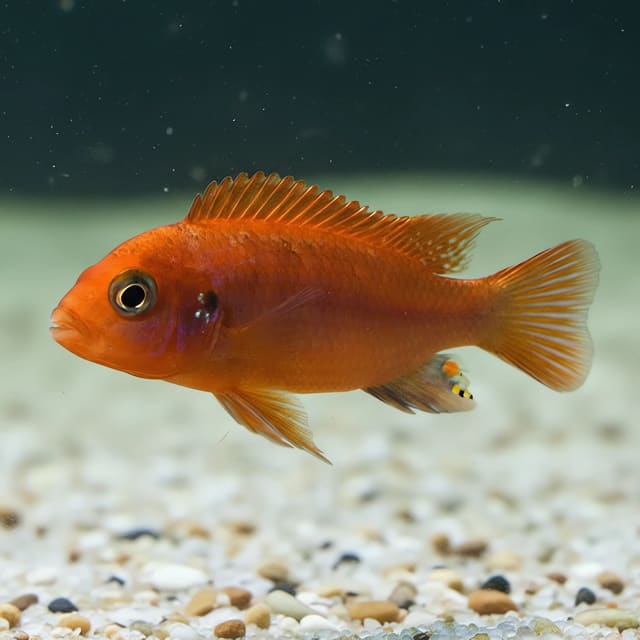
Acei Cichlid (Pseudotropheus sp. “acei”)
24–26°C · pH 7.5–8.5 · 300L
£7.99

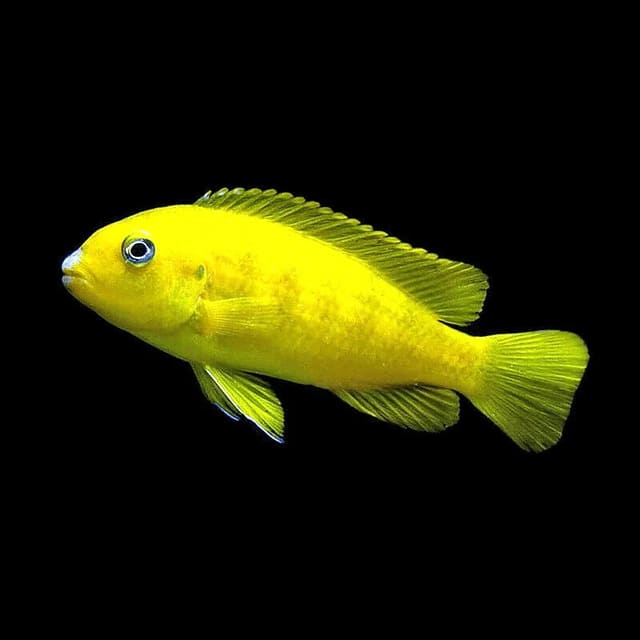
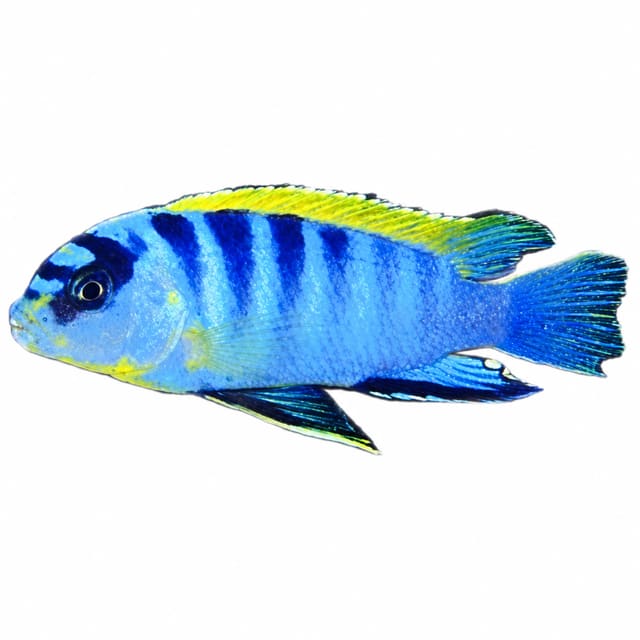
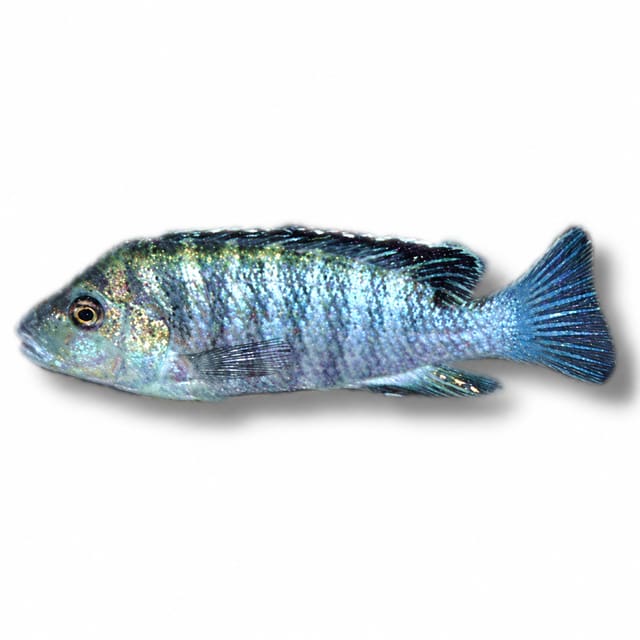
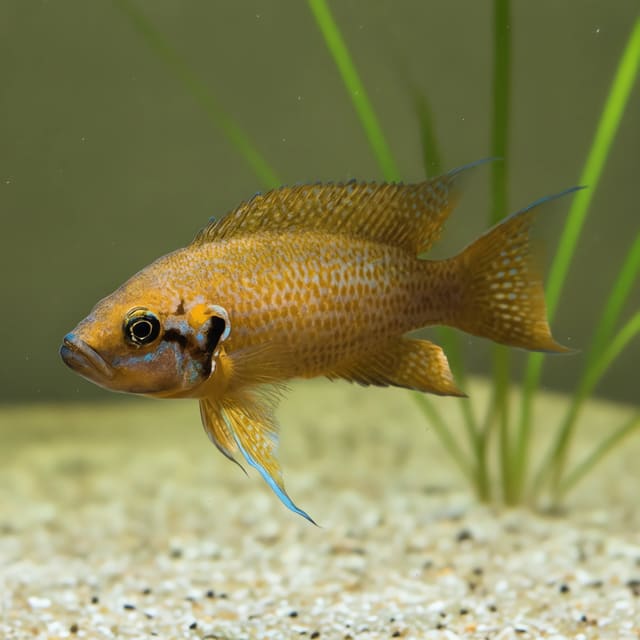
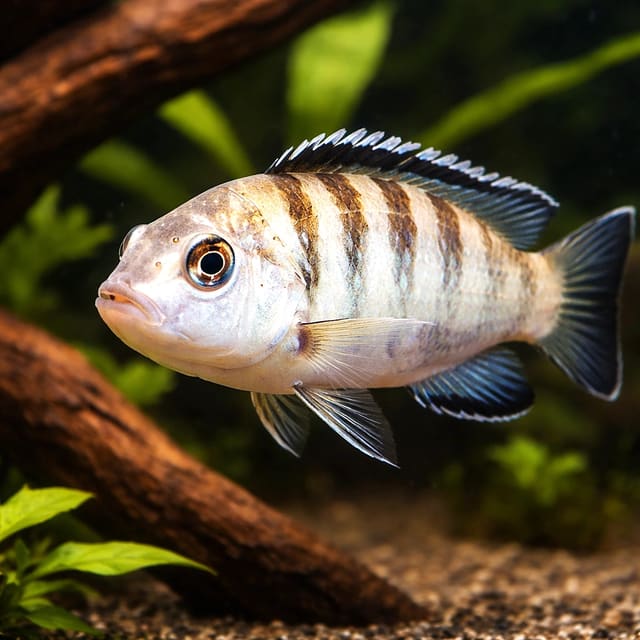
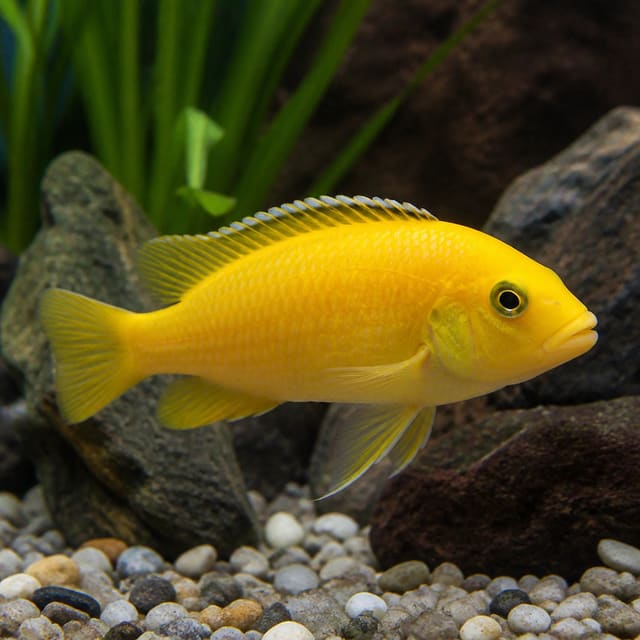
Sweden Hongi Cichlid (Labidochromis sp.) is an unsexed genus-level Malawi cichlid offer in 2–9 cm size choices for mature hard-water aquariums with robust filtration and carefully planned stocking.
Labidochromis sp.
Save when buying multiple fish. Each quantity is one fish; sex and pair formation are not guaranteed unless the selected variant explicitly states them.
Sweden Hongi Cichlid (Labidochromis sp.) is an unsexed genus-level Malawi cichlid offer in 2–9 cm size choices for mature hard-water aquariums with robust filtration and carefully planned stocking.
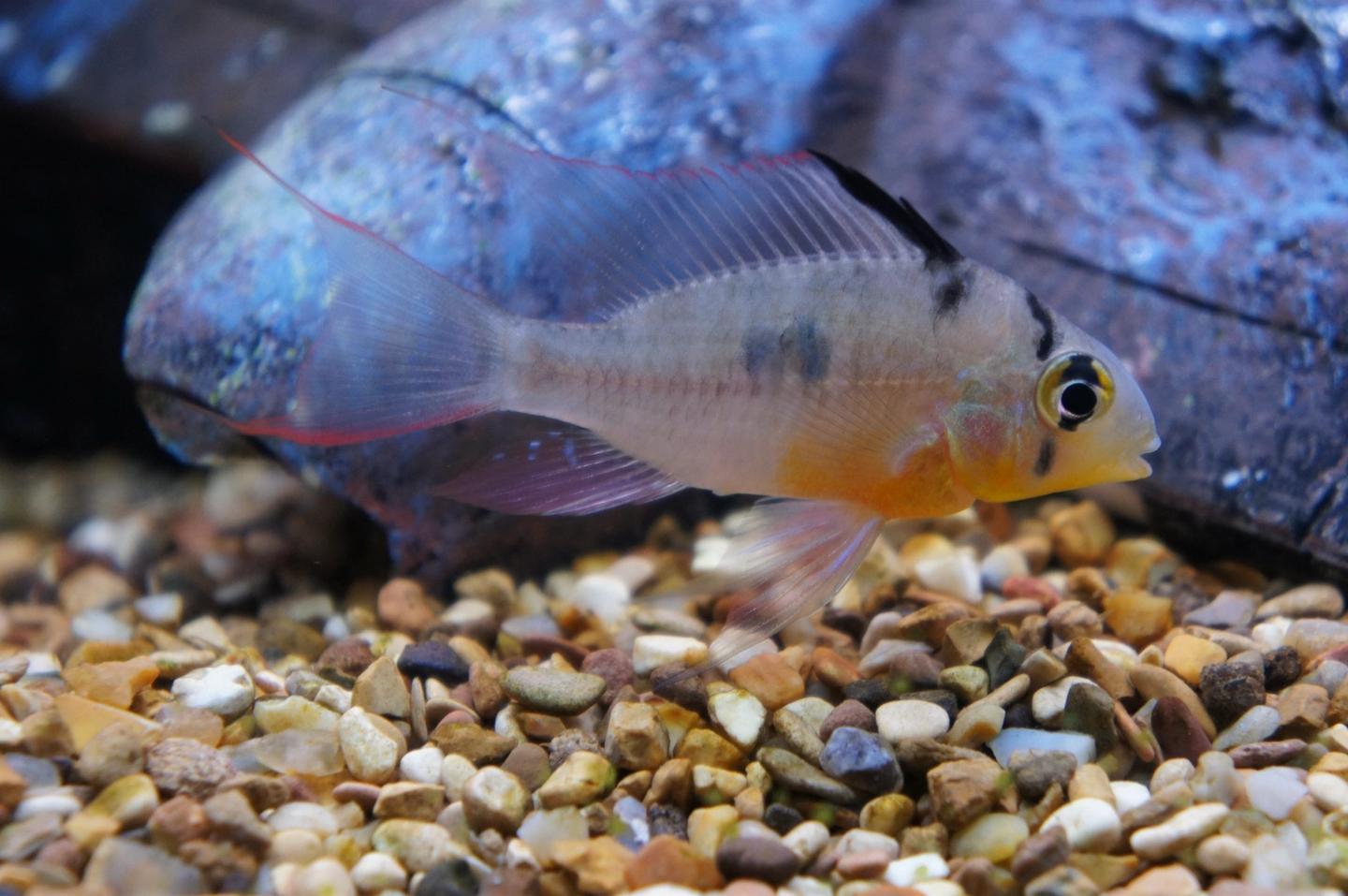
Cichlids are a family of roughly 1,800 accepted species, not one care type. Before buying, identify the exact species and source, then compare adult measurement, usable tank dimensions, social system, territory, tested water, diet and an exit plan. No family-wide minimum tank, water range or tank-mate list is safe.
Maintain these water conditions for optimal health and vibrant colors
The Sweden Hongi Cichlid is offered here as Labidochromis sp.: the genus is supported, while the exact species is not. One purchase supplies one live fish in the selected dispatch size. The size choices are 2–3 cm, 3.5–5 cm, 5–7 cm and 7–9 cm; the live selector owns current availability. The size you select is the size supplied, not the adult size.
No size is labelled male or female. Sex is guaranteed only when the selected option explicitly states male or female. This Sweden Hongi Cichlid listing has no sex-guaranteed option. Colour, apparent body shape or a photograph must not be used to promise sex, maturity, pedigree or the exact fish that will arrive.
This fish is identified only as Labidochromis sp., so choose it for a conservatively planned Lake Malawi aquarium rather than assuming the needs of a named species. It is a specialised Malawi purchase, not a fish for a general community. The genus is endemic to Lake Malawi, but the trade word “Sweden” does not indicate a wild locality, selected lineage or formal species.
| A prepared home | A poor match |
|---|---|
| A mature Lake Malawi aquarium with hard alkaline water | A soft-water mixed community |
| At least 200 litres under broad OATA group guidance | A small starter kit chosen from dispatch size alone |
| Robust filtration, strong aeration and secure rockwork | An uncycled aquarium or unstable pile of stones |
| A planned Malawi group with a separation option | Adding one territorial fish without reviewing the hierarchy |
OATA describes Malawi cichlids as colourful, specialised and aggressive. Its care sheet recommends at least 200 litres for a reasonable community and discusses groups of at least 15 to spread aggression, while clearly noting that species can differ. Use those numbers as broad group-level planning guidance. They are not proof of the needs, adult size or social structure of an unresolved species.
Labidochromis is an accepted cichlid genus in the order Cichliformes. A genus can contain multiple species and undescribed forms. The exact label therefore stays Labidochromis sp. rather than Labidochromis hongi. Customer copy also avoids a fixed adult length, a species-specific diet, breeding timetable and colour promise because those details would require evidence for the exact animal.
This is not a reason to ignore care. It is a reason to build a conservative setup around the well-supported Malawi group needs: mature filtration, hard alkaline water, high oxygen, secure rockwork and carefully chosen cichlid companions. Browse the African cichlid collection for separate alternatives, but never treat a neighbouring product card as proof that two fish are compatible.
Dispatch size affects handling and vulnerability, but it does not turn a small juvenile into a nano fish. A 2–3 cm fish still needs a long-term Malawi plan; a larger fish can face stronger territorial reactions when added to an established group. Consider the relative sizes already present, the number and position of territories, feeding access and whether the filter can handle the intended community.
Compare the selected dispatch band with every fish already in the aquarium. A small individual needs protected access to food and routes that do not force it through an established territory. A larger individual needs enough space to withdraw without simply displacing a smaller resident. The useful comparison is the actual size and behaviour of the present community, not a generic label such as juvenile, medium or large.
Before ordering, mark the territories that existing fish defend at feeding time and after the lights come on. Check whether an arrival could reach at least two useful shelters without crossing the same dominant fish's route. Prepare a mature alternative tank or permanent compatible destination before the parcel travels. A transport bag, breeder box or newly filled spare aquarium does not provide long-term separation.
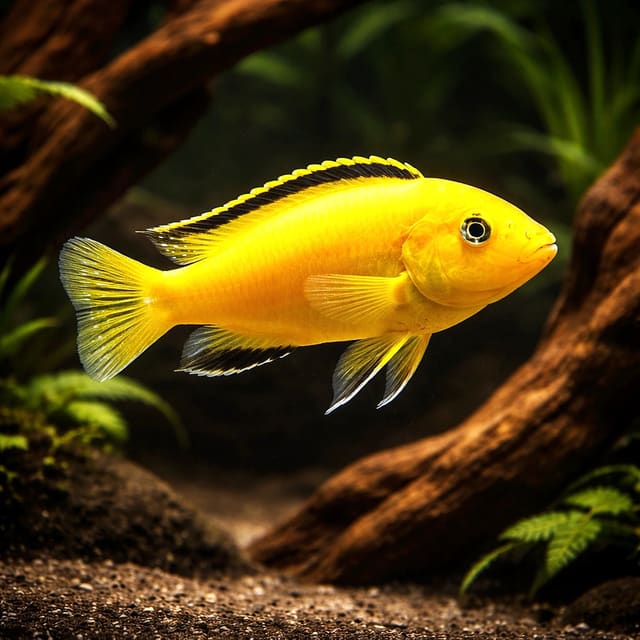
Gallery images have been digitally enhanced to improve image quality. Natural colour, pattern, size and maturity can vary between live animals.
Set up and mature the aquarium before ordering. Fish excrete ammonia, which is toxic; a working biological filter supports bacteria that convert it to nitrite and then nitrate. Clear water is not proof that this cycle is established. Use repeated tests to confirm zero detectable ammonia and nitrite, and record nitrate, pH, GH, KH and temperature. The first tropical tank guide covers cycling and testing, but a Malawi aquarium also needs specialist stocking and chemistry decisions.
OATA recommends at least 200 litres for a reasonable Malawi cichlid community, with an oversized filter and strong aeration because these fish are commonly kept in dense, active groups. Treat this as a broad planning floor, not a guarantee. Aquarium length, rock placement, total adult biomass and the behaviour of the actual fish all matter. A taller container with the same litres may offer fewer usable territories than a longer footprint.
Choose filtration that can maintain excellent water quality under the full planned load. Combine biological capacity with mechanical capture that can be cleaned before it clogs. Keep useful surface movement and oxygenation throughout the tank. Protect intakes where a smaller dispatch fish could be trapped, and confirm that flow does not pin any individual against decor.
Test the aquarium before the addition, not only on the day after it. Record ammonia, nitrite, nitrate, pH, GH, KH and temperature at consistent times for a week while the existing fish are fed normally. Watch how quickly mechanical media blocks and whether surface movement remains strong late in the maintenance cycle. A filter nameplate or tank volume cannot show how a particular stocked aquarium performs.
After an addition, keep the same schedule so the comparison remains meaningful. Zero detectable ammonia and nitrite are essential; a rising nitrate trend, falling flow or faster breathing also calls for investigation. Do not respond to every change by replacing all media or making a large chemistry correction. Protect the established biological filter, increase maintenance deliberately and use measured results to decide the next step.
OATA's Malawi cichlid sheet gives 23–27 °C, pH 8.0–8.6, 12–18 dGH and 10–15 dKH as general group guidance. These values are not a species-specific optimum for this unresolved Labidochromis. They are a practical starting range for screening the aquarium and source water. The care card keeps the same scope beside the numbers so a channel does not present them as exact species limits.
Test the aquarium and the replacement supply. The water chemistry guide explains pH, GH and KH, while the water matcher helps compare measured values with a stated range. Do not assume every UK tap supply is hard enough for Malawi fish; supplies can vary or be blended. Equally, avoid adding mineral products without measuring the result.
Use a thermostatically controlled heater where needed and verify it with an independent thermometer. Avoid direct sun, radiator heat and cold draughts. When moving fish or carrying out maintenance, gradual matching is safer than a sudden attempt to hit a target number. Stability matters only within a suitable chemistry plan.
OATA describes mbuna as rock-dwelling Malawi cichlids and recommends plentiful rockwork, caves and crevices. Because the species identity here is unresolved, the layout is framed as group-level Malawi guidance. Build stable structures directly on a secure base before adding digging substrate, and make sure no stone can shift onto the glass when fish excavate around it.
Use multiple routes and broken sight lines rather than one central cave that a dominant fish can control. A fish should be able to leave another's view without becoming trapped in a dead end. Keep enough open water for the group to feed and for the keeper to observe breathing, fins and body condition. Recheck stability after maintenance and after any digging.
Coral sand or a similar substrate can contribute to a hard-water plan, but substrate does not replace testing. Malawi cichlids will uproot plants; hardy species attached to rock sometimes persist, although plants are optional. Never wedge rock on loose substrate and assume its weight makes it safe.
OATA says Malawi cichlids can be highly aggressive, often fight in small groups and may be kept in groups of at least 15 with carefully managed slight crowding to spread pressure. This approach demands a large aquarium, oversized filtration and aggressive aeration; it is not permission to add fish until aggression disappears. Count every animal and plan the biological load before purchase.
Additions to an established hierarchy can receive concentrated aggression. Introduce fish only after assessing relative size, species, sex where known and existing territories. Rearranging some rockwork can interrupt established boundaries, but it also disturbs the whole community. Keep a mature hospital or separation tank available instead of relying on a divider improvised after injury.
View the aquarium from both ends as well as from the front. A wall of rock can look complex to the keeper while leaving one dominant fish a clear route through every shelter. Each refuge needs an entrance appropriate to the intended user and an exit that does not become a dead end. Keep enough clearance for waste removal and water movement, and rebuild any structure that shifts during excavation.
Observe at lights-on, during both feeds and after the room becomes quiet. Note which fish controls each route, which individuals remain hidden and whether all can feed without entering one defended patch. Repeated hiding, rapid breathing, faded condition, torn fins or exclusion from food are reasons to separate and reassess. The aim is not to wait until aggression looks dramatic; it is to spot a pattern while a safe response is still straightforward.
OATA explains that dietary requirements vary across Malawi cichlids: smaller mbuna may be more herbivorous, while some larger open-water forms require more animal content. A genus-level trade name is not enough to classify this exact fish confidently. Use a complete Malawi cichlid food chosen to match a confirmed dietary type rather than declaring every Sweden Hongi strictly herbivorous.
OATA advises feeding only what the fish can consume within a few minutes, twice daily. Distribute food across the aquarium so subordinate animals have a chance to eat. Observe the whole group, remove repeated leftovers and reduce portions if waste accumulates. An oversized filter supports the plan but cannot make chronic overfeeding harmless.
Use a small measured starting portion and watch who actually eats it. Delivering food at more than one point can reduce the advantage held by a territorial fish, but it is not permission to double the ration. Check body condition over time and note uneaten particles reaching the substrate. A fish that misses several feeds, spits food repeatedly or cannot leave cover safely needs investigation and possibly separation rather than a richer random diet.
Keep the food label and record the product used. “Malawi food” is a broad shop category, not confirmation that every formula suits every species. The unresolved identity is a reason to seek confirmation before making a narrow dietary claim. Until then, avoid casual supplementation and abrupt changes, and have an aquatic professional assess persistent appetite or digestive problems.
Do not use grazing behaviour as a substitute for maintenance. Algae and biofilm may be browsed, but no cichlid “cleans” an aquarium. Control excess nutrients with measured feeding, partial water changes, suitable lighting and filter care. Avoid a sudden rich-food change after transport.
OATA strongly recommends a 25% partial water change at least once every week for Malawi cichlids. More frequent work may be needed when the group is heavily stocked or nitrate rises quickly. Condition replacement water for chlorine or chloramine, match temperature and chemistry as closely as practical, and add it steadily.
If filter media needs cleaning, rinse it lightly in removed aquarium water or another dechlorinated method that protects the biological community. Do not replace all mature media at once. A fall in flow, rising ammonia or rapid breathing needs investigation, not a cosmetic water-clearer.
A healthy fish should be alert, breathe regularly, hold its fins normally and feed consistently. Persistent hiding, surface gasping, loss of balance, clamped or damaged fins, spots, wounds, swelling or appetite loss are warning signs rather than a diagnosis. Test water and confirm heat, filtration and oxygen first, then review aggression, new livestock and food.
Use a separate mature quarantine aquarium with dedicated equipment where practical. Match hard alkaline water carefully and keep the fish observable. Avoid selecting salt, heat or medication from one symptom. Treatments can stress fish, affect the filter or be unsafe for other inhabitants, and different problems can look alike. Seek aquatic veterinary advice for severe, spreading or persistent signs.
Read the current delivery and Live Arrival Guarantee policy before the fish travels. Be at the address to receive the parcel. For every delivery, start one continuous unboxing video while the parcel is still sealed; show the outer box, record the opening and keep the fish visible inside the sealed bag before anything is disturbed.
During introduction, consider the established hierarchy as well as water. A newly arrived fish may need protected observation or a planned reorganisation of territories. Do not release it into immediate concentrated aggression simply because temperature has equalised.
OATA's broad recommendation is to keep Malawi cichlids with other Malawi cichlids or with some suitable Synodontis catfish from Lake Malawi. This excludes the usual soft-water community mix. Tetras, rasboras, domestic bettas and slow long-finned fish are poor candidates because chemistry and territorial pressure do not align.
Even within a Malawi community, a shared lake name is not enough. Compare adult size, diet, aggression, swimming zone and social structure, then judge whether the aquarium offers sufficient footprint and filtration. A more peaceful open-water cichlid can be harassed by a persistent rock-territory fish; a larger predator may treat a small dispatch fish as prey.
The genus Labidochromis contains multiple species and undescribed forms, and members can hybridise in aquaria. Keep only one Labidochromis species in one aquarium. Because this listing is unresolved to species, any breeding or mixed-genus plan should be conservative and offspring should never be labelled as a documented pure line without reliable records.
Proceed only after four questions have clear answers. Is the aquarium mature and demonstrably stable in hard alkaline water? Can the selected size reach food and more than one refuge among the present fish? Is there mature accommodation ready for immediate separation? Can every other proposed species be justified by its own water, size, social and dietary needs? A “no” is a reason to prepare the system first, not to rely on the fish adapting after delivery.
Finally, confirm what this offer does and does not establish. It establishes one unsexed Sweden Hongi trade fish in the selected dispatch-size band and assigns it to Labidochromis. It does not establish exact species, adult size, adult colour, sex, ancestry or breeding outcome. Keep those boundaries with the fish's records so a later keeper receives the same honest information.
| Question | Why it matters |
|---|---|
| Are present fish larger or already territorial? | A small newcomer may receive concentrated pursuit. |
| Can each fish leave another's sight? | Broken sight lines reduce continuous visual pressure. |
| Does the filter have spare capacity? | Group stocking raises waste and oxygen demand. |
| Is there mature separation space? | Injury or starvation needs an immediate safe response. |
Do not buy an alternative product as a presumed tank mate. The related cards are comparison routes only. Their exact care and behaviour need separate review.
Intervene early. Rearranging secure rockwork can reset some territories, but it is not guaranteed to solve an incompatible mix. Separation into mature suitable accommodation is preferable to waiting for serious injury.
The trade offer is Sweden Hongi Cichlid and the accepted genus is Labidochromis, but the exact species has not been established. The label Labidochromis sp. keeps that limit visible rather than turning the trade word Hongi into a scientific species name.
OATA recommends at least 200 litres for a reasonable Malawi cichlid community, while noting that some specialist species differ. Because this fish is identified only to genus, treat 200 litres as broad group-level planning guidance and assess footprint, rockwork, filtration, oxygen and the full stocking plan together.
OATA's broad Malawi cichlid guidance discusses groups of at least 15 to spread aggression and warns that small groups often fight. This is not a species-specific stocking formula. Plan the whole Malawi community, use strong filtration and keep a mature separation option for an individual that is bullied or persistently aggressive.
It is better suited to an experienced keeper or a well-supported newcomer who already understands cycling, hard alkaline water and territorial cichlid stocking. The store's advanced label reflects the specialised water, aggression management and unresolved species identity; it is not a biological ranking.
Malawi cichlid diets vary, so a genus-level trade label does not justify calling this fish strictly herbivorous or predatory. Use a complete Malawi cichlid food chosen for the confirmed dietary type, and follow OATA's broad portion guide of only what the fish clear within a few minutes, twice daily.
OATA gives 23–27 °C, pH 8.0–8.6, 12–18 dGH and 10–15 dKH for Malawi cichlids as a group. These are not a species-specific optimum. Test the source and aquarium water, confirm zero ammonia and nitrite, and make necessary chemistry changes gradually.
OATA describes Malawi cichlids as aggressive and advises cautious mixing. Expect territorial pressure rather than peaceful community behaviour. Stable rockwork, broken sight lines, a large planned group and close observation help, but any fish that is injured, cornered or excluded from food needs prompt intervention.
OATA limits broad compatibility to other Malawi cichlids and some Synodontis catfish that naturally occur in Lake Malawi. Each proposed species must still match water, adult size, aggression and space. Keep only one Labidochromis species in one aquarium because members of the genus can hybridise.
Tropical Fish Co uses a licensed live-animal courier. Be present and, before opening the parcel, start one continuous unboxing video showing the sealed parcel, the opening and the fish still in its sealed bag. Inspect it the same day, float the sealed bag for 20–30 minutes before release, and report concerns promptly with the order number and video.
The water, 200-litre and group-of-15 figures are labelled as broad Malawi guidance, not species-specific thresholds. The unresolved identity is preserved throughout the title, care card and customer copy.
No reviews for this item yet. Bought one? Honest reviews only, good or bad.
What customers say about ordering from us
I have a small group of long finned mountain minnows. So was delighted to be able to order ten of this variety to increase the genetics in my tank . The ones I recieved are healthy but it’s to early to give a verdict on wether they are of a long finned type since they are small currently.
Gordon Walker · 23 Sept 2026
100% success travel and "installation". Pleased with quality of purchase. The Siamese fighter a bit "shy" so have not yet seen him at his best yet but looking good. Happy customer. GG
George E Garratt · 21 Sept 2026
Reviews of our shop, collected by Judge.me, an independent third-party review collector. Newest first.