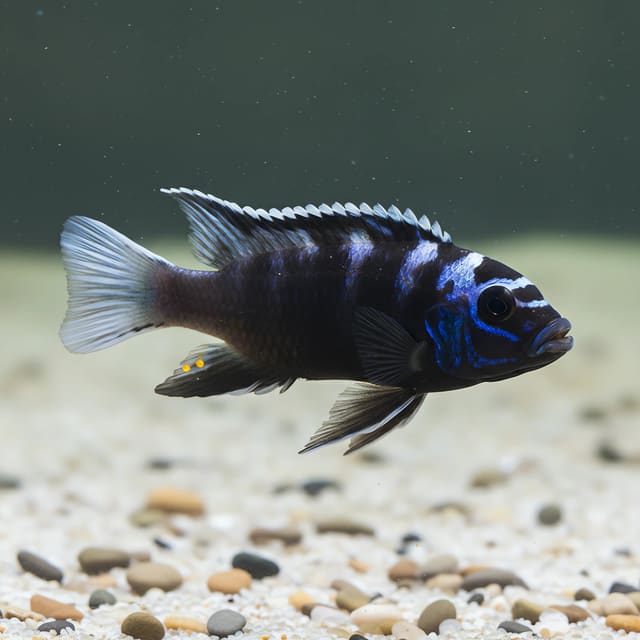
Moderate
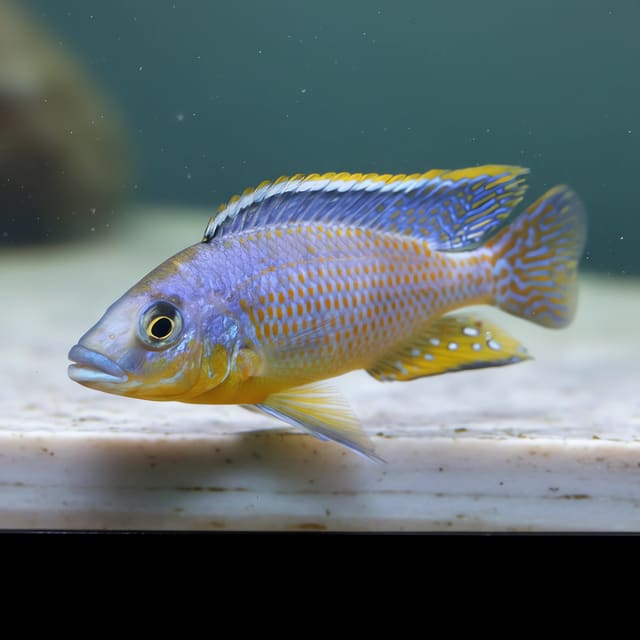
Acei Cichlid (Pseudotropheus sp. “acei”)
24–26°C · pH 7.5–8.5 · 300L
£7.99

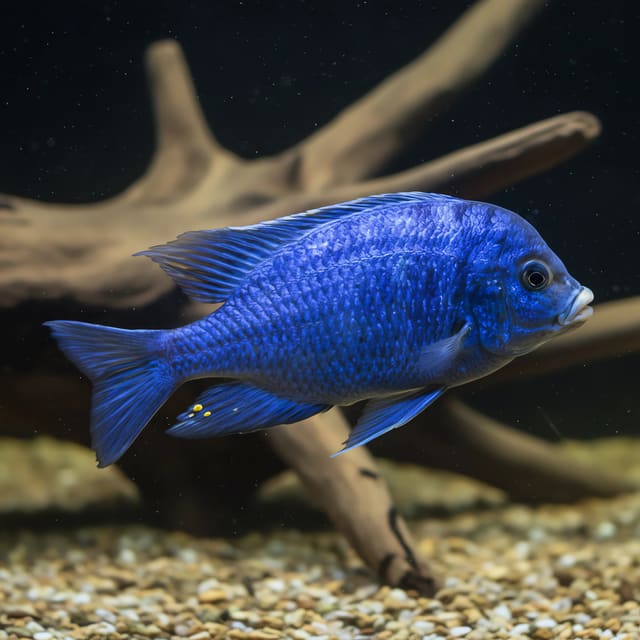
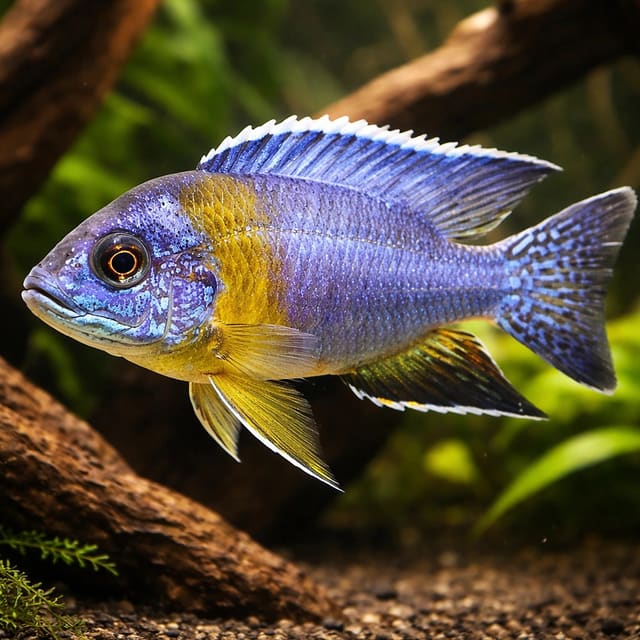
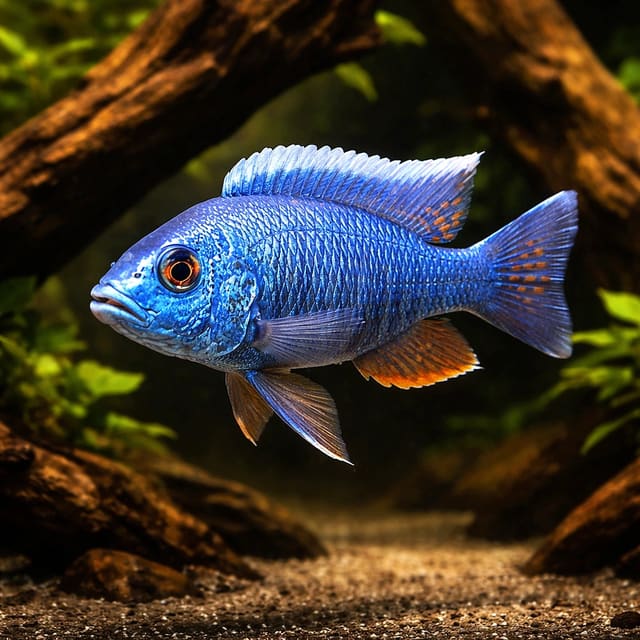
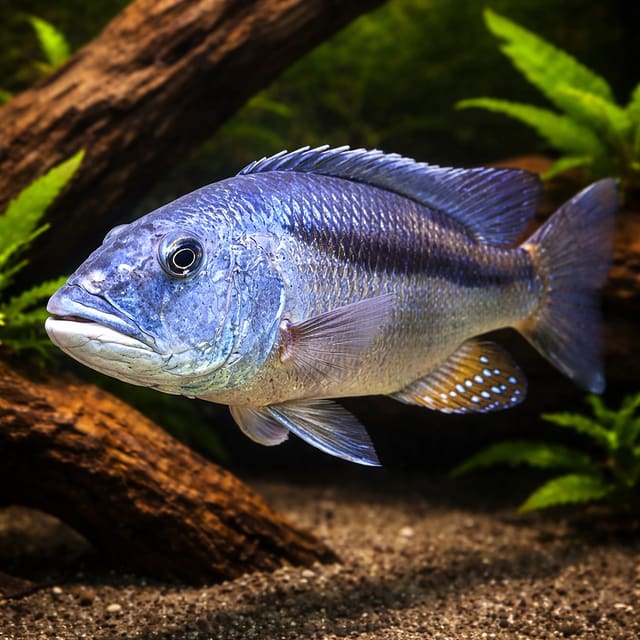
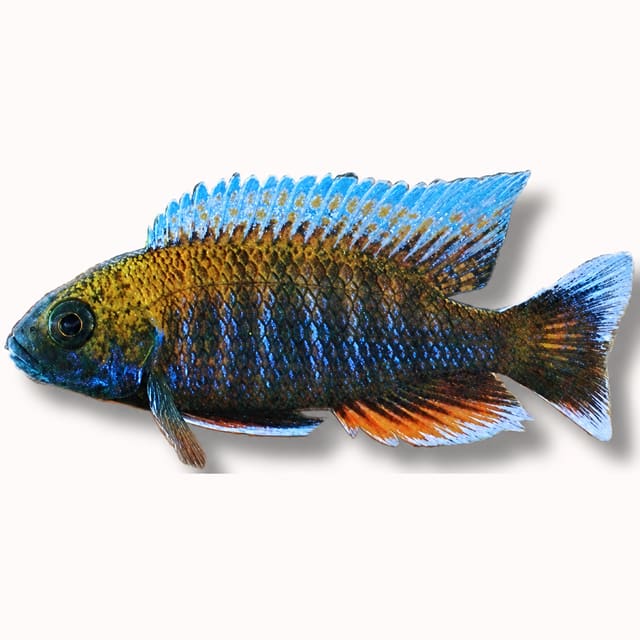
Super VC 10 Big-Lip Hap (Placidochromis johnstoni) is a 20 cm Lake Malawi-region cichlid for a carefully planned hard-water aquarium. It feeds on invertebrates in the wild and needs cautious Malawi community stocking, strong filtration and stable water.
Adult size is the maximum length this species reaches at full maturity (scientific sources). The livestock you receive will be younger and smaller — pick a size above for the actual shipping size. Product-photo provenance and any image-specific limitations are stated on the listing.
Placidochromis johnstoni
Save when buying multiple fish. Each quantity is one fish; sex and pair formation are not guaranteed unless the selected variant explicitly states them.
Super VC 10 Big-Lip Hap (Placidochromis johnstoni) is a 20 cm Lake Malawi-region cichlid for a carefully planned hard-water aquarium. It feeds on invertebrates in the wild and needs cautious Malawi community stocking, strong filtration and stable water.
Adult size is the maximum length this species reaches at full maturity (scientific sources). The livestock you receive will be younger and smaller — pick a size above for the actual shipping size. Product-photo provenance and any image-specific limitations are stated on the listing.
Cichlids are a family of roughly 1,800 accepted species, not one care type. Before buying, identify the exact species and source, then compare adult measurement, usable tank dimensions, social system, territory, tested water, diet and an exit plan. No family-wide minimum tank, water range or tank-mate list is safe.
Maintain these water conditions for optimal health and vibrant colors
Super VC 10 Big-Lip Hap is the trade name attached to this offer of Placidochromis johnstoni. That identity is important because much of the older material associated the trade name with a different species. FishBase places P. johnstoni in the cichlid family and records it from Lake Malawi, Lake Malombe and the upper Shire River. It reaches 20 cm total length in the species record, so the fish needs planning as a substantial adult rather than as the juvenile size you receive.
The size you select is the size supplied, not the adult size. The two sizes offered cover 5–6 cm and 7–8 cm, and one purchase supplies one live fish. Use the live size choice to select dispatch size without assuming that either choice is an adult. The page does not promise that every size is available at every moment.
| Suits | Requires caution |
|---|---|
| A keeper building or maintaining a hard, alkaline Malawi aquarium | A soft-water mixed community or a recently filled tank |
| A layout with open swimming room, vegetation where practical and robust filtration | A dense rock maze designed around a different cichlid's habitat |
| A carefully selected Malawi community whose adult sizes and aggression have been considered | Small peaceful fish, shrimp or unrelated companions with different water needs |
| A keeper able to test water and manage a large cichlid community | A buyer choosing from juvenile appearance alone |
FishBase describes the species in shallow vegetated areas and says it is rarely found over rocks. It feeds on invertebrates and often moves in small groups while searching for food. That differs from the heavily rocky, crevice-feeding story sometimes attached to the trade name. A suitable aquarium should therefore provide generous swimming space and visual structure without turning the entire floor into an impenetrable rock pile.
For water, a sensible routine aquarium target is 24–26°C: this lies within FishBase's environmental record for the species and within OATA's wider Malawi-cichlid aquarium guidance. OATA gives pH 8.0–8.6 and 12–18°dGH for Malawi cichlids as a group. Those hard, alkaline values provide the practical aquarium framework; they are not a narrowly tested species optimum. Ammonia and nitrite should remain at zero.
This is an intermediate-care offer. The label reflects the combination of adult size, assertive Malawi social behaviour, water chemistry, filtration and the need to distinguish species facts from group husbandry. It does not mean the fish is fragile; it means the keeper must make more connected decisions than with a small, peaceful community fish.
Before buying, compare the fish's 20 cm adult record with the aquarium footprint, existing adults and filtration already in place. Then check whether the water is consistently hard and alkaline, rather than relying on a single reading taken after adjustment. Finally, look at the community as a living system: every resident adds waste, occupies swimming room and changes how aggression is distributed. Passing all three checks is more useful than judging suitability from colour, current juvenile size or an empty-looking corner of the tank.
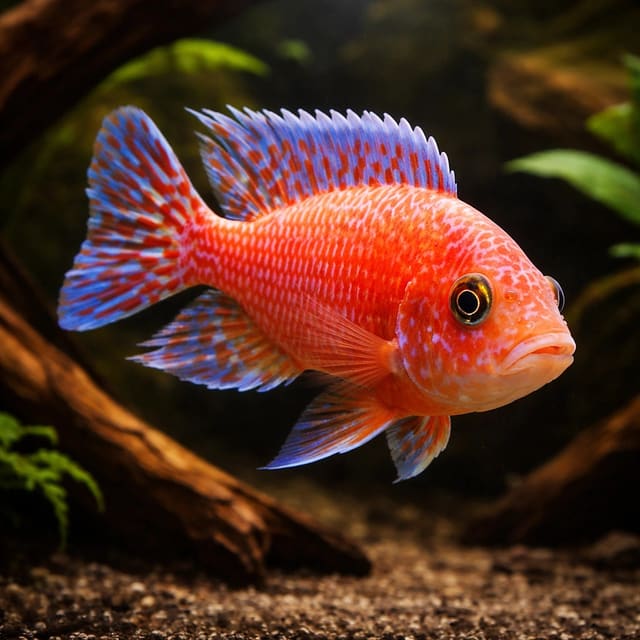
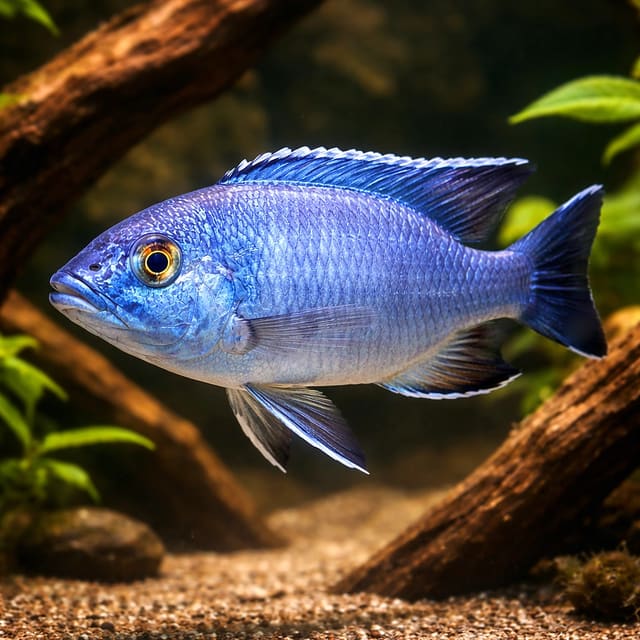
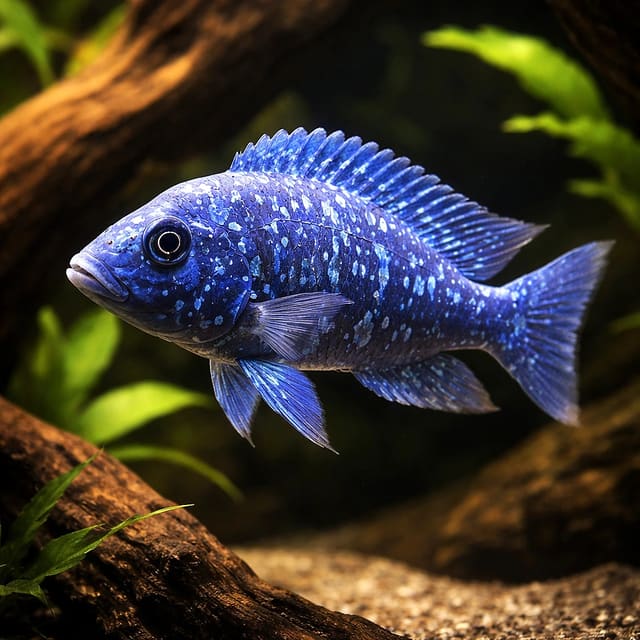
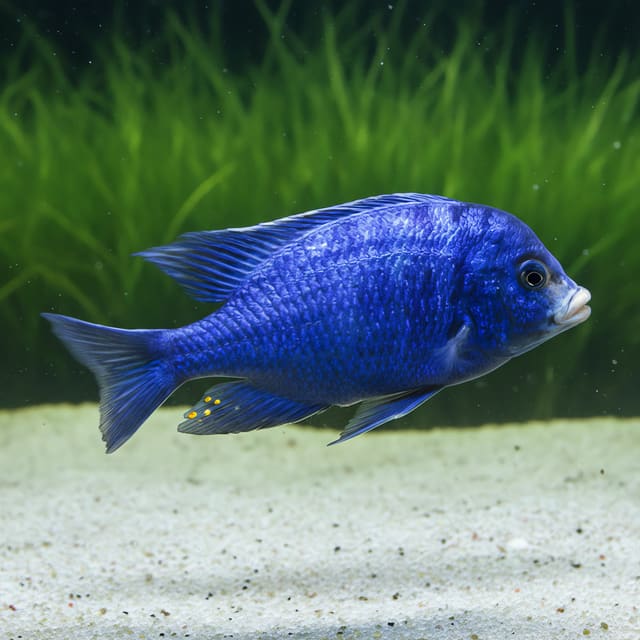
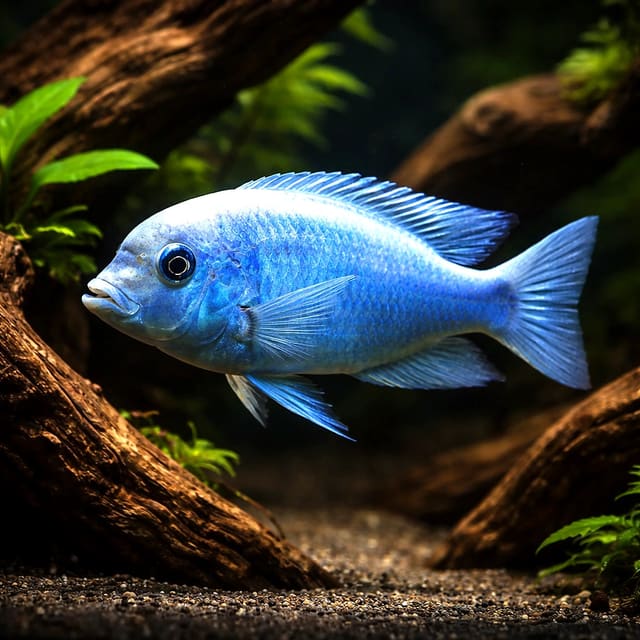
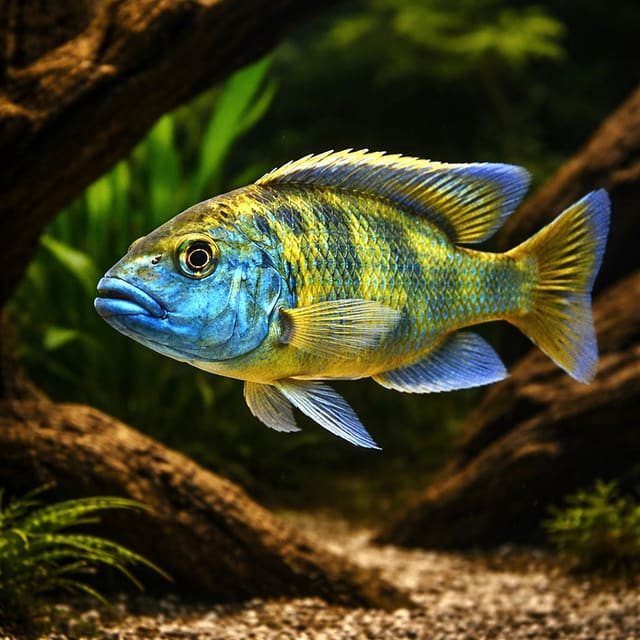
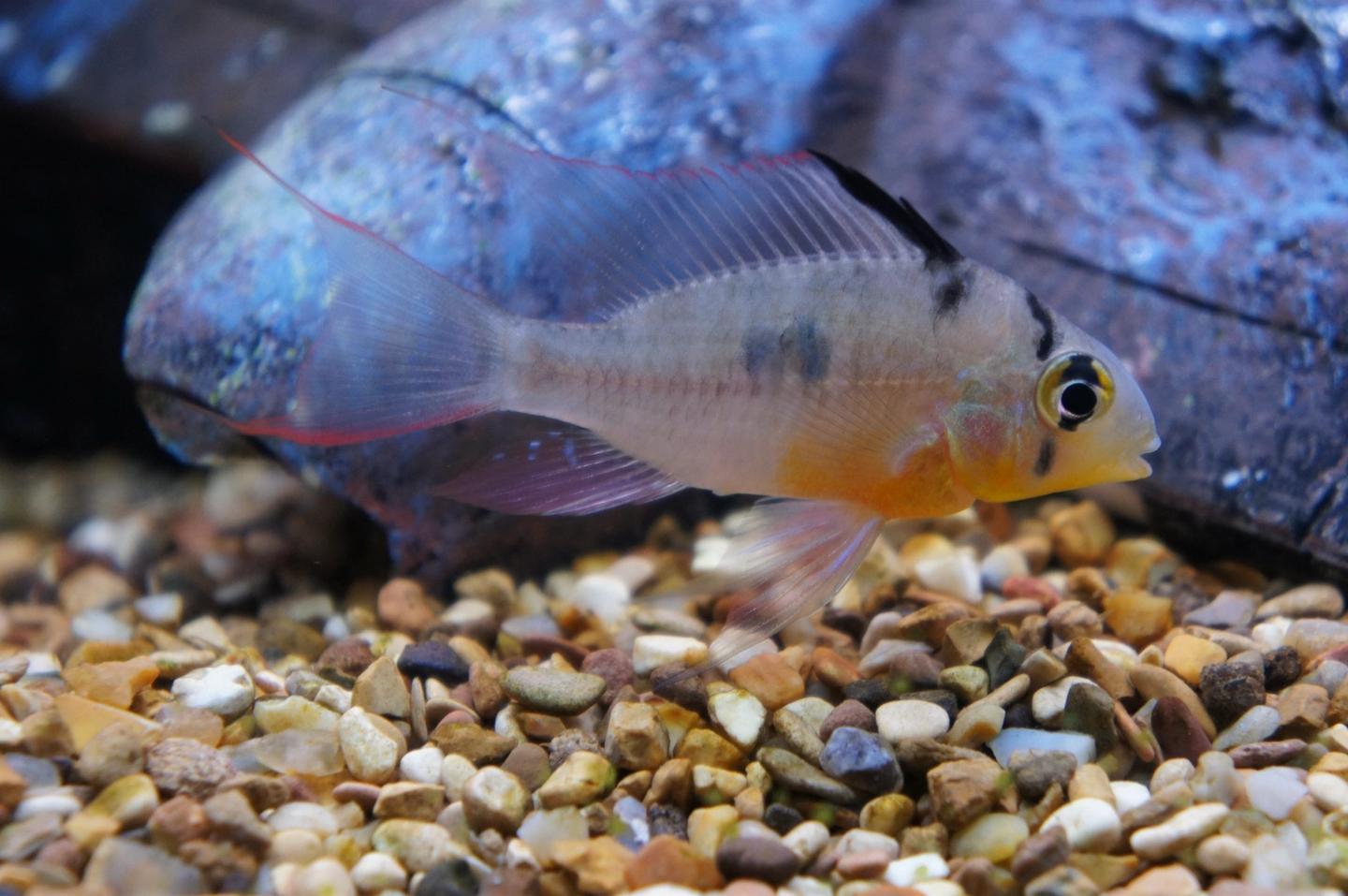
Gallery images have been digitally enhanced to improve image quality. Natural colour, pattern, size and maturity can vary between live animals.
Sex is guaranteed only when the selected option explicitly states male or female. This Super VC 10 Big-Lip Hap listing has no sex-guaranteed option.
Browse the African cichlid collection to compare offers, but treat those pages as alternatives rather than an automatic compatibility list. Every companion still needs to be checked for adult size, water and aggression.
FishBase's species summary identifies Placidochromis johnstoni as a freshwater, demersal cichlid. Its recorded distribution covers Lake Malawi, Lake Malombe and the upper Shire River. The maximum recorded length is 20 cm total length for male or unsexed fish. That 20 cm figure is the adult reference for planning; 5–8 cm describes the supplied size choices only.
A general species overview agrees on the same range, shallow vegetated habitat and 20 cm length. The useful buyer lesson is that the Super VC 10 name should not be used to import the care, appearance or anatomy of Placidochromis milomo. Run this aquarium for the species named here.
FishBase says P. johnstoni is commonly found in shallow vegetated areas and rarely over rocks. It feeds on invertebrates and frequently moves in small groups in search of food. These facts support open foraging space, some planted or sheltered zones where the aquarium design permits them, and a diet that includes an appropriate animal component. They do not support treating the fish as a rock-scraping cleaner or building the whole aquarium around crevice feeding.
Malawi cichlids will often dig and rearrange the substrate, which will uproot plants that are not secured. Choose robust planting methods where vegetation is used. Leave clear swimming lanes, then use stable decor and planting to reduce direct pursuit. The species' natural setting is the reason to balance open room with cover rather than copy a generic rock-dwelling mbuna display.
Natural small-group foraging is useful context, but it does not establish an aquarium head count for P. johnstoni. Community numbers below come from OATA's Malawi-cichlid sheet and must be applied to the whole aquarium, not turned into a promise that a fixed number of P. johnstoni will always coexist.
The practical temperature target is 24–26°C. It uses the overlap between FishBase's species environmental range and the OATA Malawi-cichlid aquarium guide. OATA's group figures give pH 8.0–8.6, general hardness 12–18°dH and carbonate hardness 10–15°dKH. Keep those values stable and confirm them with tests rather than assuming that decorative coral or a buffer has produced the desired result.
Ammonia and nitrite should both remain at zero. OATA advises keeping nitrate no more than 20 mg per litre above the level in normal tap water. Test the incoming supply as well as the aquarium so the nitrate result has context. The water-chemistry guide explains the measurements, and the water matcher can help compare your readings with the stated range.
| Value | Planning figure and scope |
|---|---|
| Temperature | 24–26°C, within both the species environmental record and Malawi aquarium guidance |
| pH | 8.0–8.6 under OATA guidance for Malawi cichlids as a group |
| General hardness | 12–18°dGH from OATA's Malawi-cichlid sheet |
| Carbonate hardness | 10–15°dKH from OATA's Malawi-cichlid sheet |
| Ammonia and nitrite | Zero |
Read the measurements together. A suitable pH reading does not compensate for detectable ammonia, and correct hardness does not make a sudden temperature change harmless. Record the results on the same day and compare them over time. This makes a drifting value easier to spot than occasional testing from memory. If the source water differs sharply from the aquarium, plan routine changes carefully so that maintenance restores cleanliness without creating an abrupt chemistry swing.
OATA recommends at least 200 litres for a reasonably sized community of Malawi cichlids. That is a community-care figure, while P. johnstoni can reach 20 cm TL. Choose the final aquarium from its footprint, filtration and the adult size and number of all residents. A longer aquarium provides useful swimming room and more opportunities to separate social pressure than a short tank with the same nominal volume.
OATA's sheet describes Malawi communities of at least 15 fish, with slight overstocking used to distribute aggression. This is an advanced stocking technique, not a reason to crowd an undersized or weakly filtered aquarium. It raises the demand on filtration, oxygen and water changes. Plan the community as a whole, use an oversized filter and aggressive aeration, and stop before stocking exceeds the system's capacity.
Where sexed fish are genuinely chosen, OATA advises more females than males to reduce persistent attention on one female. This offer does not provide a sex choice, so do not build the purchase plan around a guaranteed harem. Focus instead on adult size, the temperament of each species and enough room for fish to move away from confrontation.
Write down the adult length and likely role of every proposed resident before totalling the community. The juvenile fish in front of you may use little space now, but filtration and swimming room must serve the mature combination. OATA advises adding Malawi cichlids in groups, placing more peaceful species before more aggressive ones, and changing the arrangement of decor when that helps reduce aggression as territories form. Those measures support observation; they do not turn an unsuitable mix into a safe one.
Use the first-tank guide to establish the aquarium and filter before the fish arrives. Increase stocking gradually. Beneficial bacteria respond to the waste produced by fish and feeding; a sudden large addition can push ammonia and nitrite above zero even in a tank that appeared settled.
A working biological filter is essential because fish release toxic ammonia. Filter bacteria convert ammonia to nitrite and then to the safer nitrate, but the process depends on an established, maintained filter. Match the filter to the whole community, not just this purchase, and keep strong aeration available because a crowded Malawi aquarium places a high demand on dissolved oxygen.
OATA strongly recommends a 25% partial water change at least once every week. Treat that as the group-care routine, then use testing and the actual stocking load to judge the aquarium between changes. Condition replacement water to remove harmful chlorine or chloramine. Check the filter for blockages during maintenance. If it needs cleaning, do not run it under the tap; rinse it lightly in tank water removed during the partial water change so fewer beneficial bacteria are lost.
Substrate and planting also need to survive normal Malawi behaviour. OATA says these fish will often dig and rearrange the substrate, which will uproot any plants present. Use only the hardiest plants that can be attached securely, and keep rocks stable independently of loose sand. For P. johnstoni, retain open swimming room and avoid replacing the species' shallow, vegetated habitat with a floor filled entirely by rockwork.
Check swimming, breathing, colour, appetite, body condition and damage during the normal daily routine. A fish hanging at the surface, sitting on the bottom, breathing unusually, hiding more than normal or losing interest in food gives you a reason to test the water and reassess social pressure. Look at the entire aquarium before blaming a single fish: temperature, oxygen, ammonia, nitrite, recent additions and repeated pursuit can interact.
Weekly records make maintenance easier to evaluate. Note the water results before the change, the amount changed, any filter work and changes in behaviour. This gives you a practical baseline for the individual aquarium. It also prevents a visually clear tank from being mistaken for a chemically stable one, because dissolved waste cannot be judged by appearance alone.
The RSPCA explains biological filtration as the bacterial conversion of toxic ammonia to toxic nitrite and then to safer nitrate. OATA recommends an oversized filter for crowded Malawi communities and aggressive aeration to maintain dissolved oxygen. Select equipment for the final community load, not for one juvenile fish.
Keep water moving through the biological material continuously and check intakes for obstruction. When the filter needs cleaning, rinse it lightly in water removed from the aquarium and never under the tap. Chlorine or chloramine can damage the bacterial population. Clean enough to restore flow without stripping every surface at once.
OATA strongly recommends a 25% partial water change at least weekly. Siphon waste from accessible substrate, treat replacement water with conditioner and match temperature before adding it. Test at least weekly so changes in ammonia, nitrite and nitrate are caught early. A regular day and method make trends easier to recognise.
| Observation | First practical check |
|---|---|
| Rapid or unusually slow breathing | Test ammonia and nitrite, verify aeration and inspect filter flow |
| Hanging at the surface or sitting on the bottom | Check oxygenation, temperature and the full water-test set |
| Colour becoming markedly darker or paler | Look for aggression, hiding and changes in water or stocking |
| Reduced feeding or body condition | Observe competition, offer an appropriate portion and test the water |
| White spots, fluffy growths or damaged fins | Contact an aquatic retailer for guidance after checking water and social stress |
FishBase records small-group foraging in the wild, while OATA warns that Malawi cichlids can be highly aggressive in aquariums. Observe whether this individual can feed, swim and rest without relentless pursuit. Aggression can change after a new fish, a maturity shift or a territory change, so a peaceful first hour does not settle long-term compatibility.
Healthy fish should have clear eyes, intact scales and fins, steady breathing, appropriate swimming and interest in food. Learn the normal pattern for this aquarium and respond when it changes. Start with water and equipment checks; avoid treating a display tank for a guessed disease.
Record water results, maintenance and new additions. A brief log can reveal that a change followed a missed water change, reduced filter flow or a stocking event. This is especially valuable in Malawi communities where many fish share the same water and social environment.
FishBase records P. johnstoni feeding on invertebrates in the wild. That rules out treating it as a specialised algae grazer. OATA notes that some larger open-water Malawi cichlids need pellets with a higher animal content, with frozen foods such as brine shrimp, prawns or cockles. Use a quality Malawi-cichlid pellet appropriate to an animal-feeding fish as the dependable base, then add suitable frozen items in controlled portions.
Feed only what the fish can consume within a few minutes, twice a day under OATA's Malawi-cichlid feeding schedule. Divide the ration rather than giving one heavy meal. Watch the Super VC 10 Big-Lip Hap take food; a community can look busy while one fish is excluded or a more aggressive resident captures most of the ration.
Malawi cichlids can be eager at the front of the tank, but enthusiasm does not require extra food. Excess food becomes waste, raises the load on the filter and can push ammonia, nitrite or nitrate in the wrong direction. Judge the portion by body condition, complete consumption and the results of the maintenance routine.
A sudden loss of appetite is an observation, not a diagnosis. Test water, confirm temperature and oxygenation, and watch for aggression or hiding. Seek aquarium advice when reduced feeding persists or appears with altered breathing, body condition or external marks.
Have the hard-water aquarium heated, filtered and tested before dispatch. Read the current delivery and Live Arrival Guarantee policy and be present at the address on the confirmed delivery day.
Observe breathing, balance and the response of established cichlids after introduction. Make sure the new fish can move away from attention and reach food. Keep water tests close at hand because an additional cichlid also increases the biological load.
OATA advises keeping Malawi cichlids with other Malawi cichlids or with some Synodontis catfish that also inhabit Lake Malawi. That is a category-level starting point, not a universal approval. Compare adult size, aggression, feeding style and use of space before combining any two species.
Do not mix this fish into a small, soft-water community. The pH and hardness needs alone make that a poor fit, while a 20 cm cichlid can intimidate or injure small companions. Shrimp and tiny fish are not suitable experiments. Keep unrelated water requirements out of the same tank rather than compromising both groups.
| Potential combination | How to treat it |
|---|---|
| Carefully selected Malawi cichlids of appropriate adult size | Potentially suitable with adequate space, filtration and staged introductions |
| Some Lake Malawi Synodontis | Potentially suitable after the exact catfish species and adult size are checked |
| A much more aggressive Malawi species | Use caution; provide escape routes and monitor persistent pursuit |
| Small tetras, dwarf soft-water fish or shrimp | Avoid because water, size and social needs conflict |
OATA recommends adding more peaceful species first and more aggressive species later. Add Malawi cichlids in groups rather than leaving one newcomer to absorb all attention. Rearranging decor can reduce established territorial ownership when new fish are introduced, but keep structures stable and retain the open swimming areas this species needs.
A slight overstocking strategy can spread aggression in a properly designed Malawi community, yet it increases waste and oxygen demand. It belongs with oversized filtration, strong aeration, regular water changes and a tank of adequate footprint. It should never be used to excuse crowding fish into a system that cannot process their waste.
Judge success over time. Check whether each fish feeds, whether one individual stays hidden, whether colour or breathing changes and whether fins remain intact. Be ready to separate a persistently targeted or aggressively dominant fish. The alternative products shown elsewhere on this page are shopping comparisons, not declarations that those exact fish should share a tank.
FishBase records Placidochromis johnstoni at a maximum of 20 cm total length for male or unsexed fish. The 5–8 cm range on this offer describes dispatch choices, not adult size, so plan the aquarium and companions around the 20 cm record.
OATA recommends at least 200 litres for a reasonably sized Malawi community, but that is a community recommendation rather than a minimum established for P. johnstoni. This fish can reach 20 cm TL, so choose the final footprint and volume from adult size, total stocking, aggression, oxygenation and filtration capacity.
Plan the whole Malawi community instead of assuming a fixed P. johnstoni harem. OATA's Malawi-cichlid sheet describes communities of at least 15 to distribute aggression, supported by oversized filtration and aeration. It is a community-stocking method and does not guarantee that any arbitrary mix will work.
It is better treated as intermediate care. A keeper needs to manage a 20 cm cichlid, hard alkaline water, assertive social behaviour, strong filtration and cautious companion choice. A well-prepared newcomer to Malawi fish can succeed, but this is not a casual addition to a small mixed community.
FishBase records invertebrate feeding in the wild. Use an appropriately sized quality Malawi-cichlid pellet with suitable animal content, with controlled frozen foods such as brine shrimp, prawn or cockle. Under OATA's Malawi-cichlid sheet, feed only what is eaten within a few minutes, twice daily.
Use 24–26°C, which sits within both the FishBase species environmental record and OATA's aquarium range. OATA's Malawi-cichlid sheet gives pH 8.0–8.6 and 12–18°dGH. Keep ammonia and nitrite at zero and prioritise stable, tested water.
OATA describes Malawi cichlids as aggressive fish that require cautious mixing. Do not promise a fixed temperament from the trade name. Provide adequate space, add communities thoughtfully and watch for repeated pursuit, hiding, colour change, feeding exclusion or fin damage.
OATA limits the starting pool to other Malawi cichlids and some Lake Malawi Synodontis catfish. Check each exact species for adult size and behaviour. Avoid small soft-water fish, shrimp and companions whose water requirements conflict with a hard alkaline Malawi setup.
Tropical Fish Co hand-packs live fish and uses a tracked licensed live-animal courier under its current policy. Be present to receive the parcel. Begin one continuous video while the parcel is sealed, keep the outer box visible, open it in the same take and show the fish still bagged before release. If there is a concern, contact the store the same day with the order number and video under the current policy.
FishBase supports the identity, range, habitat, invertebrate diet, small-group foraging and 20 cm TL maximum. The species overview provides matching general natural-history context.
OATA's Malawi cichlid sheet supplies the community husbandry figures. The RSPCA fish-environment guide explains filtration. Tropical Fish Co's current delivery policy governs arrival and guarantee steps.
No reviews for this item yet. Bought one? Honest reviews only, good or bad.
What customers say about ordering from us
I have a small group of long finned mountain minnows. So was delighted to be able to order ten of this variety to increase the genetics in my tank . The ones I recieved are healthy but it’s to early to give a verdict on wether they are of a long finned type since they are small currently.
Gordon Walker · 23 Sept 2026
100% success travel and "installation". Pleased with quality of purchase. The Siamese fighter a bit "shy" so have not yet seen him at his best yet but looking good. Happy customer. GG
George E Garratt · 21 Sept 2026
Reviews of our shop, collected by Judge.me, an independent third-party review collector. Newest first.