Moderate
Acei Cichlid (Pseudotropheus sp. “acei”)
24–26°C · pH 7.5–8.5 · 300L
£7.99

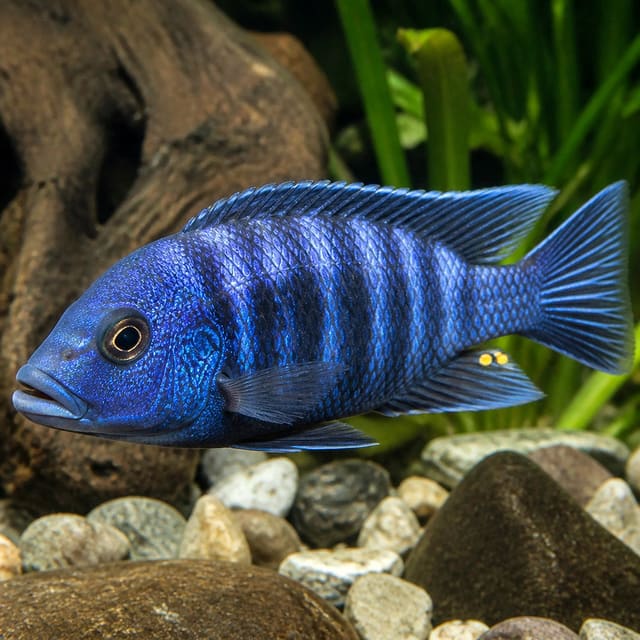
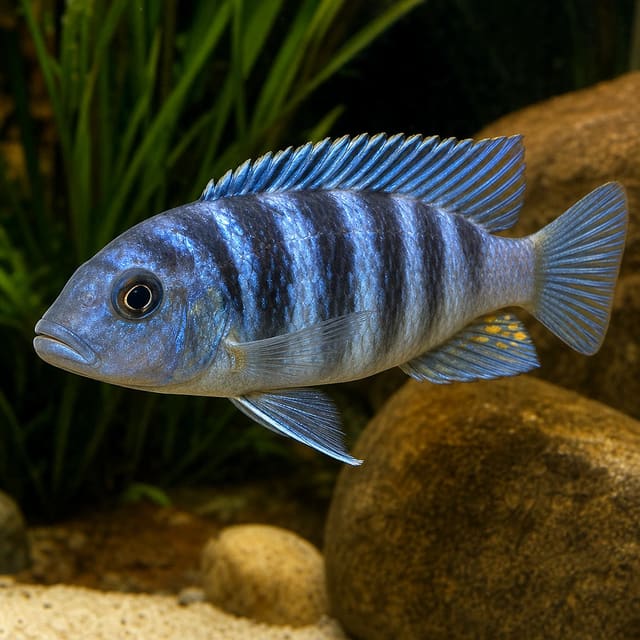
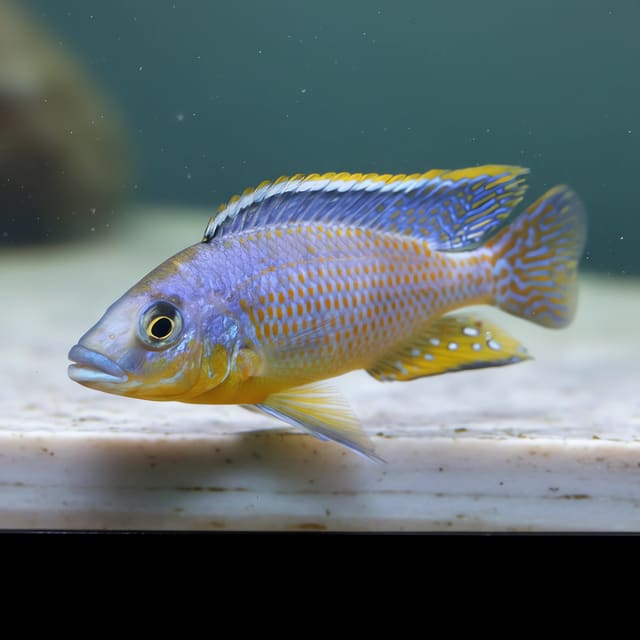
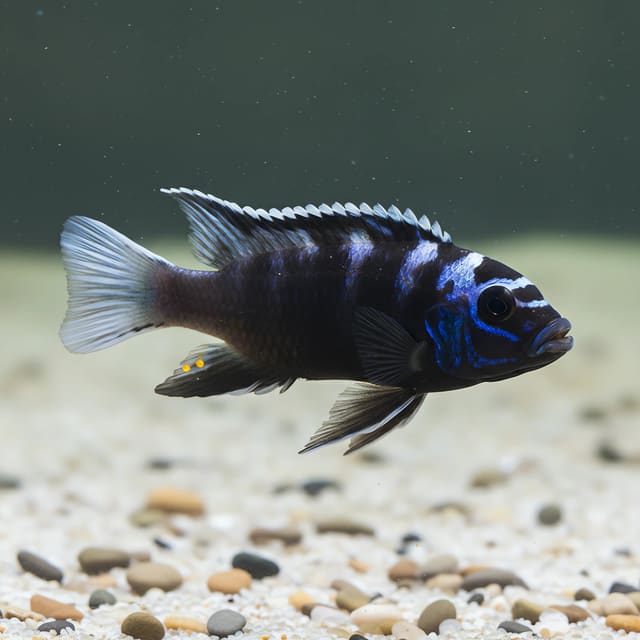
The Red Dorsal Dogtooth Cichlid (Cynotilapia sp. 'Red Dorsal') is a Lake Malawi mbuna in the cichlid family. It suits prepared keepers planning a managed Malawi community; OATA's group guidance gives 23–27°C, pH 8.0–8.6, 12–18°dH and at least 200 litres for a reasonable community. Sold individually in 3–4 cm, 4–5 cm, 6–7 cm and 7–9 cm dispatch sizes.
Cynotilapia sp. 'Red Dorsal'
Save when buying multiple fish. Each quantity is one fish; sex and pair formation are not guaranteed unless the selected variant explicitly states them.
The Red Dorsal Dogtooth Cichlid (Cynotilapia sp. 'Red Dorsal') is a Lake Malawi mbuna in the cichlid family. It suits prepared keepers planning a managed Malawi community; OATA's group guidance gives 23–27°C, pH 8.0–8.6, 12–18°dH and at least 200 litres for a reasonable community. Sold individually in 3–4 cm, 4–5 cm, 6–7 cm and 7–9 cm dispatch sizes.
Cichlids are a family of roughly 1,800 accepted species, not one care type. Before buying, identify the exact species and source, then compare adult measurement, usable tank dimensions, social system, territory, tested water, diet and an exit plan. No family-wide minimum tank, water range or tank-mate list is safe.
Maintain these water conditions for optimal health and vibrant colors
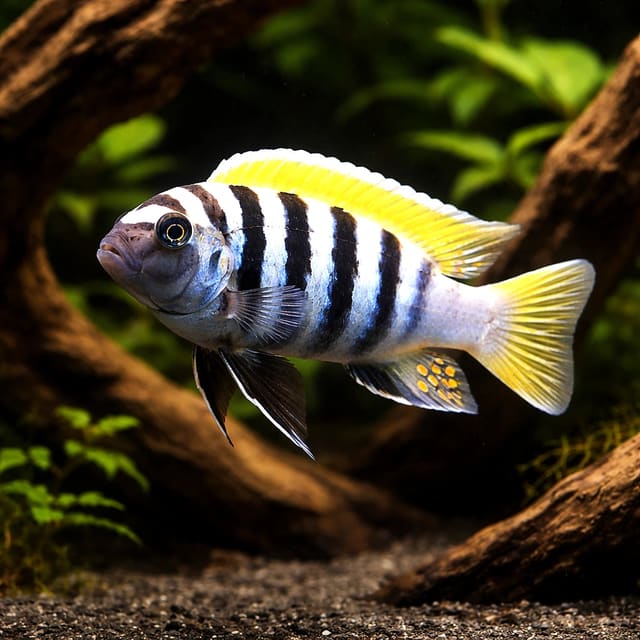
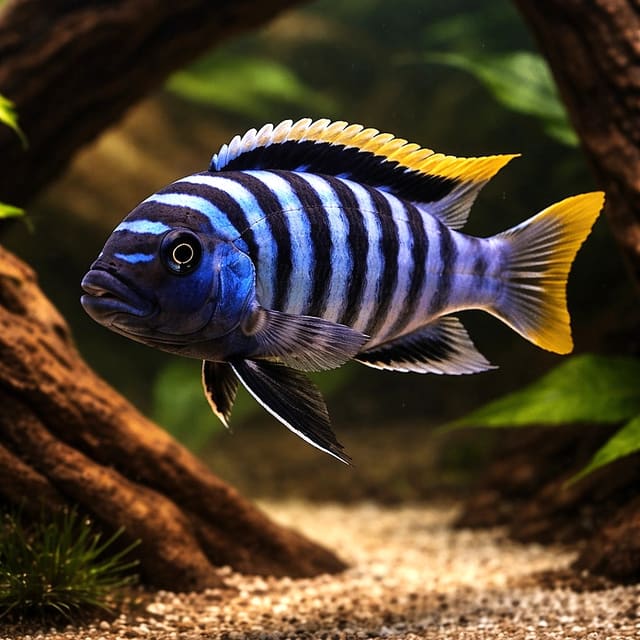
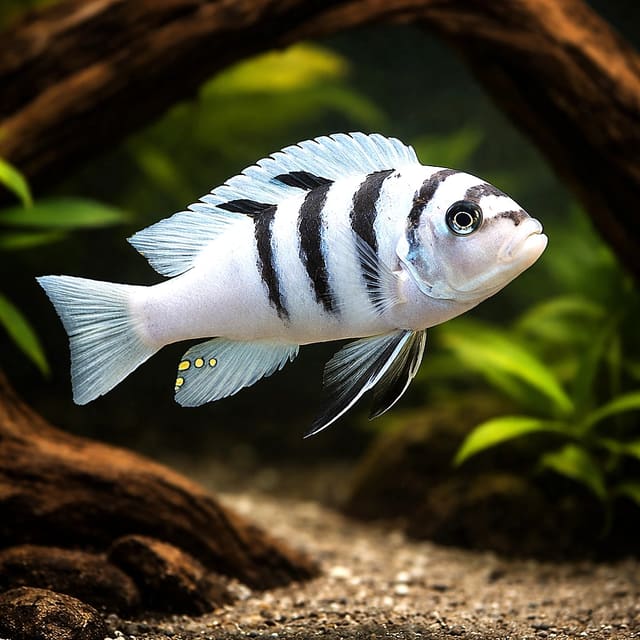
The Red Dorsal Dogtooth Cichlid is a rock-dwelling Lake Malawi mbuna belonging to the accepted genus Cynotilapia in the cichlid family, Cichlidae. It suits prepared keepers who can manage an aggressive Malawi community: OATA's African Malawi cichlid guidance gives 23–27°C, pH 8.0–8.6, general hardness of 12–18°dH and at least 200 litres for a reasonable community. The exact species has not been identified, so the care advice here follows the genus Cynotilapia and its care group. Keep the scientific label Cynotilapia sp. 'Red Dorsal' with the fish rather than assigning it to a named locality or species from its colour.
A Wikipedia account of Cynotilapia describes these fish as haplochromine cichlids within the mbuna flock of Lake Malawi. Mbuna occupy rocky surroundings, and this background explains why territory layout matters alongside water quality. The genus is also described as polygamous and maternal mouthbrooding, with females carrying developing fry for about 20–30 days.
Use the Malawi-group values as the starting framework for this unidentified Cynotilapia, then manage stability, filtration and social pressure as parts of the same plan. Carbonate hardness should remain within 10–15°dKH, while ammonia and nitrite must remain at zero.
| Suits | Not suited to |
|---|---|
| A prepared keeper able to manage aggressive Malawi cichlids | A peaceful mixed-community aquarium |
| A mature, filtered aquarium with hard alkaline water | An uncycled aquarium or one without a maintained filter |
| A reasonable Malawi community planned around at least 200 litres | A casual combination chosen without checking the complete community |
Our intermediate suitability assessment reflects the need to coordinate hard alkaline water, a mature filter, a deliberately chosen Malawi community and an intervention plan for aggression. The routine itself is manageable, but successful care depends on decisions that a peaceful mixed-community aquarium does not usually demand.
One purchase supplies one animal from the size option selected on the live selector. Choose between 3–4 cm, 4–5 cm, 6–7 cm and 7–9 cm, and use the quantity control when you want more than one animal. The size you select is the size supplied, not the adult size. These centimetre bands are dispatch sizes, so every choice still needs an aquarium planned around future growth, territory and the complete community.
OATA notes that most Malawi cichlids grow to around 10 cm, while some may grow up to 25 cm. That wide group range makes an assumed final length inappropriate for an unidentified member of Cynotilapia. Use the selected centimetre band only to prepare for arrival and introduction; use the Malawi community requirements, the animal's changing behaviour and conservative long-term space planning for the permanent aquarium.
Sex is guaranteed only when the selected option explicitly states male or female. This Red Dorsal Dogtooth Cichlid listing has no sex-guaranteed option.
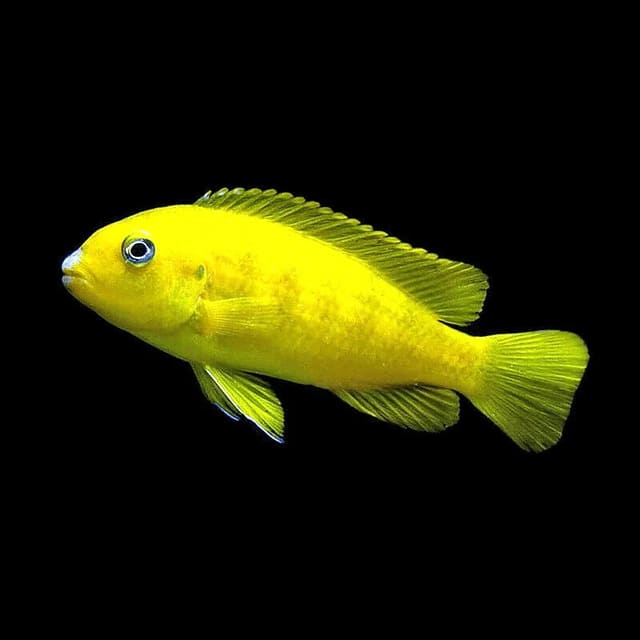
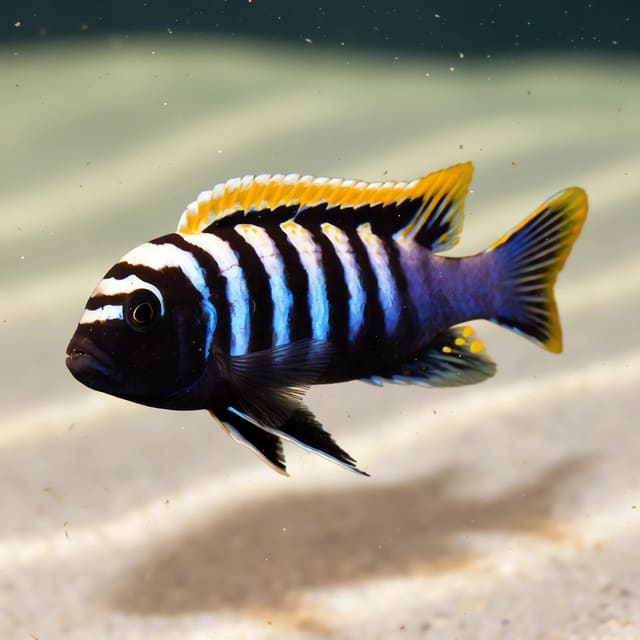
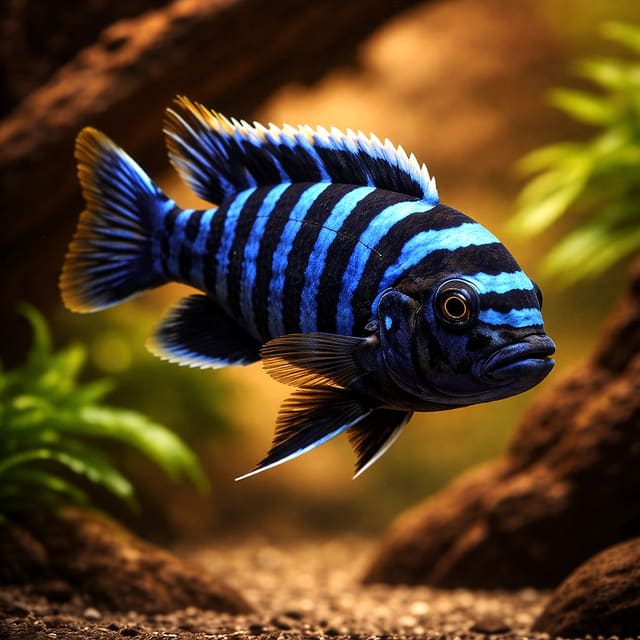
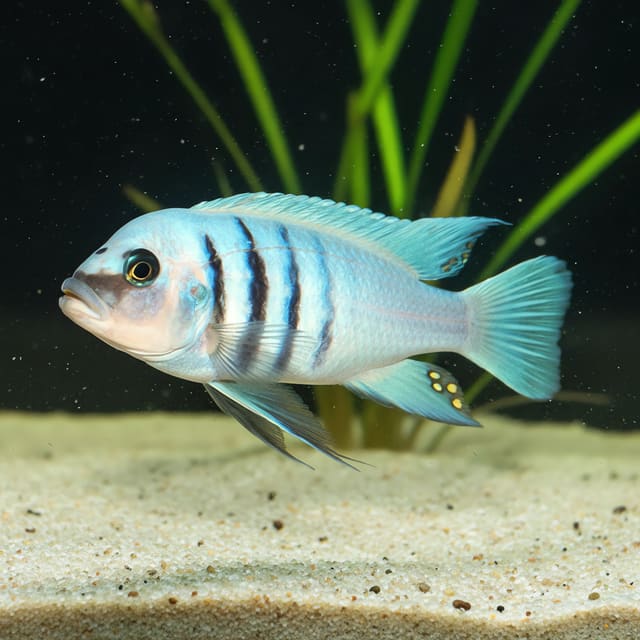
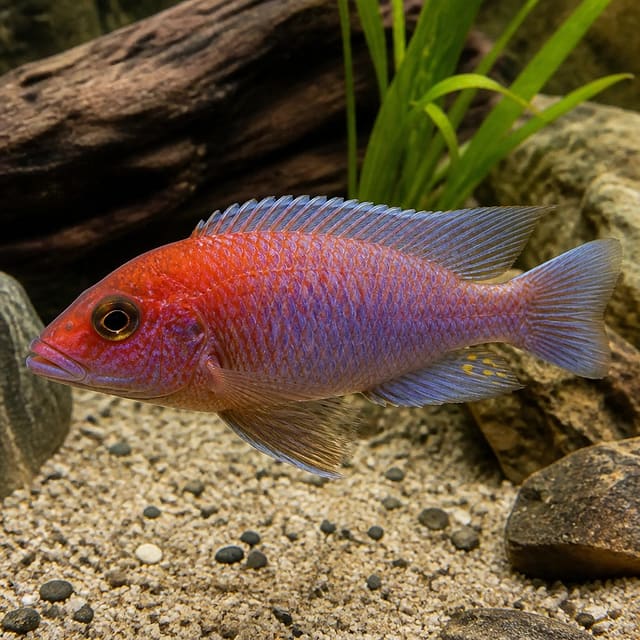
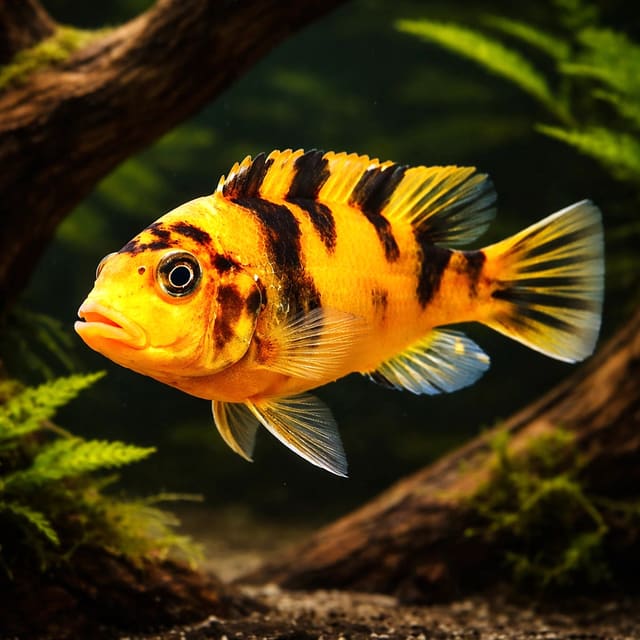
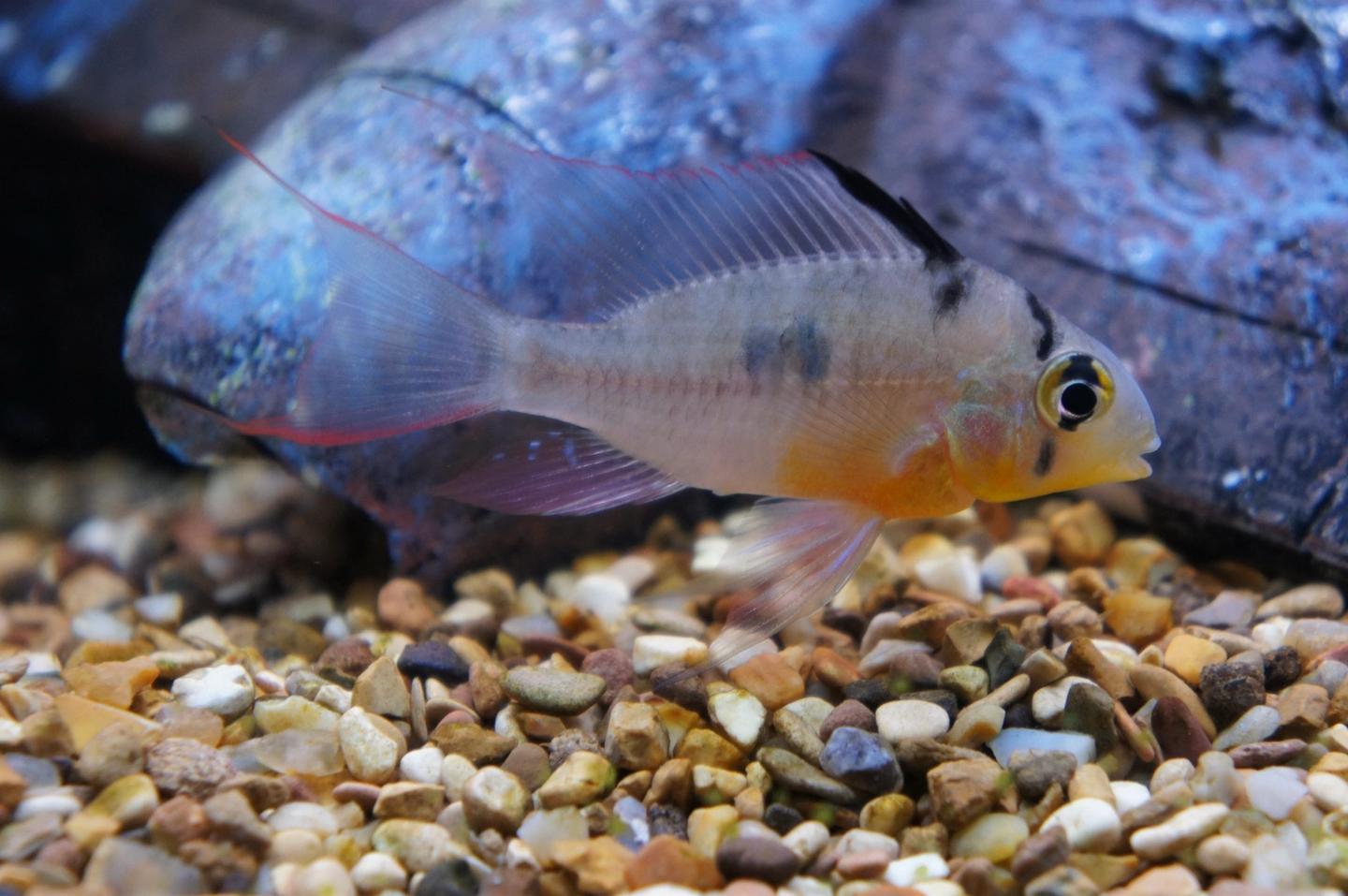
The gallery images are representative, based on reference photographs of this kind of animal, so colours can look slightly different from the live animal. One scene contains two visible fish, but sale quantity is controlled separately: one purchase still means one animal. Treat colour, contrast and fin edging as a guide to the named form rather than a promise that an individual will match a scene exactly.
Before checkout, read the current delivery and Live Arrival Guarantee policy. It explains the confirmed delivery date, tracking, licensed live-animal courier service, hand packing, insulated packaging and the reporting steps that apply if an animal arrives in compromised condition.
Begin with an aquarium of at least 200 litres when planning a reasonable Malawi cichlid community. OATA presents this as a community recommendation rather than a universal minimum for every possible Malawi species or combination. Choose as large an aquarium as reasonably possible because greater water volume generally makes temperature and water quality more stable, while extra usable space gives more choices for territories and escape routes.
A litre figure is only the first screening step. Two aquariums with the same volume can offer very different living conditions: one may provide a useful footprint and several separated rock areas, while another may concentrate every fish into one open line of sight. Select dimensions that let you build distinct areas without filling every swimming route or creating places where water and waste remain trapped.
A 3–4 cm fish may occupy little physical space at first, but that does not make a small temporary aquarium the right long-term home. Moving an increasingly territorial cichlid later can disrupt both the fish and an established hierarchy. Prepare the permanent scale of aquarium before introduction wherever possible.
If you are developing a new system, use our first tropical tank guide to organise maturation before livestock enters it. The guide supports the general setup process; the hard alkaline water, group structure and aggression decisions on this page still apply to the Red Dorsal.
Maintain a temperature of 23–27°C, pH 8.0–8.6, general hardness of 12–18°dH and carbonate hardness of 10–15°dKH. Test the aquarium and tap water rather than judging hardness or alkalinity from appearance. Use the aquarium water chemistry guide to understand each measurement, then compare your readings with the range using the water matcher.
Ammonia and nitrite must remain at zero milligrams per litre. Nitrate should not exceed 20 mg per litre above the normal tap-water level. Record the tap reading as well as the aquarium reading so the nitrate limit has a meaningful baseline. A test result that changes unexpectedly calls for a check of feeding, livestock load, filter flow and recent maintenance before more animals are introduced.
The RSPCA's aquarium filtration guidance explains why a working biological filter is essential: fish release toxic ammonia, beneficial bacteria convert it to toxic nitrite, and further bacteria convert nitrite to safer nitrate. Allow this bacterial population to mature and protect it during cleaning. Clear water alone does not show that ammonia and nitrite are being processed.
| Reading or sign | Action |
|---|---|
| Ammonia above zero | Pause livestock additions, test again and correct the waste-processing problem |
| Nitrite above zero | Treat the biological filter as unable to carry the present load |
| Nitrate rising quickly | Review feeding, waste removal, stocking load and water-change frequency |
| pH outside 8.0–8.6 | Check tap water, GH and KH before making measured changes |
| Temperature outside 23–27°C | Check the heater and thermometer, then restore the range without abrupt swings |
Use treated replacement water and keep its temperature and chemistry close to the aquarium. OATA recommends coral sand or a similar substrate to help buffer the water. Choose any buffering approach from actual GH, KH and pH results rather than adding products by guesswork. The aim is repeatable hard alkaline water, not frequent attempts to force an exact decimal.
Mbuna are rock-dwelling fish, so arrange the aquarium around rock-oriented territories, cover and broken sight lines. A useful layout prevents one fish from watching every route at once. Combine sheltered areas with open passages so a subordinate animal can move away from pressure without becoming trapped behind equipment or in a dead end.
Malawi cichlids often dig and rearrange their substrate, which will uproot any plants present. Check every rock arrangement for stability before livestock enters the aquarium, and recheck it whenever digging alters the base. Avoid a layout that can topple when substrate moves. Leave enough access to remove settled waste and inspect fish rather than building an inaccessible solid wall.
Plants are optional. Digging will uproot any plants present, so only the hardiest plants that tolerate the aquarium conditions and growth method should be considered. Do not reduce essential territory, circulation or swimming space simply to reproduce a planted gallery scene. The fish's rocky mbuna biology and the aquarium's water needs take priority over decorative similarity.
Strong aeration is recommended for a Malawi community, especially where stocking is deliberately managed to distribute aggression. Keep the surface moving and check that circulation reaches around the rockwork. If fish gather at the surface, change their breathing rate or remain beside the outlet, test water quality and inspect aeration immediately rather than assuming the behaviour is social.
Rearranging décor can help reduce aggression by removing established territorial boundaries, but use that step for a clear social reason. Frequent complete redesigns can replace one unstable hierarchy with another. Make the initial structure flexible enough to adjust selected barriers or territories while retaining safe cover and reliable water movement.
Use a specialised Malawi cichlid food with a high algae content as the main direction for this mbuna. OATA notes that smaller mbuna are more herbivorous and also appreciate fresh vegetables. Because the Red Dorsal identity remains at genus level, keep the diet aligned with that mbuna guidance rather than switching to the animal-rich feeding described for larger predatory utaka.
Feed twice a day and offer only what the fish can consume within a few minutes. The time limit is practical waste control, not an invitation to keep adding food while a dominant fish continues eating. Start with a modest amount, watch every part of the aquarium and reduce the next meal when food remains uneaten.
| What you observe | What to change |
|---|---|
| Food remains after a few minutes | Remove the excess and reduce the next portion |
| One fish controls one feeding point | Distribute the same measured meal across more than one area |
| A subordinate fish does not approach | Check territory pressure and whether it can reach food safely |
| The whole group loses interest | Test water quality and check for broader health changes |
| Body condition rises or falls | Review portions, access and the suitability of the staple food |
Do not solve leftovers by adding another animal. Uneaten food breaks down and contributes waste that the biological filter must process. A repeated excess also makes weekly nitrate control harder and can hide whether quieter fish are genuinely receiving food.
Fresh vegetable food can add variety within the mbuna plan, but it remains part of the same measured daily allowance. Remove portions that are not eaten promptly enough to stay clean. Keep changes gradual so appetite, waste and water readings can be connected to a clear feeding decision.
Watch the whole group during both meals. Reduced intake is one of OATA's warning signs, while exclusion from food may also reveal aggression before severe external damage appears. Respond to either pattern by checking water values and the social layout rather than simply offering a larger quantity.
Prepare the destination before the animal arrives. Confirm that temperature, pH and hardness sit within the Malawi range and that ammonia and nitrite are zero. Check filter flow, aeration and the intended refuge. A new fish should not be the test of whether a newly prepared aquarium can process waste.
The permanent aquarium must already be mature and suitable for the selected community. Introducing livestock increases feeding and waste, so the beneficial bacterial population must be able to grow with the load.
OATA recommends increasing fish numbers slowly because the filter's bacterial population must expand whenever more fish and food are added. Adding too many animals too quickly can cause new tank syndrome, allowing ammonia or nitrite to rise. Where a Malawi stocking plan calls for fish to enter as a group, the mature filter must already be prepared for that combined load.
Within a developing community, introduce more peaceful species before more aggressive species. Adding Malawi cichlids in groups can reduce the chance that all attention falls on one newcomer. Rearranging selected décor may also interrupt established territories, but it does not replace close observation or a separation plan.
Do not judge success from the first calm minutes. Check again during feeding and while established fish patrol their usual areas. If the newcomer remains at the surface, sits on the bottom, swims erratically, hides continuously or cannot feed, test the water and intervene in the social conflict promptly.
Change 25% of the aquarium water at least once every week. Use a siphon to remove solid waste from the substrate, particularly where debris collects around rockwork. Treat replacement tap water with a conditioner that removes chlorine or chloramine, and keep its temperature and chemistry close to the aquarium.
Test ammonia and nitrite at least weekly and keep both at zero. Record nitrate against the normal tap-water reading, keeping it within 20 mg per litre above that baseline. Continue regular testing in an established aquarium because livestock growth, changing portions, trapped waste or reduced filter flow can alter a previously stable pattern.
| Check | Routine |
|---|---|
| Water values | Test before maintenance and investigate unexpected changes |
| Substrate waste | Siphon accessible debris during the partial water change |
| Replacement water | Condition it and match temperature and chemistry closely |
| Filter flow | Check intakes, outlets and media for blockages |
| Filter media | Rinse lightly in removed aquarium water when cleaning is needed |
Do not run established biological filter media under the tap because chlorine or chloramine may kill beneficial bacteria. Avoid cleaning every part of the filter aggressively at once. The objective is to restore flow and remove excess debris while retaining the bacterial population that processes ammonia and nitrite.
Observe the fish daily for changes in swimming, colour, temperament, breathing, appearance, body condition and feeding. Warning signs include hanging at the surface, sitting on the bottom, erratic swimming, unusual darkening or paling, greater aggression, persistent hiding, altered gill movement, white spots, fluffy growths, damaged fins or scales, weight change and reduced appetite.
If a change appears, test water quality first and compare the affected fish with the rest of the community. A whole-group change points towards an aquarium-wide problem, while one excluded fish may be experiencing concentrated aggression. Contact us for further guidance when health changes continue after the immediate water and social checks.
Malawi cichlids can be highly aggressive and are not social fish in the peaceful schooling sense. OATA advises keeping a managed Malawi community in groups of at least 15 and notes that slight overcrowding may distribute aggression. This is a whole-community figure, not an instruction to order 15 Red Dorsals.
Small Malawi groups often fight because one individual can receive repeated attention. A denser community can spread that pressure, but it also increases waste and oxygen demand. Use this approach only within the aquarium's volume, filtration and aeration capacity, with enough observation to identify a fish that is still being targeted.
Where possible, keep more females than males of each species so one female does not receive all male attention. This offer cannot establish that ratio, so plan for the possibility that a growing group develops an unsuitable composition. Do not use colour in the gallery, dispatch size or a fish's early behaviour as a sex guarantee.
A community that appears settled can change as fish mature or territory holders strengthen. Treat persistent hiding, failure to feed, weight loss, torn fins or repeated displacement from cover as reasons to act, not as a normal price of keeping mbuna. Rearranging décor can reset territorial boundaries, but some combinations still require separation.
Plan every new purchase against the complete adult community before using the selector. Group numbers, sex balance, visual similarity, introduction order, aquarium footprint and the behaviour of existing fish all influence the result. The goal is controlled distribution of social pressure, not maximum fish density.
OATA advises keeping Malawi cichlids only with other Malawi cichlids or with some species of Synodontis catfish. Avoid placing this Red Dorsal in a general mixed community outside those categories. Shared temperature alone is not enough; the companion must also fit hard alkaline water, adult space, feeding access and the aggression level of the planned community.
Neither category creates an automatic match. Other Malawi cichlids vary in size and aggression, while only some Synodontis species fit a Malawi aquarium. Research the exact identity and adult requirements of every proposed companion, then assess the complete aquarium rather than relying on a general group name.
| Question | Decision rule |
|---|---|
| Does it belong in this community? | Limit candidates to Malawi cichlids or an individually suitable Synodontis |
| Do the water requirements align? | Keep only fish suited to stable hard alkaline Malawi conditions |
| Can the aquarium hold the adult combination? | Assess adult size, footprint, territories and the total waste load |
| Can every fish reach food? | Reject a plan where one type is likely to be consistently excluded |
| Is there a safe introduction plan? | Choose order, group timing, décor changes and separation capacity in advance |
Use the African cichlid collection to compare identities and care requirements, not as a ready-made tank-mate list. Each candidate needs its own assessment. Similar appearance may also concentrate territorial attention, so compare body shape and pattern as well as names.
Ask us for one stocking and compatibility assessment before purchase when the aquarium already contains Malawi cichlids. Include the aquarium volume and dimensions, established species, approximate sizes, group numbers, measured water values and planned additions. Those details allow a meaningful screen; the word “Malawi” by itself does not describe the social pressure in a particular aquarium.
Some chasing is consistent with territorial Malawi cichlids, but sustained exclusion requires action. Watch where the targeted fish ends up and whether it can leave that position. A fish held at the surface, on the bottom, behind equipment or in one corner has lost practical access to the aquarium even when the total litre figure looks generous.
| Warning sign | Immediate response |
|---|---|
| One fish cannot reach food | Change feeding distribution and assess whether separation is required |
| Persistent hiding or colour change | Test water and identify which fish controls access to cover |
| Fins or scales become damaged | Prevent renewed attacks rather than waiting for the hierarchy to resolve itself |
| A newcomer receives all attention | Use the prepared separation option and reconsider introduction timing |
| Aggression rises after growth | Reassess adult space, group composition and territory boundaries |
Rearranging décor may reduce aggression because fish must establish new territories. Change selected structures to create new visual barriers and routes, then observe the result. If the same fish is immediately trapped again, further rearrangement is not an adequate welfare plan.
Adding fish simply to distract an aggressor can overload the filter or create another victim. OATA's group recommendation works only as part of a planned Malawi community with appropriate filtration, aeration, space and introduction order. Do not convert it into an automatic remedy for a poor species combination.
Keep a separation route ready before conflict starts. A divider or another suitable mature aquarium can stop physical contact while you reassess the group. Responsible rehoming may be the lasting answer when aquarium dimensions, sex composition or individual behaviour prevent a safe arrangement.
Compatibility remains conditional throughout the animals' lives. Recheck the group after additions, rapid growth, décor changes and any sustained change in temperament. Early action protects the targeted fish and prevents minor damage, poor feeding or repeated hiding from progressing into a more serious welfare problem.
OATA says most Malawi cichlids grow to around 10 cm, while some may grow up to 25 cm. Use that broad Malawi-group range as a conservative planning reference for this genus-level fish and do not treat its dispatch size as its adult length.
OATA recommends at least 200 litres for a reasonable Malawi cichlid community. Choose as large an aquarium as reasonably possible and plan its usable space around the complete adult community, rock territories, filtration and escape routes.
Plan the fish within a managed Malawi community. OATA says Malawi cichlids can be kept in groups of at least 15 to distribute aggression, but that is a whole-community number rather than a direction to keep 15 Red Dorsals.
It is better suited to a prepared keeper who can maintain hard alkaline water, manage an aggressive Malawi community and separate a targeted fish. Our store care assessment is intermediate.
OATA's smaller-mbuna guidance supports specialised Malawi cichlid food with a high algae content and fresh vegetables for the Red Dorsal Dogtooth Cichlid. Feed twice daily and offer only what the group consumes within a few minutes.
OATA's Malawi-group guidance gives 23–27°C, pH 8.0–8.6, general hardness of 12–18°dH and carbonate hardness of 10–15°dKH. Keep ammonia and nitrite at zero.
Malawi cichlids are aggressive and must be mixed cautiously. Watch for persistent chasing, exclusion from food or cover, damaged fins and altered hiding behaviour, then separate fish when the existing arrangement cannot prevent further harm.
OATA advises keeping Malawi cichlids only with other Malawi cichlids or some species of Synodontis catfish. Screen every candidate for hard alkaline water, adult space, aggression, feeding access and introduction order, and avoid a general mixed community.
The Tropical Fish Co policy says fish are hand-bagged in pure oxygen and packed in an insulated box, with a heat pack when the weather calls for it. Be present to receive the parcel. Start filming every delivery continuously while the parcel is sealed, record it being opened and show the fish still inside the sealed bag. Float the bag for 20–30 minutes before release and never pour the bag water into the aquarium.
No reviews for this item yet. Bought one? Honest reviews only, good or bad.
What customers say about ordering from us
I have a small group of long finned mountain minnows. So was delighted to be able to order ten of this variety to increase the genetics in my tank . The ones I recieved are healthy but it’s to early to give a verdict on wether they are of a long finned type since they are small currently.
Gordon Walker · 23 Sept 2026
100% success travel and "installation". Pleased with quality of purchase. The Siamese fighter a bit "shy" so have not yet seen him at his best yet but looking good. Happy customer. GG
George E Garratt · 21 Sept 2026
Reviews of our shop, collected by Judge.me, an independent third-party review collector. Newest first.