Moderate
Acei Cichlid (Pseudotropheus sp. “acei”)
24–26°C · pH 7.5–8.5 · 300L
£7.99

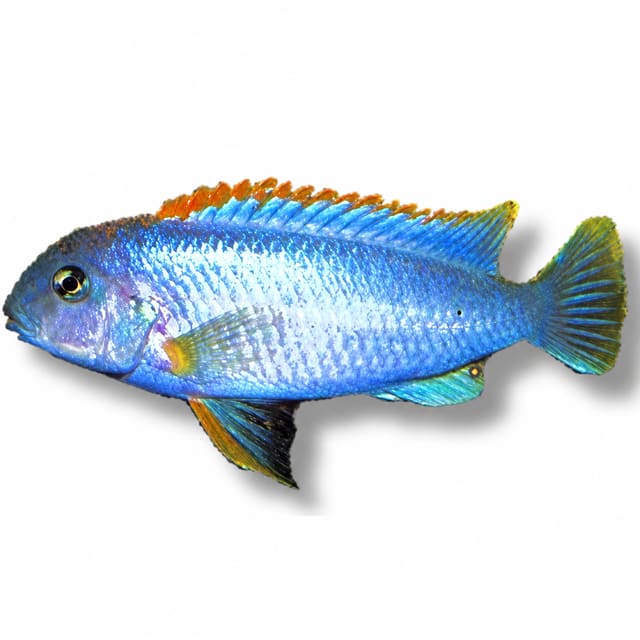
Slender Mbuna (Chindongo elongatus) is a highly aggressive, territorial Lake Malawi cichlid for an advanced mbuna aquarium. One purchase supplies one animal in the size selected; plan a 120 × 38 cm base, about 137 litres, rockwork and 24–28°C hard, alkaline water. Screen companions by temperament, pattern, water needs and diet, and avoid peaceful Peacocks or Utaka.
Adult size is the maximum length this species reaches at full maturity (scientific sources). The livestock you receive will be younger and smaller — pick a size above for the actual shipping size. Product-photo provenance and any image-specific limitations are stated on the listing.
Chindongo elongatus
Shoaling fish: kept in a group they feel safer, stay calmer and show their best colour.
Slender Mbuna (Chindongo elongatus) is a highly aggressive, territorial Lake Malawi cichlid for an advanced mbuna aquarium. One purchase supplies one animal in the size selected; plan a 120 × 38 cm base, about 137 litres, rockwork and 24–28°C hard, alkaline water. Screen companions by temperament, pattern, water needs and diet, and avoid peaceful Peacocks or Utaka.
Adult size is the maximum length this species reaches at full maturity (scientific sources). The livestock you receive will be younger and smaller — pick a size above for the actual shipping size. Product-photo provenance and any image-specific limitations are stated on the listing.
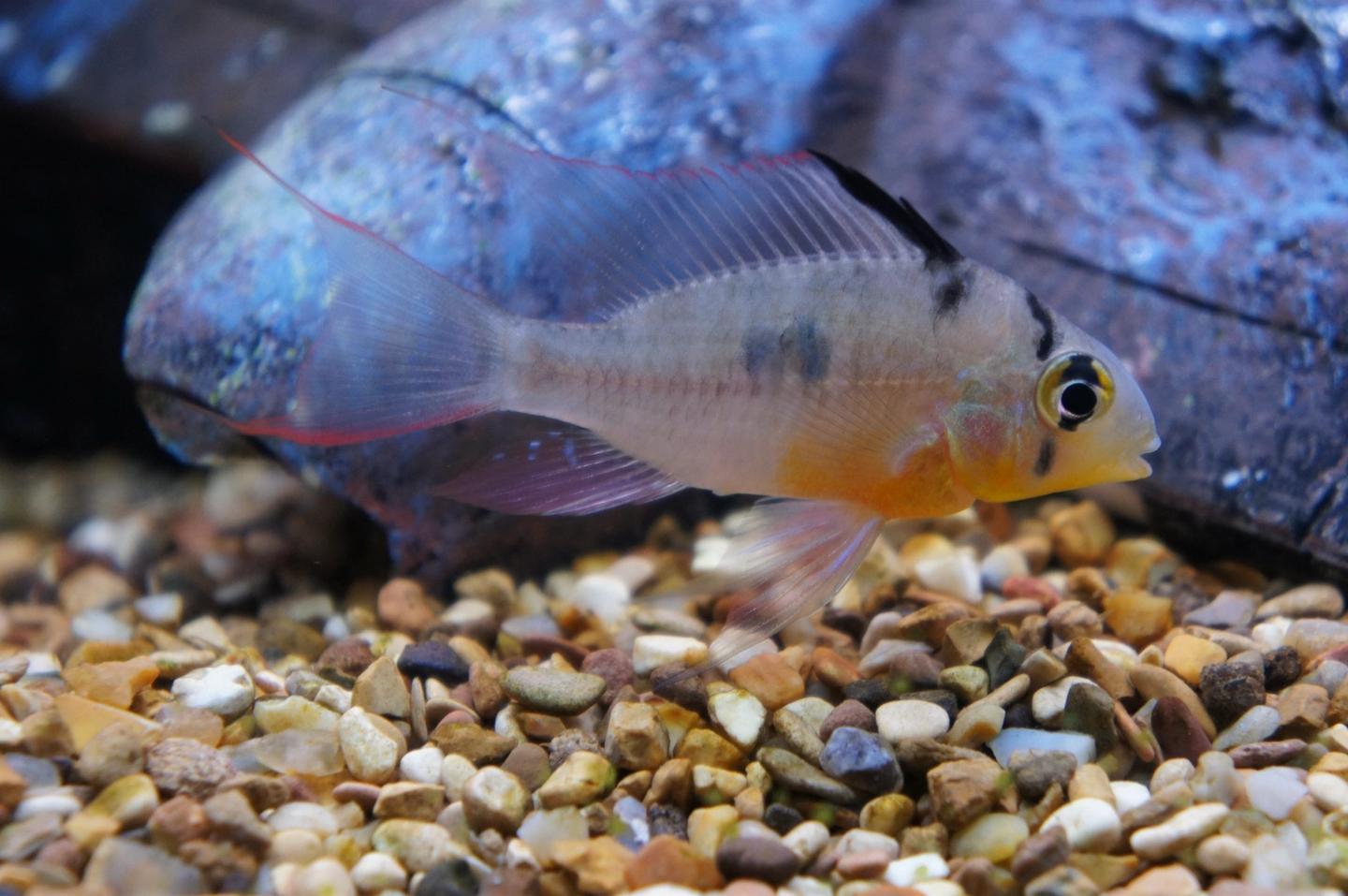
Cichlids are a family of roughly 1,800 accepted species, not one care type. Before buying, identify the exact species and source, then compare adult measurement, usable tank dimensions, social system, territory, tested water, diet and an exit plan. No family-wide minimum tank, water range or tank-mate list is safe.
Maintain these water conditions for optimal health and vibrant colors
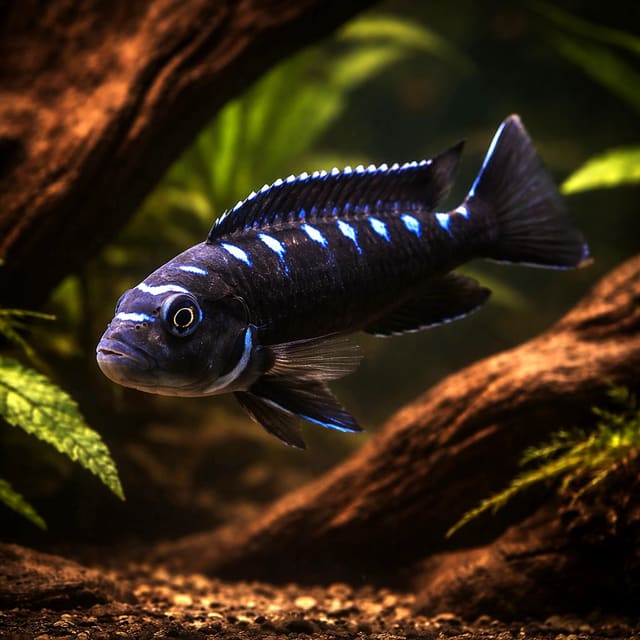
Slender Mbuna (Chindongo elongatus) is a freshwater, rock-dwelling cichlid from Lake Malawi. FishBase places it in the cichlid family Cichlidae and records a maximum of 9.5 cm standard length for male or unsexed fish. Its relatively slender form gives the fish its familiar common name.
Older aquarium references may call it Pseudotropheus elongatus, which is why Slender Pseudotropheus remains a useful trade name. Both names concern the same animal here; Chindongo elongatus is the scientific name used throughout the main care plan.
This is one of the most aggressive and territorial mbuna, rather than a general community fish. It suits an advanced keeper who can plan rock territories, filtration, stocking order and an escape route for subordinate fish. A calm mixed aquarium, a newly prepared tank or a casually assembled group is the wrong starting point.
Expect territorial displays and chasing, then judge whether every fish can still reach shelter and food. Persistent exclusion, damaged fins, altered breathing, refusal to feed or a fish confined to one corner requires action. The strongest colour or largest body should never be used to assume the sex of the animal being supplied.
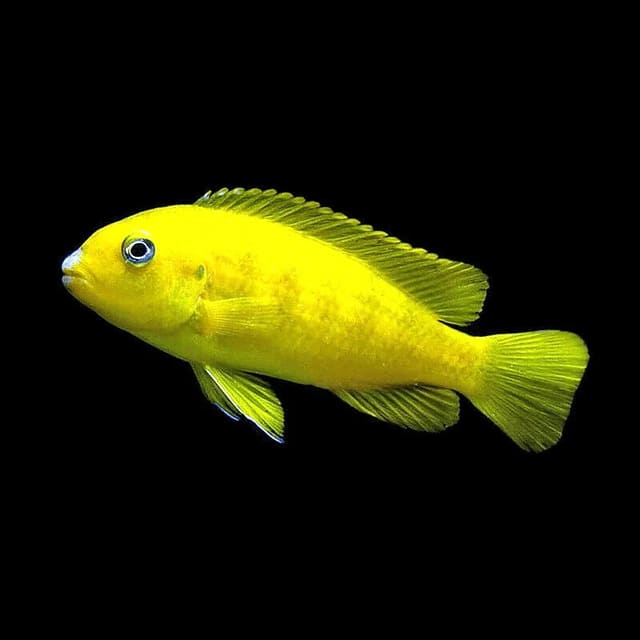
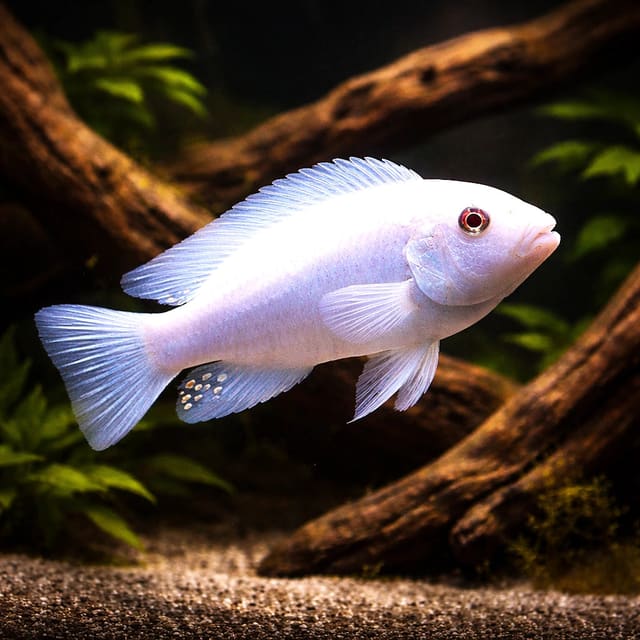
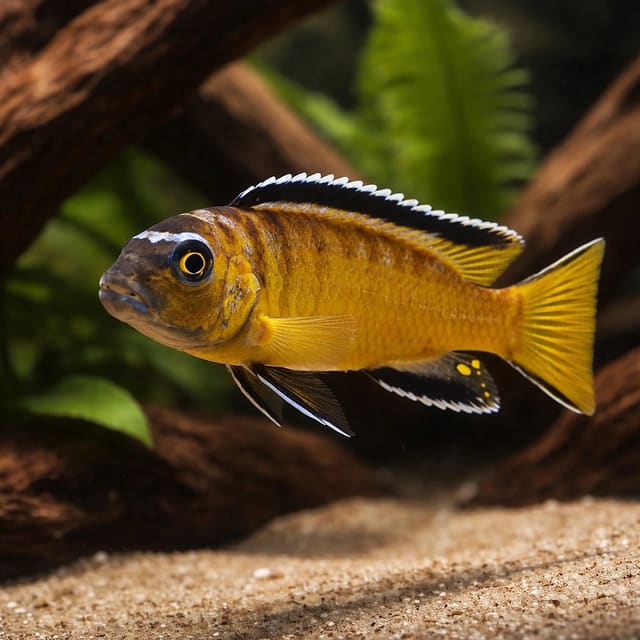
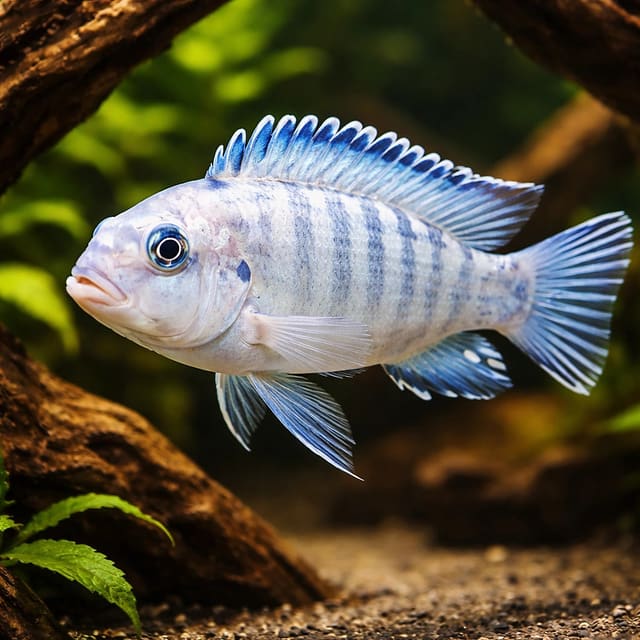
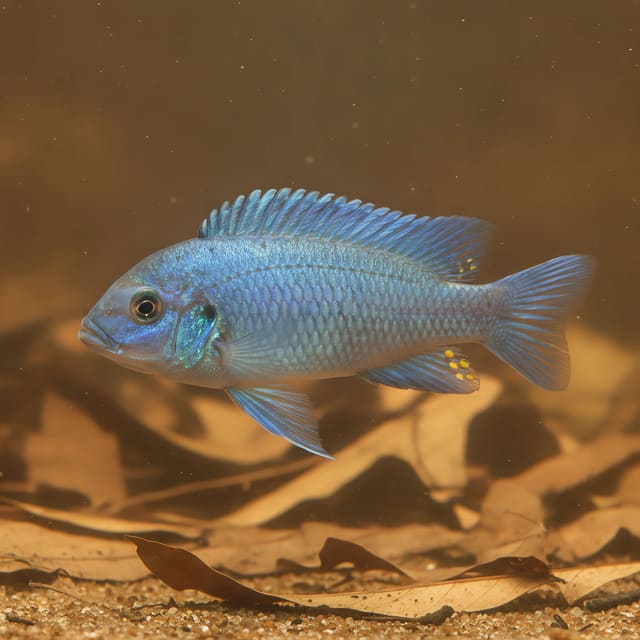
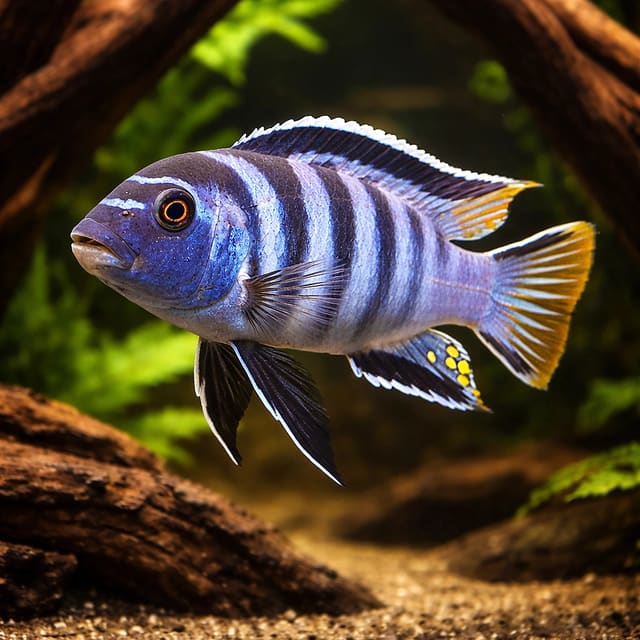
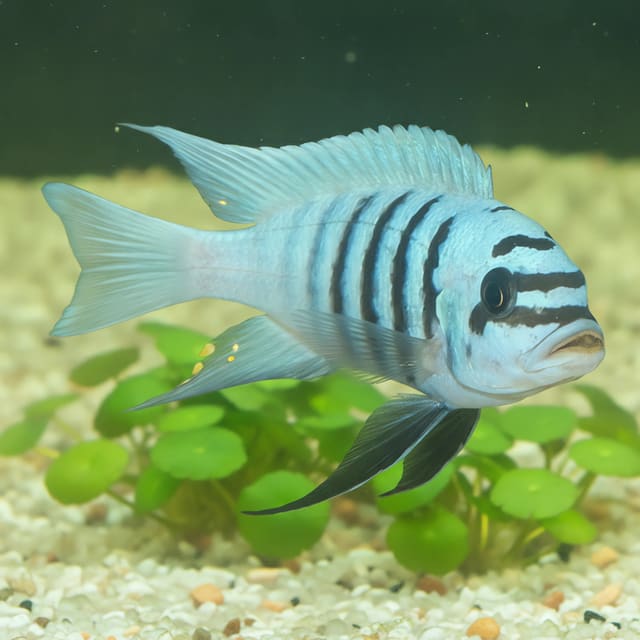
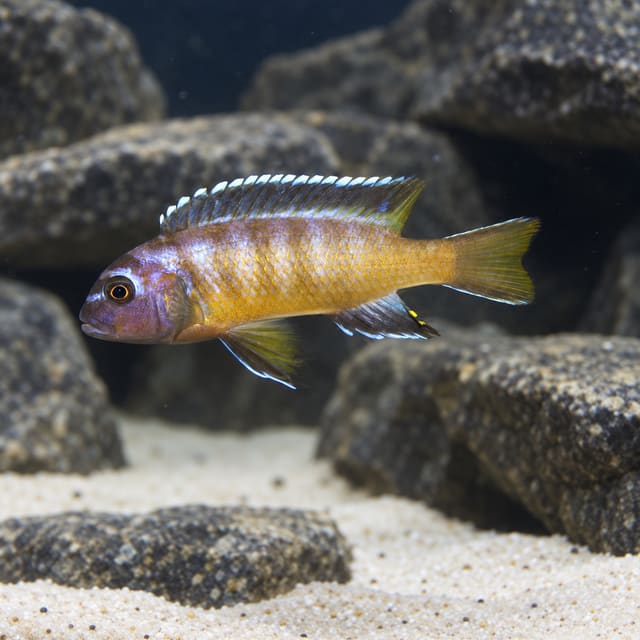
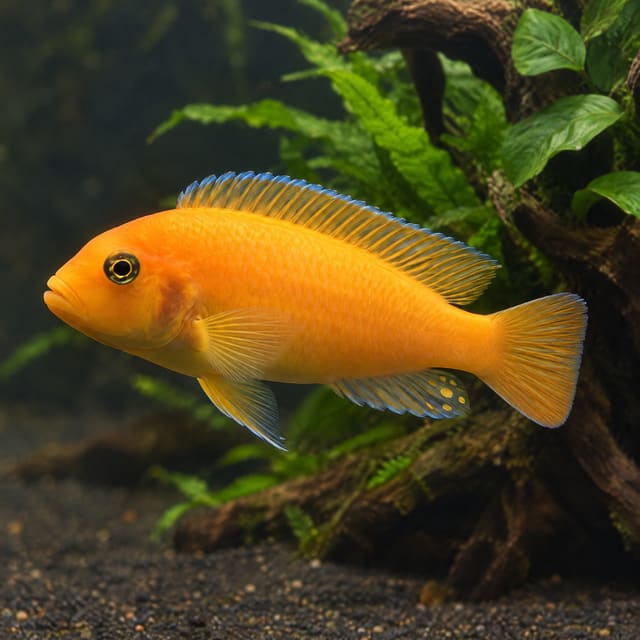
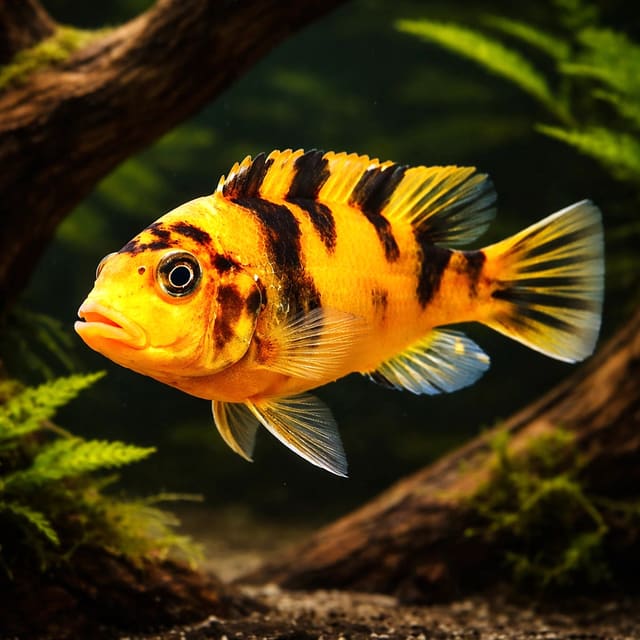
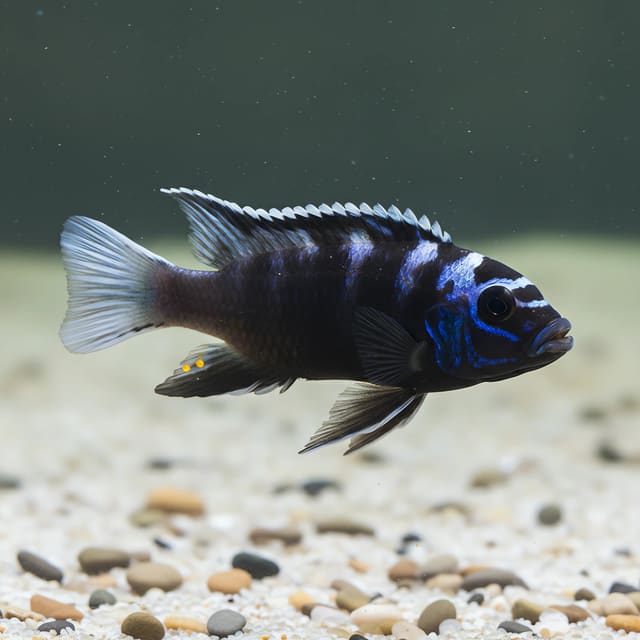
Some gallery images have been digitally enhanced to improve image quality. They show the listed type of animal rather than guaranteeing the exact markings of the individual supplied, so natural colour and pattern can vary.
One purchase quantity supplies one Slender Mbuna from the selected option. The dispatch sizes are 2–3 cm, 4–5 cm, 6–7 cm and 7–9 cm. Read the live size selector when ordering because it is the page control for the option you choose.
The size you select is the size supplied, not the adult size. Dispatch size describes the animal at fulfilment; it does not reduce the aquarium footprint, filtration or social planning needed for long-term care. A 2–3 cm fish and a 7–9 cm fish therefore require the same adult-focused plan, although the immediate stocking assessment must also consider the sizes of fish already in the aquarium.
| Offer decision | What to do |
|---|---|
| Purchase unit | Choose a quantity of one for one animal. |
| Dispatch grade | Select 2–3, 4–5, 6–7 or 7–9 cm through the live selector. |
| Long-term space | Use the aquarium planning dimensions, not the dispatch grade. |
| Existing fish | Compare body size, territorial behaviour and feeding access before introduction. |
Sex is guaranteed only when the selected option explicitly states male or female. This Slender Mbuna listing has no sex-guaranteed option.
Plan without assuming that two animals will become a pair or that a chosen size will produce a preferred sex. If a future social plan depends on a known ratio, establish that ratio independently before combining fish and keep the species’ severe same-sex aggression in mind.
Review the delivery and Live Arrival Guarantee policy separately from the size choice. The policy page carries the applicable dispatch, delivery and claim details, while the product selector controls the animal size.
Seriously Fish gives a species aquarium plan based on a 13.5 cm standard-length reference, a base measuring 120 × 38 cm and a volume of about 137 litres. FishBase records a maximum of 9.5 cm standard length, but the 13.5 cm figure is the more cautious planning reference for selecting the aquarium. Treat it as a space-planning value rather than a promised mature size.
Footprint matters because this mbuna defends rockwork and needs routes around territories. About 137 litres in a tall but narrow shape is not equivalent to the stated 120 × 38 cm base. Begin with both the footprint and volume, then increase space when the complete Malawi community, number of territories or intended sex ratio demands it.
| Planning value | How to use it |
|---|---|
| Recorded maximum | 9.5 cm standard length in FishBase. |
| Cautious length reference | 13.5 cm standard length for aquarium planning. |
| Aquarium base | Plan from 120 × 38 cm. |
| Reference volume | About 137 litres for the stated base and setup. |
| Routine temperature | 24–28°C. |
| Routine pH | 7.6–8.8. |
| General hardness | 10–25 dGH. |
UK Malawi-cichlid guidance recommends at least 200 litres for a reasonable-sized community. That larger figure concerns the whole community rather than one isolated body measurement. It becomes especially relevant when using the slight crowding strategy employed to spread aggression, because more fish also produce more waste and increase competition for shelter.
A worked decision is straightforward: a 137-litre aquarium with the stated base can meet the species profile’s starting dimensions, but it should not automatically be treated as a complete mixed-mbuna community. A 200-litre aquarium provides more water, yet it still fails if its footprint, rock structure, filtration or stocking combination traps subordinate fish. Judge all of those factors together.
| Suits | Not suited to |
|---|---|
| Stable aquarium water maintained at 24–28°C and pH 7.6–8.8 | Water outside 24–28°C and pH 7.6–8.8 |
| Differently patterned mbuna after a full aquarium stocking assessment | Peace-loving species such as Peacocks or Utaka |
Create several rock piles with cave-like spaces and hiding places, while retaining open water for feeding and movement. The aim is not one impressive central cave controlled by the dominant fish. Spread useful shelter across the aquarium so a subordinate animal has more than one route away from a defended area.
Sand is the preferred substrate in the species aquarium guidance. Algal growth on the rocks should not be discouraged because vegetable and algal material forms a large part of the diet. Plants are secondary to territorial structure: Malawi cichlids will often dig and rearrange the substrate, which will uproot any plants present, so do not let planting reduce the number of caves or safe routes.
Look along the aquarium from each end before introducing livestock. If you can see every cave entrance in one uninterrupted line, add another visual barrier or turn a rock pile. If one end contains all the shelter while the other is bare, redistribute it. This physical check is more useful than counting decorative caves that all open into the same dominant territory.
Leave enough access for waste removal and filter flow. A dense wall that traps debris creates a maintenance problem, while an open pile with several approaches serves both water movement and territorial escape. After arranging the rocks, press each structure gently from more than one direction and correct any movement before fish enter the aquarium.
Watch how the first occupants use the layout. A cave that looks generous from outside may be guarded so effectively that no other shelter can be reached. Rearranging the décor can reduce established territorial ownership, but it cannot compensate for an unsuitable footprint or an unsafe stocking combination.
A biological filter must be established before the fish enters the aquarium. The RSPCA explains that filter bacteria convert toxic ammonia to toxic nitrite and then to safer nitrate. A running pump alone does not show that this bacterial population can process the aquarium’s waste.
Use the first aquarium preparation guide to plan maturation before livestock arrives. Test the water rather than judging readiness from clarity. Clear water can still contain ammonia or nitrite, and adding several fish increases the amount of waste that the filter must process.
For the approximately 137-litre species setup, the aquarium guidance uses turnover of four to five times the volume each hour and a filter rating of 550–685 litres per hour. This gives a practical worked check: 137 × 4 is about 548 litres per hour, while 137 × 5 is about 685 litres per hour.
Scale the same calculation when the aquarium is larger. At 200 litres, four to five turnovers equal 800–1,000 litres per hour. Treat this as the starting calculation, then account for the crowded community plan, because Malawi guidance recommends oversized filtration where the fish population needed to spread aggression also creates a high waste load.
OATA’s Malawi-cichlid guidance gives, for the group, ammonia and nitrite at zero mg per litre. It also recommends aggressive aeration so the crowded aquarium retains sufficient dissolved oxygen. Use strong surface movement and check that rockwork has not created still areas packed with waste.
| Before introduction | Pass condition |
|---|---|
| Biological filter | Mature and operating continuously. |
| Ammonia | Zero mg per litre. |
| Nitrite | Zero mg per litre. |
| Flow | Scaled from four to five turnovers per hour. |
| Oxygenation | Strong surface movement and aeration. |
Set routine aquarium conditions at 24–28°C, pH 7.6–8.8 and 10–25 dGH. These are the species aquarium values to use when preparing replacement water and screening companions. Measure the aquarium and tap water before deciding whether any adjustment is necessary.
Use the water chemistry guide to understand pH, hardness and nitrogen readings, then compare measured values with the target through the water matcher. Record the figures at the same point in the maintenance cycle so changes are easier to identify.
For an aquarium of about 137 litres in a room around 20°C, the species guidance estimates roughly 125–175 W to hold 24–28°C. This is a worked reference tied to that room temperature and aquarium volume. A different room, aquarium volume or heat loss changes the heater decision, so base the final choice on the actual setup rather than copying the wattage alone.
| Reading | Decision |
|---|---|
| 24–28°C | Keep routine temperature within this aquarium range. |
| pH 7.6–8.8 | Use hard, alkaline conditions and avoid companions needing soft, acidic water. |
| 10–25 dGH | Match the mineral level when preparing the aquarium and replacement water. |
| Ammonia or nitrite detected | Treat the reading as a water-quality warning and review filtration and stocking. |
Do not judge suitability from temperature alone. A fish that shares 24–28°C may still require incompatible pH, hardness, food or social conditions. Screen all values together, then check whether the animal can withstand this mbuna’s territorial pressure.
Coral sand or a similar buffering substrate can support a hard-water Malawi setup. Test the outcome rather than assuming the substrate will create a particular number. The target is a repeatable aquarium environment within the stated range, supported by regular measurements and consistent replacement-water preparation.
At least once every week, change 25% of the water and siphon solid waste from accessible areas around the rockwork. Treat replacement tap water with conditioner to remove chlorine or chloramine before it enters the aquarium. Match the established water plan so routine maintenance does not create unnecessary swings.
Check ammonia, nitrite and nitrate at least weekly. Ammonia and nitrite should remain at zero mg per litre. Nitrate should not exceed 20 mg per litre above the normal level in the tap water. Record the tap-water baseline as well as the aquarium result; otherwise the nitrate increase caused inside the aquarium cannot be separated from the incoming value.
| Weekly task | Purpose |
|---|---|
| Test the water | Find ammonia, nitrite or rising nitrate before livestock shows prolonged distress. |
| Change 25% at least weekly | Remove dissolved waste and refresh the aquarium. |
| Siphon debris | Remove solid waste trapped beside rocks or in the substrate. |
| Check filter flow | Find blockages that reduce circulation and oxygenation. |
| Observe every fish | Identify feeding, breathing, colour or aggression changes. |
Check the filter for blockages. If the filter needs cleaning, do not run it under the tap because any chlorine or chloramine present may kill the beneficial bacterial population established in the media. Instead, rinse it lightly in aquarium water removed during the partial water change.
Avoid combining every disruptive job on the same day. The priority is preserving the established biological filter while removing waste and restoring flow. If output drops soon after cleaning, inspect the intake and the spaces around rockwork for trapped debris rather than repeatedly washing all media.
Use the maintenance results to guide stocking decisions. Detectable ammonia, detectable nitrite, rising nitrate or repeatedly blocked filtration means the present waste load needs attention before another fish is introduced. Increasing the population while the filter is struggling raises the risk of new tank syndrome and poor health.
Use a quality dried food alongside an algae-based food, with vegetable matter forming a large proportion of the diet. Suitable examples in the species guidance include spirulina flakes, blanched spinach and nori. Live and frozen foods may supplement this plant-led plan, but they should not replace its main vegetable and algal content.
Feed twice a day and offer only what the fish can eat within a few minutes. Watch the entire group rather than only the first fish to reach the food. If food remains after that period, reduce the next portion and remove accessible remains before they decay into additional waste.
| Food decision | Use |
|---|---|
| Quality dried food | Routine prepared component. |
| Algae-based food | Core part of the plant-led diet. |
| Spirulina, spinach or nori | Examples of vegetable and algal material. |
| Live or frozen varieties | Supplement rather than the dominant food. |
| Beefheart or other red meat | Avoid because it interferes with digestion in these fish. |
Do not choose food solely because another Malawi fish eats it. Diets vary across the lake’s cichlids: smaller mbuna are more herbivorous, while some larger open-water forms require food with more animal content. A shared water range therefore does not make every Malawi diet interchangeable.
Feeding is also a social check. Confirm that no individual is consistently driven away, hiding through both meals or taking noticeably less food. Reduced intake can be an early sign of aggression or poor health. Review the territory layout and water results rather than compensating with excess food, which increases the load on the filter.
Keep the schedule consistent enough to compare behaviour from one day to the next. A sudden loss of interest, a fish unable to approach the feeding area or repeated food left after a few minutes gives you a clear reason to inspect water quality and the group’s interactions.
Confirm that ammonia and nitrite are zero mg per litre before adding the fish. Check temperature, pH and hardness against the planned 24–28°C, pH 7.6–8.8 and 10–25 dGH range. The aquarium should already have a mature biological filter, stable rockwork, open swimming routes and enough shelter for the complete stocking plan.
Malawi cichlids are often introduced in a planned group so one newcomer does not receive all the attention. At the same time, the filter’s beneficial bacteria must grow as waste and feeding increase. Resolve those needs by planning the intended cohort in advance, confirming that the aquarium and filter can support it, and avoiding repeated additions in quick succession.
Add more peaceful Malawi species before more aggressive ones. Slender Mbuna belongs at the aggressive end of that sequence. Rearranging the rock décor immediately before an introduction can disrupt existing territories and reduce the advantage held by established fish, although the resulting layout must still provide stable caves and several escape routes.
| Checkpoint | Required response |
|---|---|
| Before introduction | Confirm zero ammonia and nitrite, matching water and secure rockwork. |
| First feeding | Check that the newcomer can approach food without being excluded. |
| First few days | Watch breathing, swimming, colour, shelter access and aggression. |
| After feeding increases | Retest water and check that filter flow remains strong. |
| Before another addition | Confirm stable readings and a compatible territorial plan. |
Do not interpret hiding by itself without context. A new territory may take time to establish, but hiding combined with rapid breathing, missed meals, fin damage or repeated cornering calls for immediate assessment. Test the water first, then inspect which fish controls the routes between shelter and food.
Stocking the aquarium too quickly can cause new tank syndrome when the biological filter cannot process the increased waste. A clear first-day test is therefore only the starting point; continue testing as feeding and waste rise during the following days.
Slender Mbuna is highly aggressive towards its own species. Do not build a same-species group by choosing an arbitrary pair or trio. A very large aquarium is required for more than one male, and even then a subordinate male may be killed.
The species guidance calls for at least four to six females per male for their safety. That ratio describes a deliberately planned harem, not a promise that a group selected by size will mature into the required sexes. Because this offer does not guarantee sex, buying five or six animals does not guarantee one male and the intended number of females.
Adult males are usually larger and have brighter egg spots on the anal fin than females, but those general differences are not a retail sex guarantee. Do not use dispatch size, gallery colour or a single visual feature as the basis for an irreversible stocking plan.
UK group guidance says Malawi cichlids can be maintained in communities of at least 15 with slight crowding used to limit aggression; small groups often fight. It also recommends at least 200 litres for a reasonable-sized community. These are community planning figures, not an instruction to keep 15 Chindongo elongatus together.
Combine the two levels of advice carefully. The community strategy spreads attention among compatible Malawi cichlids, while the species rule warns that more than one male Slender Mbuna remains extremely dangerous. A larger fish count must therefore be paired with a larger aquarium, oversized filtration, strong aeration, numerous territories and a deliberate mix of fish.
| Proposed plan | Decision |
|---|---|
| Random pair | Reject; two fish do not form a guaranteed safe pair. |
| Several animals chosen by size | Reject as a method of creating a sex ratio. |
| Known male with females | Use at least four to six females and sufficient space. |
| More than one male | Requires a very large aquarium and still carries severe risk. |
| Mixed Malawi community | Assess pattern, diet, water, aggression, footprint and filtration together. |
Avoid peace-loving species such as Peacocks or Utaka. Sharing Lake Malawi does not make them safe with one of its most aggressive mbuna. Also avoid mbuna that closely resemble Slender Mbuna in patterning, because the species guidance permits other mbuna only when they do not resemble it.
Some Synodontis catfish may be considered within a Malawi setup, but “Synodontis” is not a universal approval. Screen the exact catfish for water, adult size, behaviour and space before combining it with this mbuna. The same conditional approach applies to every fish in the African cichlid collection.
More than 30 forms of this species occur in Lake Malawi. Do not mix different forms in the aquarium because they hybridise freely. Preserve the identity of an established group rather than adding another form merely because its common name looks similar.
| Candidate | Screening outcome |
|---|---|
| Peaceful Peacock or Utaka | Avoid. |
| Similarly patterned mbuna | Avoid. |
| Differently patterned mbuna | Consider only after the full screen. |
| Some Synodontis | Consider only after exact-species assessment. |
| Another geographical form | Avoid mixing because of hybridisation. |
Compatibility remains a whole-aquarium decision rather than a reusable list. Ask us once you have the aquarium dimensions, water readings, filtration, present fish and intended quantities so the stocking assessment can address the actual territories and bioload.
Territorial display and chasing are expected from this mbuna, but every fish must retain practical access to shelter and food. Intervene when one animal is repeatedly cornered, excluded from all useful caves, unable to feed or losing fins or scales. A sudden increase in hiding or aggression also warrants investigation.
Start with water tests. Ammonia and nitrite must be zero mg per litre, and nitrate should remain no more than 20 mg per litre above the tap-water baseline. Check temperature, pH and hardness against the established plan, then inspect filter flow and aeration.
If the readings remain within range, watch the routes between caves, open water and feeding areas. One dominant fish may control a narrow passage even where the total cave count looks generous. Rearranging décor can reset territories, but the revised structure must create genuinely separate shelters and more than one path around each rock pile.
| What you see | What to do |
|---|---|
| Short display chase | Observe whether both fish return to normal movement and feeding. |
| Repeated cornering | Review territory routes and the stocking combination immediately. |
| Reduced food intake | Test water and check whether another fish blocks the feeding area. |
| Faster or slower gill movement | Check water quality, oxygenation and social pressure. |
| White spots, fluffy growths or lost scales | Test water and seek health guidance rather than choosing a treatment blindly. |
Watch swimming position, colour, temperament, breathing, body condition and feeding. Hanging at the surface, sitting on the bottom, erratic swimming, darker or paler colour, unusual hiding, altered breathing or reduced appetite can identify a problem before it becomes more severe.
When a health change persists, test the water and contact us for guidance. Give the measured readings, aquarium volume, temperature, maintenance history, tank mates and observed behaviour. Those details help distinguish a water-quality issue from territorial pressure without guessing at a disease treatment.
It is a highly aggressive, territorial, rock-dwelling cichlid from Lake Malawi. FishBase records a maximum of 9.5 cm standard length, while aquarium planning guidance uses a cautious 13.5 cm length reference.
One purchase quantity supplies one animal from the selected size option. Use the live selector to choose the required dispatch grade.
The dispatch sizes are 2–3 cm, 4–5 cm, 6–7 cm and 7–9 cm. These describe the fish at fulfilment rather than its long-term space requirement.
Plan from a 120 × 38 cm base and about 137 litres, with stable rock piles, caves, open routes, sand, mature filtration and strong aeration. A reasonable-sized Malawi community is planned from at least 200 litres.
Do not create a random pair or small group. When sexes are independently known, use at least four to six females per male; more than one male requires a very large aquarium and remains dangerous.
Maintain 24–28°C, pH 7.6–8.8 and 10–25 dGH. Keep ammonia and nitrite at zero mg per litre and nitrate no more than 20 mg per litre above the tap-water baseline.
Feed twice daily, offering only what is eaten within a few minutes. Use quality dried and algae-based foods with plenty of vegetable matter; avoid beefheart and other red meat.
Use a mature aquarium with zero ammonia and nitrite, matching water and secure rockwork. Rearrange territories before introduction, observe shelter and feeding access, and retest as the waste load increases.
Avoid peace-loving Peacocks or Utaka and similarly patterned mbuna. Consider differently patterned mbuna or some Synodontis only after screening water, diet, adult space, filtration and the complete territorial plan.
No reviews for this item yet. Bought one? Honest reviews only, good or bad.
What customers say about ordering from us
I have a small group of long finned mountain minnows. So was delighted to be able to order ten of this variety to increase the genetics in my tank . The ones I recieved are healthy but it’s to early to give a verdict on wether they are of a long finned type since they are small currently.
Gordon Walker · 23 Sept 2026
100% success travel and "installation". Pleased with quality of purchase. The Siamese fighter a bit "shy" so have not yet seen him at his best yet but looking good. Happy customer. GG
George E Garratt · 21 Sept 2026
Reviews of our shop, collected by Judge.me, an independent third-party review collector. Newest first.