Expert
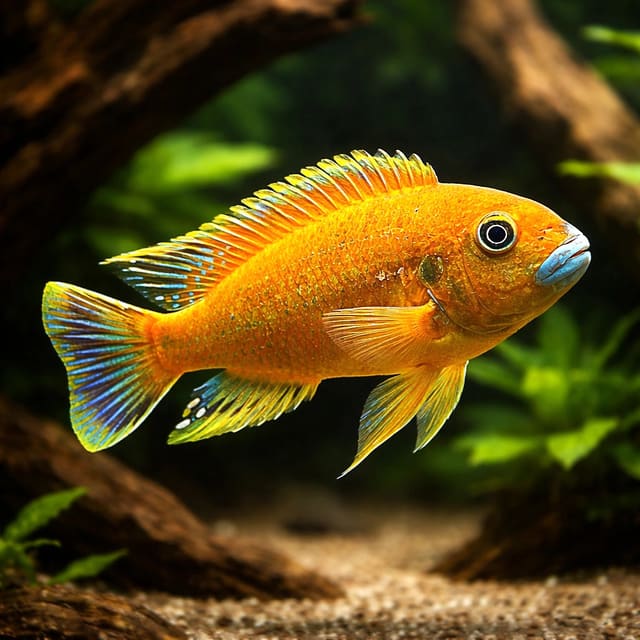
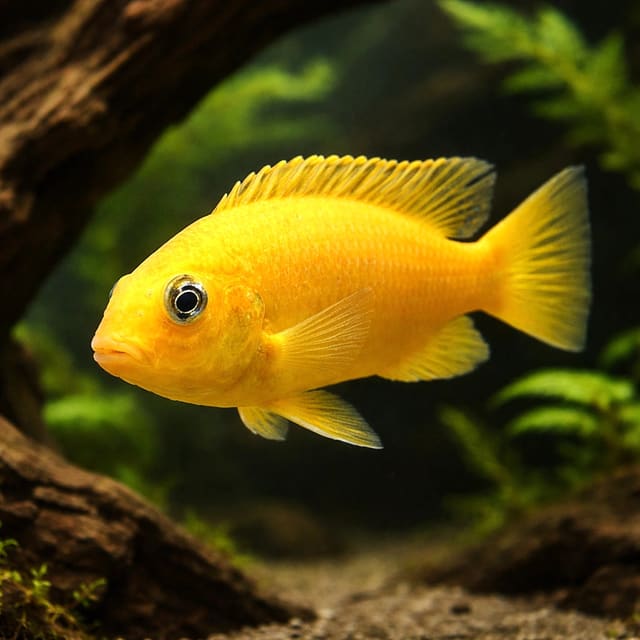
Orange Chilumba Cichlid (Tropheops sp. 'Chilumba')
24–26°C · pH 7.5–8.5 · 400L
£13.99

Specialist Lake Malawi mbuna for experienced keepers: an algae-grazing Tropheops with hard-water needs, territorial males and striking barred colour.
Adult size is the maximum length this species reaches at full maturity (scientific sources). The livestock you receive will be younger and smaller — pick a size variant above for the actual shipping size. Product-photo provenance and any image-specific limitations are stated on the listing.
Tropheops microstoma
Small-Mouthed Tropheus are a shoaling species — they need 6+ to feel safe and show their full colour.
Confirm your email, then we’ll send an availability message for this exact item if it returns within 180 days.
This request is only for this product—no newsletter or other promotions. A mail-provider retry may very rarely duplicate the same availability message. Unconfirmed addresses are removed after 48 hours. See our privacy policy.
Specialist Lake Malawi mbuna for experienced keepers: an algae-grazing Tropheops with hard-water needs, territorial males and striking barred colour.
Adult size is the maximum length this species reaches at full maturity (scientific sources). The livestock you receive will be younger and smaller — pick a size variant above for the actual shipping size. Product-photo provenance and any image-specific limitations are stated on the listing.

Cichlids are a family of roughly 1,800 accepted species, not one care type. Before buying, identify the exact species and source, then compare adult measurement, usable tank dimensions, social system, territory, tested water, diet and an exit plan. No family-wide minimum tank, water range or tank-mate list is safe.
Maintain these water conditions for optimal health and vibrant colors
Small-Mouthed Tropheus (Tropheops microstoma) is a specialist Lake Malawi mbuna for keepers who already understand hard alkaline water, territorial cichlid behaviour and careful vegetable-led feeding. It is sometimes still seen in older supplier wording as Pseudotropheus microstoma, so this listing keeps that name visible for identification while using the current Tropheops name for care and SEO.
This is not a soft-water community fish and it is not a casual first cichlid. It is an active rock-and-sand interface grazer from Lake Malawi, with territorial males, a compact body shape and a narrow grazing mouth adapted for picking at algae-rich biofilm. The current Shopify variants are 4-5 cm, 6-7 cm and 7-9 cm when stock is available. Those are purchase sizes, not the adult planning size.
| Scientific name | Tropheops microstoma |
|---|---|
| Common / trade name | Small-Mouthed Tropheus; older supplier wording may use Pseudotropheus microstoma |
| Natural range | Endemic to Lake Malawi, including the Monkey Bay, Mvunguti, Domwe Island and Otter Point area records noted by specialist sources |
| Adult planning size | FishBase records 9.8 cm standard length; plan for roughly 10-12 cm total length, with larger mature aquarium males possible |
| Best aquarium type | Rocky Lake Malawi mbuna aquarium with sand, caves, sight breaks and open grazing space |
| Adult tank planning | 300 litres+ and 120 cm+ length is the safer adult target for a harem or mixed mbuna display |
| Temperature | 24-26 C is the safest core range; avoid rapid swings |
| pH and hardness | Hard alkaline water, about pH 7.5-8.5 and 10-25 dGH |
| Temperament | Territorial Malawi mbuna; males defend rockwork and feeding areas |
| Diet | Algae-based mbuna foods, spirulina flakes, vegetable matter and aufwuchs-style grazing |
The accepted name used here is Tropheops microstoma. Older lists and some our stock records can still show Pseudotropheus microstoma, and the common name can be confusing because "Tropheus" is also a separate Lake Tanganyika genus. For this fish, the important point is practical: treat it as a Lake Malawi Tropheops mbuna, not as a Tanganyikan Tropheus.
The species name microstoma means small mouth, and that is a useful clue to its lifestyle. This fish is built to graze from rock surfaces and sediment-rich transition zones, taking algae, biofilm and tiny organisms from the surface rather than chasing large prey. That feeding style is the reason the aquarium diet must stay lean, vegetable-led and consistent.
Tropheops microstoma is endemic to Lake Malawi. FishBase lists it as a freshwater, demersal tropical cichlid, while specialist Malawi references place it around sheltered bays and rocky or rock-sand transition habitats. It is associated with calmer protected areas rather than only heavy wave-swept shorelines, so aquarium flow should provide strong oxygenation without forcing the fish to fight a harsh current all day.
In the wild it grazes from rocks and sedimented surfaces, tearing and picking at algae-rich growth. Stomach contents and habitat notes show that tiny invertebrates may be taken with the aufwuchs, but that does not make it a meat-eating cichlid in aquarium care. In the home aquarium, the safest long-term approach is to feed it as an herbivorous or algivorous mbuna.
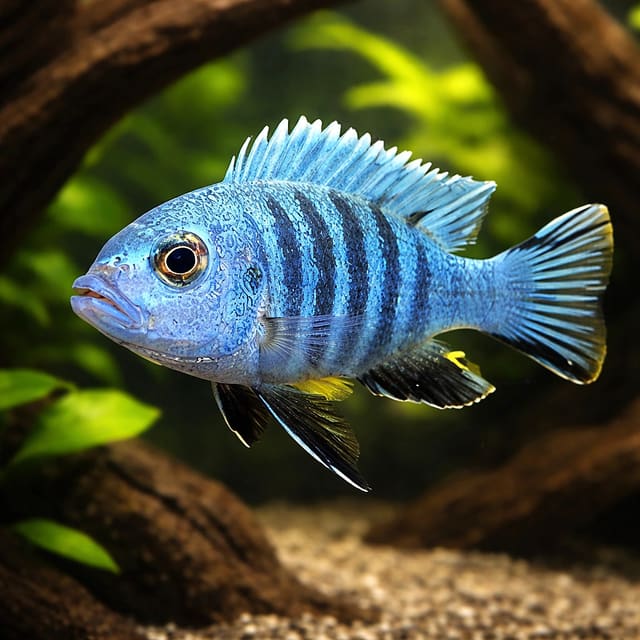
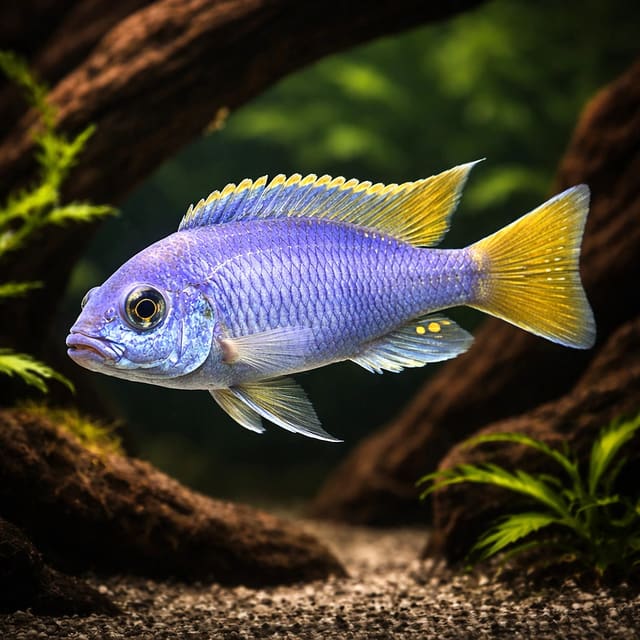
Expect a confident, busy fish that spends much of the day grazing, checking territory boundaries and reacting to the social structure around it. Males are the more territorial sex and can show stronger blue, barred or locality-dependent colour when settled. Females and subdominant fish are usually plainer, often blue-grey to silvery, and colour can change with mood, dominance, age and lighting.
Plan the aquarium as a proper Malawi mbuna system, not as a decorated community tank. Use a sand substrate, stable rock piles and caves arranged so the fish can graze, hide and break line of sight. The best structure gives several separate territories rather than one central rock mountain that a single dominant male can control.
The old 200 litre planning figure is too tight for most adult groups. For a safer adult display, aim for 300 litres or more with at least 120 cm of length, and go larger if mixing it with other mbuna. A harem-style group, such as one male with several females, is usually more stable than a pair because it spreads attention and reduces pressure on a single female.
Filtration should be strong enough to keep water clear and oxygen-rich, with regular water changes to control nitrate. Malawi cichlids may look tough, but they do badly when water quality slides. Use rockwork that cannot collapse, keep enough open space for movement, and avoid delicate plants unless you accept that grazing and digging may damage them.
This fish belongs in stable hard alkaline water. A core temperature around 24-26 C, pH around 7.5-8.5 and moderate to high hardness suits the species and keeps the aquarium close to the Lake Malawi conditions it is adapted for. Many UK tap-water areas are already hard enough for Malawi cichlids, but the important word is stable. Sudden pH swings are more dangerous than a carefully maintained value within the correct range.
Ammonia and nitrite must remain at zero. Keep nitrate low with sensible stocking, generous filtration and regular water changes. Do not chase numbers with sudden chemical corrections; test, adjust gradually and keep alkalinity buffered. A mature filter and consistent maintenance routine are much more valuable than last-minute fixes.
Feed Tropheops microstoma like a specialist algae grazer. The staple should be spirulina flakes, quality herbivore cichlid pellets and other vegetable-led mbuna foods. Small, frequent portions are better than large heavy meals because this fish is naturally adapted to regular grazing.
Avoid rich meaty foods as a routine diet. Bloodworm, heavy animal protein and fatty feeds can increase the risk of digestive trouble and Malawi bloat in herbivorous mbuna. Tiny invertebrates may be part of natural aufwuchs, but that is very different from repeatedly feeding rich frozen foods in an aquarium. If you offer variety, keep it light, occasional and balanced by algae-based staples.
Small-Mouthed Tropheus is territorial in the normal mbuna way. It is not the most brutal Malawi cichlid, but it still needs space, rockwork and companions that can cope with hard alkaline water. Keep it with robust Lake Malawi cichlids of similar size and compatible diet, especially other algae-grazing or vegetable-leaning mbuna. Synodontis catfish can work in larger Malawi displays if the tank is planned around them.
Avoid soft-water community fish, shrimp, delicate slow fish, long-finned species and tank mates that need a very different diet. Also be careful with much larger predatory cichlids, as they can turn a specialist grazing setup into a stressful display. Stress matters here because stressed mbuna are more likely to stop feeding properly, hide, fight or develop digestive problems.
If you are building a mixed Malawi aquarium, choose species around behaviour first and colour second. A tank full of pretty but incompatible fish is hard work. A tank with compatible diet, similar size and enough visual barriers is far more likely to settle into a stable rhythm.
Tropheops microstoma is a maternal mouthbrooder. A male claims a territory and displays to females, then the female carries the eggs and developing fry in her mouth. Specialist hobby sources describe mouthbrooding periods of around three weeks before fry are released, although timing can vary with temperature and individual condition.
Breeding is much easier in a calm group with enough rockwork. A holding female should have places to retreat, and aggressive tank mates should not be allowed to harass her constantly. Fry can be started on finely crushed spirulina-based foods and other suitable small herbivore foods. Keep the grow-out water clean and stable, because young mbuna are still vulnerable to poor water quality.
The first week matters with any Malawi cichlid, and especially with a specialist grazer. Dim the lights during acclimation, float the bag to equalise temperature, then gradually mix small amounts of aquarium water before release. Do not feed heavily on arrival. Give the fish time to settle, then start with small vegetable-led feeds.
Watch for clamped fins, heavy breathing, refusal to feed, swelling, stringy waste or one fish being pinned in a corner. Those signs usually point to stress, water quality, social pressure or diet. Quarantine is ideal if you have the facilities, particularly before adding fish to an established Malawi group. Preventing a problem is easier than trying to treat one in a rocky display tank.
We list this fish as a specialist Malawi mbuna because that is what it is. The page does not hide the difficult-care rating, the vegetable diet or the need for a properly sized hard-water aquarium. That honesty helps the right keeper choose it and helps the wrong setup avoid a problem.
When available, livestock is packed for UK live-animal delivery with insulated packaging, weather-aware dispatch and our Live Arrival Guarantee. The exact/source supplier photo is preserved alongside the existing gallery images so you can see both the product-specific source image and the visual care-gallery context.
Max adult size is the length this species reaches at full maturity (from scientific sources). The livestock you receive will be younger and smaller — pick a size variant on the buy box for the actual shipping size. Product-photo provenance and any image-specific limitations are stated on the listing.
Best kept by experienced Malawi keepers in hard alkaline water with broken sight lines, rock territories and a vegetable-led mbuna diet.
Always research specific species before adding them to your tank. Consider:
No reviews for this item yet. Bought one? Honest reviews only, good or bad.
What customers say about ordering from us
I have a small group of long finned mountain minnows. So was delighted to be able to order ten of this variety to increase the genetics in my tank . The ones I recieved are healthy but it’s to early to give a verdict on wether they are of a long finned type since they are small currently.
Gordon Walker · 23 Sept 2026
100% success travel and "installation". Pleased with quality of purchase. The Siamese fighter a bit "shy" so have not yet seen him at his best yet but looking good. Happy customer. GG
George E Garratt · 21 Sept 2026
Reviews of our shop, collected by Judge.me, an independent third-party review collector. Newest first.