
−16%
Moderate
Chindongo saulosi ‘Coral Red’ – Coral Red Dwarf Mbuna Cichlid | Lake Malawi
23–27°C · pH 7.4–8.4 · 150L
£9.68£11.49

One unsexed Orange Chilumba Cichlid in the selected 4-5 cm, 6-7 cm or supplier-defined XL grade. Adult maximum 14 cm; plan 400-450 L and 150 cm+.
Adult size is the maximum length this species reaches at full maturity (scientific sources). The livestock you receive will be younger and smaller — pick a size variant above for the actual shipping size. Product-photo provenance and any image-specific limitations are stated on the listing.
Tropheops sp. 'Chilumba'
Save when buying multiple fish. Each quantity is one fish; sex and pair formation are not guaranteed unless the selected variant explicitly states them.
One unsexed Orange Chilumba Cichlid in the selected 4-5 cm, 6-7 cm or supplier-defined XL grade. Adult maximum 14 cm; plan 400-450 L and 150 cm+.
Adult size is the maximum length this species reaches at full maturity (scientific sources). The livestock you receive will be younger and smaller — pick a size variant above for the actual shipping size. Product-photo provenance and any image-specific limitations are stated on the listing.
Cichlids are a family of roughly 1,800 accepted species, not one care type. Before buying, identify the exact species and source, then compare adult measurement, usable tank dimensions, social system, territory, tested water, diet and an exit plan. No family-wide minimum tank, water range or tank-mate list is safe.
Maintain these water conditions for optimal health and vibrant colors
Orange Chilumba Cichlid is the aquarium trade name used here for Tropheops sp. 'Chilumba', a territorial rock-dwelling mbuna associated with Lake Malawi. One unit buys one unsexed fish in the size grade selected above: 4-5 cm, 6-7 cm or the XL grade. It is not a sexed pair, breeding pair or guaranteed male. The supplier gives an adult maximum of 14 cm and a maintenance range of 24-26 C, pH 7.5-8.5 and 10-25 dGH.
This is a specialist African cichlid for a mature hard-water aquarium, not a general community fish. Its space, rockwork, plant-led diet and social plan need to be settled before purchase. For long-term care, plan around 400-450 litres with at least a 150 cm footprint, and use more room when keeping a group or a busy mixed-mbuna community. The generous recommendation gives a 14 cm adult room to establish territory while leaving space for visual barriers and escape routes.
| Retail unit | One unsexed fish in the selected 4-5 cm, 6-7 cm or XL grade |
|---|---|
| Working identity | Tropheops sp. 'Chilumba'; provisional aquarium name |
| Older trade wording | May be encountered under Pseudotropheus or Pseudotropheus/Tropheops |
| Supplier adult maximum | 14 cm |
| Long-term aquarium plan | About 400-450 L and at least 150 cm long; larger for groups |
| Supplier water range | 24-26 C; pH 7.5-8.5; 10-25 dGH |
| Temperament | Territorial and belligerent mbuna; specialist social planning required |
| Diet direction | Plant-led mbuna staple and natural aufwuchs-style grazing |
| Breeding mode | Maternal mouthbrooder; no pair bond |
The size selector controls the retail contract. Choose 4-5 cm, 6-7 cm or XL and the order is for one fish in that supplier grade. XL is deliberately left as XL because the supplier has not supplied a dependable numeric interval for that grade. We do not invent a centimetre range that could make the listing look more precise while making the actual promise less honest.
Fish are sold unsexed unless a selector explicitly says otherwise. Neither orange colour nor body size is a safe sexing guarantee in a juvenile. Quantity two means two unsexed fish, not one compatible male and one compatible female. A quantity-pricing feature can change the basket price, but it does not turn separate fish into a proven pair.
Tropheops sp. 'Chilumba' is a provisional hobby identity rather than a formally described species name. The abbreviation sp. signals that position. Older aquarium literature and supplier lists can place this fish under Pseudotropheus, which explains why both names appear in searches and historic trade records. The current listing uses Tropheops because that is the more useful modern genus placement for this recognised form.
The supplier's abbreviated line supports the Orange Chilumba trade identity but does not document a collection site, wild or captive generation, or breeding-line history. This page therefore does not promise that a dispatched fish originated at Chilumba itself, is F1, is wild caught or belongs to a particular locality strain. Those claims require traceable evidence for the individual stock line.
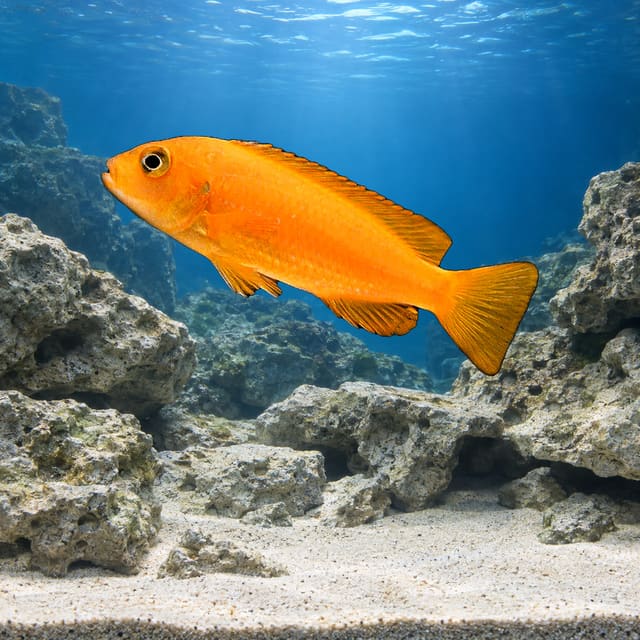
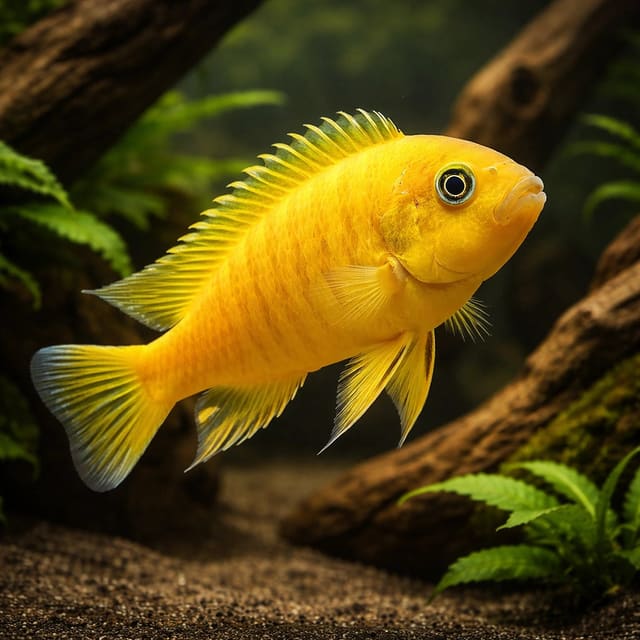
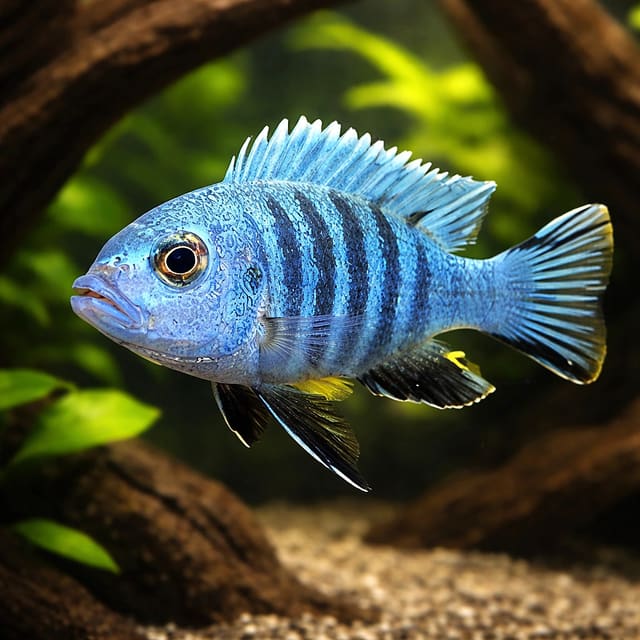
Orange is a useful trade label, not a promise that every fish remains solid orange throughout life. Specialist descriptions report strong sexual and social colour differences. Females are commonly yellow to orange, sometimes with grey-brown markings, while mature males may develop dark blue or black vertical barring with contrasting fin detail. Juveniles and subordinate fish can look different again.
Colour also changes with age, rank, background, stress, lighting and photography. Buy this fish for its identity, behaviour and suitability for your Malawi setup, not for a guaranteed shade copied from one gallery frame. A fish that changes from juvenile orange into barred adult male colour has not become the wrong product.
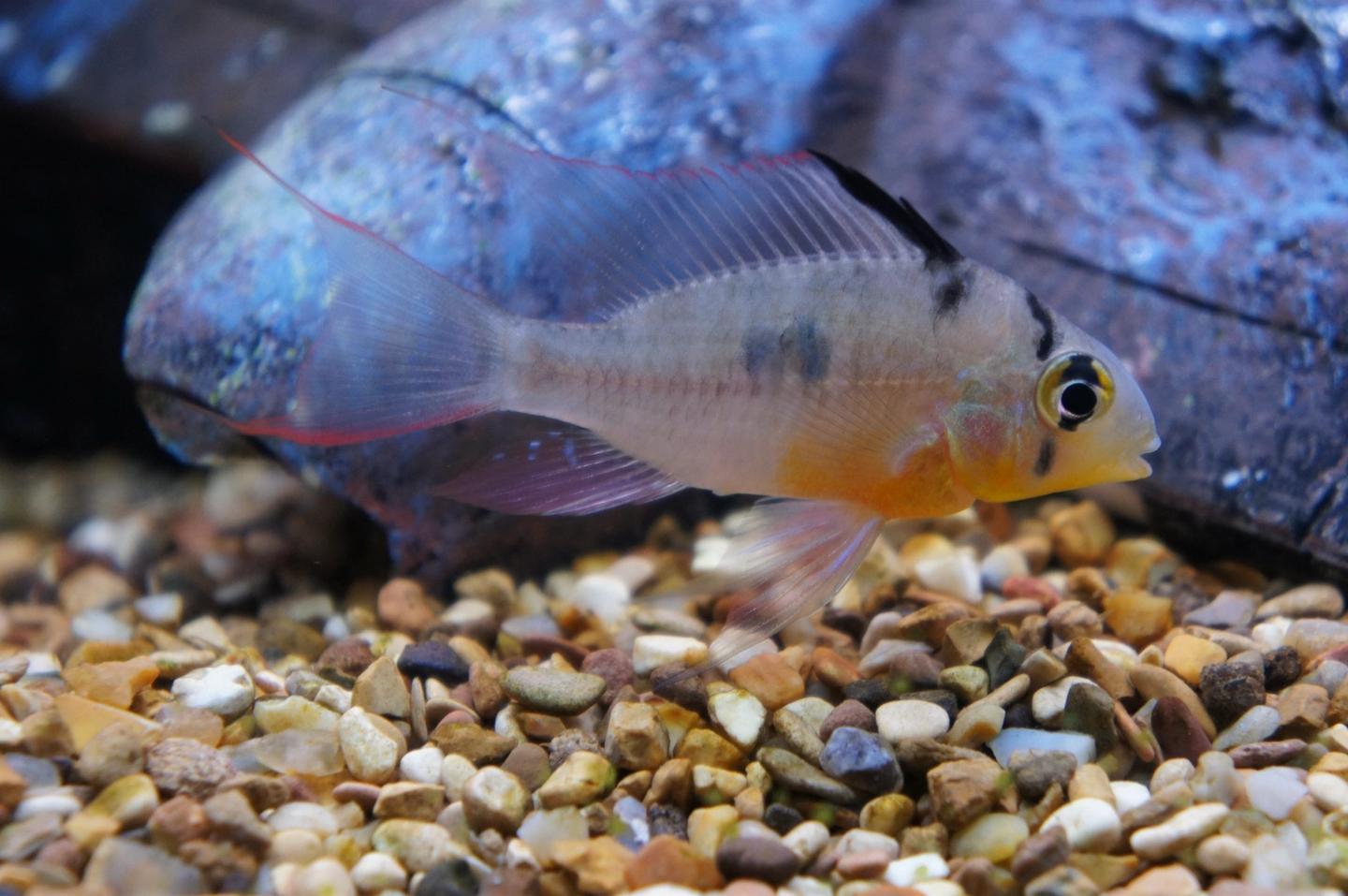
The four gallery images are illustrations, not photographs of the exact fish packed for an order. Their predominantly orange appearance is closer to one possible female or juvenile presentation than to the full adult sex and rank range. The image showing two fish is a composition, not evidence that the listing supplies a pair.
Use the written size selector, unsexed retail statement and care data as the controlling information. Natural fish vary, and no illustration can diagnose sex, locality, genetic purity, adult colour or the individual markings of the animal that will arrive.
The supplier gives a maximum of 14 cm. That is the adult planning figure used throughout this page. It should not be confused with the dispatch grade: a 4-5 cm or 6-7 cm fish still needs an aquarium and social plan built for adulthood. XL is also a sale grade, not a separate species or a guaranteed fully grown specimen.
Growth rate is not promised. It depends on genetics, age, food quality, water quality, temperature, social stress and prior husbandry. Heavy feeding to force rapid growth can damage water quality and digestion. Consistent nutrition and stable conditions are more useful than trying to hit a date-based size target.
For this territorial 14 cm mbuna, use about 400-450 litres with a footprint at least 150 cm long as a cautious long-term starting point. Increase the volume and floor area for multiple males, a larger female group, a dense mixed-mbuna population or tank mates that occupy the same rock zones. Length and usable territory matter as much as the headline litre figure.
Some older species references describe 120 cm or roughly 200 litres. Those figures are valuable historical context, but they leave less margin for modern welfare-led social management, filtration, escape routes and a 14 cm supplier maximum. A temporarily smaller juvenile does not make a small aquarium a permanent solution.
A tall narrow aquarium can contain many litres without creating many territories. Orange Chilumba Cichlids patrol rock faces, passages and the water immediately around them, so horizontal length and depth are especially important. A 150 cm tank lets the keeper divide the view into several zones instead of forcing every fish to confront the dominant individual whenever it moves.
Keep a clear swimming corridor as well as caves. Filling every centimetre with a solid wall of stone can reduce escape options. The goal is a network of broken sight lines, alternative routes and stable grazing surfaces, not a single central fortress that one fish can own.
Build the rock structure on the base of the aquarium or another load-bearing support before adding loose substrate around it. Mbuna dig, and rocks resting only on sand can shift. Use aquarium-safe stone, stable contact points and caves large enough that a fish can enter and leave without becoming trapped. Check that no sharp edge sits where a chased fish is likely to collide with it.
Arrange separate clusters rather than one uninterrupted pile. Offset entrances and create visual barriers from front to back. The cichlid care guide provides broader setup context, while the Orange Chilumba plan should remain focused on hard-water rock habitat and territorial control.
Fine sand or smooth small-grained substrate suits a Malawi layout and allows normal sifting and digging. Avoid sharp gravel that can damage the mouth or belly. Leave accessible stone surfaces where natural biofilm can develop, but do not assume the aquarium will grow enough algae to provide a complete diet.
Bright, appropriate lighting can support visible aufwuchs on rocks, yet water quality and fish comfort come first. Introduce any lighting change gradually. A bare new rock surface has little food value, and a mature algae film can also contain detritus, microorganisms and material that varies from day to day.
| Parameter | Target used for this listing | Reason |
|---|---|---|
| Temperature | 24-26 C | Supplier-backed range |
| pH | 7.5-8.5 | Stable alkaline Malawi conditions |
| General hardness | 10-25 dGH | Supplier-backed hard-water range |
| Ammonia | 0 | Toxic at detectable levels |
| Nitrite | 0 | Toxic at detectable levels |
| Nitrate | Kept low by stocking control and water changes | Trend matters; do not wait for visible stress |
Stability is more important than repeatedly adjusting the aquarium to chase a perfect decimal. Test the source water and tank, understand carbonate hardness, and make changes gradually. The aquarium water chemistry guide explains the relationship between pH, hardness and buffering.
Active mbuna and the stocking strategies sometimes used to manage their aggression can create a substantial waste and oxygen load. Use mature biological filtration with strong mechanical capacity and visible surface movement. Provide circulation that prevents stagnant pockets without pinning fish against the glass. Backup aeration is sensible during hot weather, medication or a power interruption.
Filter turnover labels are not a substitute for observation. Media condition, head height, pipework and maintenance all affect real flow. Watch breathing rate, surface behaviour and waste accumulation, and keep the filter intake protected without allowing it to clog unnoticed.
Add this fish only to a fully cycled aquarium. Zero ammonia and zero nitrite are non-negotiable. A mature filter can still be overwhelmed by a large addition of fish, excess food, a dead animal, medication or aggressive cleaning, so test after changes rather than assuming the cycle can never fail.
Use regular partial water changes based on measured waste and stocking pressure. Match replacement water reasonably for temperature and chemistry, dechlorinate it correctly, and avoid washing all biological media in untreated tap water. Record results so a slow nitrate or pH trend is visible before it becomes a crisis.
Specialist sources describe this form as an aufwuchs-grazing or limnivorous mbuna. Use a complete, reputable Malawi or mbuna staple with substantial plant material as the nutritional base. Spirulina and other suitable algae ingredients can be useful within a balanced formulation, but one ingredient name does not by itself prove that a food is complete.
Small portions of suitable aquatic invertebrate food may be used occasionally for variety where the overall plan remains plant-led. Avoid mammal or poultry meat, rich generic carnivore foods and frequent heavy protein treats. The fish-food category is a starting point; always check the label against the needs described here.
Feed measured portions that the group clears without a cloud of waste settling behind rocks. Several small feeds may suit grazing behaviour better than one very large meal, but the exact schedule must reflect fish age, stock density, food energy and water quality. Do not keep adding food merely because an assertive cichlid still approaches the glass.
Make sure subordinate fish eat. Spread food across the surface or flow path so the dominant individual cannot control every piece. A rounded abdomen after feeding is not a target; persistent swelling, long pale faeces, refusal to eat or hiding requires investigation rather than another change of food.
| Avoid or limit | Why | Better direction |
|---|---|---|
| Mammal and poultry meat | Unsuitable fat and tissue profile | Complete mbuna formulation |
| Frequent rich carnivore meals | Can displace the plant-led plan | Measured aquatic variety only |
| Single-ingredient feeding | May be nutritionally incomplete | Reputable complete staple |
| Large portions left in rockwork | Waste and water-quality decline | Small observed portions |
| Sudden total diet changes | Digestive and acceptance problems | Gradual transition |
Orange Chilumba is territorial and can be belligerent. That does not mean every specimen attacks constantly, nor does it make the species safe by default in a crowded aquarium. Behaviour changes as fish mature, establish rank, colour up, breed or compete for a preferred cave. A setup that seems calm at juvenile size can become unstable later.
Chasing becomes a welfare problem when one fish cannot rest, feed or leave the attacker's view. Torn fins, clamped posture, dark stress colour, rapid breathing, weight loss and continuous hiding are intervention signals. Have a divider, spare mature aquarium or rehoming route available before a serious conflict occurs.
Specialist care commonly uses one mature male with several females to distribute courtship pressure. That is a management model, not something this unsexed retail listing can guarantee. Juveniles may not be reliably sexed, and buying four fish does not promise one male and three females. Multiple males may require substantially more space and careful observation.
Do not buy exactly two and assume they will form a pair. This is a maternal mouthbrooder without a stable pair bond. A male may repeatedly harass a single female, and two males may become incompatible. Build the group only when you can monitor developing sex and remove individuals when necessary.
| Potential situation | Assessment | Planning note |
|---|---|---|
| Robust, differently patterned mbuna | Possible with specialist care | Large tank, broken sight lines, diet match and backup plan |
| Another male Orange Chilumba | High territorial risk | Much more space; never assume tolerance |
| Small peaceful community fish | Unsuitable | Different chemistry, behaviour and competitive ability |
| Slow, delicate or long-finned fish | Unsuitable | Harassment and feeding competition risk |
| Shrimp or small invertebrates | Unsafe | May be harassed or eaten |
| Visually similar Tropheops forms | High caution | Aggression, identity confusion and hybridisation risk |
No compatibility chart overrides individual behaviour. Browse the African cichlids hub for context, then compare adult size, sex, diet, water needs and territory before selecting any companion.
The phrase community fish often refers to species expected to coexist in mixed soft or neutral water with modest territorial pressure. Orange Chilumba needs the opposite planning approach: hard alkaline water, substantial rock territory, a plant-led mbuna diet and active aggression management. Many tetras, rasboras, livebearers and ornamental shrimp are therefore inappropriate companions even when their temperature ranges overlap.
Matching temperature alone is not compatibility. Water chemistry, adult size, swimming speed, feeding style, mouth size, fin shape and ability to withstand social pressure all matter. Keep this fish in a purpose-built Malawi system rather than adding it to an established peaceful community as a colour accent.
Prepare the aquarium before delivery. Confirm water quality, secure the lid, check the heater and create more than one refuge. When adding to an established mbuna group, rearranging selected rocks can disrupt existing territory maps, but it is not a guaranteed cure for aggression. Dim lighting during introduction and observe closely after the fish becomes active.
Quarantine in a separate cycled system is the safest way to protect an established collection, provided the quarantine tank itself meets the fish's chemistry, oxygen and shelter needs. Do not medicate automatically without a diagnosis. Use dedicated nets and equipment where practical.
Follow the current livestock instructions supplied with the order because bag condition, journey length and water chemistry affect the appropriate process. Have the tank ready before opening the package. Avoid prolonged handling, sudden temperature change and repeated chasing with a net. Keep the room calm and the aquarium covered.
It is normal for a newly transported fish to show subdued colour while settling, but severe breathing difficulty, loss of balance or physical damage needs prompt evidence and contact. Read the current delivery information and returns and problem-reporting policy before dispatch so the reporting window and required photographs are understood.
| Check | Healthy direction | Concern |
|---|---|---|
| Breathing | Steady, not laboured | Persistent gasping or one-sided gill use |
| Feeding | Alert and able to obtain food | Repeated refusal or inability to compete |
| Body | Stable weight and normal profile | Swelling, wasting or lesions |
| Fins | Open and intact | Clamping, progressive tears or rot |
| Social position | Can leave cover and rest | Continuously trapped or chased |
| Water | Zero ammonia/nitrite; stable trend | Any ammonia/nitrite or sudden pH change |
Mbuna digestive problems are often discussed under the broad hobby term Malawi bloat, but a swollen fish can have several causes. Prevention starts with correct plant-led nutrition, modest portions, good water, low chronic stress and appropriate stocking. It does not come from one miracle ingredient.
If a fish stops eating, isolates, swells or produces abnormal faeces, test water immediately and seek diagnosis from a fish-experienced veterinary professional or qualified aquatic specialist. Randomly mixing medicines can delay correct treatment and harm biological filtration. Separate an affected fish when that can be done without causing further stress.
| Problem | Likely pressure | First checks |
|---|---|---|
| One fish owns the whole tank | Too little usable territory | Footprint, sight lines, rock distribution |
| One female is chased constantly | Unbalanced mature social group | Confirmed sex, group structure, removal plan |
| Conflict rose after maturity | Adult rank and breeding behaviour | Space, male count, similar colours |
| Subordinate fish lose weight | Feeding control or chronic stress | Food distribution, refuge access, separation |
| Fights continue after rearranging | Fundamental incompatibility | Use divider, spare tank or rehome |
This fish is reported as a maternal mouthbrooder. After spawning, the female carries developing eggs and fry in her mouth. The male does not form a stable pair bond or share brood care. Courtship can increase pressure on females, which is another reason social structure and refuge matter.
Breeding is not guaranteed, and it should not be attempted without a plan for female welfare, fry space and accurate identity. Avoid mixing closely related or visually similar forms where offspring could be hybrids or impossible to identify. Never sell uncertain young under a precise locality or generation claim.
Specialist observations describe mature males as potentially dark blue to black-barred, while females are often yellow or orange and may show patches or bars. Rank can suppress a male's display, and a female can vary with condition. Visual sexing from a single photograph is therefore uncertain, especially at the smaller sale grades.
The safest order assumption is one unsexed fish whose adult colour is not guaranteed. This honesty protects both customer expectation and the animal: a keeper should not build a social plan around a sex inferred from juvenile colour.
| Feature | Orange Chilumba | Why it matters |
|---|---|---|
| Ecological style | Rock-dwelling mbuna grazer | Needs rock territory and plant-led feeding |
| Temperament | Territorial/belligerent | Not selected like a peaceful community fish |
| Colour expectation | Sex, maturity and rank dependent | Orange is not a universal adult promise |
| Retail sex | Unsexed | Quantity does not establish a harem |
| Breeding | Maternal mouthbrooder | No pair bond or shared brood care |
The closest site category is the Pseudotropheus and related mbuna collection. The category label reflects established trade navigation; the product text explains the more useful Tropheops placement.
Orange Chilumba suits an aquarist who already understands cycling, hard-water chemistry and cichlid social management, or a careful learner willing to build a dedicated system before purchase. The keeper needs enough room for adulthood, confidence reading aggression and a practical way to separate an incompatible fish.
It is a poor choice for a first small aquarium, a peaceful mixed community, an uncycled setup or a buyer choosing only by colour. It is also unsuitable where no alternative housing exists. The most rewarding display comes from planning around natural mbuna behaviour rather than trying to make the fish behave like a different category of tropical fish.
| Question | Required answer before purchase |
|---|---|
| Is the aquarium mature? | Yes; ammonia and nitrite are zero |
| Is the adult footprint sufficient? | About 150 cm+ and roughly 400-450 L or larger |
| Are water conditions suitable? | Stable 24-26 C, pH 7.5-8.5, 10-25 dGH |
| Is the food plan plant-led? | Yes; complete mbuna staple, controlled portions |
| Are companions appropriate? | Adult size, diet, chemistry, colour and aggression checked |
| Can an injured fish be separated? | Yes; divider, mature spare tank or rehoming route ready |
| Is the order understood? | One unsexed fish in the selected grade |
The supplier is the source for the retail size grades, 14 cm maximum and 24-26 C, pH 7.5-8.5 and 10-25 dGH ranges. Specialist profiles support the provisional Tropheops identity, sexual colour difference, territorial social behaviour, plant-led grazing diet and maternal mouthbrooding. The larger aquarium recommendation is a cautious retail judgement built from adult size and behavioural risk.
We deliberately do not claim a precise lifespan, exact growth rate, wild locality, generation, sex, permanent orange colour, guaranteed compatible group or easy breeding. These details are either not supplied for this stock line or vary too much between individuals and conditions.
Set the water-change interval from measured nitrate, stocking density, feeding and the aquarium's real filtration performance. A regular moderate change is generally less disruptive than waiting for a large correction. Gravel-vacuum accessible waste pockets while leaving useful established biofilm on grazing rocks. Clean different filter sections at different times so biological capacity is not stripped all at once.
Prepare replacement water with an appropriate conditioner and check its temperature and chemistry before it enters the aquarium. Pouring very soft, cold or untreated water rapidly into a hard-water Malawi system can create an avoidable shock even when the percentage changed seems routine. If the source-water chemistry varies seasonally, keep a log and adjust the preparation method gradually.
Plants are optional and should not replace rock territory. This fish may dig around roots or graze tender leaves, and the hard alkaline water narrows the useful plant choice. Robust species fixed to wood or rock can sometimes work, but every plant must be checked for its own chemistry and lighting needs. Never use lead plant weights or sharp fixings where active fish can reach them.
A planted appearance does not make the aquarium a peaceful community layout. Keep caves, sight breaks, circulation and cleaning access as the primary design requirements. The aquarium plants collection can provide visual ideas, but compatibility with this specific hard-water, high-activity system must be assessed item by item.
Use a close-fitting lid because a chased or startled cichlid can jump. Cover cable and pipe gaps without blocking ventilation, and check them again whenever equipment is moved. Protect glass heaters from impact or use a guarded external solution suitable for the system. Position intakes so a weakened fish cannot be held against them and make sure every rock remains stable during maintenance.
Electrical equipment around water should use drip loops and suitable residual-current protection. Do not overload extensions or place connections where splashes collect. A thermometer separate from the heater controller helps reveal a fault, while a simple battery air pump can preserve oxygen during a short outage.
Photograph each fish's flank after it has settled, then keep dated notes on size grade, colour development, appetite, territory and any injury. Records make gradual rank changes easier to see and reduce the temptation to identify sex from one dramatic colour moment. They are also useful when separating similar fish or asking a specialist for help.
Log water tests, maintenance, food changes and additions to the group. When aggression rises, the timeline can reveal whether it followed maturity, a new tank mate, a rearranged cave or a chemistry shift. Evidence-led adjustments are more reliable than repeatedly changing several parts of the aquarium at once.
Three kinds of information are kept distinct on this page. Supplier facts define what is sold and provide the 14 cm maximum and core water range. Specialist evidence explains the provisional name, natural feeding style, colour difference, territoriality and mouthbrooding. Retail judgement turns those facts into a cautious 400-450 litre, 150 cm long-term recommendation with explicit backup housing.
This separation matters because a supplier label is not a scientific revision, and a historical species profile is not a guarantee about one current stock line. Where evidence is absent, the listing says so.
One unit is one unsexed fish in the selected 4-5 cm, 6-7 cm or XL supplier grade. It is not a pair or group.
The supplier labels the grade XL but has not supplied a reliable centimetre range. The listing keeps that exact label rather than inventing a measurement.
No. These fish are sold unsexed. Juvenile colour and size are not used as dependable sex guarantees.
Not necessarily. Females are commonly yellow/orange, while mature males may become dark blue or black-barred. Age, rank and condition also affect colour.
No. Tropheops sp. 'Chilumba' is a provisional aquarium identity used for a recognised Malawi form.
That is an older or legacy trade placement. Supplier and historic records can use Pseudotropheus/Tropheops wording; this page uses the more useful modern Tropheops placement.
No locality is promised for this stock line. The supplier does not provide collection-site or generation documentation.
The supplier gives a maximum of 14 cm. Individual final size and growth rate vary.
Use about 400-450 litres with at least a 150 cm footprint as a cautious long-term starting point, and scale upward for a group or complex mixed-mbuna community.
The supplier range is 24-26 C, pH 7.5-8.5 and 10-25 dGH. Keep chemistry stable with zero ammonia and nitrite.
Use a complete plant-led Malawi or mbuna staple and support natural grazing. Suitable aquatic invertebrate food can be occasional measured variety, not the dietary base.
No. It is a territorial, potentially belligerent mbuna that needs space, broken sight lines and active social management.
No. Small peaceful community fish and shrimp are poor matches for its chemistry, size, feeding competition and territorial behaviour.
No. Two unsexed fish are not a proven pair. The species is a maternal mouthbrooder and does not form a stable pair bond.
No. Breeding depends on mature sex, social structure, condition and environment. Female welfare and a plan for fry come first.
No. All four preserved images are illustrations. The selected size grade and unsexed retail statement control what is supplied.
Choose Orange Chilumba only for a mature hard-water Malawi aquarium with enough adult territory, a plant-led diet and a real separation plan. Expect one unsexed fish in the chosen 4-5 cm, 6-7 cm or XL grade, growing toward the supplier's 14 cm maximum. Expect colour to develop with sex and rank rather than remaining identical to an illustration.
With stable 24-26 C water, pH 7.5-8.5, 10-25 dGH, strong filtration, secure rockwork and careful social management, this provisional Tropheops form can display the active grazing and territorial behaviour that makes specialist mbuna aquariums compelling.
Max adult size is the length this species reaches at full maturity (from scientific sources). The livestock you receive will be younger and smaller — pick a size variant on the buy box for the actual shipping size. Product-photo provenance and any image-specific limitations are stated on the listing.
Always research specific species before adding them to your tank. Consider:
No reviews for this item yet. Bought one? Honest reviews only, good or bad.
What customers say about ordering from us
I have a small group of long finned mountain minnows. So was delighted to be able to order ten of this variety to increase the genetics in my tank . The ones I recieved are healthy but it’s to early to give a verdict on wether they are of a long finned type since they are small currently.
Gordon Walker · 23 Sept 2026
100% success travel and "installation". Pleased with quality of purchase. The Siamese fighter a bit "shy" so have not yet seen him at his best yet but looking good. Happy customer. GG
George E Garratt · 21 Sept 2026
Reviews of our shop, collected by Judge.me, an independent third-party review collector. Newest first.
23–27°C · pH 7.4–8.4 · 150L

23–27°C · pH 8–8.6

24–27°C · pH 7.8–8.6 · 250L
24–28°C · pH 7.6–8.8
24–26°C · pH 7.5–8.5 · 300L
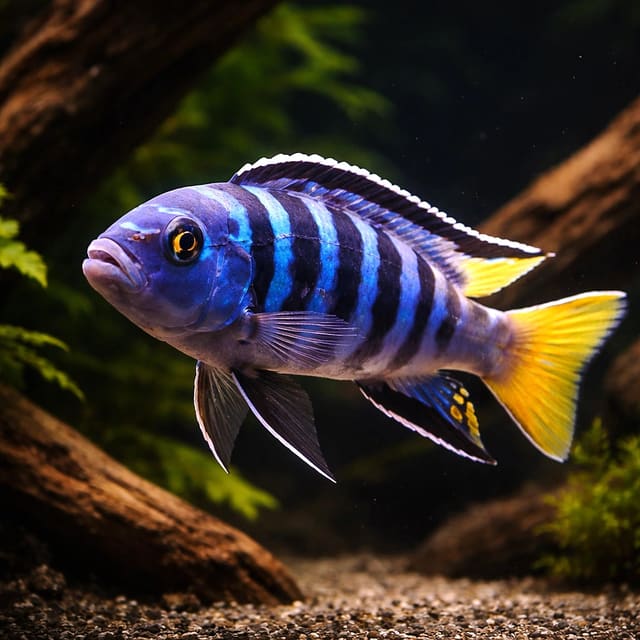
24–28°C · pH 7.6–8.8 · 137L
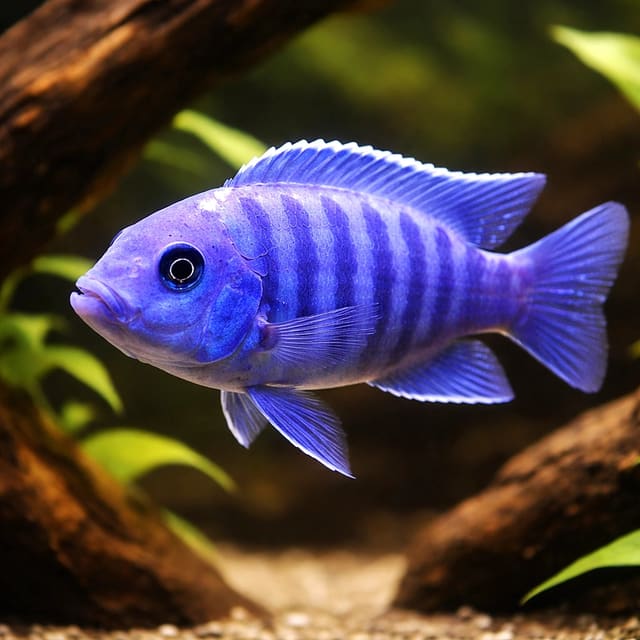
22–28°C · pH 7.5–8.5
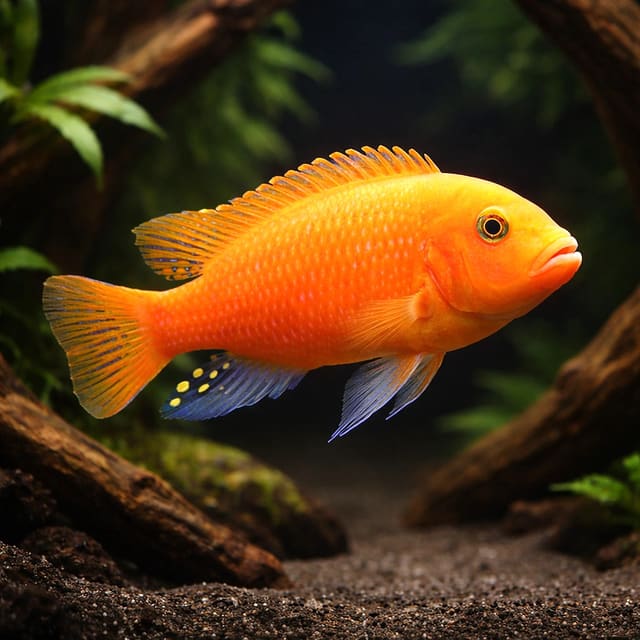
24–28°C · pH 7.5–8.5 · 200L
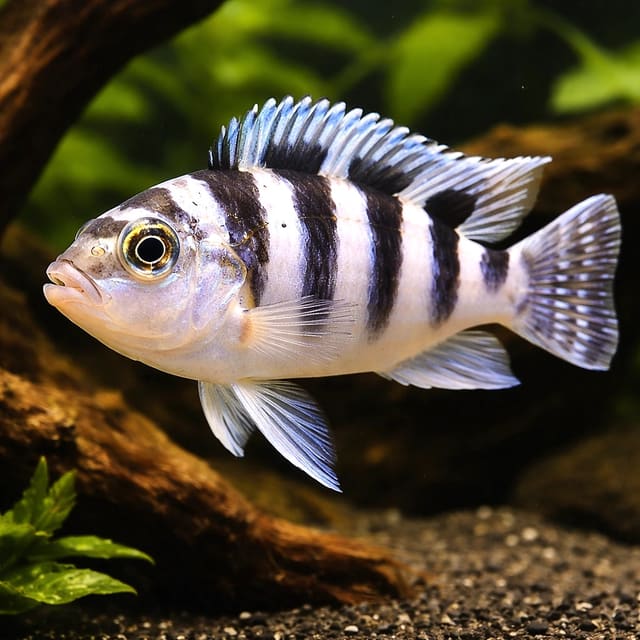
24–28°C · pH 7.6–8.8 · 205L
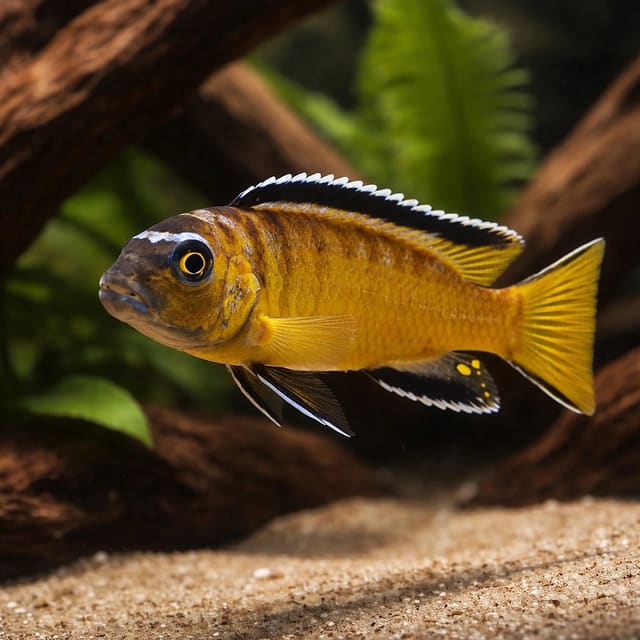
23–26°C · pH 7.5–8.5 · 200L
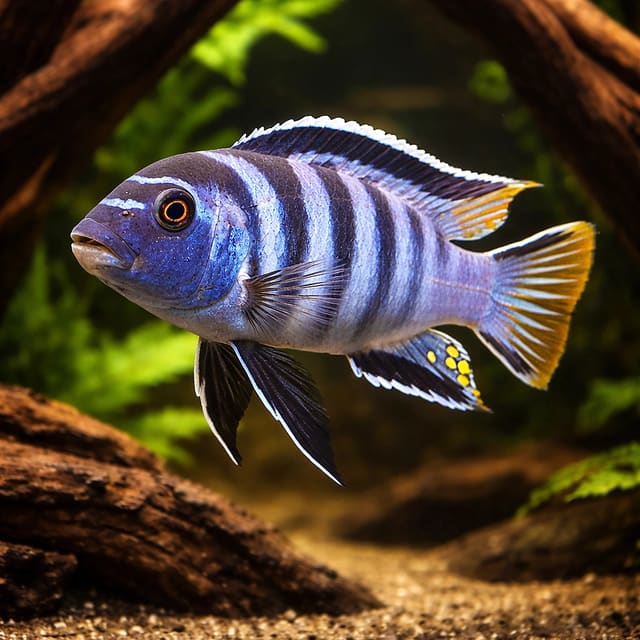
24–27°C · pH 8–8.6 · 137L
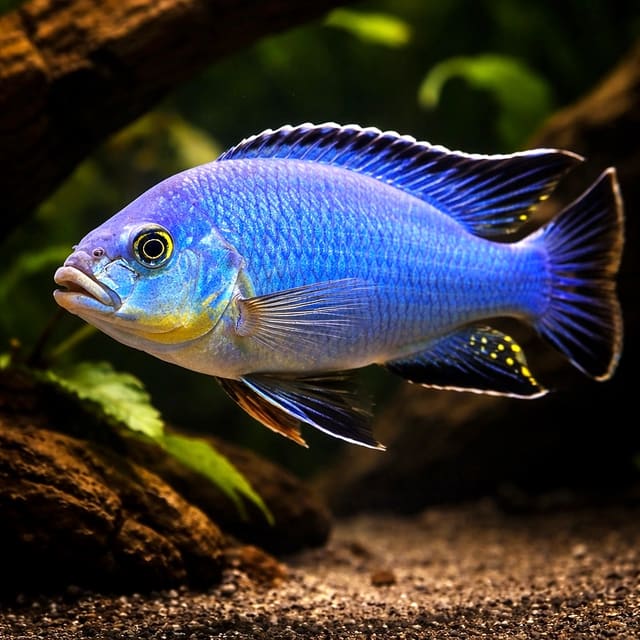
24–26°C · pH 8–8.3
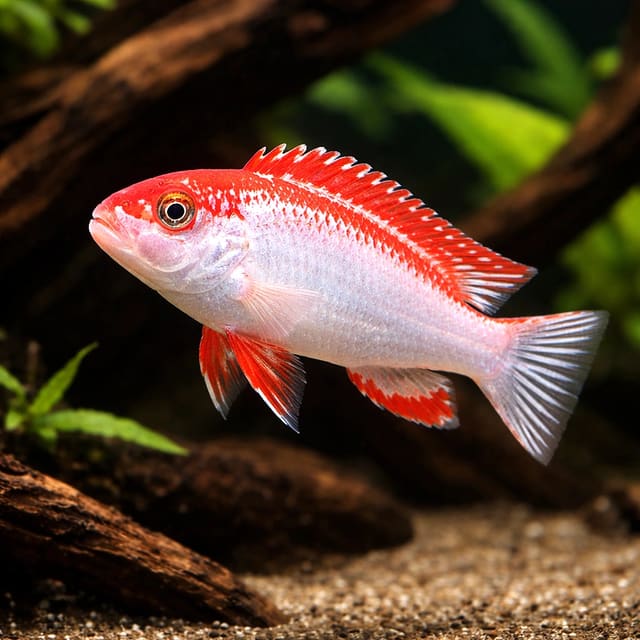
23–27°C · pH 8–8.6
23–27°C · pH 8–8.6

24–27°C · pH 8–8.4 · 154L
23–27°C · pH 8–8.6 · 205L

22–28°C · pH 7–8 · 41L

21–25°C · pH 5–7
24–29°C

24–27°C · pH 6.5–6.5

22–27°C · pH 6–8 · 72L

23–27°C · pH 5.5–7 · 60L

22–27°C · pH 6–8

22–26°C · pH 6–7.8 · 75L