Moderate
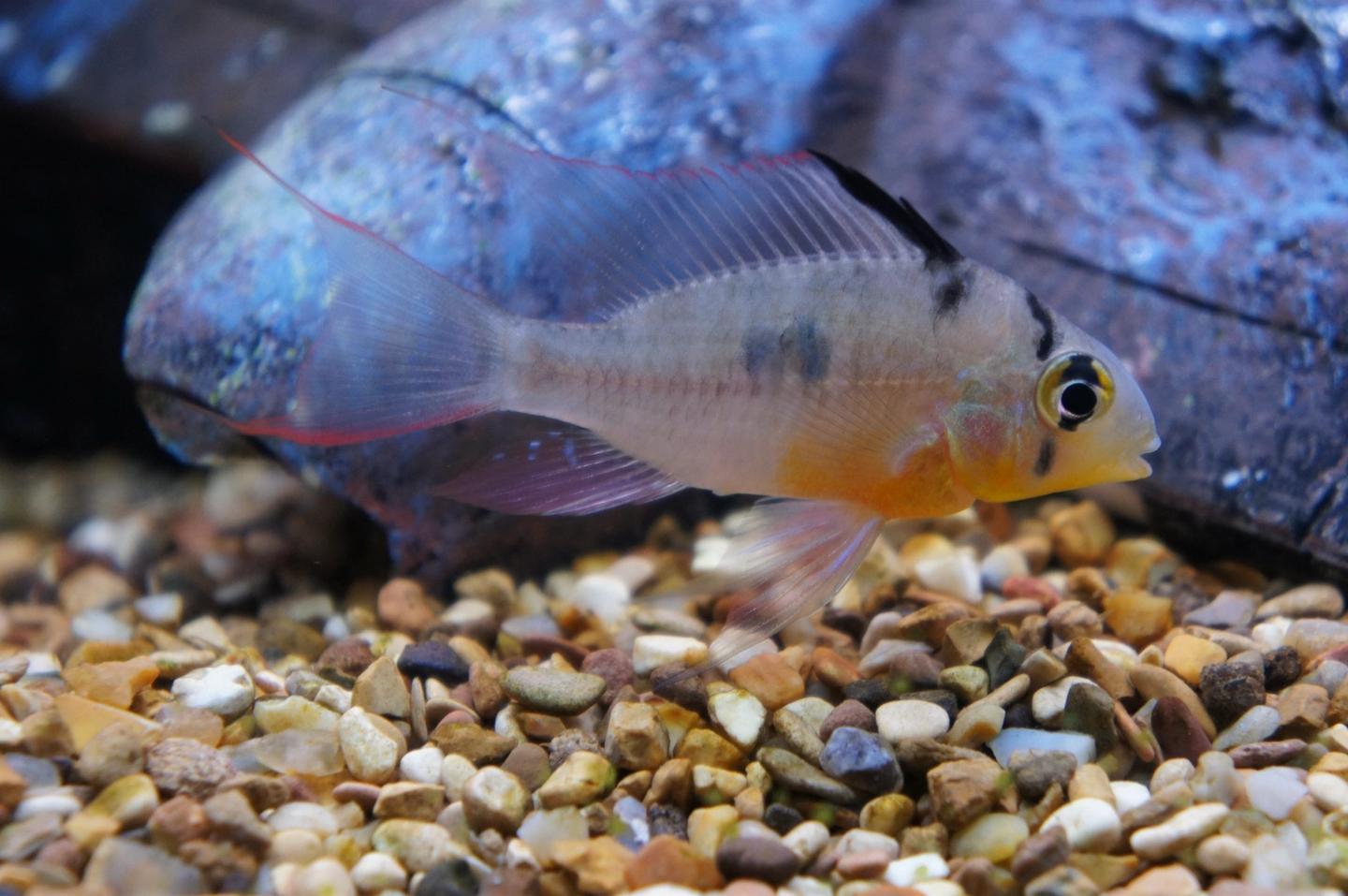
Acei Cichlid (Pseudotropheus sp. “acei”)
24–26°C · pH 7.5–8.5 · 300L
£7.99

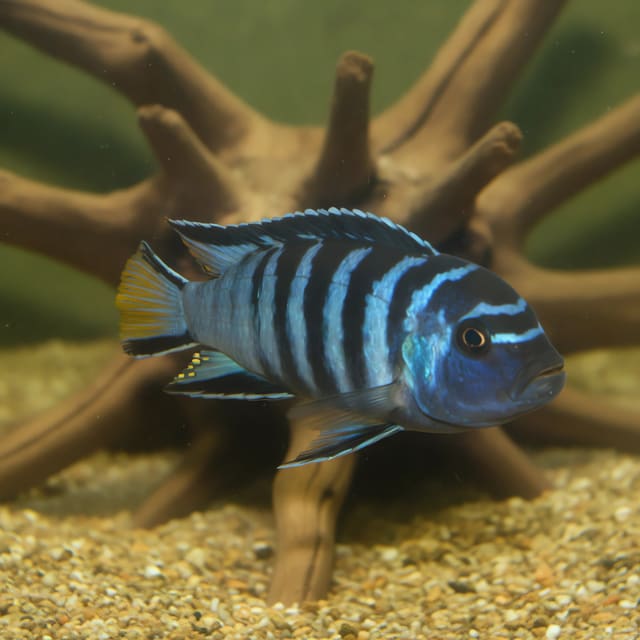
The Yellow-Tail Acei Cichlid - Luwala (Pseudotropheus sp. 'acei') is a Pseudotropheus mbuna from Lake Malawi in Eastern Africa. Plan it within a Malawi community of at least 200 litres; OATA says Malawi cichlids can be kept in groups of at least 15 at 23–27°C and pH 8.0–8.6. Sold individually in sizes from 2 - 3 cm to 9 - 13 cm.
Pseudotropheus sp. 'acei'
The Yellow-Tail Acei Cichlid - Luwala (Pseudotropheus sp. 'acei') is a Pseudotropheus mbuna from Lake Malawi in Eastern Africa. Plan it within a Malawi community of at least 200 litres; OATA says Malawi cichlids can be kept in groups of at least 15 at 23–27°C and pH 8.0–8.6. Sold individually in sizes from 2 - 3 cm to 9 - 13 cm.
Cichlids are a family of roughly 1,800 accepted species, not one care type. Before buying, identify the exact species and source, then compare adult measurement, usable tank dimensions, social system, territory, tested water, diet and an exit plan. No family-wide minimum tank, water range or tank-mate list is safe.
Maintain these water conditions for optimal health and vibrant colors
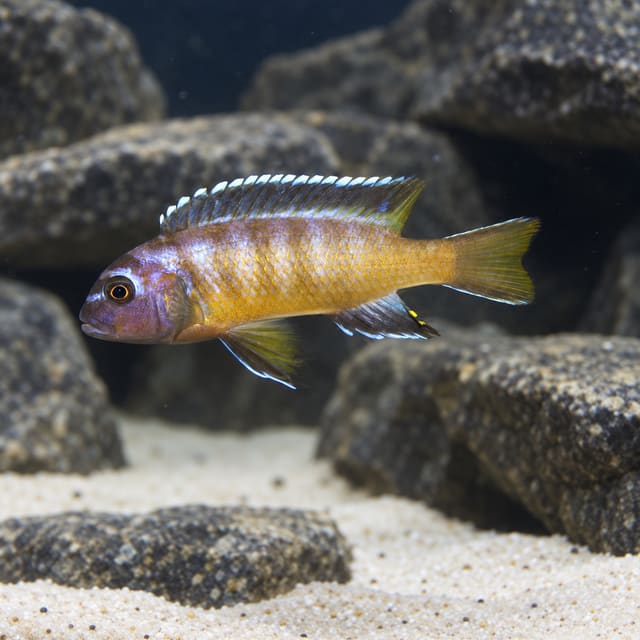
Yellow-Tail Acei Cichlid - Luwala is labelled Pseudotropheus sp. 'acei'. The World Register of Marine Species recognises Pseudotropheus as a genus in the cichlid family Cichlidae. The exact species has not been identified, so the care advice here follows the genus Pseudotropheus and its care group.
The abbreviation sp. therefore matters: this is a genus-level identity rather than a formally identified species. Luwala is the form label attached to the offer. Use that label to distinguish the fish when planning your aquarium, but do not treat it as a guarantee of wild collection history, generation or locality lineage.
A natural-history summary of the genus places these mbuna cichlids in Lake Malawi in Eastern Africa. That makes a managed African Malawi cichlid aquarium the appropriate starting point, rather than a general tropical community assembled around colour alone. You can compare the wider African cichlid collection while screening every intended resident for matching water, feeding and aggression needs.
| Selector label | What to plan for |
|---|---|
| 2 - 3 cm | One animal in this dispatch-size range |
| 4 - 5 cm | One animal in this dispatch-size range |
| 6 - 7 cm | One animal in this dispatch-size range |
| 9 - 13 cm | One animal in this dispatch-size range |
Use the live size selector to choose the option, then set the purchase quantity to the number of individual animals required. One purchase quantity supplies one animal of the selected option; it is not a pair or group bundle. The size you select is the size supplied, not the adult size.
Sex is guaranteed only when the selected option explicitly states male or female. This Yellow-Tail Acei Cichlid listing has no sex-guaranteed option.
OATA's African Malawi cichlid guidance gives 23–27°C, pH 8.0–8.6, general hardness of 12–18°dH and carbonate hardness of 10–15°dKH for the group; this is broad guidance rather than a species-specific optimum. It recommends an aquarium of at least 200 litres for a reasonable-sized community, an oversized filter and aggressive aeration.
| Planning decision | Starting point |
|---|---|
| Community aquarium | At least 200 litres |
| Temperature | 23–27°C |
| pH | 8.0–8.6 |
| General hardness | 12–18°dH |
| Carbonate hardness | 10–15°dKH |
| Ammonia and nitrite | Zero mg per litre |
Treat 200 litres as a starting minimum for a sensibly planned community, not a promise that every combination will fit. The complete adult population, aggression pattern, waste load and swimming space determine whether a larger aquarium is needed. A single small dispatch animal does not make a small or immature aquarium suitable.
Adult-size planning must remain conservative because this offer identifies a genus rather than a species. OATA says most Malawi cichlids grow to around 10 cm, while some may grow up to 25 cm. Those are planning references for the wider group, not a predicted final length for this particular animal. Leave capacity for growth and reassess space as the fish develop.
Malawi cichlids may be aggressive and small groups often fight. OATA says they can be kept in groups of at least 15, with slight crowding sometimes used to spread aggression. That number concerns the planned Malawi community; it does not mean purchasing 15 Luwala Acei without first checking aquarium capacity, filtration and the rest of the stock.
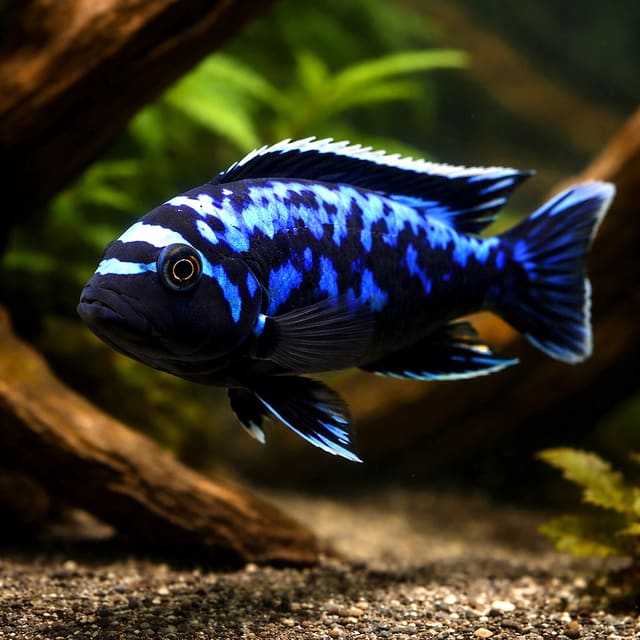
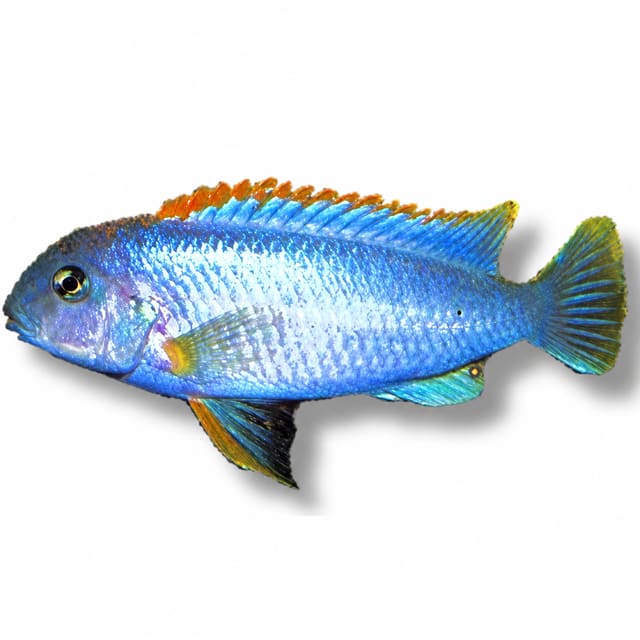
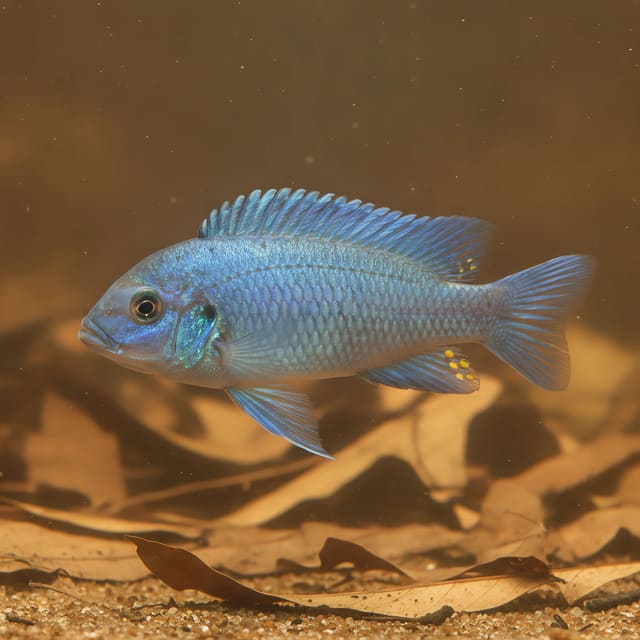
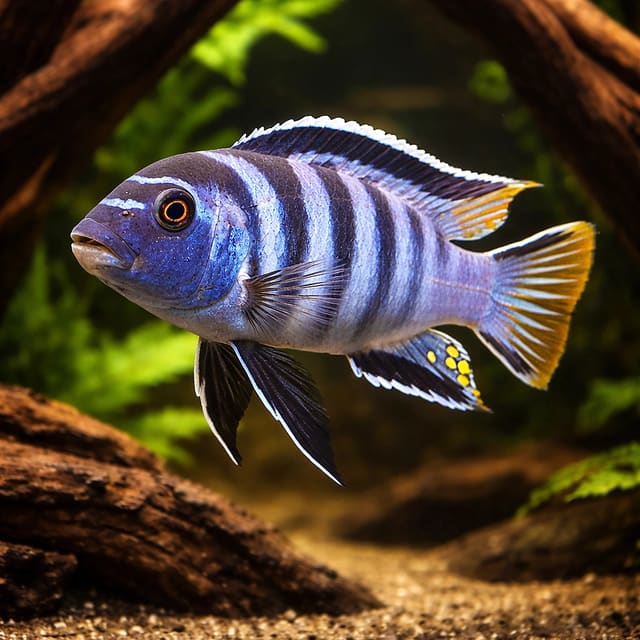
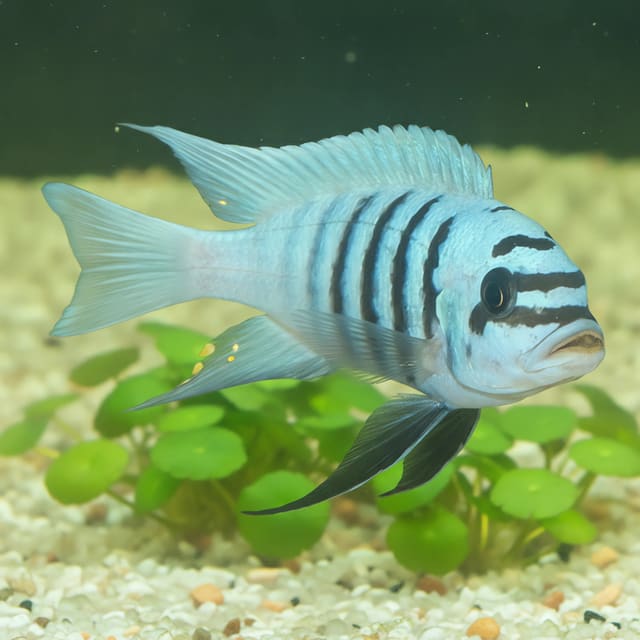
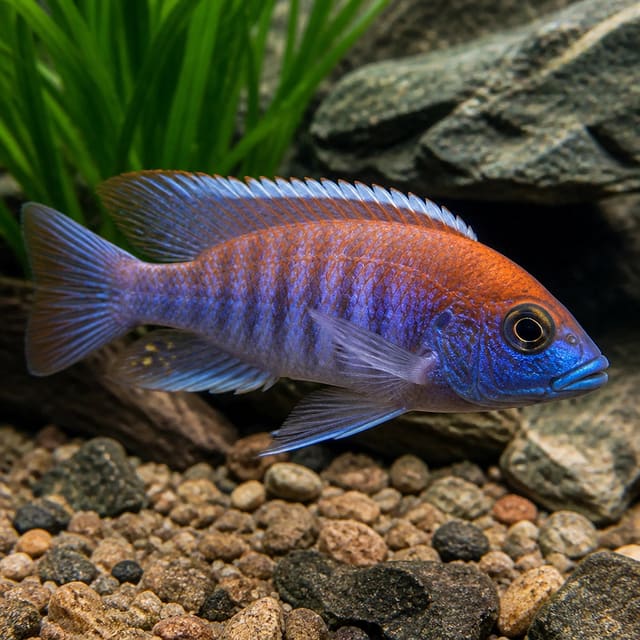
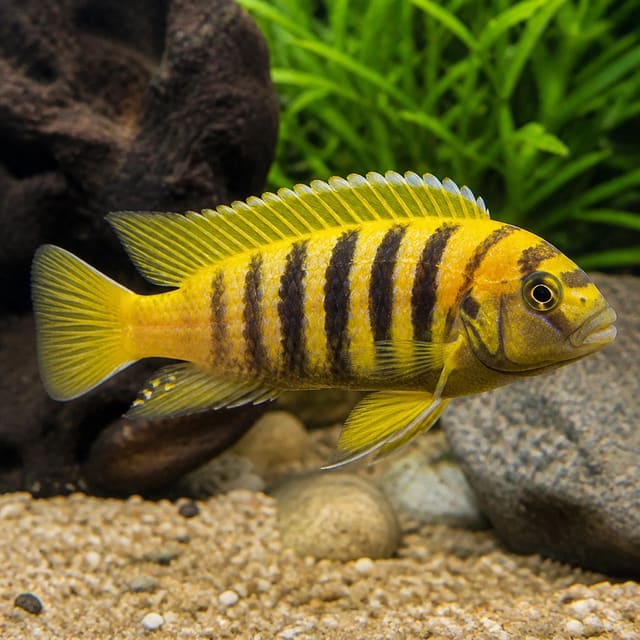
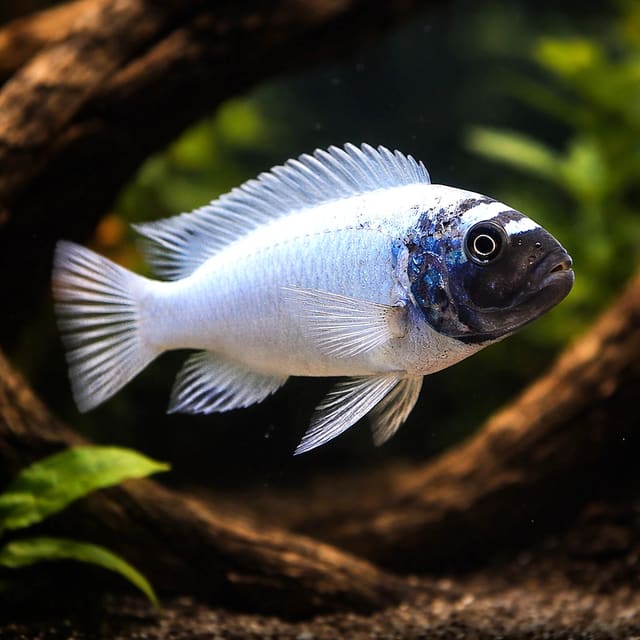
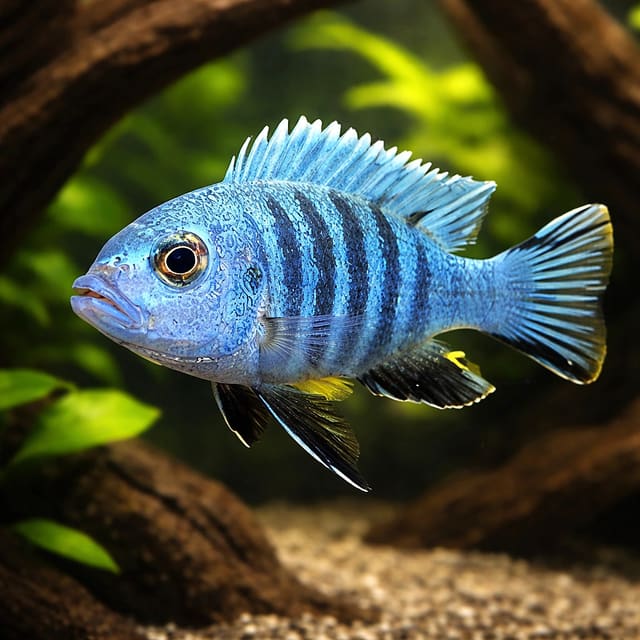
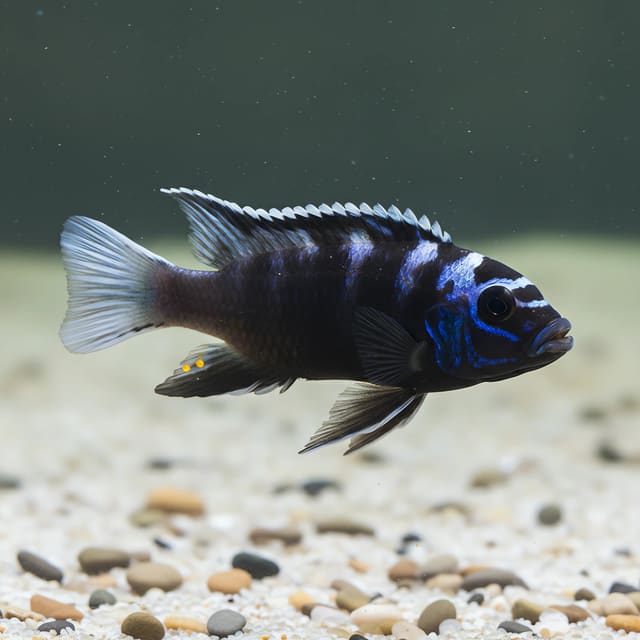
Some gallery images have been digitally enhanced to improve image quality. They show the listed type of animal rather than guaranteeing the exact markings of the individual supplied, so natural colour and pattern can vary.
| Suits | Not suited to |
|---|---|
| Stable aquarium water maintained at 23–27°C and pH 8.0–8.6 | Water outside 23–27°C and pH 8.0–8.6 |
| A carefully planned Malawi cichlid community where space, filtration and aggression are managed | Fish outside a planned Lake Malawi cichlid community, except screened Synodontis species |
Measure the aquarium and replacement water before changing its chemistry. Aim for 23–27°C, pH 8.0–8.6, 12–18°dH general hardness and 10–15°dKH carbonate hardness. Stability within those ranges is the practical goal; avoid making repeated abrupt adjustments to chase one exact reading.
Use the same testing method consistently so trends are easy to recognise. Our water chemistry guide explains what the main measurements mean, while the water matcher helps compare measured aquarium values with the intended range.
| Result | Action |
|---|---|
| Temperature below 23°C | Check the heater and thermometer before adjusting gradually |
| Temperature above 27°C | Check heating, room temperature, aeration and surface movement |
| pH outside 8.0–8.6 | Compare aquarium and replacement water before changing anything |
| GH below 12°dH | Use a repeatable hard-water preparation plan |
| KH below 10°dKH | Review buffering and watch the pH trend |
| Ammonia or nitrite detected | Treat the result as a water-quality problem requiring prompt action |
Ammonia and nitrite must remain at zero mg per litre. Nitrate should not exceed 20 mg per litre above the normal tap-water level. Compare nitrate with the water used for changes rather than reading the aquarium result in isolation.
Prepare replacement water with tap-water conditioner to remove chlorine or chloramine before it enters the aquarium. Keep its temperature and chemistry close to the aquarium values. Consistency matters particularly in a managed Malawi community because fish, filter bacteria and the buffering system all experience each water change.
Hard, alkaline water is only one part of the decision. A reading inside range cannot compensate for detectable ammonia, inadequate oxygen, an immature filter or severe aggression. Interpret the water panel alongside breathing, feeding, swimming and filter flow.
A well-established biological filter is essential. The RSPCA explains that beneficial filter bacteria convert toxic ammonia into nitrite and then into the safer nitrate. Ammonia and nitrite are both toxic, so clear-looking water is not enough to show that the aquarium is ready.
Prepare and mature the aquarium before livestock arrives. Our first tropical aquarium guide gives the setup sequence for establishing the tank and filter. Test the finished system and confirm zero ammonia and zero nitrite before introducing the planned stock.
Adding fish increases both feeding and waste. OATA warns that stocking too quickly can cause new tank syndrome when too few nitrifying bacteria are present to process the load. The resulting ammonia and nitrite can make fish ill or cause death. Plan each addition around measured filter capacity rather than the visual amount of empty space.
An oversized filter is not permission to ignore maintenance or overfill the aquarium. It provides more biological and mechanical capacity, but oxygen, swimming space and aggression still set limits. Keep the inlet, outlet and aeration working efficiently, especially after feeding or a stocking change.
If filter flow falls, inspect it for blockages. Preserve the established bacteria when cleaning media: rinse suitable media lightly in aquarium water removed during a partial water change rather than under the tap. Chlorine or chloramine may damage the bacterial population on which the fish depend.
Mbuna are the rock-dwelling branch of Malawi cichlids. Give the community room to move while using aquarium décor to divide attention and territory. Keep the arrangement practical for observation, feeding and waste removal rather than filling every open area.
OATA recommends coral sand or a similar substrate that helps buffer the water. Expect Malawi cichlids to dig and rearrange the substrate. Check the aquarium after digging so equipment remains clear and the layout continues to work as intended.
| Need | Planning response |
|---|---|
| Swimming | Retain usable open water for active movement |
| Territory | Use décor to break continuous lines of sight |
| Water quality | Keep flow paths and filter access clear |
| Maintenance | Leave areas where settled waste can be removed |
Do not judge space from the dispatch size alone. The 2 - 3 cm option still needs a permanent plan for growth and community life. The 9 - 13 cm option places a larger immediate demand on swimming space, filtration and social introductions. In both cases, plan from the complete adult community rather than treating the selected size as a final measurement.
Malawi cichlids will often dig and rearrange the substrate, which will uproot any plants present. Check whether substrate movement creates inaccessible waste pockets. The fish's water, oxygen and social needs take priority over maintaining a particular planted appearance.
Rearranging décor can help when new Malawi cichlids are introduced because established fish must find territories again. Use that as one part of an introduction plan, not as a substitute for enough space, compatible stock or the ability to separate a fish experiencing sustained attack.
OATA describes Malawi cichlids as aggressive fish that should be mixed with caution. It also notes that small groups often fight and that groups of at least 15 may be used, with slight crowding helping to spread aggression. Apply that guidance to the whole Malawi community, not automatically to one form or one purchase.
Start with the aquarium's usable volume, filter capacity and intended adult population. List every resident, its expected place in the community and its feeding needs. Do not calculate capacity by counting how many small dispatch animals physically fit on the first day.
OATA recommends adding the more peaceful species first and more aggressive species later. This genus-level identity does not establish a precise aggression ranking for Luwala Acei, so assess its place alongside the exact residents already chosen. Relative labels such as “peaceful for a cichlid” are not enough for a stocking decision.
Where adult sexes can be distinguished, OATA recommends keeping more females than males of each species where possible to reduce repeated male attention towards one female. This offer carries no sex-guaranteed option, so do not build a precise male-to-female calculation around the animals selected here.
A larger group raises filtration and oxygen demands even when it helps distribute social pressure. If your planned combination makes those demands difficult to reconcile, contact us once you have the aquarium dimensions, measured water values and complete stock list so the community can be assessed as a whole.
Diet varies across Malawi cichlids. OATA identifies smaller mbuna as more herbivorous and recommends specialised Malawi cichlid foods with a high algae content together with fresh vegetables. Use that as the feeding basis for this unidentified Pseudotropheus, rather than copying the more animal-rich diet described for larger predatory utaka.
Feed only what the fish can consume within a few minutes, twice a day. Begin with a small measured portion, watch the entire group eat and stop adding food when active feeding slows. Remove food that remains uneaten instead of allowing it to break down in the aquarium.
| What you see | What to do |
|---|---|
| Food remains after a few minutes | Remove it and reduce the next portion |
| One fish controls the feeding point | Distribute small portions across more than one area |
| A fish approaches but does not eat | Check social pressure, breathing and water quality |
| Waste rises after feeding | Review portion size, filter flow and maintenance |
| Fish finish immediately | Observe body condition before increasing the ration |
Fresh vegetables can provide the plant material described in the Malawi guidance, but they should be managed like any other food. Offer an amount the community can consume and remove remnants before they decay. A food being vegetable-based does not make unlimited feeding safe.
Do not accelerate growth by extending each meal beyond a few minutes. Extra food becomes extra waste, and a larger ration does not resolve social exclusion. Spread the correct total ration so subordinate fish receive access while ammonia, nitrite and nitrate remain controlled.
Observe appetite alongside body condition. Reduced intake or a sudden lack of interest in food is a warning sign, especially when paired with abnormal breathing, hiding, colour change or altered swimming. Check the water and social situation before changing foods repeatedly.
Test the aquarium before the delivery day. Ammonia and nitrite must both read zero, temperature should sit within 23–27°C, and the filter and aeration must be running normally. Arrange for someone to receive the parcel because live fish must not be left unattended.
Follow the current delivery and Live Arrival Guarantee policy. Start filming before the sealed parcel is opened, keep the outer box visible and continue in one take through opening and showing the fish inside the sealed bag. Then float the sealed bag for 20–30 minutes before releasing the fish, acclimatise slowly and do not pour the bag water into the aquarium. Prepare the lights, access and aquarium beforehand so the process is calm and deliberate.
OATA recommends adding Malawi cichlids in groups so one individual does not receive all the attention while settling. It also warns against increasing the biological load too quickly. Reconcile those two needs before purchase: prepare adequate mature filter capacity for the intended addition and do not use an unplanned series of single newcomers to build a large community.
After release, observe swimming balance, breathing and social pressure. Short interactions may occur while territories change, but repeated pursuit that prevents normal swimming or feeding needs action. Do not add a large meal immediately as a distraction; use the established twice-daily feeding routine once the fish is settled enough to feed.
During the first week, compare the newcomer with the rest of the group several times a day. Check whether it reaches food, uses the aquarium normally and maintains steady breathing. Repeat ammonia and nitrite tests after the addition because the filter must adjust to the increased waste.
Test the aquarium at least once every week. Record ammonia, nitrite, nitrate, pH and the hard-water measurements so a slow change becomes visible before it turns into a crisis. Add extra tests after new fish, heavier feeding, reduced filter flow or unusual behaviour.
OATA strongly recommends, at least once every week, a partial water change of 25%. Treat that as the baseline routine. If nitrate approaches its limit or waste accumulates more quickly, review stocking, feeding, filtration and the maintenance schedule rather than waiting for the next calendar date.
Check the filter for blockages. When cleaning is needed, lightly rinse suitable media in the aquarium water removed during the water change. Do not wash established biological media under the tap because chlorine or chloramine may kill part of the beneficial bacterial population.
Avoid replacing all established media together. The filter's bacterial population performs the ammonia-to-nitrite-to-nitrate conversion on which the aquarium depends. Preserve that population while restoring flow and removing excessive trapped debris.
Use nitrate as a trend as well as a single result. OATA's limit is no more than 20 mg per litre above the normal tap-water level, so test the replacement supply periodically. A change in tap-water nitrate changes how the aquarium result should be interpreted.
Finish by checking that digging has not obstructed equipment or altered flow. Confirm that every fish is swimming and breathing normally after maintenance. A consistent routine makes it easier to distinguish a water-quality change from a social or health problem.
Learn the normal behaviour and appearance of each fish. OATA recommends watching swimming, colour, temperament, breathing, body condition, feeding, fins and scales. A change matters most when it persists, affects access to food or appears in several fish together.
| Warning sign | First response |
|---|---|
| Hanging at the surface | Check oxygen, temperature, filter flow, ammonia and nitrite |
| Sitting on the bottom | Test the water and observe whether aggression limits movement |
| Erratic swimming | Check water quality and remove immediate physical hazards |
| Faster or slower gill movement | Check aeration, temperature, ammonia and nitrite promptly |
| Darker or paler colour | Compare behaviour, feeding and social pressure |
| White spots or fluffy growth | Record the appearance and check the environment before treatment |
| Fin or scale loss | Look for sustained aggression and provide safe separation |
| Reduced food intake | Observe the fish at the next small meal and test the water |
Several fish changing behaviour together should trigger immediate environmental checks. Confirm temperature, surface movement, filter operation, ammonia and nitrite before assuming that one animal has an isolated condition. Water and oxygen problems can affect the whole community quickly.
Social pressure often appears through repeated hiding, colour change, damaged fins or failure to reach food. Rearranging décor may reduce established territorial focus, but a fish under continuing attack needs a safe separation plan. Do not wait for visible injury if it can no longer swim or feed normally.
When a health change persists, test the water and contact us with the readings, timeline and observed signs. Avoid choosing a treatment from one vague symptom; white spots, altered breathing, appetite loss and colour change each need the surrounding conditions considered.
OATA advises keeping Malawi cichlids only with other Malawi cichlids or some species of Synodontis catfish. Avoid treating this fish as a general tropical community resident. Its hard, alkaline water and the aggression associated with Malawi cichlids must shape the complete stock plan.
| Question | Required decision |
|---|---|
| Is it a Malawi cichlid? | Continue screening size, aggression and feeding |
| Is it a Synodontis? | Identify the exact species before considering it |
| Does it need different water? | Avoid the combination |
| Will one feeding plan suit both? | Continue only if each animal can receive an appropriate diet |
| Can every fish reach food? | Provide distributed feeding access or change the plan |
| Can aggression be managed? | Proceed only with enough space and a separation option |
Another Malawi label is not automatic approval. Match the intended residents by adult planning size, aggression, feeding strategy and the same hard-water range. The exact result of a mix remains uncertain until the named animals, aquarium and group structure have been considered together.
Some Synodontis may be considered, but the genus name alone is too broad for a final decision. Identify the catfish, then include its adult needs, social requirements and waste load in the aquarium plan. “Some species” must not be turned into approval for every catfish carrying that genus name.
Do not use colour as a compatibility shortcut. Two attractive Malawi cichlids may still compete intensely or require feeding patterns that are difficult to combine. Choose a coherent community whose needs can be met at every meal and throughout adult growth.
Malawi cichlids are aggressive, and OATA says they should be mixed with caution. Slight crowding may distribute aggression, but it also increases waste and oxygen demand. Use it only within an aquarium whose volume, filtration, aeration and maintenance can support the complete community.
| Observation | Decision |
|---|---|
| A short chase ends quickly | Continue observing normal swimming and feeding |
| One fish is repeatedly pursued | Intervene before feeding and condition decline |
| A newcomer cannot leave one area | Use the prepared separation option |
| One fish misses repeated meals | Change feeding access and reassess the group |
| Fins or scales are damaged | Separate safely and review the stock plan |
| Several fish breathe rapidly | Check oxygen, temperature, ammonia and nitrite |
Adding Malawi cichlids in groups can prevent one newcomer receiving all the initial attention. Adding more fish is not a universal cure once aggression is established, because each addition also changes territory, filtration demand and feeding competition.
Rearranging décor may reduce aggression as fish establish new territories. Make the change with a clear purpose and then observe the result. If the same animal remains excluded, do not continue moving décor while it loses condition.
Use the live selector to choose dispatch sizes that fit the introduction plan. Widely different sizes may alter feeding access and social pressure, but size alone cannot predict behaviour. Screen the whole combination rather than assuming that two animals sharing a trade name will accept one another.
For a stocking and compatibility assessment, contact us with the aquarium volume and dimensions, measured water values, filtration, existing residents and intended additions. A complete stock list gives the practical context needed to apply the Malawi compatibility rule.
It is labelled Pseudotropheus sp. 'acei' at genus level. The exact species has not been identified, so aquarium decisions use Pseudotropheus and African Malawi cichlid guidance.
One purchase quantity supplies one animal of the selected option. It is not a pair or group bundle, and the offer has no sex-guaranteed option.
Use the live selector to choose 2 - 3 cm, 4 - 5 cm, 6 - 7 cm or 9 - 13 cm. These are dispatch sizes rather than adult-size predictions.
OATA recommends at least 200 litres for a reasonable Malawi community, with an oversized filter and aggressive aeration. Plan more capacity where the complete adult stock, aggression or waste load requires it.
OATA says Malawi cichlids can be kept in groups of at least 15 and that small groups often fight. This is community guidance, not an instruction to buy 15 of this form; plan the full adult stock and filtration.
OATA's African Malawi cichlid guidance gives 23–27°C, pH 8.0–8.6, 12–18°dH and 10–15°dKH. Keep ammonia and nitrite at zero mg per litre and nitrate no more than 20 mg per litre above the normal tap-water level.
Feed a specialised Malawi cichlid food with a high algae content and suitable fresh vegetables. Give only what the fish consume within a few minutes, twice a day, and remove leftovers.
Start filming before the sealed parcel is opened, keep the outer box visible and continue in one take through opening and showing the fish inside the sealed bag. Then float the sealed bag for 20–30 minutes, acclimatise slowly and do not pour the bag water into the aquarium.
OATA advises other Malawi cichlids or some Synodontis species only. Screen every candidate for adult needs, hard-water compatibility, feeding and aggression; no named fish is an automatic match.
No reviews for this item yet. Bought one? Honest reviews only, good or bad.
What customers say about ordering from us
I have a small group of long finned mountain minnows. So was delighted to be able to order ten of this variety to increase the genetics in my tank . The ones I recieved are healthy but it’s to early to give a verdict on wether they are of a long finned type since they are small currently.
Gordon Walker · 23 Sept 2026
100% success travel and "installation". Pleased with quality of purchase. The Siamese fighter a bit "shy" so have not yet seen him at his best yet but looking good. Happy customer. GG
George E Garratt · 21 Sept 2026
Reviews of our shop, collected by Judge.me, an independent third-party review collector. Newest first.