−15%
Moderate
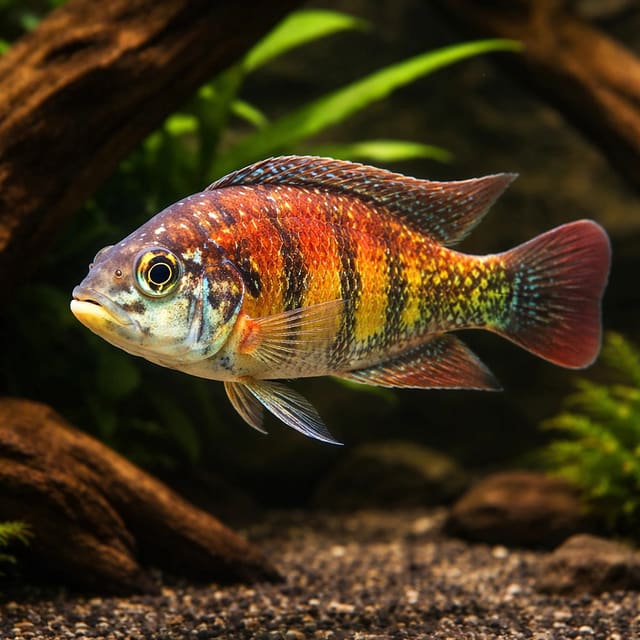
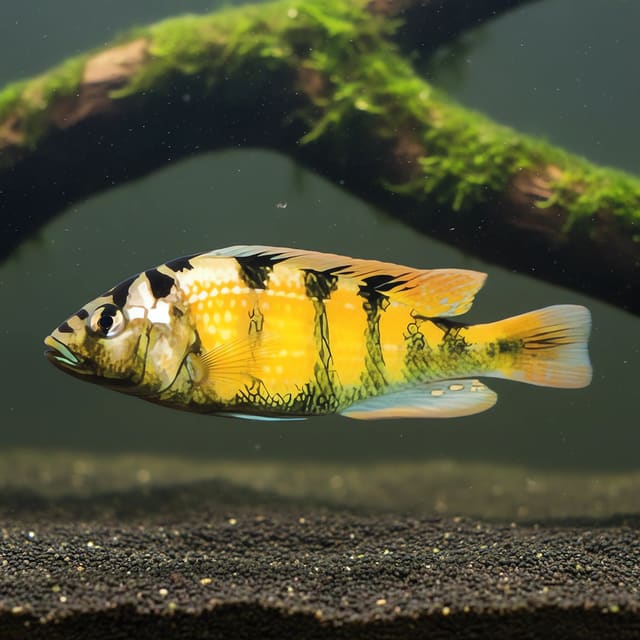
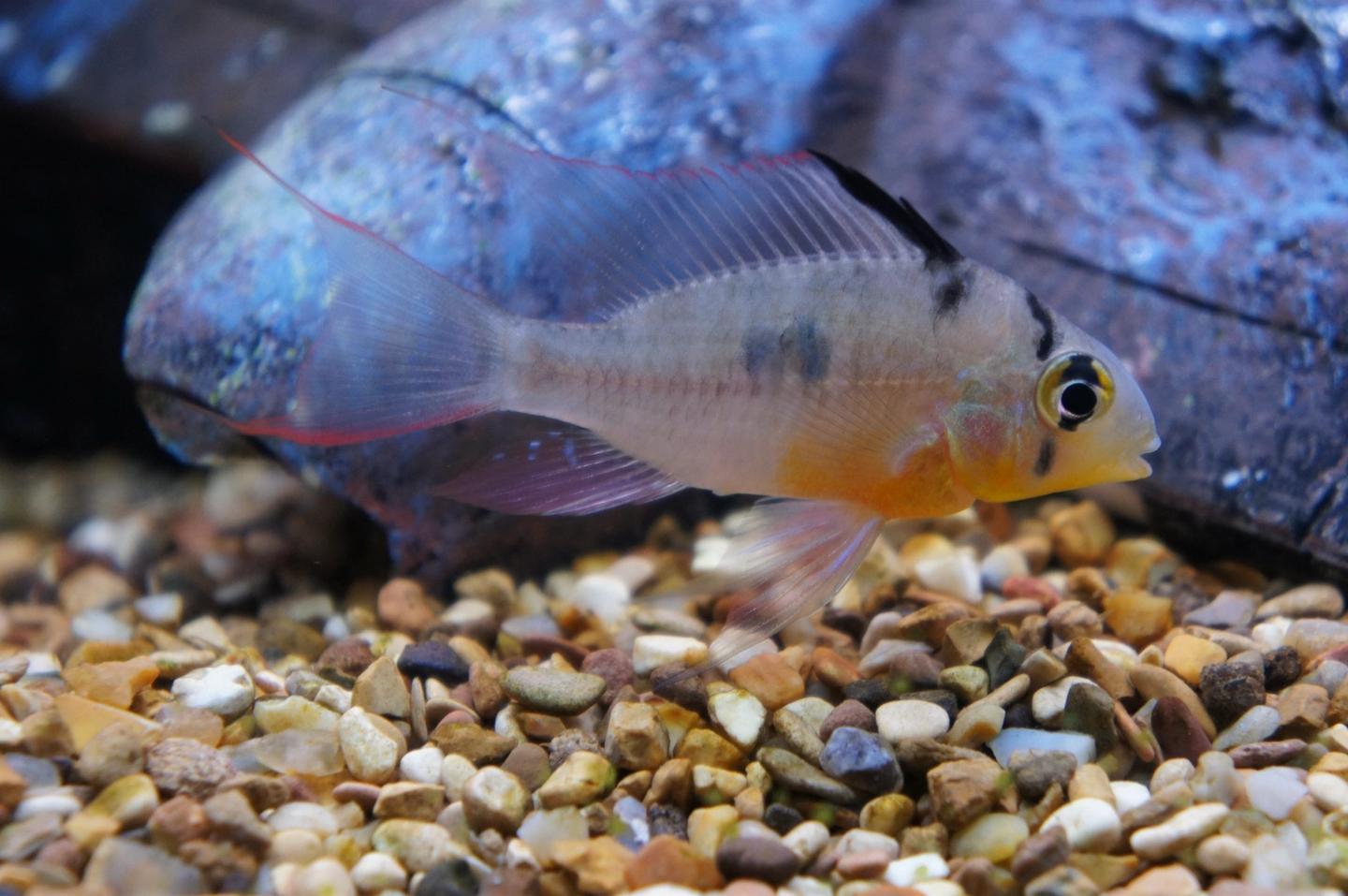
Zebra Obliquidens Cichlid (Astatotilapia latifasciata)
23–27°C · pH 8–8.2 · 108L
£12.74£14.99

Yellowfin Borleyi is an active Lake Malawi hap with yellow-gold finnage, best kept in a spacious hard-water aquarium with robust Malawi tank mates.
Adult size is the maximum length this species reaches at full maturity (scientific sources). The livestock you receive will be younger and smaller — pick a size above for the actual shipping size. Product-photo provenance and any image-specific limitations are stated on the listing.
Copadichromis borleyi
Save when buying multiple fish. Each quantity is one fish; sex and pair formation are not guaranteed unless the selected variant explicitly states them.
Confirm your email, then we’ll send an availability message for this exact item if it returns within 180 days.
This request is only for this product—no newsletter or other promotions. A mail-provider retry may very rarely duplicate the same availability message. Unconfirmed addresses are removed after 48 hours. See our privacy policy.
Yellowfin Borleyi is an active Lake Malawi hap with yellow-gold finnage, best kept in a spacious hard-water aquarium with robust Malawi tank mates.
Adult size is the maximum length this species reaches at full maturity (scientific sources). The livestock you receive will be younger and smaller — pick a size above for the actual shipping size. Product-photo provenance and any image-specific limitations are stated on the listing.
Cichlids are a family of roughly 1,800 accepted species, not one care type. Before buying, identify the exact species and source, then compare adult measurement, usable tank dimensions, social system, territory, tested water, diet and an exit plan. No family-wide minimum tank, water range or tank-mate list is safe.
Maintain these water conditions for optimal health and vibrant colors
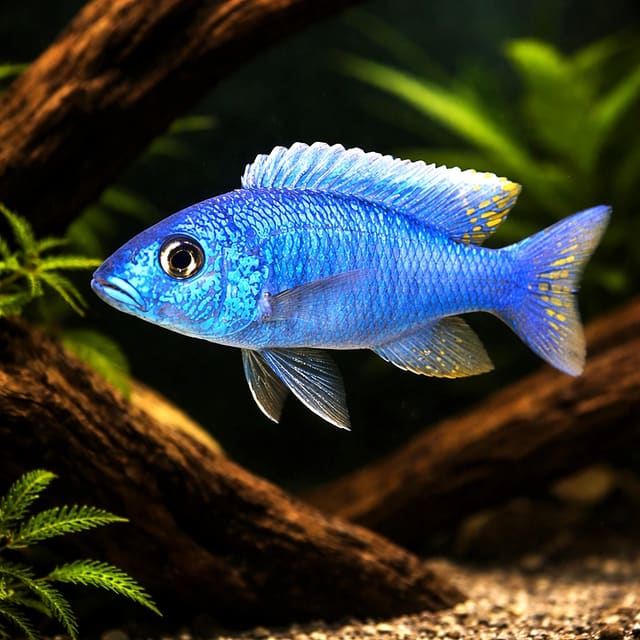
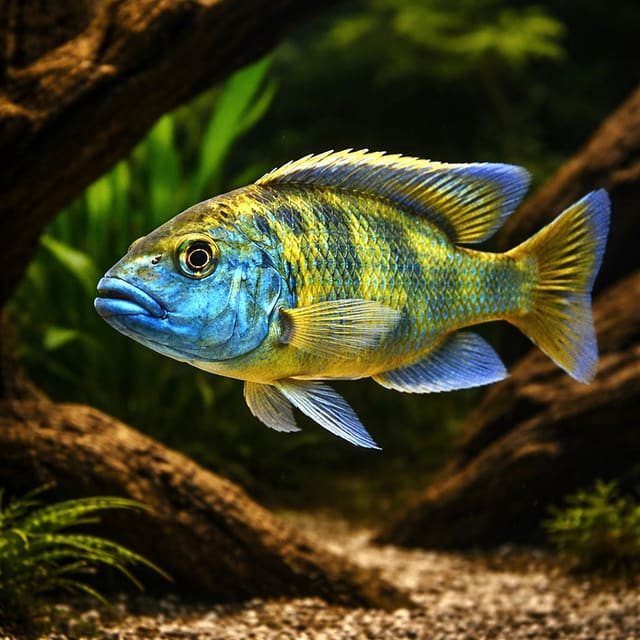
Yellowfin Borleyi Cichlid (Copadichromis borleyi) is a large, active Lake Malawi hap with the bright yellow to gold fin colour that made the old trade name "Haplochromis borleyi Yellow Fin" popular. The older Haplochromis name still appears in trade catalogues, but the accepted care identity is Copadichromis borleyi. It is best treated as an open-water Malawi cichlid that likes room to cruise, hard alkaline water, strong filtration, and a calm but confident group of similarly sized Rift Lake fish.
This is not a small community fish. It is a showy utaka-type hap for aquarists who already understand Malawi water chemistry and territorial cichlid behaviour. In the right aquarium it gives a lot back: males develop blue body tones with yellow, orange, or gold finnage, females are more subtle but still elegant, and the group brings constant movement through the middle water without the rock-scrapping intensity of many mbuna.
| Accepted name | Copadichromis borleyi |
|---|---|
| Trade name | Yellowfin Borleyi, Borleyi Yellow Fin, Haplochromis borleyi Yellow Fin |
| Origin | Lake Malawi, East Africa |
| Adult size | Usually planned as 15-18 cm in aquaria; FishBase records 14 cm total length |
| Minimum aquarium | 300 litres or larger, with generous front-to-back swimming space |
| Water | 24-26C, pH 7.5-8.5, hard alkaline water around 10-30 dGH |
| Temperament | Semi-aggressive, generally calmer than many mbuna but still territorial when mature |
| Diet | Plankton-led carnivorous/omnivorous Malawi cichlid diet |
The Yellowfin form is valued for the contrast between cool blue body colour and warm yellow to orange finnage. Mature males can show a metallic blue head, deeper blue flanks, and bright yellow, gold, or orange edging through the dorsal, anal, pelvic, and tail fins. The exact colour depends on locality, maturity, hierarchy, lighting, diet, and the mood of the fish. Subdominant males and females are usually softer silver-brown with less intense fin colour, which is normal rather than a health concern.
Young fish often look understated compared with adult males. The colour develops as they settle, grow, and find their place in the group. A clean mineral-rich aquarium, a varied diet, and a stress-free social layout do more for colour than harsh lighting or overfeeding. Give this fish time and space and it becomes a strong centrepiece for a Malawi hap display.
Copadichromis borleyi is endemic to Lake Malawi. FishBase describes it around rocky areas and large boulders, with schools also gathering near rocky islets on sand, and it feeds on plankton. That background matters in the aquarium: it needs both visual structure and open water. It should not be packed into a narrow rock pile with nowhere to swim.
Lake Malawi water is warm, highly oxygenated, hard, and alkaline. Stability is more important than chasing a perfect number every day. Keep the pH comfortably alkaline, maintain mineral hardness, avoid soft acidic conditions, and use enough filtration and surface movement to keep oxygen high.
Use a long, spacious aquarium of at least 300 litres for a settled adult group, with larger tanks preferred if mixing with other haps or peacocks. Build rockwork along the back and sides to break lines of sight, then leave a broad open swimming lane across the front and centre. Sand or fine aragonite-style substrate suits the Malawi look and helps maintain a clean base for waste removal.
Filtration should be strong enough for a heavily fed cichlid aquarium. Aim for excellent biological capacity, visible surface agitation, and a regular maintenance rhythm. Weekly partial water changes are important because adult haps are active, messy feeders. Avoid cramped, heavily decorated layouts where a dominant male can trap other fish in corners.
Keep the temperature around 24-26C, matching the supplier care range and FishBase climate note. A pH of 7.5-8.5 is suitable, with the upper part of that range often preferred for Malawi systems. Hardness should remain firm and mineral-rich; the supplier range is 10-30 dGH, while hobby profiles commonly sit around the low-to-mid teens.
Do not combine this species with soft-water South American or Asian community fish. Even if they survive the water, their behaviour and tank needs do not match. Stable Rift Lake conditions are the foundation for colour, appetite, disease resistance, and calm social behaviour.
In nature this species feeds heavily on plankton, so it does best on a clean, varied Malawi cichlid diet rather than rich mammal-based foods. Use quality cichlid pellets or granules as the daily base, then rotate in frozen mysis, brine shrimp, krill, cyclops, or similar small aquatic foods. A small amount of vegetable matter or spirulina-based food can be included for balance, especially in a mixed Malawi tank.
Feed modest portions once or twice a day. The fish should clear food quickly and remain eager at the next feed. Heavy meals and constant snacking can pollute the aquarium and push rapid, uneven growth. Good colour comes from steady care, not from overfeeding.
Yellowfin Borleyi is generally more open-water and less relentlessly combative than many rock-dwelling mbuna, but it is still a cichlid with hierarchy and breeding territory. A mature male may display strongly, guard a chosen area, and chase rivals or unreceptive females. Space, visual barriers, and sensible stocking make the difference between impressive display behaviour and constant stress.
For a species-focused group, keep one male with several females where possible. In a larger Malawi community, it can also work alongside other non-identical haps and peacocks that are robust, similar in size, and not too timid. Avoid keeping multiple similar-looking Copadichromis or close colour forms together if you are trying to avoid hybrid risk.
Good companions include robust Aulonocara, Placidochromis, Protomelas, other suitably chosen haps, and Synodontis catfish that enjoy similar hard alkaline water. Choose tank mates by adult size and temperament rather than by how peaceful they look as juveniles. Small tetras, guppies, shrimp, delicate community fish, slow fancy fish, and very timid species are poor matches.
Very aggressive mbuna can also be a problem. Some mbuna work in large, well-planned Malawi aquariums, but a crowded rock-dwelling group can harass open-water haps and stop them showing natural behaviour. If mixing, build the layout and stocking plan around the adult fish, not the purchase size.
Copadichromis borleyi is a maternal mouthbrooder. The male displays and courts, the female collects and holds the eggs, and she incubates the brood in her mouth until the fry are ready to release. Brooding females need quiet, clean water, and low stress. If fry survival matters, a separate holding or rearing tank gives the female and young fish a much better chance.
Because Malawi cichlids hybridise easily, avoid mixing very close relatives or multiple colour forms if breeding is a goal. For a display aquarium, the main aim is usually social stability and clean water rather than producing fry.
Before adding this fish, check that your aquarium is fully cycled, warm, hard, alkaline, and free from ammonia or nitrite. Keep the lights low during introduction and give the fish time to settle before feeding heavily. Float the sealed bag to equalise temperature, then gradually mix small amounts of aquarium water into the transport water over 30-45 minutes before release.
After arrival, watch breathing, posture, and social pressure. It is normal for colour to look muted at first, especially after transport. Strong colour and confident swimming usually return once the fish has settled, eaten, and found safe routes through the aquarium.
This listing is best suited to aquarists building a medium-to-large Lake Malawi aquarium who want a colourful, active hap that is impressive without being as frantic as many mbuna. Choose it if you can provide a spacious hard-water system, strong filtration, and carefully selected tank mates. It is not the right choice for a soft-water community tank, a nano aquarium, or a peaceful mixed tropical setup.
No reviews for this item yet. Bought one? Honest reviews only, good or bad.
What customers say about ordering from us
I have a small group of long finned mountain minnows. So was delighted to be able to order ten of this variety to increase the genetics in my tank . The ones I recieved are healthy but it’s to early to give a verdict on wether they are of a long finned type since they are small currently.
Gordon Walker · 23 Sept 2026
100% success travel and "installation". Pleased with quality of purchase. The Siamese fighter a bit "shy" so have not yet seen him at his best yet but looking good. Happy customer. GG
George E Garratt · 21 Sept 2026
Reviews of our shop, collected by Judge.me, an independent third-party review collector. Newest first.