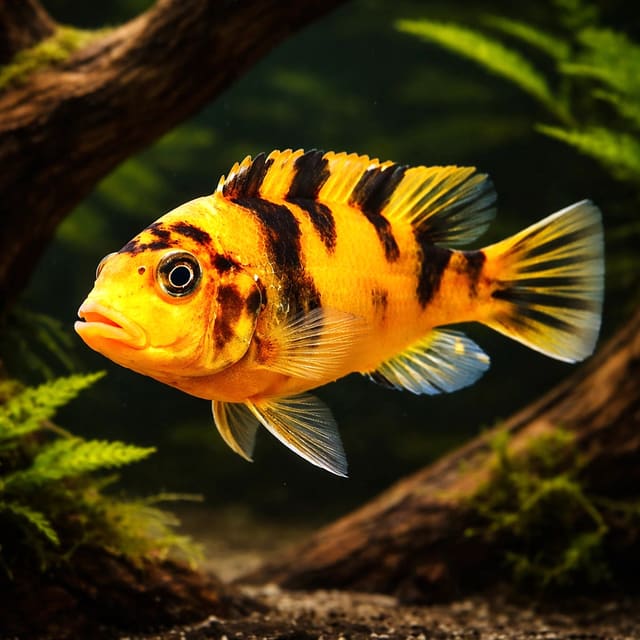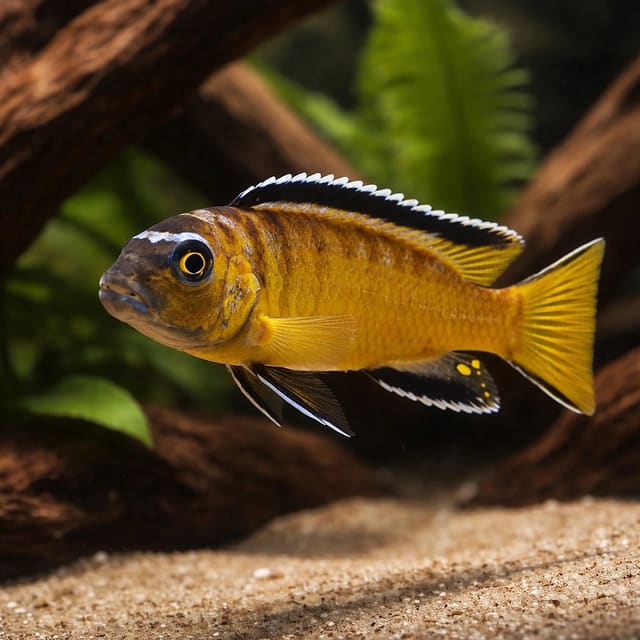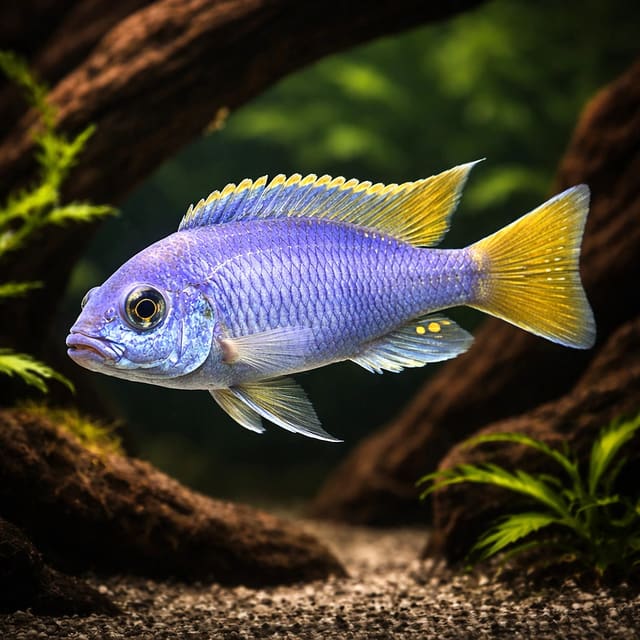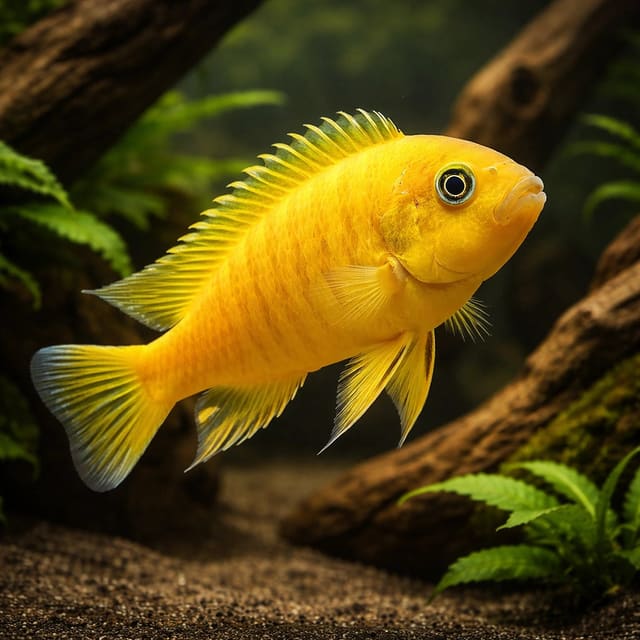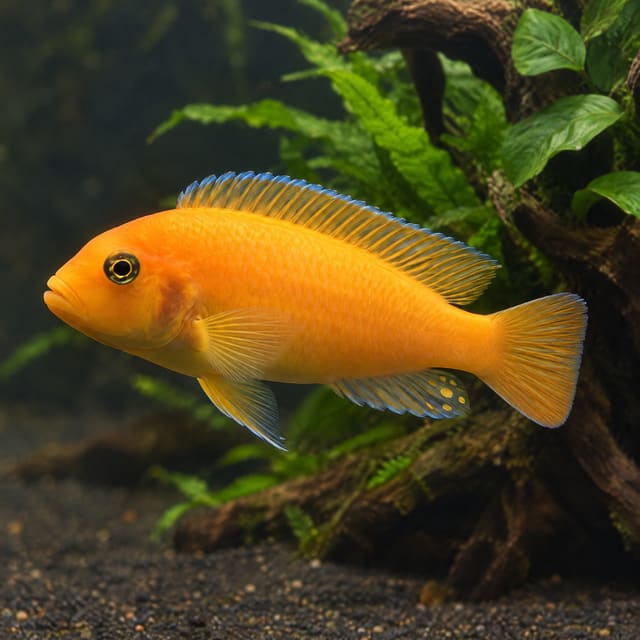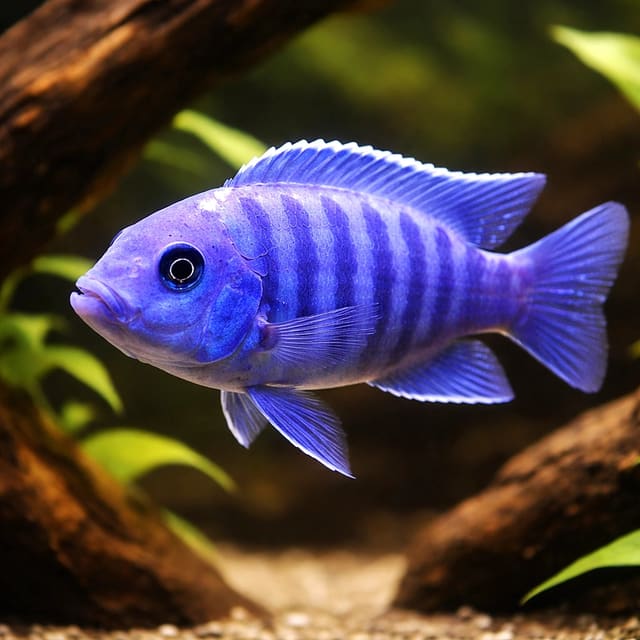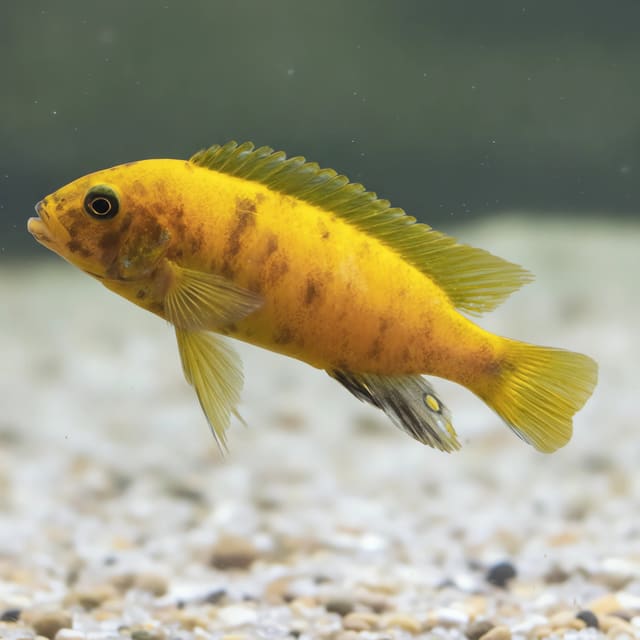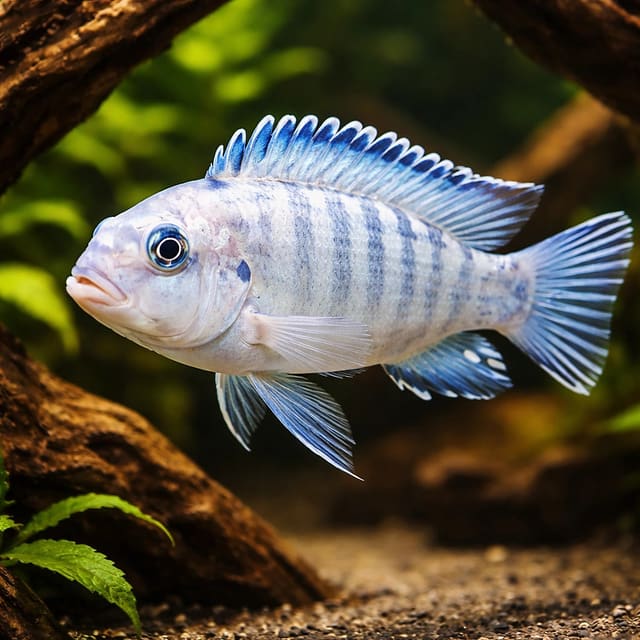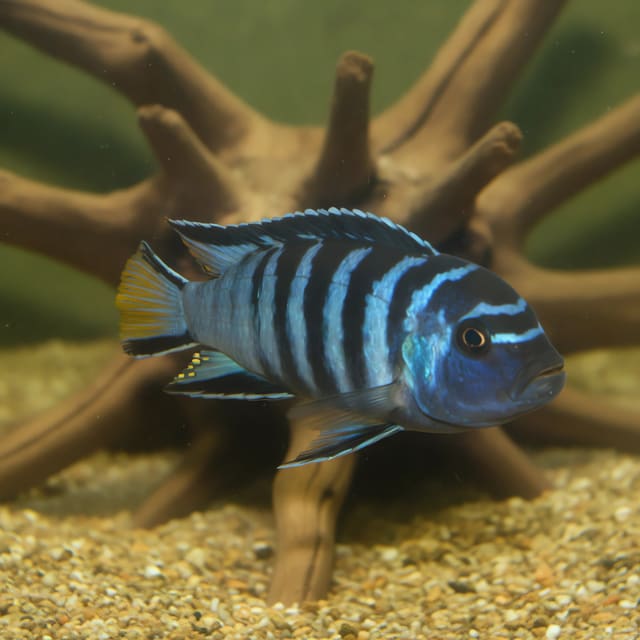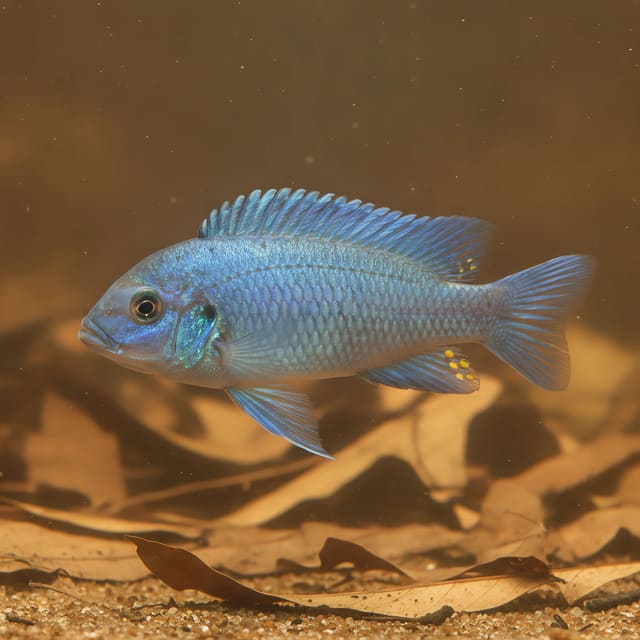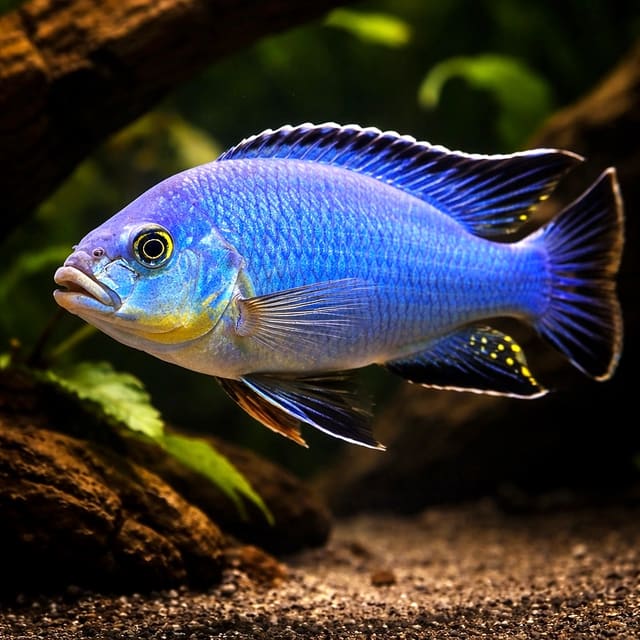
William's Mbuna (Pseudotropheus williamsi)
24–26°C · pH 8–8.3
£16.99
A striking Lake Malawi mbuna cichlid with bold colour, lively personality, and classic rock-dwelling behaviour. Moderate care, aggressive. 24-26C, pH 7.5-8.5.
Adult size is the maximum length this species reaches at full maturity (scientific sources). The livestock you receive will be younger and smaller. Product-photo provenance and any image-specific limitations are stated on the listing.
Maylandia hajomaylandi
Shoaling fish: kept in a group they feel safer, stay calmer and show their best colour.
A striking Lake Malawi mbuna cichlid with bold colour, lively personality, and classic rock-dwelling behaviour. Moderate care, aggressive. 24-26C, pH 7.5-8.5.
Adult size is the maximum length this species reaches at full maturity (scientific sources). The livestock you receive will be younger and smaller. Product-photo provenance and any image-specific limitations are stated on the listing.
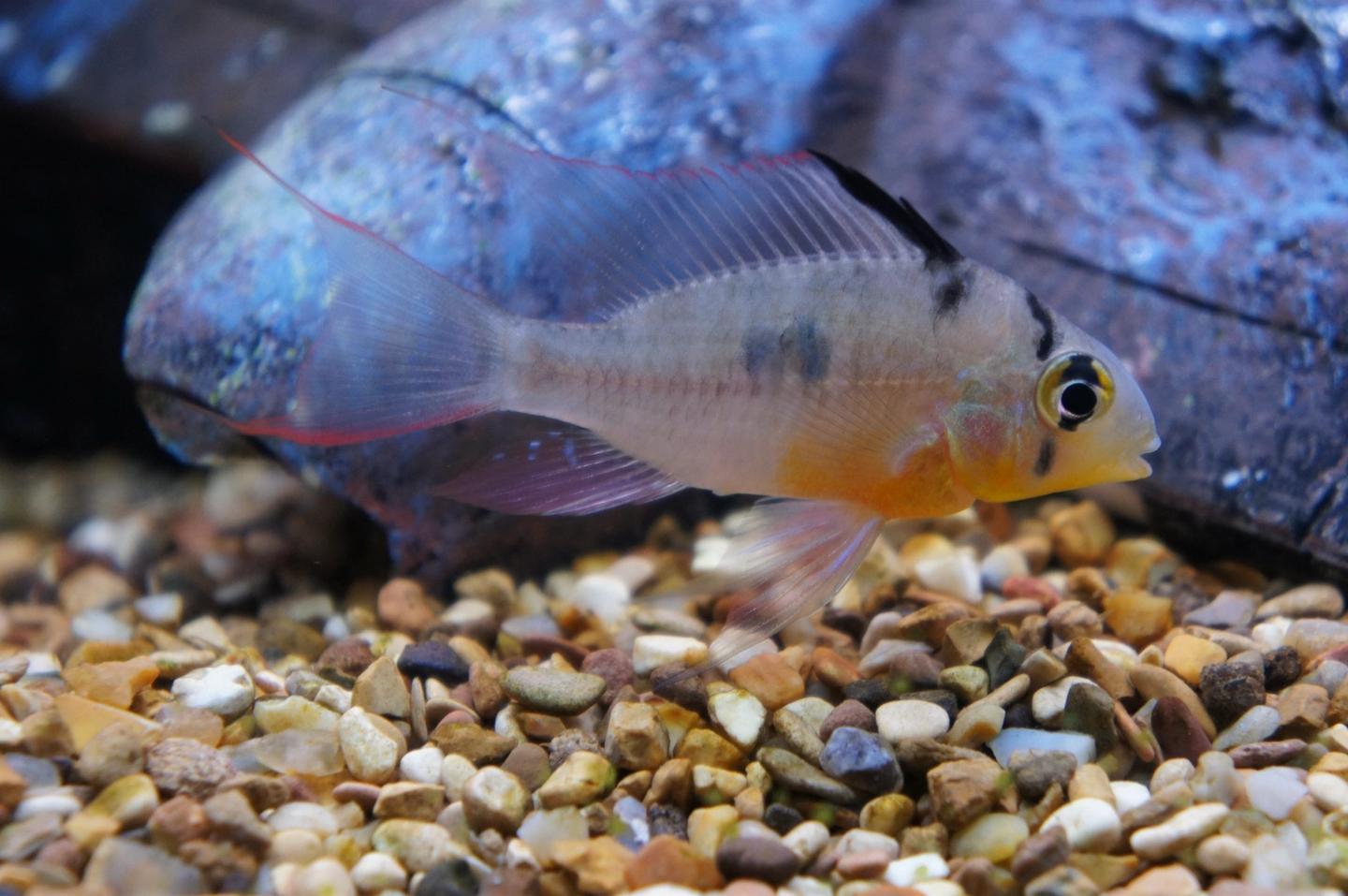
Cichlids are a family of roughly 1,800 accepted species, not one care type. Before buying, identify the exact species and source, then compare adult measurement, usable tank dimensions, social system, territory, tested water, diet and an exit plan. No family-wide minimum tank, water range or tank-mate list is safe.
Maintain these water conditions for optimal health and vibrant colors
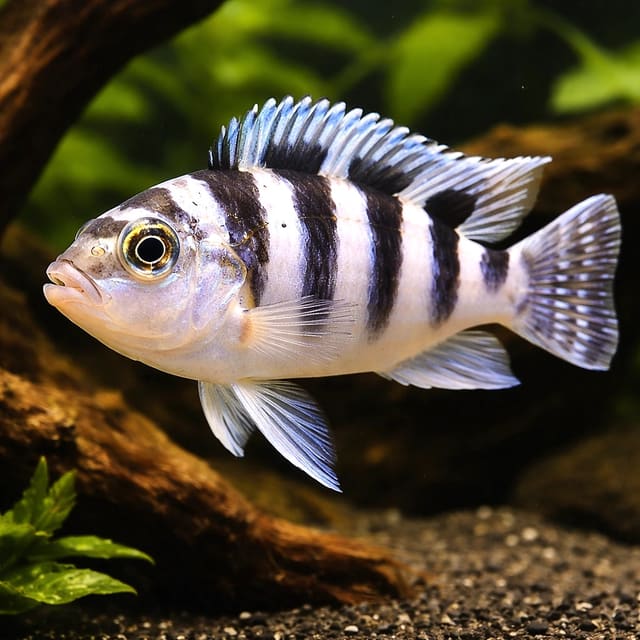
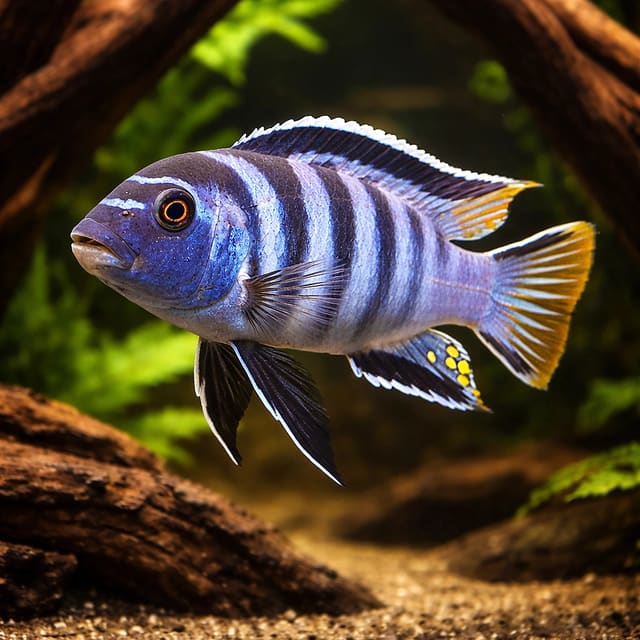
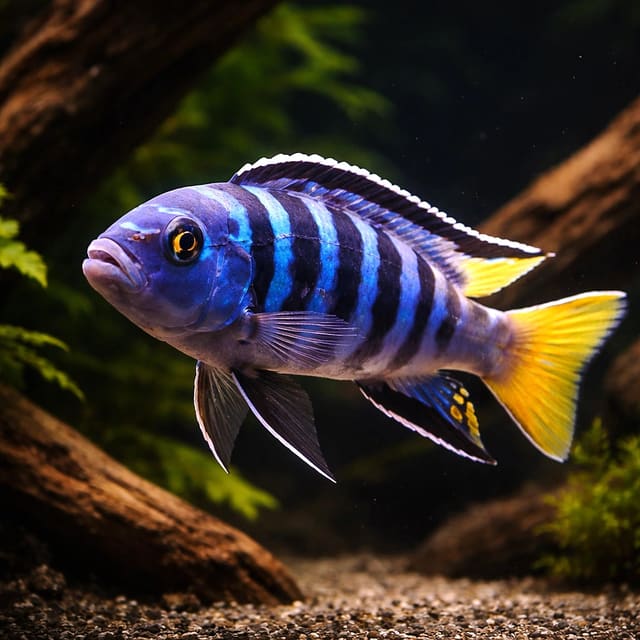
Maylandia hajomaylandi is a striking Lake Malawi mbuna cichlid with bold colour, lively personality, and classic rock-dwelling behaviour. This aggressive mbuna thrives in hard, alkaline water and brings vibrant colour, energy, and activity to well-maintained Malawi biotope tanks.
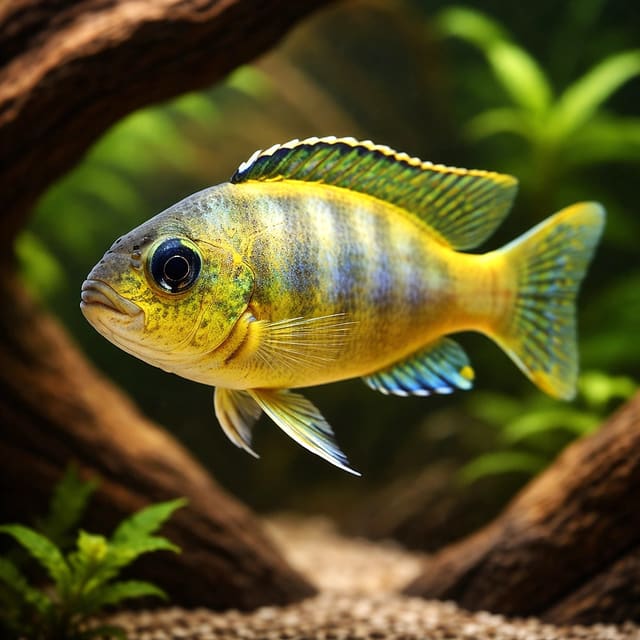
Maylandia hajomaylandi can reach about 12 cm total length as an adult. The 4–5 cm supplier sale size is a juvenile size, rather than its adult limit. Its laterally compressed body and colouration change with mood and maturity.
This species is native to Lake Malawi, East Africa, where it inhabits rocky shorelines and intermediate zones with rubble, boulders, and crevices. In the wild, M. hajomaylandi takes plankton from open water while remaining near rocks; territorial males also feed from the biocover on rocks. These environments are characterised by hard, alkaline water, high oxygen saturation, and intense competition for territory and resources.
Plan for a well-filtered aquarium of at least 200 litres and 100 cm length as a starting recommendation, with plenty of rockwork to create territories, caves, and hiding places. Allow more space where stocking and territorial behaviour require it. Use a sand or fine gravel substrate and arrange rocks to form vertical structures with multiple sight breaks. Strong filtration and excellent water quality are essential. Avoid overcrowding, and stock carefully to minimise aggression. Bright lighting suits this species well.
Maintain hard, alkaline water between 24–26°C with a pH of 7.5–8.5. Regular partial water changes (30–50% weekly) and excellent filtration are essential to keep water pristine and stable. This species is sensitive to poor water quality and parameter fluctuations, requiring consistent maintenance. Use cichlid salts or buffer to maintain appropriate hardness and pH if necessary.
Maylandia hajomaylandi takes plankton and rock biocover in the wild. Offer a varied, balanced cichlid diet that includes plant-based foods and suitable small animal foods, rather than treating it as an exclusively algae-feeding fish. Feed once or twice daily, and remove uneaten food promptly.
Top Tip: Provide plenty of rock caves and visual barriers—mbuna aggression is best managed with complex rockwork and careful stocking.
This mbuna is aggressive, territorial, and highly active, especially males defending territories. Males establish territories among rocks and may display intense aggression toward conspecifics, similar-looking species, and other mbuna. Females are generally less aggressive but may become defensive when brooding. M. hajomaylandi is a maternal mouthbrooder, with females carrying eggs and fry in their mouths after spawning.
Ideal companions include other robust Lake Malawi mbuna, similar-sized African cichlids with comparable temperament, and Synodontis catfish. Avoid peaceful community fish, small fish, shrimp and other small invertebrates, slow-moving or long-finned fish, and overly aggressive species that may provoke constant fighting. Choose tankmates that appreciate similar hard, alkaline conditions.
Maternal mouthbrooder; males establish territories and court females. Provide rockwork and multiple hiding places, and remove fry or use a separate breeding setup if needed. Females carry eggs and fry in their mouths for 3–4 weeks. Fry are released when free-swimming and can be fed baby brine shrimp and finely crushed foods.
Check that your aquarium has the space, rockwork and compatible tank mates needed for this territorial Lake Malawi cichlid before ordering.
No reviews for this item yet. Bought one? Honest reviews only, good or bad.
What customers say about ordering from us
Easy website plenty of info on fish your buying great to pick a time slot
TRACEY DURRANT · 7 Oct 2026
Got some lovely fish thank you
Kevin Mackie · 7 Oct 2026
Reviews of our shop, collected by Judge.me, an independent third-party review collector. Newest first.