Moderate
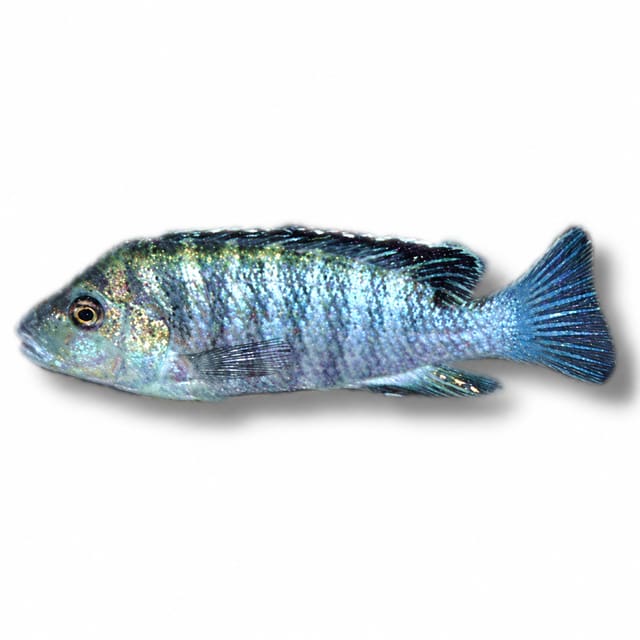
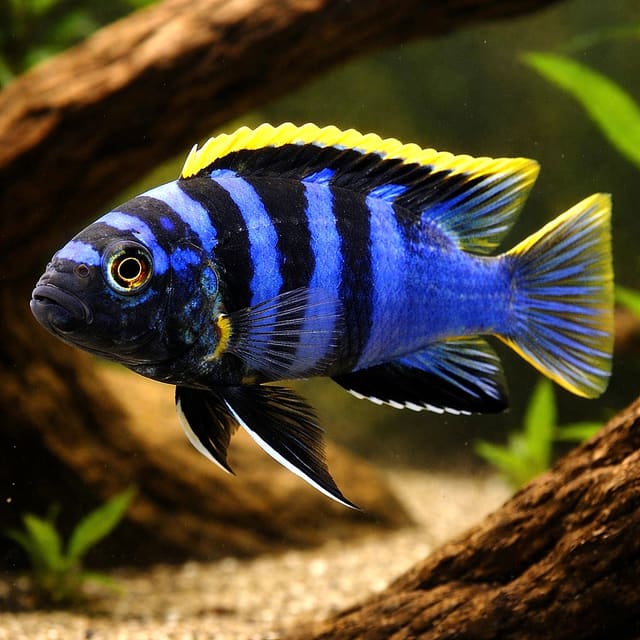
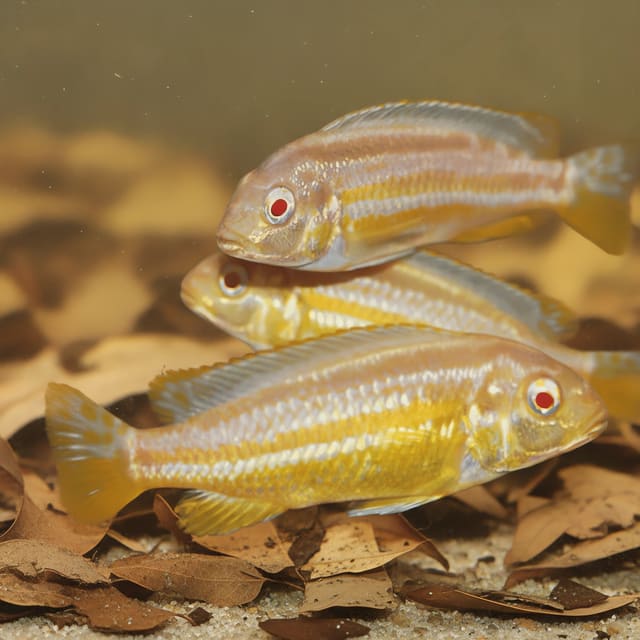
Acei Cichlid (Pseudotropheus sp. “acei”)
24–26°C · pH 7.5–8.5 · 300L
£7.99

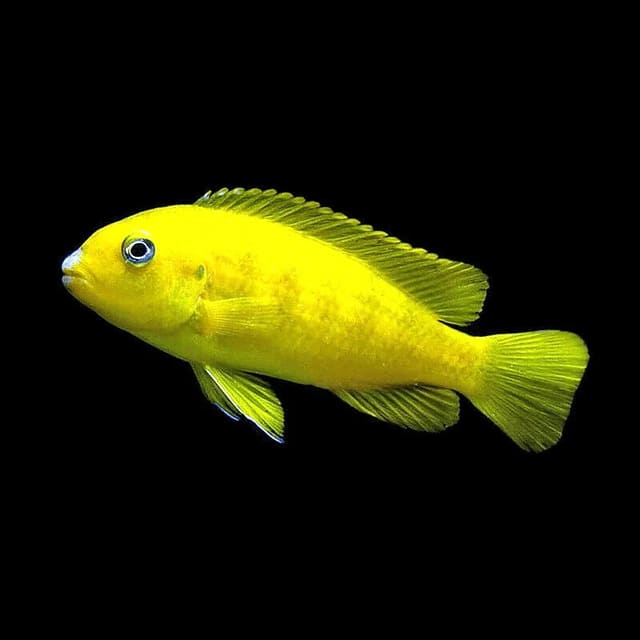
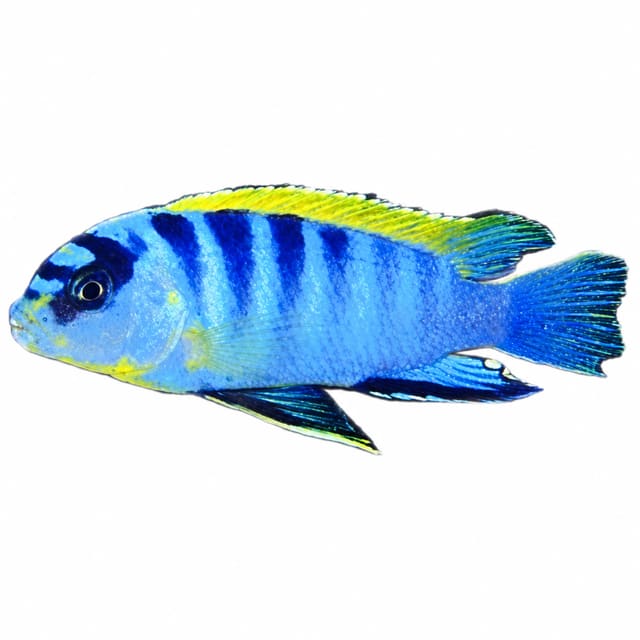
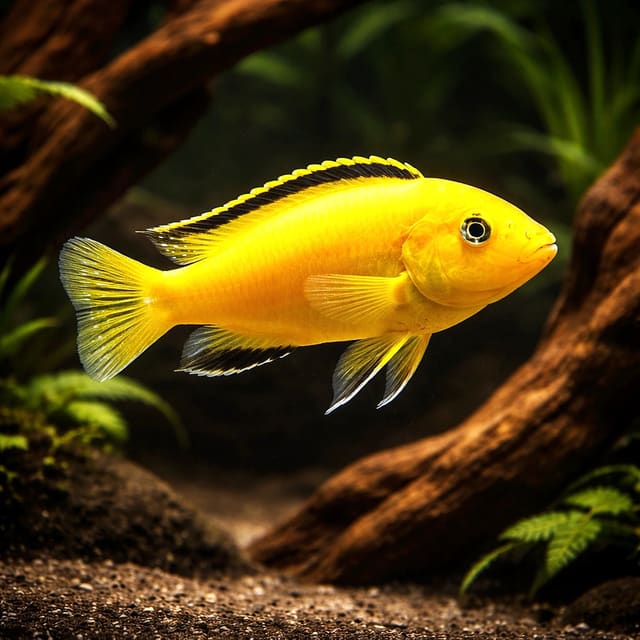
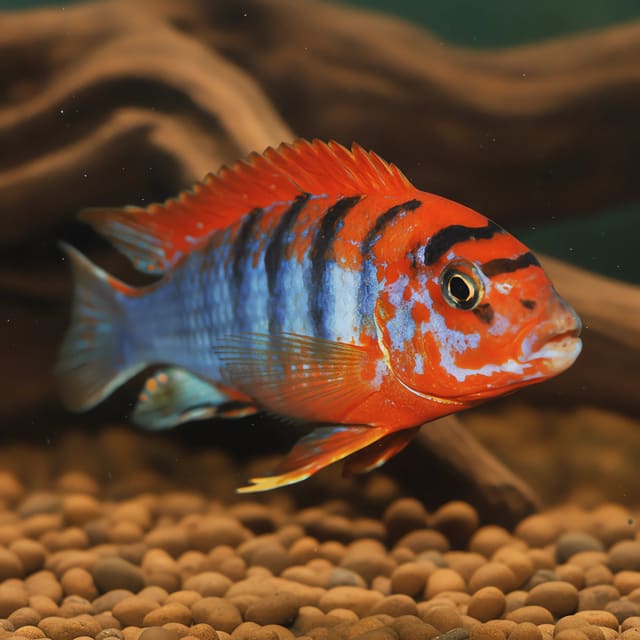
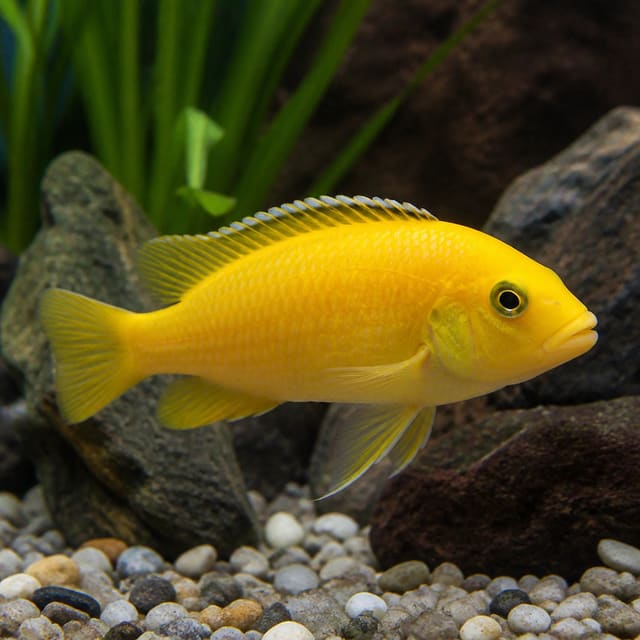
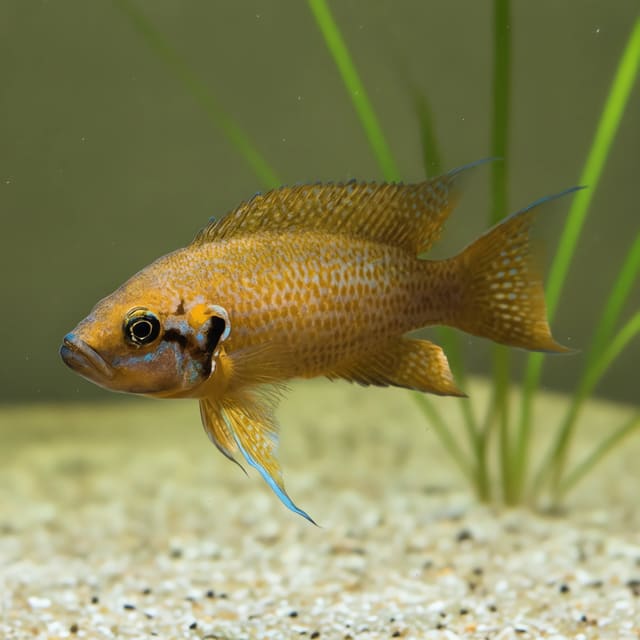
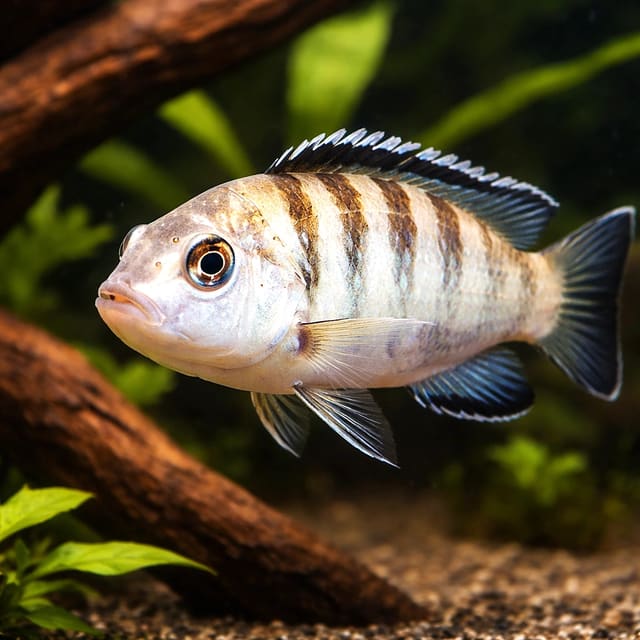
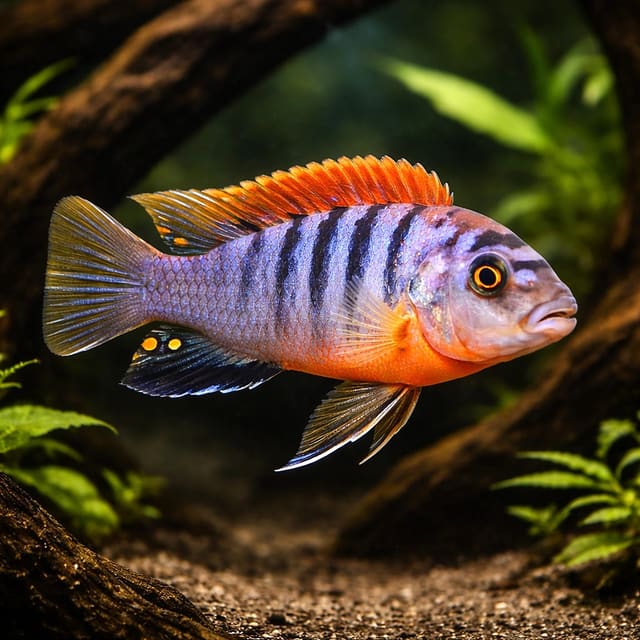
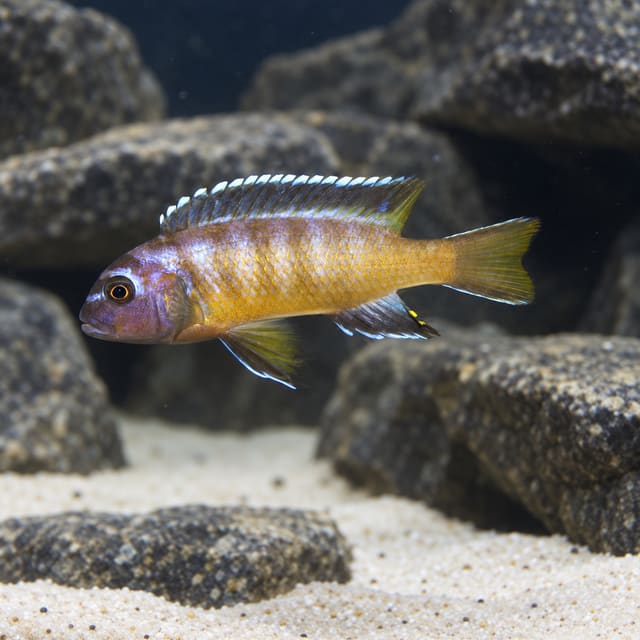
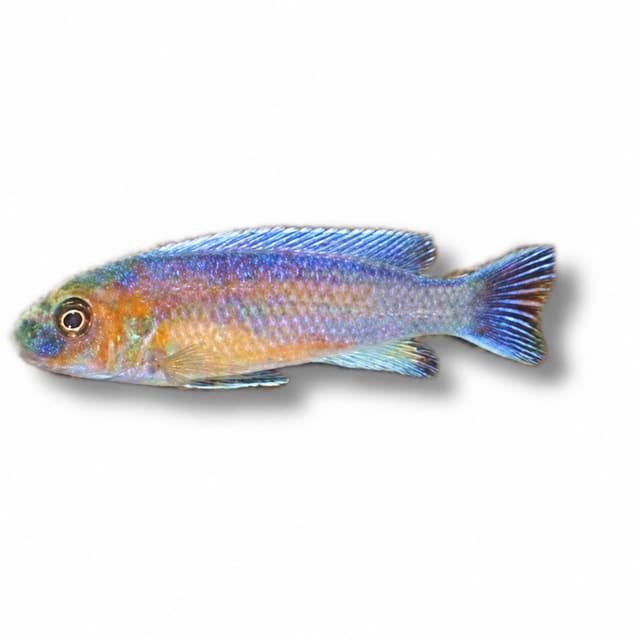
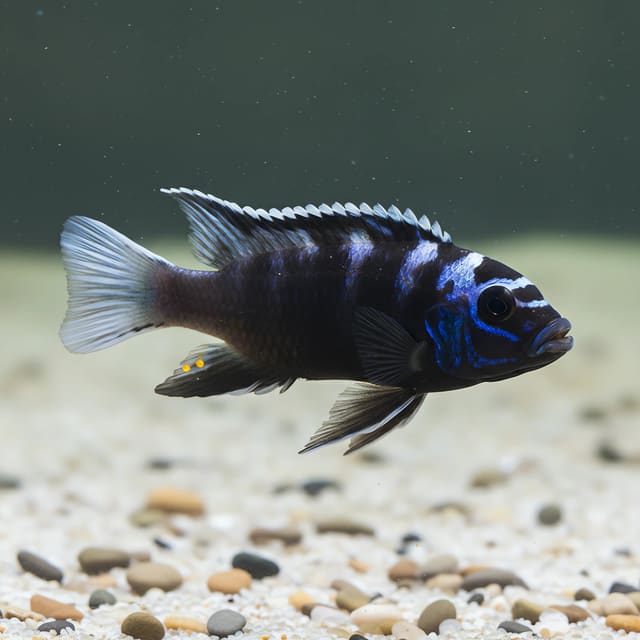
Orange Hongi Cichlid (Labidochromis sp.) is a vividly coloured Lake Malawi cichlid offered as one fish in two size bands. It suits an established hard, alkaline Malawi aquarium with strong filtration, oxygenation, structured territory and a carefully planned cichlid group rather than a peaceful mixed community.
Labidochromis sp.
Save when buying multiple fish. Each quantity is one fish; sex and pair formation are not guaranteed unless the selected variant explicitly states them.
Orange Hongi Cichlid (Labidochromis sp.) is a vividly coloured Lake Malawi cichlid offered as one fish in two size bands. It suits an established hard, alkaline Malawi aquarium with strong filtration, oxygenation, structured territory and a carefully planned cichlid group rather than a peaceful mixed community.
Cichlids are a family of roughly 1,800 accepted species, not one care type. Before buying, identify the exact species and source, then compare adult measurement, usable tank dimensions, social system, territory, tested water, diet and an exit plan. No family-wide minimum tank, water range or tank-mate list is safe.
Maintain these water conditions for optimal health and vibrant colors
The Orange Hongi Cichlid is a colourful Lake Malawi cichlid identified as Labidochromis sp.; Orange Hongi is its trade name. One purchase supplies one live fish in the size chosen on the product page. The size you select is the size supplied, not the adult size. Plan its husbandry conservatively around a mature Lake Malawi aquarium with hard, alkaline water, strong filtration, generous oxygenation and space for territorial behaviour. Do not assume a species-specific adult size, feeding type or breeding pattern from the trade name alone.
Labidochromis is a genus of cichlids from Lake Malawi in East Africa. That origin points towards a specialist Malawi setup: hard, alkaline water, high oxygen, robust filtration and a social plan built for territorial cichlids. It does not belong in a small, quiet soft-water community merely because the fish is still young at dispatch.
| Suits | A keeper preparing a mature Lake Malawi aquarium with hard alkaline water, substantial structure, strong filtration and a deliberate stocking plan. |
|---|---|
| Not suited to | A peaceful general community, soft acidic water, an uncycled aquarium or a casual single-fish addition without a territory plan. |
| Sold unit | One live fish per purchase, with two dispatch-size bands shown on the product page. |
| Identity | Orange Hongi trade name; Labidochromis sp. is the scientific identity. |
| Store care assessment | Intermediate, because water chemistry, aggression, filtration and group design all need active management. |
Malawi cichlids are colourful and often hardy once their needs are met, but OATA describes the group as aggressive and warns that small groups often fight. The answer is not to add random fish until the aquarium looks busy. The keeper needs adequate volume, a filter sized for the eventual population, abundant oxygen, planned hiding and sight-line structure, and compatible Malawi species added in a controlled order.
For Malawi cichlid communities, OATA recommends at least 15 fish to spread aggression and an aquarium of at least 200 litres for a reasonable community. Those figures describe the whole planned aquarium, not a minimum or fixed head count for this Orange Hongi on its own. Apply them alongside the aquarium's dimensions, the adult requirements of every selected species and the filtration capacity.
Orange colour makes this fish visually prominent, but appearance should come after system design. A buyer needs to enjoy observing territorial interactions, maintaining mineral-rich water and adjusting structure as the group matures. The fish is a poor impulse addition to fill an empty-looking space. It is a better fit when the keeper has already mapped the full community, understands the filter's capacity and can separate an individual if pressure becomes excessive.
Browse the African cichlid collection while comparing forms, but treat every listing as a separate husbandry decision. Another Malawi cichlid on the site is not automatically a safe tank mate for this fish.
Sex is guaranteed only when the selected option explicitly states male or female. This Orange Hongi Cichlid listing has no sex-guaranteed option.
Gallery images have been digitally enhanced to improve image quality. Natural colour, pattern, size and maturity can vary between live animals.
Biological filtration is the first welfare requirement. Fish release ammonia, which is toxic; established bacteria convert it to nitrite and then nitrate. Both ammonia and nitrite should remain at zero. A clear-looking new aquarium is not necessarily cycled, and a bacterial product is not a substitute for testing. Mature the system, prove that it processes waste and increase livestock gradually so the bacterial population can respond to each rise in feeding and bioload.
The first tropical aquarium guide explains the preparation sequence. A Malawi aquarium also needs more filtration and oxygen than its volume alone might suggest because the group-care approach can involve a substantial population. Choose equipment around the completed stock list, not the first fish added.
For Malawi cichlids, OATA gives 23–27°C, pH 8.0–8.6, general hardness 12–18°dH and carbonate hardness 10–15°dKH. Orange Hongi is identified as Labidochromis sp., so use these as a stable community planning range rather than an exact prescription for a named species. Make any change slowly and only for a clear reason.
| Temperature | 23–27°C for a Malawi cichlid aquarium. |
|---|---|
| pH | 8.0–8.6 for a Malawi cichlid aquarium. |
| General hardness | 12–18°dH, described as hard. |
| Carbonate hardness | 10–15°dKH, supporting an alkaline system. |
| Ammonia and nitrite | 0 mg/l for both. |
| Nitrate | Keep controlled with stocking discipline, feeding and regular partial water changes. |
Measure the source water and aquarium instead of relying on appearance. The water-chemistry guide explains the tests and why stability matters. The water parameter matcher can then compare your readings with the stated group range. Do not create rapid pH changes by adding buffer without understanding carbonate hardness and the amount of water being treated.
OATA recommends at least 200 litres for a reasonable Malawi community, while noting that some specialist species may be kept differently. Use 200 litres as a starting point for the complete community, then increase space when the stock list, adult sizes or behaviour demand it; it is not a stand-alone minimum for this fish. Length and width matter because territories and escape routes occupy floor and wall space, so a tall narrow aquarium does not provide the same social options as a long, wide one with equal volume.
Use stable rock or purpose-made structure to create caves, routes and visual separation. Put heavy rocks securely on a protected base before loose substrate so digging cannot undermine them. Leave open swimming room and enough access to siphon waste. Malawi cichlids often dig and rearrange substrate, so coral sand or a similar suitable substrate can assist buffering, while delicate rooted plants may be disturbed. Hardy plants attached to rock can be considered without making them central to the layout.
Break long uninterrupted sight lines. A chased fish should be able to move behind structure rather than remain visible across the entire aquarium. At the same time, avoid building dead zones where food and waste collect. Run the completed aquascape before stocking and check circulation at the lower and rear areas.
Use an oversized filter with accessible mechanical and biological stages. Vigorous aeration and visible surface movement help maintain dissolved oxygen for an active cichlid population and its filter bacteria. Position outlets so waste travels towards an intake without creating a single harsh jet that traps fish against rock.
Check flow and intakes each week. When biological media needs cleaning, rinse it lightly in aquarium water removed during a water change; do not run it under the tap. Stagger maintenance so the system retains mature bacteria. A sudden drop in flow, rapid breathing or fish gathering near the surface calls for immediate testing and an equipment check.
Diet varies across Malawi cichlids. OATA notes that smaller mbuna species tend to be more herbivorous and appreciate specialist feeds with a high algae content plus vegetables, while larger open-water forms may need more animal content. For this Orange Hongi, use a complete quality Malawi cichlid food and watch appetite, body condition and waste. Do not assume the richest or most vegetable-heavy diet simply from the trade name; adjust the balance only with reliable advice for the actual fish.
OATA recommends two small feeds a day for Malawi cichlids. Offer only what the fish consume within a few minutes, and watch every feeding so shy or lower-ranking fish receive food. Remove excess before it breaks down and adds toxic waste. Avoid sudden diet changes and do not compensate for aggression by pouring in extra food; uneaten food increases the burden on an already busy filter.
Write down the proposed species, adult size, feeding type, aggression level and preferred part of the aquarium for every fish. Remove combinations that depend on a young animal staying small or peaceful. Then decide the order of introduction: OATA recommends adding more peaceful Malawi species before more aggressive ones. Leave capacity for changes, because a social plan with no spare space or separation option is difficult to correct safely.
Stock gradually enough for filtration to respond, while recognising that a lone newcomer can receive concentrated aggression from an established group. These two needs have to be reconciled in advance. Do not improvise with whichever cichlids happen to be available. Confirm the group and introduction sequence, mature any additional filter media and prepare a second stable holding space before the fish arrive.
Test the tap supply because its mineral content and pH may vary by area or season. If the aquarium uses a buffer or mineral mix, measure each replacement batch consistently and dissolve it fully before use. Match temperature and avoid pouring concentrated additives directly near fish. Record the amount used so a different household member can repeat the process accurately.
Evaporation removes water but leaves minerals behind. Top up evaporation with appropriate water rather than treating the falling water line as a water change. Regular partial changes remove dissolved waste; topping up alone can allow hardness and other dissolved substances to creep upwards.
OATA strongly recommends a 25% partial water change at least once each week for Malawi cichlids. Siphon solid waste from open substrate and behind accessible rockwork. Treat replacement water for chlorine or chloramine and bring its temperature and chemistry close to the aquarium before adding it. Test at least weekly and record results so a slow trend is visible before fish show distress.
Do not respond to every nitrate reading by making an abrupt chemistry change. First examine stocking, food quantity, blocked media and hidden debris. Consistent moderate maintenance protects the mineral balance better than long periods of neglect followed by a very large correction.
A densely stocked Malawi aquarium depends on continuous circulation and oxygen. Keep spare aeration equipment available, know how long the filter can remain stopped without intervention and check that airline tubing cannot siphon water during a power cut. After an outage, inspect temperature and breathing before feeding. Restore flow carefully if a canister has stood stagnant for a prolonged period, and test ammonia and nitrite as the system recovers.
Healthy fish should have clear bright eyes, intact scales and fins, an appropriate swimming posture and a prompt feeding response. Learn the normal colour and territory of each individual. A fish that turns unusually dark or pale, hides more, breathes faster, hangs at the surface or bottom, loses condition or refuses food needs immediate water tests and a review of aggression.
Observe the aquarium from a distance before approaching with food. This reveals which fish controls each route and whether a subordinate individual leaves cover. Then inspect fins and body at feeding time. This page does not supply a diagnosis or medication plan; correct water and social causes promptly and seek case-specific help if signs persist.
Arrange for someone to receive the parcel and read the current delivery and Live Arrival Guarantee policy before dispatch. Begin a continuous unboxing video while the parcel is still sealed, keep the outer box visible and show the fish inside the sealed bag. Inspect it on arrival and contact Tropical Fish Co the same day with the order number and video if anything has gone wrong.
Adding several Malawi cichlids as a planned group can reduce the chance of one newcomer receiving all the pressure, but the exact introduction must follow the complete stock plan and filter capacity. Rearranging some décor can disrupt established territories. Never use a new arrival as an experiment to discover whether an unplanned mix works.
OATA advises keeping Malawi cichlids with other Malawi cichlids or with some suitable Synodontis catfish that share the lake context. That is a starting category, not a promise that any two listings can live together. Match adult size, feeding style, territory, aggression and water needs. Peaceful soft-water fish, small vulnerable animals and species that cannot compete at feeding are poor directions for this hard alkaline territorial setup.
| Potentially suitable | Carefully chosen Malawi cichlids and some appropriate Synodontis, after a full stocking review. |
|---|---|
| Needs caution | Fish with a large aggression mismatch, similar colour or territory, or the same feeding space. |
| Avoid | Peaceful general-community fish, soft-water specialists and small animals vulnerable to pursuit or predation. |
OATA recommends groups of at least 15 Malawi cichlids with slight overstocking to distribute aggression. That method only works with at least 200 litres for a reasonable community, oversized filtration, aggressive aeration and enough structure. It is not permission to exceed the aquarium's biological capacity or to combine species without researching each one.
Small groups often focus aggression on one fish. Large poorly planned groups can fail through waste, oxygen demand or incompatible temperaments. Write the entire stock list first, calculate how each adult will use the aquarium and leave room to remove an aggressor or victim. Add peaceful choices before more aggressive ones, as the group guidance recommends.
The genus Labidochromis can hybridise readily in aquariums. Keep only one species from the genus in the aquarium, and do not distribute offspring under a confident species or locality name when parentage is uncertain. Because this fish is sold as Labidochromis sp., breeding it with another Labidochromis form could produce hybrids whose parentage cannot be described honestly.
This is also why the product alternatives listed elsewhere are choices to compare, not breeding partners or tank-mate endorsements. Colour similarity can increase attention between cichlids, and a bright trade form should not be selected merely to complete a palette.
Create several routes through rockwork and more retreats than the dominant fish can control at once. Re-arranging décor can help reduce aggression by resetting boundaries, particularly when new fish are added. Make changes deliberately: unstable rock is more dangerous than a territorial dispute, and removing every familiar shelter can increase stress.
Many Malawi cichlids show clearer sex differences only as adults; colour and egg spots can sometimes indicate a mature male. Those signs do not create a guarantee for a juvenile or for every fish sold under a trade name. This listing supplies no chosen sex. Do not promise a male-to-female ratio unless the actual selected animals have been reliably sexed under a separate offer.
Where a stocking plan aims for more females than males to spread male attention, confirm the real animals rather than inferring sex from the gallery. Have an alternative plan if the group matures differently from expectation.
Watch several complete meals rather than judging compatibility from swimming alone. A subordinate fish may remain uninjured yet lose condition because it cannot approach food. Spread suitable food across the aquarium without overfeeding and check that each animal swallows a portion. Persistent exclusion is a stocking problem, not a reason to add more food to the water.
After feeding, inspect the routes back to shelter. A dominant fish that controls both food and the main cave can place another under constant pressure. Add or rearrange stable structure only as part of a considered response, and be ready to separate fish if the change does not restore normal feeding and movement.
A combination that appears calm at dispatch size can change with maturity. Reassess territories, feeding order and shelter after growth, new additions or décor changes. Aggression is not simply a personality flaw; it is shaped by space, sight lines, sex, species mix and competition. Early observation gives the keeper more options than waiting for obvious wounds.
It is a Lake Malawi cichlid sold under the Orange Hongi trade name and identified as Labidochromis sp. Plan it for a properly prepared Malawi aquarium, and do not assume a species-specific adult size, diet or breeding pattern from the trade name alone.
OATA recommends at least 200 litres as a starting point for a reasonable Malawi cichlid community. That figure applies to the whole planned community rather than this fish alone. Aquarium length, rock structure, final group, oxygenation and an oversized filter all matter, so plan the complete adult community rather than one young fish.
OATA recommends planning at least 15 Malawi cichlids with slight overstocking to spread aggression, because small groups often fight. This approach needs a suitable 200-litre-or-larger community, strong filtration and aeration. It is not a fixed count for this Labidochromis sp. or permission to exceed biological capacity.
Tropical Fish Co rates it intermediate. The fish can be robust in the right system, but hard alkaline water, territorial behaviour, group design, high oxygen and filter capacity need more planning than a peaceful mixed aquarium. A new keeper should build and test the entire Malawi setup before livestock arrives.
Use a complete Malawi cichlid food and watch the fish's condition and response. OATA notes that diets vary: smaller mbuna appreciate algae-rich foods and vegetables, while larger open-water forms need more animal content. Feed only what is eaten within a few minutes, twice daily as its Malawi care sheet recommends.
For Malawi cichlids, OATA recommends 23–27°C, pH 8.0–8.6, general hardness 12–18°dH and carbonate hardness 10–15°dKH. Orange Hongi is identified as Labidochromis sp., so keep a suitable point stable within that community range and maintain zero ammonia and nitrite.
Malawi cichlids are territorial and aggression can include chasing and fin damage. Use a planned group, enough volume, broken sight lines and several retreats. Watch feeding and resting areas daily. Separate fish if one individual is persistently confined, cannot eat or develops repeated damage.
OATA advises carefully selected Malawi cichlids and some suitable Synodontis catfish. Avoid peaceful general-community and soft-water fish. No named animal is automatically compatible; adult size, temperament, diet, water needs, territory and hybridisation risk must all align.
No sex is guaranteed in this listing. Some Malawi cichlids show clearer differences only when mature, and colour or egg spots can be clues rather than certainty for every trade form. Build the stocking plan around the actual sexed fish available, not an assumption made from size or the gallery.
Tropical Fish Co hand-bags livestock in oxygen, uses an insulated box and adds a heat pack when conditions require it, then uses a licensed live-animal courier. Be present, record the sealed parcel continuously while opening it, inspect the fish in its sealed bag and contact the team the same day if anything is wrong.
No reviews for this item yet. Bought one? Honest reviews only, good or bad.
What customers say about ordering from us
I have a small group of long finned mountain minnows. So was delighted to be able to order ten of this variety to increase the genetics in my tank . The ones I recieved are healthy but it’s to early to give a verdict on wether they are of a long finned type since they are small currently.
Gordon Walker · 23 Sept 2026
100% success travel and "installation". Pleased with quality of purchase. The Siamese fighter a bit "shy" so have not yet seen him at his best yet but looking good. Happy customer. GG
George E Garratt · 21 Sept 2026
Reviews of our shop, collected by Judge.me, an independent third-party review collector. Newest first.