−11%
Moderate
Calico Peacock Cichlid (Aulonocara sp. calico)
24–28°C · pH 7.5–8.5 · 200L
£17.79£19.99

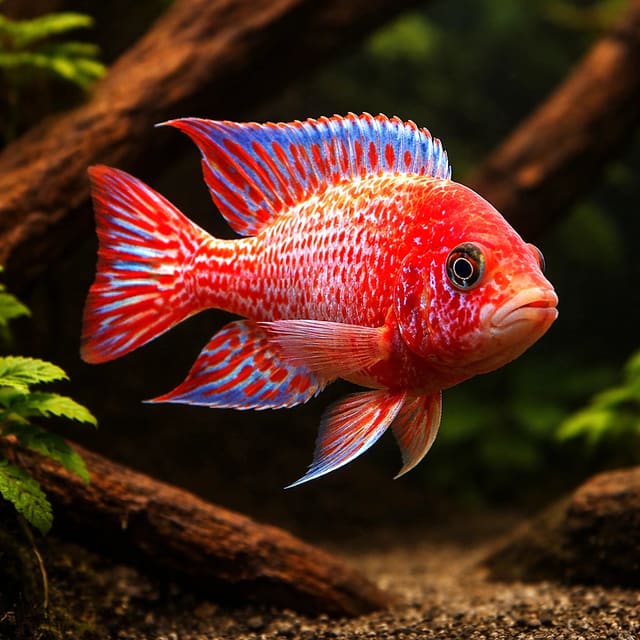
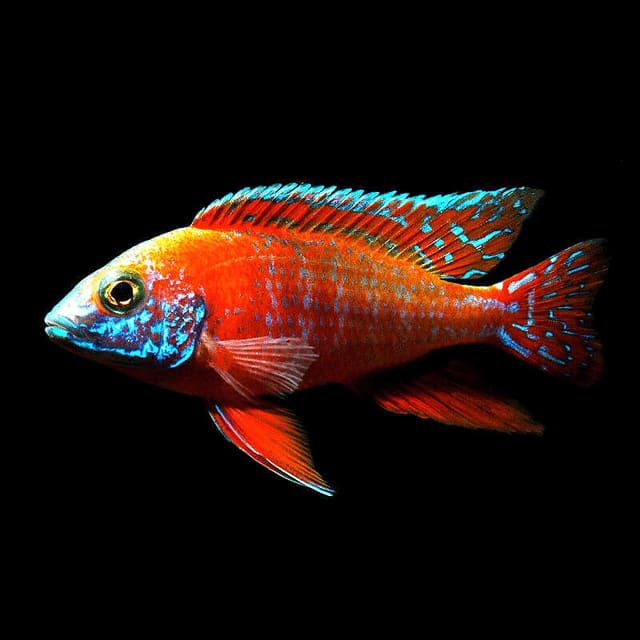
The Red Flash Peacock Cichlid (Aulonocara stuartgranti) is a sand-feeding cichlid endemic to Lake Malawi that reaches 11.8 cm. It suits mature hard-water aquariums with a 120 × 45 cm base; keep 23–26°C within FishBase’s wild record and Seriously Fish/OATA guidance, with pH 8.0–8.6 and 12–18 dGH within the two aquarium ranges. Sold individually in sizes from 3–4 cm to 7–9 cm.
Adult size is the maximum length this species reaches at full maturity (scientific sources). The livestock you receive will be younger and smaller — pick a size above for the actual shipping size. Product-photo provenance and any image-specific limitations are stated on the listing.
Aulonocara stuartgranti
Save when buying multiple fish. Each quantity is one fish; sex and pair formation are not guaranteed unless the selected variant explicitly states them.
The Red Flash Peacock Cichlid (Aulonocara stuartgranti) is a sand-feeding cichlid endemic to Lake Malawi that reaches 11.8 cm. It suits mature hard-water aquariums with a 120 × 45 cm base; keep 23–26°C within FishBase’s wild record and Seriously Fish/OATA guidance, with pH 8.0–8.6 and 12–18 dGH within the two aquarium ranges. Sold individually in sizes from 3–4 cm to 7–9 cm.
Adult size is the maximum length this species reaches at full maturity (scientific sources). The livestock you receive will be younger and smaller — pick a size above for the actual shipping size. Product-photo provenance and any image-specific limitations are stated on the listing.
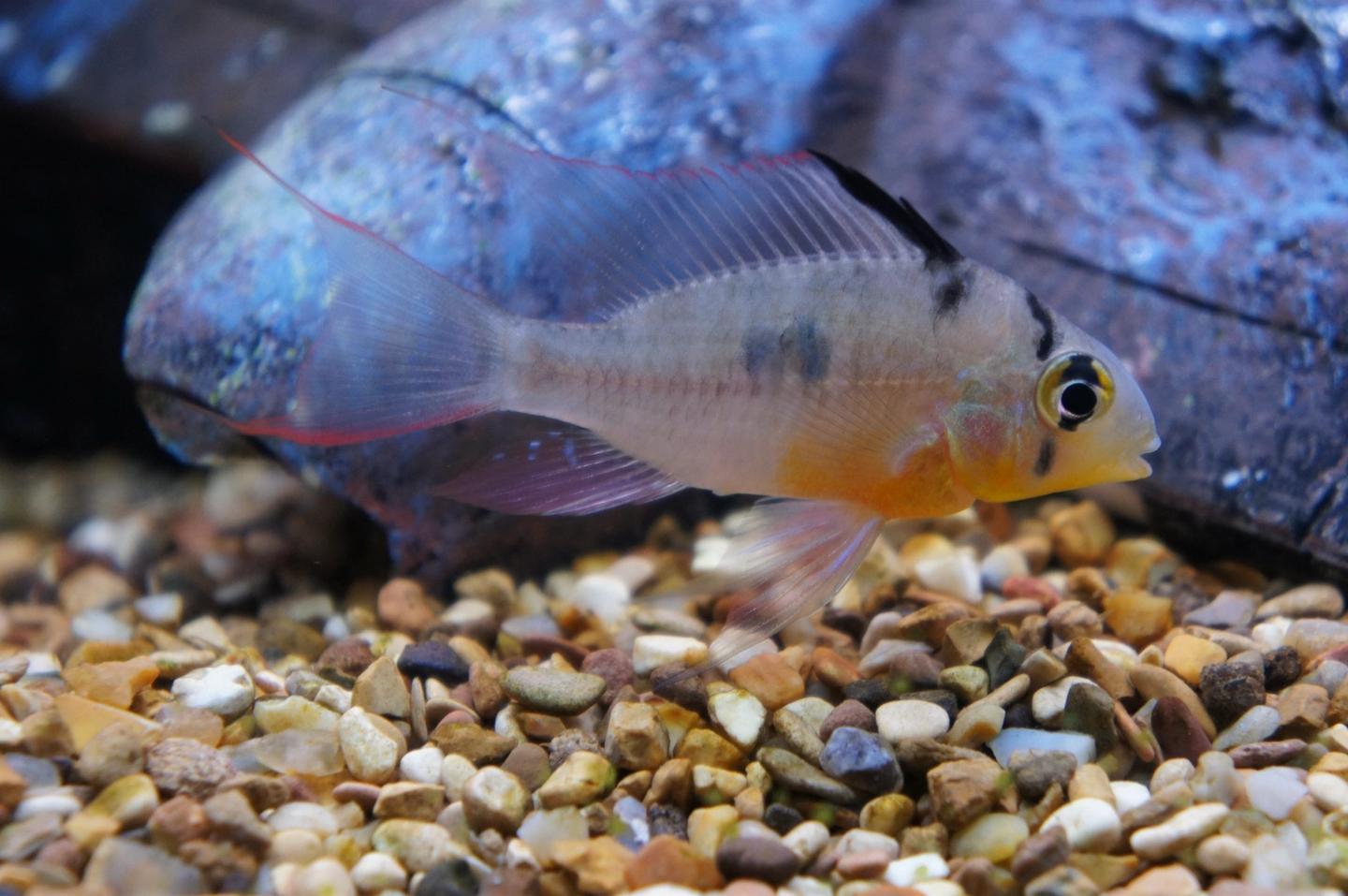
Cichlids are a family of roughly 1,800 accepted species, not one care type. Before buying, identify the exact species and source, then compare adult measurement, usable tank dimensions, social system, territory, tested water, diet and an exit plan. No family-wide minimum tank, water range or tank-mate list is safe.
Maintain these water conditions for optimal health and vibrant colors
The Red Flash Peacock Cichlid is Aulonocara stuartgranti, a freshwater cichlid endemic to Lake Malawi that reaches a recorded maximum of 11.8 cm total length. “Red Flash” is the trade colour-form name attached to this fish rather than a separate scientific name. It is a peacock cichlid, not an mbuna, and feeds over sand in search of invertebrates.
This fish suits a mature, filtered Lake Malawi aquarium with hard alkaline water, open fine sand and secure rock retreats. Plan at least a 120 × 45 cm base or equivalent and about 243 litres. The keeper must be able to maintain stable chemistry, protect access to feeding space and separate a fish if territorial pressure becomes persistent.
It is not suited to a biologically immature aquarium, coarse gravel or a combination dominated by excessively boisterous fish. Males are territorial and may act aggressively towards fish with similar colour patterns, so companion selection requires more than matching temperature and pH. Choose this cichlid when its adult space, feeding behaviour and social management all fit the aquarium.
FishBase records a maximum of 11.8 cm total length for male or unsexed Aulonocara stuartgranti. Seriously Fish separately uses a planning length of 13 cm standard length and recommends minimum base dimensions of 120 × 45 cm or equivalent, with an approximate volume of 243 litres. Use the recorded 11.8 cm adult size throughout the plan while providing the larger aquarium footprint.
| Planning decision | Working requirement |
|---|---|
| Base dimensions | At least 120 × 45 cm or equivalent |
| Approximate volume | About 243 litres or more |
| Routine temperature | 23–26°C |
| Routine pH | 8.0–8.6 |
| General hardness | 12–18 dGH |
| Substrate | Fine sand with open feeding space |
Seriously Fish gives an aquarium range of 23–29°C, pH 7.5–9.0 and 10–25 dGH for the species. OATA’s freshwater Malawi-cichlid sheet gives 23–27°C, pH 8.0–8.6 and 12–18 dGH as group guidance. Keep this aquarium at 23–26°C, pH 8.0–8.6 and 12–18 dGH; the temperature also remains within FishBase’s recorded 22–26°C wild environmental range.
Footprint matters as much as litres. Length and width create open feeding ground, retreat routes and separation between territories. Rock, sand and equipment reduce usable water and floor area, so calculate around the furnished aquarium rather than its empty external dimensions.
The live size selector carries the labels 3–4 cm, 4–5 cm, 5–7 cm and 7–9 cm. One purchase quantity supplies one animal of the selected option. The size you select is the size supplied, not the adult size. Use the selector to choose a dispatch size that will not be dangerously outmatched by established fish, then plan the aquarium around adult requirements.
Sex is guaranteed only when the selected option explicitly states male or female. This Red Flash Peacock Cichlid listing has no sex-guaranteed option. A size label should therefore never be used to build a presumed male-to-female ratio.
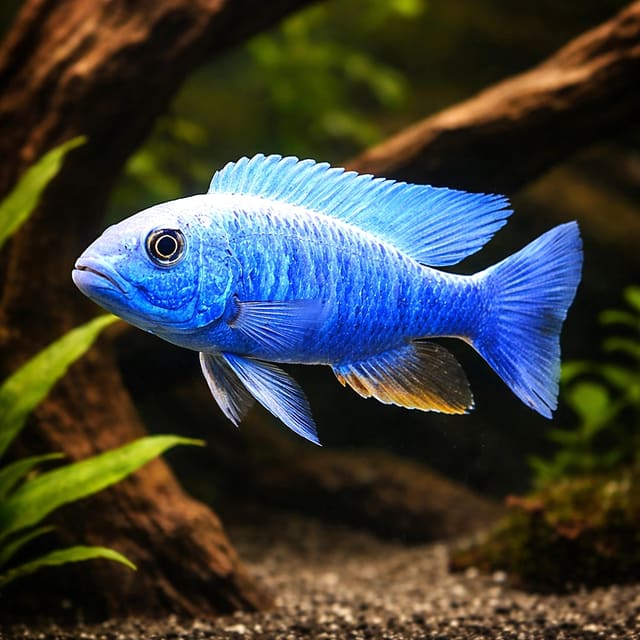
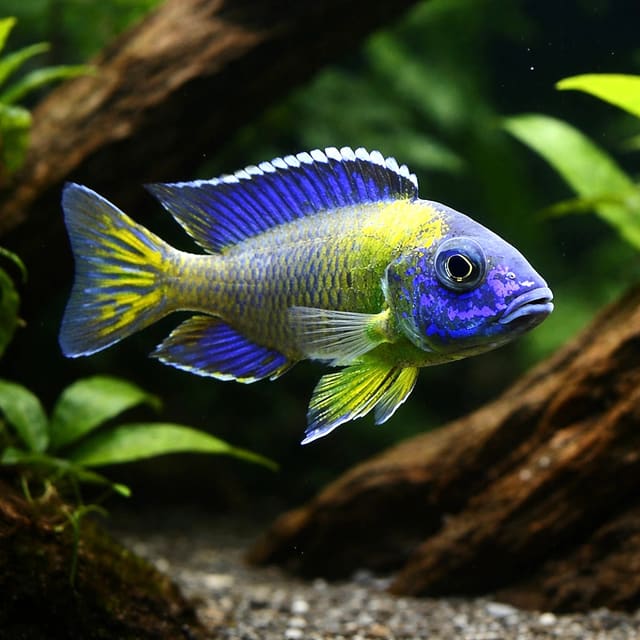
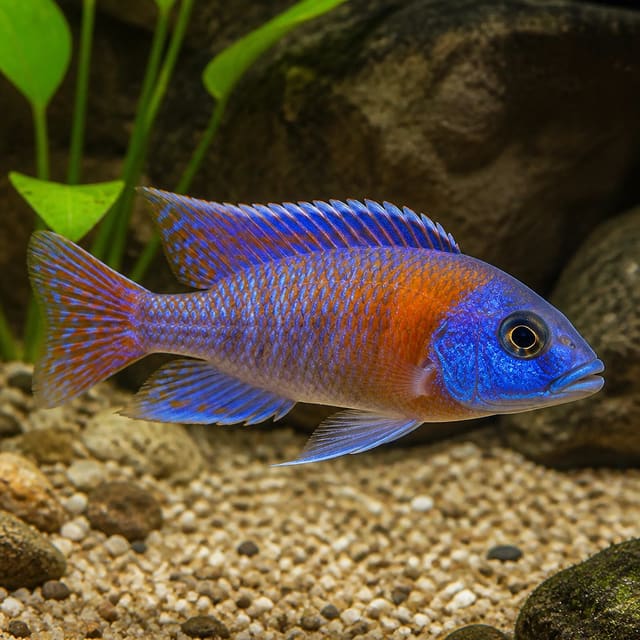
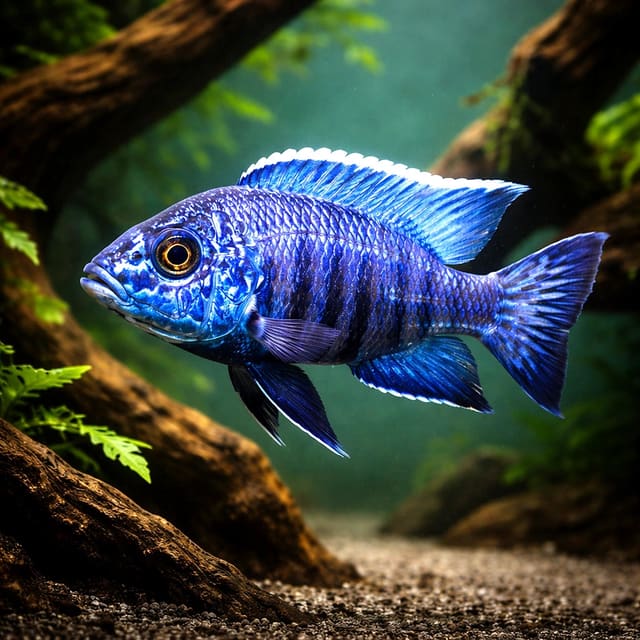
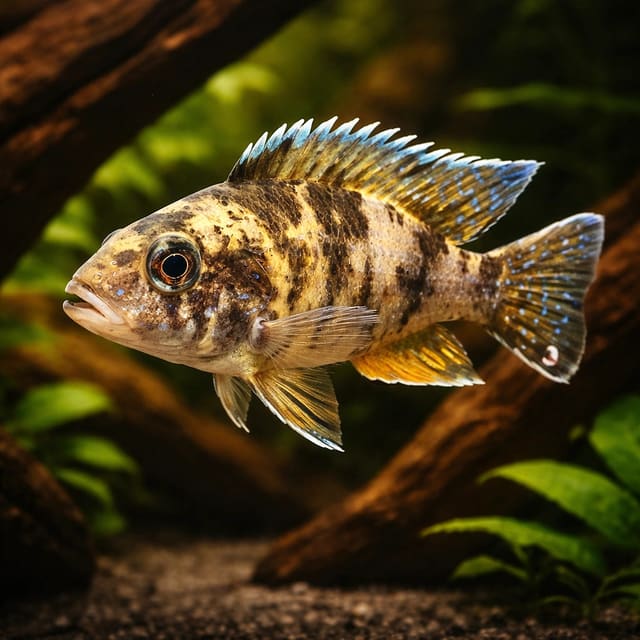
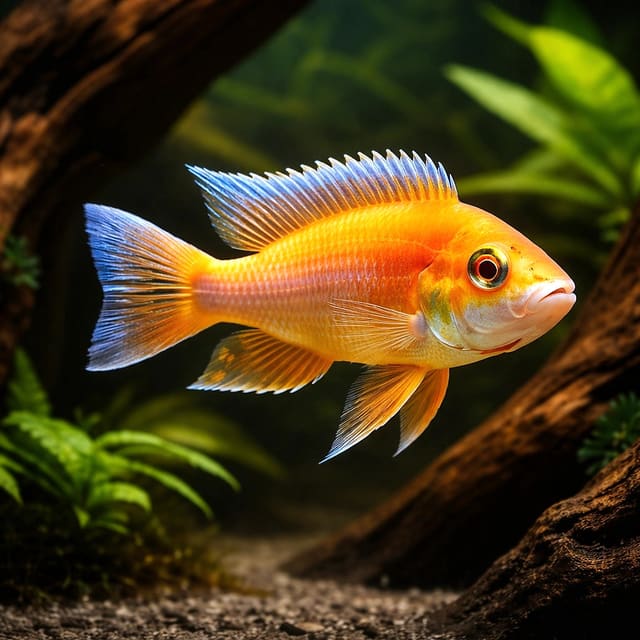
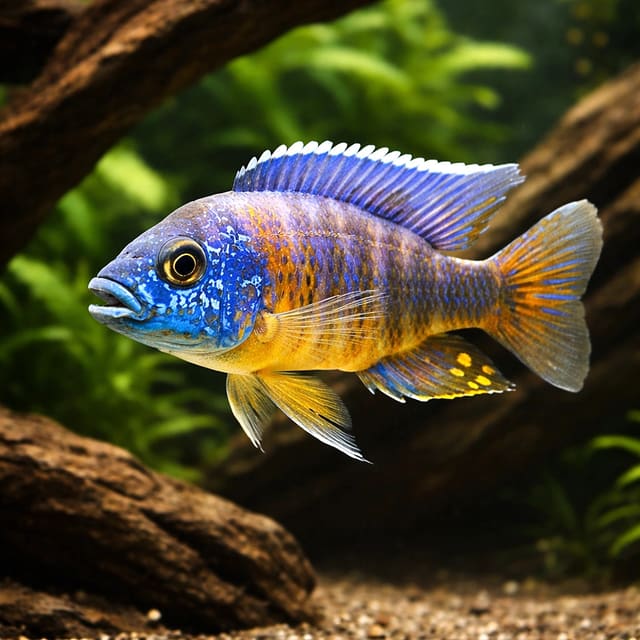
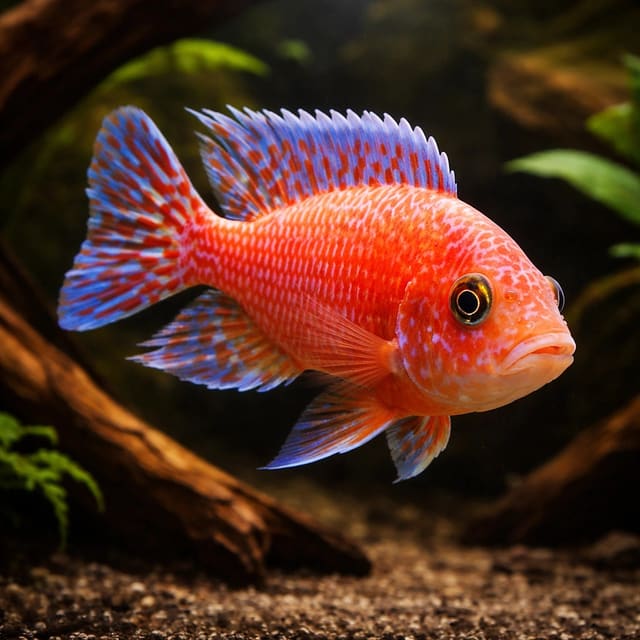
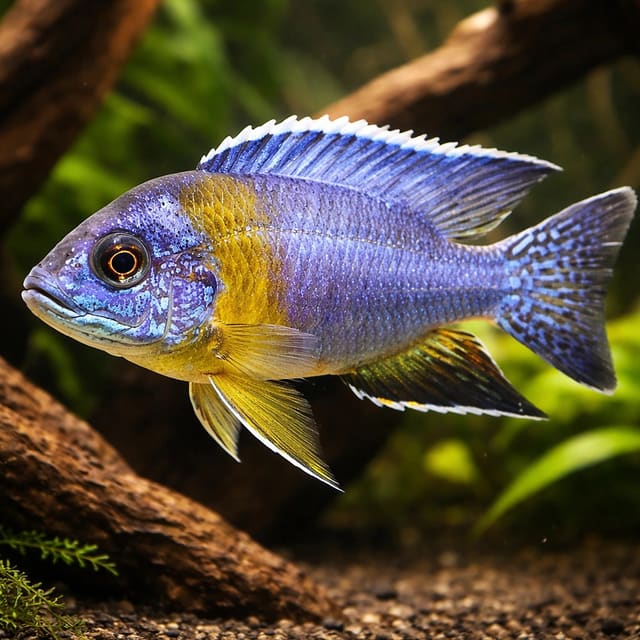
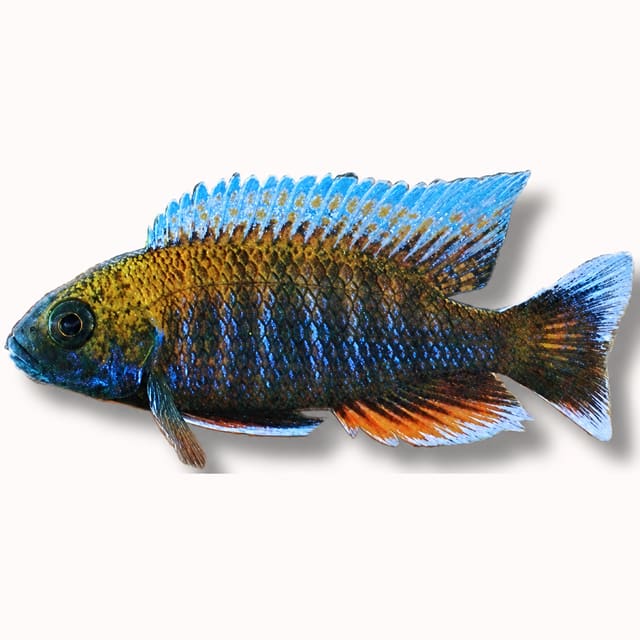
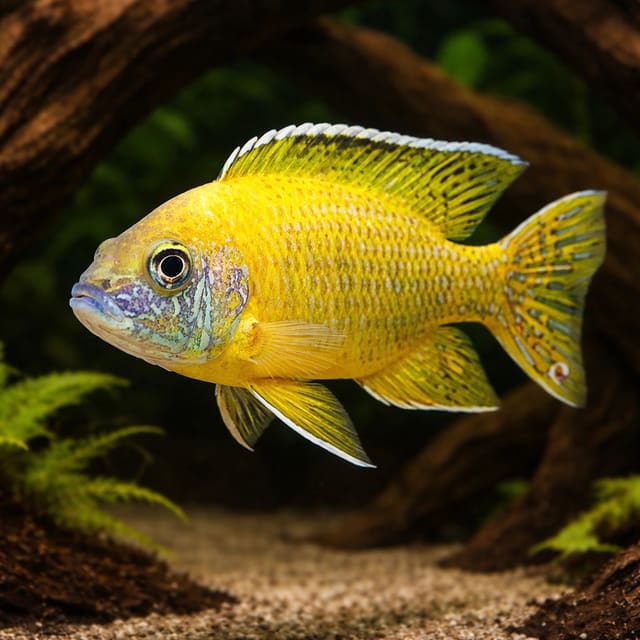
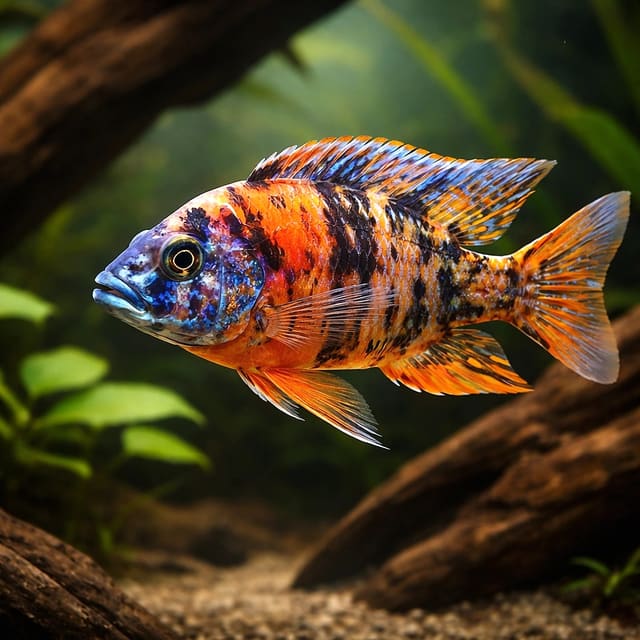
The gallery images are representative of this type of animal rather than photographs of the exact animal supplied, so colours can look slightly different from the live animal. Choose this cichlid for its care requirements rather than expecting an exact reproduction of the pictured pattern.
This cichlid suits a mature, filtered Lake Malawi aquarium where the keeper can maintain hard alkaline water, preserve open sand and respond if one fish is persistently harassed. It should not be introduced to a biologically immature aquarium or selected simply because its dispatch size looks small enough for temporary accommodation.
In the wild, FishBase describes Aulonocara stuartgranti as a benthopelagic fish endemic to Lake Malawi. It feeds on sand-dwelling invertebrates; some individuals hide in caves, while others form large schools over sand. That wild behaviour supports a layout with both open substrate and secure retreats, but it does not make the fish a schooling community species in an aquarium.
| Suits | Not suited to |
|---|---|
| A mature aquarium of about 243 litres or more with a 120 × 45 cm base | A biologically immature aquarium |
| Stable hard alkaline water within the stated ranges | Water outside the stated chemistry ranges or subject to rapid swings |
| Fine open sand with stable rock retreats | Gravel or small pebbles that inhibit sand feeding |
| A keeper able to monitor territorial behaviour and separate fish | A setup with no response available for persistent harassment |
| Carefully screened Malawi companions | The majority of excessively boisterous mbuna |
A larger aquarium becomes increasingly valuable when keeping several cichlids because it offers more routes around territories and more places to feed. Extra water alone does not resolve an unsuitable sex ratio or an aggressive companion, so space and social planning must work together.
Maintain 23–26°C, pH 8.0–8.6 and general hardness of 12–18 dGH. Stability is the practical priority: measure the tap water and aquarium before changing chemistry, then use the same controlled preparation method for replacement water. Avoid rapid temperature, pH or mineral corrections.
Use a reliable test routine for ammonia, nitrite, nitrate and pH. Ammonia and nitrite should remain at zero mg per litre. OATA advises that nitrate should not exceed 20 mg per litre above the normal tap-water level for Malawi cichlids. Testing the tap water alongside the aquarium distinguishes nitrate entering with replacement water from nitrate accumulating through feeding and fish waste.
| Reading or change | Response |
|---|---|
| Ammonia or nitrite above zero | Pause new additions, check filtration and act to restore safe water quality. |
| Nitrate trend rising each week | Review portions, waste removal, stocking load and water-change volume. |
| pH falling between changes | Check carbonate stability, waste load and the preparation of replacement water. |
| Temperature moving quickly | Check heater operation and match replacement water before it enters the aquarium. |
Keep a simple written log. A sequence of weekly figures reveals gradual changes that one isolated test can hide. Record water-change percentage, feeding adjustments and filter work beside the readings so the cause of a trend is easier to identify.
Our water chemistry guide explains what each measurement means. Enter measured values in the water matcher for an initial comparison, then base decisions on tests from the actual aquarium.
Use fine aquarium sand so the fish can take substrate into its mouth and sift it while searching for food. Seriously Fish warns that gravel and small pebbles can inhibit this feeding method, damage the gill filaments or be swallowed, with a risk of internal blockage. A smooth open feeding area is therefore a functional part of the habitat.
Support rocks securely so digging cannot undermine them. The fish may move sand around the base of the decor, so stability must not depend on loose substrate holding a heavy stone in place. Recheck the structure after maintenance or any significant excavation.
This species does not tend to harm plants, but plants must still tolerate the aquarium’s hard alkaline water and the chosen layout. Keep roots and planting containers away from the main feeding floor if they would obstruct sand sifting. Plants should supplement the arrangement rather than replace open substrate and secure cover.
When planning the layout, view it from the fish’s level as well as from the front glass. A decorative rock pile that looks broken from above may still leave an uninterrupted line of sight along the whole tank. Small shifts in position can create separate visual zones without consuming all the swimming space.
Use mature biological filtration and strong circulation throughout the aquarium. The RSPCA explains that biological filtration supports bacteria that convert toxic ammonia to toxic nitrite and then to safer nitrate. A clear-looking aquarium can still contain harmful dissolved waste, so appearance never replaces testing.
Seriously Fish recommends heavy filtration using canister filters, a sump or a combination. For an aquarium of about 243 litres, its worked example uses turnover of four to five times the aquarium volume each hour, equal to roughly 970–1,215 litres per hour. Treat that as a system-planning figure: media, pipework and head height can reduce real flow below the number printed on a filter.
| Observation | Practical decision |
|---|---|
| Waste settles behind rocks | Redirect circulation or remove the trapped debris during maintenance. |
| Sand blows continuously | Diffuse or redirect the outlet without reducing oxygenation across the whole tank. |
| Flow drops suddenly | Check intakes, pipework and mechanical media for restrictions. |
| Tests worsen after adding fish | Reduce the pressure on the system and reassess biological capacity. |
Keep vigorous surface movement so gas exchange remains effective. An oversized filter is useful in a Malawi aquarium, but high pump output does not compensate for immature biological media, excessive feeding or neglected waste.
For a roughly 243-litre aquarium in a room around 20°C, Seriously Fish gives a planning example of 125–175 W across two heaters. The actual requirement depends on room temperature and heat loss. Position equipment so warmed and filtered water circulates through the aquarium rather than collecting in one zone.
Change 30–50% of the water at least weekly, following the species guidance from Seriously Fish. OATA’s Malawi-cichlid group guidance separately recommends a 25% partial water change at least once a week. Use the species range as the working routine and adjust within it by checking ammonia, nitrite, nitrate, visible waste, feeding load and the number of residents. Replacement water should be treated for chlorine or chloramine and matched closely for temperature and chemistry.
| Frequency | Work to complete |
|---|---|
| Daily | Check temperature, filter flow, breathing, appetite, fins and access to open space. |
| At least weekly | Test ammonia, nitrite, nitrate and pH; change 30–50% of the water. |
| During each change | Remove accessible solid waste and inspect rock stability and equipment. |
| When flow declines | Check intakes and clean restricted mechanical media without stripping the biological filter. |
| Monthly review | Compare test trends, body condition, feeding portions and social pressure. |
Rinse filter media lightly in removed aquarium water when cleaning is needed. Do not wash established biological media under the tap because chlorine or chloramine may damage the bacterial population. Avoid replacing all mature media at once.
Clean the open sand surface without dismantling every territory during each water change. Repeatedly rebuilding the whole aquarium can disrupt social boundaries, while leaving accumulated food and waste beneath rocks damages water quality. Target the areas that collect debris and occasionally inspect less accessible zones.
A worked nitrate example helps set the routine. If the tap water reads 15 mg per litre and the aquarium reaches 30 mg per litre before each change, the rise is 15 mg per litre. That remains below OATA’s maximum increase of 20 mg per litre, but a rising week-to-week pattern still signals that feeding, stocking or water-change volume needs attention.
In Lake Malawi, Aulonocara stuartgranti feeds on sand-dwelling invertebrates. Members of the genus hover over the substrate, detect tiny movements, take mouthfuls of sand and expel the unwanted material through the mouth and gills. Feed in a way that lets the fish search and take small items without leaving large amounts trapped behind rocks.
Use a varied diet of high-quality fine-grade prepared foods with small live or frozen foods such as chironomid larvae, Tubifex, Artemia or mosquito larvae. Seriously Fish also advises that at least some dried foods should contain a high proportion of vegetable matter such as Spirulina. Choose food sizes the fish can take easily at its present dispatch size.
OATA recommends feeding Malawi cichlids twice a day. Split the daily amount into two measured portions rather than responding to repeated begging. Overfeeding adds organic waste, raises the workload on the filter and can push ammonia, nitrite or nitrate in the wrong direction.
Watch the whole group during feeding. A fish that approaches but is repeatedly driven away has a compatibility or territory problem, not simply a need for more food. Spread a small portion across more than one open area, then intervene if exclusion continues.
Review body condition alongside test results. A cleanly consumed ration with stable readings is more useful than a large menu. If appetite drops suddenly, check water quality, breathing and social pressure before changing several foods at once.
Complete cycling and confirm stable readings before choosing a delivery window. The first tropical aquarium guide covers filter maturation and pre-arrival preparation. Ammonia and nitrite must read zero, the heater and filter should run consistently, and the sand-and-rock layout should already be secure.
Follow our delivery and Live Arrival Guarantee policy for the current transport and claim requirements. Someone must be present to receive the parcel.
Observe balance, breathing and swimming after release. Transport can temporarily alter colour or behaviour, so judge the fish by a combination of posture, respiration, injuries and its progress over time. Avoid a large feed immediately after introduction; resume the measured routine when the fish is settled enough to take food normally.
Check water and behaviour every day. Confirm that the newcomer can reach open sand, retreat from other fish and eat without persistent pursuit. Test immediately if breathing accelerates, appetite disappears or several fish change behaviour together. Early action is easier than trying to restore stability after waste or aggression has escalated.
Seriously Fish describes this peacock as relatively peaceful, while noting that males are territorial and may act aggressively towards fish with a similar colour pattern. The recommended social arrangement is one male with four to six females unless the aquarium is very large. Treat that as a long-term arrangement requiring confirmed sexes, sufficient space and close observation.
A group selected by dispatch size cannot be assumed to have that ratio. As fish develop, watch for repeated display, courtship, territory defence and exclusion. The useful distinction is between brief interaction followed by normal feeding and sustained pressure that prevents another fish from using the aquarium.
| What you see | What to do |
|---|---|
| Brief chase, then both fish feed | Monitor frequency, fin condition and use of retreats. |
| One fish stays hidden and misses meals | Separate it if necessary and reassess the social plan. |
| A male targets a similarly coloured fish | Do not rely on extra food or decor alone; review whether both can remain together. |
| Pressure rises after decor moves | Allow careful observation while territories reform, with separation ready. |
| Several fish breathe rapidly | Test water and oxygenation before treating it as a social problem. |
Adding more fish is not an automatic cure for aggression. Every addition increases waste and creates another interaction, while a dominant fish may continue to focus on one rival. A larger footprint, sensible sex structure and suitable companions must all be in place.
Review the aquarium again as the fish approaches adult dimensions. A layout that offered ample room to a 3–4 cm fish may divide an adult footprint poorly. Move only what is necessary, keep rockwork secure and preserve the broad sand area used for feeding.
Observe breathing, swimming, colour, appetite, body condition, fins and scales every day. OATA highlights surface hanging, sitting on the bottom, erratic swimming, darker or paler colour, unusual aggression, extra hiding, altered gill movement, white spots, fluffy growths, missing scales and reduced food intake as changes requiring attention.
| Change | First response |
|---|---|
| Rapid breathing | Test ammonia, nitrite and temperature; check flow and surface movement. |
| Sudden refusal to eat | Check water, recent introduction and whether another fish blocks feeding access. |
| Torn fins or lost scales | Observe pursuit and inspect the stability and surfaces of the decor. |
| Persistent hiding | Check water and identify whether a particular fish controls the open areas. |
| Several fish change together | Investigate the shared environment immediately. |
Do not let a normal-looking test from several days earlier replace a fresh test after behaviour changes. A filter blockage, heater fault, extra feed or dead organic matter can alter conditions quickly. Record the time and readings so you can see whether corrective work is improving the situation.
If health changes continue after water and social causes have been addressed, contact us with the aquarium volume, temperature, pH, ammonia, nitrite, nitrate, full stock list and a clear account of the signs. Those details allow a more useful response than a colour change or appetite description alone.
Keep maintenance calm while a fish is stressed. Preserve oxygenation, avoid sudden chemistry changes and do not dismantle the whole aquarium unless an immediate safety problem requires it.
OATA advises keeping Malawi cichlids with other Malawi cichlids or some Lake Malawi Synodontis catfish. That is a starting boundary rather than an automatic tank-mate list. Compare each candidate’s adult size, water requirements, diet, activity, colour pattern and use of the aquarium floor.
Browse the African cichlid collection to compare adult requirements, but do not select companions by colour or dispatch size alone. A fish that looks similar may mature into a direct territorial rival or become too boisterous for a sand-feeding peacock.
Companion selection remains conditional because individual behaviour and the established hierarchy can change the outcome. Before mixing an uncertain combination, contact us with the aquarium dimensions, measured water values, adult stock list and intended numbers for a stocking and compatibility assessment.
Introduce additions gradually so the biological filter can adjust to the extra waste. OATA warns that stocking too quickly can leave too few nitrifying bacteria to process the increased ammonia and nitrite load.
Avoid the majority of mbuna because Seriously Fish describes them as excessively boisterous and unsuitable companions for this species. Their activity and territorial pressure can prevent a peacock from feeding calmly over sand even when the aquarium’s chemistry suits both fish.
Avoid other Aulonocara species because most can hybridise. Mixed peacock offspring may lose a dependable identity, and females of different forms can be difficult to distinguish. Keep one Aulonocara species rather than relying on colour to identify parents or young.
Males may act aggressively towards fish with a similar colour pattern. Blue-headed or red-bodied companions therefore need an especially careful review, even when their general care looks compatible. Similar appearance does not guarantee conflict, but it raises a specific territorial concern supported by the species profile.
| Candidate | Decision |
|---|---|
| Most mbuna | Avoid because their boisterous behaviour can overwhelm this peacock. |
| Other Aulonocara species | Avoid because most can hybridise. |
| Similarly coloured males | Use caution and prepare separation because direct rivalry may develop. |
| Selected Malawi cichlids | Consider only after matching adult size, water, diet, temperament and footprint. |
| Some Lake Malawi Synodontis | Consider only after checking the exact catfish’s adult needs and floor-space use. |
Rearranging decor can reduce the advantage of established territories when adding Malawi cichlids, but it cannot make an unsuitable combination safe. Keep every rock secure after changes and watch feeding access closely during the first days.
FishBase records a maximum of 11.8 cm total length for male or unsexed Aulonocara stuartgranti, so plan its aquarium around an adult size of 11.8 cm.
Seriously Fish recommends at least a 120 × 45 cm base or equivalent and an approximate volume of 243 litres, with open fine sand and stable rock piles.
Seriously Fish recommends one male with four to six females unless the aquarium is very large, but use that arrangement only with confirmed sexes and enough space to manage territorial behaviour.
It suits a keeper prepared to maintain a mature filtered aquarium, stable hard alkaline water, fine sand and a separation plan; it should never enter a biologically immature aquarium.
Feed varied fine-grade prepared foods with small live or frozen chironomid larvae, Tubifex, Artemia or mosquito larvae; OATA’s Malawi guidance says to feed only what it can eat within a few minutes, twice a day.
Keep it at 23–26°C, pH 8.0–8.6 and 12–18 dGH; these values fit Seriously Fish species guidance and OATA’s Malawi-group ranges, while the temperature also stays within FishBase’s 22–26°C wild record.
Seriously Fish describes it as relatively peaceful, but males are territorial and may act aggressively towards fish with similar colour patterns; persistent chasing, damaged fins or exclusion from food requires intervention.
Screen selected Malawi cichlids or some Lake Malawi Synodontis by adult size, water, diet, behaviour and floor-space needs; avoid most mbuna, and avoid other Aulonocara species because most can hybridise.
Someone must be present to receive it. Film every delivery continuously from the sealed parcel as it is opened, keeping the fish in the sealed bag on camera; then float the bag for 20–30 minutes and never pour the bag water into the aquarium.
No reviews for this item yet. Bought one? Honest reviews only, good or bad.
What customers say about ordering from us
I have a small group of long finned mountain minnows. So was delighted to be able to order ten of this variety to increase the genetics in my tank . The ones I recieved are healthy but it’s to early to give a verdict on wether they are of a long finned type since they are small currently.
Gordon Walker · 23 Sept 2026
100% success travel and "installation". Pleased with quality of purchase. The Siamese fighter a bit "shy" so have not yet seen him at his best yet but looking good. Happy customer. GG
George E Garratt · 21 Sept 2026
Reviews of our shop, collected by Judge.me, an independent third-party review collector. Newest first.