−11%
Moderate
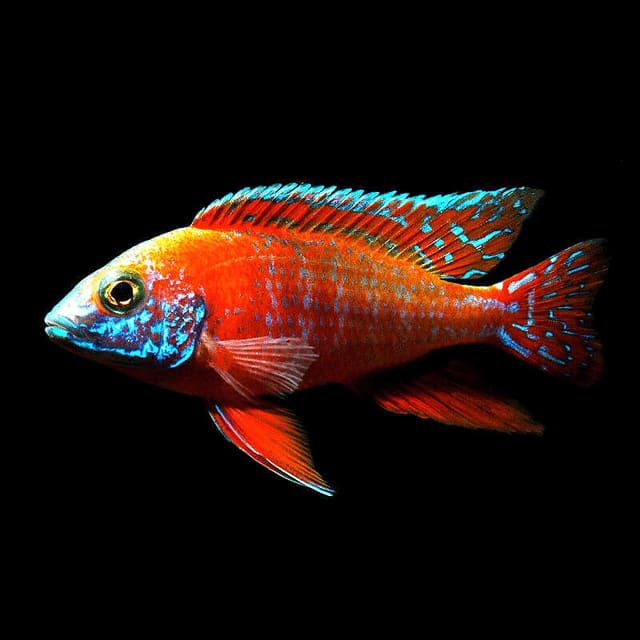
Calico Peacock Cichlid (Aulonocara sp. calico)
24–28°C · pH 7.5–8.5 · 200L
£17.79£19.99

The Flavescent Peacock Cichlid (Aulonocara stuartgranti) is a cichlid endemic to Lake Malawi that reaches 13 cm. It suits intermediate keepers with a 120 × 45 cm aquarium base and about 243 litres, using the FishBase, Seriously Fish and OATA overlap of 23–26°C and the Seriously Fish and OATA overlap of pH 8.0–8.6 and 12–18 dGH. Sold individually in 3–4 cm, 4–5 cm, 6–7 cm, 7–9 cm and XL sizes.
Adult size is the maximum length this species reaches at full maturity (scientific sources). The livestock you receive will be younger and smaller — pick a size above for the actual shipping size. Product-photo provenance and any image-specific limitations are stated on the listing.
Aulonocara stuartgranti
Save when buying multiple fish. Each quantity is one fish; sex and pair formation are not guaranteed unless the selected variant explicitly states them.
The Flavescent Peacock Cichlid (Aulonocara stuartgranti) is a cichlid endemic to Lake Malawi that reaches 13 cm. It suits intermediate keepers with a 120 × 45 cm aquarium base and about 243 litres, using the FishBase, Seriously Fish and OATA overlap of 23–26°C and the Seriously Fish and OATA overlap of pH 8.0–8.6 and 12–18 dGH. Sold individually in 3–4 cm, 4–5 cm, 6–7 cm, 7–9 cm and XL sizes.
Adult size is the maximum length this species reaches at full maturity (scientific sources). The livestock you receive will be younger and smaller — pick a size above for the actual shipping size. Product-photo provenance and any image-specific limitations are stated on the listing.
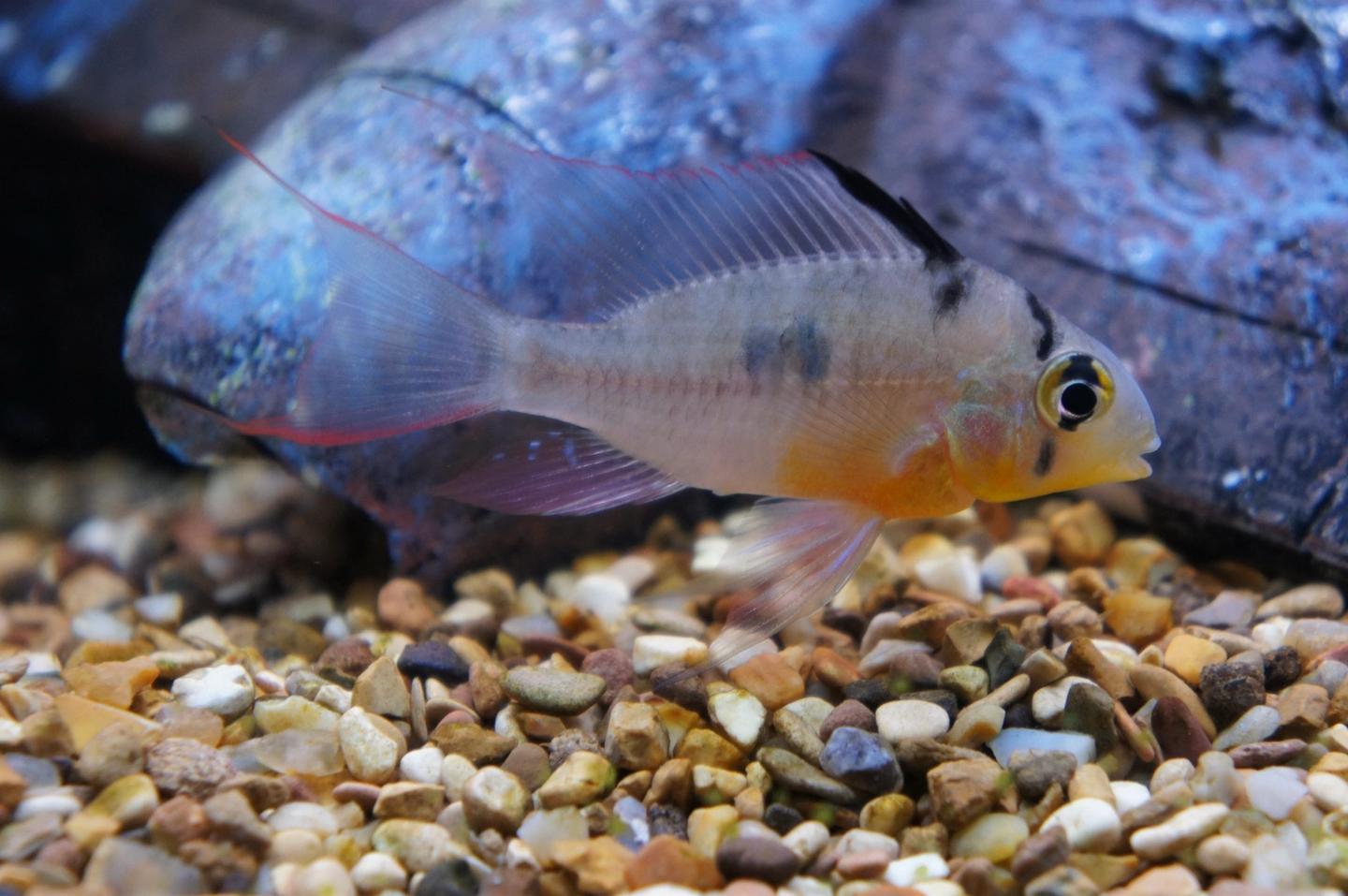
Cichlids are a family of roughly 1,800 accepted species, not one care type. Before buying, identify the exact species and source, then compare adult measurement, usable tank dimensions, social system, territory, tested water, diet and an exit plan. No family-wide minimum tank, water range or tank-mate list is safe.
Maintain these water conditions for optimal health and vibrant colors
The Flavescent Peacock Cichlid (Aulonocara stuartgranti) is a freshwater cichlid endemic to Lake Malawi in Africa. It suits an intermediate keeper who can prepare a large, biologically mature aquarium with stable hard, alkaline water, fine sand and carefully screened companions. FishBase records a maximum adult size of 11.8 cm total length and places the species along the coast between Ngara and Chizi Point.
This is a bottom-associated peacock cichlid with a strong connection to open sand. In nature it feeds on sand-dwelling invertebrates. Some individuals hide persistently in caves, while others form large schools over sand, so the aquarium must combine open feeding space with secure cover rather than forcing the fish into one exposed area.
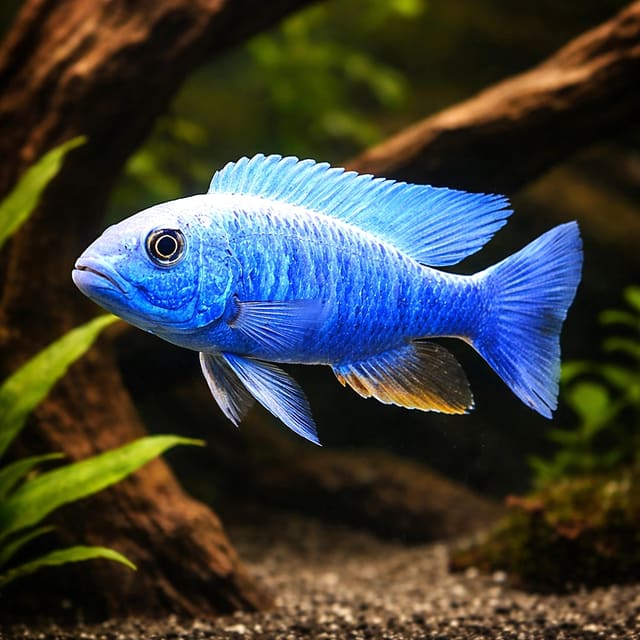
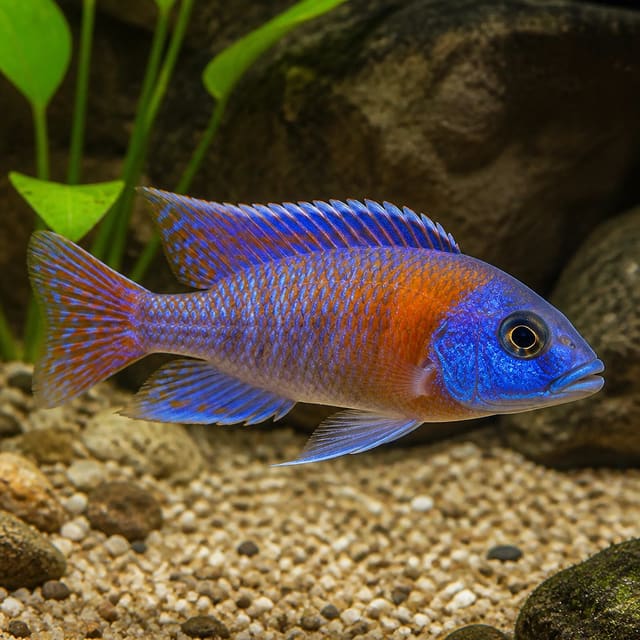
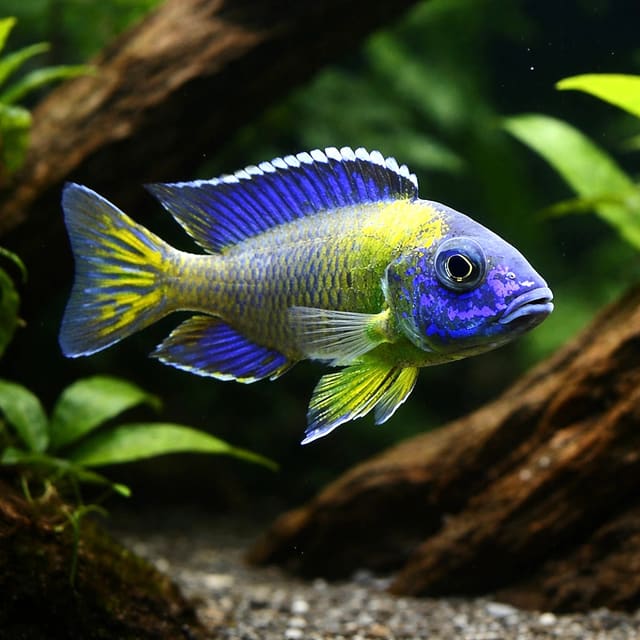
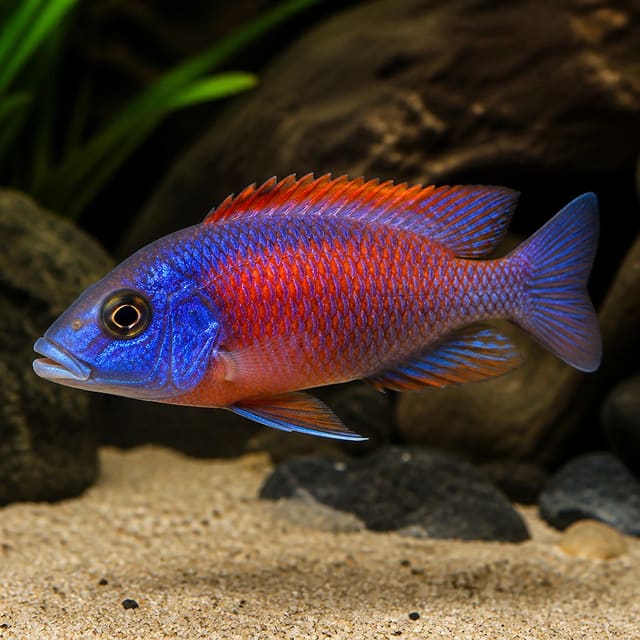
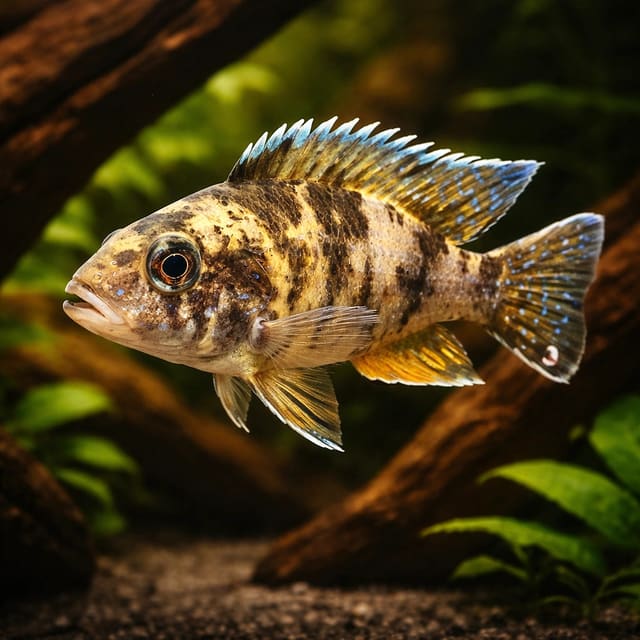
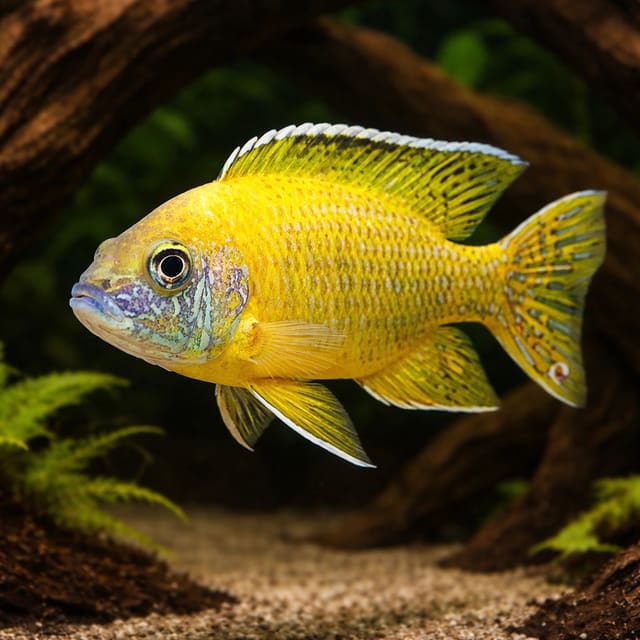
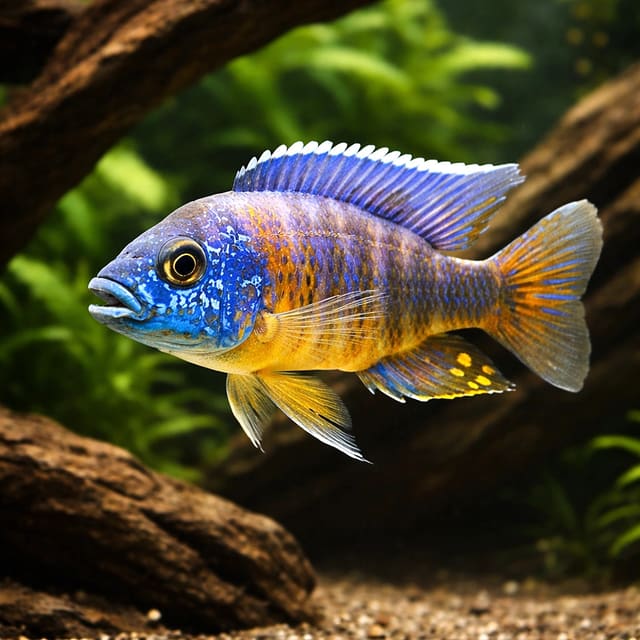
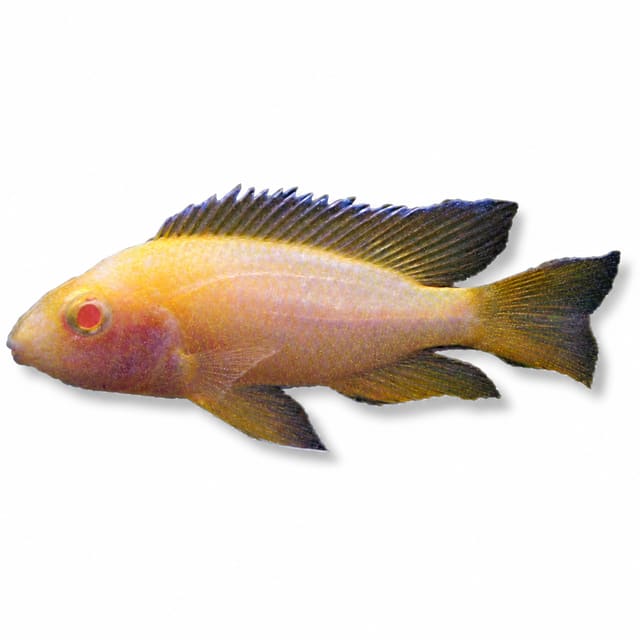
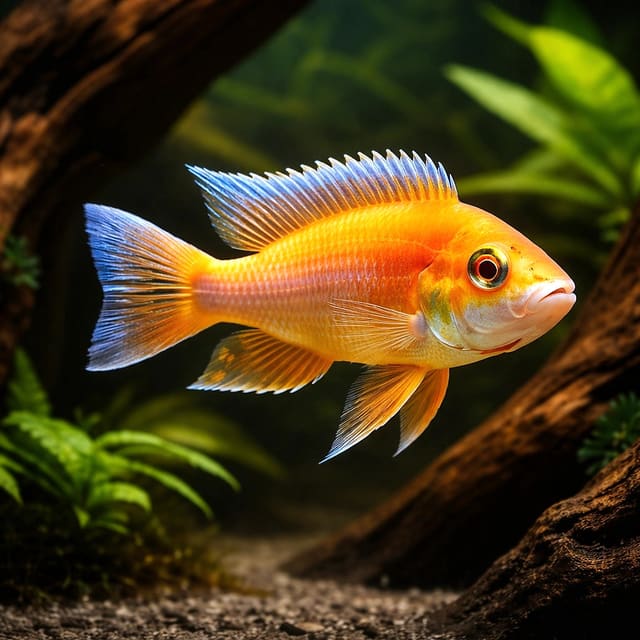
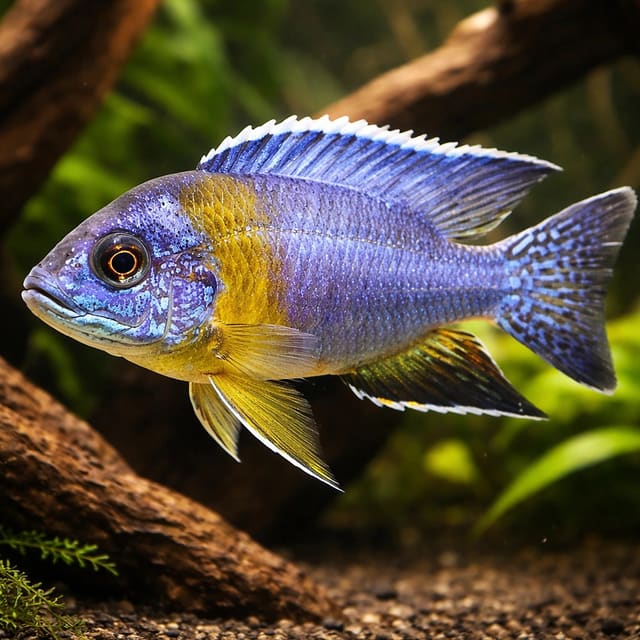
Chilumba identifies this Flavescent Peacock trade form. Male colour forms vary by locality across the species’ range, with blue variants occurring predominantly, though not exclusively, in the north of the lake and yellow forms in the south. Colour must therefore be treated as variable rather than as a fixed promise for every fish.
Start with a base of at least 120 × 45 cm or an equivalent footprint and about 243 litres. Seriously Fish recommends those minimum base dimensions for general keeping, while allowing smaller aquaria for breeding purposes. Length and front-to-back depth matter because this fish needs open sand for feeding as well as rockwork that creates cover and visual boundaries.
Keep routine water at 23–26°C, pH 8.0–8.6 and 12–18 dGH. Temperature is the overlap of FishBase, Seriously Fish and OATA; pH and hardness are the overlap of Seriously Fish and OATA. OATA’s Malawi-cichlid figures are group guidance, not a species-specific optimum, while the narrower routine values remain inside the species profile.
Water quality is a decisive part of suitability. This cichlid should never enter a biologically immature aquarium and is extremely susceptible to deteriorating water or swings in chemical parameters. A strong filter, regular testing and consistent replacement water are therefore as important as aquarium dimensions.
| Suits | Not suited to |
|---|---|
| A mature aquarium of about 243 litres with a 120 × 45 cm base | A small or biologically immature aquarium |
| Stable hard, alkaline water at 23–26°C | A setup requiring soft or acidic water |
| Fine sand with rock cover and open feeding space | Coarse gravel or small pebbles that impede feeding |
| A carefully planned Lake Malawi community | Other Aulonocara species or the majority of Mbuna |
| A keeper prepared to test and maintain water every week | An aquarium maintained through occasional visual checks alone |
One purchase supplies one live fish in the selected size. Use the live size selector to choose 3–4 cm, 4–5 cm, 6–7 cm, 7–9 cm or XL. The size you select is the size supplied, not the adult size. Prepare the permanent aquarium around the 11.8 cm adult figure and the full 120 × 45 cm footprint rather than treating a smaller dispatch fish as suitable for a smaller permanent home.
Sex is guaranteed only when the selected option explicitly states male or female. This Flavescent Peacock Cichlid listing has no sex-guaranteed option. Males are larger and more colourful than females; sex is guaranteed only when the exact product or selected option explicitly states male or female. A request for several fish can still produce a social combination that differs from a planned male-with-females group.
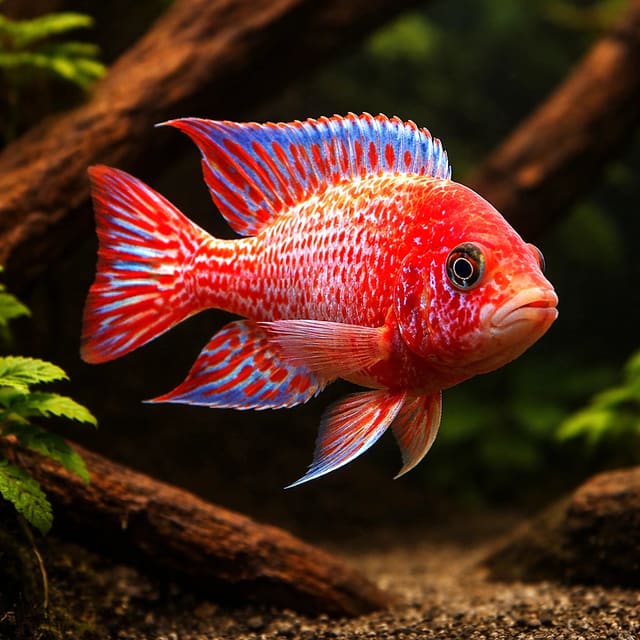
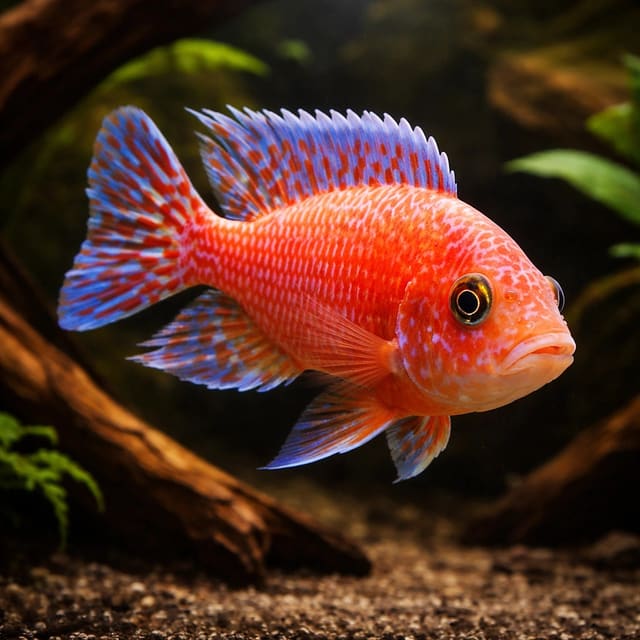
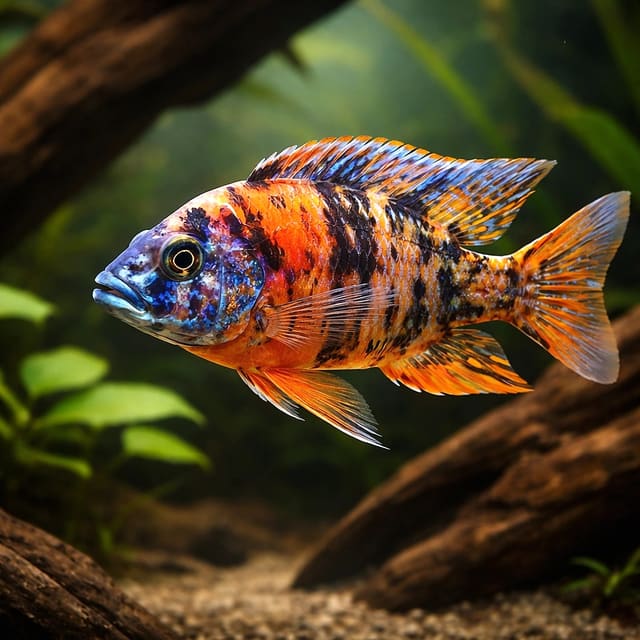
Some gallery images have been digitally enhanced to improve image quality. They show the listed type of animal rather than guaranteeing the exact markings of the individual supplied, so natural colour and pattern can vary. The two-fish scene shows two illustrated animals, but it does not change the purchase unit. Every quantity still represents one fish.
Use 11.8 cm as the consistent adult-size figure for space and stocking decisions. FishBase records that maximum as total length for male or unsexed specimens. Seriously Fish separately uses 13 cm standard length in its aquarium profile, so the 120 × 45 cm base recommendation should not be reduced to match a small dispatch fish.
A base of 120 × 45 cm and about 243 litres creates room for open sand, rock boundaries and filtration without sacrificing the fish’s feeding area. An unusually tall aquarium with the same nominal volume is not equivalent if its base is shorter or narrower. Measure the clear internal length and depth, then allow for displacement by rockwork and equipment.
Do not postpone the adult aquarium on the assumption that a later upgrade will happen before growth or territorial behaviour becomes important. The permanent system should already be biologically mature, chemically stable and correctly arranged before the fish is introduced.
A single individual still needs the full species-appropriate footprint. Keeping one fish can reduce the complications of an accidental sex combination, but it does not remove the need for sand, cover, stable chemistry or strong filtration. Where a social group is intended, plan the sex composition before purchase rather than adding fish until aggression appears.
Use fine sand as the substrate and arrange piles of rock around the aquarium while leaving open spaces between them. This layout supports the fish’s natural feeding method: Aulonocara take mouthfuls of substrate, sift out edible material and expel the remainder through the mouth and gills. They also hover above the bottom and respond to small movements in the sand.
Avoid coarse gravel and small pebbles. Seriously Fish warns that coarse material can inhibit feeding, damage gill filaments and be swallowed, with a risk of internal damage or blockage. Fine sand is therefore a functional care choice rather than a decorative preference.
| Layout element | Care purpose |
|---|---|
| Broad fine-sand area | Supports natural substrate sifting and makes uneaten food easier to see |
| Separated rock piles | Create caves, cover and breaks between open spaces |
| Open routes between structures | Allow the fish to move between cover and feeding areas |
| Unobstructed filter flow | Moves waste towards filtration without removing the complete calm feeding zone |
| Carefully placed plants | Add cover without replacing the required sand area |
The species does not tend to harm plants, although Malawi cichlids will often dig and rearrange substrate. Use plants only where their placement and water requirements fit the hard, alkaline aquarium. Rooted specimens may be disturbed, while plants attached to rock can retain their position more reliably.
Set rockwork securely and check it during maintenance. The fish needs dependable cover, especially because FishBase describes both cave-hiding individuals and fish that school over sand. A layout with only bare sand can leave a shy individual exposed, while a solid wall of rock removes the feeding habitat.
Keep the feeding surface accessible to a siphon. Fine foods can settle around rock bases, and trapped organic waste undermines the stable water quality this species needs. Clean sections methodically without dismantling every refuge during one routine service.
Keep the aquarium at 23–26°C, pH 8.0–8.6 and 12–18 dGH. These routine figures sit inside the species ranges and the Malawi-cichlid guidance used for this fish. Stability matters more than repeatedly dosing the aquarium to chase one exact point inside each range.
Test the source water and aquarium before choosing a preparation method. Our water chemistry guide explains the role of each reading, while the water matcher helps compare measured aquarium values with the target range. Use fresh tests rather than relying on a tap-water report or an earlier aquarium reading.
Prepare replacement water consistently. Treat tap water with conditioner to remove chlorine or chloramine before it enters the aquarium, and avoid creating a sudden temperature or mineral change during maintenance. Record the main readings at the same point in the weekly routine so trends become easier to recognise.
Test again whenever behaviour or appearance changes. Rapid or slow gill movement, surface hanging, bottom sitting, unusual hiding, altered aggression, reduced feeding or erratic swimming can accompany a water-quality problem. Check chemistry before assuming the behaviour is purely territorial.
Do not introduce the fish while ammonia or nitrite is detectable. Adding livestock increases feeding and waste, and the established beneficial-bacteria population must expand with that load. Increase stocking slowly and keep the filter running continuously.
Use strong biological filtration in a fully mature aquarium. The RSPCA explains that fish release toxic ammonia, which a working biological filter converts first to nitrite and then to the safer nitrate. The filter must be established and maintained before it is relied upon for a live cichlid.
For an aquarium of about 243 litres, Seriously Fish recommends turnover of four to five times the aquarium volume per hour. That equates to approximately 970–1,215 litres per hour. Consider the real flow after filter media, pipework and normal debris reduce the rated output.
Heavy filtration should support stable water without removing every calmer feeding area. Position the return to maintain circulation and surface movement, then check whether fine food is being driven behind rocks before the fish can take it. Clear blocked intakes and reduced outlets promptly.
Never run filter media under the tap. Chlorine or chloramine may kill the beneficial bacterial population established in it. Rinse the media lightly in aquarium water removed during a partial water change, and avoid excessive cleaning that strips away the biological capacity.
Use the first tropical tank guide to plan maturation before livestock arrives. A filled and heated aquarium is not automatically biologically mature; ammonia and nitrite must remain at zero as the system begins processing the intended feeding load.
Check water at least weekly and after each stocking change. Malawi cichlids can be stressed by even small amounts of ammonia and nitrite, while this species is particularly sensitive to deteriorating water and chemical swings.
Make high-quality, fine-grade prepared foods and appropriately sized invertebrate foods the foundation of the diet. FishBase records sand-dwelling invertebrates as the wild food, while Seriously Fish describes Aulonocara as skilled benthic feeders that sift substrate and detect small movements before striking.
Offer small live or frozen foods such as chironomid larvae, Tubifex, Artemia and mosquito larvae as part of a varied menu. At least some dried products should contain a high proportion of vegetable matter such as Spirulina. This combination follows the species profile without turning one rich food into the complete diet.
In a shared aquarium, place modest portions across more than one suitable feeding area. This lets you check whether each fish eats and reduces the chance that one territorial individual takes the complete ration. Do not compensate for an excluded fish by scattering excess food throughout the rockwork; separate the social and feeding problem from the portion decision.
Overfeeding creates a direct water-quality risk. Food that remains between rocks or in the substrate decomposes and adds toxic waste, while the biological filter must process the increased load. Reduce the next portion when food remains after a few minutes, then remove what you can see.
Use body condition and feeding behaviour as ongoing checks. Reduced intake, loss of interest, increasing or decreasing body condition and a fish repeatedly displaced from food all require attention. Test the water and review interactions before changing the menu repeatedly.
Keep the sand surface open enough for feeding and cleaning. The natural sifting behaviour depends on suitable substrate, but the aquarium still requires deliberate portions and waste removal; substrate investigation is not a substitute for a complete diet.
Expect a settled fish to use the lower and middle areas, hover over sand, investigate the substrate and move into cover. Individual behaviour varies: FishBase describes some fish as very shy and permanently cave-oriented, while others form large schools over sand. Judge a change against the individual’s established pattern rather than against the pose shown in an illustration.
Watch for changes in swimming, colour, temperament, breathing, appearance, condition and feeding. OATA highlights surface hanging, bottom sitting, erratic swimming, unusual darkening or paling, increased hiding, altered aggression, abnormal gill movement, white spots, fluffy growths, damaged fins or scales, weight change and loss of appetite.
Persistent hiding can be normal for an individual, but a sudden change combined with missed meals, colour loss or abnormal breathing requires action. Correct measurable husbandry problems promptly and send us the observations and water readings if the fish continues to decline.
Males are territorial and tend to act aggressively towards fish with a similar colour pattern. Do not wait for severe damage before reassessing a combination. A fish that cannot leave another’s attention, use the substrate or feed normally is not functioning as a compatible member of the aquarium.
Keep written readings and brief behavioural notes. A simple weekly record makes gradual pH drift, reduced feeding or an increasing aggression pattern easier to identify than memory alone.
Prepare the mature aquarium before the parcel is due. Confirm 23–26°C, pH 8.0–8.6, 12–18 dGH, zero ammonia and zero nitrite, then make sure the rockwork, sand and filter flow are ready without requiring a major change during introduction.
Read the delivery and Live Arrival Guarantee policy before dispatch. The policy describes fish as hand-bagged in pure oxygen inside an insulated poly box, with a heat pack when the weather calls for it.
After release, observe breathing, balance, swimming and the response of established fish. Test the aquarium after adding livestock because the biological load rises with each introduction and its feeding. Increase livestock numbers slowly rather than adding a complete Malawi community at the same time.
Do not judge permanent colour from the first period after transport. Use breathing, posture, body condition and gradual settling as the practical checks, then compare behaviour over the following feeds. If established fish repeatedly block access to sand, shelter or food, reassess that combination promptly.
Treat the Flavescent Peacock as relatively peaceful for a cichlid, but never as a general community fish. Males are territorial and tend to act aggressively towards fish with a similar colour pattern. Screen every intended companion for water requirements, adult space, colour pattern and behaviour before it enters the aquarium.
These exclusions still apply in a larger aquarium. More space does not remove hybridisation between Aulonocara, and it does not turn the majority of Mbuna into routine companions for this relatively peaceful peacock.
A male may respond aggressively to another fish with similar colouring. Compare the exact intended animals rather than relying only on broad labels such as peacock, hap or Malawi cichlid. Continue observing after introduction because territorial behaviour is an interaction between individuals, not merely a name on a stock plan.
| Proposed companion | Decision |
|---|---|
| Another Aulonocara species | Avoid |
| The majority of Mbuna | Avoid |
| Fish requiring non-Malawi water conditions | Avoid |
| A similarly coloured fish | Use caution because males may react aggressively |
| Some Lake Malawi Synodontis species | Screen the exact species, adult space and water needs first |
For this species, Seriously Fish recommends keeping a single male with four to six females unless the aquarium is very large. Males are territorial, and the reproduction guidance also recommends one male to at least four females to reduce attention on any one female.
This purchase does not guarantee sex, so buying five or seven fish does not guarantee that recommended composition. Start from the sex disclosure and the adult aquarium plan rather than treating quantity as a shortcut to a harem. If a precise male-to-female arrangement is essential, use fish whose sex is explicitly stated.
| Decision | What to establish |
|---|---|
| How many to purchase | The aquarium has the adult footprint, filtration capacity and feeding access for every fish |
| How to form a group | The sex composition is known rather than inferred from dispatch length or colour |
| Which companions to add | The exact animals pass the compatibility exclusions and similar-colour screening rule |
| Whether to mix peacocks | Other Aulonocara remain an avoid because most can hybridise |
OATA notes that Malawi cichlids are not social fish and may be highly aggressive. Its broad plan allows communities of at least 15 with slight overstocking to spread aggression, but that number describes a deliberately planned Malawi community rather than a requirement for this species. Do not turn it into a target without assessing the aquarium, filtration and exact stock.
Some Lake Malawi Synodontis catfish are the only non-cichlid companions named by OATA. Screen the exact Synodontis species rather than treating the genus as universally suitable. Shared geography is only the start of the decision; the aquarium must still support the complete adult plan.
Browse the African cichlid collection to compare identities and care requirements, not as a blanket mixing list. Apply the avoid rules before considering any shared aquarium.
The Flavescent Peacock Cichlid reaches 11.8 cm total length according to FishBase. Plan the aquarium around that adult figure rather than the dispatch size.
The Flavescent Peacock Cichlid needs a base of at least 120 × 45 cm or equivalent and about 243 litres for general keeping, as recommended by Seriously Fish.
Seriously Fish recommends one male Flavescent Peacock Cichlid with four to six females unless the aquarium is very large. Sex is not guaranteed for this offer, so purchase quantity alone cannot create that composition.
The Flavescent Peacock Cichlid has an intermediate store care rating. It suits a prepared keeper who can mature a 243-litre aquarium, maintain hard alkaline water and screen a Lake Malawi community carefully.
Aulonocara stuartgranti eats sand-dwelling invertebrates in nature. Feed high-quality fine-grade prepared foods with small live or frozen chironomid larvae, Tubifex, Artemia or mosquito larvae twice daily, offering only what it eats within a few minutes; include some dried food rich in vegetable matter such as Spirulina.
Keep it at the FishBase, Seriously Fish and OATA overlap of 23–26°C and the Seriously Fish and OATA overlap of pH 8.0–8.6 and 12–18 dGH. Maintain zero ammonia and nitrite.
Seriously Fish describes this fish as relatively peaceful, but males are territorial and tend to act aggressively towards fish with a similar colour pattern. Screen companions for colour and behaviour and act if one fish is persistently pursued or excluded.
Avoid other Aulonocara species and the majority of Mbuna. OATA restricts Malawi-cichlid companions to other Malawi cichlids or some Synodontis catfish that naturally inhabit Lake Malawi, so screen the exact species before mixing them.
Start filming the sealed parcel before opening it, then keep the fish inside the sealed bag on camera. The Tropical Fish Co policy says fish are hand-bagged in pure oxygen inside an insulated poly box, with a heat pack when weather calls for it; float the bag for 20–30 minutes before releasing, and send the continuous video with your order number the same day if making a Live Arrival Guarantee claim.
No reviews for this item yet. Bought one? Honest reviews only, good or bad.
What customers say about ordering from us
I have a small group of long finned mountain minnows. So was delighted to be able to order ten of this variety to increase the genetics in my tank . The ones I recieved are healthy but it’s to early to give a verdict on wether they are of a long finned type since they are small currently.
Gordon Walker · 23 Sept 2026
100% success travel and "installation". Pleased with quality of purchase. The Siamese fighter a bit "shy" so have not yet seen him at his best yet but looking good. Happy customer. GG
George E Garratt · 21 Sept 2026
Reviews of our shop, collected by Judge.me, an independent third-party review collector. Newest first.