Steveni Blue Neon Peacock Cichlid (Aulonocara stuartgranti)
23–26°C · pH 8–8.6 · 243L
£18.99

A vivid Lake Malawi peacock cichlid with blue face colour, orange tail highlights and a calmer temperament than many mbuna. Best for mature hard-water aquariums of 200 litres or more.
Adult size is the maximum length this species reaches at full maturity (scientific sources). The livestock you receive will be younger and smaller — pick a size above for the actual shipping size. Product-photo provenance and any image-specific limitations are stated on the listing.
Aulonocara stuartgranti "Ngara"
Save when buying multiple fish. Each quantity is one fish; sex and pair formation are not guaranteed unless the selected variant explicitly states them.
Confirm your email, then we’ll send an availability message for this exact item if it returns within 180 days.
This request is only for this product—no newsletter or other promotions. A mail-provider retry may very rarely duplicate the same availability message. Unconfirmed addresses are removed after 48 hours. See our privacy policy.
A vivid Lake Malawi peacock cichlid with blue face colour, orange tail highlights and a calmer temperament than many mbuna. Best for mature hard-water aquariums of 200 litres or more.
Adult size is the maximum length this species reaches at full maturity (scientific sources). The livestock you receive will be younger and smaller — pick a size above for the actual shipping size. Product-photo provenance and any image-specific limitations are stated on the listing.

Cichlids are a family of roughly 1,800 accepted species, not one care type. Before buying, identify the exact species and source, then compare adult measurement, usable tank dimensions, social system, territory, tested water, diet and an exit plan. No family-wide minimum tank, water range or tank-mate list is safe.
Maintain these water conditions for optimal health and vibrant colors
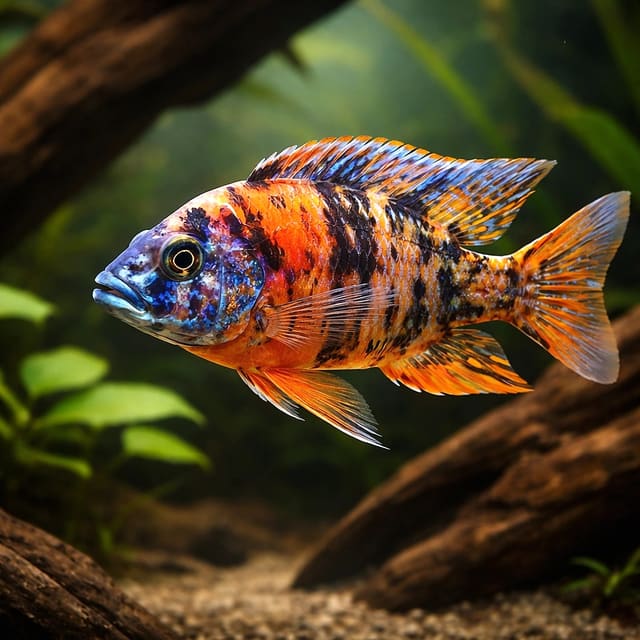
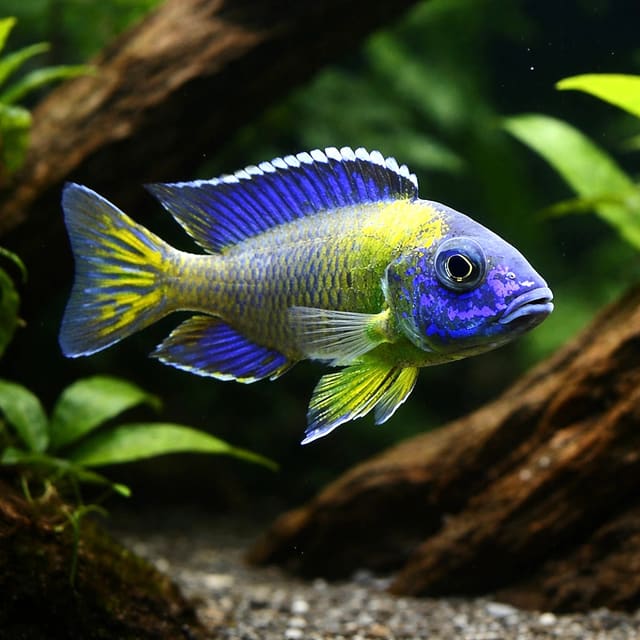
The Ngara Peacock Cichlid, often sold as the Flametail Peacock Cichlid, is a colourful Lake Malawi peacock associated with Aulonocara stuartgranti "Ngara". Mature males can show a metallic blue face and body with warm orange to red tail highlights, giving the fish a proper display presence without the constant rock-fighting intensity of many mbuna.
This is a hard-water African cichlid for a mature, well-filtered aquarium. It is not a tiny community fish, a soft-water species, or a quick addition to a new tank. The best results come from stable alkaline water, a 200 litre or larger aquarium, broken rockwork, open swimming room and tank mates that suit Lake Malawi conditions.
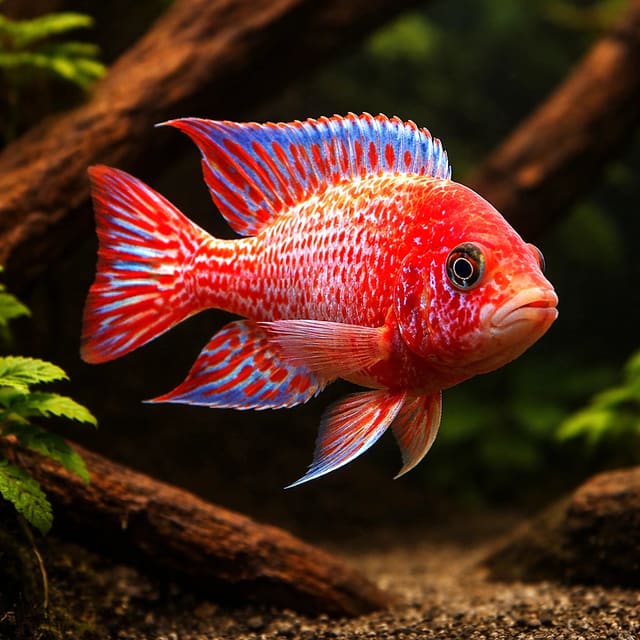
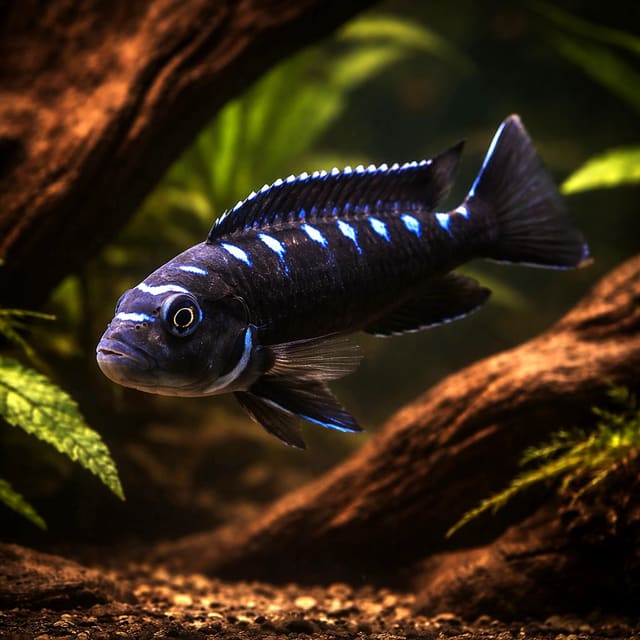
The media set is also important. The product now has a recovered source-style image plus the existing support images, so the listing remains visual rather than text-only. Use the photos as a guide to body form and colour potential, while remembering that sex, age, lighting, diet and social rank all affect how strongly an individual fish colours up.
| Common name | Ngara Peacock Cichlid; Flametail Peacock Cichlid |
|---|---|
| Scientific / trade name | Aulonocara stuartgranti "Ngara"; also searched as Aulonocara ngara |
| Origin | Lake Malawi peacock cichlid group |
| Adult size | Usually around 12-15 cm for mature males |
| Minimum aquarium | 200 litres; 240-300 litres is better for groups or mixed peacock displays |
| Temperature | 24-28°C, with 25-26°C ideal for routine care |
| Water chemistry | Hard, alkaline water; aim for pH 7.5-8.5 and stable carbonate hardness |
| Temperament | Semi-aggressive, usually calmer than many mbuna |
| Diet | Omnivore; quality cichlid staple with varied frozen or live-style foods |
| Best keeper | Intermediate fishkeeper or careful beginner with a properly cycled Malawi setup |
The main reason to choose this fish is colour with manageable behaviour. A settled male Ngara Peacock can become the centrepiece of a Malawi aquarium, especially against pale sand and darker rockwork. The blue face, warm tail and confident swimming style give movement and impact without needing an over-complicated aquascape.
It also suits aquarists who want a cichlid that behaves like a cichlid without becoming unmanageable. Males patrol, display, feed eagerly and interact with the layout. They are still territorial, though, so this fish should be kept with other peacocks, selected haps or robust hard-water companions rather than delicate community fish.
The other advantage is clarity of care. The fish asks for a specific environment: hard water, open space, strong filtration, mineral stability and a planned stock list. When those boxes are ticked, care becomes much more straightforward. When they are ignored, even a healthy fish can become stressed, washed out or aggressive.
Peacock cichlids of the genus Aulonocara are associated with Lake Malawi, a warm, mineral-rich rift lake in East Africa. They are not rainforest fish and they are not meant for acidic blackwater aquariums. The lake environment explains nearly every care requirement on this page: alkaline water, stable hardness, high oxygen, clear water, sand, rock structure and regular maintenance.
Many Aulonocara spend time over sandy areas close to rocks. In the aquarium, this means the ideal layout is neither a bare tank nor a dense planted jungle. Use sand for the base, stacks or groups of rock for boundaries, and open lanes so the fish can swim and display. The male should be able to hold a visual territory, while females or lower-ranking fish can break line of sight when needed.
The Ngara form is often discussed under both Ngara Peacock and Flametail Peacock names. For a customer, the practical point is simple: buy the fish for its colour form and care needs, then manage it as a Lake Malawi peacock cichlid. The exact trade label matters less than giving it water and tank mates that match the fish in front of you.
A 200 litre aquarium is the sensible starting point for this listing. A larger footprint is strongly preferred if you want a male with females, several peacock species, or a mixed peacock-and-hap display. Long tanks are better than tall tanks because the fish use horizontal space for territories and display swimming.
Filtration should be sized for active cichlids, not just for the water volume printed on the tank box. Malawi cichlids eat well and produce a noticeable bioload. Use a mature external filter or a strong internal system with plenty of biological media, good surface movement and easy access for cleaning. Weekly water changes are part of good colour; they are not optional decoration.
Use a secure lid. Peacock cichlids are not famous jumpers in the same way as some killifish, but any startled cichlid can launch itself. A lid also reduces evaporation, keeps heat stable and stops equipment gaps becoming escape routes.
| Setup area | Recommended approach | Why it matters |
|---|---|---|
| Tank size | 200 litres minimum; 240-300 litres preferred for groups | Reduces pressure on females and lower-ranking fish |
| Substrate | Fine sand or smooth mineral substrate | Matches natural foraging behaviour and protects mouths |
| Rockwork | Several broken structures with gaps | Creates territories and escape routes without blocking swimming room |
| Filtration | High biological capacity with strong oxygenation | Keeps ammonia and nitrite at zero in an active cichlid tank |
| Lighting | Moderate to bright, with shaded retreats | Shows colour while preventing nervous pacing |
Keep this fish in warm, hard, alkaline water. A target of 25-26°C is ideal for routine care, with the safe range sitting around 24-28°C. Avoid repeated swings. A heater that drifts by several degrees between day and night can cause more harm than a stable number that is slightly above or below your preferred target.
pH should normally sit around 7.5-8.5. Hardness and carbonate hardness are just as important as pH because they help the water resist sudden crashes. Many UK tap-water areas are already suitable for Malawi cichlids; softer areas may need mineral support through substrate choice, buffers or remineralised water. Test your own water rather than guessing.
Ammonia and nitrite must remain at zero. Nitrate should be controlled through water changes, sensible feeding and stocking discipline. A colourful male that suddenly looks grey, hides, clamps fins or breathes heavily is often telling you the water or social balance is wrong before any disease is visible.
Ngara Peacock Cichlids are omnivores that do best on varied, clean food. Use a good quality cichlid pellet or flake as the daily base, then rotate in frozen or live-style foods such as brine shrimp, mysis, daphnia and occasional bloodworm. Keep rich foods moderate rather than turning every feed into a protein feast.
Because these fish are eager feeders, it is easy to overfeed. Offer small portions once or twice daily, only what is eaten quickly. In a mixed cichlid tank, spread food across the surface so dominant fish cannot guard one feeding point. Watch body shape: a healthy peacock should be firm and alert, not hollow-bellied and not bloated.
Colour improves with maturity, stable water, lower stress and varied food. No food can replace good conditions, but a balanced cichlid diet with natural colour-supporting ingredients can help mature males show stronger blue and orange tones. Females and juveniles are naturally plainer, so do not judge every young fish against an adult male photograph.
| Food type | How often | Notes |
|---|---|---|
| Quality Malawi or cichlid pellet | Daily base | Choose a size the fish can swallow cleanly |
| Spirulina or vegetable-supported cichlid food | Several times weekly | Useful in mixed Malawi displays |
| Frozen brine shrimp, mysis or daphnia | 2-4 times weekly | Good variety without relying only on rich foods |
| Bloodworm | Occasional treat | Use lightly; not the main diet for Malawi peacocks |
| Uneaten leftovers | Never leave them | Siphon or reduce portions to protect water quality |
This fish is best described as semi-aggressive. That does not mean it should be feared, but it does mean it should not be mixed casually with peaceful tetras, guppies, long-finned fish, dwarf gouramis, small Corydoras or soft-water dwarf cichlids. It belongs in a planned Malawi-style aquarium.
Good companions are usually other Aulonocara, selected haps and robust Synodontis catfish that enjoy similar water chemistry. Avoid very aggressive mbuna unless the whole tank is planned around that mix by an experienced keeper. Mbuna can outcompete and harass peacocks, especially in smaller aquariums.
For display tanks, many keepers prefer one male of a colour form rather than several similar males that compete and hybridise. If you keep females, expect mouthbrooding behaviour and the possibility of crossbreeding if other peacock species are present. All-male peacock displays can look superb, but they need careful stocking and enough room to spread attention.
| Tank mate choice | Suitability | Reason |
|---|---|---|
| Other peacock cichlids | Good with planning | Similar behaviour and water requirements |
| Peaceful haps | Often good | Can share open-water Malawi setups |
| Synodontis catfish | Good in larger tanks | Robust bottom dwellers for hard, alkaline water |
| Aggressive mbuna | Use caution | Can dominate food, rockwork and weaker peacocks |
| Small community fish | Avoid | Different size, behaviour and water needs |
| Long-finned slow fish | Avoid | Stress, fin damage and poor compatibility |
Young Ngara Peacocks may not show full adult colour. Males develop stronger blue through the head and body, with warm orange or red tones in the tail and fin area. Females are usually more muted, often silver, grey or brownish, which is normal for many peacock cichlids. Do not assume a young fish is poor quality simply because it has not coloured up yet.
Sexing is easiest once the fish mature. Males are typically brighter, more territorial and more likely to hold a display position. Females are usually smaller and plainer. In shop-size juveniles, sexing can be uncertain; if a guaranteed male display fish is essential, choose the larger sexed option when available or ask before ordering.
Adult males commonly reach around 12-15 cm, depending on line, diet and conditions. Give them room to turn, court and retreat. A fish that looks small at 2-3 cm is still a future cichlid with adult territory needs.
When your fish arrives, float the sealed bag to equalise temperature, then acclimate gradually according to your tank water. Keep lights low during introduction. Do not feed immediately if the fish has travelled; give it time to settle and offer a light meal later or the next day.
For the first week, watch breathing, posture, appetite and social pressure. A newly introduced cichlid can be chased while the group resets rank. Rearranging a few rocks before introduction can help break old territories. If one fish is being pinned into a corner, intervene early rather than hoping it will fix itself.
Orders are covered by the Tropical Fish Co live arrival guarantee when the stated delivery and acclimation conditions are followed. New customers can use the active welcome code WELCOME10 where eligible. The care advice on this page is here to reduce risk after arrival, not just to help search engines understand the product.
Like other peacock cichlids, the Ngara Peacock is a maternal mouthbrooder. Males display to females, spawning takes place on a prepared area, and the female carries eggs and fry in her mouth. During this period she may eat little and hide more than usual.
If you want fry, provide a calm setup, avoid aggressive tank mates, and be ready with a separate rearing tank. If you keep multiple peacock forms together, hybrid fry are possible. Responsible keepers should avoid selling mixed fry under a precise locality or species name unless parentage is known.
For most home aquariums, breeding is not the goal. The priority is a stable, attractive display where the fish can behave naturally and maintain good condition.
| Problem | Likely cause | What to check first |
|---|---|---|
| Colour looks dull | Juvenile fish, stress, poor diet, weak lighting or social pressure | Water tests, tank mates, diet variety and hiding spaces |
| Fish hides constantly | Bullying or a layout with no secure retreat | Dominant male behaviour and rockwork layout |
| Heavy breathing | Poor oxygen, ammonia/nitrite, heat stress or shipping recovery | Ammonia, nitrite, temperature and surface movement |
| Chasing every tank mate | Tank too small, too few sight breaks, wrong mix or breeding condition | Footprint, stock list and whether females are being pressured |
| Bloat risk | Overfeeding, unsuitable rich foods, stress or poor water | Feeding quantity, food type and nitrate control |
A good Ngara Peacock Cichlid page should help the keeper imagine the fish six months from now, not just on arrival day. This strain is bought for colour, but colour only holds when the aquarium is stable. Plan the tank around hard water, steady mineral content, clean sand, strong oxygenation and enough broken sight lines that lower-ranking fish can move away without being chased across the full length of the aquarium.
For most keepers the easiest route is a Malawi-style layout: sand or fine gravel, rock piles with gaps, open swimming room at the front and middle, and a filter that can deal with cichlid feeding. A mature male often spends time in the open, displaying and watching the group, while females and younger fish use rock edges more. This behaviour is part of the appeal, but it also means cramped aquariums show stress quickly.
| Care stage | What to check | Why it matters |
|---|---|---|
| Before ordering | Tank volume, pH, hardness, filter maturity and current tank mates | Prevents adding a Malawi cichlid to a soft-water or under-sized setup |
| Arrival day | Temperature match, lights low, slow release and calm observation | Reduces shock after transport and helps the fish settle |
| First week | Eating response, breathing rate, colour, fin condition and chasing | Early signs tell you whether the group and water are suitable |
| Ongoing | Nitrate control, mineral stability, diet variety and social balance | Keeps colour, growth and immune strength steady over time |
Peacock cichlids are not delicate in the right water, but they are not maintenance-free. They eat well, produce waste and often live in aquariums with other active cichlids. The best routine is boring in the nicest possible way: regular water changes, consistent feeding, and observation before problems become dramatic.
| Task | Suggested rhythm | Notes |
|---|---|---|
| Observe behaviour and appetite | Daily | Look for a fish hiding constantly, breathing hard, refusing food, or being pinned in a corner |
| Remove uneaten food | After feeding | Peacock cichlids should eat promptly; leftovers point to overfeeding or stress |
| Partial water change | Weekly, adjusted to stocking | Keep nitrate under control while avoiding big chemistry swings |
| Clean filter media | As flow drops, using aquarium water | Protects beneficial bacteria while keeping oxygen and turnover strong |
| Check pH and hardness | Weekly at first, then routine | Useful when using tap water blends, mineral buffers, or new decor |
If your tap water is naturally soft, do not guess with powders at random. Use a measured Malawi buffer or mineral plan and test the water before the fish arrives. Stability is more valuable than chasing a perfect number every day.
The Ngara form can be kept as a single show male in a suitable mixed Malawi display, as part of a carefully planned peacock and hap group, or in a harem-style group where space allows. The safest choice depends on the size of the tank, the sex and size of the fish available, and what is already living in the aquarium.
| Plan | Best for | Caution |
|---|---|---|
| Single male display | Keepers wanting one colourful centrepiece in a Malawi tank | Avoid another very similar male that may trigger constant rivalry |
| One male with females | Large tanks where breeding behaviour is acceptable | Females need refuge and should not be harassed without escape routes |
| All-male peacock/hap display | Experienced cichlid keepers with larger aquariums | Choose different colour forms and body patterns to lower direct competition |
| Mixed mbuna tank | Usually not the first choice | Many mbuna are too intense, too territorial, or too rough at feeding time |
When adding this fish to an existing aquarium, compare body size and confidence. A tiny new fish placed among established adults can struggle even if the species list looks compatible on paper. Rearranging some rockwork before introduction can help break old territories and reduce immediate pressure.
The photo set should not be treated as decoration only. It helps customers judge body profile, colour potential, fin shape and the kind of aquarium setting that suits the fish.
Expect variation. Adult dominant males show the strongest blue and warm tail colour. Younger fish, females and lower-ranking males can look much quieter. Store lighting, shipping stress and settling time also affect first impressions. A fish that arrives pale can still be healthy if it is alert, balanced, breathing normally and begins feeding after settling.
| Visual sign | Healthy meaning | Watch carefully if |
|---|---|---|
| Clear eyes and steady swimming | The fish is orienting normally | It rolls, tilts, gasps, or cannot hold position |
| Intact fins | Good condition and low recent damage | Fins are clamped, torn, bloody, or fuzzy |
| Interest in food | Settling well after transport | It ignores food for several days while hiding or breathing fast |
| Colour returning gradually | Normal stress recovery | Dark stress colour combines with bullying or poor water readings |
Because this is a live animal, the first few days matter. If you have a quarantine aquarium, use it. If you do not, at least keep the display tank quiet, avoid heavy feeding, and test water before and after arrival. Do not add medication as a routine gesture unless there is a clear reason; clean water and low stress are often the best first support.
On delivery, inspect the bag before opening it. Check that the fish is upright, breathing and responsive. Float or temperature-match according to your usual safe method, then move the fish without pouring transport water into the aquarium. Keep lights low for the rest of the day and avoid chasing the fish around with nets or phones once it is released.
Our Live Arrival Guarantee belongs in the page because it is genuinely useful to customers, but it should not replace proper preparation. Have the aquarium ready before dispatch, be available for delivery, and contact us promptly with clear photos if anything looks wrong. First-order customers can also use WELCOME10 where the code is active, but the page should still read like a care guide first and a sales page second.
The most common mistake is treating every colourful cichlid as interchangeable. The Ngara Peacock Cichlid is not a small tetra, not a soft-water dwarf cichlid, and not a fish for a newly filled aquarium. It is far easier to keep when the whole tank is planned around Lake Malawi conditions from the start.
Peacock cichlids sit in a useful middle ground for many aquarists. They are more imposing than small community fish, often calmer than many mbuna, and usually less predatory than large haps. That does not make them peaceful, but it does make them a strong option for keepers who want colour and display behaviour without building a tank around constant territorial combat.
| Group | Typical behaviour | How the Ngara Peacock compares |
|---|---|---|
| Mbuna | Rock-focused, territorial, often very assertive | Usually less frantic, but still needs space and structure |
| Other peacocks | Colourful open-water display fish | Compatible in planned groups, especially when males look different |
| Haps | Often larger, open swimmers, some predatory | Can mix with selected peaceful haps in a larger aquarium |
| Soft-water community fish | Gentler species needing different chemistry | Not a match for the same aquarium conditions |
In the aquarium trade, Ngara Peacock and Flametail Peacock are often used for this Lake Malawi peacock colour form associated with Aulonocara stuartgranti. Care is the same: hard, alkaline water, space, rockwork and Malawi-safe tank mates.
No. It is too territorial and too specialised for small peaceful community tanks. Keep it with suitable Malawi cichlids or robust companions that match its size, water chemistry and pace.
Use 200 litres as the minimum. A larger tank of 240-300 litres or more is better if you want a group, several peacock species, or other haps.
Not always. Young fish, females and lower-ranking males can be plainer. Colour improves with maturity, stable water, good food, low stress and suitable social conditions.
You can use tough attached plants such as Anubias or Java fern, but this is primarily a rock-and-sand cichlid aquarium. Do not design the tank like a soft-water planted community setup.
No reviews for this item yet. Bought one? Honest reviews only, good or bad.
What customers say about ordering from us
I have a small group of long finned mountain minnows. So was delighted to be able to order ten of this variety to increase the genetics in my tank . The ones I recieved are healthy but it’s to early to give a verdict on wether they are of a long finned type since they are small currently.
Gordon Walker · 23 Sept 2026
100% success travel and "installation". Pleased with quality of purchase. The Siamese fighter a bit "shy" so have not yet seen him at his best yet but looking good. Happy customer. GG
George E Garratt · 21 Sept 2026
Reviews of our shop, collected by Judge.me, an independent third-party review collector. Newest first.