Moderate
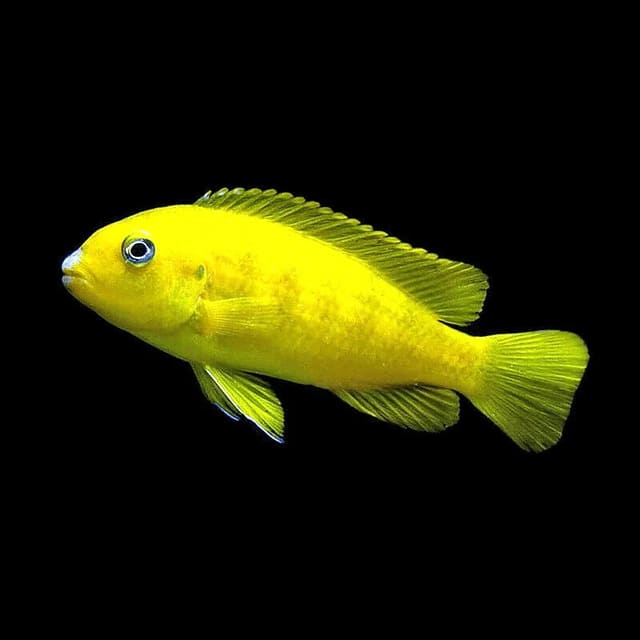
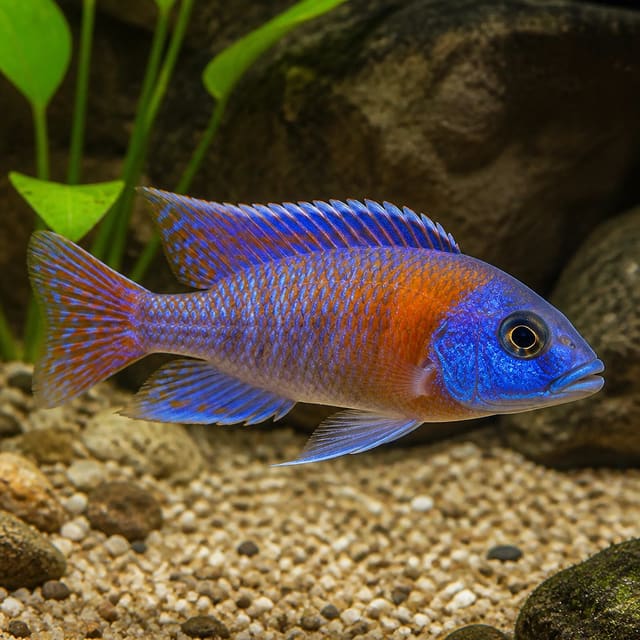
Acei Cichlid (Pseudotropheus sp. “acei”)
24–26°C · pH 7.5–8.5 · 300L
£7.99

One Stuargrandi peacock cichlid, sold under a trade name within Aulonocara, with several size choices. Plan a mature Malawi aquarium with hard alkaline water, substantial filtration and careful aggression management.
Aulonocara sp.
Save when buying multiple fish. Each quantity is one fish; sex and pair formation are not guaranteed unless the selected variant explicitly states them.
One Stuargrandi peacock cichlid, sold under a trade name within Aulonocara, with several size choices. Plan a mature Malawi aquarium with hard alkaline water, substantial filtration and careful aggression management.
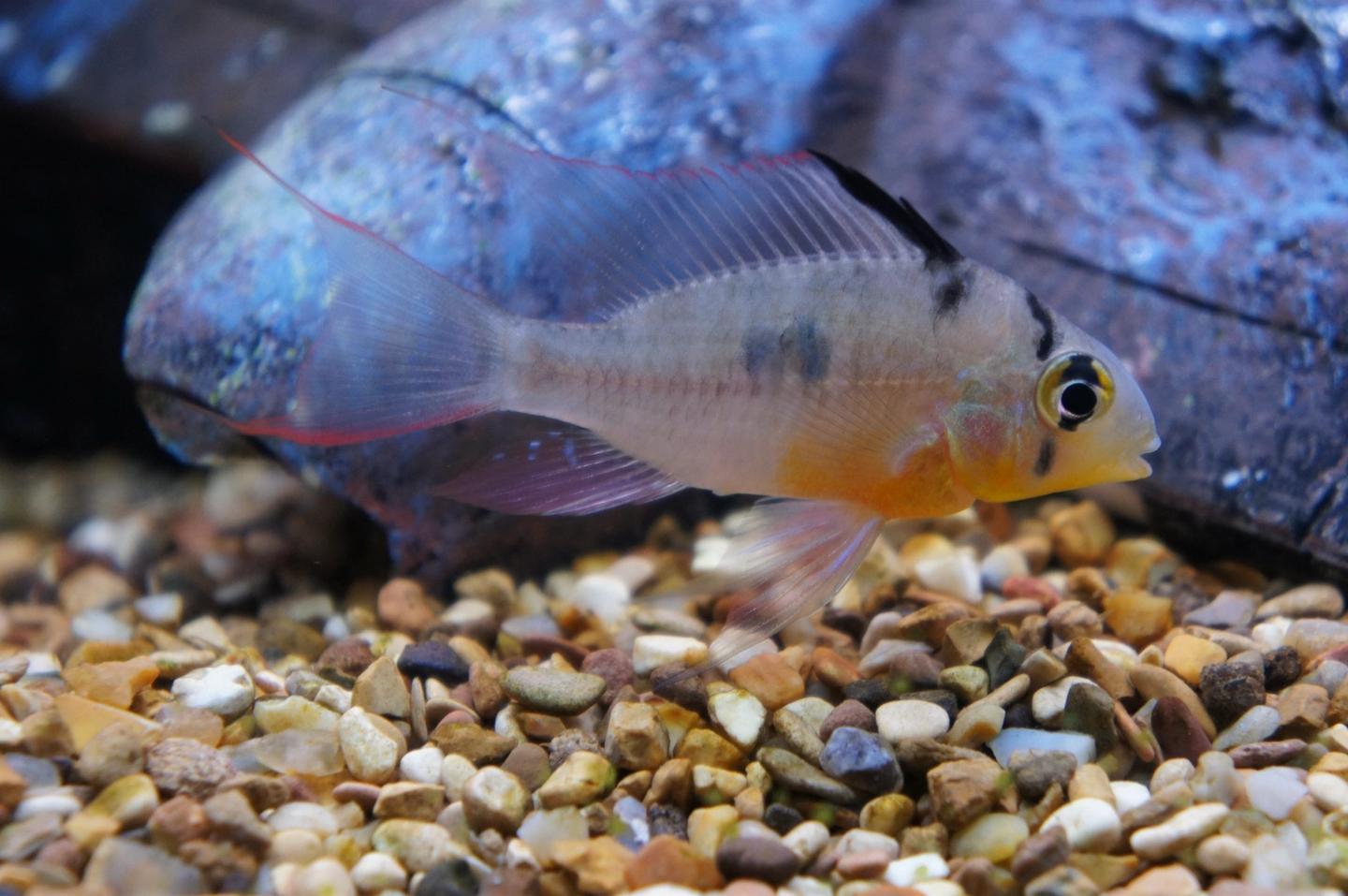
Cichlids are a family of roughly 1,800 accepted species, not one care type. Before buying, identify the exact species and source, then compare adult measurement, usable tank dimensions, social system, territory, tested water, diet and an exit plan. No family-wide minimum tank, water range or tank-mate list is safe.
Maintain these water conditions for optimal health and vibrant colors
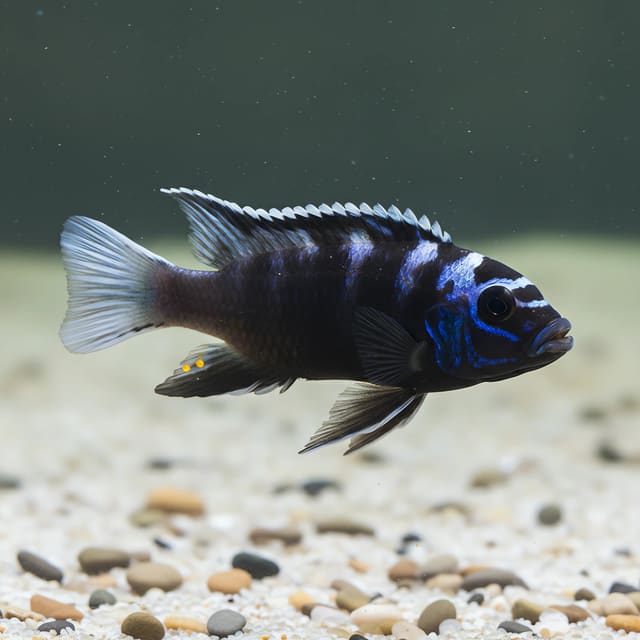
The Stuargrandi Peacock Cichlid is offered under the trade name Stuargrandi within the genus Aulonocara, the peacock cichlids associated with Lake Malawi. It belongs in a deliberately planned Malawi aquarium, where water chemistry, filtration and the relationships between fish are considered together. The attraction is an active cichlid with an engaging presence, but the practical commitment extends beyond choosing a colour that looks good beside the fish you already own.
This listing does not identify a verified locality or exact scientific species beyond Aulonocara. If your aquarium or breeding plans depend on a particular species, adult maximum or locality, establish those details before purchase. Use the guidance here as a Malawi community planning framework, with the final space and stocking decision made for the actual fish and aquarium involved.
One purchase supplies one live fish of the selected size. The size choices are 3–4 cm, 4–5 cm, 5–7 cm, XL and 7–9 cm. XL is a size label without a stated centimetre measurement. The size you select is the size supplied, not the adult size. Choose using the live size selector and plan the aquarium for growth rather than treating a small dispatch grade as a permanently small fish.
Sex is guaranteed only when the selected option explicitly states male or female. This Stuargrandi Peacock Cichlid listing has no sex-guaranteed option. A brightly coloured gallery image does not turn a size option into a male order, and buying two animals does not establish a breeding pair. A stocking plan that requires a particular sex balance needs suitable confirmation before it can be relied upon.
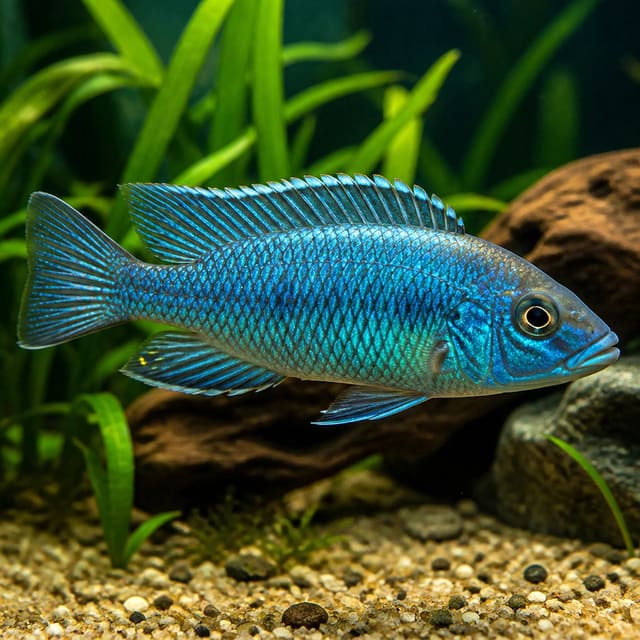
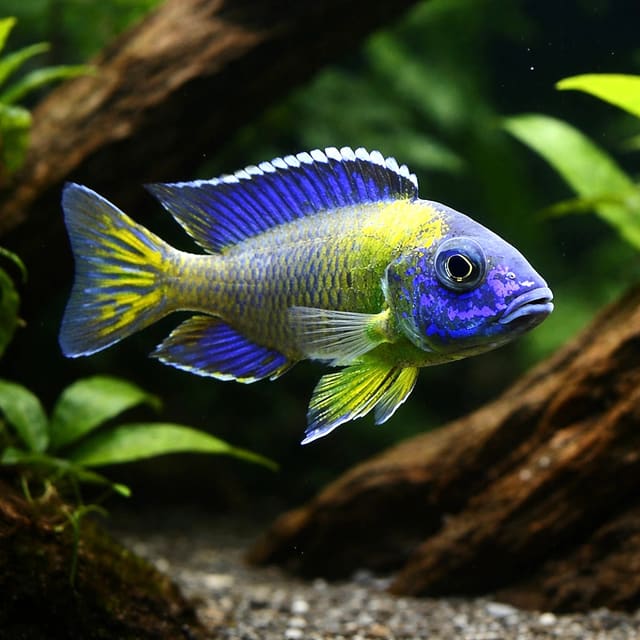
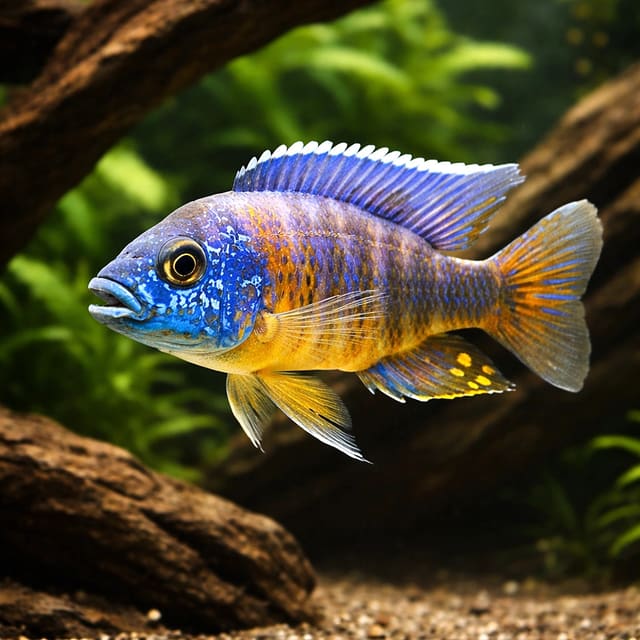
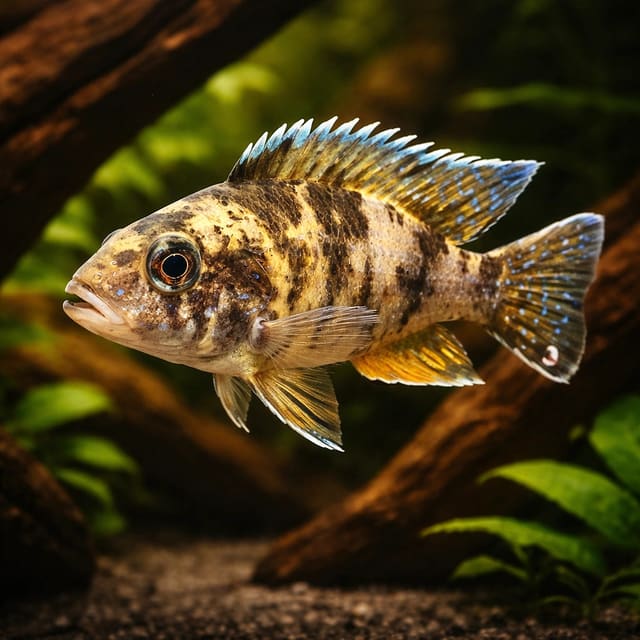
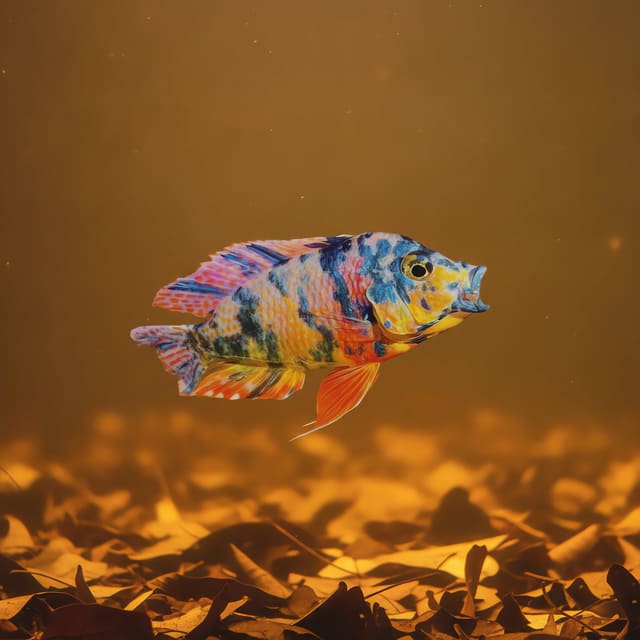
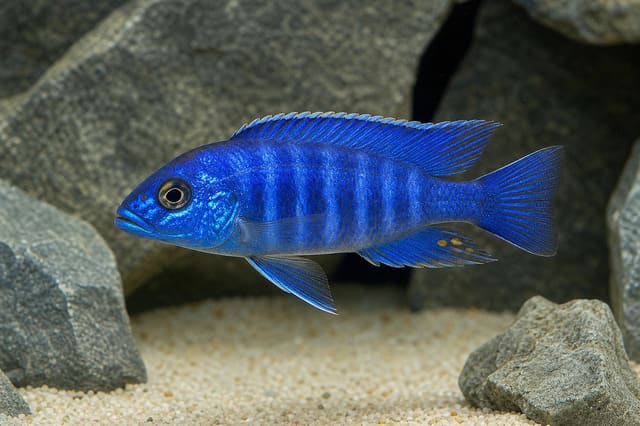
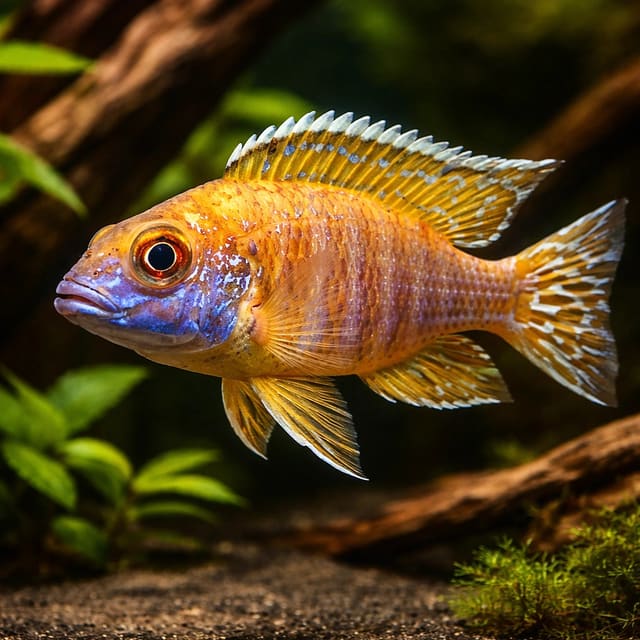
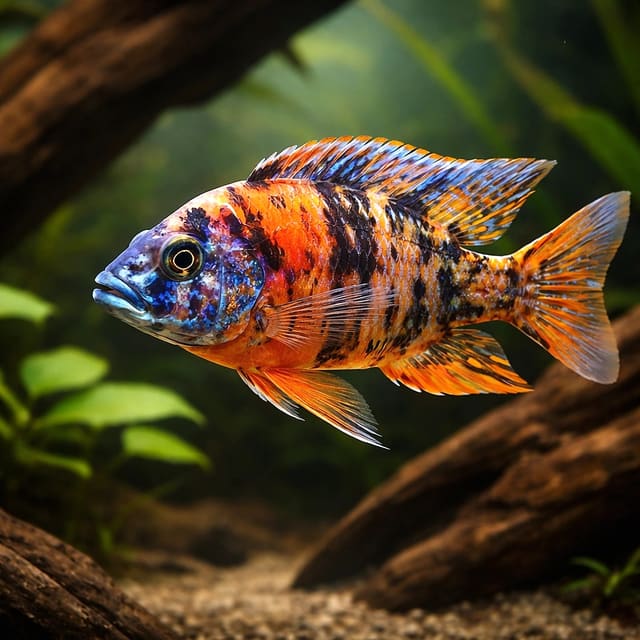
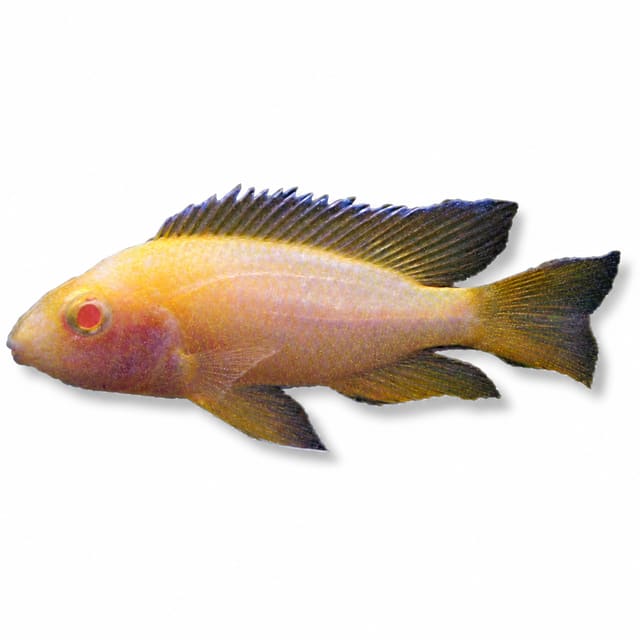
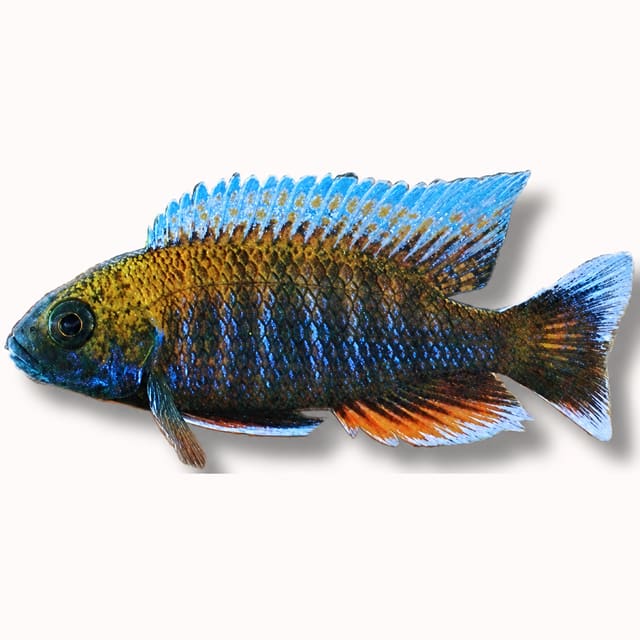
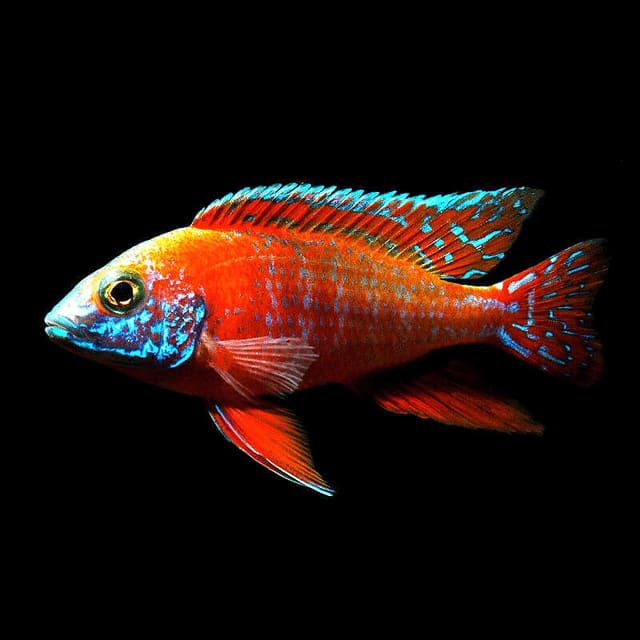
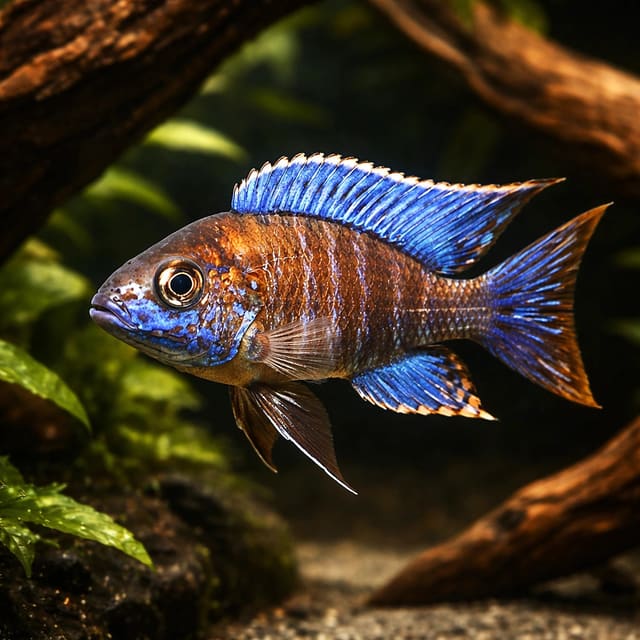
The gallery is a visual guide, not a guarantee of the exact fish, colour, sex or locality supplied. Peacock cichlids are known for differences in appearance between sexes, while the appearance of a fish can also change as it develops. Choose the animal for the aquarium you can provide, allowing for individual appearance rather than expecting an exact visual match.
First, check whether your aquarium is already arranged for Malawi cichlids. It needs appropriate hard, alkaline water and a mature biological filter, together with reliable aeration and enough room for the intended adult community. An aquarium described only as tropical or freshwater may be quite unsuitable if its current inhabitants need different water or cannot cope with territorial cichlids.
Next, consider how the fish will fit into the existing hierarchy. Size, feeding access, territories and individual behaviour all affect an introduction. A newcomer needs places to withdraw and routes through the aquarium, and you need a practical way to intervene if aggression becomes persistent. More fish are not automatically a cure for a bullying problem, especially when the filter is already close to its useful capacity.
Finally, plan the ordinary work. Testing, partial water changes, observing meals and maintaining equipment are part of keeping these fish successfully. A well-arranged Malawi aquarium can be rewarding because you notice how its inhabitants use different spaces. That observation also lets you catch a problem before a fish spends its days hidden behind equipment or misses repeated meals.
The African cichlid collection offers other fish to research while planning a suitable aquarium. Compare their individual requirements rather than assuming that a shared continent, lake or common label makes them interchangeable. The useful question is how the complete adult community will function in the space and water you can maintain.
| A useful starting point | A mature Malawi aquarium with tested hard water, space for the intended adults and a keeper ready to monitor behaviour. |
|---|---|
| Resolve before ordering | Exact adult-space needs, diet and the proposed community, especially when a particular species or sex balance is essential. |
OATA's care sheet for African Malawi cichlids gives general group guidance of 23–27°C, pH 8.0–8.6, general hardness 12–18 dGH and carbonate hardness 10–15 dKH. These figures describe a broad Malawi keeping framework; they are not an established optimum for the exact Stuargrandi trade fish. Check the requirements of the actual stock and all intended companions before using the ranges to finalise a community.
| Measurement | OATA Malawi group guidance |
|---|---|
| Temperature | 23–27°C |
| pH | 8.0–8.6 |
| General hardness | 12–18 dGH |
| Carbonate hardness | 10–15 dKH |
| Ammonia and nitrite | Zero mg per litre |
| Nitrate | No more than 20 mg per litre above the normal tap-water level |
Measure your aquarium and source water rather than judging them by clarity or by where you live. Temperature, pH and hardness are separate properties. Water can look perfectly clean while being unsuitable for the proposed fish, and a working heater cannot tell you anything about the nitrogen waste produced in the aquarium. Keep a record of actual readings so that your decisions have a useful starting point.
The water chemistry guide explains the measurements used in aquarium care. The water matcher can help compare those readings with published guidance, but the result still needs to be considered alongside space, diet and temperament. A numerical overlap is only one part of a stocking decision.
Think about how you will maintain appropriate conditions during ordinary water changes. A one-off adjustment is less useful than a repeatable method you understand. If your supply is very different from the proposed aquarium conditions, discuss the preparation process before buying livestock. That conversation should include your test results, the aquarium volume and how replacement water will be prepared.
OATA mentions coral sand or a similar substrate as a way to help buffer a Malawi aquarium. Substrate is one part of the arrangement, not a substitute for testing. Check what it does in your own water and avoid assuming that adding a bag of material guarantees a particular pH or hardness forever. Use aquarium products according to their instructions and get advice when the result differs from what you expected.
Use a thermometer to check the actual water temperature rather than relying solely on the heater dial. Place equipment where it can work effectively and be inspected during routine care. After maintenance, confirm that heating, filtration and aeration are operating normally. Small checks made consistently are much easier than trying to reconstruct what stopped working after the fish begin to behave differently.
The aim is a suitable environment that remains dependable across the week. Record changes and test results together, particularly after adding fish or altering feeding. This helps distinguish an isolated reading from a developing trend. If a result is unexpected, confirm the test procedure and seek advice with the readings available rather than making several unrelated changes at once.
When considering a tankmate, check that it can live comfortably under the same maintained conditions. A fish that tolerates the edge of a range is not automatically a good match for another that needs a different routine. Build a community whose water requirements work together so that you are not continually compromising one animal's needs to accommodate another.
OATA recommends at least 200 litres for a reasonable-sized Malawi cichlid community. This is broad community advice, not an exact minimum for this trade fish or a guarantee that any selection of Malawi cichlids will fit. The final aquarium needs to accommodate the actual adult sizes, number of fish and territorial relationships involved. Establish an adult-space plan before relying on a small supplied size.
Consider the aquarium's footprint and layout as well as its stated volume. Fish need usable routes around decoration and places to move away from a dispute. An impressive pile of rocks is less useful if it leaves one narrow passage that another fish can control. View the layout from the fish's perspective: where can a newcomer withdraw, and can it reach food without entering the same defended space every time?
Malawi cichlids often move substrate, so rockwork must remain secure when the arrangement beneath it changes. Plan substantial structures carefully and seek aquarium-specific advice about supporting their weight safely. Check stability as part of maintenance, especially after you notice digging. A stable layout is a welfare feature as well as a protection for the aquarium.
Provide shelter while retaining open routes for movement. Different-sized openings can offer choices, but avoid spaces where a fish can become trapped or where an entrance is easily blocked. You should still be able to inspect the inhabitants and maintain the aquarium. Decoration that makes every fish impossible to observe can conceal a feeding or aggression problem until it has become serious.
Planting requires realistic expectations. OATA notes that digging will uproot plants and suggests hardier plants attached to wood or rocks. Choose the layout for the needs and behaviour of the inhabitants rather than assuming a delicate planted arrangement will remain undisturbed. Plants can be attractive, but their condition should not become a reason to leave a fish without usable shelter or necessary space.
Keep access to the substrate and filter intake in mind when positioning decoration. Waste can accumulate where it is difficult to reach, and a beautiful arrangement becomes awkward if every water change requires dismantling it. A maintainable layout lets you remove debris, check equipment and inspect the fish without turning ordinary care into a major disturbance.
Allow for growth in the gaps and routes you create. The fact that a small fish can pass behind a rock today does not establish that the same gap will remain useful. Review the layout as the community develops, and consider whether larger inhabitants are restricting areas that smaller fish previously used. Space planning is an ongoing observation task rather than a decision completed on the day the aquarium is filled.
Before buying, write down the dimensions, intended adult inhabitants and the equipment you will use. Discuss that complete plan with someone familiar with Malawi cichlids. A photograph of the aquarium can help explain the arrangement, but it should sit alongside measurements and water results. Those details make it possible to give advice about the actual home you are preparing.
A Malawi community places substantial demands on filtration. OATA recommends an oversized filter for the more heavily stocked arrangements often used with these fish, together with vigorous aeration to maintain dissolved oxygen. Equipment should be chosen for the proposed aquarium and fish load, with its maintenance needs understood before the animals arrive. Capacity on a box does not remove the need to watch water quality.
The RSPCA explains the role of biological filtration: fish release toxic ammonia, which filter bacteria convert first to nitrite and then to nitrate. Nitrite is also toxic, so both ammonia and nitrite need to remain at zero in a suitable aquarium. The process depends on an established biological filter. Clean-looking water and newly installed equipment cannot demonstrate that the aquarium is ready for livestock.
If this is a new aquarium, work through maturation before stocking. The first tropical tank guide is useful for organising the general preparation steps, while the final stocking arrangement needs Malawi-specific planning. Confirm suitable test results and normal equipment operation before introducing fish. The animals should enter a prepared environment, not become a test of whether a new setup works.
As fish numbers and feeding increase, the biological load also increases. OATA cautions against adding livestock too quickly because the filter's bacterial population must adjust to the additional waste. This matters even when a stocking plan uses groups to manage aggression. The social introduction and the filter's capacity have to be planned together; neither can safely be considered in isolation.
Check that the water return, air supply and equipment arrangement provide the intended circulation without leaving accumulated waste ignored in inaccessible places. Look for changes after cleaning or rearranging the aquarium. Reduced flow may indicate a blockage, and a filter that sounds normal may still need inspection. Follow the manufacturer's guidance when servicing equipment and restore it to normal operation promptly.
OATA recommends a partial water change of 25% at least once every week, alongside water testing at least weekly. Remove settled debris during the change and condition replacement tap water to address chlorine or chloramine before adding it. Prepare replacement water to avoid abrupt differences in temperature or the maintained chemistry. Adjust the overall routine in response to results and appropriate advice.
When filter media needs attention, lightly rinse it in water removed from the aquarium. OATA advises against running it under the tap because chlorine or chloramine can damage the beneficial bacteria. Aim to clear obstruction while preserving the biological function. Keep equipment instructions to hand so that maintenance is both effective and appropriate to the filter design.
Complete the water change by checking the inhabitants and equipment. Confirm that no fish has been trapped by a moved decoration, that the filter intake is clear and that aeration has resumed. Record the readings and any unusual behaviour. A reliable finishing check helps ensure that a routine intended to improve conditions has not accidentally introduced a new problem.
Malawi cichlids do not all eat the same diet. OATA distinguishes the more plant-oriented feeding of many mbuna from the more animal-based diets of some other Malawi groups and recommends species-specific advice. For this trade-named Aulonocara, ask what the actual stock is eating and confirm a suitable prepared food before purchase. Do not choose the diet solely because a packet says African cichlid.
A food appropriate to the fish should also be appropriate in size. Watch whether each individual can take and swallow it comfortably. A fish may rush towards feeding activity without obtaining much food, particularly when larger or more assertive neighbours dominate the meal. Observing the whole group for a few moments is useful, but checking the newcomer individually tells you more.
OATA's broad Malawi guidance is to offer only what can be eaten within a few minutes, twice a day. Use that as a portion framework while following advice for the actual stock and food. Excess food that disappears behind rocks has not necessarily been eaten; it can break down and add to the waste load. Remove leftovers and revise the portion rather than treating every feeding response as a request for more.
Distribute suitable food so that a dominant fish does not control the only feeding point. Watch whether the new arrival moves into the feeding area, remains displaced at the edge or repeatedly retreats. If access is poor, consider how layout and social relationships are affecting the meal. Increasing the total ration can leave the same fish hungry while making water maintenance harder.
Keep the needs of every inhabitant in view. A mixture of fish with conflicting diets may be difficult to feed appropriately even when their water requirements overlap. Before adding a tankmate, ask whether its staple diet and feeding method fit the existing routine. Feeding compatibility is a practical part of deciding whether the community will work over the long term.
OATA advises watching for changes in swimming, breathing, colour, appetite, fins, scales and body condition. Become familiar with each fish's usual behaviour so that a difference stands out. A fish spending much more time hidden, avoiding food or showing damaged fins needs investigation. Check water quality and the behaviour of its neighbours, and contact the retailer for further guidance.
When asking for help, describe the change clearly: when it began, what the fish is doing, whether other animals are affected and what the current water tests show. Useful observations are more informative than a guessed disease name. Avoid adding treatments simply because one sign resembles something seen online; appropriate advice depends on the animal and its actual surroundings.
Colour should be understood in context. Aulonocara are known for differences between sexes, and developing fish may not resemble the coloured individuals shown in galleries. Food and lighting should not be used to chase an exact photographic appearance. Assess condition and feeding access alongside normal movement, while respecting that the offer does not guarantee a particular sex or locality form.
Read Tropical Fish Co's delivery and Live Arrival Guarantee policy before the confirmed arrival day. The team hand-bags fish with pure oxygen, uses insulated boxes and adds heat packs when conditions require them. Delivery is by a licensed live-animal courier, with the confirmed Thursday or Friday date and tracking sent by email. Arrange for someone to receive the parcel because live fish cannot be left unattended.
For a Live Arrival Guarantee claim, a continuous unboxing video must show the parcel still sealed, the opening and the fish still inside the sealed bag. Open and inspect the parcel on the day it arrives. If anything is wrong, contact the team that day with the order number and video. The recording documents the condition on arrival for a claim; it is not a biological requirement for the fish.
Have the aquarium and necessary equipment ready before opening the parcel. Follow the supplied arrival guidance and acclimatise slowly; the store instructions include floating the bag for 20–30 minutes and keeping transport water out of the aquarium. If the fish appears distressed or you are uncertain how to proceed in the circumstances, contact the team promptly rather than improvising a different routine.
Observe the introduction and return to check after the aquarium has settled. The established fish may respond differently once the newcomer begins using shelter or approaching food. Confirm that it can move away from unwanted attention and that it has access to suitable feeding opportunities. A release that appears calm is encouraging, but its experience over the following meals and resting periods is more informative.
Keep the first observations specific. Note where the fish rests, whether it is repeatedly displaced and whether it eats. Compare those observations with normal equipment operation and water results. If a problem appears, these details make it easier to decide whether the main issue is water quality, the layout or an interaction with another inhabitant, and to obtain useful advice quickly.
OATA advises mixing Malawi cichlids cautiously because aggression is a central part of keeping this group. A shared origin does not make every combination appropriate. Select the community around adult space, the strength and pattern of aggression, feeding needs and maintained water conditions. Plan for individuals as well as species names: an arrangement that looks plausible can still need adjustment after observation.
Other Malawi cichlids and certain suitable Synodontis catfish are the kinds of companions named in the OATA sheet. That is a starting boundary for research, not a promise that any fish carrying those labels will work. Check the exact catfish or cichlid, including adult size and feeding needs. A small juvenile's present behaviour may not describe its future role in the aquarium.
A standard soft-water community is unsuitable for this Malawi plan. Fish with very different water requirements should not be brought together just because the aquarium has empty-looking space. Likewise, a quiet fish that cannot compete safely at feeding time may struggle even if the numbers on the water tests overlap. Compatibility has to remain useful during ordinary daily life.
OATA describes keeping Malawi communities in groups of at least 15, with some crowding, as one way to distribute aggression. This is broad advice about a managed community, not an instruction to buy 15 Stuargrandi peacocks or to overcrowd any aquarium. The filter capacity, oxygen supply, adult fish load and intended mix must support the arrangement. Get advice on the complete plan before using that strategy.
The same group guidance favours more females than males where possible to reduce pressure on an individual female. That approach depends on knowing the sexes involved. This offer cannot be used as a guaranteed sex-balanced group simply by ordering a particular quantity. If a proposed community depends on specific males and females, resolve the sourcing and identification first.
Introduction order and changes to decoration can influence territorial relationships. OATA recommends adding less aggressive species before more aggressive ones and notes that rearranging decor may reduce established territorial advantage. These measures require a considered plan; they do not remove the need to monitor. Avoid repeated disruption without observing whether the change has actually improved the affected fish's access to space and food.
Look beyond brief chasing to its effect on the fish receiving it. Persistent confinement in a corner, repeated exclusion from meals, injuries or an inability to rest are reasons to act promptly. Have a practical, suitable separation option agreed before stocking rather than discovering during a dispute that there is nowhere else for a fish to go. Seek help with a community that is not settling.
Aulonocara are maternal mouthbrooders at genus level. That natural history explains part of their appeal, but this listing makes no breeding, pair or offspring promise. Keep breeding ambitions separate from assumptions based on colour or a trade label. A responsible plan begins with confirmed identity, appropriate accommodation and fish whose needs you can meet even when their behaviour changes.
Plan a mature Malawi aquarium with strong filtration, aeration and room to manage aggression. OATA suggests at least 200 litres for a reasonable-sized Malawi community, but that is broad group guidance. Establish the exact fish's adult-space needs and the complete stocking plan before purchase.
An adult maximum is not confirmed for this trade-named fish. Establish the identity and adult-space requirements before choosing it for a size-limited aquarium. A small fish still needs a plan for growth and adult behaviour.
There is no verified exact group number for this offer. OATA's discussion of groups of at least 15 concerns managed Malawi communities, not a required number of this fish. Stocking numbers must suit the adult community, filtration, oxygen supply and aggression plan.
It needs a keeper prepared to manage Malawi water conditions, mature filtration, feeding competition and territorial behaviour. Discuss the complete aquarium plan before buying. A simple care label cannot replace suitable space, testing and a practical response to bullying.
Confirm a suitable diet and the food accepted by the actual stock before purchase, because Malawi cichlid diets vary. OATA's broad portion guidance is food eaten within a few minutes twice daily. Observe each fish and remove leftovers.
OATA's broad Malawi cichlid guidance is 23–27°C, pH 8.0–8.6, general hardness 12–18 dGH and carbonate hardness 10–15 dKH. These are group figures, not a verified species-specific optimum for this trade fish. Confirm suitability for the actual fish and every intended companion.
OATA names other Malawi cichlids and certain suitable Synodontis catfish as possibilities, with careful individual selection. Match adult space, diet, water and temperament. Persistent pursuit or exclusion from food means the arrangement needs attention.
Tropical Fish Co uses oxygenated bags, insulated packaging and heat packs when required, with a licensed live-animal courier. Be present on the confirmed day. A Live Arrival Guarantee claim needs same-day contact and a continuous video showing the sealed parcel being opened and the fish in the sealed bag.
OATA's African Malawi cichlid care sheet explains general water conditions, aquarium maintenance and Malawi community planning. The RSPCA aquarium environment advice explains filtration and fish waste. The Aulonocara genus overview provides general natural-history context for peacock cichlids.
No reviews for this item yet. Bought one? Honest reviews only, good or bad.
What customers say about ordering from us
I have a small group of long finned mountain minnows. So was delighted to be able to order ten of this variety to increase the genetics in my tank . The ones I recieved are healthy but it’s to early to give a verdict on wether they are of a long finned type since they are small currently.
Gordon Walker · 23 Sept 2026
100% success travel and "installation". Pleased with quality of purchase. The Siamese fighter a bit "shy" so have not yet seen him at his best yet but looking good. Happy customer. GG
George E Garratt · 21 Sept 2026
Reviews of our shop, collected by Judge.me, an independent third-party review collector. Newest first.