Moderate
Acei Cichlid (Pseudotropheus sp. “acei”)
24–26°C · pH 7.5–8.5 · 300L
£7.99

Sunset Cichlid (Dimidiochromis strigatus) is a large Lake Malawi-system cichlid with a recorded maximum of 24.4 cm total length. One purchase supplies one animal from the selected 3–4 cm, 4–5 cm, 6–7 cm or XL option. Plan a mature, filtered Malawi aquarium, use at least 200 litres for a reasonable community under broad OATA guidance, and manage aggression through adult-size stocking and close observation.
Adult size is the maximum length this species reaches at full maturity (scientific sources). The livestock you receive will be younger and smaller — pick a size above for the actual shipping size. Product-photo provenance and any image-specific limitations are stated on the listing.
Dimidiochromis strigatus
Save when buying multiple fish. Each quantity is one fish; sex and pair formation are not guaranteed unless the selected variant explicitly states them.
Sunset Cichlid (Dimidiochromis strigatus) is a large Lake Malawi-system cichlid with a recorded maximum of 24.4 cm total length. One purchase supplies one animal from the selected 3–4 cm, 4–5 cm, 6–7 cm or XL option. Plan a mature, filtered Malawi aquarium, use at least 200 litres for a reasonable community under broad OATA guidance, and manage aggression through adult-size stocking and close observation.
Adult size is the maximum length this species reaches at full maturity (scientific sources). The livestock you receive will be younger and smaller — pick a size above for the actual shipping size. Product-photo provenance and any image-specific limitations are stated on the listing.

Cichlids are a family of roughly 1,800 accepted species, not one care type. Before buying, identify the exact species and source, then compare adult measurement, usable tank dimensions, social system, territory, tested water, diet and an exit plan. No family-wide minimum tank, water range or tank-mate list is safe.
Maintain these water conditions for optimal health and vibrant colors
The Sunset Cichlid is Dimidiochromis strigatus, a large cichlid from the Lake Malawi system. FishBase records a maximum length of 24.4 cm total length for male or unsexed fish, while OATA describes Malawi cichlids as aggressive fish that must be mixed cautiously. Plan around that adult scale and Malawi-cichlid aggression rather than treating this animal as a peaceful community fish.
Choose it for a mature Malawi aquarium whose dimensions, filter capacity and stocking plan can accommodate the chosen fish as adults. The aquarium must give every resident enough room to move away from disputes, and you must be prepared to monitor relationships rather than assuming that fish sharing a lake origin will automatically coexist. It best suits an aquarist who is comfortable testing hard, alkaline water, maintaining a substantial biological filter and responding to territorial behaviour.
A one-fish purchase unit does not make solitary keeping the care recommendation. Decide whether your aquarium can support the wider Malawi community plan before selecting an individual. If you are still comparing suitable animals, browse the African cichlid collection by adult size, water requirements and temperament rather than colour alone.
There are four regular size choices: 3–4 cm, 4–5 cm, 6–7 cm and XL. Check the live selector for purchase availability and choose the grade you intend to receive. One purchase quantity supplies one animal of the selected option. The size you select is the size supplied, not the adult size.
Dispatch size is a sale-grade measurement, while the 24.4 cm FishBase figure is the maximum recorded adult planning reference. Do not use a smaller dispatch grade to justify a temporary aquarium that cannot meet the animal’s longer-term needs. Confirm the aquarium’s dimensions, adult stocking load and filtration capacity before ordering, then choose the dispatch grade that suits the established community.
Sex is guaranteed only when the selected option explicitly states male or female. This Sunset Cichlid listing has no sex-guaranteed option.
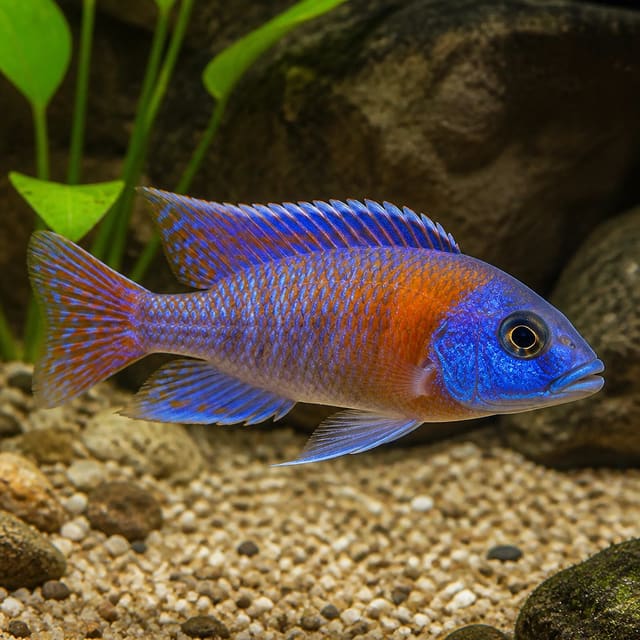
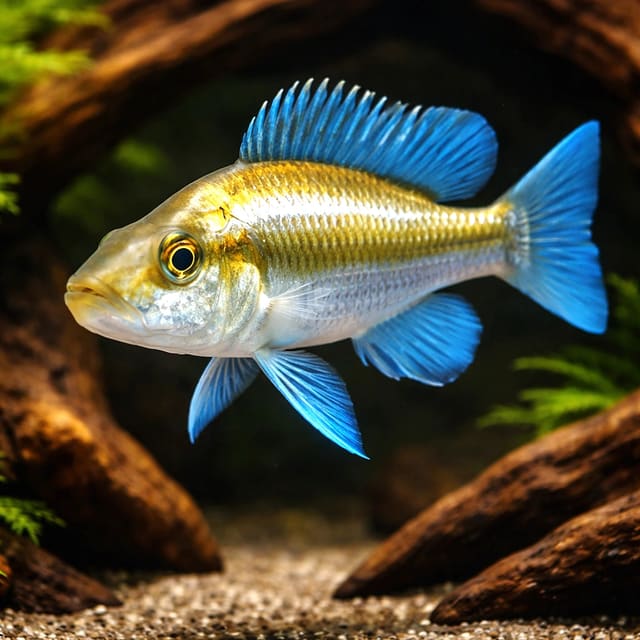
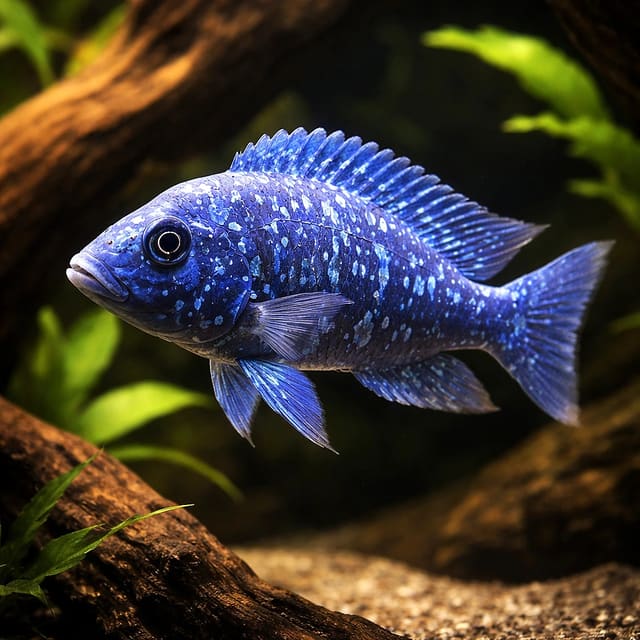
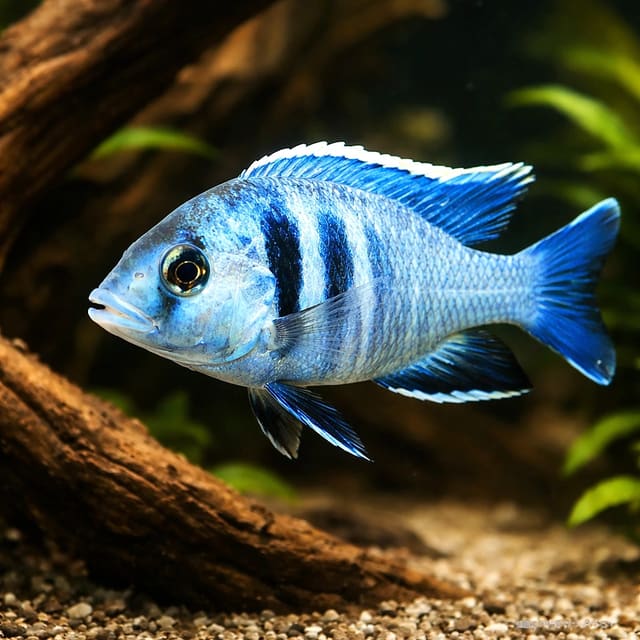
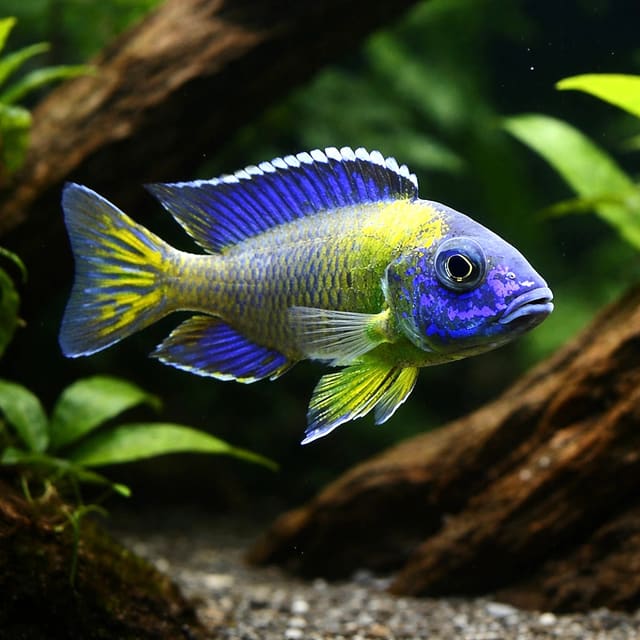
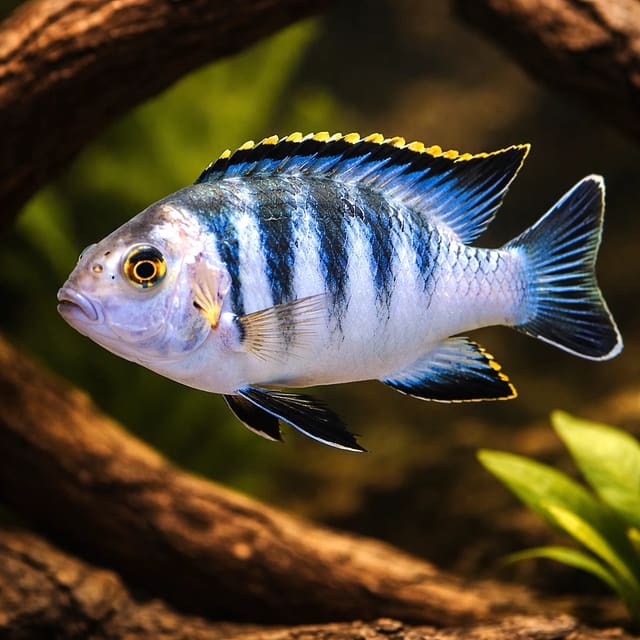
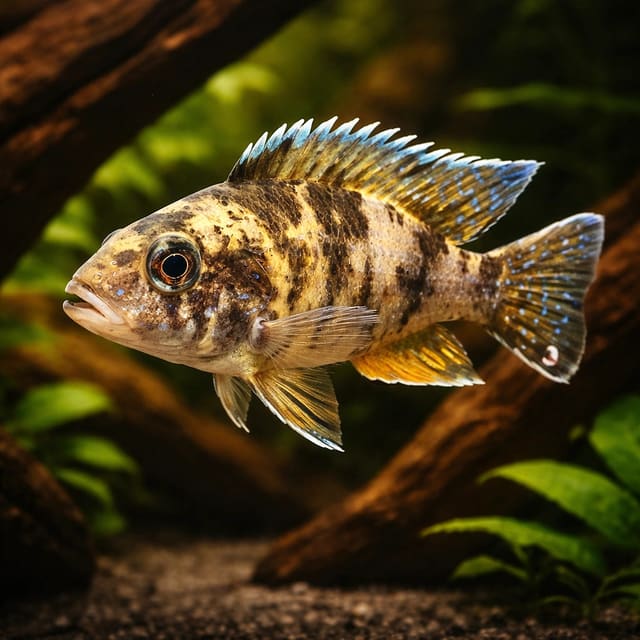
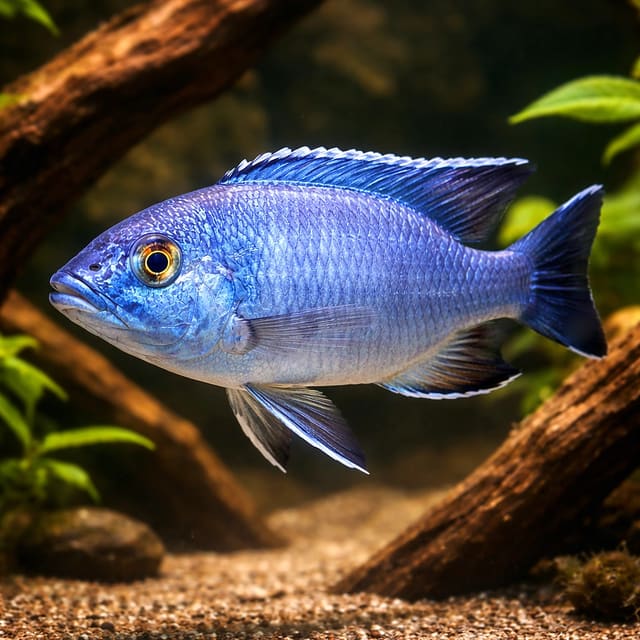
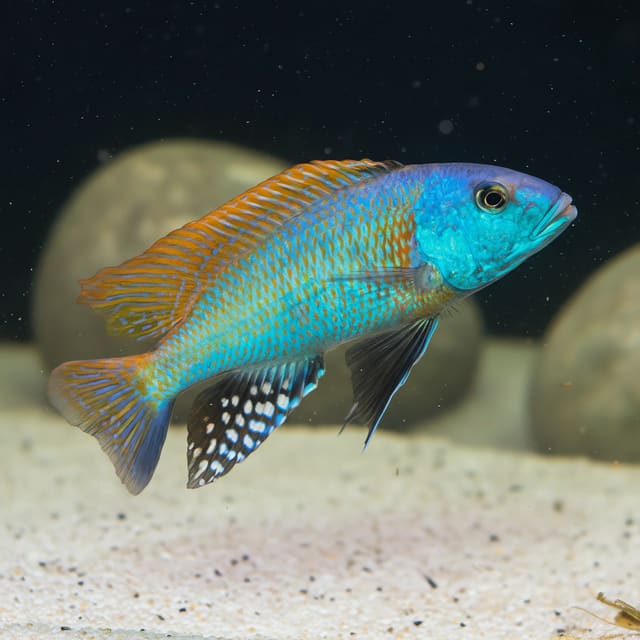
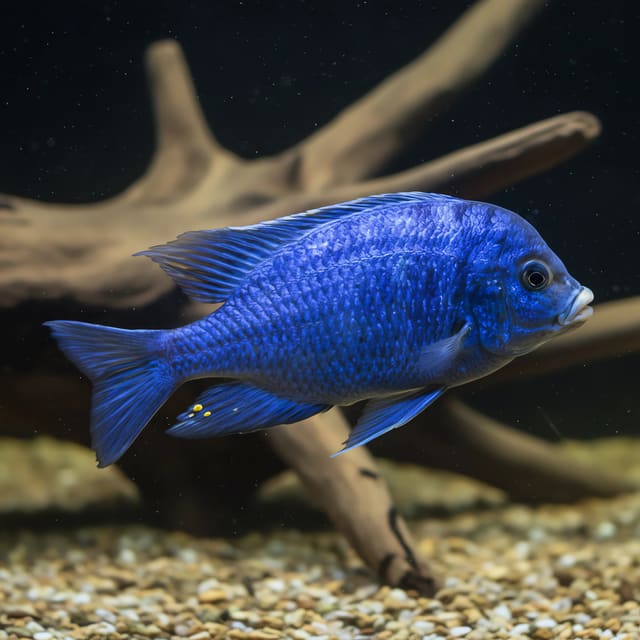
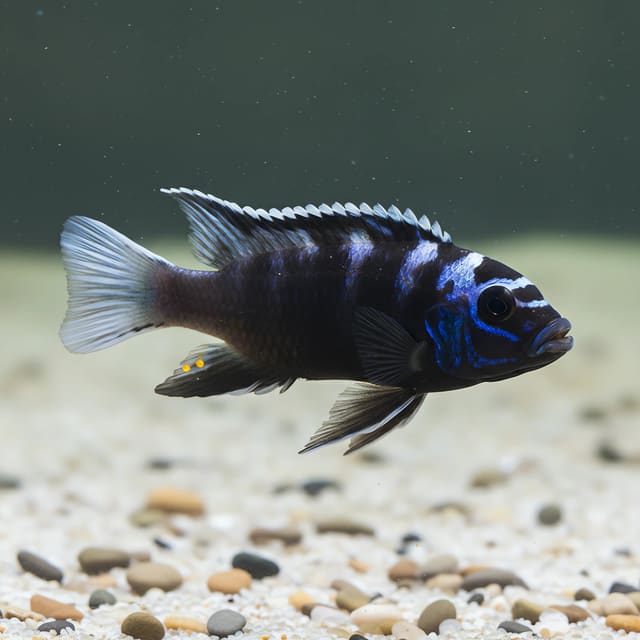
Some gallery photos were digitally enhanced to improve image quality, so colours can look slightly different from the live animal. The picture represents the listed animal type and shows one fish over light gravel; it does not identify the exact specimen that will be supplied.
If the aquarium has not finished maturing, follow the first tropical aquarium setup guide before livestock arrives. Prepare a mature, filtered aquarium with suitable water, then read the delivery and Live Arrival Guarantee policy for dispatch days, delivery arrangements and claim conditions. The policy governs the service rather than changing the animal’s care requirements.
FishBase identifies the scientific name as Dimidiochromis strigatus and also records the name Haplochromis sunset. The species belongs to Cichlidae, the cichlid family. It is a tropical freshwater fish described as benthopelagic, so plan for an animal associated with the lower and middle parts of the water column rather than assigning it a narrow ornamental “tank level”.
Its recorded range includes Lake Malawi, lagoons connected with the lake, the upper Shire River and the mouths of larger rivers. Use that range as geographical context. For aquarium companions, assess shared water requirements, adult body size and individual behaviour.
FishBase shows the species as Least Concern on the IUCN assessment displayed in its profile.
OATA says the majority of Malawi cichlids in the aquarium trade are captive bred.
Malawi cichlids are loosely divided into rock-dwelling mbuna and open-water utaka. That broad division helps explain why one layout or food plan cannot be copied across every Malawi cichlid. Smaller mbuna tend to use rock-based spaces and more plant-rich foods, while some larger utaka may need more open room and animal-rich food. Make the final choice for this fish from its observed feeding response and species-specific advice from us.
For a Malawi community, OATA advises at least 15 fish and slight overstocking to spread aggression, provided the aquarium and filtration can carry the adults. Where sexes are known, keeping more females than males of each species may reduce persistent harassment of one female. Many Malawi cichlids show clearer sex differences only as adults; colour and male anal-fin egg spots can be sex-related traits, but neither trait should be used to assume the sex supplied with this listing.
OATA recommends at least 200 litres for a reasonable-sized Malawi-cichlid community. Use that as a broad community starting point and choose a larger aquarium where practical to accommodate the Sunset Cichlid’s recorded adult scale, the number and dimensions of its companions, and the waste produced by the whole group.
A larger aquarium usually keeps temperature and water quality more stable because a given change in heat or waste is diluted through more water. Extra volume also gives you more room to separate activity areas and respond when established territories create repeated conflict. Volume alone is not enough: the aquarium’s usable dimensions must let adult fish turn, pass one another and move away from aggression.
Rearranging décor can interrupt established territorial patterns because the residents must negotiate the altered space again. Use that action when a territory is repeatedly causing conflict, then watch the whole group closely; a layout change can redistribute aggression rather than eliminate it. Keep the structure manageable so changes can be made without creating cramped passages for a fish approaching the recorded maximum size.
Before adding any fish, total the planned adult dimensions and fish count, then confirm that the aquarium is appropriately sized for the complete community. This calculation matters more than fitting the fish into the available space on purchase day. It also determines the filter capacity, aeration and maintenance load required later.
OATA’s Malawi-cichlid profile gives 23–27°C, pH 8.0–8.6, ammonia 0 mg/L, nitrite 0 mg/L, nitrate no more than 20 mg/L above the normal tap-water level, general hardness 12–18°dH and carbonate hardness 10–15°dKH. These are broad group-level guidance, not a species-specific optimum.
Set the aquarium within those figures before adding the fish, then prioritise stability. A reading inside the range does not compensate for detectable ammonia, detectable nitrite or a sudden change in chemistry. Test the source water as well as the aquarium because the nitrate limit is expressed relative to the normal tap-water level.
Use the aquarium water chemistry guide to understand what each test measures and why ammonia, nitrite, nitrate, pH and hardness require different responses. Record results consistently enough to recognise a developing trend before behaviour changes.
After testing, enter the measured values in the water matcher to compare them with the stated guidance. Use the result as a practical comparison, then correct the identified parameter gradually through appropriate aquarium management rather than reacting to water appearance alone.
The RSPCA’s general aquarium-welfare guidance explains that fish release toxic ammonia and that a working biological filter supports bacteria which convert ammonia into toxic nitrite and then into the safer end product nitrate. This advice applies across the whole aquarium rather than to one species. A properly established and maintained filter is essential wherever the Sunset Cichlid is kept.
Size the filter for the complete planned fish population, adult dimensions and feeding load. OATA recommends an oversized filter for a crowded Malawi community so waste can be processed more reliably as fish numbers and food intake increase. Oversized filtration adds capacity, but it does not replace water testing or maintenance.
Provide strong aeration in a busy Malawi aquarium so enough dissolved oxygen remains available to its fish. The need increases with the community’s total biological load, so plan aeration alongside filtration before stocking rather than adding it only after fish show breathing changes.
Beneficial bacteria need time to increase when feeding and waste production rise. Adding too many fish too quickly can cause new tank syndrome because the biological filter cannot yet process the extra waste. Ammonia or nitrite may then rise far enough to make fish ill or kill them.
This creates a real planning trade-off: Malawi cichlids can be vulnerable when introduced singly, but the biological filter must also be able to carry each addition. Prepare enough filter capacity before the group arrives, use an appropriately mature system and test closely through each stocking step.
Change 25% of the aquarium water at least once every week. Use a siphon during the change to lift solid waste from the substrate instead of leaving it to break down. Pay particular attention to hollows and edges where digging can gather debris, while keeping the substrate and décor stable enough for the fish.
Treat replacement tap water with a suitable conditioner before it enters the aquarium so harmful chlorine or chloramine is removed. Match the replacement water closely enough to the aquarium conditions to avoid an abrupt change in temperature or chemistry, and keep the final values within the group-level Malawi guidance.
When filter media needs cleaning, rinse it lightly in aquarium water removed during the partial water change. Never rinse biological media in untreated tap water because chlorine or chloramine can kill part of the beneficial bacterial population. Clean only as much as necessary to restore effective flow and avoid stripping the biological filter of the organisms processing waste.
Respond immediately to any ammonia result. Test the other parameters, check for excess food or an obstructed filter, and make the corrective water change appropriate to the measured problem. Do not wait for the fish to show obvious distress before acting.
Use results from the same routine to judge stability over time. A consistent record can show whether the aquarium is coping with adult growth, a stocking change or increased feeding without repeating the full setup decision each week.
Malawi-cichlid diets vary, so do not apply one food plan to every species in the aquarium. Smaller mbuna are generally more herbivorous and may need algae-rich Malawi feeds with fresh vegetables. Some larger predatory utaka may require pellets with a higher animal content and frozen foods such as brine shrimp, prawn or cockles.
That group-level contrast does not by itself establish one fixed diet for every Sunset Cichlid. Ask us for species-specific feeding advice before deciding whether an animal-rich pellet and frozen-food plan is appropriate for this fish. Use a complete prepared food whose manufacturer identifies it for the intended cichlid diet, then watch whether the fish takes and finishes it normally.
Do not overfeed. Uneaten food breaks down and adds toxic waste to the water, increasing the work required from the biological filter and potentially raising ammonia or nitrite. A larger portion is therefore harmful when it remains uneaten, even if the product itself is suitable.
Assess body condition rather than judging feeding success from eagerness alone. A fish losing condition, refusing food or being excluded by aggression needs a closer check of access, diet suitability, social pressure and water quality. An unexplained increase in body condition also deserves attention because it can indicate that the overall ration is excessive.
When assessing a fish, look for clear, bright eyes and alert, appropriate swimming behaviour. Check that the fins are undamaged and the scales are intact. Avoid choosing or accepting a fish with ulcerations, unexplained bumps or other visible damage without first resolving what the change is and what action is required.
When behaviour, breathing, colour, condition or appetite changes, begin by testing the aquarium water. Correct any identified ammonia, nitrite, temperature, pH or maintenance problem promptly, then continue observing the affected fish and the rest of the community. This first step addresses aquarium-wide causes that can affect several residents at once.
Interpret aggression changes in context. One fish hiding after a territorial dispute may need a compatibility or layout response, while several fish showing breathing or swimming changes point more strongly towards a shared water or system problem. Use the pattern across the aquarium to decide whether to inspect territories, feeding access, filtration or water chemistry first.
If you remain concerned about the fish’s health after testing the water and correcting any identified aquarium problem, contact us for further guidance. Give the measured water values and describe the change in behaviour, appetite, breathing, colour or appearance so the next action can be based on specific observations.
Keep the Sunset Cichlid with carefully selected Malawi cichlids, while monitoring the community for aggression. Some Synodontis catfish that naturally inhabit Lake Malawi may also be considered when aquarium space, adult dimensions, stocking and observed behaviour are suitable.
Individual behaviour and territory can change as fish grow. Keep enough aquarium room to alter the layout and separate a fish if close observation shows persistent aggression or exclusion from food.
Use related-product suggestions only as alternatives for comparison. Assess each animal’s adult size, water, social and aquarium requirements independently. Choose the complete community as a husbandry plan rather than adding fish because their colours or regional labels look similar.
Introduce Malawi cichlids in groups where practical so one new fish does not receive all the aggression while settling in. Balance that social requirement with the filter’s biological capacity: the aquarium must be mature and prepared for the planned group before the fish are added.
When building a community in stages, add the more peaceful species first and the more aggressive species later. This gives less assertive residents an opportunity to establish normal movement and feeding patterns before stronger territorial pressure develops. It does not remove the need to monitor the group after every introduction.
Continue checking interactions as the fish grow. A combination that has enough room at dispatch size can become unsuitable when adult dimensions, sex-related behaviour or territorial confidence develop. Use the recorded adult planning values for every species when deciding whether the aquarium can carry the group long term.
The Sunset Cichlid is Dimidiochromis strigatus, a tropical freshwater member of the cichlid family from the Lake Malawi system. FishBase records a maximum of 24.4 cm total length for male or unsexed fish.
One purchase quantity supplies one animal of the selected option. This retail unit does not establish that keeping one fish alone is suitable.
The regular choices are 3–4 cm, 4–5 cm, 6–7 cm and XL. Check the live selector for purchase availability; the selected grade is the supplied size rather than a promised adult size.
Prepare a mature, filtered Malawi aquarium. Broad OATA guidance starts a reasonable Malawi community at least 200 litres, with more space chosen for adult dimensions, fish numbers and aggression.
There is no species-specific solitary-keeping recommendation for Dimidiochromis strigatus, so do not buy one on the assumption that it can be kept alone. OATA’s broader Malawi guidance describes communities of at least 15 fish, with aquarium capacity, aggression management and oversized filtration planned for the group.
Use 23–27°C, pH 8.0–8.6, GH 12–18°dH, KH 10–15°dKH, zero ammonia, zero nitrite and nitrate no more than 20 mg/L above tap water. They are broad Malawi-group figures rather than a species-specific optimum.
Malawi diets vary. Ask us whether an animal-rich pellet and frozen-food plan is appropriate, then feed only what the fish finishes within a few minutes, twice daily, and prevent excess food from polluting the water.
Confirm that the aquarium is mature, filtered and appropriately sized, with stable Malawi water values and zero ammonia and nitrite. Follow the delivery policy and introduce the fish only after those conditions are ready.
Use carefully selected Malawi cichlids, with some Lake Malawi Synodontis considered conditionally. Screen adult size, water needs, aquarium space and behaviour, then monitor aggression rather than treating any combination as guaranteed.
No reviews for this item yet. Bought one? Honest reviews only, good or bad.
What customers say about ordering from us
I have a small group of long finned mountain minnows. So was delighted to be able to order ten of this variety to increase the genetics in my tank . The ones I recieved are healthy but it’s to early to give a verdict on wether they are of a long finned type since they are small currently.
Gordon Walker · 23 Sept 2026
100% success travel and "installation". Pleased with quality of purchase. The Siamese fighter a bit "shy" so have not yet seen him at his best yet but looking good. Happy customer. GG
George E Garratt · 21 Sept 2026
Reviews of our shop, collected by Judge.me, an independent third-party review collector. Newest first.