Moderate
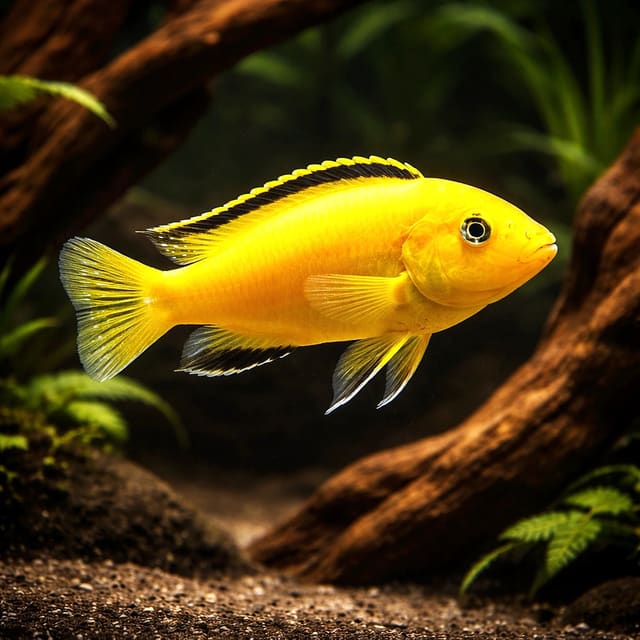
Acei Cichlid (Pseudotropheus sp. “acei”)
24–26°C · pH 7.5–8.5 · 300L
£7.99
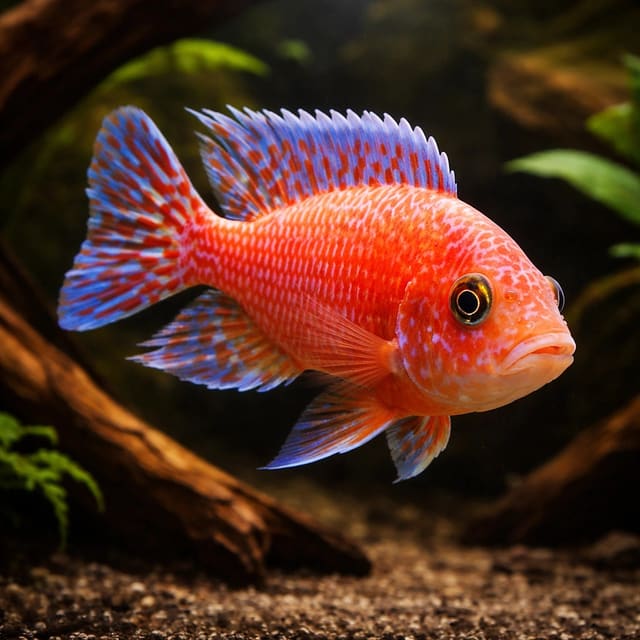
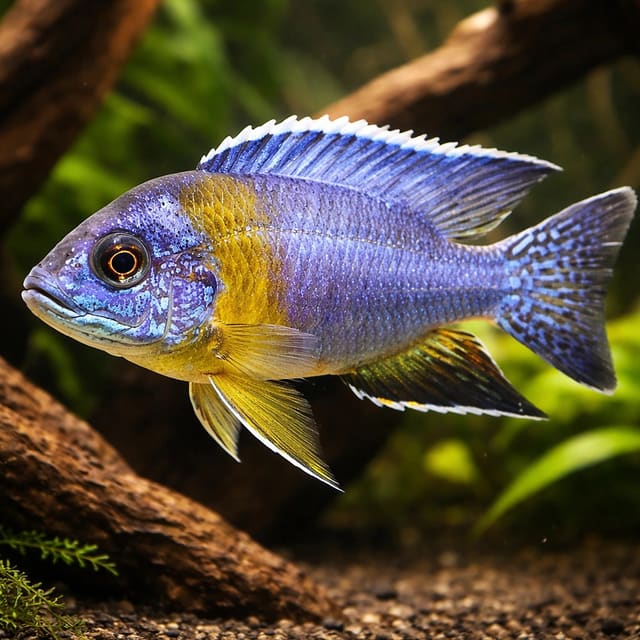
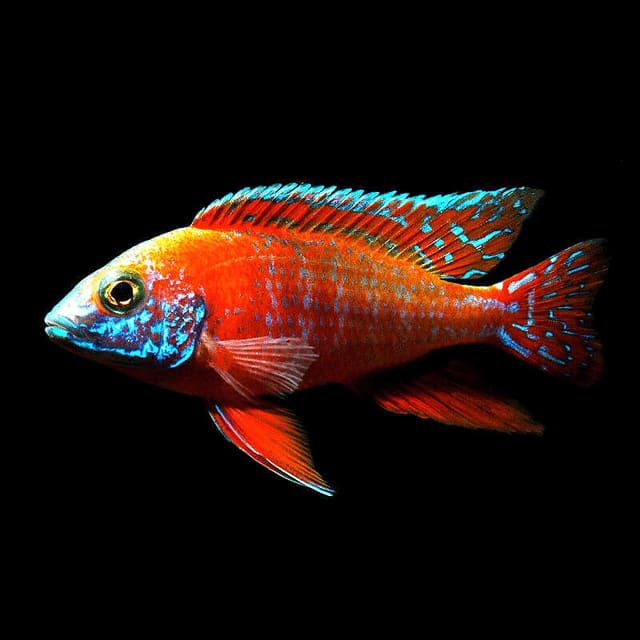
Calico Red Neon Peacock Cichlid is an Aulonocara trade form sold as one fish, with three size choices for a large, filtered Malawi aquarium with hard, alkaline water.
Aulonocara sp. ‘Calico Red Neon’
Save when buying multiple fish. Each quantity is one fish; sex and pair formation are not guaranteed unless the selected variant explicitly states them.
Calico Red Neon Peacock Cichlid is an Aulonocara trade form sold as one fish, with three size choices for a large, filtered Malawi aquarium with hard, alkaline water.

Cichlids are a family of roughly 1,800 accepted species, not one care type. Before buying, identify the exact species and source, then compare adult measurement, usable tank dimensions, social system, territory, tested water, diet and an exit plan. No family-wide minimum tank, water range or tank-mate list is safe.
Maintain these water conditions for optimal health and vibrant colors
Calico Red Neon Peacock Cichlid is the customer trade name for an Aulonocara aquarium form. A cautious working designation is Aulonocara sp. “Calico Red Neon”: it keeps the genus and trade identity together without turning the colour label into a formal species name.
One purchase supplies one live fish in the size choice selected: 3–4 cm, 4–5 cm or 6–7 cm. The size you select is the size supplied, not the adult size. These choices help with matching the new arrival to the scale of an existing Malawi setup, but they do not change the need for a spacious, strongly filtered aquarium or careful aggression management.
Sex is guaranteed only when the selected option explicitly states male or female. This Calico Red Neon Peacock Cichlid listing has no sex-guaranteed option.
This fish suits a keeper who is deliberately building a hard-water Malawi cichlid community. The important decisions are whole-system decisions: enough aquarium volume for the planned community, oversized biological filtration, strong aeration, compatible water chemistry, a robust layout and a stocking plan that spreads rather than concentrates aggression.
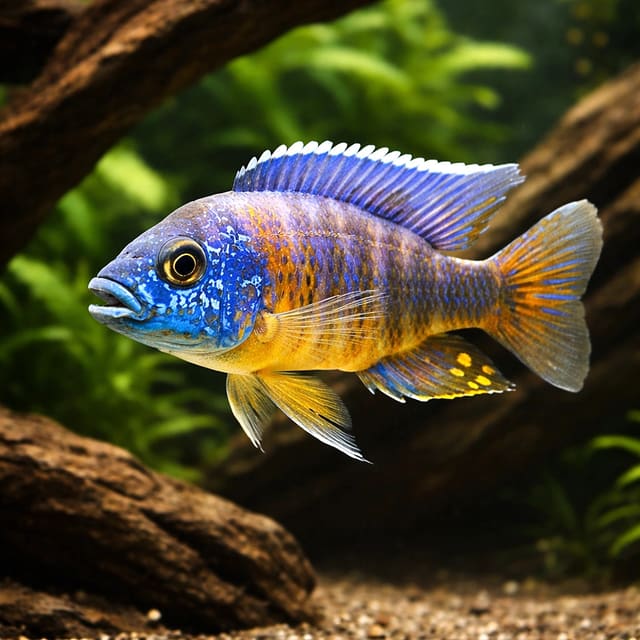
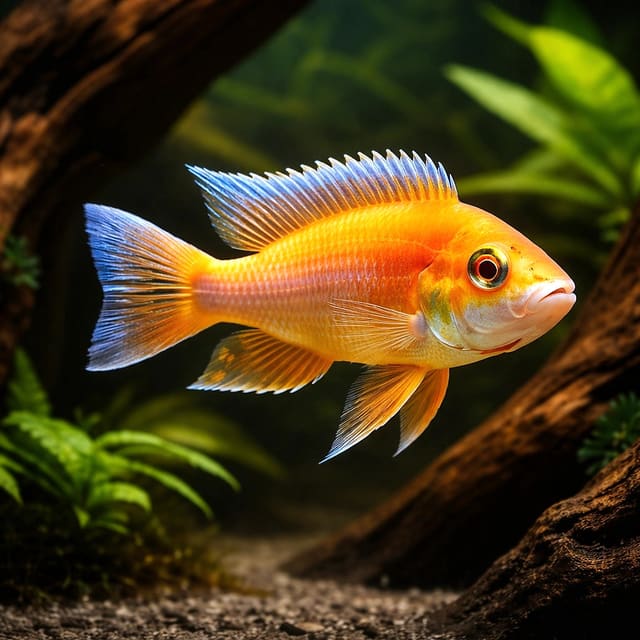
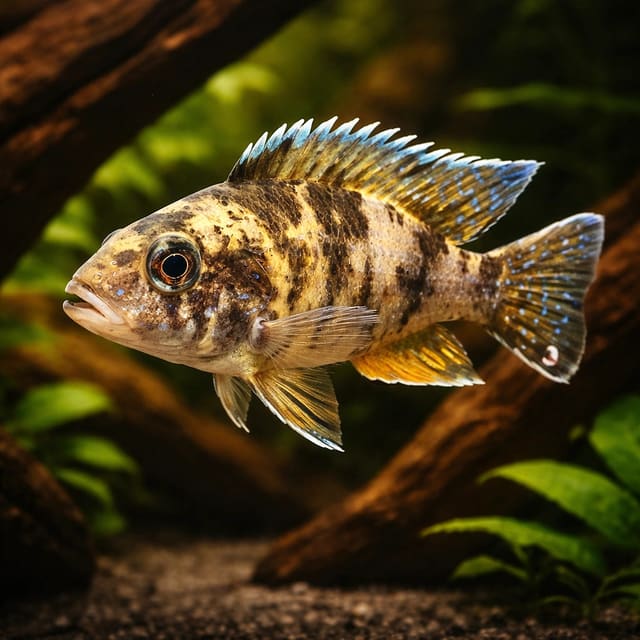
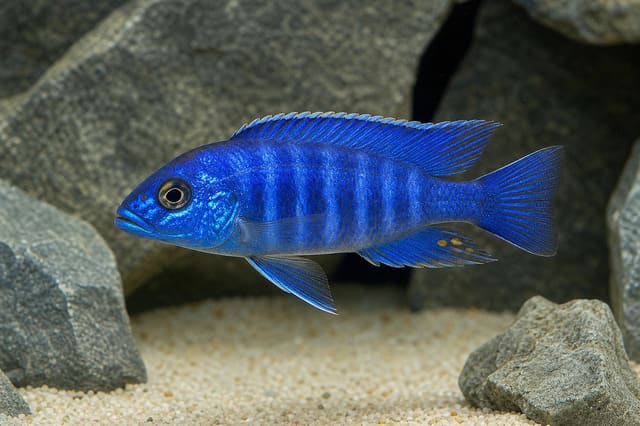
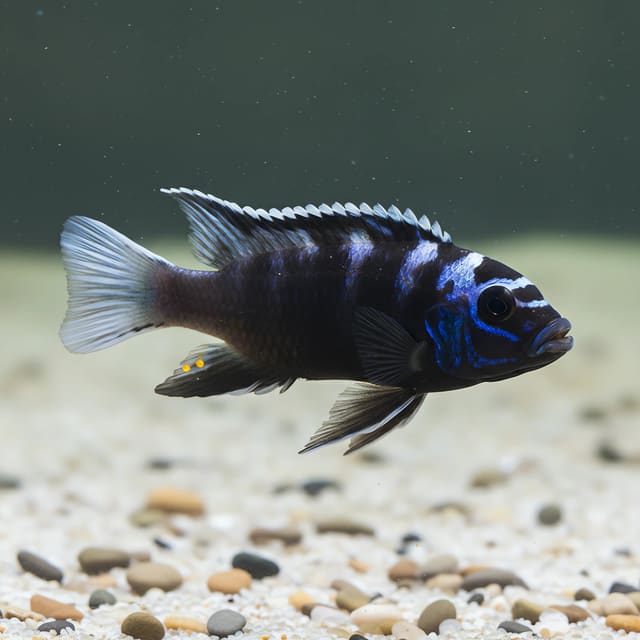
Gallery images have been digitally enhanced to improve image quality. Natural colour, pattern, size and maturity can vary between live animals.
If the aquarium is still being prepared, use the first tropical aquarium guide to establish the filter and testing routine before livestock is added. The African cichlid collection is useful for comparing other listings by water, adult scale and temperament; sharing a collection does not make every fish a compatible tank mate.
| Customer name | Calico Red Neon Peacock Cichlid |
|---|---|
| Working designation | Aulonocara sp. “Calico Red Neon” |
| Fish family | Cichlidae |
| Sold unit | One live fish per purchase |
| Size choices | 3–4 cm, 4–5 cm and 6–7 cm |
| Broad Malawi temperature | 23–27°C |
| Broad Malawi pH | 8.0–8.6 |
| Broad Malawi hardness | 12–18 dGH; 10–15 dKH |
| Best suited to | Keepers planning a large Malawi cichlid community |
| Store care assessment | Intermediate |
The genus overview places Aulonocara among Lake Malawi's haplochromine cichlids and notes the familiar “peacock cichlid” name. It also describes the genus as maternal mouthbrooding and strongly sexually dichromic. Those are genus traits, not a sex promise for this purchase and not a guarantee that a juvenile will develop one exact colour pattern.
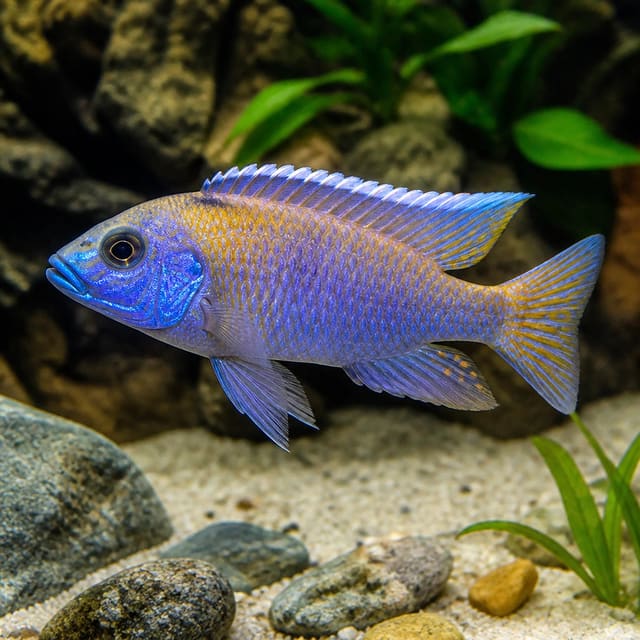
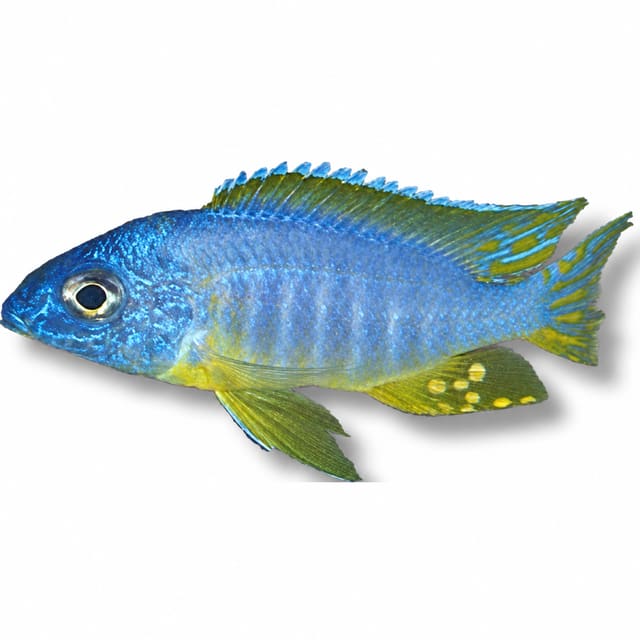
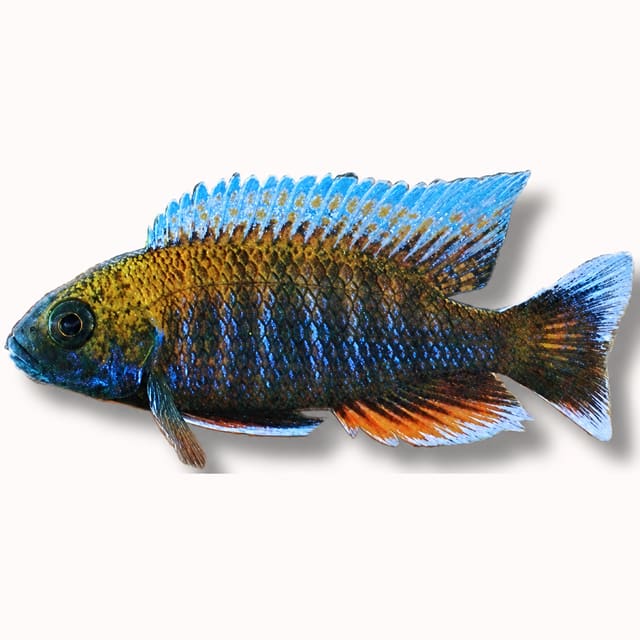
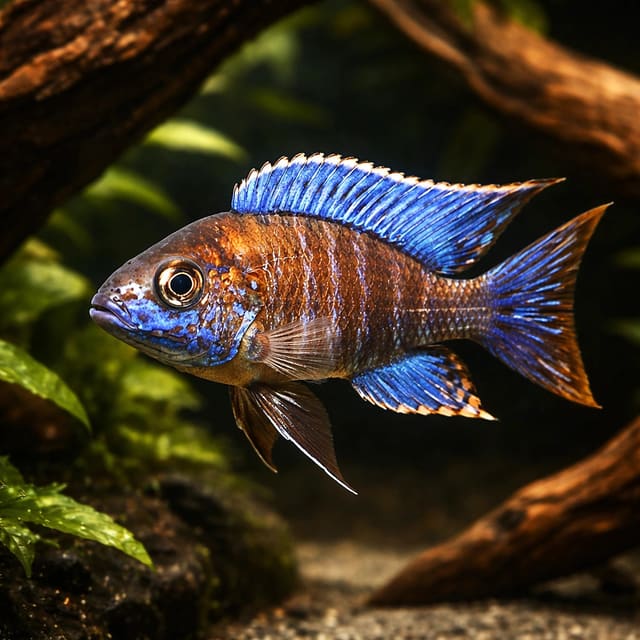
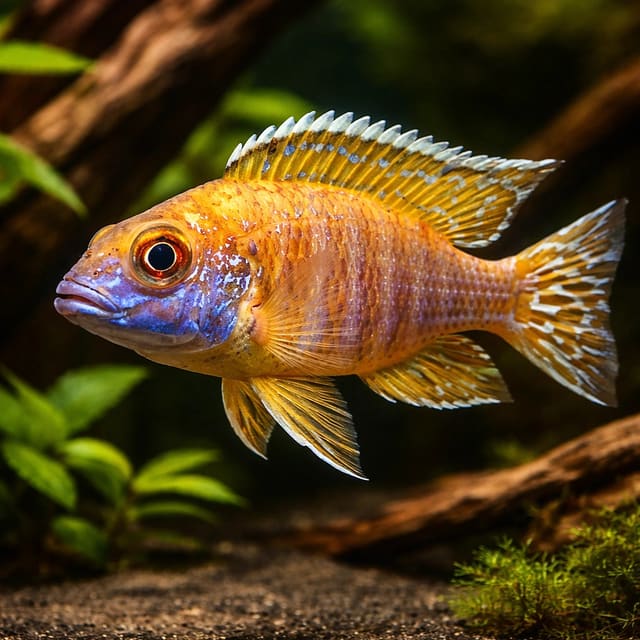
Calico, red and neon are useful trade descriptors for the listed form. Live colour and pattern remain individual, and the fish pictured is not the exact animal supplied. Use those words to recognise the product, then judge whether the aquarium is suitable from water, filtration, community size and behaviour.
The store assessment is intermediate because the core water range is clear but the community planning is demanding. Malawi cichlids combine hard alkaline water with territorial behaviour, substantial filtration needs and a stocking method that must be considered across the whole aquarium.
The OATA Malawi cichlid care sheet gives broad group-level guidance of 23–27°C, pH 8.0–8.6, general hardness 12–18 dGH and carbonate hardness 10–15 dKH. These are Malawi-group values rather than a species-specific optimum for this named aquarium form. They are still the most useful safe starting point for planning the system.
Measure the water rather than assuming a hard-water aquarium from its décor. The water chemistry guide explains pH, ammonia, nitrite, nitrate and hardness, while the water matcher helps compare actual readings with the intended range. Test both tap water and established aquarium water because substrate, rock, water changes and biological activity can change what the fish experiences.
Stable hard water is more valuable than constant adjustment. If source water sits outside the planned range, design a repeatable preparation method before adding the fish. Avoid large, improvised corrections in an occupied aquarium. Record the measured result after water changes so you know the routine is producing similar conditions each time.
OATA recommends an oversized filter for a Malawi community and strong aeration to maintain dissolved oxygen. This is especially important when the stocking plan deliberately uses a sizeable group to spread aggression. The filter must process the waste produced by the whole community, while surface movement and aeration help oxygen reach both fish and filter bacteria.
The RSPCA aquarium guidance explains the biological role: fish release toxic ammonia; established bacteria convert it to nitrite and then to the safer nitrate stage. Clear water alone cannot show whether that cycle is working. A matured filter, zero ammonia, zero nitrite and recorded maintenance are the dependable checks.
As broad guidance for a reasonably sized Malawi cichlid community, OATA recommends an aquarium of at least 200 litres, while acknowledging that some specialist species may be kept differently. Do not store that number as a species-specific minimum for this trade form. Use it as a community-planning floor alongside footprint, adult scale of all residents, territory, filtration capacity and water-change access.
Length and width matter because fish need usable swimming and escape routes, not simply a tall column of water. Leave open space as well as robust structure. Position filter outlets and air sources so oxygenated water circulates through the occupied area without leaving dead zones behind rockwork.
OATA recommends coral sand or a similar substrate that helps buffer Malawi water. It also notes that Malawi cichlids dig and rearrange substrate, so planting can be difficult unless plants are hardy and attached securely to décor. Build rockwork and ornaments so digging beneath them cannot make them unstable.
A good layout combines sturdy shelter with open swimming. Multiple routes through the aquarium help fish move away from pressure, while open areas let the keeper see whether everyone is feeding. Avoid balancing heavy rocks on loose sand. Support the structure safely, check that it cannot trap a fish, and leave enough access to siphon waste.
OATA strongly recommends a partial water change of 25% at least once each week. Condition replacement water to remove chlorine or chloramine and bring it close to the aquarium's temperature and chemistry. In a heavily stocked Malawi setup, test results may show that more frequent attention is needed; change the schedule from measured trends rather than waiting for visible dirt.
If filter media needs cleaning, do not run it under the tap because chlorine or chloramine may kill the beneficial bacteria established there. OATA advises rinsing it lightly in aquarium water removed during the water change. Clear enough debris to restore flow while protecting the biological function.
A rising nitrate trend may reflect larger portions, more fish, blocked flow or waste trapped behind structure. A falling pH may indicate that the buffering plan and water-change rhythm are no longer holding conditions steady. Faster gill movement can point to oxygen or water-quality stress, especially if several fish show it together. Record readings and observations so causes can be traced rather than guessed.
OATA's healthy-fish checks include bright clear eyes, intact scales, undamaged fins and appropriate swimming. Watch for persistent surface hanging, bottom sitting, erratic movement, colour change, unusual aggression or hiding, white spots, fluffy growths, loss of body condition or reduced feeding. Test water promptly when behaviour changes.
Maintenance should preserve the planned environment. Move décor only when there is a clear safety or aggression reason, and make sure any rearrangement remains structurally sound. The aim is a predictable hard-water system in which fish behaviour can be interpreted against stable conditions.
Malawi cichlids do not all share one diet. OATA separates smaller, more herbivorous mbuna from larger open-water forms that may take foods with more animal content. A colour-form trade name alone is not enough to choose either extreme. Start with a high-quality complete Malawi cichlid food appropriate to the identified residents in the aquarium, then use additional foods only when they suit the whole plan.
OATA's broad group routine is twice daily, with only as much food as the fish eat within a few minutes. Small measured portions are easier to observe and produce less waste than a large scatter. Distribute food so subordinate fish can reach it, but do not add excess simply because one fish is slower.
A complete food provides consistency. Frozen brine shrimp, prawns or cockles appear in OATA's advice for some larger open-water Malawi cichlids, while algae-rich food and vegetables suit some mbuna. Those examples show why the final menu must match the identified community. They are not a ready-made list for every fish carrying a Malawi label.
Use feeding as a daily condition check. A fish that hangs back for several meals, loses body condition or cannot compete may need a change in food placement, social pressure or water quality. Test the aquarium and watch interactions before increasing the quantity. Extra uneaten food can turn a behavioural problem into an ammonia or nitrate problem.
A successful Malawi aquarium is planned from the finished community backwards. Before adding this fish, list every resident and the size each is expected to occupy, then note its water, diet and behaviour. This prevents a new colour choice from quietly changing the aquarium into a mixture of incompatible feeding needs or very different aggression levels.
Take temperature, pH, general-hardness and carbonate-hardness readings before a water change and again after the replacement water has mixed. The broad group target remains 23–27°C, pH 8.0–8.6, 12–18 dGH and 10–15 dKH. The useful question is whether the same preparation method returns similar values each week. If it does not, correct the preparation routine before expanding the community.
OATA's at-least-200-litre recommendation applies to a reasonably sized Malawi community, not to this trade form alone. In a nominal 200-litre aquarium, a 25% water change is 50 litres; rock, substrate and the normal fill line reduce the actual water volume, so use the aquarium's real working volume when preparing replacement water. Make sure containers, conditioner and access make that routine practical every week.
Test nitrate before the scheduled change and again after the aquarium has mixed. Over several weeks, that record shows whether the current feeding and stocking plan is staying within the group guidance. If nitrate climbs faster after another fish is added, respond by reviewing portions, waste removal, filter flow and the maintenance interval rather than waiting for the water to look cloudy.
Watch surface movement, outlet flow and fish breathing when the aquarium is active and after feeding. An oversized filter is useful only when water can pass through it and oxygen remains available. Clean blocked mechanical areas through the normal maintenance routine, keep air delivery unobstructed and confirm that rockwork has not redirected all flow away from an occupied corner.
Never treat the group figure of at least 15 fish as a shopping target on its own. The method is tied to sufficient space, deliberate species choice, oversized filtration, strong aeration and disciplined maintenance. A keeper who cannot support those parts should revise the aquarium plan before increasing numbers.
The three size choices describe the fish supplied. Compare that selected size with the mouths, feeding speed and territorial behaviour already in the tank. A smaller newcomer may struggle to reach food among larger residents, while a larger fish can alter an established social balance. Use several feeding points and observe who actually eats, but keep the total portion within what the community consumes in a few minutes.
Decide in advance what you will do if one fish is persistently cornered, denied food or damaged. A safe temporary separation option, spare conditioned water and the ability to test immediately make a response quicker. The goal is not to react to every short chase; it is to prevent repeated pressure from becoming injury or loss of condition.
Review the plan after each addition. Stable water, normal breathing, consistent appetite and a community in which every fish can move and feed are stronger signs than the absence of one dramatic fight. This step-by-step record turns broad group guidance into care that reflects the actual aquarium.
OATA describes Malawi cichlids as aggressive fish that should be mixed with caution. Its broad community guidance recommends groups of at least 15 and explains that slight, planned overstocking can spread aggression. That approach only makes sense in a sufficiently large aquarium with oversized filtration, strong aeration and a keeper able to maintain water quality. It is not permission to crowd fish into an undersized tank.
Malawi cichlids kept in small groups may focus aggression on one fish. OATA also advises keeping more females than males where possible, but many juveniles are difficult to sex and this product has no sex guarantee. Do not build a ratio plan around assumed sex. Instead, review the known sex, size and behaviour of the whole community and keep a contingency for a fish that becomes persistently targeted.
OATA's general advice is to keep Malawi cichlids with other Malawi cichlids or some suitable Synodontis catfish. Within that boundary, compatibility still depends on size, aggression, diet, territory and introduction order. “Malawi cichlid” is not a universal compatibility label.
Add more peaceful species before more aggressive ones where the plan allows, and introduce Malawi cichlids in groups rather than leaving one fish to absorb all attention. OATA notes that rearranging décor can reduce established territorial ownership, but every change must keep heavy structures stable and preserve water circulation.
Brief display or chasing can occur in a cichlid aquarium, but each fish should still reach food, rest and move through the tank. Repeated cornering, fin damage, rapid breathing, refusal to feed or one fish remaining hidden throughout the day means the social plan needs action. Water testing comes first because poor conditions can intensify conflict and weaken the targeted fish.
Compare products by purpose before treating them as companions. Lupingu Copadichromis is another Malawi cichlid listing with a distinct identity and care profile. The link helps a buyer compare forms; it is not a statement that the two fish should share an aquarium.
Confirm temperature, pH, ammonia and nitrite before the delivery day. Make sure the chosen size can enter shelters safely and that filter intakes are appropriate. Avoid adding several unrelated changes at the same time; a stable aquarium makes the new fish's behaviour easier to assess.
For a Live Arrival Guarantee claim, Tropical Fish Co requires one continuous unboxing video that begins with the parcel still sealed, shows the outer box being opened and shows the fish still inside the sealed bag before anything is disturbed. Someone must be at the delivery address, the parcel must be opened and inspected on the day it arrives, and the store should be contacted that day with the order number and evidence if anything has gone wrong. Check the current delivery and Live Arrival Guarantee policy before dispatch.
After the arrival condition is recorded, the policy says to acclimatise slowly by floating the bag for 20–30 minutes before releasing the fish. Keep the room and aquarium activity calm and follow the current order instructions. Observe breathing, balance, fin condition and the reaction of established residents.
Record what you see. A brief chase is different from repeated exclusion, and one cautious meal is different from continuing refusal. Early notes help the keeper act on a pattern while the fish still has good condition.
It identifies the fish at genus level and keeps “Calico Red Neon” as the aquarium trade form. The colour words are not presented as a formal species epithet, so care figures are kept at the clearly labelled Malawi-group scope.
OATA's broad Malawi cichlid guidance is 23–27°C, pH 8.0–8.6, 12–18 dGH and 10–15 dKH. Keep ammonia and nitrite at zero and maintain the hard, alkaline conditions steadily.
OATA recommends at least 200 litres for a reasonably sized Malawi cichlid community, while noting that specialist species may differ. Treat this as a broad community-planning floor and also consider footprint, finished stock, territories, filtration and aeration.
OATA broadly advises groups of at least 15, using carefully planned slight overstocking to spread aggression. This needs a large aquarium, oversized filtration, strong aeration and a coherent stocking plan; it is not a shortcut for a small tank.
It is best for a keeper with some aquarium experience or one willing to plan carefully. Hard alkaline water, a large community, aggressive interactions, strong filtration and diet matching all need attention together.
Use a good-quality complete Malawi cichlid food suited to the identified community. Feed twice daily and only what the fish eat within a few minutes; choose any vegetable or animal-rich extras according to the needs of the fish sharing the aquarium.
OATA describes Malawi cichlids as aggressive and recommends cautious mixing. Use a large, structured aquarium, add fish in a planned order and watch for repeated exclusion from food, damage or one fish being cornered.
The broad OATA boundary is other Malawi cichlids or some suitable Synodontis catfish. Match size, water, diet and temperament, and do not treat a product comparison as a tank-mate guarantee.
Tropical Fish Co hand-packs live fish in oxygen with an insulated box and a heat pack when weather calls for it, then uses a licensed live-animal courier. For a Live Arrival Guarantee claim, record one continuous video from the sealed parcel through opening to the fish still in the sealed bag, and contact the store on the day of arrival with the order number.
The supplier and live offer establish the trade identity, sold unit and three size choices. The Aulonocara genus overview supports the Lake Malawi genus context and mouthbrooding and sexual-dichromism notes. OATA's African Malawi cichlid sheet supports the water, aquarium, filtration, aeration, maintenance, feeding and compatibility guidance. RSPCA guidance supports the explanation of biological filtration. Tropical Fish Co's delivery page controls packing, acclimatisation and Live Arrival Guarantee wording.
Every numeric care value on this page is either an exact size choice or explicitly broad Malawi-group guidance. No group-wide adult maximum, tank volume or head count is turned into a species-level card for this named trade form.
No reviews for this item yet. Bought one? Honest reviews only, good or bad.
What customers say about ordering from us
Easy website plenty of info on fish your buying great to pick a time slot
TRACEY DURRANT · 7 Oct 2026
Got some lovely fish thank you
Kevin Mackie · 7 Oct 2026
Reviews of our shop, collected by Judge.me, an independent third-party review collector. Newest first.