Moderate
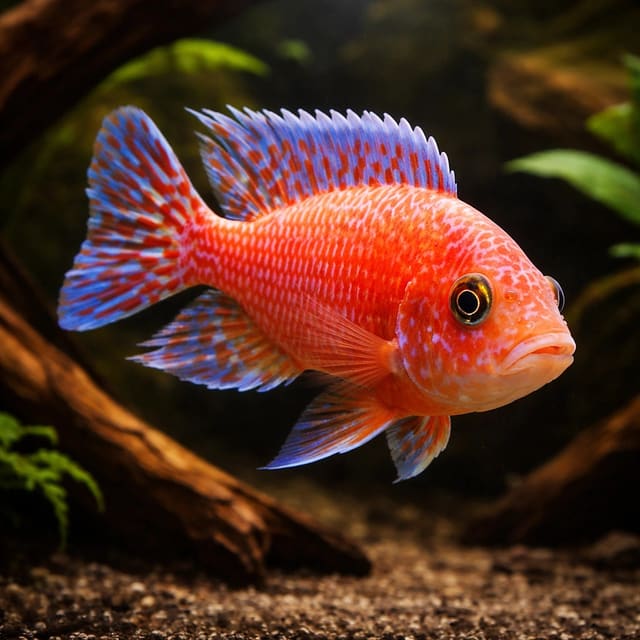
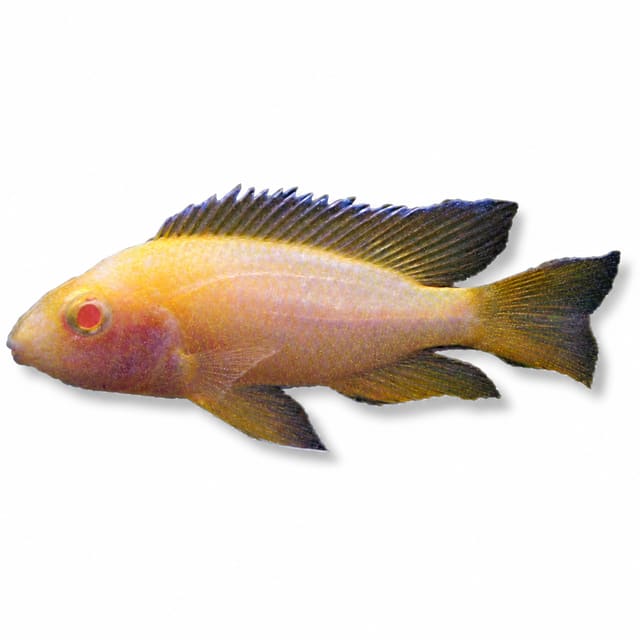
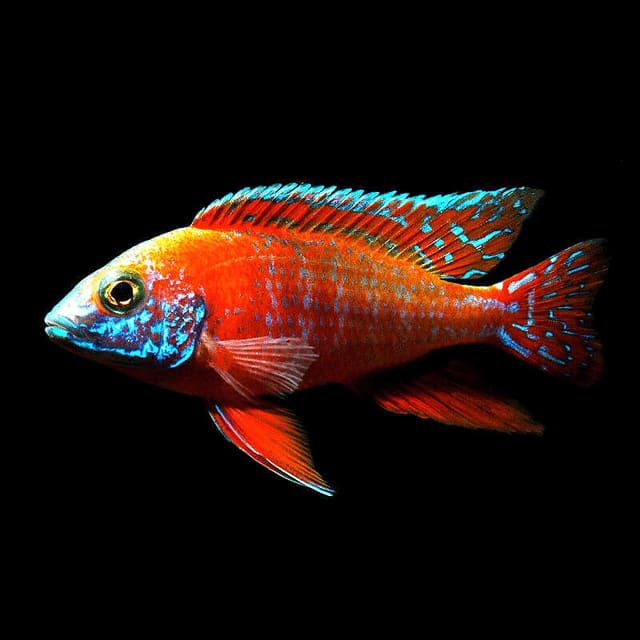
Acei Cichlid (Pseudotropheus sp. “acei”)
24–26°C · pH 7.5–8.5 · 300L
£7.99

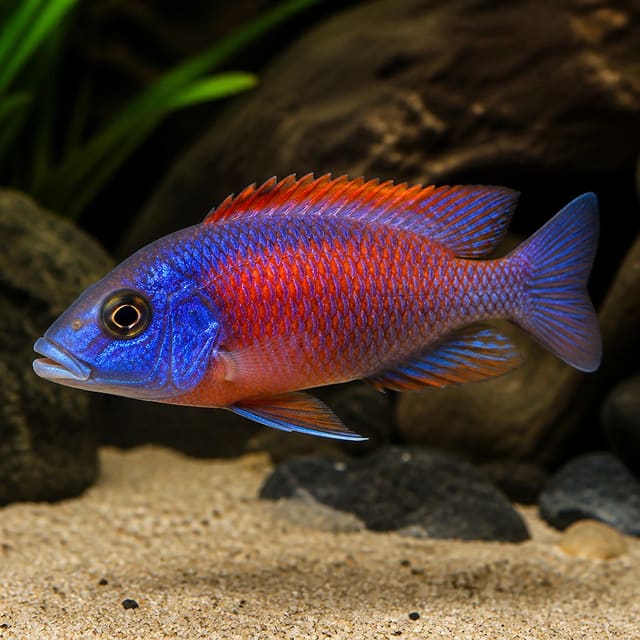
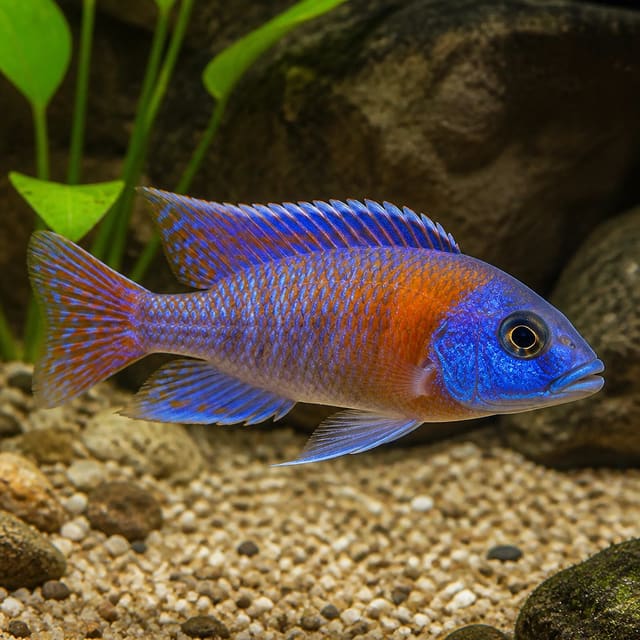
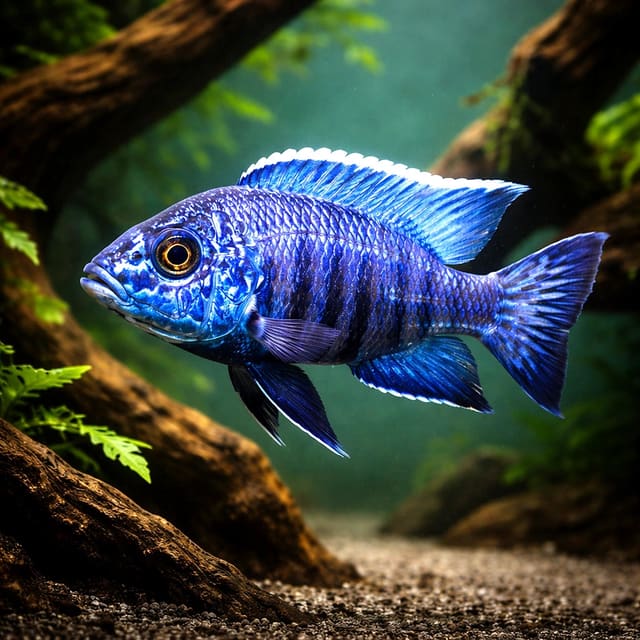
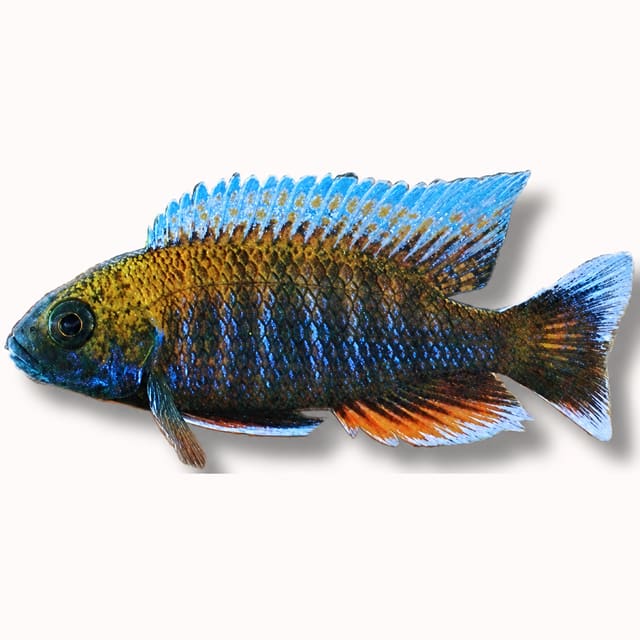
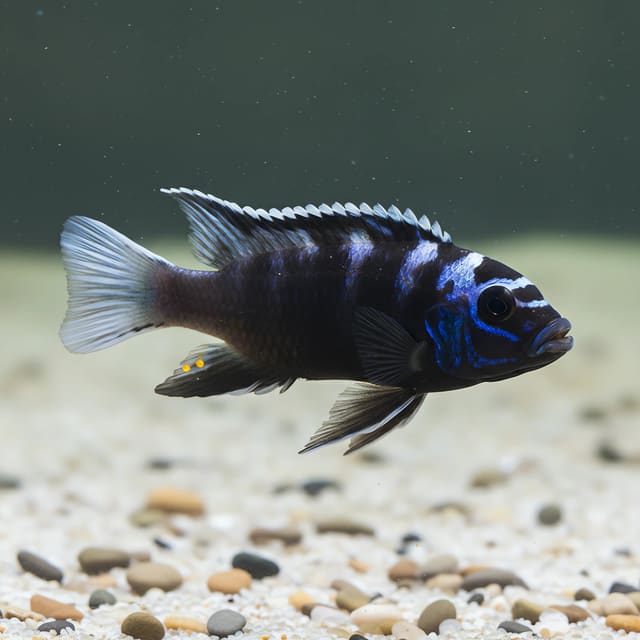
Maulana Peacock Cichlid (Aulonocara maulana) is supplied as one live fish per purchase in the chosen listed size. It needs a mature, filtered hard-water Malawi aquarium with careful stocking, and this listing does not guarantee sex.
Aulonocara maulana
Save when buying multiple fish. Each quantity is one fish; sex and pair formation are not guaranteed unless the selected variant explicitly states them.
Maulana Peacock Cichlid (Aulonocara maulana) is supplied as one live fish per purchase in the chosen listed size. It needs a mature, filtered hard-water Malawi aquarium with careful stocking, and this listing does not guarantee sex.
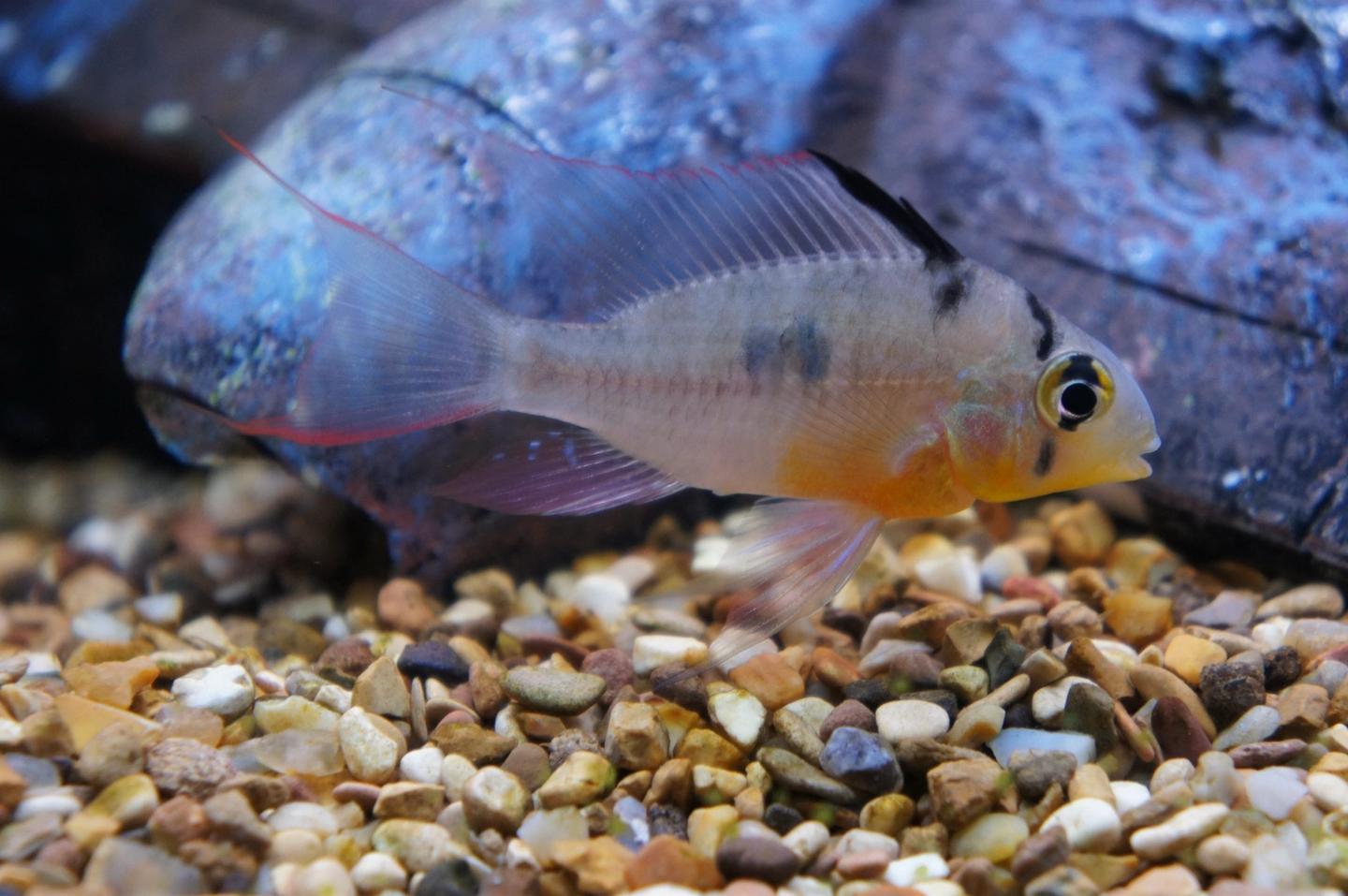
Cichlids are a family of roughly 1,800 accepted species, not one care type. Before buying, identify the exact species and source, then compare adult measurement, usable tank dimensions, social system, territory, tested water, diet and an exit plan. No family-wide minimum tank, water range or tank-mate list is safe.
Maintain these water conditions for optimal health and vibrant colors
The Maulana Peacock Cichlid (Aulonocara maulana) is a Lake Malawi cichlid for an aquarist who wants the poised shape and alert behaviour associated with peacock cichlids, and who is prepared to run a properly planned hard-water aquarium. The verified trade identity for this listing is Maulana Peacock Cichlid. The fish belongs to Aulonocara, a genus endemic to Lake Malawi, and peacock cichlids are maternal mouthbrooders. Those facts give useful context, but they do not turn every broad statement about the genus into a species-specific promise.
One purchase supplies one live fish in the size chosen from the live product choices. The recurring listed grades are 3–4 cm, 4–5 cm, 6–7 cm and XL. The size you select is the size supplied, not the adult size. Some sizes may not be available at a particular moment, so use the live purchase controls for the current choice rather than relying on evergreen text. Sex is guaranteed only when the selected option explicitly states male or female. This Maulana Peacock Cichlid listing has no sex-guaranteed option.
This is not a fish to add casually to a soft-water mixed community. Its sensible home is a mature Lake Malawi-style aquarium with hard, alkaline water, effective biological filtration, generous oxygenation and companions chosen for shared water needs as well as behaviour. OATA's UK care sheet describes Malawi cichlids as colourful, varied and aggressive, and advises mixing them with caution. That broad group description is a useful reason to plan before purchase, not a prediction that every individual will behave identically.
| Suits | Think carefully if |
|---|---|
| Keepers able to maintain stable hard, alkaline water | Your aquarium is soft, acidic or built for delicate community fish |
| Established Malawi aquariums with strong filtration and aeration | The filter is new, undersized or showing detectable ammonia or nitrite |
| Aquarists willing to observe and manage cichlid social pressure | You need a reliably peaceful fish or guaranteed sex |
| Layouts combining swimming space with secure structure | The aquarium has little room for fish to move away from conflict |
Plan from the needs of the whole adult Malawi community rather than treating the dispatch grade as a permanent size. The broad published range across Malawi cichlids is too varied to use as a species-specific maximum for Aulonocara maulana. OATA gives at least 200 litres for a reasonable Malawi community as general guidance, while also warning that specialist species can differ. Use that figure as a community-planning starting point, not as permission to crowd a particular mix.
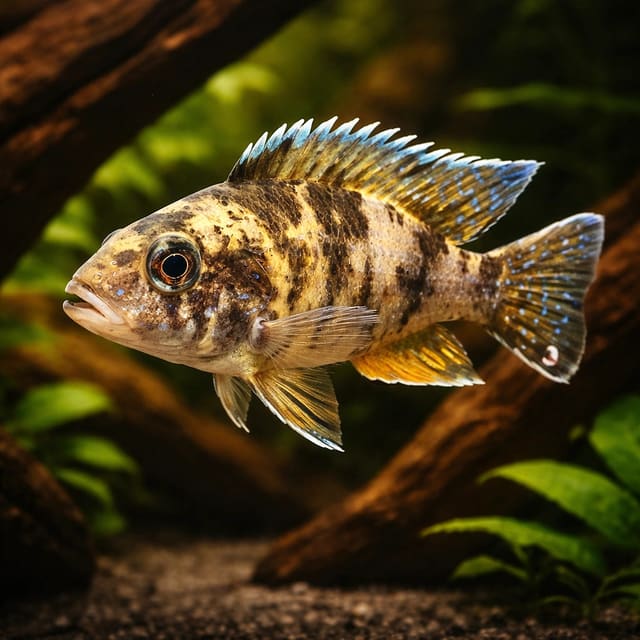
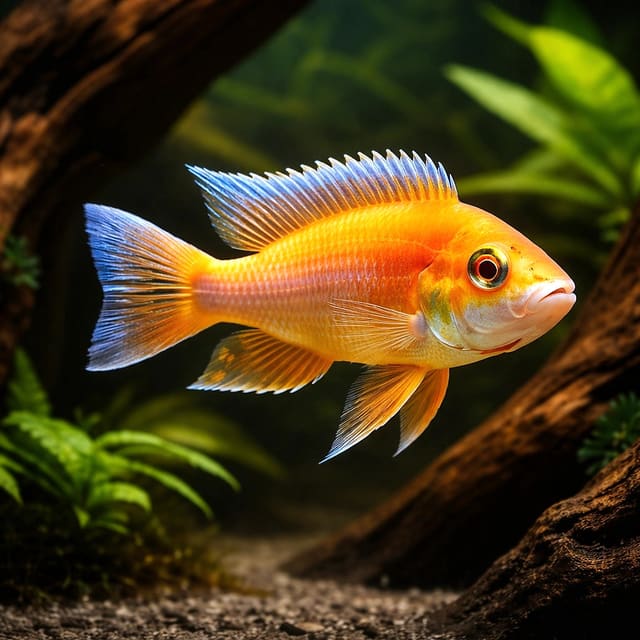
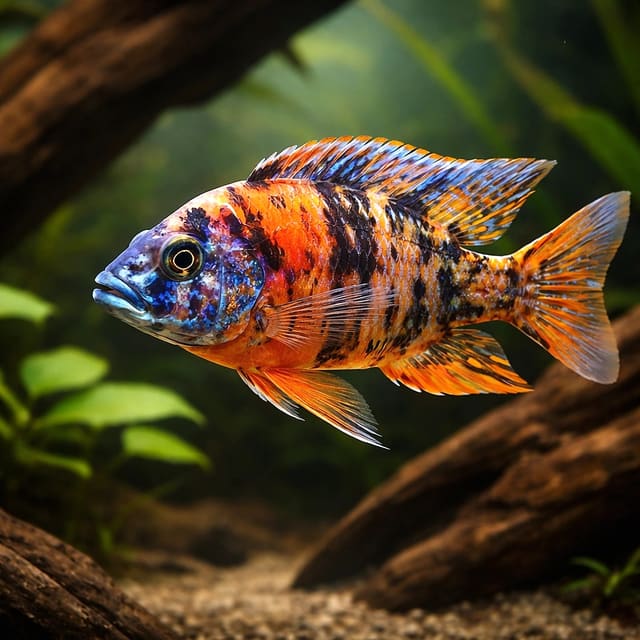
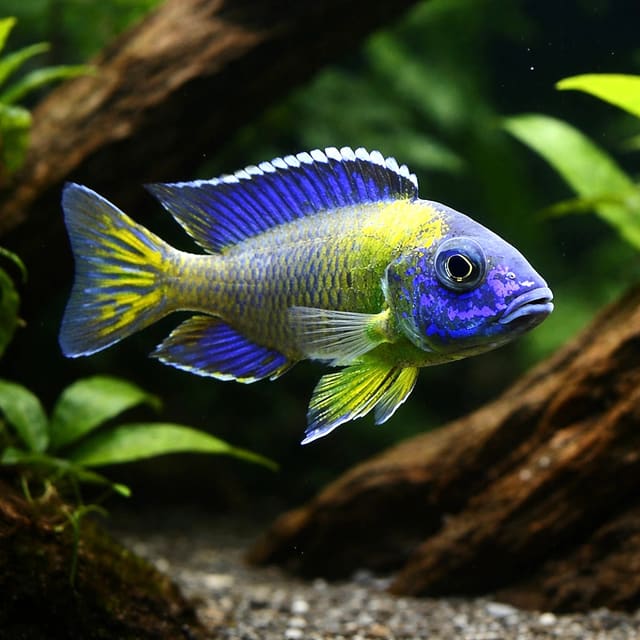
The genus is strongly sexually dichromic, which means adult males and females can differ noticeably in colour, but juveniles may not show reliable adult differences. The Aulonocara genus overview provides that natural-history context. This listing does not promise a male, female or particular mature colour outcome. Natural colour, pattern, size and maturity can vary between live animals, and the fish's appearance will also change with age, health, social position and surroundings.
For a broader view of current African cichlid choices, browse the African cichlid collection. Use that collection for comparison, not as a compatibility list: two fish appearing in the same shop section may still differ in adult size, diet, aggression and social needs.
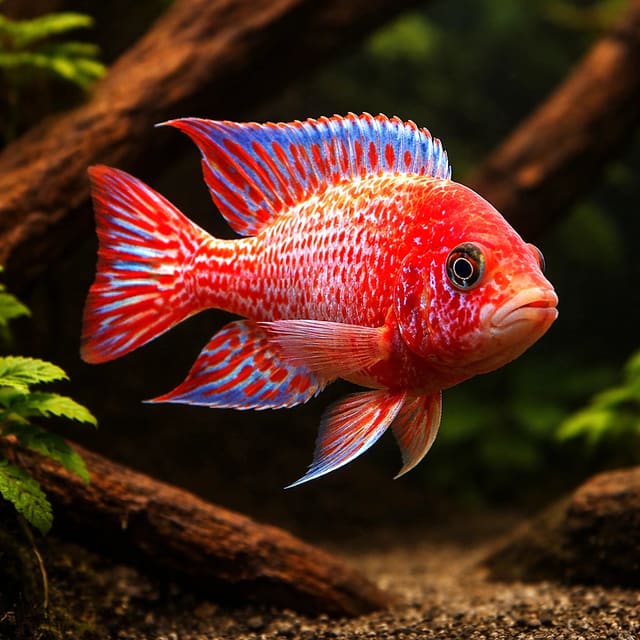
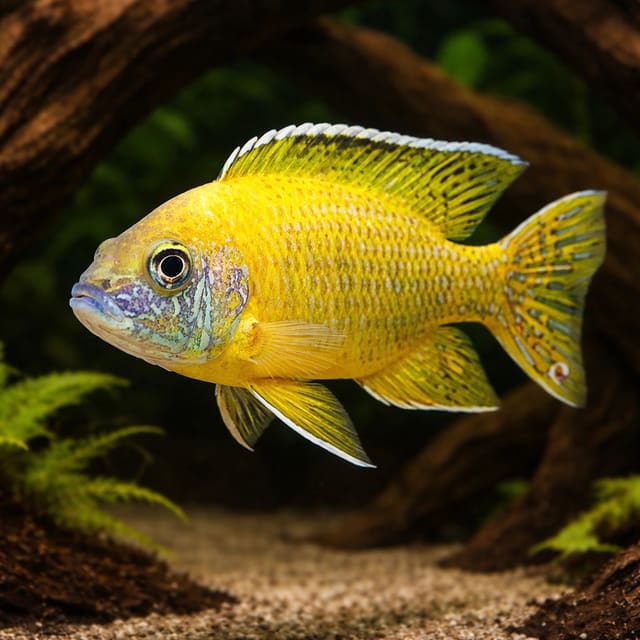
Gallery images have been digitally enhanced to improve image quality. Natural colour, pattern, size and maturity can vary between live animals.
Start by checking the aquarium rather than the colour of the fish. A Malawi set-up needs a cycled filter, stable chemistry and a stocking plan that accounts for territorial behaviour. Record the actual temperature, pH, general hardness, carbonate hardness, ammonia, nitrite and nitrate before deciding that the water is suitable. One isolated reading is less useful than a stable pattern, especially when the tank has recently gained fish or feeding has changed.
Then consider the existing animals. Malawi cichlids should not be selected solely because their colours look attractive together. Similar water chemistry is essential, yet it does not settle questions of body size, feeding style or aggression. OATA recommends adding more peaceful species before more aggressive ones and notes that rearranging décor can help when territories are being re-established. Make a practical plan for observation and separation if a new arrival is harassed.
The product's recurring sizes let a keeper choose a starting size that fits the existing stock, but they are not interchangeable with adult dimensions. A smaller juvenile may be vulnerable beside established larger fish; a larger newcomer may immediately change the social balance. Size matching reduces one obvious risk, while continued observation remains essential.
Water quality is the foundation of this fish's care. OATA's group-level Malawi guidance gives 23–27°C, pH 8.0–8.6, general hardness of 12–18 dGH and carbonate hardness of 10–15 dKH. These are broad values for Malawi cichlids rather than a demonstrated species-specific optimum for Aulonocara maulana. They are best used as a stable planning range while the keeper also considers the other species in the aquarium.
Do not focus on pH alone. General hardness describes dissolved minerals, while carbonate hardness helps resist sudden pH movement. A tank can display an apparently acceptable pH at one moment yet remain vulnerable to instability if buffering is weak. Test the source water and aquarium water with the same reliable method, record the trend and make gradual corrections. The water chemistry guide explains what the common readings mean, and the water matcher can help compare measured values with the guidance used for a proposed aquarium.
A filter is not mature merely because water has been circulating. The biological community must be able to convert toxic ammonia to nitrite and then to the less harmful nitrate. RSPCA guidance emphasises that fish should not be kept without a well set up and maintained filter. OATA likewise warns that adding stock faster than the beneficial bacteria can adjust can cause new tank syndrome, exposing fish to dangerous ammonia and nitrite.
Use tests to confirm zero ammonia and zero nitrite before adding this fish. After introduction, continue testing rather than assuming the cycle will absorb every change immediately. Extra feeding and additional waste increase the load. If either toxic compound appears, stop treating the result as a cosmetic water problem: reduce the source of pollution, seek appropriate advice and restore safe conditions promptly.
If this is your first cycled aquarium, work through the first tropical tank guide before ordering livestock. A delivery date is the wrong time to discover that the heater is unstable, the filter has not matured or the test kit is missing.
OATA's Malawi cichlid care sheet recommends an oversized filter and strong aeration for Malawi communities because active fish and comparatively dense stocking can create a high oxygen and waste demand. The filter must provide useful mechanical capture and a stable home for nitrifying bacteria. Flow also needs to reach the aquarium without leaving quiet pockets full of debris or driving every fish into one corner.
Check the intake and outlets regularly for blockages. When filter material needs cleaning, OATA advises rinsing it lightly in water removed from the aquarium rather than running it under the tap, because chlorine or chloramine can harm the beneficial bacteria. This is different from trying to make every piece of media look new. The aim is to restore flow while protecting the biological function that keeps ammonia and nitrite controlled.
Aeration is especially valuable when the aquarium is busy, warm or heavily fed. Surface movement supports gas exchange, while oxygen is also consumed inside the biological filter. Watch the fish as well as the equipment: unusually rapid breathing, hanging near the surface or a sudden change in swimming position can signal a problem that deserves immediate water testing.
OATA recommends coral sand or a similar substrate for buffering in a Malawi aquarium and notes that these cichlids often dig and rearrange it. This activity will uproot many ordinary aquarium plants. Choose a substrate and décor arrangement that can be siphoned without dismantling the entire tank. Secure heavy stones directly and safely so excavation cannot undermine an unstable pile. Leave enough open area for swimming and feeding, with structure distributed so one dominant fish cannot control every useful space.
Plants are optional and must suit the chemistry and behaviour. Hardy plants attached to wood or rock are more practical than delicate rooted stems in a tank whose occupants rearrange the substrate. The welfare value comes from stable water and a safe, maintainable environment, not from copying a decorative photograph.
Rapid changes are often more stressful than a modest reading held steadily within the broad Malawi range. Match replacement water for temperature and chemistry, treat it for chlorine or chloramine, and avoid large unplanned shifts in mineral content. If your tap water differs greatly from the intended aquarium, establish a repeatable preparation method before the fish arrives rather than improvising during a water change.
Temperature stability matters too. Use a dependable heater suitable for the volume, place a thermometer where it can be read easily and check it independently after equipment changes. The broad 23–27°C guidance should remain connected to its Malawi-group scope; it is not proof that every fish, tank mate or breeding situation shares the same optimum.
The strongest routine is consistent and easy to follow. Feed measured portions, remove accumulated waste, test water and notice how each fish behaves. Changes in appetite, colour, breathing or social position often appear before a keeper sees an obvious lesion, so familiarity with the normal aquarium is valuable.
OATA states that Malawi cichlid diets vary: smaller mbuna tend to need more plant-rich material, while some larger open-water fish take foods with more animal content. That group distinction is a warning against assigning a detailed species diet from appearance alone. Use an appropriate complete Malawi cichlid food whose formulation matches the fish in your aquarium, and seek species-aware advice before making rich frozen foods or vegetables a major part of the plan.
OATA advises feeding only what the fish can consume within a few minutes, twice a day. Start conservatively, observe whether every animal reaches food and adjust the amount rather than scattering extra in the hope that a shy fish eventually finds it. Uneaten food breaks down and increases the waste burden. A fish that persistently misses meals may be socially suppressed, unwell or unable to compete at the chosen feeding point.
Spread food so one dominant cichlid cannot take every item, while avoiding an amount that settles into inaccessible gaps. A slow or cautious newcomer may need a calm feeding opportunity rather than richer food. Keep a simple note if appetite changes; a sudden refusal is more informative when you know the fish previously ate reliably.
OATA strongly recommends a partial water change of 25% at least once every week for Malawi cichlids. Siphon solid waste from accessible substrate, condition the replacement water and match its temperature. Test ammonia and nitrite at least weekly and more often after adding fish, changing filtration or seeing abnormal behaviour. Nitrate should not rise more than 20 mg per litre above the normal tap-water level under the cited group guidance.
The correct schedule still depends on actual test results, stocking and feeding. A heavily stocked aquarium may need more frequent intervention, while a single percentage cannot compensate for unsuitable stocking. Clean viewing panes and décor only as needed; the priority is removing waste without destabilising the biological system.
Inspect the heater, air supply, filter flow and electrical connections during routine work. A gradual reduction in flow may be easy to miss until oxygenation or waste processing suffers. Keep spare essentials appropriate to the system, including conditioner and a way to maintain aeration during a short interruption.
OATA suggests watching swimming pattern, colour, temperament, breathing, appearance, body condition and feeding. A healthy fish should be alert, move in a controlled way and show an appropriate interest in food. Concern signs include hanging at the surface, sitting unusually on the bottom, erratic swimming, much faster or slower gill movement, unexpected hiding, damaged fins, white spots, fluffy growths, loss of scales or a marked change in weight.
Begin with water tests when something changes. Poor water quality can cause or intensify many apparently unrelated symptoms, and treatment without checking the environment can miss the underlying problem. Contact an aquatic retailer or qualified fish-health professional for guidance when signs persist or several fish are affected. Do not choose a treatment from a symptom list alone; similar outward signs can have different causes.
The RSPCA's fish-environment guidance explains why a working biological filter is central to aquarium welfare. It converts ammonia to nitrite and then nitrate, but that process depends on living bacteria and suitable conditions. A clear-looking tank can still contain toxic dissolved waste, which is why test results and fish behaviour matter more than visual clarity.
Aggression also needs active observation. Brief display and chasing may occur in a cichlid community, but repeated cornering, blocked access to food, torn fins or a fish that cannot rest indicates that the social arrangement needs attention. Record when the behaviour happens, because feeding time, a new addition or a changed layout can reveal the trigger.
The dispatch size is a starting point. Review stocking as fish grow, territories develop and sex-related colour differences become clearer. Aulonocara is strongly sexually dichromic at genus level, yet this does not allow reliable sexing from a juvenile photograph or a colour expectation for the individual delivered. Never build the plan around receiving a particular sex from this unsexed listing.
Growth can change food competition and the amount of waste produced. Recheck filter capacity, swimming room and refuge access rather than waiting for a conflict. A set-up that worked for small juveniles may need a different stocking decision later, even if the water numbers remain stable.
A brief maintenance note makes gradual changes easier to recognise. Record the date and result for ammonia, nitrite, nitrate, pH and hardness, together with water changes, filter work and any new livestock. Add a short observation when appetite, breathing or social behaviour differs from normal. The purpose is not to create paperwork for its own sake; it is to see whether a problem followed a practical change and whether conditions are improving.
Measure in a repeatable way. Use the same test method, read it under suitable light and avoid comparing results from different units without checking the conversion. If a reading seems surprising, repeat it before making a large correction. A sudden chemical adjustment can create another source of stress, while a confirmed ammonia or nitrite reading needs prompt action because the OATA target for both is zero.
Maintenance notes are also useful when several people care for the aquarium. They prevent a fish from being fed twice, show when conditioner was used and make it clear whether filter flow has recently changed. Agree the routine in advance, including who checks the tank when the main keeper is away. Consistency is particularly important after a new cichlid arrives because both biological load and social behaviour may change at the same time.
Filtration and aeration are essential parts of the Malawi set-up, so notice equipment problems early. Check that air is moving, the filter outlet has normal flow and the heater is holding temperature. Keep the manufacturer's information and suitable basic spares accessible. If equipment stops, focus on restoring oxygenation and safe water quality, then seek appropriate technical or livestock advice rather than making several untested changes at once.
After any interruption, test ammonia and nitrite and watch breathing closely. A filter that restarts mechanically may still need careful observation if it has been without flow. Resume feeding cautiously until the aquarium is behaving normally. This measured response protects the fish and gives the keeper useful information instead of masking the problem with extra food or unnecessary products.
Prepare before the courier arrives. Tropical Fish Co's current policy says live fish are hand-bagged with oxygen, placed in an insulated box and supplied with a heat pack when weather calls for it. The parcel travels with a licensed live-animal courier and the confirmed delivery date and tracking information are sent by email. Someone must be present to receive live fish; do not plan for the box to wait unattended.
These steps belong together and in this order. Opening or floating first and deciding to film only after finding a problem would not provide the continuous sealed-parcel evidence the policy asks for. The video is part of the claims process, while slow temperature equalisation and keeping bag water out of the aquarium are practical introduction steps.
Read the complete delivery and Live Arrival Guarantee policy before the delivery day because claim conditions and courier arrangements are governed by that page. This listing summarises the steps most relevant to receiving the fish; the current policy remains the place for the full terms.
Compatibility begins with shared water needs, but it does not end there. OATA advises keeping Malawi cichlids with other Malawi cichlids or some species of Synodontis catfish. That is broad group guidance, not a declaration that every Malawi fish or every Synodontis is safe with this animal. Adult size, diet, swimming space, aggression and the personalities already established in the aquarium must all be considered.
A companion should tolerate hard alkaline conditions around the planned group values, be robust enough for a cichlid community and have a compatible feeding pattern. Soft-water tetras, delicate long-finned community fish and small animals are poor choices for this style of aquarium even if their nominal temperature range overlaps. A product described as another African cichlid is still not automatically suitable.
OATA describes Malawi cichlids as aggressive and recommends adding the more peaceful species before the more aggressive ones. A new fish entering established territories is particularly vulnerable. Rearranging décor can reduce the value of old territories, but it is not a substitute for enough space or a sensible mix. Observe after lights-on, around feeding and during the quieter parts of the day so persistent pressure is not missed.
OATA's group sheet discusses large Malawi groups and slight overstocking as ways experienced keepers distribute aggression, and it recommends more females than males where possible. Those ideas require filtration, oxygenation and an aquarium sized for the total adult community. They should not be copied as a universal formula for a small tank or used to justify adding fish beyond the biological capacity of the system.
This product does not offer guaranteed sex, so a planned male-to-female ratio cannot be promised at purchase. Juvenile appearance is not a reliable substitute, even though the genus becomes strongly sexually dichromic. If a precise sex ratio is essential to the stocking plan, choose livestock explicitly sold by sex rather than assuming colour, size or a photograph settles it.
Watch for a fish that remains pinned behind equipment, abandons normal feeding, breathes rapidly after repeated chases or develops fresh fin damage. Social pressure can also appear as a gradual loss of condition rather than spectacular fighting. Intervene before an animal is exhausted. The appropriate response may be to separate a fish, revise the layout or reduce the stocking plan, depending on the cause.
At the same time, do not treat every short display as proof of failure. Cichlids communicate with posture, movement and brief pursuit. The important question is whether all fish can feed, rest and move through the aquarium without one individual controlling every essential resource.
| Potential fit | Conditions |
|---|---|
| Carefully selected Lake Malawi cichlids | Match adult scale, feeding, chemistry and temperament; monitor territorial pressure |
| Some suitable Synodontis species | Confirm the particular catfish's adult needs and provide appropriate shelter |
| Another peacock-type cichlid | Assess the individual species and aquarium; shared trade grouping alone is insufficient |
| Soft-water or delicate community fish | Avoid because chemistry and behaviour expectations conflict |
All Aulonocara are maternal mouthbrooders at genus level. Courtship and holding can change behaviour, with females needing room to avoid pressure. The evidence here does not establish a home-breeding recipe or exact incubation period for this species, so the practical care point is to maintain stable conditions and protect fish from persistent harassment rather than promising an easy breeding project.
If breeding does occur, do not increase disturbance simply to inspect the female. Watch condition and social pressure, ensure she can withdraw and seek species-aware advice before deciding whether intervention is necessary. The regular community plan must still work when behaviour changes.
The selected size is its dispatch size, not its adult size. Published group guidance says Malawi cichlids vary considerably, with many around 10 cm and some reaching 25 cm, so that broad range is not a species-specific promise. Plan generous swimming room and judge the whole adult community, not the juvenile size at delivery.
OATA recommends at least 200 litres for a reasonable Malawi cichlid community as broad group guidance, while noting that individual species can differ. Treat that as a planning floor for the community rather than a guarantee for every stocking plan, and prioritise floor area, filtration, oxygenation and manageable social pressure.
There is no species-specific number supplied for Aulonocara maulana. OATA's Malawi guidance describes carefully managed groups and recommends more females than males where possible, but this listing does not offer sex selection. Build the stocking plan around aquarium size, the temperaments already present and advice for the complete community.
It is better suited to a keeper who already understands cycling, hard alkaline water and cichlid aggression. The fish itself is not unusually delicate under stable conditions, but a Malawi community needs deliberate stocking, strong biological filtration, regular testing and enough confidence to respond when chasing or water quality changes.
Use an appropriate complete Malawi cichlid food chosen for the fish in your aquarium. OATA notes that diets differ across Malawi groups, so avoid assuming one generic formula suits every cichlid. Feed small portions that are eaten within a few minutes, up to twice daily, and remove the cause if uneaten food is accumulating.
As broad Malawi-group guidance rather than a species-specific optimum, OATA gives 23–27°C, pH 8.0–8.6 and hard water around 12–18 dGH, with carbonate hardness around 10–15 dKH. Keep conditions stable, use tests you can read reliably and never allow detectable ammonia or nitrite.
Treat it as an assertive Malawi cichlid, not a peaceful general-community fish. OATA describes aggression as a normal planning issue for the group. Provide enough space and structure, watch actual behaviour, and intervene if one fish is persistently cornered, prevented from feeding or left with damaged fins.
OATA's broad guidance limits Malawi cichlids to carefully chosen Malawi cichlids and some suitable Synodontis catfish. Any companion must share hard alkaline water needs and cope with cichlid behaviour. Small, delicate or soft-water community animals are a poor fit, and an alternative product is not automatically a compatible tank mate.
Tropical Fish Co hand-packs live fish in oxygenated bags inside an insulated box, using a heat pack when weather calls for it, and uses a licensed live-animal courier. Be present for delivery. Before opening the sealed parcel, start a continuous unboxing video; inspect the fish in the sealed bag, then float the closed bag for 20–30 minutes and transfer carefully without adding transport water to the aquarium.
The care values and community-planning advice on this page are deliberately scoped. The listing identity and dispatch grades reflect the current offer. Natural-history statements about peacock cichlids use the genus account, while aquarium values use UK group-level guidance and remain labelled accordingly.
Use the cited guidance for aquarium planning and the live purchase choices for dispatch size. This listing does not promise a species-specific adult maximum, lifespan, sex selection, disease treatment or breeding timetable. Broad Malawi values remain labelled as group guidance so they are not mistaken for a measured optimum for every individual.
No reviews for this item yet. Bought one? Honest reviews only, good or bad.
What customers say about ordering from us
I have a small group of long finned mountain minnows. So was delighted to be able to order ten of this variety to increase the genetics in my tank . The ones I recieved are healthy but it’s to early to give a verdict on wether they are of a long finned type since they are small currently.
Gordon Walker · 23 Sept 2026
100% success travel and "installation". Pleased with quality of purchase. The Siamese fighter a bit "shy" so have not yet seen him at his best yet but looking good. Happy customer. GG
George E Garratt · 21 Sept 2026
Reviews of our shop, collected by Judge.me, an independent third-party review collector. Newest first.