Moderate
Jalo Reef Afra (Cynotilapia zebroides)
24–28°C · pH 7.5–8.5
£14.89

Add the Mpangha Rock Dogtooth Cichlid to your cichlid setup for bold colour and character. Moderate care and ideal for experienced keepers. Buy online today.
Adult size is the maximum length this species reaches at full maturity (scientific sources). The livestock you receive will be younger and smaller — pick a size above for the actual shipping size. Product-photo provenance and any image-specific limitations are stated on the listing.
Cynotilapia afra
Save when buying multiple fish. Each quantity is one fish; sex and pair formation are not guaranteed unless the selected variant explicitly states them.
Confirm your email, then we’ll send an availability message for this exact item if it returns within 180 days.
This request is only for this product—no newsletter or other promotions. A mail-provider retry may very rarely duplicate the same availability message. Unconfirmed addresses are removed after 48 hours. See our privacy policy.
Add the Mpangha Rock Dogtooth Cichlid to your cichlid setup for bold colour and character. Moderate care and ideal for experienced keepers. Buy online today.
Adult size is the maximum length this species reaches at full maturity (scientific sources). The livestock you receive will be younger and smaller — pick a size above for the actual shipping size. Product-photo provenance and any image-specific limitations are stated on the listing.

Cichlids are a family of roughly 1,800 accepted species, not one care type. Before buying, identify the exact species and source, then compare adult measurement, usable tank dimensions, social system, territory, tested water, diet and an exit plan. No family-wide minimum tank, water range or tank-mate list is safe.
Maintain these water conditions for optimal health and vibrant colors
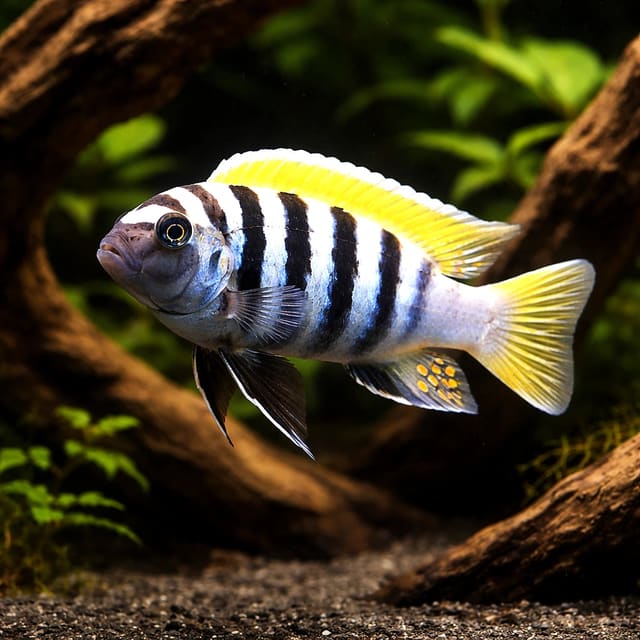
The Mpangha Rock Dogtooth Cichlid is one of the most eye-catching tropical fish for sale UK hobbyists can add to a Malawi display. Known scientifically as Cynotilapia afra, this active Mbuna brings electric colour, bold attitude, and constant movement to a carefully planned rockscape. At around 8 cm as an adult, it stays compact enough for a well-sized home aquarium, yet it still behaves like a true Lake Malawi cichlid: territorial, energetic, and always aware of its surroundings. With a lifespan of up to 8 years and a moderate care level, it suits aquarists who already understand tropical fish care, stable water chemistry, and the importance of smart stocking. If you are comparing cichlid fish for sale uk, looking for malawi cichlids for sale, or searching for the best place to buy cichlids uk, this species stands out for its colour, personality, and compatibility with other Mbuna. See our detailed photos showing the fish’s vivid patterning, body shape, and rock-dwelling posture in a realistic aquarium setting. For keepers who want a striking display with real behaviour, this is a superb choice for a tropical fish for sale online order.
This Mbuna cichlid is part of the rich Lake Malawi cichlid UK hobby, where colour, territorial behaviour, and rock-based aquascaping come together. In the aquarium trade, it is valued as a hardy, display-worthy species for aquarists who want a fish with genuine personality rather than a passive community species. It is closely related to other rock-dwelling African cichlids, and its care overlaps with many Mbuna species that thrive in hard, alkaline water.
Mpangha Rock Dogtooth Cichlids originate from Lake Malawi, East Africa, one of the world’s most famous freshwater ecosystems. In the wild, they live among broken rock piles and shoreline boulders where crevices offer shelter, territories, and breeding sites. This is why mpangha rock dogtooth cichlid Malawi tank setup needs to focus on rockwork first, not open swimming space. Their natural environment is bright, mineral-rich, and highly structured, with clean water movement and stable chemistry. That means the best results come from recreating a tropical fish tank ecosystem that mimics the lake’s alkaline, hard-water conditions.
In nature, these fish graze on algae films, tiny invertebrates, and biofilm from rock surfaces. That feeding style explains why the mpangha rock dogtooth cichlid diet should be built around plant-based nutrition rather than rich meaty foods. The species is adapted to a tropical fish tank temperature range of 24-28°C, with a strong preference for stable water rather than sudden swings. If you have ever wondered what should a tropical fish tank be kept at, this fish is a good reminder that precision matters more than guesswork. A well-planned Malawi aquarium also helps reduce stress, which is especially important because these cichlids can be assertive in confined spaces.
Although many people search for tropical fish for beginners, this species is better suited to keepers who already understand stocking balance, filtration, and territorial species. In a proper setup, it rewards you with bright colour, courtship displays, and fascinating social behaviour. It is not a fish for a small tropical fish tank with heater, and it is not a match for community tropical fish uk setups full of peaceful species. Instead, it belongs in a carefully planned African cichlid aquarium with other Mbuna or robust species that can handle the same water conditions.
Mimicking the natural rock habitat improves health and brings out stronger colour. Use stacked stone, open caves, and clear sight breaks so each fish can claim space without constant fighting. This is the simplest way to reduce stress and make your tropical fish tank complete setup work like a real Malawi shoreline.
The mpangha rock dogtooth cichlid minimum tank size is 150 litres, but that is the absolute floor for a small group. For long-term success, a larger aquarium is better, especially if you want to keep a male with multiple females or mix it with other Mbuna. The mpangha rock dogtooth cichlid tank size should ideally be 100 cm or more in length, because horizontal swimming room helps reduce aggression. A 100cm tropical fish tank is a much safer option than a 60cm tropical fish tank or 80cm tropical fish tank, which can become cramped once rockwork and territories are added.
For keepers asking what size tank for tropical fish or what tank do you need for tropical fish, the answer depends on species behaviour, not just body length. This fish is only about 8 cm, but it acts like a much larger animal. That is why overstocking the right way can actually help diffuse aggression in a Malawi setup. If you are comparing a 90cm tropical fish tank with a 100cm tropical fish tank, choose the larger footprint whenever possible. It gives you more room for caves, line-of-sight breaks, and a stronger social structure.
The mpangha rock dogtooth cichlid ideal temperature is 24-28°C, which matches the broader tropical fish temperature range used for many African cichlids. If you are asking what temperature should a tropical fish tank be kept at, this species gives a clear answer: steady warmth, not extremes. The tropical fish tank ideal temperature for this fish is usually around 25-26°C, with the tropical fish tank heater setting adjusted to avoid daily swings. The tropical fish tank water temperature should remain stable, and the tropical fish tank temperature uk celsius reading should be checked with a reliable thermometer rather than guessed.
Target pH is 7.5-8.5, with hardness from 10-25 dGH. If you have ever searched what ph for tropical fish tank or what should tropical fish tank ph be, this fish is a classic example of why species-specific numbers matter. It thrives in hard water care conditions and is not suitable for soft, acidic community systems. For aquarists asking what should my tropical fish tank levels be, aim for stable ammonia and nitrite at zero, low nitrate, and strong oxygenation. A tropical fish tank temperature chart is useful for general planning, but this species needs a Malawi-focused approach rather than a generic tropical setup.
Use strong mechanical and biological filtration, ideally with a tropical fish tank filter and heater combination or a separate high-flow canister filter plus heater. Malawi cichlids produce a meaningful bioload, so water turnover should be robust. The tropical fish tank filter and heater should keep oxygen levels high and the temperature stable. Position the tropical fish tank heater position near water movement, not buried behind thick rockwork, so heat spreads evenly. If you are building a tropical fish tank starter kit with heater, make sure it includes enough filtration capacity for cichlids, not just community fish.
Choose fine sand or smooth gravel as substrate. Sand is especially useful because it supports natural digging behaviour and is gentle on mouths and fins. Darker substrate also helps colour contrast, making the fish look more intense under a 90cm tropical fish tank light or a neutral white LED. Rock piles, slate, and ceramic caves are essential. Avoid delicate décor that can be knocked over by territorial fish. For plants, choose hardy species attached to rock or wood, and consider browsing our range of aquarium plants for hardy options that tolerate cichlid activity. If you are wondering what plants for tropical fish tank work here, go for tough Anubias, Java fern, or Vallisneria secured away from digging zones.
Lighting should be moderate, around 8-10 hours per day. Bright light can help show off colour, but too much intensity without rock cover may increase stress. A neutral spectrum LED works best, though some keepers use a tropical fish tank blue light in the evening for viewing. Avoid excessive algae growth by balancing light with filtration and a sensible feeding routine. If you are asking what temp tropical fish tank or what temperature does tropical fish tank need to be, remember that lighting and heat both affect stability. A well-planned tropical fish tank how to set up routine includes temperature, filtration, décor, and stocking from day one.
Always cycle the tank for 4-6 weeks before adding fish. If you are learning how to maintain tropical fish tank conditions, start with water testing, then add stock slowly. Stable filtration matters more than fancy décor in a Malawi aquarium.
This species is primarily herbivorous, so the mpangha rock dogtooth cichlid diet should focus on spirulina, algae wafers, quality cichlid pellets, and blanched vegetables. In the wild, it grazes on algae and biofilm, which is why a plant-based menu supports digestion and colour. Avoid heavy protein foods, especially mammal-based ingredients, because Mbuna are prone to digestive issues and bloat when fed the wrong diet. If you have ever searched what tropical aquarium fish eat snails, this is not the fish for that job; it is better thought of as a grazer than a hunter.
For staple feeding, use a high-quality cichlid pellet or spirulina flake once or twice daily in small portions. Supplement with blanched spinach, courgette, and peas. Treats can include algae-rich foods and occasional frozen vegetable blends. If your aquarium has visible tropical fish tank algae, do not rely on this fish to solve it alone; it may graze on surfaces, but it is not a dedicated cleaner. If you are researching tropical fish tank algae eaters, tropical fish tank bottom feeders, or which tropical fish clean the tank, remember that cichlids are not a substitute for proper maintenance.
Feeding frequency should be modest. Overfeeding leads to waste, cloudy water, and stress on the filtration system. This matters especially in a tropical fish tank ecosystem where rockwork and territorial behaviour already make maintenance more demanding. A good routine is small morning and evening feeds, with one fasting day each week if the fish are adults. If you are comparing tropical fish tank plant food or tropical fish tank water treatment, note that nutrition and water quality work together; one cannot compensate for the other.
| Time | Food | Amount |
|---|---|---|
| Morning | Spirulina flakes or cichlid pellets | Only what is eaten in 30-45 seconds |
| Evening | Algae wafers or blanched vegetables | Small portion, remove leftovers |
Overfeeding causes ammonia spikes and water quality issues, especially in cichlid tanks with heavy rockwork. If you notice uneaten food or rising nitrate, reduce portions immediately and review your how to keep tropical fish tank clean routine.
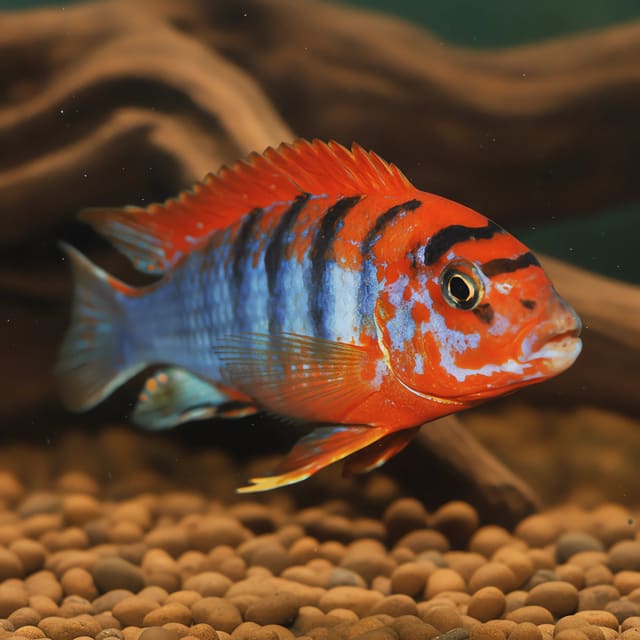
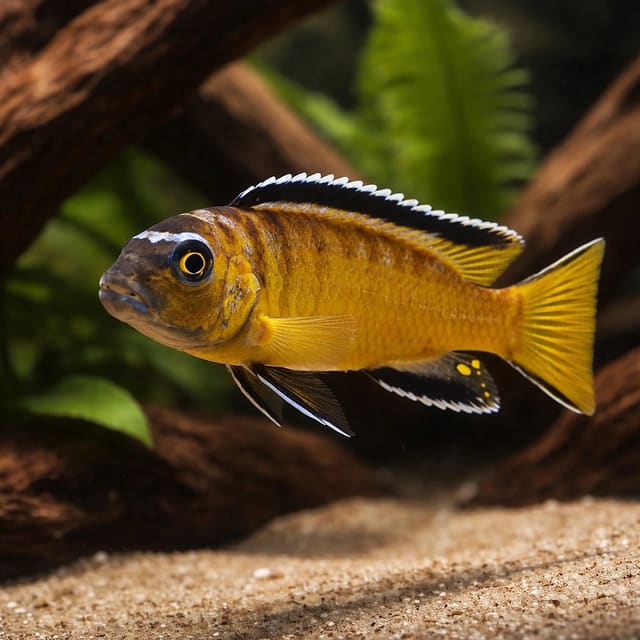
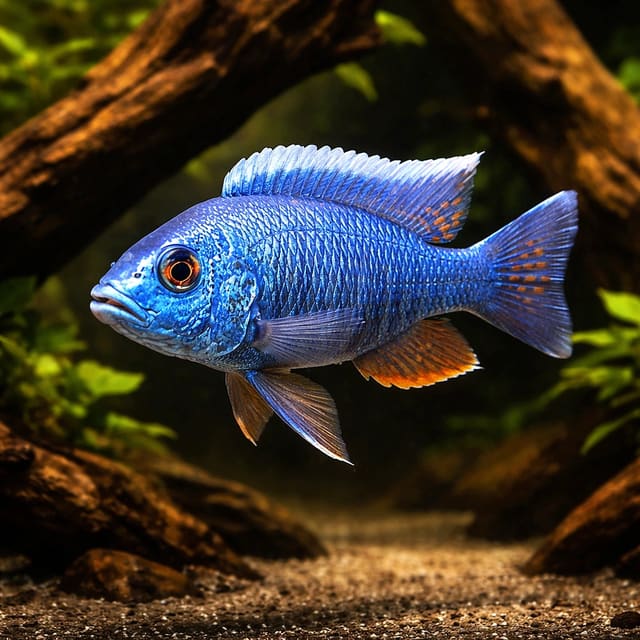
The Mpangha Rock Dogtooth Cichlid Fish is compact, streamlined, and built for quick movement through rock crevices. Adults reach about 8 cm, with males typically showing stronger colour and more intense patterning than females. Their body shape is classic Mbuna: laterally compressed, agile, and designed for darting between territories. In a well-lit tank, the fish can show striking blue, dark, or yellow-toned patterning depending on lineage and stress level. This is one reason people looking for tropical fish for sale UK often add them to a display tank rather than a plain holding setup.
Sexual dimorphism is fairly clear in mature fish. Males are usually more vivid and may hold territory more aggressively, while females are subtler in colour. If you are comparing mpangha rock dogtooth cichlid tank size with mpangha rock dogtooth cichlid minimum tank size, remember that display quality improves in a larger tank because the fish have room to establish natural colour and posture. Dark substrate, rock contrast, and stable lighting all help. Many aquarists notice that the fish looks best under a neutral LED rather than overly blue lighting, although a 90cm tropical fish tank light can still be used to create a clean, bright Malawi look.
Our photos show the intense colour and body contrast achieved through a clean rockscape, proper diet, and balanced lighting. If you are comparing mpangha rock dogtooth cichlid or alternative species, this one is a strong choice for keepers who want a smaller Mbuna with a bold presence. It is not a fish for a 50cm tropical fish tank or a 60cm tropical fish tank, but in the right aquarium it becomes a focal point.
This is a territorial species, so compatibility must be planned carefully. The best tank mates for Mpangha Rock Dogtooth Cichlid are other robust Mbuna and a few hardy bottom-dwelling catfish that can tolerate the same water chemistry. If you are searching mpangha rock dogtooth cichlid compatible fish or best tank mates for mpangha rock dogtooth cichlid, focus on species that are quick, similarly sized, and not overly passive. In a proper mpangha rock dogtooth cichlid community tank, the goal is to spread aggression across several fish and provide enough rockwork for each individual to hold territory.
Good companions include other Mbuna, selected Yellow Elongatus Cichlid - Chindongo Elongatus, Kiriza Yellow Cichlid - Tropheus Moorii, and Orange I Blunthead Cichlid - Tropheus in appropriately sized systems, though Tropheus should only be mixed by experienced keepers. Some aquarists also pair them with Thorichthys Maculipinnis - Elliot'S Cichlid - or Guianacara Dacrya - South American Cichlid, but that is usually not recommended because water chemistry and temperament differ. For best results, stay within Malawi-style stocking and avoid mixing with peaceful fish.
As for tropical fish tank mates, remember that a tropical fish tank mates chart is only a starting point. This fish is not suitable for mpangha rock dogtooth cichlid for community tank setups with tetras, guppies, or shrimp. It is also a poor fit for community tropical fish uk aquariums or tropical fish tank mates lists built around peaceful species. Invertebrates such as shrimp will usually be eaten or harassed, and snails may be picked at. If you are asking what tropical fish can live in a small tank, this is not one of them.
| Species | Compatible? | Notes |
|---|---|---|
| Yellow Elongatus Cichlid - Chindongo Elongatus | ✅ Yes | Similar Mbuna temperament and water needs |
| Synodontis catfish | ✅ Yes | Hardy bottom-dweller that can handle Malawi conditions |
| Neon tetra | ❌ Avoid | Too small and too peaceful for this cichlid |
Always quarantine new arrivals for 2-4 weeks in a separate tropical fish quarantine tank. This protects the whole aquarium from parasites, reduces aggression during introduction, and gives you time to observe feeding and breathing behaviour.
Breeding difficulty is easy, which makes this species popular with aquarists who want to try mpangha rock dogtooth cichlid breeding in a controlled Malawi setup. A successful mpangha rock dogtooth cichlid breeding pair usually forms when a dominant male is kept with several females in a spacious rock-filled tank. The male intensifies colour, claims a cave or flat stone, and courts the female with display movements. Once spawning begins, the female takes the eggs into her mouth, as this is a maternal mouthbrooder.
For breeding setup, use a mature aquarium of at least 150 litres, though larger is better. Keep water at 25-26°C, pH around 8.0, and maintain excellent filtration. Good conditioning foods include spirulina flakes and quality cichlid pellets. If you are asking what should tropical fish tank levels be during breeding, keep ammonia and nitrite at zero and nitrate as low as possible. After spawning, the female may carry tropical fish tank eggs for roughly 18-21 days before releasing fry, depending on temperature and stress. Some keepers notice yellow eggs in tropical fish tank scenarios when mouthbrooding fish are present, but with this species the eggs are usually held internally rather than left exposed.
Fry should be fed finely crushed spirulina flake, powdered fry food, and micro foods several times a day. Growth is steady if water quality is excellent. A common challenge is aggression from the male, especially if the tank is too small or lacks visual barriers. Another issue is a female spitting eggs too early if she is disturbed. Keep the tank calm, avoid rehoming too often, and use stable rockwork. For advanced keepers, selecting the strongest juvenile pair from a larger group can improve future spawning success.
Set up a separate breeding tank with a few large flat stones and minimal tankmates. This reduces stress, makes it easier to monitor mouthbrooding, and improves fry survival. If you are serious about mpangha rock dogtooth cichlid breeding pair selection, watch for the male’s strongest colour and the female’s calm feeding response before pairing.
Comparing species helps you choose the right temperament, size, and layout for your aquarium. If you want a compact, colourful Mbuna with strong personality, this fish is a great pick. If you want a slightly different look or behaviour, one of the related Malawi cichlids below may suit your tank better. This is especially useful if you are deciding between mpangha rock dogtooth cichlid for beginners and a more demanding display fish.
| Feature | Mpangha Rock Dogtooth Cichlid | Rubin Red Peacock Cichlid |
|---|---|---|
| Max Size | 8 cm | 12-15 cm |
| Care Level | Moderate | Moderate |
| Temperature | 24-28°C | 24-27°C |
| Price | £11.61 | Varies |
| Best For | Rocky Mbuna displays | Mixed Malawi setups |
| Feature | Mpangha Rock Dogtooth Cichlid | Aulonocara kandeense |
|---|---|---|
| Temperament | Territorial | Calmer |
| Tank Style | Rock-heavy Mbuna tank | Open sand and rock mix |
| Best For | Experienced Malawi keepers | Mixed cichlid displays |
Choose this species if you want a smaller but more assertive Malawi fish that thrives in a rock-dominated aquarium. Choose peacocks if you want a less aggressive display fish, or Tropheus if you are building a specialist herbivore tank with very strict care. For many aquarists, the Mpangha Rock Dogtooth Cichlid sits in the sweet spot between manageable size and strong visual impact.
A healthy fish is active, alert, and feeding well, with clear eyes, intact fins, and strong colour. The body should be full but not bloated, and breathing should be steady. Common tropical fish tank diseases in Malawi cichlids often link back to stress, poor water quality, or the wrong diet. Bloat is one of the biggest concerns for Mbuna, especially when high-protein foods are used too often. Another issue is territorial stress, which can lead to torn fins or hiding behaviour.
Prevention starts with water testing and stable maintenance. If you are learning how to test tropical fish tank water, check ammonia, nitrite, nitrate, and pH regularly. If the tank becomes cloudy, ask why is my tropical fish tank cloudy or why my tropical fish tank is cloudy and review feeding, filtration, and cleaning. A strong tropical fish tank water treatment routine includes dechlorination during water changes and careful matching of temperature. If your aquarium is turning green, you may need to ask why is my tropical fish tank going green and reduce light or nutrient buildup. Brown film, green film, and even tropical fish tank black hair algae can all indicate imbalance, not just an aesthetic issue.
Quarantine is essential. A tropical fish quarantine tank should be bare-bottomed, filtered, heated, and monitored for at least 2-4 weeks. Watch for parasites, flashing, clamped fins, and refusal to eat. If treatment is needed, use species-appropriate medication and avoid copper where invertebrates are present. This is especially important if you keep shrimp or snails in other tanks. Good husbandry beats medication every time.
NEVER use copper-based medications with invertebrates - lethal to shrimp! Even in fish-only tanks, dose carefully and remove carbon as instructed by the manufacturer. If you are unsure, isolate the fish in a quarantine setup first.
This is an active, territorial fish that spends much of the day patrolling rockwork, defending a small area, and grazing surfaces. It is not a schooling species in the classic sense, but it does best in groups where aggression is spread out. If you are researching mpangha rock dogtooth cichlid school size, think in terms of social structure rather than true schooling. A single male with several females is a common approach, and overstocking carefully can reduce bullying in larger Malawi tanks.
One of the most interesting behaviours is colour display. Males intensify their markings when competing for space or courting females. They also dart in and out of caves, especially when the tank has strong rock cover. To encourage natural behaviour, use a tropical fish tank ecosystem with plenty of hiding spots, stable water, and a consistent feeding schedule. This species is most active during the day and becomes less confident if the tank is too open or if tankmates are too passive.
Our Mpangha Rock Dogtooth Cichlid stock is selected for strong body shape, healthy feeding response, and vivid Malawi coloration. Each fish is held in a monitored system before sale, then carefully acclimated to UK water conditions so it arrives ready to settle into a stable aquarium. When you buy live fish online uk, the difference is in the packing, the quarantine process, and the way the fish are prepared for transport. We use insulated packaging, tracked delivery, and heat packs in colder months to protect live arrival.
If you are comparing tropical fish for sale near me, buy tropical fish UK, or tropical fish for sale UK, this species is a strong option for a specialist Malawi build. Many customers searching best place to buy tropical fish online want more than a listing; they want clear care guidance, reliable packing, and honest compatibility advice. That is why every order includes practical support for how to maintain tropical fish tank conditions, plus help with acclimation and water testing. We also support hobbyists looking for aquarium fish shop near me home delivery without the uncertainty of local stock availability.
Order your Mpangha Rock Dogtooth Cichlid today with confidence if you are building a proper Malawi display and want a fish with real character. If you are comparing best place to buy tropical fish uk options, this species is a standout for aquarists who value behaviour as much as colour.
Complete your aquarium with compatible Mbuna and the right maintenance products. Consider Aulonocara Sp Neon Red Calico Peacock for a contrasting display fish in a larger setup, or Rubin Red Peacock Cichlid - Aulonocara for bright colour in a mixed Malawi tank. For herbivore-focused stocking, Kiriza Yellow Cichlid - Tropheus Moorii is a specialist option, while Orange I Blunthead Cichlid - Tropheus suits experienced keepers. To support feeding and filtration, add a reliable tropical fish tank heater, a strong tropical fish tank filter and heater combo, and herbivore foods that match this species’ natural diet. If you are still planning your stocking list, browse our tropical fish for sale online collection for more Malawi-compatible choices.
No reviews for this item yet. Bought one? Honest reviews only, good or bad.
What customers say about ordering from us
I have a small group of long finned mountain minnows. So was delighted to be able to order ten of this variety to increase the genetics in my tank . The ones I recieved are healthy but it’s to early to give a verdict on wether they are of a long finned type since they are small currently.
Gordon Walker · 23 Sept 2026
100% success travel and "installation". Pleased with quality of purchase. The Siamese fighter a bit "shy" so have not yet seen him at his best yet but looking good. Happy customer. GG
George E Garratt · 21 Sept 2026
Reviews of our shop, collected by Judge.me, an independent third-party review collector. Newest first.