−15%
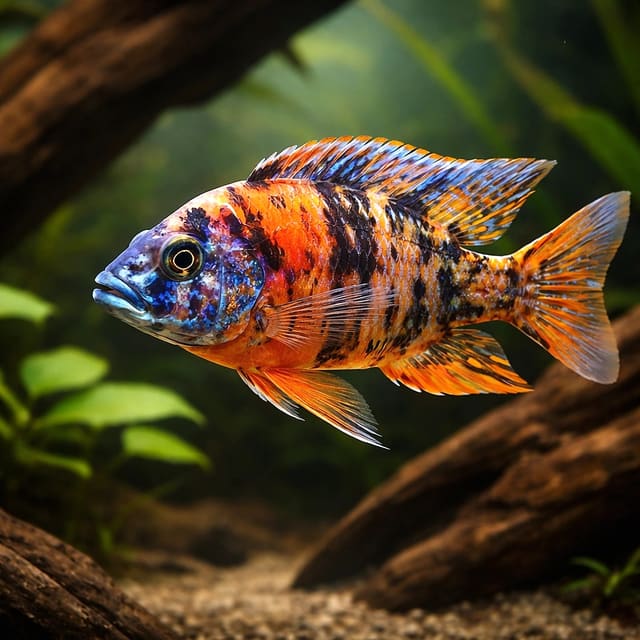
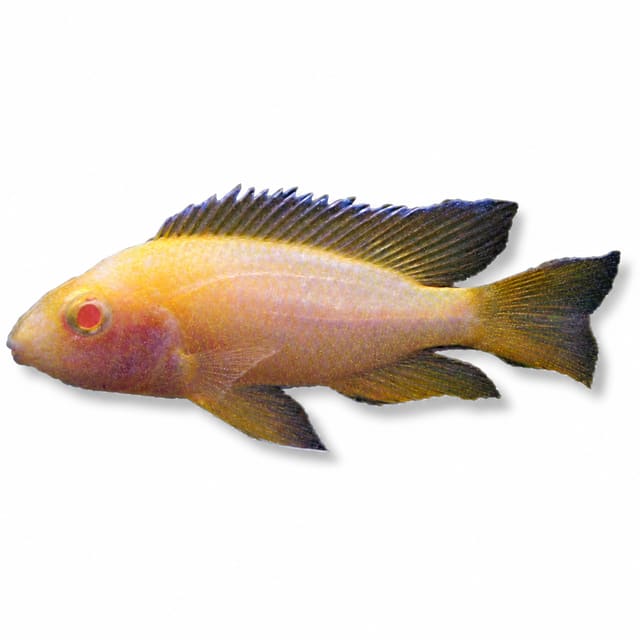
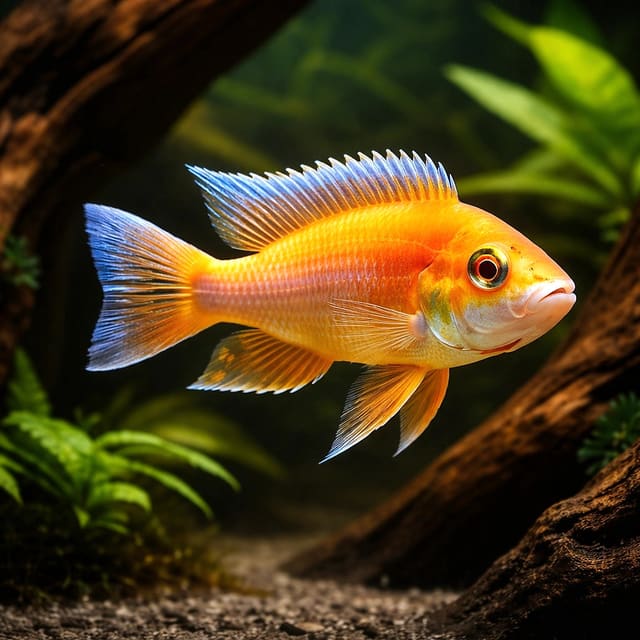
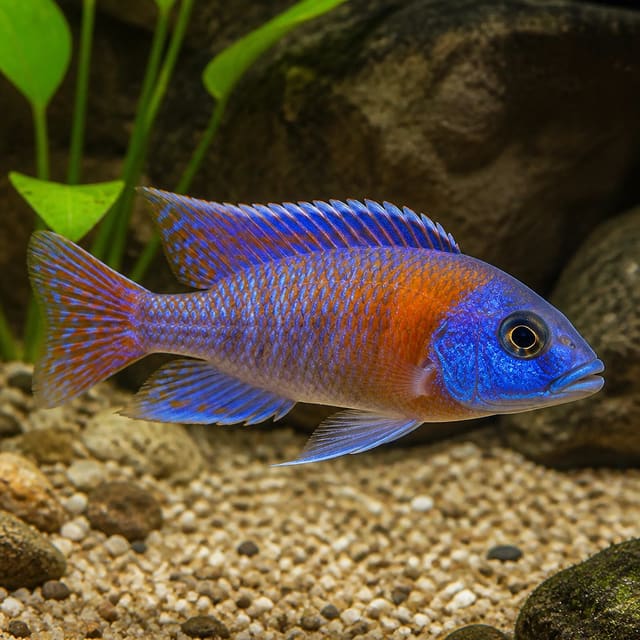
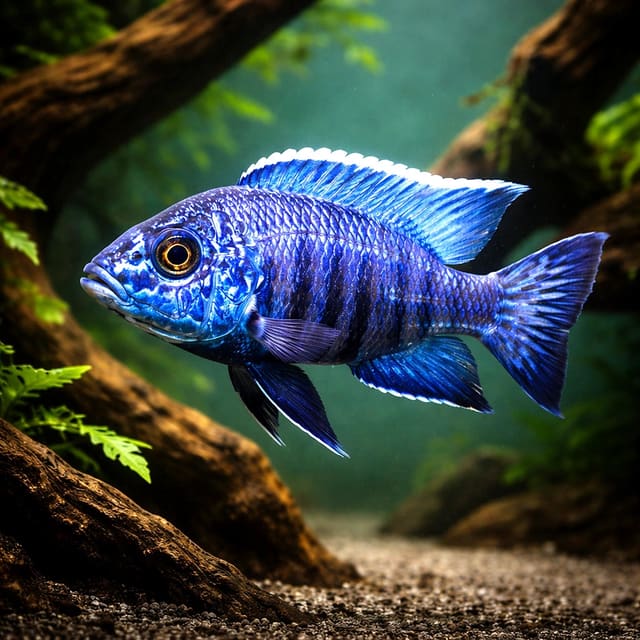
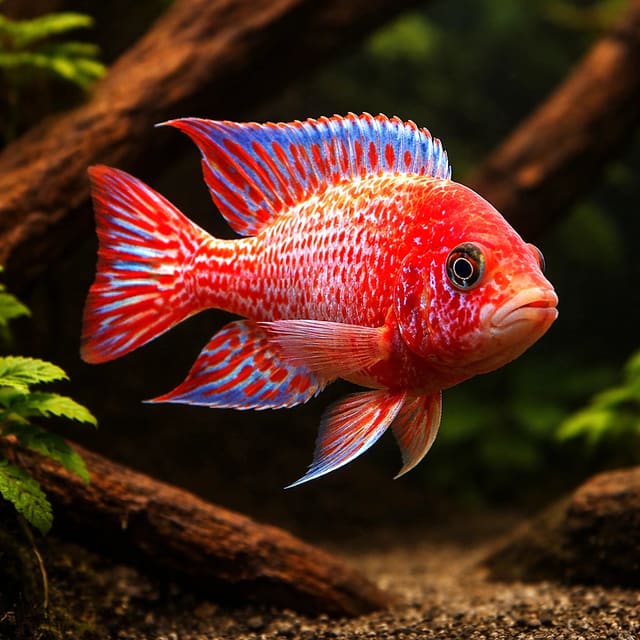
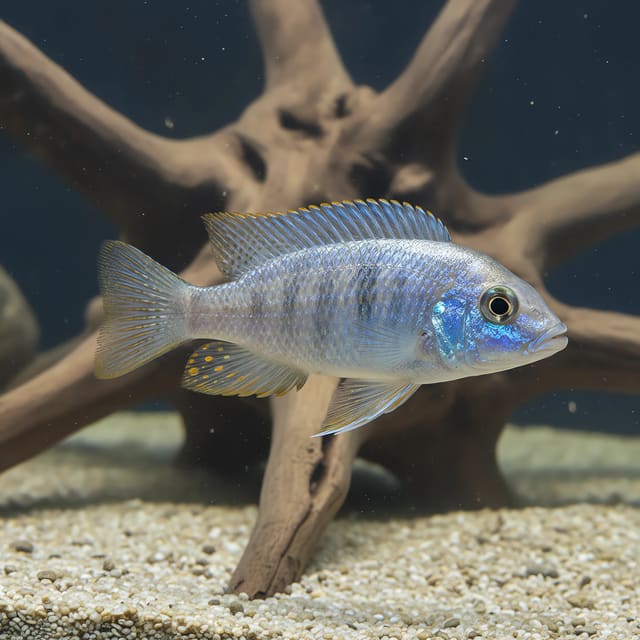
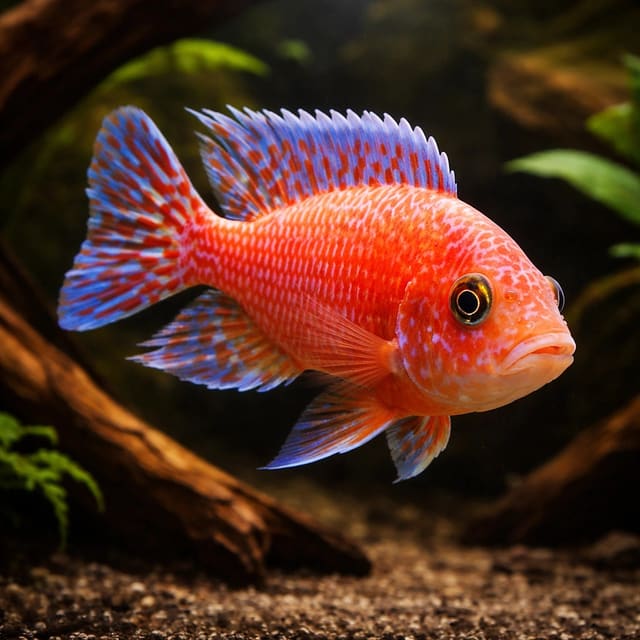
Firefish Peacock Cichlid (Aulonocara sp.)
23–27°C · pH 8–8.6
£7.99£22.99

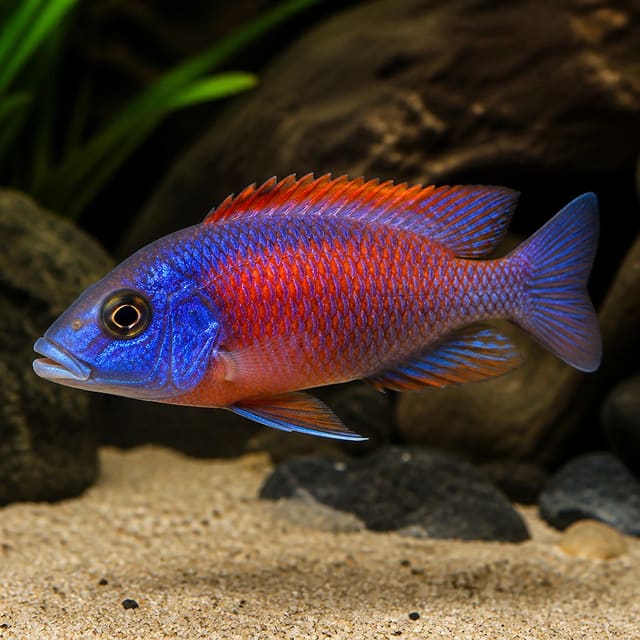
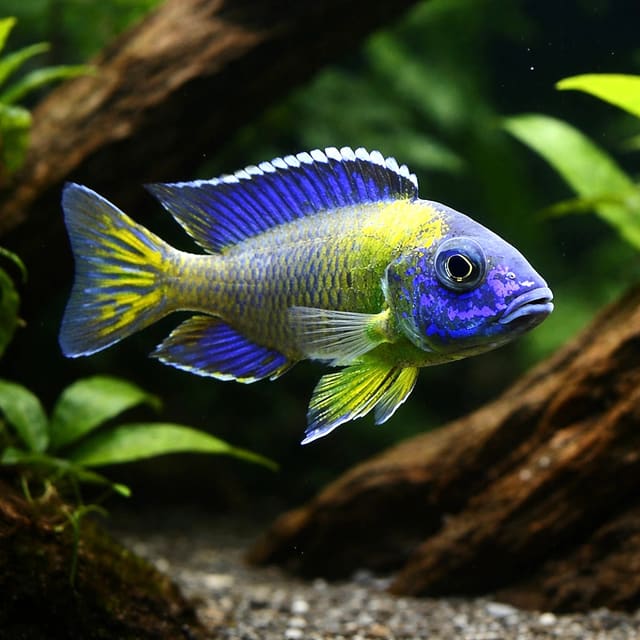
Freiberg's Peacock Cichlid (Aulonocara jacobfreibergi) is a territorial Lake Malawi cichlid for mature hard-water aquariums with fine sand, stable rock retreats and a generous swimming footprint. One purchase supplies one live fish in the chosen dispatch size.
Aulonocara jacobfreibergi
Save when buying multiple fish. Each quantity is one fish; sex and pair formation are not guaranteed unless the selected variant explicitly states them.
Freiberg's Peacock Cichlid (Aulonocara jacobfreibergi) is a territorial Lake Malawi cichlid for mature hard-water aquariums with fine sand, stable rock retreats and a generous swimming footprint. One purchase supplies one live fish in the chosen dispatch size.
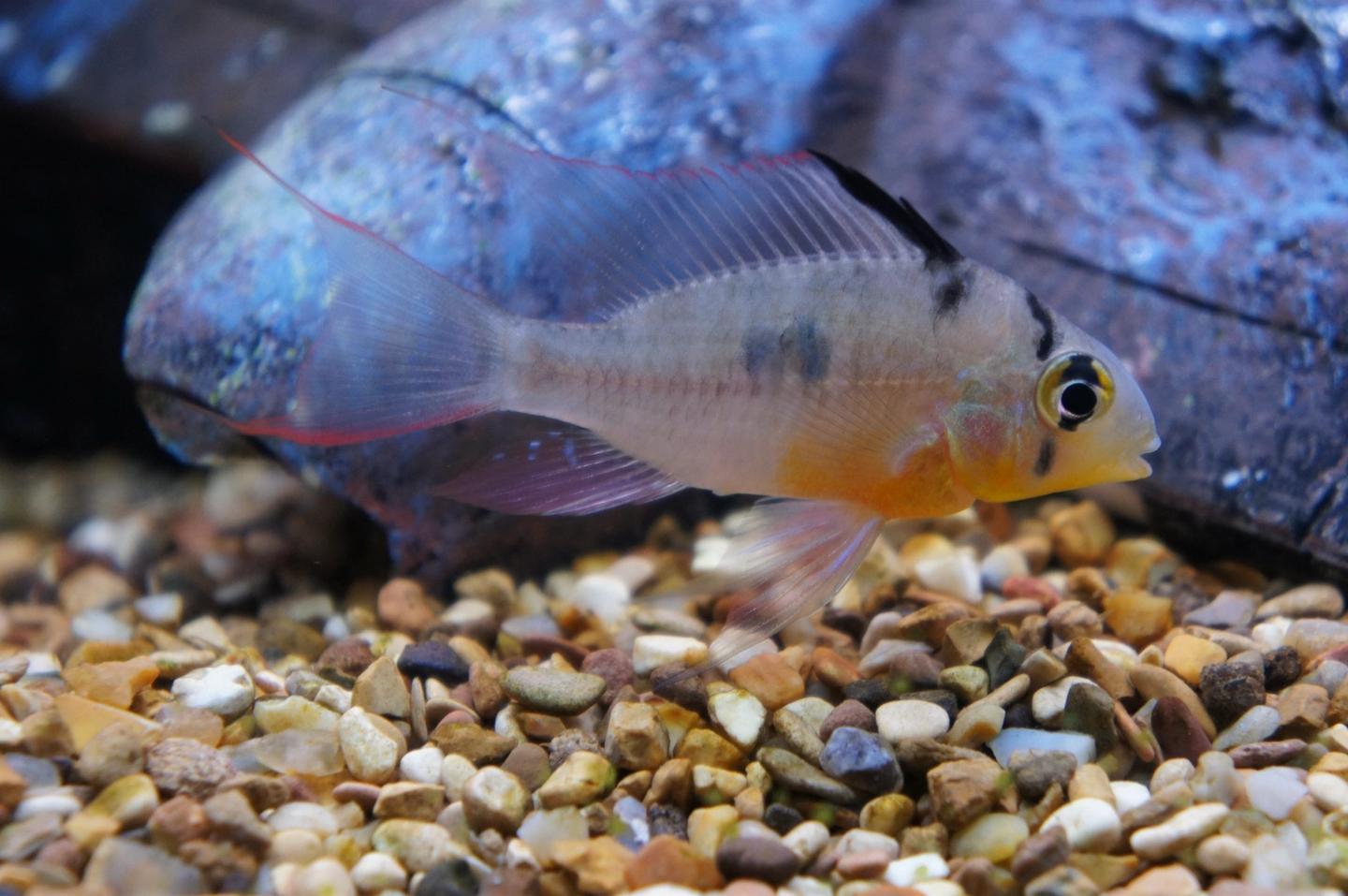
Cichlids are a family of roughly 1,800 accepted species, not one care type. Before buying, identify the exact species and source, then compare adult measurement, usable tank dimensions, social system, territory, tested water, diet and an exit plan. No family-wide minimum tank, water range or tank-mate list is safe.
Maintain these water conditions for optimal health and vibrant colors
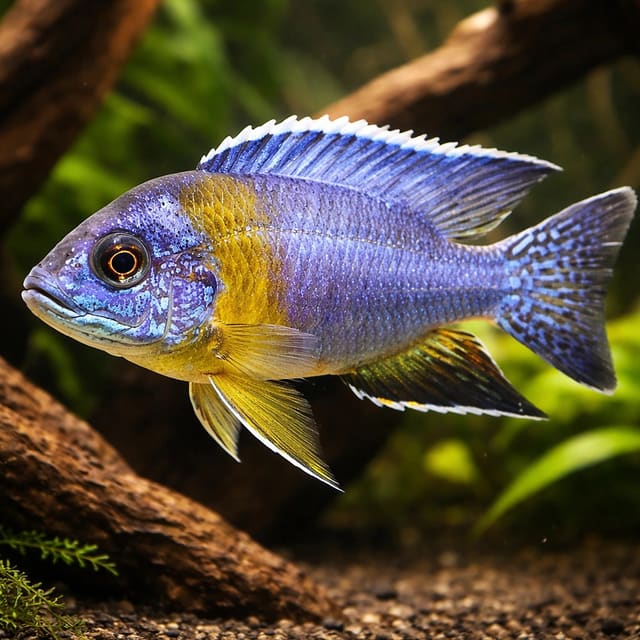
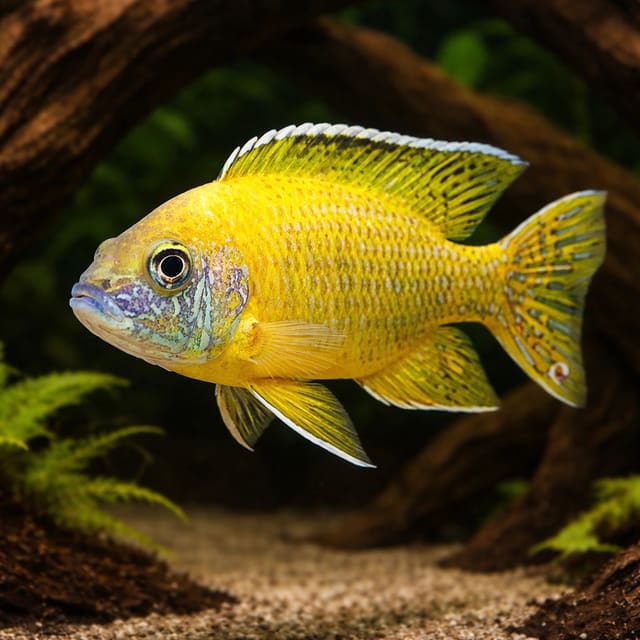
Freiberg's Peacock Cichlid (Aulonocara jacobfreibergi) is a Lake Malawi cichlid with the high-backed, alert shape and vivid display colour that make peacocks such memorable centrepiece fish. The trade identity and the accepted scientific name both point to A. jacobfreibergi, a fish also called Freiberg's peacock or fairy cichlid. It is best chosen for a planned hard-water African cichlid aquarium, not added casually to a soft-water community.
One purchase supplies one live fish. The offered dispatch sizes are 2–3 cm, 4–5 cm, 6–7 cm, 7–9 cm and XL; the product page shows which sizes can be ordered at the time. The size you select is the size supplied, not the adult size. XL remains the genuine trade grade because the offer gives it no centimetre equivalent.
Adult-length records need their units kept intact. FishBase records a maximum of 15 cm total length (TL), male/unsexed, while the Seriously Fish species profile records 170 mm standard length (SL). Standard length excludes the tail and total length includes it, so these figures describe different measurement conventions and should not be collapsed into a single supposed maximum. In practical terms, buy for a substantial adult cichlid and for its territory, rather than treating a small dispatch fish as a permanently small fish.
| Suits | A keeper with a mature, strongly filtered hard-water Lake Malawi aquarium and room for a 120 × 60 cm base or equivalent |
|---|---|
| One purchase | One live Freiberg's Peacock Cichlid in the chosen dispatch grade |
| Adult records | 15 cm TL, male/unsexed; separately, 170 mm SL |
| Practical water interval | 25–26 °C, pH 7.5–8.0 and 10–19 dGH, the shared interval between the two species references |
| Layout | Fine sand, rock piles and caves, with open areas between them |
| Temperament | Territorial and less peaceful than some other Aulonocara, especially towards similarly patterned fish |
This peacock lives around rocky and intermediate habitats in Lake Malawi. Northern populations are recorded in rocky areas with large boulders, while southern populations occur in intermediate habitat and males occupy small caves. That combination explains the useful aquarium balance: secure rock retreats at the sides and rear, uninterrupted sand where the fish can investigate the substrate, and open water for swimming. A decorative wall of rock with no usable gaps is less helpful than stable structures that make real territories and leave room to move.
A. jacobfreibergi is not the mildest member of its genus. A male may react strongly to a rival with a similar colour pattern, and the species can hybridise with other Aulonocara. Those points make tank dimensions, sight breaks and companion choice more important than colour matching. The most successful display is usually one with a clear stocking plan before any fish goes in.
A small dispatch fish can tempt a keeper to judge the purchase by the space it occupies today. Reverse that calculation. First reserve the 120 × 60 cm adult footprint, the sand and rock zones, and the filtration needed for the planned community. Then decide which dispatch grade is appropriate. This approach also prevents a temporary growing-on arrangement from quietly becoming the permanent home of a territorial adult.
Look at the complete stocking list at the same time. Count territories as well as litres: another cave-dwelling male can compete for exactly the same structure even when a volume calculator appears generous. Check that the eventual group has more than one feeding point, several usable retreats and an open route that a subordinate fish can cross without passing the dominant cave entrance.
Sex is guaranteed only when the selected option explicitly states male or female. This Freiberg's Peacock Cichlid listing has no sex-guaranteed option.
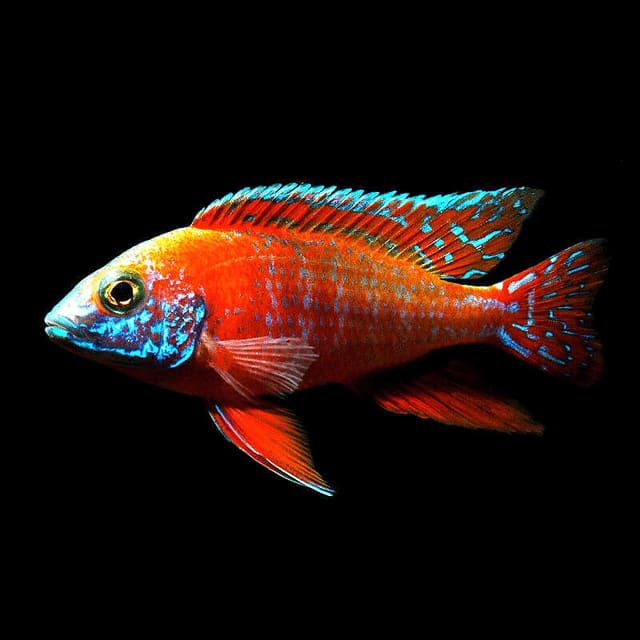
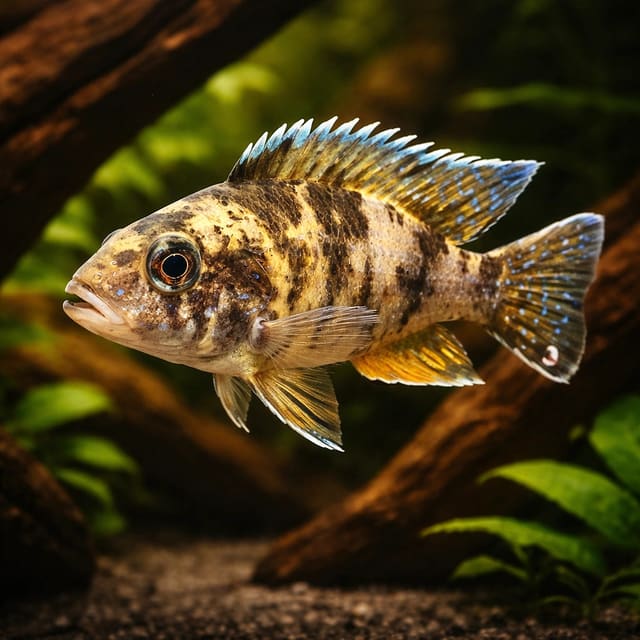
Gallery images have been digitally enhanced to improve image quality. Natural colour, pattern, size and maturity can vary between live animals.
If you are still comparing African cichlid styles, browse the African cichlid collection for the wider range. Compare habitat, adult footprint and temperament before colour: those are the differences that determine whether a fish will fit the aquarium you actually have.
Freiberg's Peacock Cichlid rewards careful preparation. Its water should be mineral-rich, alkaline and stable; its floor should let it feed naturally; and its rockwork should create shelter without taking away all the open swimming space. A newly filled aquarium is not ready simply because the water looks clear. Establish the biological filter first and confirm that it can process waste before the fish arrives. The aquarium set-up guide explains the maturation sequence if this is your first filtered tropical system.
| Identity | Aulonocara jacobfreibergi, family Cichlidae; endemic to Lake Malawi |
|---|---|
| Adult-length records | 15 cm TL, male/unsexed (FishBase); 170 mm SL (Seriously Fish) |
| Species aquarium guidance | Minimum base 120 × 60 cm or equivalent; the cited example is about 432 litres |
| Species aquarium water | 25–29 °C, pH 7.5–9.0, 10–25 dGH |
| Wild environmental record | 24–26 °C, pH 7.5–8.0, 9–19 dH |
| Shared practical interval | 25–26 °C, pH 7.5–8.0, 10–19 dGH |
| Substrate and structure | Fine sand, stable rocks and caves, plus open areas |
| Feeding style | Small prepared, live and frozen foods offered in a form the fish can take while searching over sand |
Two reputable species references describe adult length differently. FishBase gives 15 cm TL for a male/unsexed record. Seriously Fish gives 170 mm SL. TL measures to the end of the tail; SL stops at the base of the tail. It would therefore be misleading to present either number as a direct correction of the other or to average them. Both tell you that the adult is substantially larger and more powerful than the smallest dispatch grades.
For aquarium planning, body length is only one part of the space calculation. Territorial behaviour, the need for open sand and the likelihood of keeping more than one compatible Malawi cichlid all increase the useful footprint. The species profile recommends a base of at least 120 × 60 cm or an equivalent footprint and illustrates that with an aquarium of about 432 litres. OATA's separate figure of at least 200 litres concerns a reasonable-sized Malawi cichlid community in general; it is broad group advice, not a smaller species-specific substitute for the A. jacobfreibergi footprint.
A long, wide aquarium provides more usable boundaries than a tall, narrow one. It lets you create rock territories at more than one point while preserving a sandy route through the tank. If décor turns the full floor into one continuous cave pile, a dominant fish can still control the whole structure. Separate groups of stable rocks are more useful because each creates a distinct retreat and interrupts direct lines of pursuit.
The FishBase environmental record is 24–26 °C, pH 7.5–8.0 and 9–19 dH. It describes the species in its natural environment; it is not a stand-alone aquarium recipe. The Seriously Fish aquarium profile gives 25–29 °C, pH 7.5–9.0 and 10–25 dGH. A cautious routine interval shared by both records is therefore 25–26 °C, pH 7.5–8.0 and 10–19 dGH. That overlap is deliberately narrow and genuinely sits inside both ranges.
The overlap is a practical starting point, not a claim that every aquarium must sit on one exact number. Stability matters: avoid sudden temperature or mineral changes, and compare replacement water with the aquarium before a large adjustment. If the language of pH, GH, KH, ammonia, nitrite and nitrate is unfamiliar, the water-chemistry guide explains what each test means. You can then use the water matcher to compare measured values with the stated ranges.
OATA's Malawi-wide guide gives 23–27 °C, pH 8.0–8.6, general hardness 12–18 dGH and carbonate hardness 10–15 dKH. Those values are useful context for the broader group but they do not replace the species records above. OATA also expects ammonia and nitrite to remain at zero and nitrate to stay no more than 20 mg/l above the normal tap-water level. Test the aquarium rather than trying to judge invisible chemistry from clarity or smell.
All fish release ammonia, which is toxic. A working biological filter houses bacteria that convert ammonia to nitrite and then to the safer nitrate stage. The RSPCA's aquarium environment advice describes that basic biological role. For a Malawi aquarium, filtration must also cope with active cichlids, regular feeding and the stocking plan.
The species profile recommends strong filtration and, for its example aquarium of about 432 litres, a turnover around four to five times the volume each hour. Its equipment example uses two filters rated roughly 865–1080 litres per hour each. Treat those figures as an illustration tied to that aquarium, not a universal shopping list: real flow depends on media, pipework, head height and how the outlets distribute water. Aim for vigorous gas exchange and broad circulation without creating one harsh jet that pins fish into a corner.
Check filters for restricted flow and rinse dirty biological media gently in removed aquarium water. Chlorinated tap water can damage the bacteria the filter is meant to preserve. Maintain enough media for biological filtration and enough mechanical filtration to collect suspended waste, then service sections in turn so the whole biological bed is not stripped at once.
Fine sand is more than decoration for an Aulonocara. The genus feeds by taking mouthfuls of substrate, detecting small food items and expelling the remaining sand through the mouth and gills. Coarse gravel or small pebbles can interfere with that method, damage gill filaments or be swallowed. Use an aquarium-safe sand that can be kept clean with gentle surface siphoning.
Build rockwork directly and securely so burrowing cannot undermine it. Each pile should include openings large enough for the fish using them, but every stone must be stable. Leave broad sandy patches between the structures. The species occurs around rocks, boulders and intermediate habitat, so the goal is not a bare open tank and not a solid cliff; it is a connected layout of shelter, territory and feeding ground.
Hard-water-tolerant plants such as Vallisneria, Anubias or Sagittaria can be included. Plants are optional, and roots may need protection from digging. Attach rhizome plants to rocks rather than burying the rhizome, and choose placements that do not block the open sand or prevent you from inspecting caves.
In nature, Aulonocara species search the substrate for tiny movements, helped by enlarged sensory pores on the head. In captivity, offer a varied diet in suitably small pieces: high-quality fine-grade prepared foods, small live or frozen foods such as chironomid larvae, Artemia and mosquito larvae, and dried products containing vegetable matter such as spirulina. Variety is more useful than relying on one oversized pellet.
Distribute food so quieter fish can feed without having to challenge the dominant individual at one point. Watch the fish eat and remove accumulations rather than letting uneaten food break down between rocks. OATA's broad Malawi guidance is to provide only what the fish consume within a few minutes, twice a day. That is a group-level routine rather than a result measured specifically for this species, so adjust the amount to fish size, body condition and the foods used while avoiding chronic overfeeding.
A rounded abdomen after every meal is not a goal. Look for a steady appetite, controlled body condition, clear eyes and intact fins. A fish that suddenly hangs at the surface, sits unusually on the bottom, breathes faster, hides more, loses colour or stops feeding warrants an immediate water test and a review of aggression, oxygen and recent changes.
Seriously Fish recommends water changes of 30–50% at least weekly for this species setup, whereas OATA's Malawi-wide sheet recommends a 25% partial water change at least once every week. Keep each recommendation with its scope. Choose a repeatable routine suited to stocking and measured nitrate, and match the temperature and chemistry of replacement water closely enough to avoid abrupt swings.
Sketch the aquarium from above before lifting stone. Mark the filter intake and outlet, the heater, two or more separate rock groups and a continuous open-sand area. The 120 × 60 cm base recommendation is useful because it describes usable floor, not merely water volume. Preserve access around the rock piles so waste can be removed and so a fish cannot disappear into a dead-end gap that is impossible to inspect.
Use the largest stones as the stable foundation and create caves by spanning secure supports, never by balancing a heavy piece on a single point. Check that an adult-sized fish can turn around in the main retreats. A cave that suits a 2–3 cm juvenile may later become too tight; several different openings let the growing fish choose a safe space without forcing a full rebuild.
Leave the central sand broad enough for substrate searching. The fish's natural technique depends on detecting food and taking mouthfuls of sand, so this area should not be covered with sharp rubble. Position outlets so debris moves towards an accessible collection point while sand stays on the floor. Adjusting flow during set-up is easier than moving established territories later.
Colour and behaviour can change with maturity, social position and stress. Do not use the most colourful gallery fish as a promise of the exact appearance of a smaller animal. Instead, track practical signs: appetite, even breathing, fin condition, body weight, willingness to leave cover and whether the fish can use more than one part of the aquarium.
As fish grow, a layout that once provided generous gaps can become restrictive. Review passages, cave dimensions and feeding access rather than waiting for an injury. The same applies to filtration: greater body mass and feeding create more waste. Test water after meaningful stocking changes and respond to measured ammonia, nitrite or rising nitrate before adding another fish.
Maturing males may become more assertive towards similar patterns. An early plan for separation is therefore as important as the first aquascape. Keep suitable containers and nets accessible for safe capture, and know where an incompatible fish can go. The goal is not to suppress all display; it is to prevent one animal from being chronically excluded or injured.
Spend a few quiet minutes observing before feeding, then watch again while food is distributed. Before feeding, you see normal territory and breathing without the excitement of a meal. During feeding, you can confirm that every fish approaches, takes food and withdraws without being repeatedly intercepted. This catches social problems earlier than a quick head count.
Pair that observation with recorded test results. A notebook of temperature, pH, ammonia, nitrite and nitrate makes gradual drift visible and helps you relate changes to maintenance, feeding or additions. Test results are most useful when taken consistently, not only after the fish look unwell.
Prepare the aquarium before dispatch day: mature filter, suitable mineral content, stable heat, secure décor and a settled stocking plan. On arrival, be present to receive the parcel. Follow the current delivery instructions, including the continuous sealed-parcel unboxing video needed for any Live Arrival Guarantee claim, and float the sealed bag for 20–30 minutes before release. Do not pour transport water into the aquarium.
After introduction, watch how established fish use the new boundaries. Rearranging décor can reduce aggression by forcing residents to renegotiate territories, but it should be done deliberately and with every rock restabilised. A newcomer repeatedly trapped at the surface or denied access to food needs intervention; waiting for severe damage is not a stocking strategy.
Compatibility for Freiberg's Peacock Cichlid is conditional on aquarium size, colour pattern, sex balance and the temperament of the individual fish already present. This species is territorial and is described as less peaceful than some other Aulonocara. A colourful Malawi display can work, but “another African cichlid” is not enough information to judge a companion.
Seriously Fish recommends, in all but the largest aquariums, a single male with four to six females. The same profile notes that males are larger and more colourful, but those visual differences are biological tendencies rather than a promise about a juvenile or an image. Building a deliberate sex ratio requires reliably identified fish and enough space for every individual to escape courtship pressure.
If several young fish are grown on before their sex becomes clear, plan for separation rather than assuming the final group will arrange itself. OATA notes at group level that many Malawi cichlids show sex differences only as adults and that keeping more females than males can reduce repeated attention on one female. A fish being constantly chased, kept away from food or confined to one upper corner is telling you the social plan needs changing.
The species profile names differently patterned Copadichromis or Placidochromis, Otopharynx lithobates and quieter mbuna such as Labidochromis caeruleus as possibilities. They remain conditional possibilities, not universal tank mates. The aquarium must be large enough, the water requirements must align, and the final combination needs sufficient territories and observation.
OATA's broad Malawi guidance also allows some Synodontis catfish from Lake Malawi. Check the exact catfish species, adult size and feeding access; a genus name alone is not a complete compatibility decision. Add more peaceful fish before more assertive fish where possible, and avoid filling every cave with a different territorial species.
Brief display and pursuit can occur in cichlid social life, but repeated exclusion is different. Watch whether every fish can reach food, occupy shelter and move through open water. Torn fins, loss of body condition, rapid breathing, darkening or persistent hiding are reasons to check water and social pressure immediately. Extra caves cannot compensate for a footprint that lets one dominant fish patrol the whole aquarium.
Introduce with a plan for removal. A spare mature aquarium, safe divider or agreed return route is far better than improvising after aggression becomes severe. Compatibility is an ongoing observation, particularly as juveniles mature and colour develops.
A dominant fish patrolling every cave means the rock groups are functioning as one territory. A subordinate fish hovering high, skipping meals or using only the filter corner means it has no secure route through the tank. Those patterns call for action: separate fish where necessary, reassess the stocking mix and rebuild the rock groups into genuinely distinct zones.
Adding more fish to distract an aggressor changes waste load and social pressure at the same time, so it is not a neutral quick fix. Start with the species profile's one-male group advice, the adult footprint and the named compatibility cautions. Changes should make access and boundaries clearer, not simply make the aquarium busier.
Two adult records use different measurements: FishBase gives 15 cm total length for a male/unsexed record, while Seriously Fish gives 170 mm standard length. Standard length excludes the tail and total length includes it, so keep both scopes rather than treating them as one interchangeable maximum.
The species profile recommends a base of at least 120 × 60 cm or equivalent and illustrates this as about 432 litres. OATA's separate 200-litre figure is broad guidance for a reasonable-sized Malawi cichlid community, not a smaller species-specific minimum.
Seriously Fish recommends one male with four to six females in all but the largest aquariums. That plan depends on reliably identified sexes, adequate territory and close observation; this listing does not provide a sexed group.
It is a better fit for a keeper prepared for hard alkaline water, strong filtration, a large footprint and active social management. Its care is manageable when those foundations are ready, but its territorial behaviour makes it a poor first choice for an unplanned mixed community.
Offer fine-grade quality prepared foods, small live or frozen foods such as chironomid larvae, Artemia and mosquito larvae, plus dried foods containing vegetable matter such as spirulina. Present small pieces over open sand so the fish can use its natural searching behaviour.
A cautious shared interval is 25–26 °C, pH 7.5–8.0 and 10–19 dGH. It lies inside both the FishBase wild environmental record and the Seriously Fish aquarium range; keep the aquarium stable rather than chasing daily changes.
It is territorial and less peaceful than some other Aulonocara. Males may react aggressively to similarly patterned fish. Assess persistent chasing, exclusion and fin damage as social-warning signs rather than assuming any cichlid combination will settle.
The species profile lists differently patterned Copadichromis or Placidochromis, Otopharynx lithobates and quieter mbuna such as Labidochromis caeruleus as possibilities. Space, individual temperament and the full stocking plan still decide the result; avoid other Aulonocara and most boisterous mbuna.
Tropical Fish Co hand-packs live fish in oxygenated bags inside an insulated box, adding a heat pack when weather calls for it, and uses a licensed live-animal courier. Be present on the confirmed delivery day. For a Live Arrival Guarantee claim, make a continuous video from the sealed parcel through opening while the fish remains in the sealed bag, then contact the team the same day.
Full packing, receipt and claim details are kept on the delivery and Live Arrival Guarantee page.
The care advice above keeps wild records, aquarium recommendations and broad trade-body guidance in their proper roles. That distinction matters most for adult length, water and tank planning.
FishBase: Aulonocara jacobfreibergi supports the accepted species name, family, Lake Malawi distribution, rocky and intermediate habitat notes, wild environmental range and the 15 cm TL male/unsexed record.
Seriously Fish: Aulonocara jacobfreibergi supplies the 170 mm SL record, 120 × 60 cm footprint, species aquarium water range, fine-sand feeding explanation, diet, group ratio and the detailed compatibility cautions.
OATA's African Malawi cichlid care sheet provides UK group-level water, maintenance, filtration and community advice. Its figures apply broadly to Malawi cichlids and are labelled that way rather than presented as an optimum measured for this species.
The store's delivery policy governs packing, acclimatisation and guarantee steps. FishBase and Seriously Fish do not define the sale unit or dispatch grade; those come from the actual offer shown on this product.
No reviews for this item yet. Bought one? Honest reviews only, good or bad.
What customers say about ordering from us
I have a small group of long finned mountain minnows. So was delighted to be able to order ten of this variety to increase the genetics in my tank . The ones I recieved are healthy but it’s to early to give a verdict on wether they are of a long finned type since they are small currently.
Gordon Walker · 23 Sept 2026
100% success travel and "installation". Pleased with quality of purchase. The Siamese fighter a bit "shy" so have not yet seen him at his best yet but looking good. Happy customer. GG
George E Garratt · 21 Sept 2026
Reviews of our shop, collected by Judge.me, an independent third-party review collector. Newest first.