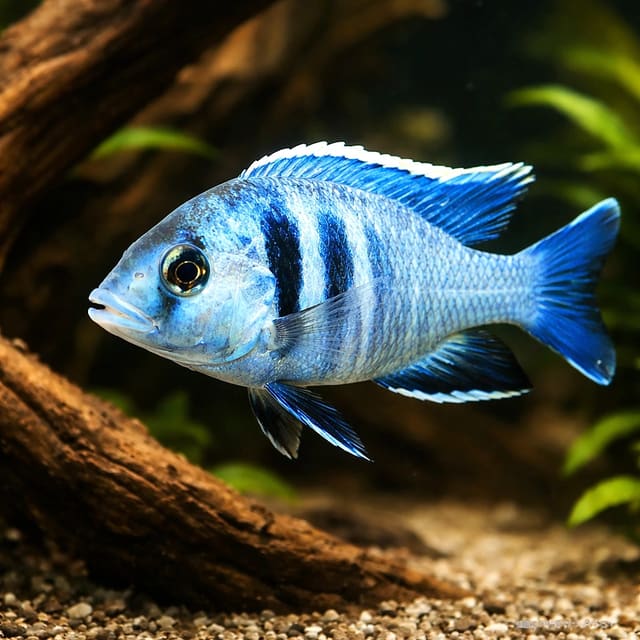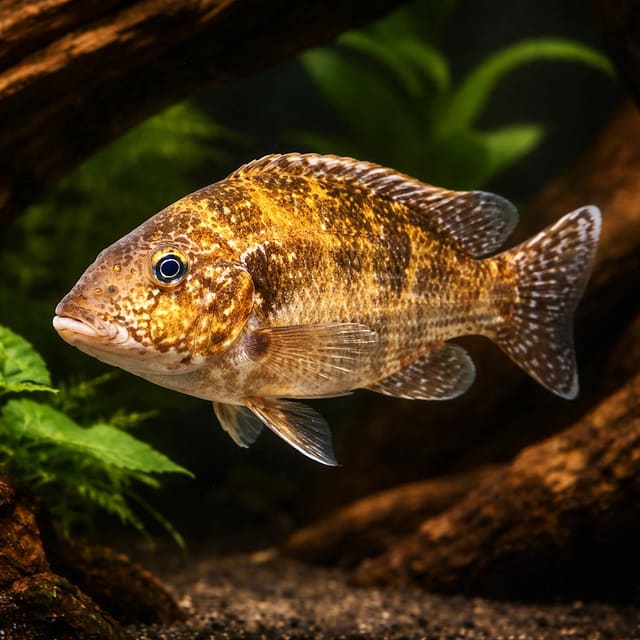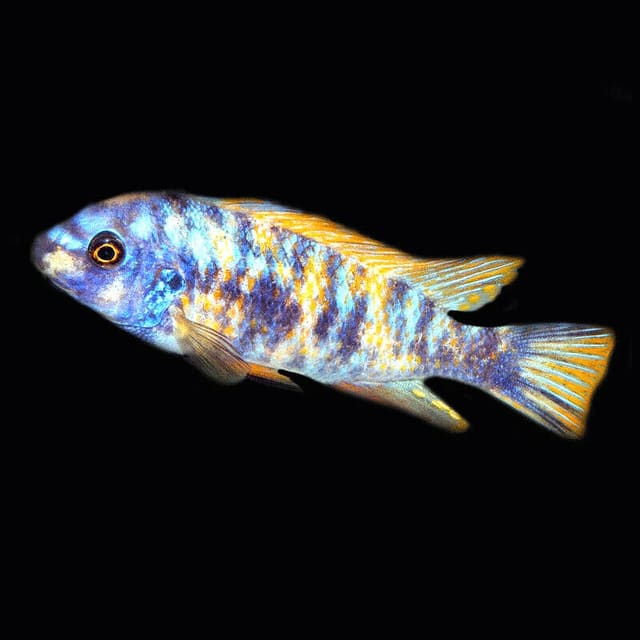
Scrapermouth Mbuna 'Marmalade' (Labeotropheus trewavasae)
24–28°C · pH 7.6–8.8 · 154L
£14.99

A bold, colorful Lake Malawi mbuna that thrives in hard, alkaline water and a rock-filled African cichlid setup. Moderate care, semi-aggressive. 24-28C, pH 7.6-8.6.
Adult size is the maximum length this species reaches at full maturity (scientific sources). The livestock you receive will be younger and smaller — pick a size above for the actual shipping size. Product-photo provenance and any image-specific limitations are stated on the listing.
Labeotropheus fuelleborni
Confirm your email, then we’ll send an availability message for this exact item if it returns within 180 days.
This request is only for this product—no newsletter or other promotions. A mail-provider retry may very rarely duplicate the same availability message. Unconfirmed addresses are removed after 48 hours. See our privacy policy.
A bold, colorful Lake Malawi mbuna that thrives in hard, alkaline water and a rock-filled African cichlid setup. Moderate care, semi-aggressive. 24-28C, pH 7.6-8.6.
Adult size is the maximum length this species reaches at full maturity (scientific sources). The livestock you receive will be younger and smaller — pick a size above for the actual shipping size. Product-photo provenance and any image-specific limitations are stated on the listing.
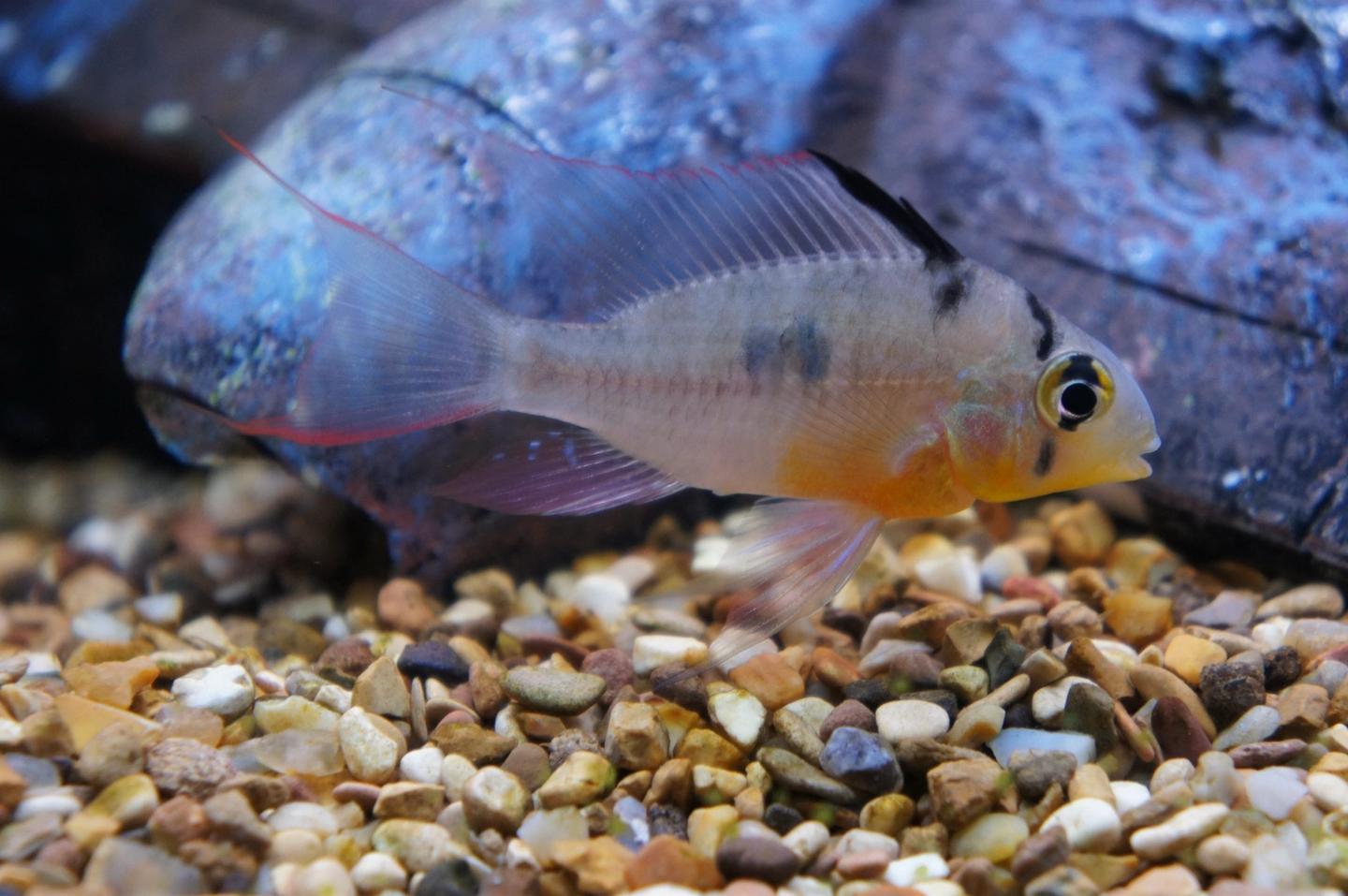
Cichlids are a family of roughly 1,800 accepted species, not one care type. Before buying, identify the exact species and source, then compare adult measurement, usable tank dimensions, social system, territory, tested water, diet and an exit plan. No family-wide minimum tank, water range or tank-mate list is safe.
Maintain these water conditions for optimal health and vibrant colors
The Fuelleborn's Cichlid, or Labeotropheus fuelleborni, is a bold, colorful, and robust Lake Malawi cichlid renowned for its striking patterns, active behavior, and hardy nature. Endemic to the rocky shorelines of Lake Malawi in East Africa, this mbuna cichlid thrives in hard, alkaline water and rock-filled aquariums. Available for sale UK from Tropical Fish Co, Labeotropheus fuelleborni is ideal for experienced African cichlid keepers seeking a vibrant, engaging centerpiece for a mbuna community. With proper care, appropriate tankmates, and stable water parameters, this species offers years of color, activity, and fascinating behavior.
Labeotropheus fuelleborni exhibits a wide range of color morphs depending on geographic origin, including brilliant blues, oranges, and blacks. The most common forms display electric blue or cobalt blue bodies with bold black vertical bars or blotches. Orange-blotched (OB) morphs feature orange and black mottling on a pale background, particularly in females and some males. Males are typically larger and more vividly colored, with intense hues and pronounced finnage. Females are often paler or display OB patterns. Adults can reach up to 30 cm in the wild, though aquarium specimens typically remain smaller (15-20 cm). The upturned, underslung mouth is a distinctive feature adapted for scraping algae from vertical rock surfaces. Juveniles are less vibrant but develop full coloration as they mature and establish dominance hierarchies.
Labeotropheus fuelleborni is endemic to Lake Malawi, East Africa, where it inhabits rocky shoreline zones densely packed with boulders and crevices. The lake's water is hard, alkaline, clear, and exceptionally stable, with high mineral content and excellent oxygenation. This species is a specialized mbuna grazer, feeding on aufwuchs (biofilm of algae, diatoms, and microorganisms) scraped from vertical and inclined rock surfaces using its uniquely shaped mouth. Males establish and defend feeding and spawning territories, with intense competition for prime rocky real estate. The dense, rocky habitat provides shelter, feeding grounds, and spawning sites.
A minimum tank size of 400 litres is essential for adult Labeotropheus fuelleborni, with larger setups (500+ litres) strongly recommended for mixed mbuna communities. Provide extensive rockwork arranged to create caves, shelters, and distinct territories. Use limestone rocks, lava rock, or aquarium-safe slate to help buffer pH and maintain hard, alkaline water. Substrate should be sand or fine gravel. Ensure powerful filtration capable of handling the significant bioload of these large, active, messy eaters. Perform frequent large water changes (30-50% weekly) to maintain pristine water quality. Lighting should be moderate to bright. Avoid plants, as mbuna will uproot, damage, or eat them. Decor should be stable and secure, as these large, boisterous cichlids can rearrange lighter items.
Labeotropheus fuelleborni is a primarily herbivorous mbuna adapted to grazing on aufwuchs. In captivity, provide a diet based on high-quality spirulina flakes, algae wafers, and herbivore cichlid pellets. Supplement with blanched vegetables such as spinach, zucchini, peas, and cucumber. Offer occasional small protein-rich foods (bloodworms, brine shrimp) very sparingly—excessive protein can lead to digestive issues, bloat, and "Malawi bloat" disease, a potentially fatal condition common in overfed mbuna. Feed small amounts 2-3 times daily, ensuring all food is consumed within a few minutes. A balanced, herbivore-focused diet supports health, coloration, and longevity.
Labeotropheus fuelleborni is semi-aggressive to aggressive, particularly males. Dominant males establish and fiercely defend territories, chasing and nipping rivals and subdominant individuals. Aggression is most intense in cramped tanks, overstocked setups, or when sex ratios are imbalanced. Females are less aggressive but still robust and competitive. These cichlids are constantly active, grazing, exploring, and interacting with tankmates. To manage aggression, provide ample rockwork with multiple territories and sight breaks, and consider slight overstocking (with appropriate filtration) to spread out territorial behavior. Careful stocking and appropriate group sizes (multiple females per male) reduce stress and injury.
Suitable tankmates include other robust Lake Malawi mbuna of similar size and temperament, such as Maylandia, Pseudotropheus, and other Labeotropheus species. Large, fast, non-aggressive fish may be tolerated only in very large setups. Avoid small community fish, slow-moving species, long-finned fish, peaceful cichlids, shrimp, and other small invertebrates—these will be bullied, chased, or eaten. Do not mix with soft-water community fish or South American species, as mbuna require hard, alkaline water. Careful stocking, ample rockwork, and appropriate group sizes help reduce aggression and create a stable, thriving mbuna community.
Labeotropheus fuelleborni is a maternal mouthbrooder, with females incubating eggs and fry in their mouths for approximately three weeks. Males establish territories and display intense coloration and behavior to attract females. After spawning, the female collects the eggs and retreats to a sheltered area, fasting during incubation. Fry are released when fully developed and capable of independent feeding. Provide finely crushed spirulina flakes, baby brine shrimp, and microworms. Breeding occurs readily in well-maintained aquariums with stable conditions and appropriate sex ratios. Remove fry or use a separate rearing tank if selective breeding or fry survival is a priority, as adults and tankmates may predate young.
Tropical Fish Co is the UK's premier destination for healthy, vibrant Lake Malawi cichlids. Our Labeotropheus fuelleborni specimens are carefully selected, quarantined, and conditioned to thrive in your aquarium. We provide expert care advice, detailed setup guidance, and ongoing support to help you build a thriving mbuna community. With fast, insured nationwide delivery and a live arrival guarantee, you can shop with confidence. Join thousands of satisfied UK aquarists who trust Tropical Fish Co for quality, expertise, and exceptional service. Discover the beauty of Lake Malawi—order your Fuelleborn's cichlid today.
No reviews for this item yet. Bought one? Honest reviews only, good or bad.
What customers say about ordering from us
I have a small group of long finned mountain minnows. So was delighted to be able to order ten of this variety to increase the genetics in my tank . The ones I recieved are healthy but it’s to early to give a verdict on wether they are of a long finned type since they are small currently.
Gordon Walker · 23 Sept 2026
100% success travel and "installation". Pleased with quality of purchase. The Siamese fighter a bit "shy" so have not yet seen him at his best yet but looking good. Happy customer. GG
George E Garratt · 21 Sept 2026
Reviews of our shop, collected by Judge.me, an independent third-party review collector. Newest first.