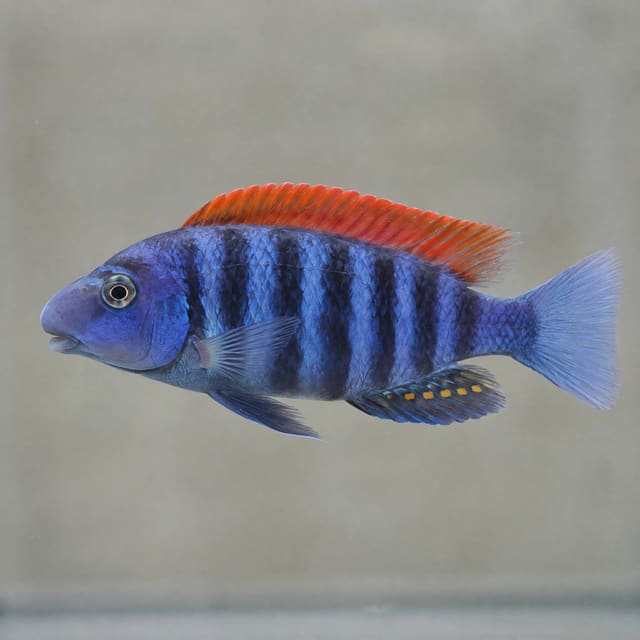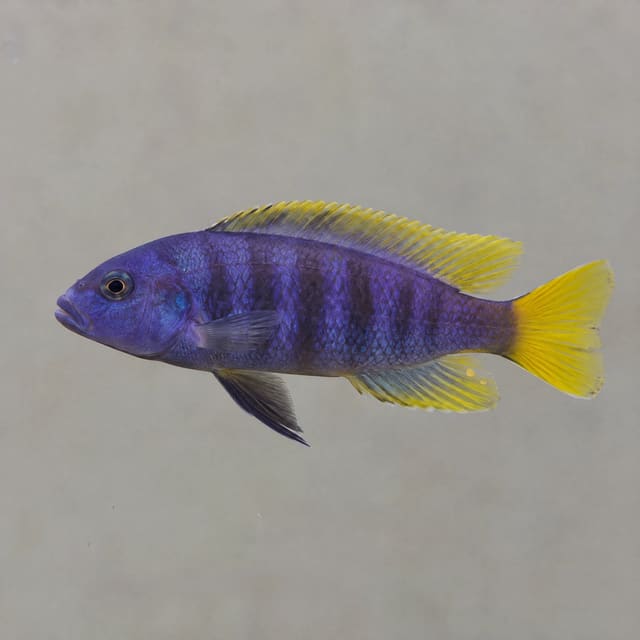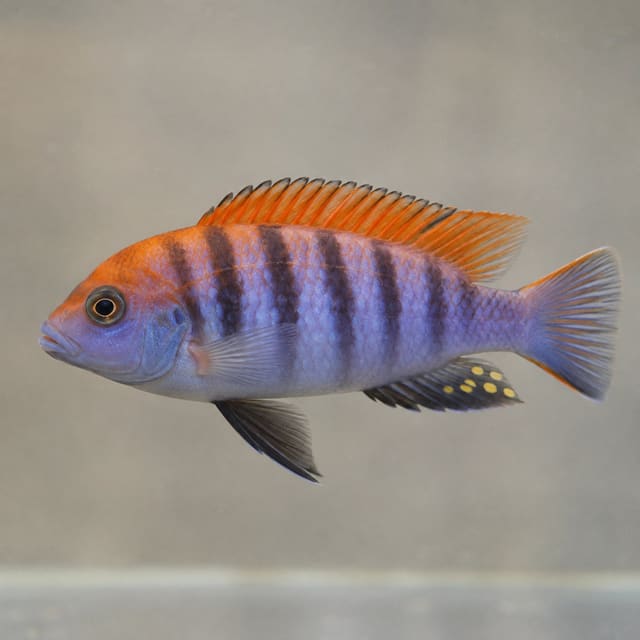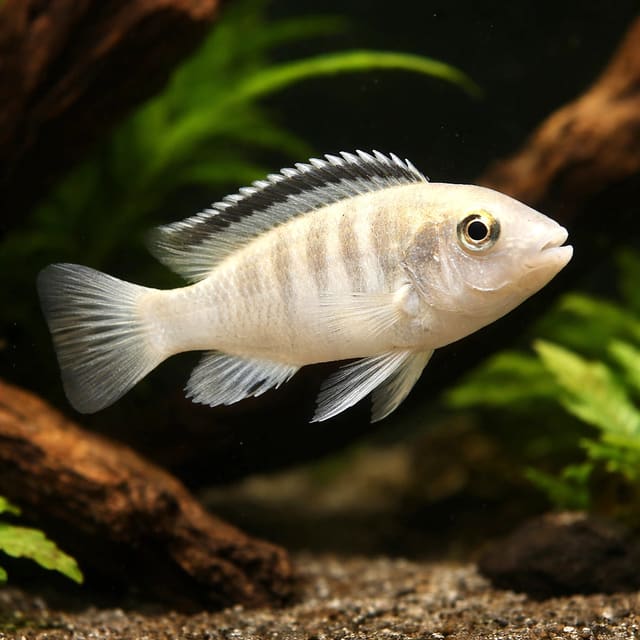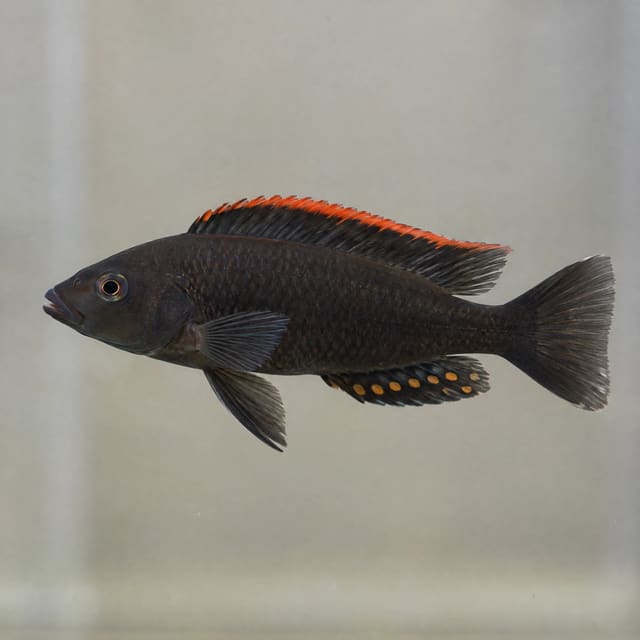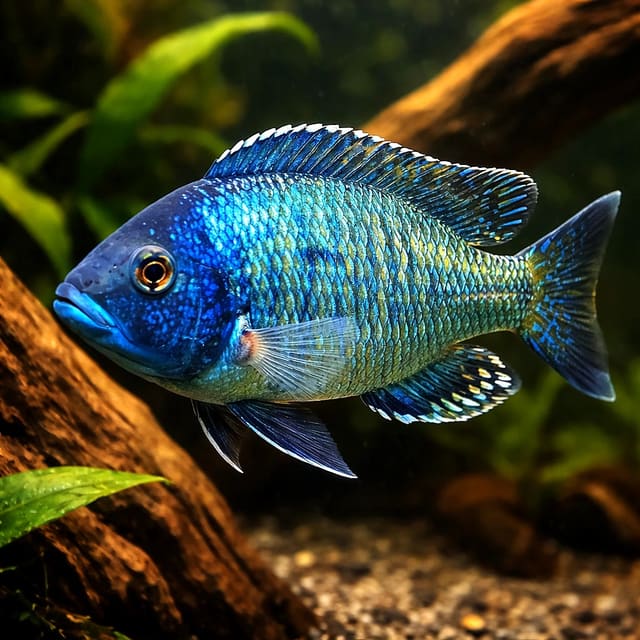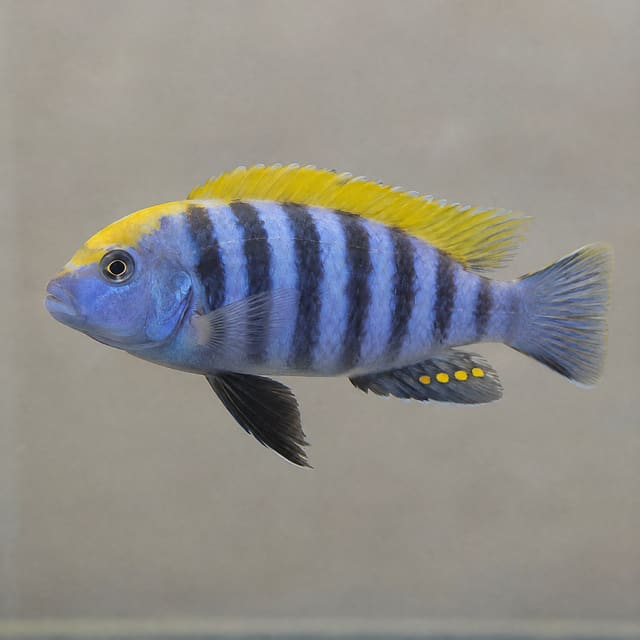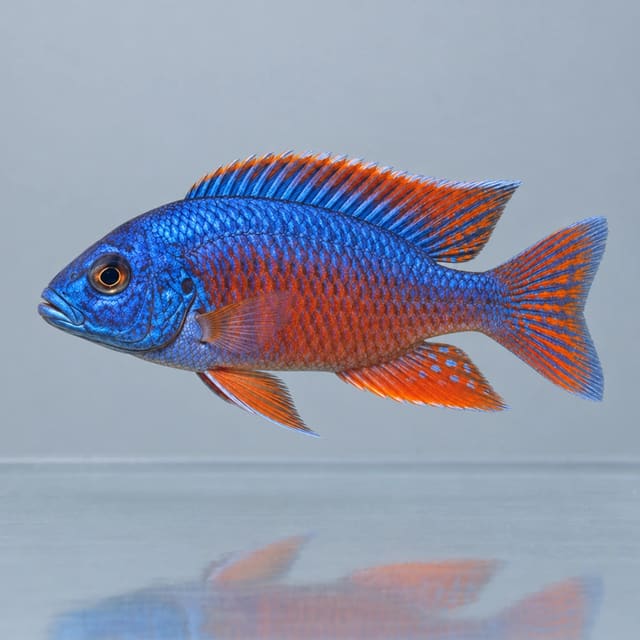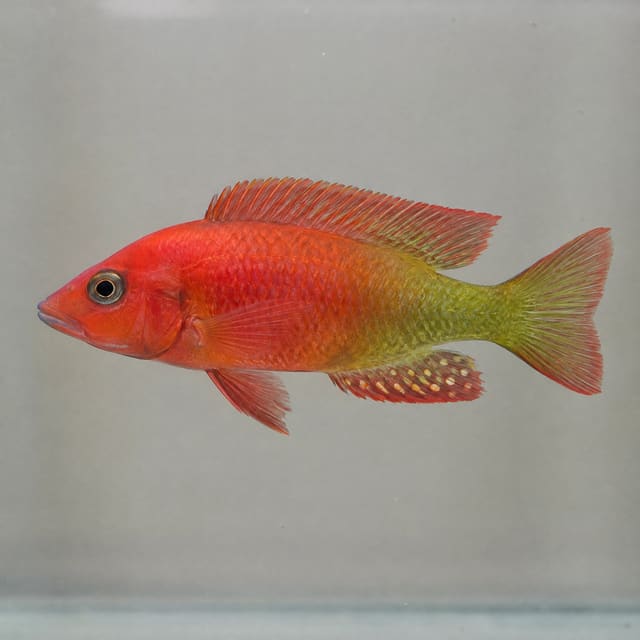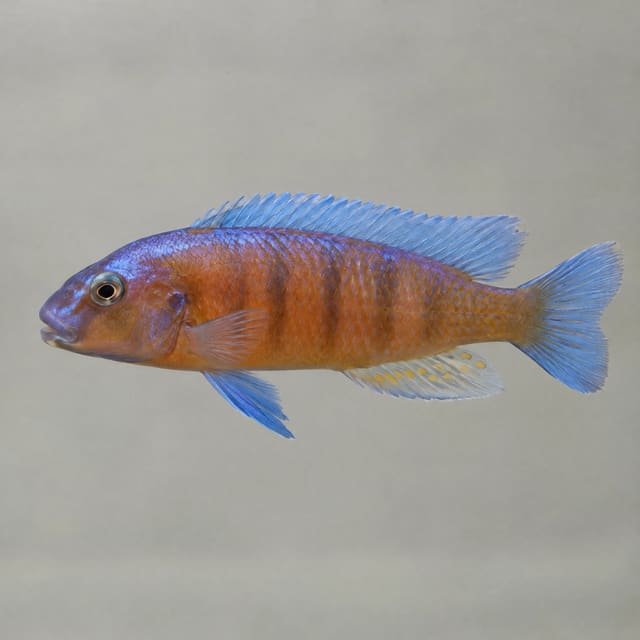
Chilumba Scrapemouth Mbuna (Labeotropheus trewavasae)
24°C · pH 8 · 154L
£11.99
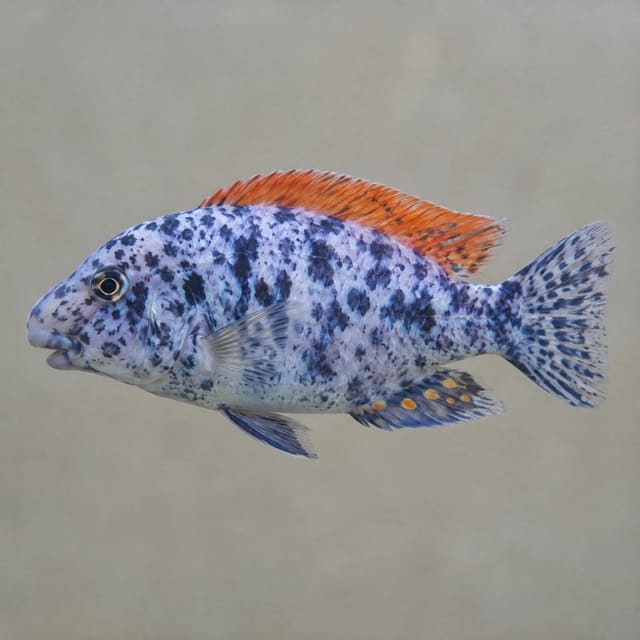
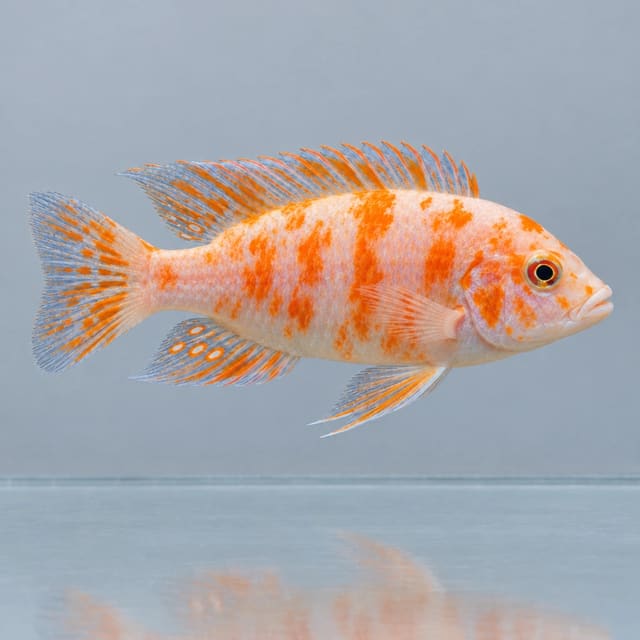
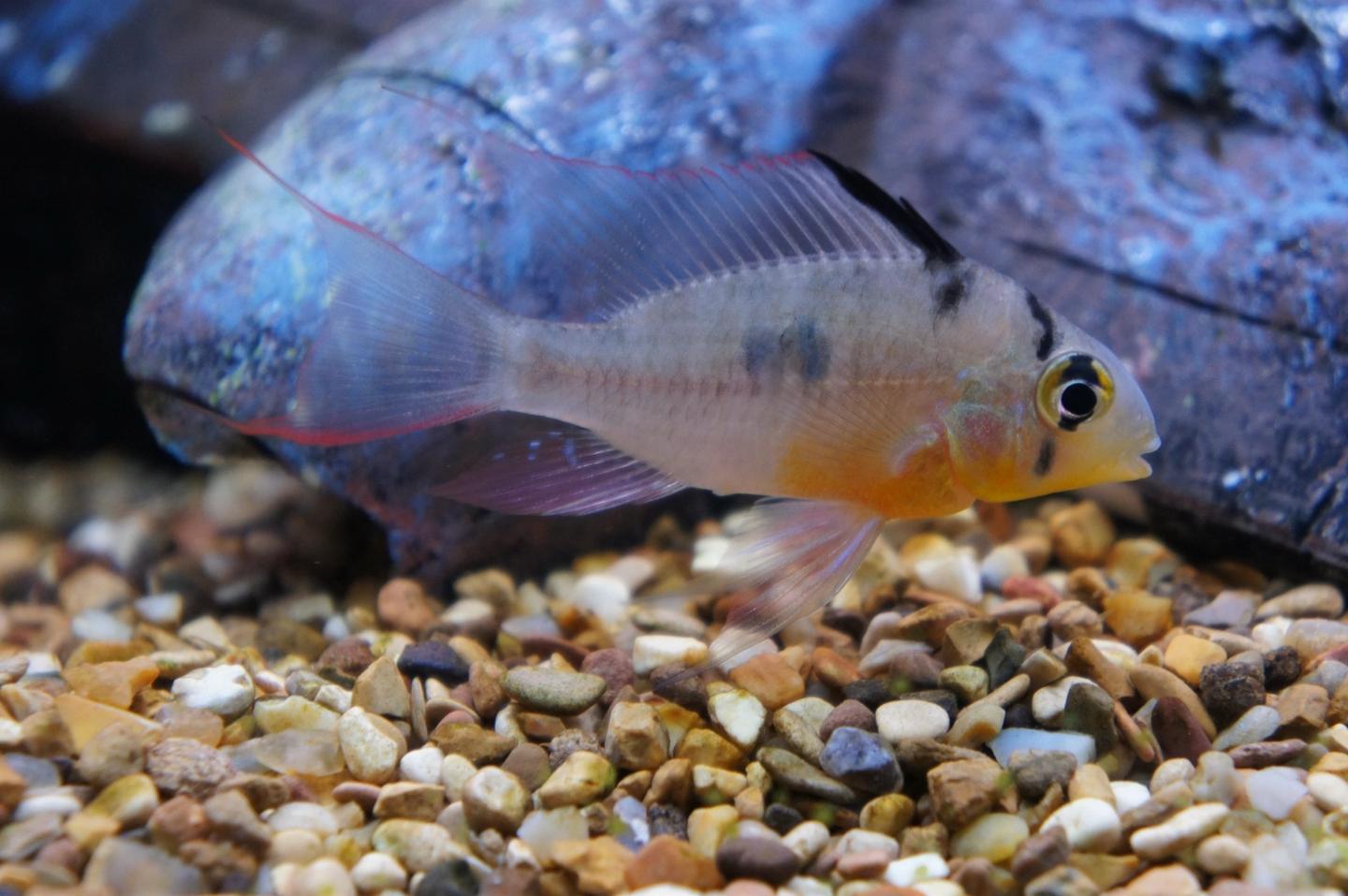
The Fuelleborni Orange Blotch is the marbled orange and slate-blue OB form of Labeotropheus fuelleborni, Fuelleborn's cichlid, an algae-scraping mbuna from the rocky shores of Lake Malawi. OB fish are usually females. It is territorial and robust, so keep it with other mbuna in a rocky, well-aerated, hard-water aquarium at least 120 cm long. Sold individually as one live fish.
Labeotropheus fuelleborni
Save when buying multiple fish. Each quantity is one fish; sex and pair formation are not guaranteed unless the selected variant explicitly states them.
The Fuelleborni Orange Blotch is the marbled orange and slate-blue OB form of Labeotropheus fuelleborni, Fuelleborn's cichlid, an algae-scraping mbuna from the rocky shores of Lake Malawi. OB fish are usually females. It is territorial and robust, so keep it with other mbuna in a rocky, well-aerated, hard-water aquarium at least 120 cm long. Sold individually as one live fish.
Cichlids are a family of roughly 1,800 accepted species, not one care type. Before buying, identify the exact species and source, then compare adult measurement, usable tank dimensions, social system, territory, tested water, diet and an exit plan. No family-wide minimum tank, water range or tank-mate list is safe.
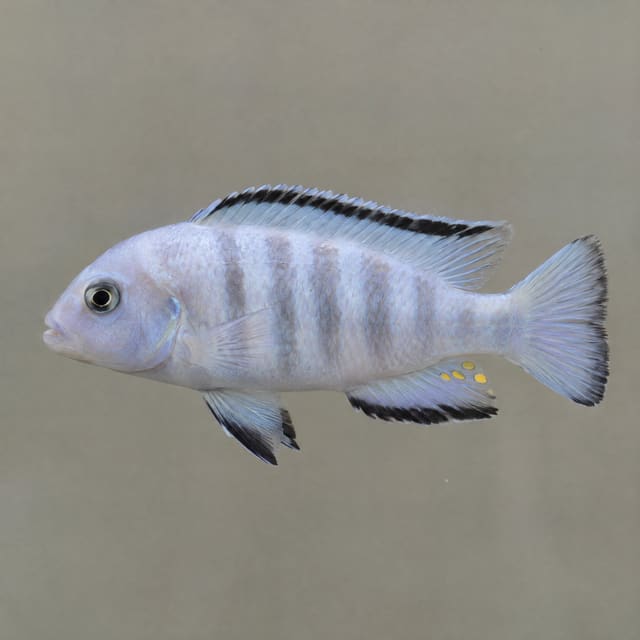
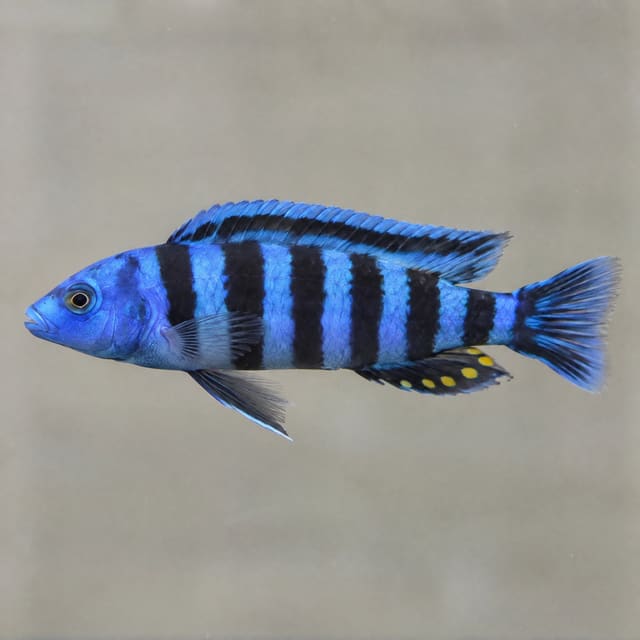
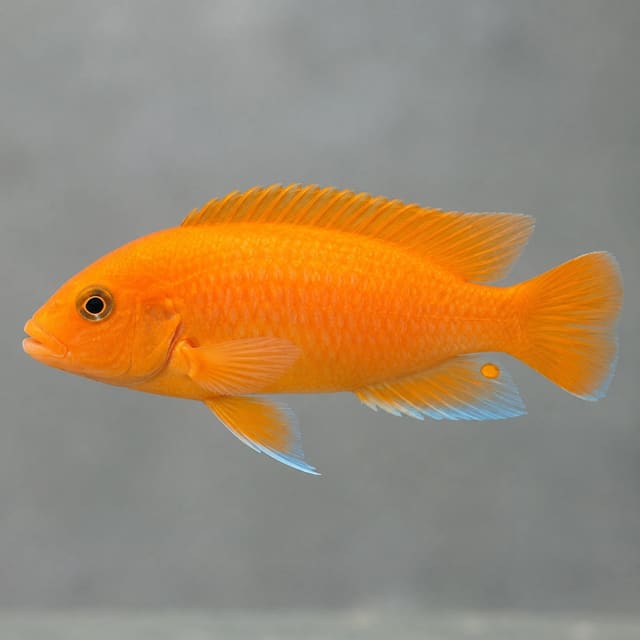
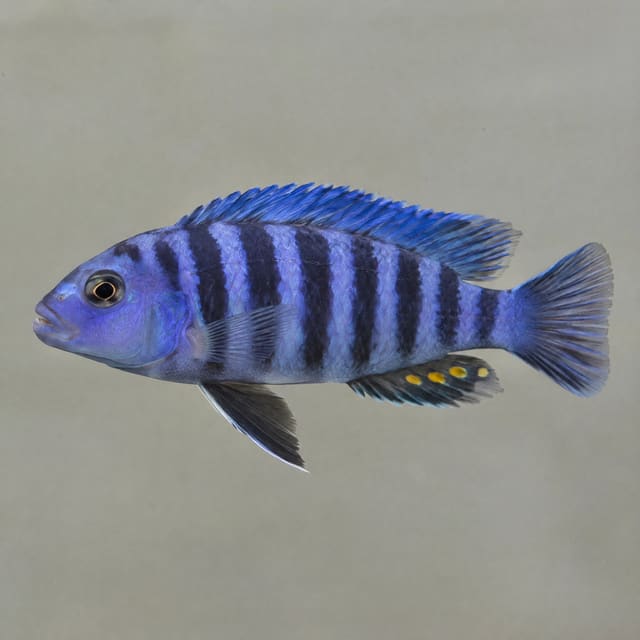
The Fuelleborni Orange Blotch is the OB colour form of Labeotropheus fuelleborni, Fuelleborn's cichlid, a mbuna from the rocky shores of Lake Malawi. Where most males of the species are blue with darker bars, this form is marbled in bright orange and dark slate-blue, with the orange strongest on the head, throat and shoulders and the blotches running into rough bars along the flanks. The fins are blue-grey flecked with orange, and the head has the short, rounded snout that hangs over the mouth in every Labeotropheus. For a busy mbuna aquarium, a Fuelleborni Orange Blotch adds colour that no two fish share.
Seriously Fish describes the species as common and widespread in the lake, living in shallow, turbulent, well-oxygenated water around the tops of rocky shorelines and islands. FishBase records it at depths of 1–6 m, including around offshore islands, and lists it as Least Concern on the IUCN Red List.
| Feature | What it means |
|---|---|
| Overhanging snout | Shared by all members of the genus, according to Seriously Fish; the mouth sits underneath |
| Chisel-shaped teeth | Built for scraping algae from rock, including rock in very shallow water that other species cannot reach |
| Mouth position | Lets the fish feed lying parallel to the rock, so it can cope with surf and turbulence |
| Name | FishBase explains Labeotropheus as "large lips" plus "trophy", for its obvious feeding adaptation; fuelleborni honours Friedrich Fülleborn (1866–1933), a German physician and parasitologist |
For the blue form of the same species, see our Fuelleborn's Cichlid. Its close relative L. trewavasae is available as Trewavas' Mbuna and as Scrapermouth Mbuna 'Marmalade'.
Seriously Fish notes that L. fuelleborni occurs in many colour forms in nature, including female forms that are plain orange or orange blotch. Males with orange blotch colouring are rare and are known in the hobby as "marmalade cats". Research explains why. Roberts, Ser and Kocher (2009) traced the orange blotch pattern of Lake Malawi cichlids to a change in the control region of the Pax7 gene: the broken pattern camouflages females, but it disrupts the colours that males use to be recognised by mates. Ser, Roberts and Kocher (2010) found that in several Lake Malawi species the dominant orange blotch pattern travels with a female sex-determining system, so OB fish are usually females.
Seriously Fish warns that the different colour forms of L. fuelleborni, and the other Labeotropheus species, should not be mixed in aquaria because they may hybridise. If you want OB fry, keep OB fish with a male of the same population and keep blue Fuelleborn's cichlids and Trewavas' mbuna in a different aquarium.
One purchase supplies one live Fuelleborni Orange Blotch at the standard size currently available, which is a young fish rather than an adult. Sex is not chosen or guaranteed, but because the orange blotch pattern is usually carried by females, expect most OB fish to be female. Seriously Fish notes that males are larger and far more colourful than females.
The photographs show the colour form. Every OB fish has its own pattern of orange and dark patches, and the balance between them can shift as the fish grows.
Our delivery information explains dispatch days, packing and the Live Arrival Guarantee before you order.
The adult size depends on the source and on the sex. Seriously Fish gives a maximum of 175 mm standard length (without the tail). FishBase records a maximum of 30 cm standard length for males or unsexed fish and 8.7 cm standard length for females. Because OB fish are usually females, many will stay far smaller than the male figures, but a rare OB male could grow large, so plan for a big mbuna.
Seriously Fish gives a minimum base of 90 × 45 cm, about 154 litres, but recommends a 48 in (about 120 cm) aquarium for a breeding harem, and OATA recommends at least 200 litres for a reasonable Malawi community. For a mixed, slightly overcrowded mbuna group we recommend a tank at least 120 cm long and 200 litres or more.
Seriously Fish recommends filling much of the aquarium with piles of rock arranged into caves, with small areas of open water between them, over a sandy substrate, and keeping the water well oxygenated. It advises against plants, which will be eaten. OATA recommends complex rockwork that breaks up lines of sight, and coral sand or a similar substrate to help buffer the water.
In the lake this fish grazes rock in shallow, surf-swept water, so give it rock surfaces under good light where a film of algae can grow, and leave that film on the rocks when you clean the front glass.
| Zone | Job |
|---|---|
| Rock piles with many caves | Territories for males and refuges for females and smaller mbuna |
| Lit rock faces with an algae film | Natural grazing between meals |
| Small open areas of sand | Swimming room and, for breeding, spawning sites near flat stones |
| Strong surface movement | High oxygen, like the turbulent shallows it comes from |
The published water ranges agree on hard, alkaline water but differ in the details, so the table shows each one and the overlap we recommend. FishBase gives a lower temperature range and a softer upper hardness than the other two.
| Reading | Seriously Fish | FishBase | OATA (Malawi cichlids) | Our target |
|---|---|---|---|---|
| Temperature | 24–28°C | 22–25°C | 23–27°C | A steady 24–25°C |
| pH | 7.6–8.8 (8.0 ideal) | 7.5–8.5 | 8.0–8.6 | 8.0–8.5 |
| General hardness | 10–25 dGH | Up to 12 dH | 12–18 dGH | 12–18 dGH |
| Ammonia and nitrite | — | — | 0 mg/l | 0 mg/l |
| Nitrate | — | — | No more than 20 mg/l above tap water | As OATA |
UK tap water varies from soft to very hard by region, so check your water company's report for your postcode and test pH, GH and KH yourself. Buffer soft water with coral sand, as OATA suggests, and always treat new water with a tap water conditioner. Our water matcher compares your water with this fish's needs, and our water chemistry guide explains the readings.
OATA recommends an oversized filter and aggressive aeration for Malawi cichlids, because the slightly overcrowded groups that keep aggression in check also produce a lot of waste and use a lot of oxygen. Seriously Fish stresses well-oxygenated water for this species. Our aquarium filtration guide explains how to size a filter.
FishBase says Fuelleborn's cichlids usually feed alone or in small mixed groups on the aufwuchs, the algae-rich cover on rocks in shallow water, and occasionally band together in schools of several hundred to raid the algal gardens of other species; they also eat worms, crustaceans, insects and plant matter. Seriously Fish advises that, although it accepts most foods, vegetable matter such as Spirulina flakes and blanched spinach should form a large part of the diet, supplemented with live and frozen foods. OATA notes that the smaller mbuna are more herbivorous and do well on algae-rich Malawi foods and fresh vegetables.
| Part of the meal | How to use it |
|---|---|
| Spirulina flake or algae-rich Malawi granules | The daily staple |
| Algae wafers | A few times a week, dropped near the rocks |
| Blanched spinach | Two or three times a week; remove leftovers the same day |
| Small frozen foods such as brine shrimp or daphnia | Occasionally, as a supplement |
OATA advises feeding twice a day, only as much as the fish eat in a few minutes. Overfeeding rich food leaves waste to break down in the rockwork.
Test the water first: ammonia and nitrite must read zero. OATA describes the floating-bag method: lights off, float the sealed bag for 10 minutes, add small amounts of aquarium water over up to 20 minutes, then release the fish with as little bag water as possible. Our acclimatisation guide explains each step.
OATA also advises adding Malawi cichlids in groups so no single fish takes all the attention, adding the more peaceful species first and the more aggressive ones later, and rearranging the decor so every fish has to find a new territory. A Labeotropheus is one of the fish to add last.
Seriously Fish describes L. fuelleborni as aggressive and territorial and very aggressive towards its own species. It should not be kept with peace-loving fish such as peacocks or utaka, but can be combined with other mbuna in a slightly overcrowded aquarium. OATA recommends keeping Malawi cichlids only with other Malawi cichlids or Synodontis catfish from the lake.
| Suits | Avoid |
|---|---|
| Robust mbuna, such as the Demasoni Cichlid or the Red Top Afra Cichlid | Peacocks, such as the Benga Yellow Peacock Cichlid |
| The Acei Cichlid and the Yellow Lab Cichlid | Utaka, such as the Red Fin Kadango Cichlid |
| The Malawi Squeaker catfish | Other colour forms of L. fuelleborni and other Labeotropheus, if you plan to breed |
Check your plan with our tank mates checker, read our Lake Malawi cichlids guide and cichlid care guide, and browse the Malawi cichlid range, the Lake Malawi and Victoria cichlids category, our mbuna category and the Labeotropheus category.
Seriously Fish describes L. fuelleborni as a fish with real character that quickly learns to recognise its owner, and notes that males can change colour rapidly when stressed or excited. OATA describes a healthy Malawi cichlid as having clear, bright eyes, undamaged fins, intact scales, normal swimming and steady breathing, and lists warning signs such as clamped fins, flicking against decor, hanging at the surface, sitting on the bottom, colour changes, unusual hiding, white spots or fluffy growths, weight loss and reduced feeding.
| Sign | Action |
|---|---|
| Dark or washed-out colour and hiding | Look for a dominant fish chasing it; add rock cover or rearrange the decor |
| Fast breathing or hanging at the surface | Test ammonia and nitrite at once and increase aeration |
| White spots, fluffy patches or flicking | Confirm water quality first, then seek treatment advice |
| A female with a swollen throat who refuses food | Probably holding eggs: leave her undisturbed |
Seriously Fish rates breeding as possible. This is a maternal mouthbrooder best spawned in a species aquarium of about 48 in with one male and at least three females, flat stones and patches of open sand, pH around 8.2–8.5 and 25–26.5°C, after conditioning on plenty of vegetable, live and frozen foods. The male cleans and displays at a chosen site; the female lays her eggs and picks them up, and the egg spots on the male's anal fin lead her to take in sperm and fertilise the brood.
Seriously Fish gives a brood of 25–60 eggs carried for up to three or four weeks, during which the female does not eat; OATA gives 21–40 days for Malawi cichlids in general. A stressed female may spit out or eat her brood, so move her only if she is being harassed. Some breeders strip the fry at about two weeks; the fry can take brine shrimp nauplii from release.
It is the orange blotch (OB) colour form of Labeotropheus fuelleborni, Fuelleborn's cichlid, a rock-dwelling mbuna from Lake Malawi. Instead of the blue barred colouring of most males, OB fish are marbled in orange and dark slate-blue. Seriously Fish lists orange blotch as one of the species' natural female colour forms.
Most OB fish are female. Seriously Fish says OB males are rare and are known as "marmalade cats", and research on Lake Malawi cichlids links the orange blotch pattern to a female sex-determining gene in several species. Sex is not chosen or guaranteed when you buy.
Sources differ a lot. Seriously Fish gives 175 mm standard length. FishBase records 30 cm standard length for males or unsexed fish and 8.7 cm for females. As OB fish are usually females, many stay well below the male figures, but plan the aquarium for a large mbuna.
We recommend a tank at least 120 cm (48 in) long and 200 litres or more. Seriously Fish gives a 90 × 45 cm minimum base for the species but suggests 48 in for a breeding harem, and OATA recommends at least 200 litres for a Malawi community.
Yes. Seriously Fish describes it as aggressive and territorial, very aggressive towards its own species, and unsuitable for peacocks or utaka. Keep it with other robust mbuna in a slightly overcrowded aquarium, with several females for each male.
It is an algae grazer. FishBase says it scrapes the algae-rich cover off rocks in shallow water. Seriously Fish advises a diet with a large proportion of vegetable food such as Spirulina flakes and blanched spinach, supplemented with some live and frozen food.
Not if you want to breed true. Seriously Fish warns that the colour forms of L. fuelleborni, and the other Labeotropheus species, may hybridise and should not be mixed.
Seriously Fish advises against plants because they will be eaten. Use rock and sand instead, and let a film of algae grow on the rock faces for the fish to graze.
One live Fuelleborni Orange Blotch at the standard size currently available, a young fish rather than an adult. Sex is not chosen or guaranteed.
No reviews for this item yet. Bought one? Honest reviews only, good or bad.
What customers say about ordering from us
Easy website plenty of info on fish your buying great to pick a time slot
TRACEY DURRANT · 7 Oct 2026
Got some lovely fish thank you
Kevin Mackie · 7 Oct 2026
Reviews of our shop, collected by Judge.me, an independent third-party review collector. Newest first.
Moved by UK carriers licensed to handle live animals
Hand-packed with oxygen bags, poly box, heat pack
Email photos the same day; an optional unboxing video helps us review problems faster — claim terms apply
Klarna & PayPal Pay in 3 at checkout