−15%
Moderate
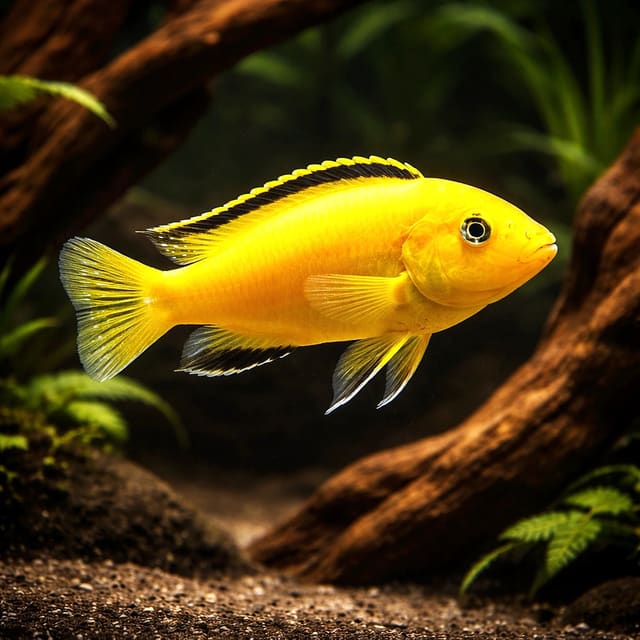
Yellow Lab Cichlid (Labidochromis caeruleus)
24–28°C · pH 7.7–8.6 · 154L
£8.39£10.99

The Chilumba Scrapemouth Mbuna (Labeotropheus trewavasae) is a rock-dwelling cichlid from Lake Malawi that reaches 11.7 cm. It suits planned Malawi aquariums with several females per male, about 154 litres, and the shared FishBase, Seriously Fish and OATA target of 24°C, pH 8.0 and 12 dGH. Sold individually in 4–5 cm, 6–7 cm and XL sizes.
Adult size is the maximum length this species reaches at full maturity (scientific sources). The livestock you receive will be younger and smaller — pick a size above for the actual shipping size. Product-photo provenance and any image-specific limitations are stated on the listing.
Labeotropheus trewavasae
Save when buying multiple fish. Each quantity is one fish; sex and pair formation are not guaranteed unless the selected variant explicitly states them.
The Chilumba Scrapemouth Mbuna (Labeotropheus trewavasae) is a rock-dwelling cichlid from Lake Malawi that reaches 11.7 cm. It suits planned Malawi aquariums with several females per male, about 154 litres, and the shared FishBase, Seriously Fish and OATA target of 24°C, pH 8.0 and 12 dGH. Sold individually in 4–5 cm, 6–7 cm and XL sizes.
Adult size is the maximum length this species reaches at full maturity (scientific sources). The livestock you receive will be younger and smaller — pick a size above for the actual shipping size. Product-photo provenance and any image-specific limitations are stated on the listing.
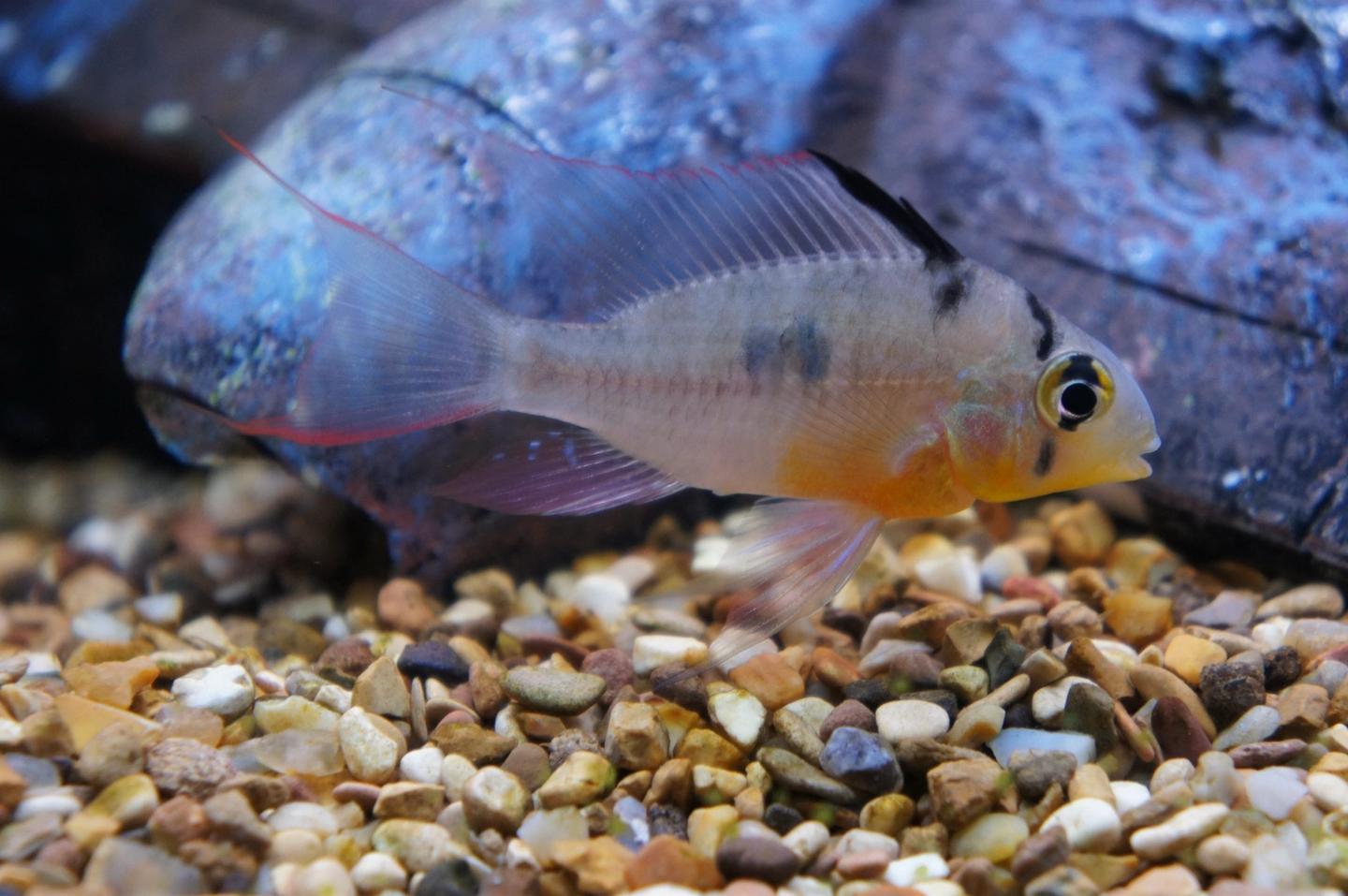
Cichlids are a family of roughly 1,800 accepted species, not one care type. Before buying, identify the exact species and source, then compare adult measurement, usable tank dimensions, social system, territory, tested water, diet and an exit plan. No family-wide minimum tank, water range or tank-mate list is safe.
Maintain these water conditions for optimal health and vibrant colors
The Chilumba Scrapemouth Mbuna (Labeotropheus trewavasae) is a freshwater cichlid from Lake Malawi in Africa. FishBase records a maximum adult length of 11.7 cm and places it in the cichlid family, Cichlidae. It suits keepers prepared to build a dedicated, hard-water Malawi aquarium around territorial behaviour, rockwork and disciplined stocking rather than a peaceful mixed community.
This mbuna is adapted to feed against rock surfaces. Its overhanging snout and chisel-shaped teeth help it scrape algae while keeping its body parallel to the rock, including in turbulent shallow areas. Its recorded wild diet also includes small crustaceans and worms, so aquarium feeding should combine a large vegetable component with measured live or frozen supplements.
Keep the aquarium at 24°C, pH 8.0 and 12 dGH. That target is the overlap of FishBase’s recorded environment, the Seriously Fish aquarium range and OATA’s Malawi-cichlid group guidance, and Seriously Fish describes pH 8.0 as ideal for this species. Test the aquarium water itself rather than assuming the values from local tap water.
Plan around a base measuring at least 90 × 45 cm and a volume of approximately 154 litres for this species. A broader Malawi community needs more room: OATA recommends at least 200 litres for a reasonably sized community. The footprint matters because the fish uses and defends rocky areas, while the larger community volume provides more scope for territories, filtration and oxygenation.
| Suits | Not suited to |
|---|---|
| A planned rock-based Malawi aquarium | A peaceful mixed community |
| Hard, alkaline water at 24°C, pH 8.0 and 12 dGH | Soft or acidic water |
| Keepers able to manage aggressive, territorial fish | Unplanned additions to a small group |
| Other screened mbuna in a structured setup | Peacocks, Utaka and other peace-loving fish |
Use the adult length, aquarium footprint and temperament together when deciding whether it fits your plans. Browse the African cichlid collection to compare identities, but assess every proposed companion against the compatibility rules below rather than treating collection placement as a compatibility guarantee.
One purchase supplies one Chilumba Scrapemouth Mbuna in the size chosen on the live selector. The size labels are 4–5 cm, 6–7 cm and XL. The size you select is the size supplied, not the adult size. Plan the permanent aquarium around the recorded 11.7 cm adult length and the full territorial setup from the start.
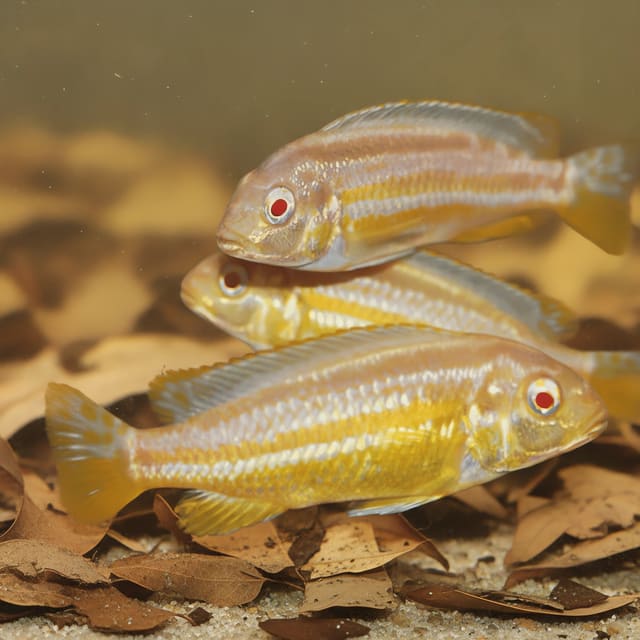
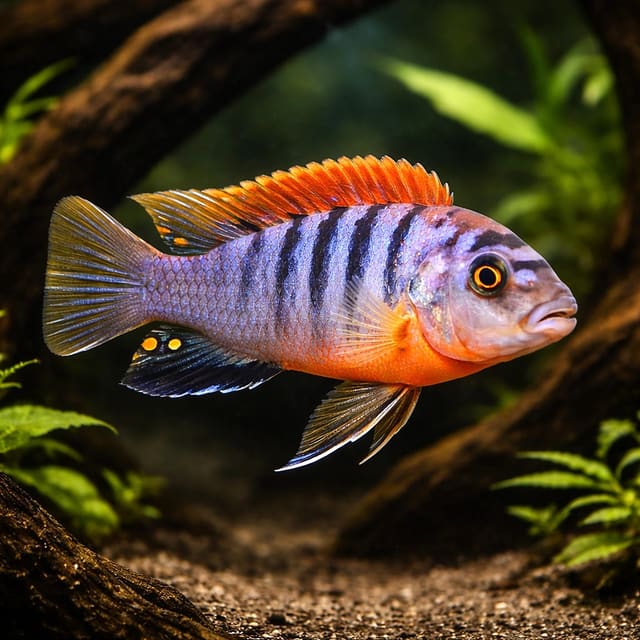
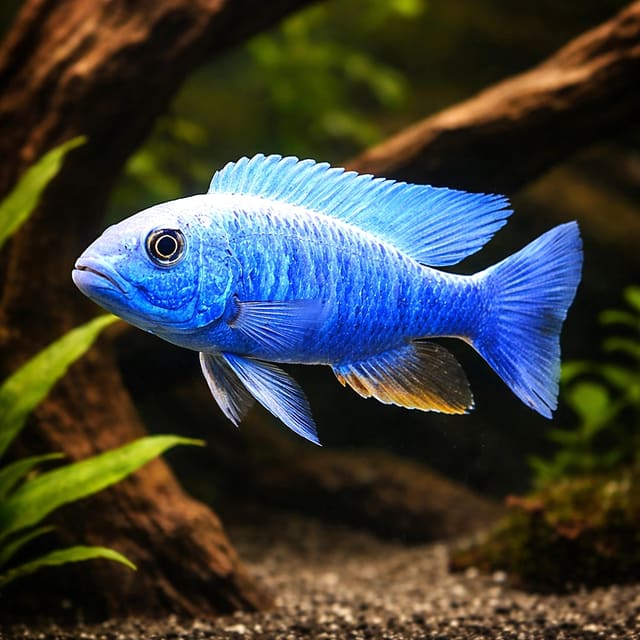
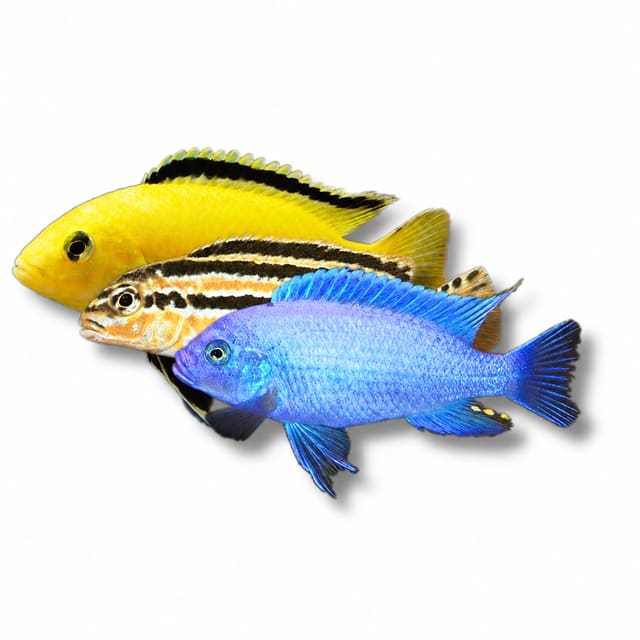
The numeric labels describe the fish’s dispatch length. XL is a grade label rather than a stated centimetre range, so it should not be converted into an assumed measurement. Whichever label you choose, the purchase unit remains one fish; gallery scenes containing two fish do not change that unit.
Sex is guaranteed only when the selected option explicitly states male or female. This Chilumba Scrapemouth Mbuna listing has no sex-guaranteed option.
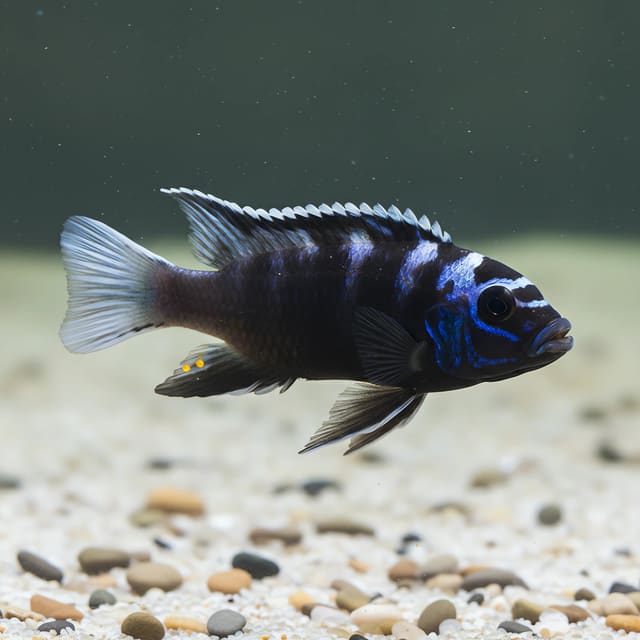
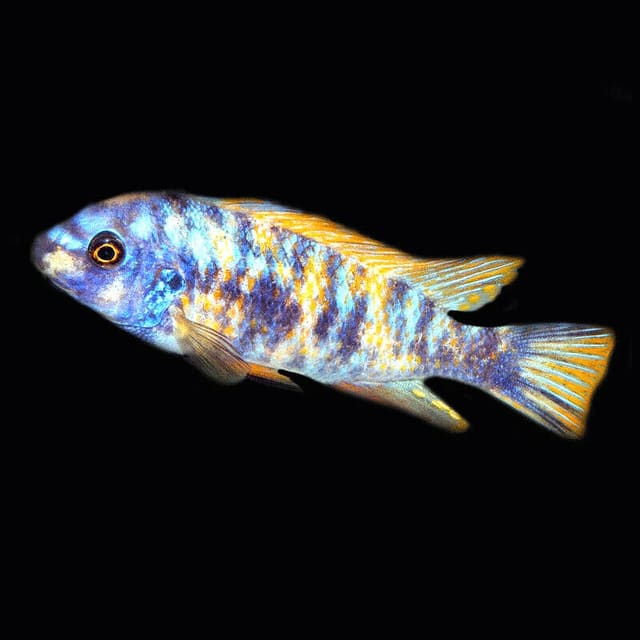
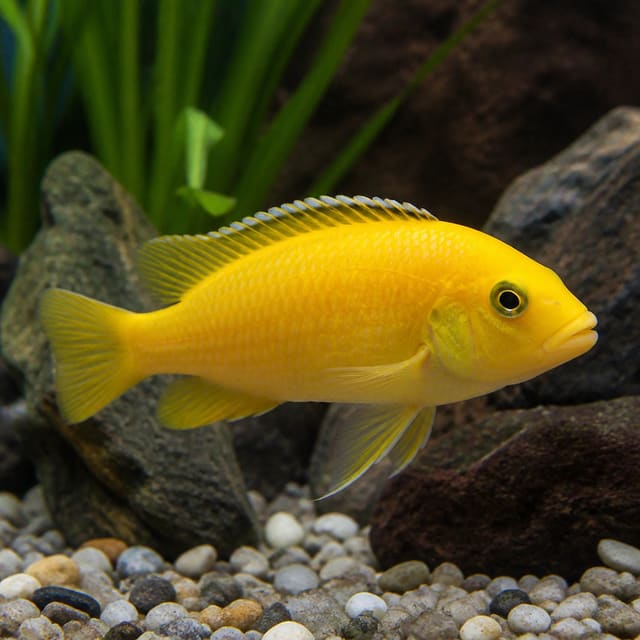
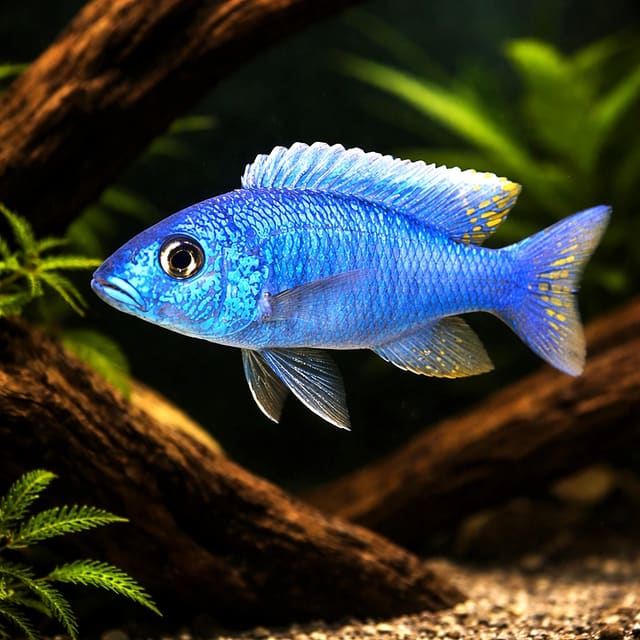
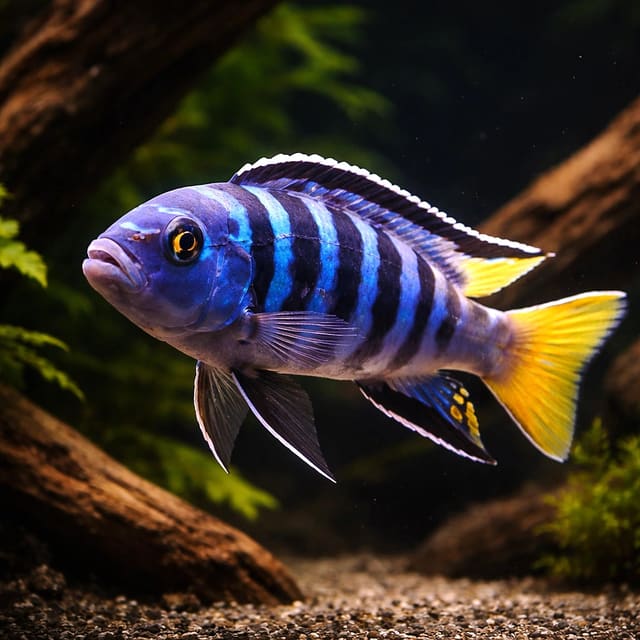
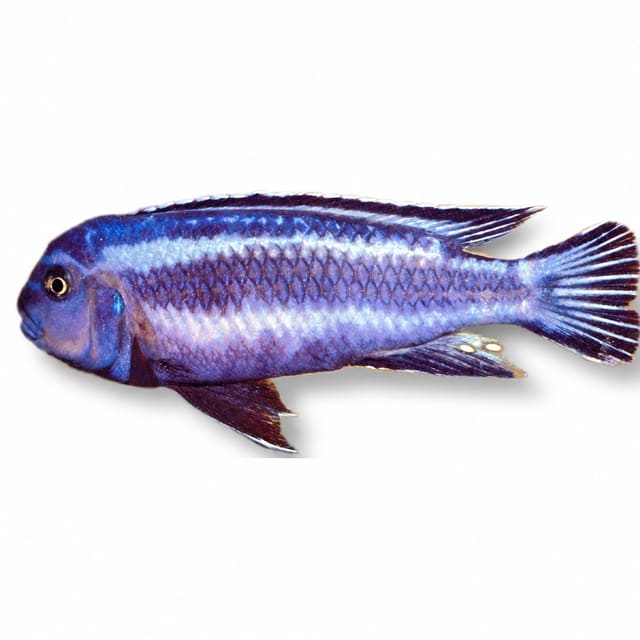
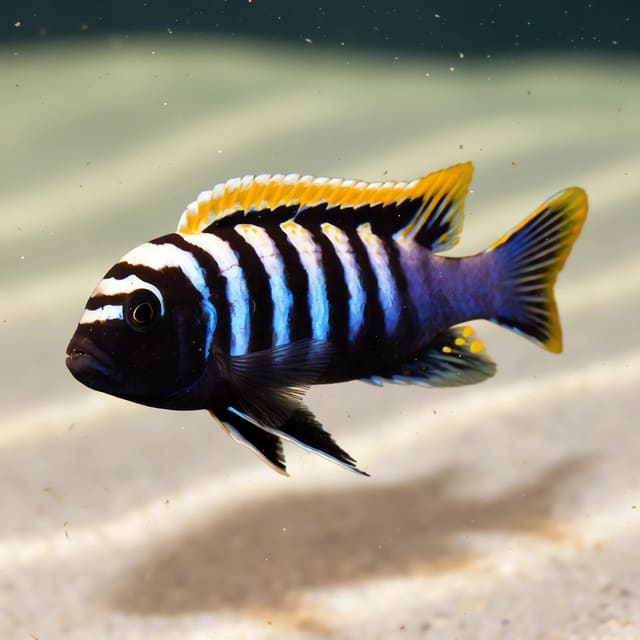
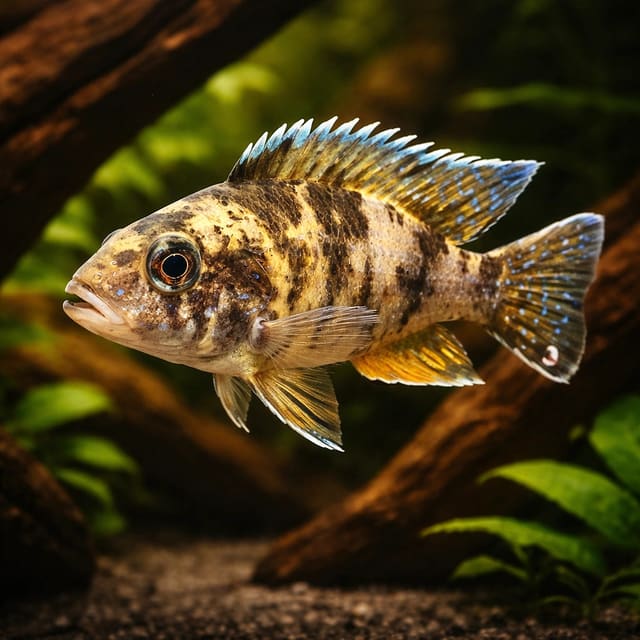
The gallery images are representative illustrations of this type of animal, not photographs of the animal supplied, so pattern and colours can differ from the live animal.
The species is aggressive and territorial, including towards its own kind. Seriously Fish advises keeping several females per male and notes that the presence of other species helps dissipate aggression. Treat those statements as stocking constraints, not as a reason to add fish without checking the total aquarium plan.
OATA describes Malawi cichlids as usually undemanding to keep once their specialised requirements are met, but it also describes them as aggressive. The decisive question is therefore whether you can provide the correct chemistry, rock structure, stocking plan, oxygenation and weekly maintenance, rather than whether the fish appears robust at its dispatch size.
Hold the aquarium at 24°C, pH 8.0 and 12 dGH. These values sit within the FishBase environment record, the Seriously Fish aquarium range and OATA’s guidance for Malawi cichlids. Check all three measurements in the prepared aquarium before introducing the fish and continue testing them as part of the weekly routine.
Ammonia and nitrite must both remain at zero milligrams per litre. OATA advises keeping nitrate no more than 20 mg per litre above the normal level in the tap water. Record the tap-water result separately so the nitrate comparison has a real baseline rather than a guessed value.
| Reading | Action |
|---|---|
| 24°C | Use this as the routine temperature target. |
| pH 8.0 | Confirm the aquarium is at the shared alkaline target. |
| 12 dGH | Confirm the general hardness reaches the shared point. |
| Ammonia or nitrite above zero | Do not add fish; restore biological filtration and retest. |
| Nitrate more than 20 mg/l above tap water | Carry out maintenance and reassess feeding and stocking. |
Use the water chemistry guide to understand what each test measures, then enter the measured values in the water matcher. A single acceptable test does not replace regular checks because feeding, fish additions and filter blockages can change waste processing.
Temperature also needs direct checking. Seriously Fish states that holding 24–28°C in an aquarium of approximately 154 litres needs roughly 175–250 W of heating, assuming a room around 20°C.
If the aquarium cannot hold these values while empty or lightly stocked, postpone the fish rather than relying on later corrections. Stable planning begins with a functioning biological filter, measured chemistry and enough water volume for the intended population.
Use a base of at least 90 × 45 cm with approximately 154 litres for this species. Fill much of the aquarium with piles of rock arranged to create caves, while leaving small areas of open water between them. Seriously Fish says a sandy substrate is best, and the water should be well oxygenated.
Rock structure serves several jobs at once. It provides the surfaces associated with the fish’s scraping behaviour, gives individuals places to retreat and breaks direct lines of sight across the aquarium. Avoid creating one isolated cave that every fish must contest; distribute caves through the footprint.
For a Malawi community, OATA recommends at least 200 litres and advises using as large an aquarium as reasonably possible. A larger body of water is also more stable in temperature and water quality. Do not interpret the approximately 154-litre species figure as a complete community allowance; every additional animal adds waste, territorial pressure and a demand on the biological filter.
Observe how the layout works after fish are introduced. A fish repeatedly held in one corner, prevented from feeding or unable to leave a cave is showing that the territory plan is failing. Rearranging the décor can reduce established territorial claims, but the revised layout still needs multiple caves and open routes.
Choose the permanent footprint before purchase. A smaller temporary aquarium does not reduce the adult space requirement, and the dispatch size does not make a narrow base suitable for territorial mbuna.
Run a well-established biological filter at all times. The RSPCA explains that fish release toxic ammonia, which filter bacteria convert first to nitrite and then to the safer nitrate. A filter is therefore life-support equipment, not simply a way to polish visible particles from the water.
For an aquarium of approximately 154 litres, Seriously Fish recommends turnover of four to five times the aquarium volume each hour and gives a filter flow of about 615–770 litres per hour. Check the rated flow against the aquarium volume, then inspect the actual circulation for blocked intakes or areas with poor movement.
OATA recommends an oversized filter for crowded Malawi communities and aggressive aeration to maintain dissolved oxygen. Increased stocking used to distribute aggression still increases waste, so it must be matched by biological capacity, oxygenation, testing and water changes. Overstocking without those controls replaces one welfare risk with another.
The first tropical tank guide explains how to prepare and mature a filtered aquarium. OATA warns that overstocking, or stocking the aquarium too quickly, can cause new tank syndrome, which occurs when there are not enough nitrifying bacteria to cope with the increased waste.
Never judge filtration by clear water alone. Ammonia and nitrite can be dangerous without making the aquarium look dirty. Use test results, flow checks and fish behaviour together: surface hanging, changed breathing or reduced feeding should trigger an immediate water test and equipment inspection.
Make vegetable matter a large proportion of the diet. Seriously Fish recommends spirulina flakes, blanched spinach and other vegetable foods, supported by a quality dried product and an algae-based food. Live and frozen foods can supplement that base rather than replacing it.
This plan reflects the animal’s recorded feeding biology. FishBase describes it scraping algae from rocks while also taking small crustaceans and worms. Rock grazing is therefore meaningful natural behaviour, but it does not remove the need for measured prepared meals.
| Decision | Instruction |
|---|---|
| Main foods | Use spirulina flakes, a quality dried food, an algae-based food and suitable vegetable matter. |
| Supplements | Add measured live or frozen varieties for dietary variety. |
| Frequency | Follow OATA’s Malawi guidance and feed twice a day. |
| Portion | Offer only what the fish can eat within a few minutes. |
| Leftovers | Remove uneaten food and reduce the next portion. |
Watch the whole aquarium during feeding. Territorial fish can control access to a single feeding point, so distribute appropriate portions where all intended fish can reach them. The total amount must still be consumed within a few minutes; scattering food is not permission to increase the meal.
Overfeeding leaves organic waste that breaks down and releases toxic compounds into the water. If nitrate rises faster than expected, ammonia or nitrite appears, or food remains after several minutes, reduce the portion and check the filter before adding dietary extras.
Judge the routine from feeding response and body condition over time. OATA lists reduced intake, loss of interest in food and changes in weight or condition among the signs that need attention. A sudden appetite change should lead to water testing and observation of aggression before the menu is repeatedly changed.
Start filming the parcel while it is still sealed, with someone at the delivery address to receive it. The Tropical Fish Co delivery and Live Arrival Guarantee policy sets out the packing, receipt, unboxing and acclimatisation procedure.
The fish is hand-bagged in pure oxygen and placed in an insulated poly box, with a heat pack used when the weather calls for it. A licensed live-animal courier carries the parcel, and the policy requires someone to be present to receive it.
If anything has gone wrong, contact us the same day with the order number and the continuous video showing the sealed parcel, opening and fish inside the sealed bag. That video is required for a Live Arrival Guarantee claim.
Before introducing the fish, confirm that ammonia and nitrite are zero and that the aquarium is at 24°C, pH 8.0 and 12 dGH. OATA advises checking water quality before adding fish and increasing the aquarium population slowly so the filter bacteria can respond to added waste.
Observe the new fish’s swimming, breathing and ability to find shelter after release. General settling advice should not turn into an unplanned stocking change: maintain the prepared rock layout, do not add further fish rapidly, and continue testing as the filter adjusts to increased feeding.
At least once every week, carry out a partial water change of 25%. OATA also recommends testing the water at least weekly so ammonia and nitrite do not build up. A larger irregular change is not a substitute for a consistent weekly routine.
Treat replacement tap water with a conditioner that removes chlorine or chloramine before adding it to the aquarium. Check that the replacement water supports the established 24°C, pH 8.0 and 12 dGH target so routine work does not push the aquarium away from its planned chemistry.
Chlorine or chloramine can kill the beneficial bacteria established in the filter media. Protecting that bacterial population helps keep ammonia and nitrite at zero, while clearing blockages restores circulation through the filter and rocky aquarium.
Use a siphon during the water change to remove solid waste from accessible substrate. Work around the rocks without dismantling the entire territory layout each week. If décor must be rearranged to reduce aggression, make that a deliberate stocking intervention rather than an accidental consequence of cleaning.
Record the weekly temperature, pH, hardness, ammonia, nitrite and nitrate results. A written sequence makes gradual movement easier to spot and gives context if behaviour or appetite changes. Compare nitrate with the normal tap-water level and keep it no more than 20 mg per litre above that baseline.
Finish by checking the filter output, surface movement and heater reading. Then observe whether every fish can leave shelter, swim normally and feed. Maintenance is complete only when both the equipment and animals have been checked.
Healthy observation is specific. Look for clear, bright eyes, intact scales, undamaged fins and appropriate swimming behaviour. Compare each fish with its normal behaviour rather than expecting every individual to use the aquarium in exactly the same way.
| Change | First action |
|---|---|
| Hanging at the surface | Test water and check aeration and filter flow. |
| Sitting on the bottom or erratic swimming | Test ammonia, nitrite, nitrate, pH and temperature. |
| Faster or slower gill movement | Check oxygenation, water values and equipment. |
| Darker or paler colour | Observe aggression, shelter access and water quality. |
| More hiding or changed aggression | Check whether the territorial layout and stocking plan are working. |
| White spots, fluffy growths or lost scales | Test the water and seek prompt health guidance. |
| Reduced feeding or changed body condition | Check water, aggression and access to food. |
Start with water testing because even small amounts of ammonia can stress Malawi cichlids. Confirm nitrite is also zero, compare nitrate with the tap-water baseline and inspect the filter for restricted flow. Correcting an equipment or water-quality problem quickly prevents it from continuing while symptoms are assessed.
Aggression requires its own check. Look for a fish pinned behind one rock, excluded from food or repeatedly chased without a route away. Review cave distribution, open escape routes, sex ratio and the total community rather than treating damaged fins as an isolated cosmetic problem.
Do not choose a disease treatment from appearance alone. If a health concern remains after the water and equipment checks, contact your retailer for further guidance with the test results and a clear description of the behavioural or physical change.
Plan for an adult length of 11.7 cm. FishBase records that maximum total length for male or unsexed fish, and it is the adult figure used throughout this page. Dispatch labels describe the fish supplied at purchase and do not change its permanent space requirement.
Seriously Fish pairs this species with a 90 × 45 cm base and approximately 154 litres.
A reasonable Malawi community begins at OATA’s recommendation of at least 200 litres. That community figure accounts for a broader stocking purpose and should not be reduced because individual fish are still small.
Sexual differences can become clearer as Malawi cichlids mature. Seriously Fish notes clearly defined egg spots on males’ anal fins, while in females these spots are much fainter or absent completely. Use such traits only for ongoing group management; do not assign the purchased fish a sex from an illustration, colour, dispatch length or a single visual feature.
Several females should be kept per male to reduce harassment. Because this species is very aggressive towards its own kind, build the eventual ratio into the stocking plan and retain enough room for other screened mbuna where they are used to distribute aggression.
Treat this as an aggressive, territorial Malawi cichlid. Seriously Fish says it can be combined with other mbuna, but it should not be kept with peace-loving species such as Peacocks or Utaka. Those exclusions remain unconditional even if an aquarium is large or heavily decorated.
Different Labeotropheus trewavasae colour forms and other Labeotropheus species should not be mixed. Keep the Chilumba identity separate when planning a display, rather than selecting another form because its colour appears contrasting.
| Category | Decision |
|---|---|
| Other mbuna | Possible only after checking water needs, aggression, space and the complete stocking plan. |
| Peacocks | Avoid. |
| Utaka | Avoid. |
| Other peace-loving species | Avoid. |
| Other forms of this species | Avoid. |
| Other Labeotropheus species | Avoid. |
| Fish other than Malawi cichlids and Lake Malawi Synodontis | Avoid. |
| Some Lake Malawi Synodontis | OATA permits some species in Malawi aquariums; assess the exact species and complete setup first. |
Shared water chemistry is necessary but not sufficient. A proposed companion also needs a territorial plan, enough aquarium footprint, access to food and a population structure that does not leave one fish absorbing repeated aggression.
OATA advises that Malawi cichlids should only be kept with other Malawi cichlids or some species of Synodontis catfish that naturally inhabit Lake Malawi. That broad rule does not turn every Malawi fish into a suitable companion: the species-level instruction to avoid Peacocks and Utaka still applies.
Do not use the dispatch size to decide whether two fish will remain compatible. Plan for adult behaviour, the 11.7 cm adult length and the total biological load on the filter.
Manage aggression through stocking, structure, filtration and observation together. Seriously Fish describes this species as very aggressive towards its own kind and advises several females per male. It also notes that other species help dissipate aggression, but every added fish must pass the companion screening rules.
OATA says Malawi cichlids can be kept in groups of at least 15 and warns that small groups often fight. OATA also states that a slight overstocking is required to spread aggression evenly, and Seriously Fish says the tank should be overcrowded to reduce aggression and territory formation.
Watch feeding access immediately after an introduction. A fish that can hide but cannot reach food is not successfully integrated. Likewise, short chases do not excuse a fish being continually trapped, losing condition or sustaining damage.
OATA recommends an oversized filter and aggressive aeration for crowded Malawi communities, alongside weekly testing and, at least once a week, a 25% water change. If ammonia or nitrite rises above zero, stop further additions and restore water quality. If aggression remains concentrated on one fish, reassess the entire combination rather than adding another animal at random.
The Chilumba Scrapemouth Mbuna reaches 11.7 cm according to FishBase. Plan its permanent aquarium around that adult length, not the 4–5 cm, 6–7 cm or XL dispatch label.
Provide a base of at least 90 × 45 cm and approximately 154 litres for the Chilumba Scrapemouth Mbuna. A reasonable Malawi community should use at least 200 litres under OATA’s group guidance.
Seriously Fish advises several females per male for Labeotropheus trewavasae. In a broader Malawi community, OATA says these cichlids can be kept in groups of at least 15 and slightly overcrowded to limit aggression, warns that small groups will often fight, and recommends at least 200 litres with an oversized filter.
The Chilumba Scrapemouth Mbuna is better suited to a keeper prepared for an aggressive Malawi setup. OATA calls the group usually undemanding, but success still requires 24°C, pH 8.0, 12 dGH, rockwork, careful stocking and weekly maintenance.
Labeotropheus trewavasae should receive spirulina flakes, vegetable foods, a quality dried food and an algae-based food, with live or frozen supplements. OATA’s Malawi guidance says to feed only what is eaten within a few minutes, twice a day.
Keep it at 24°C, pH 8.0 and 12 dGH. These values are the shared target from FishBase, Seriously Fish and OATA, combining the species ranges with Malawi-cichlid guidance.
This fish is aggressive and territorial, including towards its own kind. Provide several females per male, multiple rocky territories and escape routes, then act if a fish is repeatedly trapped, excluded from food or sustaining fin damage.
It can be considered with screened other mbuna, while OATA also permits some Synodontis species that naturally inhabit Lake Malawi. Avoid Peacocks, Utaka, peace-loving fish, other colour forms of this species, other Labeotropheus species and any fish other than Malawi cichlids or the Synodontis species that naturally inhabit Lake Malawi.
Start filming the sealed parcel before opening it or floating the bag. Tropical Fish Co hand-bags the fish in pure oxygen, uses an insulated box and a heat pack when weather calls for it, and uses a licensed live-animal courier; have someone at the delivery address receive it, open and inspect it that day, then float the bag for 20–30 minutes before release.
No reviews for this item yet. Bought one? Honest reviews only, good or bad.
What customers say about ordering from us
I have a small group of long finned mountain minnows. So was delighted to be able to order ten of this variety to increase the genetics in my tank . The ones I recieved are healthy but it’s to early to give a verdict on wether they are of a long finned type since they are small currently.
Gordon Walker · 23 Sept 2026
100% success travel and "installation". Pleased with quality of purchase. The Siamese fighter a bit "shy" so have not yet seen him at his best yet but looking good. Happy customer. GG
George E Garratt · 21 Sept 2026
Reviews of our shop, collected by Judge.me, an independent third-party review collector. Newest first.