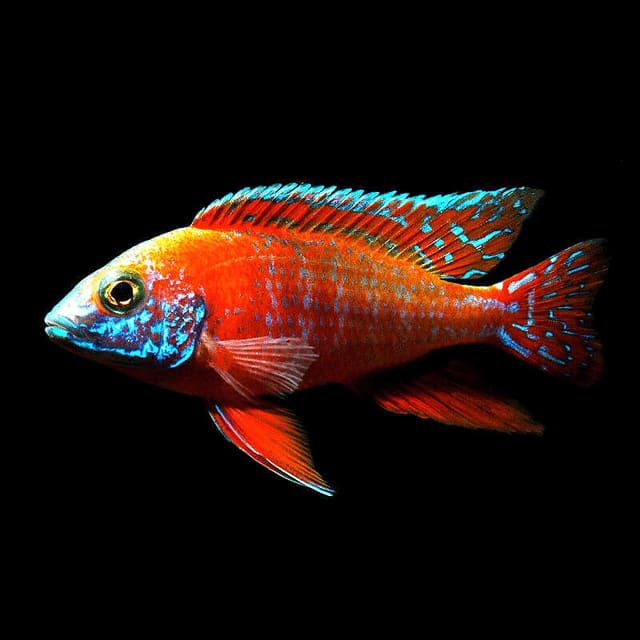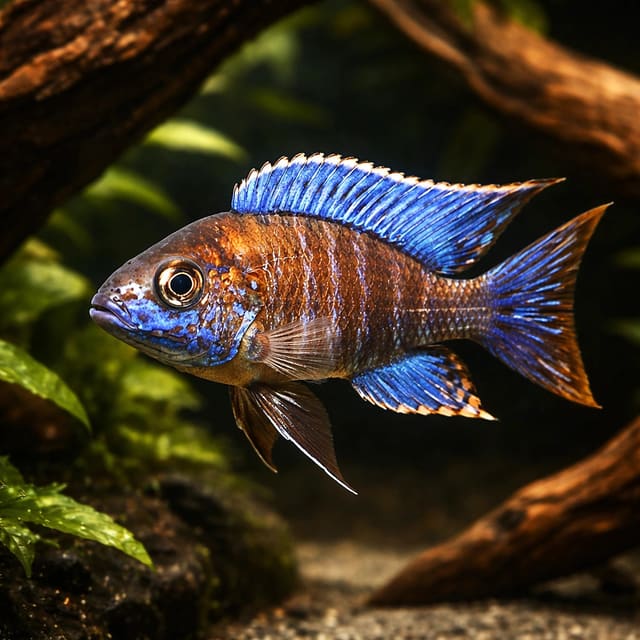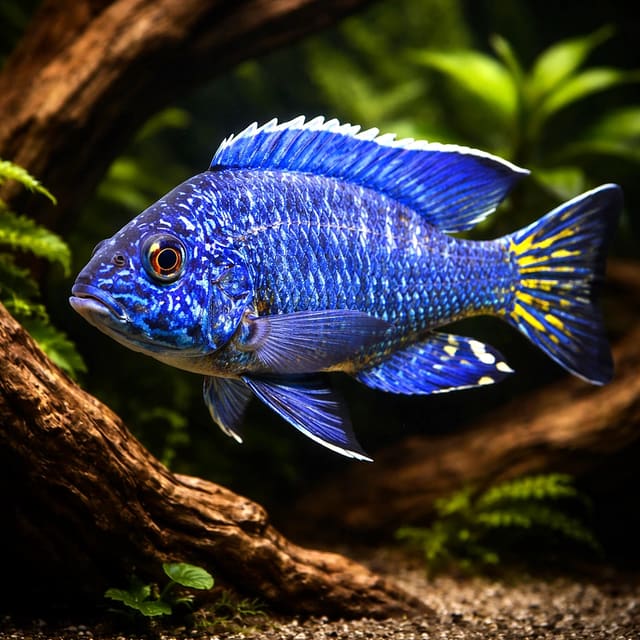
Stuargrandi Peacock Cichlid (Aulonocara sp.)
23–27°C · pH 8–8.6
£16.99

A colorful Malawi peacock cichlid with vibrant display colors and active behavior, ideal for hard, alkaline African cichlid aquariums. Moderate care, semi-aggressive. 24-26C, pH 7.5-8.5.
Adult size is the maximum length this species reaches at full maturity (scientific sources). The livestock you receive will be younger and smaller — pick a size above for the actual shipping size. Product-photo provenance and any image-specific limitations are stated on the listing.
Aulonocara eureca
Save when buying multiple fish. Each quantity is one fish; sex and pair formation are not guaranteed unless the selected variant explicitly states them.
Confirm your email, then we’ll send an availability message for this exact item if it returns within 180 days.
This request is only for this product—no newsletter or other promotions. A mail-provider retry may very rarely duplicate the same availability message. Unconfirmed addresses are removed after 48 hours. See our privacy policy.
A colorful Malawi peacock cichlid with vibrant display colors and active behavior, ideal for hard, alkaline African cichlid aquariums. Moderate care, semi-aggressive. 24-26C, pH 7.5-8.5.
Adult size is the maximum length this species reaches at full maturity (scientific sources). The livestock you receive will be younger and smaller — pick a size above for the actual shipping size. Product-photo provenance and any image-specific limitations are stated on the listing.
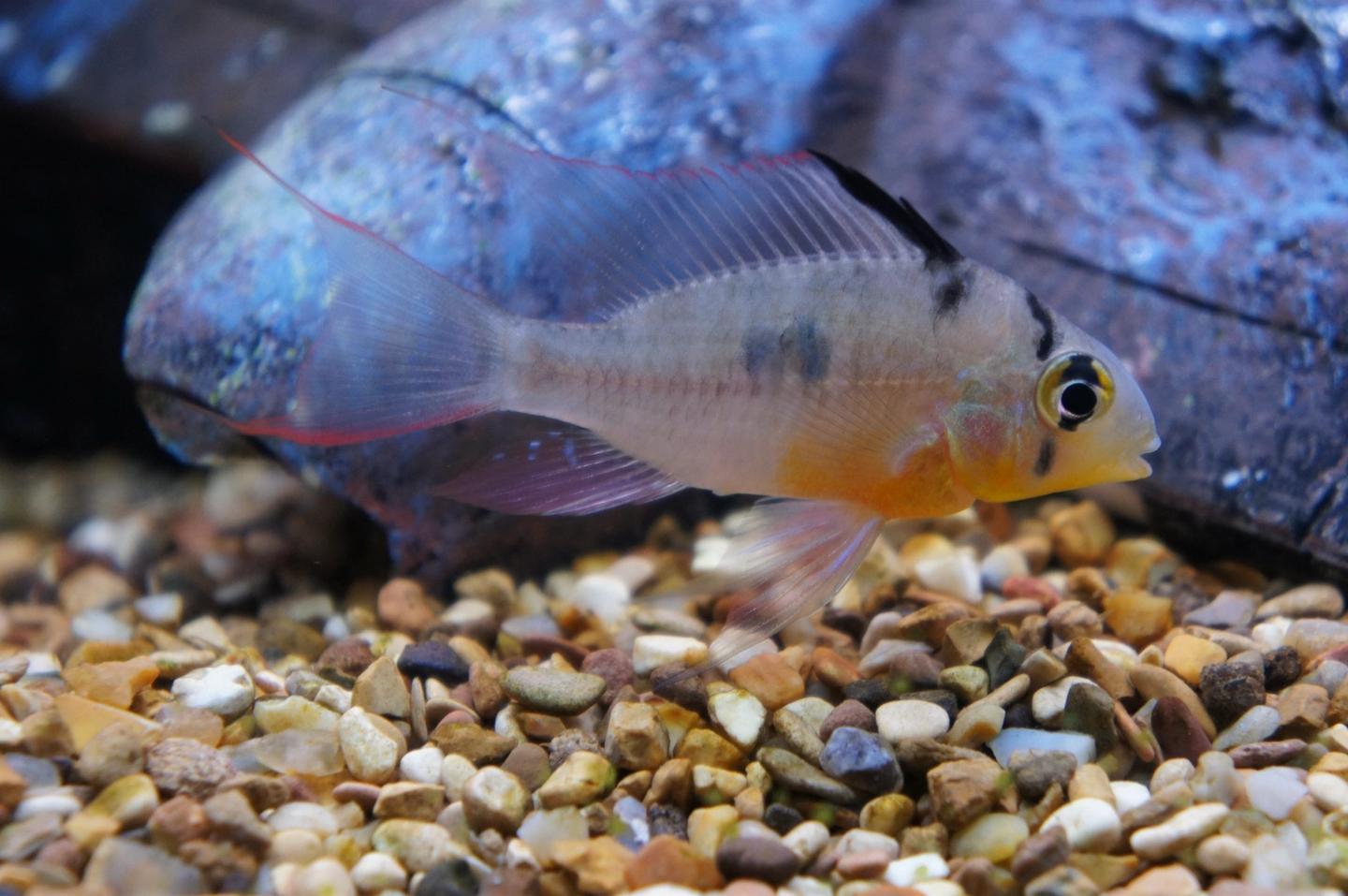
Cichlids are a family of roughly 1,800 accepted species, not one care type. Before buying, identify the exact species and source, then compare adult measurement, usable tank dimensions, social system, territory, tested water, diet and an exit plan. No family-wide minimum tank, water range or tank-mate list is safe.
Maintain these water conditions for optimal health and vibrant colors
The Eureca Peacock, Aulonocara eureca, is one of the more subtly beautiful of Lake Malawi's peacock cichlids, dominant males glowing with metallic blues and coppery highlights over a slate body. Peacocks take their name from the way that iridescence shifts and catches the light as the fish turns, and they represent the gentler, sand-sifting side of the Malawi hobby, less relentlessly combative than the rock-grazing mbuna but still assertive African cichlids that demand hard, alkaline water and real space. Reaching around 8 cm, the Eureca is a comfortable size for a home Malawi community yet still commands attention as a centrepiece. Intelligent, colourful and genuinely interactive, it learns its keeper's routine and comes to the glass to feed. Supplied in fine condition, it delivers the shimmering colour and confident personality that have made Aulonocara one of the most collected cichlid groups in the hobby.
Males reach around 8 cm and develop the full peacock finery, with an iridescent blue face and body washed with copper, gold or violet depending on the light, long flowing fins edged in white, and a row of yellow egg-spots on the anal fin used in courtship. Females and juveniles stay an understated grey-brown, plain camouflage suited to a mouthbrooder that must protect eggs in her mouth. That drab-female pattern is completely normal and not a sign of poor stock; only mature, dominant males carry the headline colour, and it builds steadily as a fish matures and secures a territory. Look closely at the face and you will see the enlarged sensory pores of the lateral-line system, the tool peacocks use in the wild to detect tiny invertebrates moving beneath the sand. A settled, confident display male in a well-run tank is one of the most striking fish in freshwater keeping.
Give a group a tank of 250 litres or more, combining a soft, sandy base several centimetres deep for natural sifting with a rockscape of caves, overhangs and crevices for territory and refuge. Hard, alkaline, mineral-rich water is essential, so aim for pH 7.5 to 8.5, 10-30 dGH and a steady 24-26°C to match the famously stable chemistry of Lake Malawi; where tap water is soft, a substrate of aragonite sand or a little crushed coral in the filter will buffer the hardness upward and hold it there. Provide powerful, well-oxygenated filtration with turnover to match the heavy waste these hungry cichlids produce, and carry out regular water changes of a quarter to a third each week to keep nitrate low. Bed the rockwork directly on the aquarium glass rather than on the sand, so that digging fish cannot undermine and collapse a stack. A darker substrate and subdued lighting settle any nervousness and coax out the fullest colour in dominant males.
Peacocks are semi-aggressive and cross-breed with dismaying ease: keep only one male per Aulonocara type, because rival males fight and different peacock species interbreed freely, producing worthless, muddy-coloured hybrids that should never re-enter the hobby. Their invertebrate-based gut also makes them prone to the digestive disorder known as 'Malawi bloat' if overfed on rich, protein-heavy foods, so feed measured amounts of an appropriate cichlid diet and never leave uneaten food to foul the tank.
The Eureca is an active, engaging fish that patrols the open sand and interacts readily with its keeper, quickly learning to expect food at the front of the glass. Males hold and display around a chosen territory, flaring and quivering to court passing females and to warn off rivals, but they are far less warlike than mbuna, so a well-structured tank stocked with one male and several females stays largely peaceful. Subdominant males often suppress their colour and slip quietly among the females until they can claim a territory of their own, which is why a spare, plainer 'female' sometimes colours up dramatically after a dominant fish is moved. Females and juveniles shoal loosely across the open water. Provide enough broken sight lines and separate territories and the group settles into a calm, colourful daily routine rather than constant squabbling.
| Great tank mates | Best avoided |
|---|---|
| Other Aulonocara peacocks, one male per type | Aggressive mbuna that out-compete and out-eat peacocks |
| Peaceful Malawi haps such as Copadichromis | Small community fish that become prey |
| Placidochromis species (e.g. star sapphire) | Soft, acidic-water species |
| Robust Synodontis catfish as a clean-up crew | Long-finned or slow-moving fish |
| Non-competing open-water haplochromines | Small shrimp and other invertebrates |
Feed the Eureca as the sand-sifting invertebrate hunter it is in the wild, where it detects and snaps up small crustaceans and insect larvae hidden in the substrate. A quality sinking pellet or flake formulated specifically for Aulonocara makes the best staple, supplemented with frozen mysis, brine shrimp and daphnia for variety and colour. Avoid protein-loaded warm-blooded meats such as beef heart, and go easy on bloodworm, both of which are strongly linked to the bloat that plagues Malawi cichlids. A spirulina or vegetable element helps round out the diet and supports steady digestion. Feed small portions once or twice a day that the group clears within a couple of minutes, and resist the temptation to overfeed a species this prone to digestive trouble; lean, regular feeding keeps both the fish and the water in far better shape.
Like other Malawi cichlids, the Eureca is a maternal mouthbrooder and will spawn willingly once a harem has settled and a male has secured a territory. The male displays intensely over a chosen spot on the sand; the female lays a small clutch of eggs, immediately takes them into her mouth, and is fertilised as she mouths at the male's egg-spots. She then broods the developing eggs and fry in her mouth for around three weeks, refusing food and sheltering among the rocks, before releasing a small group of fully formed, independent fry. To raise a brood, a heavily gravid female can be moved gently to her own well-planted tank before release, or the fry given dense rockwork and cover to survive alongside the adults. The young take crushed flake and newly hatched brine shrimp. Keeping just one male per peacock type is the single best safeguard against both territorial fighting and accidental hybrids.
Run the tank with a single Eureca male and several females, and keep any other peacocks to one male of each type. It is the simplest way to avoid territorial fighting, and it prevents the muddy, valueless hybrids that inevitably result when two Aulonocara males can cross. If a plain 'female' suddenly starts colouring up, you likely have a second male, and one of them will need to move on.
Every Eureca Peacock Cichlid is hand-selected and quarantined before sale, then packed in oxygenated bags with insulation and heat packs when needed and sent by tracked, live-animal courier. Your order is covered by our Live Arrival Guarantee, so it reaches you safely anywhere in the UK.
No reviews for this item yet. Bought one? Honest reviews only, good or bad.
What customers say about ordering from us
I have a small group of long finned mountain minnows. So was delighted to be able to order ten of this variety to increase the genetics in my tank . The ones I recieved are healthy but it’s to early to give a verdict on wether they are of a long finned type since they are small currently.
Gordon Walker · 23 Sept 2026
100% success travel and "installation". Pleased with quality of purchase. The Siamese fighter a bit "shy" so have not yet seen him at his best yet but looking good. Happy customer. GG
George E Garratt · 21 Sept 2026
Reviews of our shop, collected by Judge.me, an independent third-party review collector. Newest first.