Moderate
Acei Cichlid (Pseudotropheus sp. “acei”)
24–26°C · pH 7.5–8.5 · 300L
£7.99

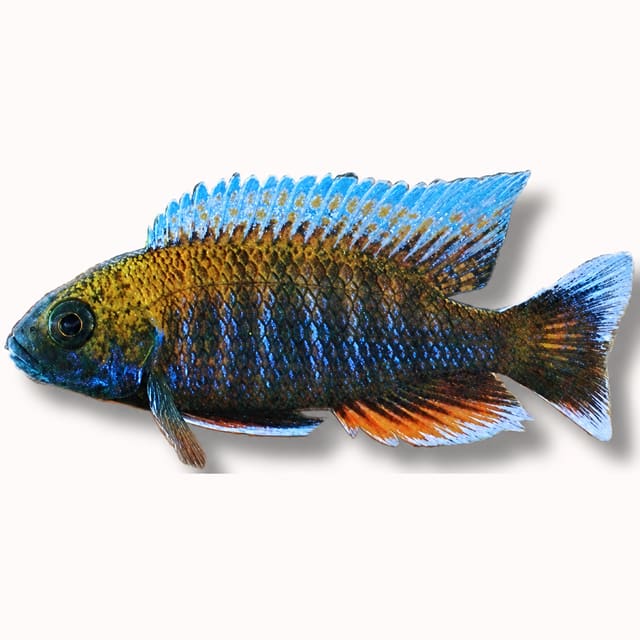
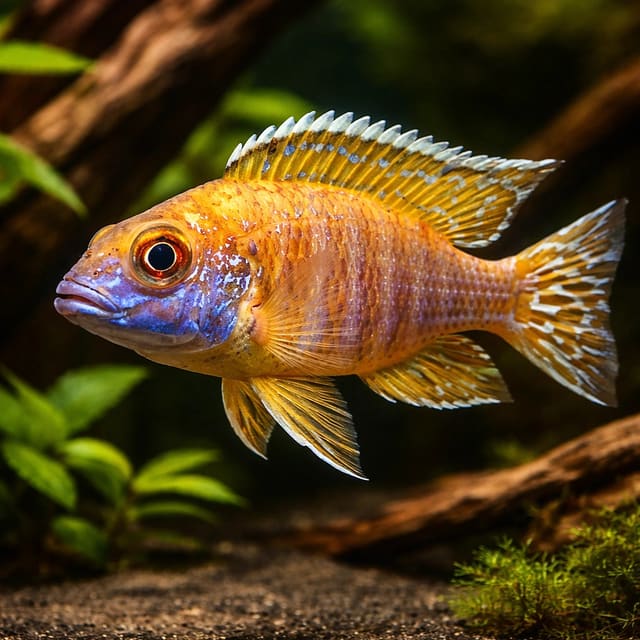
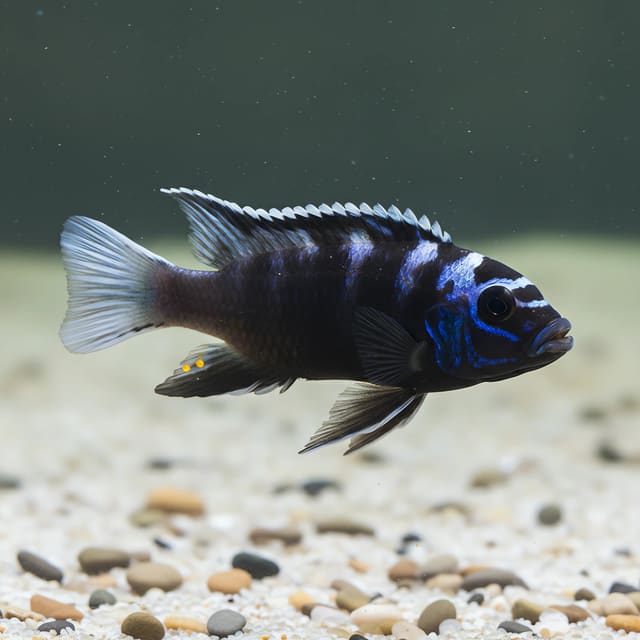
The Blue orchid Peacock Cichlid (Aulonocara kandeense) is a Lake Malawi haplochromine cichlid that reaches 12 cm. It suits an intermediate keeper planning a Malawi cichlid community at 24–27°C and pH 8.0–8.5. Sold individually in sizes from 4–5 cm to 5–6 cm.
Adult size is the maximum length this species reaches at full maturity (scientific sources). The livestock you receive will be younger and smaller — pick a size above for the actual shipping size. Product-photo provenance and any image-specific limitations are stated on the listing.
Aulonocara kandeense
Save when buying multiple fish. Each quantity is one fish; sex and pair formation are not guaranteed unless the selected variant explicitly states them.
The Blue orchid Peacock Cichlid (Aulonocara kandeense) is a Lake Malawi haplochromine cichlid that reaches 12 cm. It suits an intermediate keeper planning a Malawi cichlid community at 24–27°C and pH 8.0–8.5. Sold individually in sizes from 4–5 cm to 5–6 cm.
Adult size is the maximum length this species reaches at full maturity (scientific sources). The livestock you receive will be younger and smaller — pick a size above for the actual shipping size. Product-photo provenance and any image-specific limitations are stated on the listing.
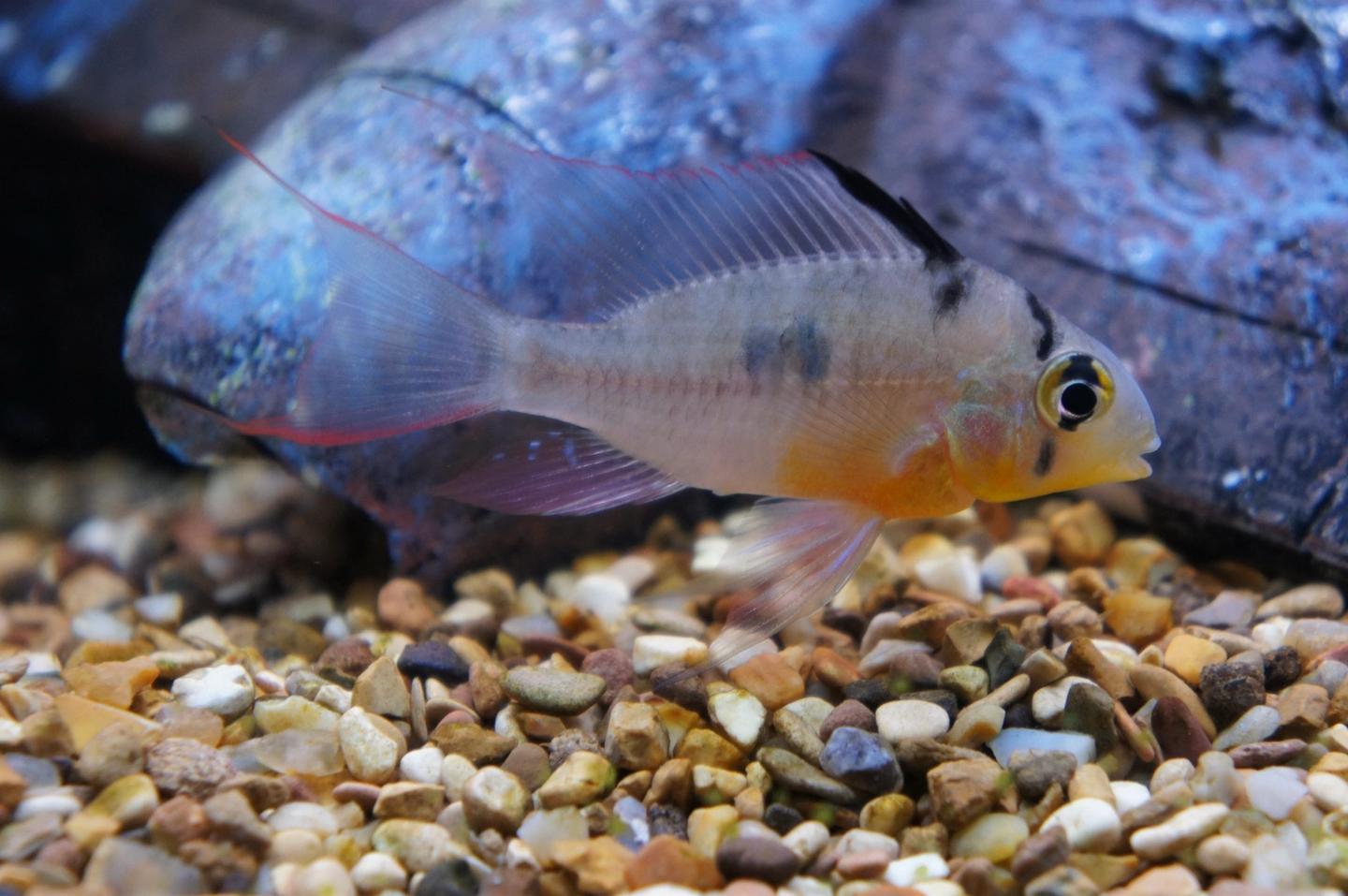
Cichlids are a family of roughly 1,800 accepted species, not one care type. Before buying, identify the exact species and source, then compare adult measurement, usable tank dimensions, social system, territory, tested water, diet and an exit plan. No family-wide minimum tank, water range or tank-mate list is safe.
Maintain these water conditions for optimal health and vibrant colors
The Blue orchid Peacock Cichlid (Aulonocara kandeense) is a haplochromine cichlid in the family Cichlidae. The Aulonocara genus is endemic to Lake Malawi in East Africa, and its members are widely known as peacock cichlids. Plan for an adult length of 12 cm. This is an intermediate-care choice for a keeper prepared to manage hard alkaline water, substantial filtration and the aggression found within a Malawi cichlid community.
Keep the aquarium at 24–27°C, pH 8.0–8.5 and 12–18°dH. Hold carbonate hardness at 10–15°dKH, the range OATA gives for Malawi cichlids. It also advises zero ammonia, zero nitrite and nitrate no more than 20 mg per litre above the normal tap-water level.
Malawi cichlids are colourful but aggressive fish. OATA says they can be kept in groups of at least 15, while small groups will often fight. That makes the whole community plan—aquarium capacity, filtration, sex balance, territorial structure and the order in which fish are introduced—more important than choosing companions by colour alone.
| Suits | Not suited to |
|---|---|
| An intermediate keeper who tests hard alkaline water | A peaceful general tropical community |
| A mature, filtered Malawi aquarium | An unfiltered or newly established aquarium |
| A carefully assessed group of Malawi cichlids | A casually assembled small cichlid group |
| A keeper able to monitor aggression | A setup where chasing and injuries cannot be managed |
One purchase supplies one fish. Use the live size selector to choose either 4–5 cm or 5–6 cm. The size you select is the size supplied, not the adult size. Both sizes are the length supplied, so build the aquarium and community around the 12 cm adult length rather than the fish’s arrival size.
A smaller fish does not justify a smaller permanent aquarium. It will still enter an aggressive Malawi community, add waste to the biological filter and need suitable space as it grows. Check the complete adult stocking plan before choosing either dispatch size, including fish already present and any additions planned for later.
Sex is guaranteed only when the selected option explicitly states male or female. This Blue orchid Peacock Cichlid listing has no sex-guaranteed option. Do not use size, colour or a gallery scene to predict the sex of the fish supplied. The genus is strongly sexually dichromic, but OATA notes that many Malawi cichlids show clear sex differences only as adults.
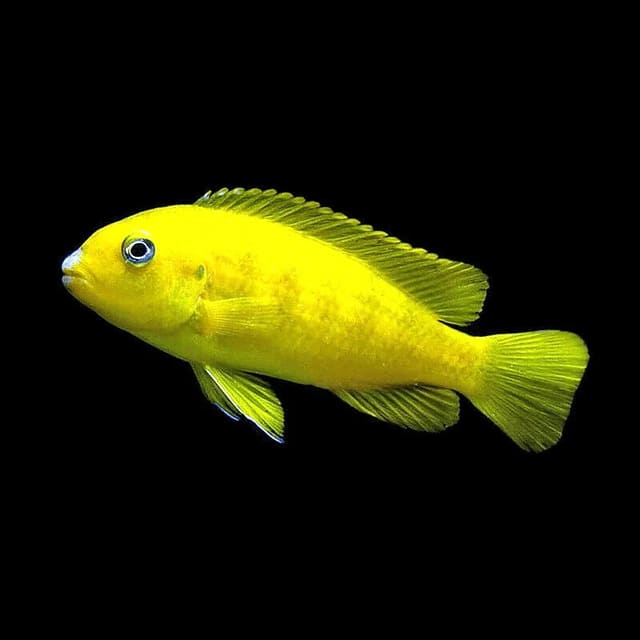
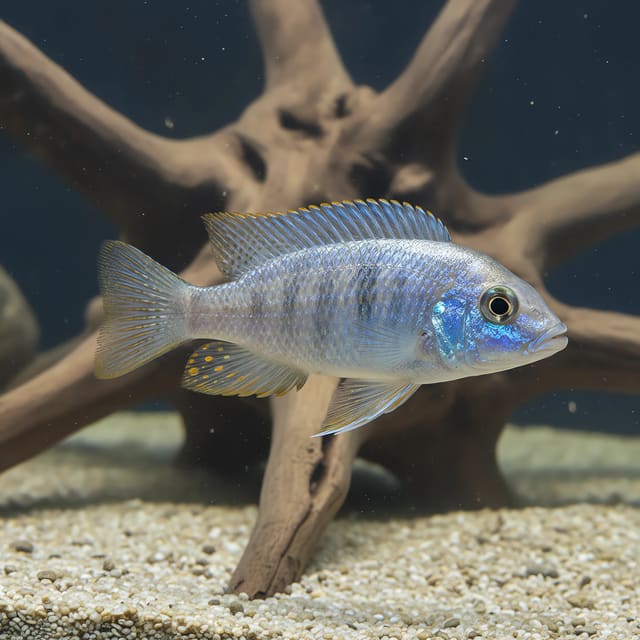
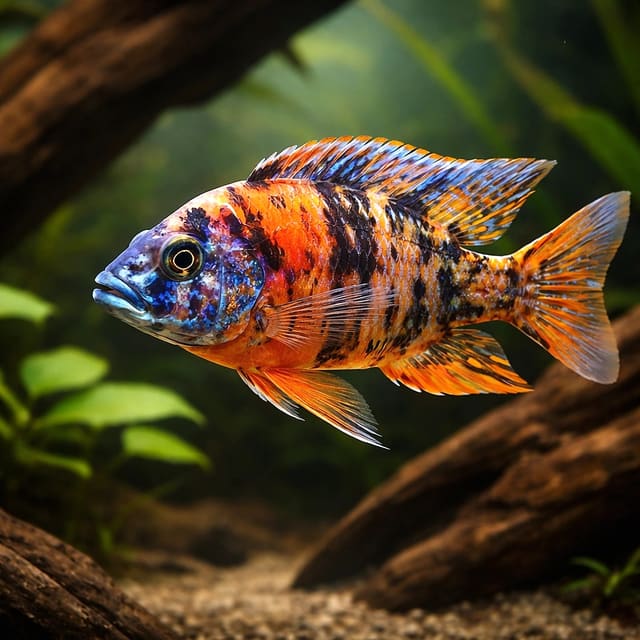
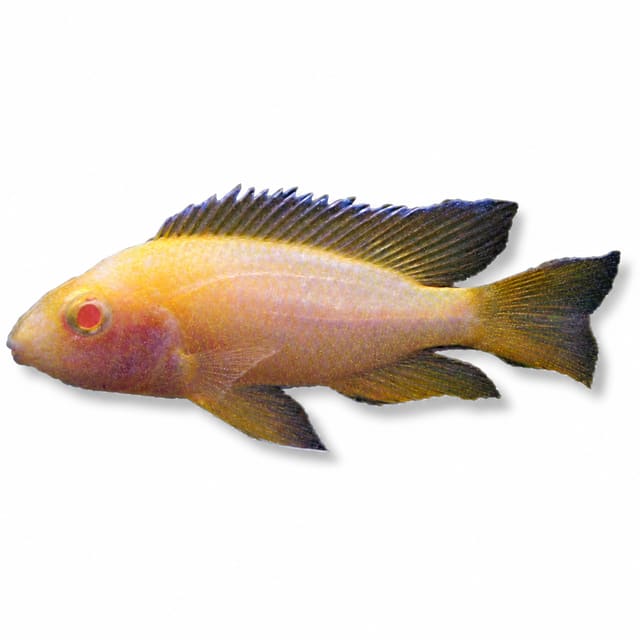
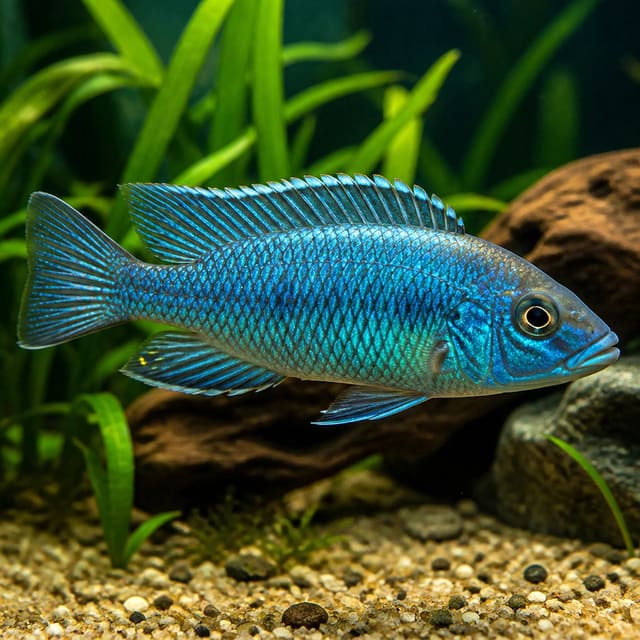
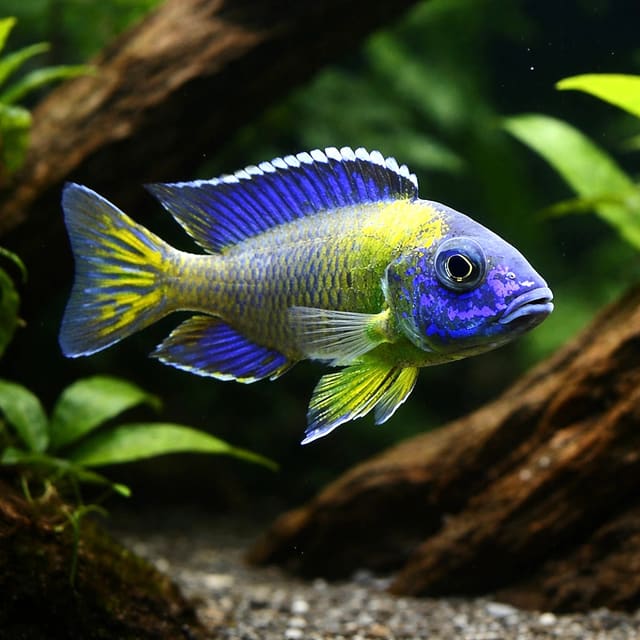
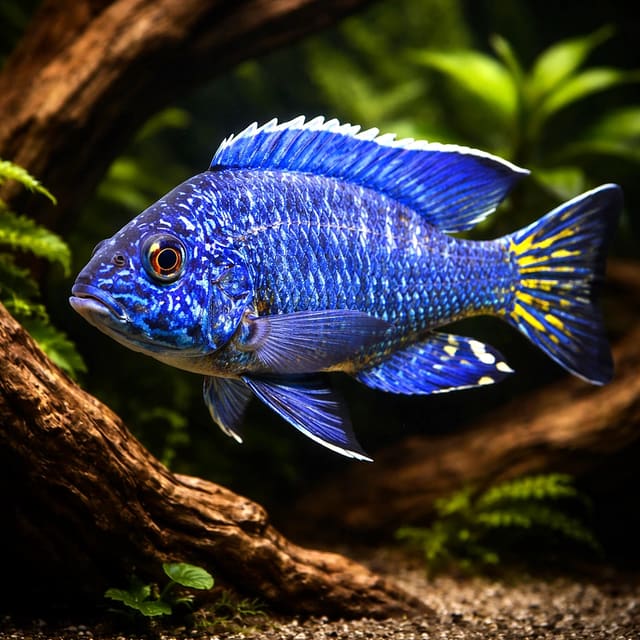
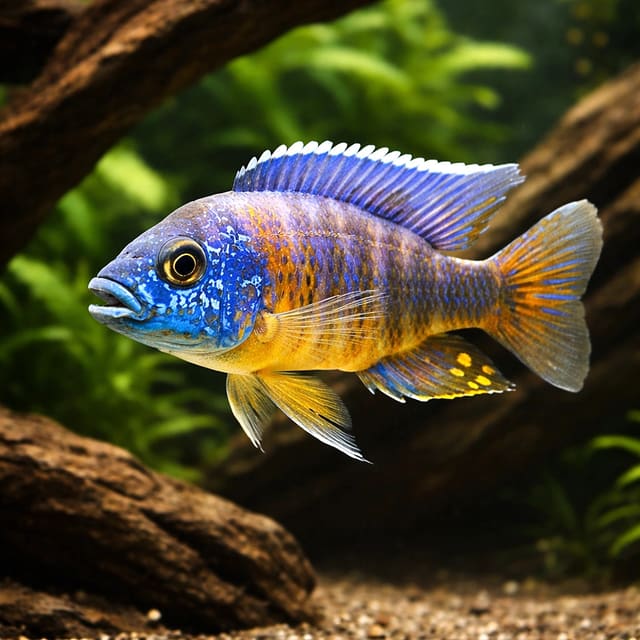
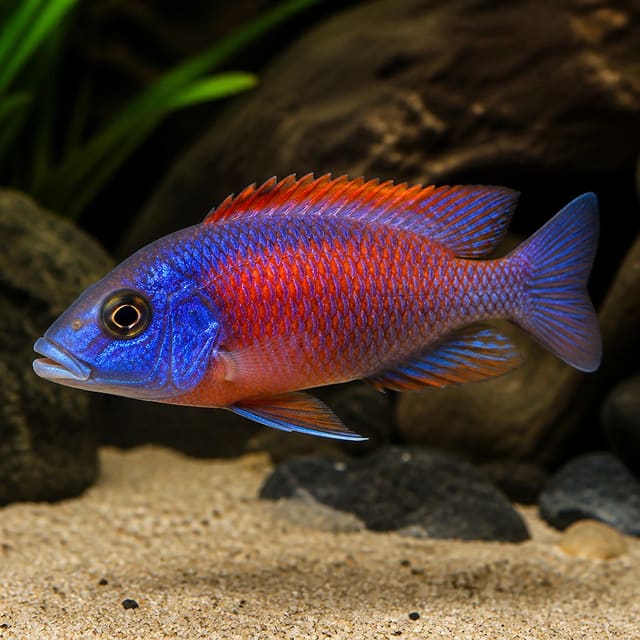
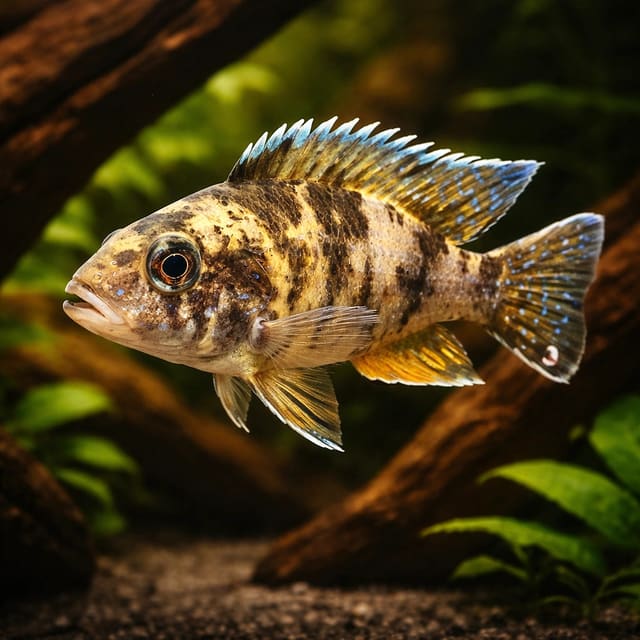
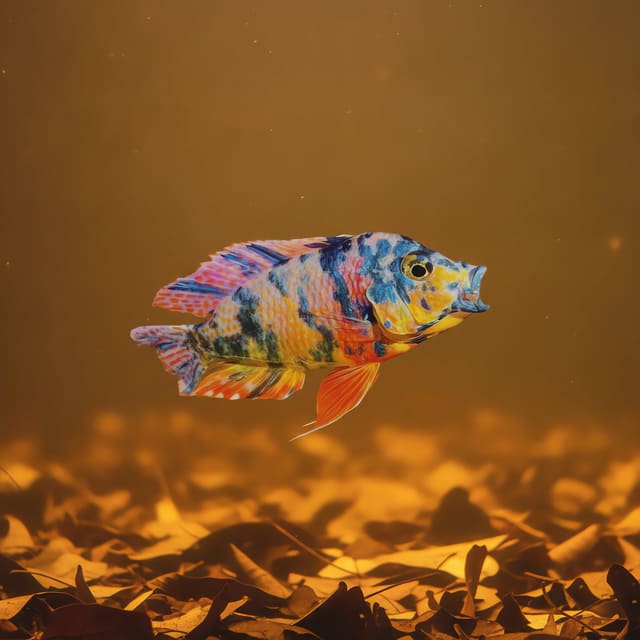
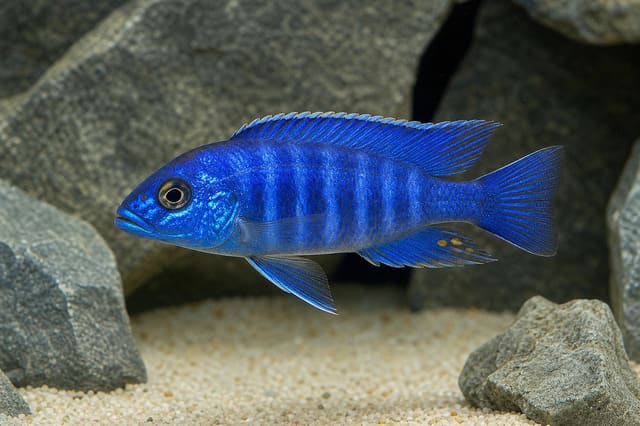
The gallery images are representative, based on reference photographs of this species, so colours can look slightly different from the live animal. Use those scenes to understand the illustrated shape, markings and aquarium presentation, not to predict the exact colour, sex or appearance of an individual fish.
Plan a reasonable Malawi community around an aquarium of at least 200 litres. OATA gives that figure for the group and recommends buying as large an aquarium as is practical because a larger water volume makes temperature and water quality more stable. Do not keep adding fish until a 200-litre aquarium looks full; stock for the adult community and the filter’s capacity.
OATA says Malawi cichlids can be kept in groups of at least 15 and slightly overcrowded to spread aggression, but that approach requires an oversized filter, strong aeration and a deliberate stocking assessment. Do not apply the number without considering adult fish size, aquarium footprint, filter capacity and the behaviour of every resident. Small groups often fight, while careless overstocking can overwhelm the filter.
Where possible, OATA recommends keeping more females than males of each species so one female is not repeatedly harassed. This offer does not guarantee sex, so do not build a precise sex ratio around an unsexed purchase. Instead, watch how the established group behaves and be ready to revise the wider plan if persistent pursuit develops.
If one answer is no, resolve that part of the plan before adding the fish. This approach protects the biological filter and gives the community a better chance of settling without one individual taking all the aggression.
Use a mature aquarium of at least 200 litres for a reasonable Malawi community, then assess whether the planned adult population needs more space. A larger aquarium offers more stable temperature and water quality and gives you more scope to separate territorial areas. Aquarium footprint, filtration and stocking all matter; volume alone does not make an aggressive combination safe.
Fit an oversized filter and provide strong aeration. Malawi communities place a heavy demand on biological filtration, particularly when the population is arranged to spread aggression. The filter must support the total adult waste load, not merely the number of small fish present on the first day.
Before livestock arrives, use our guide to preparing and maturing a first aquarium. A mature biological filter contains bacteria that process toxic ammonia into nitrite and then nitrate. Adding many fish before that bacterial population can respond risks new tank syndrome, illness and death.
Do not balance unstable rocks where digging could undermine them. When planning a wider display, browse the African cichlid collection for comparison, then assess each proposed fish against the same water, behaviour and adult-space requirements. Buy only fish that pass that assessment, whichever collection they appear in.
Review the aquarium as an adult community before adding another small fish. Confirm that the filter flow remains strong, aeration reaches the whole aquarium and maintenance access has not been blocked by décor. Count every planned resident, not only the fish already present, and leave room for the biological filter to respond gradually as feeding and waste increase.
After each stocking change, compare weekly test results with the earlier baseline. Rising nitrate, reduced filter flow or repeated aggression means the plan needs attention before another fish is introduced. A stable reading and calm-looking community do not remove the need to keep testing.
Maintain 24–27°C, pH 8.0–8.5, general hardness of 12–18°dH and carbonate hardness of 10–15°dKH. Keep ammonia at zero mg per litre and nitrite at zero mg per litre. Nitrate should not exceed 20 mg per litre above the level normally present in your tap water.
Measure the aquarium rather than relying on how clear the water looks. Clear water can still contain ammonia or nitrite, and either result means the biological system needs immediate attention. Use our water chemistry guide to understand the values, then enter your measured results into the water matcher to compare them with the ranges above.
The RSPCA explains why biological filtration is vital: fish release toxic ammonia, bacteria convert it to nitrite, and further bacteria convert nitrite to the safer nitrate. A filter therefore needs time, oxygen and careful maintenance to preserve its bacterial population.
| Result | Action |
|---|---|
| Ammonia or nitrite above zero | Pause further additions, check the filter and feeding, and protect water quality with appropriate maintenance. |
| Rising nitrate | Review water-change frequency, waste removal and feeding before nitrate passes 20 mg per litre above your tap-water level. |
| Temperature outside 24–27°C | Correct it steadily and check the heater or surrounding conditions. |
| pH or hardness drifting | Check source water, buffering substrate and replacement-water preparation. |
Avoid chasing numbers with abrupt changes. Prepare replacement water consistently, test after significant adjustments and record results so gradual movement is visible before it becomes a welfare problem.
A single acceptable result does not outweigh a problem elsewhere. For example, water at 25°C is inside the 24–27°C range, but ammonia above zero still requires action. Equally, zero ammonia does not make a falling pH or weakening hardness irrelevant. Compare the complete set of results with the fish’s breathing, swimming and feeding response.
Use the same test method and a consistent schedule so trends are easier to recognise. Record the date, results, water change and any stocking or feeding change. If a value starts moving across several tests, inspect source water, replacement-water preparation, buffering and filter operation before the drift reaches the edge of the range.
At least once every week, change 25% of the aquarium water. Use a siphon to remove solid waste from the substrate while taking out the old water.
Treat replacement tap water with conditioner before it enters the aquarium so chlorine or chloramine cannot harm fish or the filter bacteria. Match the replacement water closely enough to avoid abrupt temperature and chemistry changes. Recheck the aquarium after maintenance whenever a result, fish response or equipment issue gives you cause for concern.
This method reduces the loss of beneficial bacteria. Rinse the media lightly rather than scrubbing it clean, so the filter keeps as many beneficial bacteria as possible.
If waste accumulates quickly or nitrate rises too far between changes, review the population, feeding and filter performance rather than merely hiding the result with occasional large interventions. Stable husbandry comes from a predictable routine supported by measurements.
If the usual maintenance day is missed, test the aquarium before deciding what to do next. Complete the normal 25% partial change, remove accumulated solid waste and inspect filter flow. Do not compensate by cleaning the filter harder; rinse the media lightly in removed aquarium water as usual so the beneficial bacteria are kept.
After maintenance, confirm that aeration and filtration have resumed and observe the fish. Repeat water tests on the normal schedule, or sooner when behaviour or the first results give cause for concern. The goal is to restore the measured routine without creating another sudden change.
Feed this sand-sifting omnivore a good cichlid pellet as its staple, with frozen brine shrimp or krill used for variety. It prefers small invertebrate foods. Choose pieces the fish can take readily and distribute them so one dominant resident cannot control the entire meal.
Feed twice a day and offer only what the fish can finish within a few minutes. OATA applies that portion and schedule to Malawi cichlids while noting that dietary requirements differ across the group. Remove uneaten food instead of adding more; decomposing food releases waste and increases the load on the biological filter.
| What you observe | What to do |
|---|---|
| Food remains after a few minutes | Remove it and reduce the next portion. |
| One fish takes most of the food | Spread the next meal across more than one feeding point. |
| Interest in food falls | Test water quality and check for other changes in behaviour or appearance. |
| Nitrate rises faster than usual | Review portions, leftovers, stocking and filter performance. |
A fish that begs is not necessarily underfed. Base portions on what the community actually consumes, body condition and water-test trends. Two measured meals are safer than repeatedly adding food whenever fish approach the glass.
Frozen foods add variety but do not need to dominate every meal. Keep preparation clean, portion only what will be used and avoid allowing thawed food or liquid to create unnecessary waste. Consistency matters more than using a long list of foods.
Start with a small measured amount and watch the whole community for a few minutes. If food reaches the substrate uneaten, remove it and reduce the next meal. If one fish blocks others from feeding, keep the total portion controlled but divide it between separate points so access is spread more evenly.
Use the weekly nitrate trend as a second check on portion control. A faster rise after feeding changes may indicate excess food, more waste or increased stocking pressure. Return to measured meals and inspect the filter rather than assuming the fish need additional food because they continue to approach you.
Prepare the mature aquarium before the parcel arrives. Confirm 24–27°C, pH 8.0–8.5, zero ammonia and zero nitrite, then check that filtration and aeration are operating normally.
The Tropical Fish Co delivery and Live Arrival Guarantee policy explains the packing, reception and claim requirements. Fish are hand-bagged in pure oxygen and placed in an insulated poly box, with a heat pack when the weather calls for it. For a Live Arrival Guarantee claim, contact us the same day with the order number and continuous unboxing video.
Add fish slowly because the beneficial bacterial population must grow when fish numbers and feeding increase. Adding too many fish too quickly can cause new tank syndrome, allowing ammonia and nitrite to rise. It is best to add Malawi cichlids in groups so no single newcomer receives unnecessary aggression while settling, but add them only as quickly as the biological filter can handle the increase.
Once the fish is released, compare its behaviour with the rest of the community and with the water-test results. A newcomer hiding while ammonia and nitrite remain zero calls for close observation; several fish breathing abnormally calls for an immediate check of water quality, filtration and aeration.
Keep the first meals measured even if the newcomer is slow to feed. Uneaten food can create an additional waste load while the filter is adapting. Record feeding response, aggression and test results each day so a gradual improvement or deterioration is clear.
Observe the fish every day so changes are noticed against its normal behaviour. Healthy fish should have clear bright eyes, undamaged fins, intact scales, no ulcerations or bumps, appropriate swimming and a normal interest in food. Use the feeding periods to inspect each resident closely without adding extra meals.
| Warning sign | First action |
|---|---|
| Hanging at the surface, sitting on the bottom or erratic swimming | Test water quality and check aeration and filter operation. |
| Faster or slower gill movement | Check ammonia, nitrite, temperature and oxygenation promptly. |
| Darker or paler colour than normal | Review water results and social pressure. |
| More aggression or hiding | Identify the pursuer, inspect for injury and reassess the community arrangement. |
| White spots, fluffy growths, missing scales or damaged fins | Test the water and seek help before choosing any treatment. |
| Reduced feeding or changing body condition | Check recent portions, competition, waste levels and other symptoms. |
Water testing is the first response because even small amounts of ammonia or nitrite can stress Malawi cichlids. Correct husbandry problems promptly, but do not add medication merely because a fish behaves differently for a short period. Different conditions can produce similar signs, and an unsuitable treatment can complicate the problem.
If a fish is injured, repeatedly targeted, breathing abnormally or refusing food, record the test results and contact us for further guidance. Include temperature, pH, ammonia, nitrite, nitrate, recent maintenance and any changes to stocking; those details make the next decision more useful than a symptom alone.
Keep this fish only with other Malawi cichlids or with an individually assessed species of Synodontis catfish. All Malawi cichlids are aggressive and should be mixed with caution, so assess every Malawi cichlid or Synodontis individually before adding it.
Avoid using this fish in a general peaceful tropical community or with fish outside those named groups. Compatibility depends on the complete aquarium rather than a shared preference for warm water. Adult size, aggression, aquarium capacity, water chemistry, filtration and the existing social structure all need to align.
| Candidate | Decision |
|---|---|
| Another Malawi cichlid | Proceed only after assessing adult stocking, aggression and the order of introduction. |
| A species of Synodontis | Proceed only when that particular species suits the aquarium and community. |
| Any other fish type | Avoid; keep this fish only with Malawi cichlids or suitable Synodontis. |
| An unidentified or mixed cichlid | Do not add it until its care and behavioural needs can be assessed. |
Do not treat a similar common name, a similar colour or a nearby product in our shop as proof of compatibility. Two fish can share Lake Malawi water requirements yet create an unsafe social combination. Conversely, a catfish commonly associated with African aquariums still needs a species-level assessment before it is added.
For a stocking assessment, contact us with the aquarium dimensions and volume, filter details, measured water values, and a list of every resident with approximate adult sizes. Include the number of each fish and any chasing already occurring. That information allows the whole community to be considered rather than judging a proposed companion in isolation.
Place the proposed fish beside the existing community on paper before making the decision. Compare adult space needs, water requirements, likely aggression, introduction order and the extra load placed on filtration. Reject the addition if its water needs fall outside the Malawi plan or if the aquarium cannot absorb its adult waste load.
If the candidate belongs to an allowed group but its individual needs are unclear, pause the addition. A shared group name is only the first screening step. The final decision must account for the exact candidate, every resident already present and the behaviour currently visible in the aquarium.
Expect aggression and plan how it will be distributed and monitored. OATA says Malawi cichlids can be kept in groups of at least 15 and slightly overcrowded to limit aggression, while small groups often fight. Add more fish only when the aquarium has the capacity, an oversized filter, strong aeration and a suitable mix of species.
Where possible, keep more females than males of each species so males do not repeatedly harass one female. Because this offer does not guarantee sex, assess what the community actually becomes rather than assuming the selected dispatch size or illustrated colour reveals a sex ratio.
Rearranging aquarium décor may reduce aggression by forcing fish to establish territories again. Use that intervention for a clear behavioural reason, and ensure every rock remains secure after the change. Repeated casual rearrangement can make observation harder because the social baseline keeps changing.
A stable Malawi display comes from balancing social pressure with water quality. Neither goal can be pursued at the expense of the other.
It reaches 12 cm, so plan its permanent aquarium and community around that adult length rather than the 4–5 cm or 5–6 cm dispatch size.
Plan an aquarium of at least 200 litres for a reasonable Malawi cichlid community, as OATA recommends; a larger aquarium keeps temperature and water quality more stable.
OATA says Malawi cichlids can be kept in groups of at least 15 and that small groups often fight; the full group needs an assessed aquarium, oversized filtration and strong aeration.
It is an intermediate-care fish because its hard alkaline water, substantial filtration and aggressive Malawi community require confident testing, maintenance and stocking decisions.
Feed it a good cichlid pellet as its staple, with frozen brine shrimp or krill for variety, twice daily in portions eaten within a few minutes.
Keep this fish at 24–27°C and pH 8.0–8.5; OATA's Malawi cichlid guidance adds general hardness of 12–18°dH and carbonate hardness of 10–15°dKH.
It is aggressive: all Malawi cichlids are, so mix it with caution and watch for chasing, damaged fins, hiding and one fish receiving repeated aggression.
Keep it only with carefully assessed Malawi cichlids or some individually suitable species of Synodontis catfish; avoid a general tropical community and do not assume every member of either named group is compatible.
It is hand-bagged in pure oxygen and packed in an insulated poly box, with a heat pack when the weather calls for it. Be there to receive it, film the sealed parcel being opened in one continuous take with the fish still in its bag, then float the bag for 20–30 minutes before release.
No reviews for this item yet. Bought one? Honest reviews only, good or bad.
What customers say about ordering from us
I have a small group of long finned mountain minnows. So was delighted to be able to order ten of this variety to increase the genetics in my tank . The ones I recieved are healthy but it’s to early to give a verdict on wether they are of a long finned type since they are small currently.
Gordon Walker · 23 Sept 2026
100% success travel and "installation". Pleased with quality of purchase. The Siamese fighter a bit "shy" so have not yet seen him at his best yet but looking good. Happy customer. GG
George E Garratt · 21 Sept 2026
Reviews of our shop, collected by Judge.me, an independent third-party review collector. Newest first.