Moderate
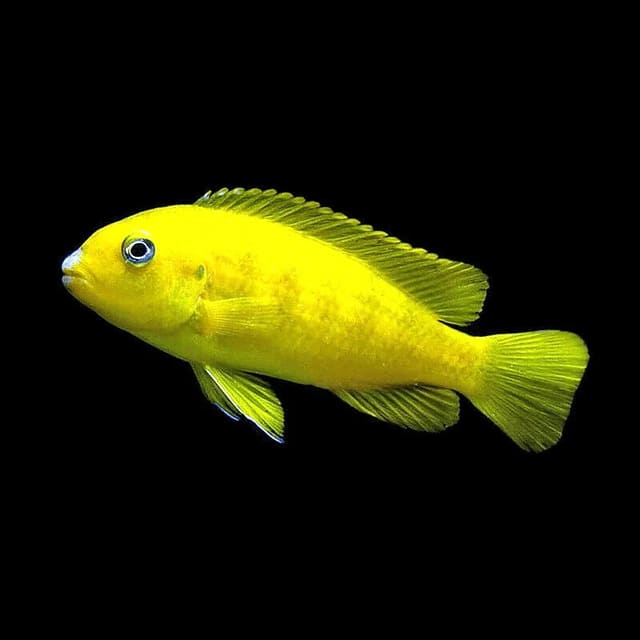
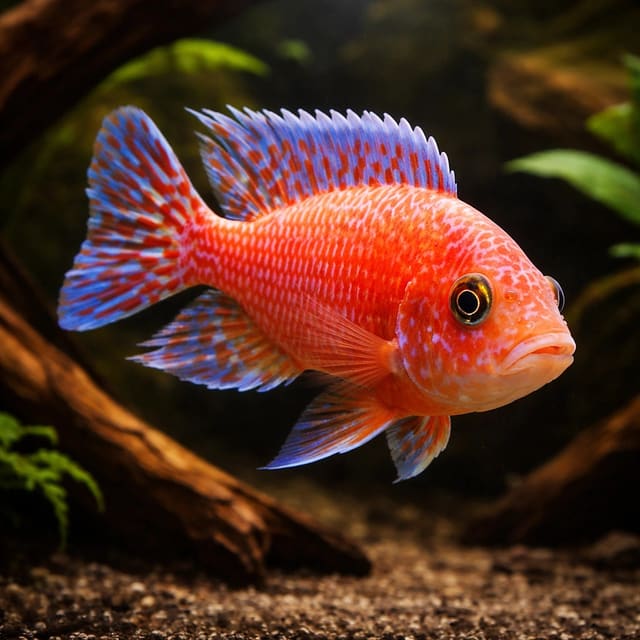
Acei Cichlid (Pseudotropheus sp. “acei”)
24–26°C · pH 7.5–8.5 · 300L
£7.99
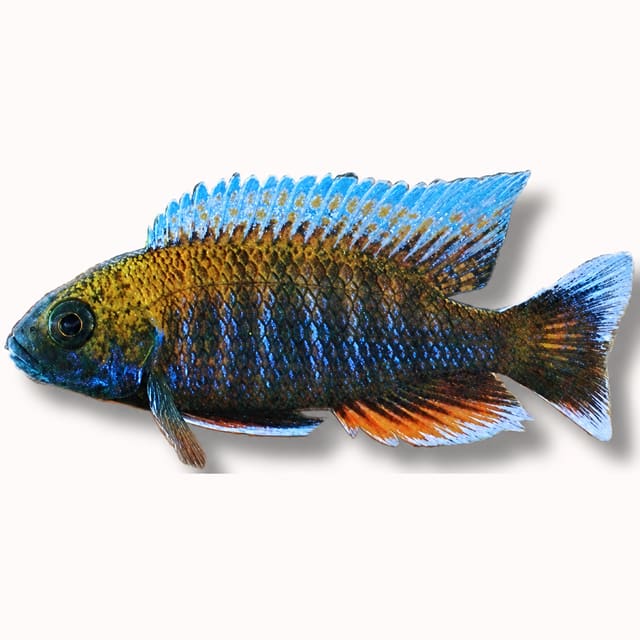
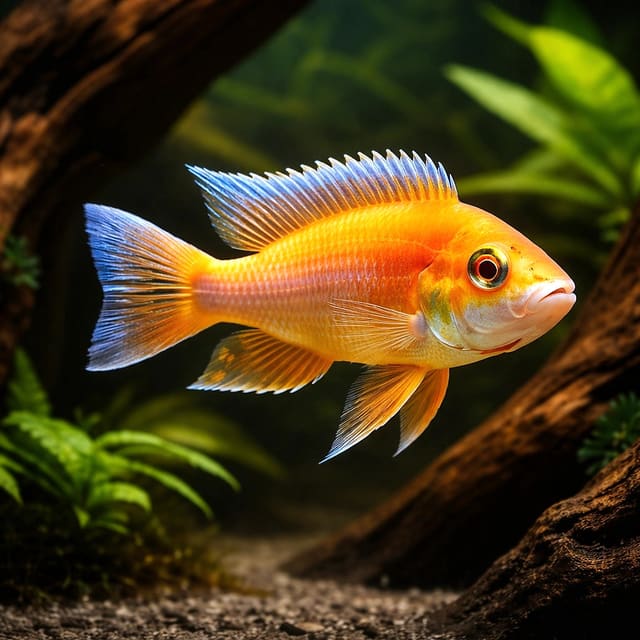
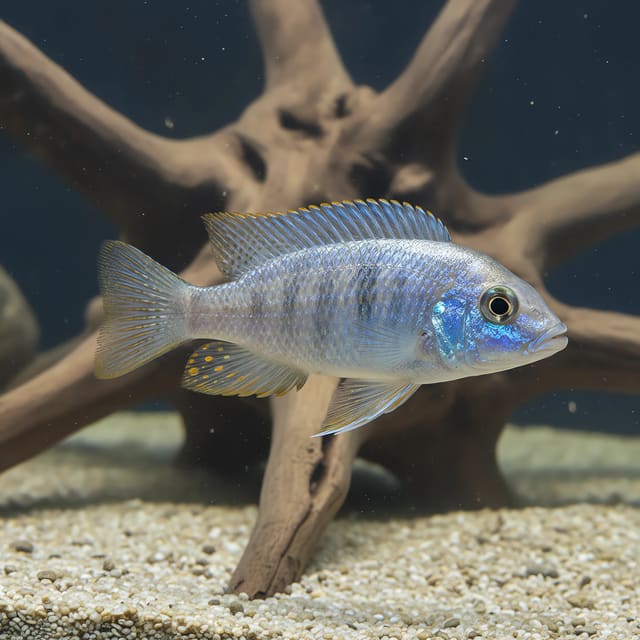
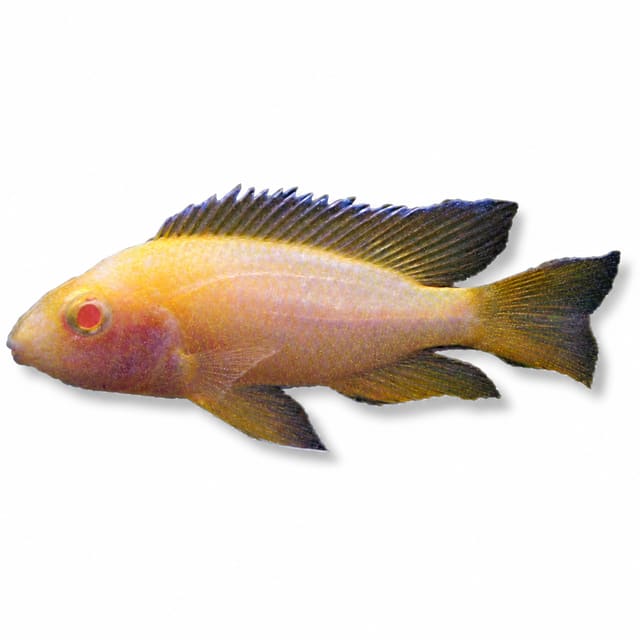
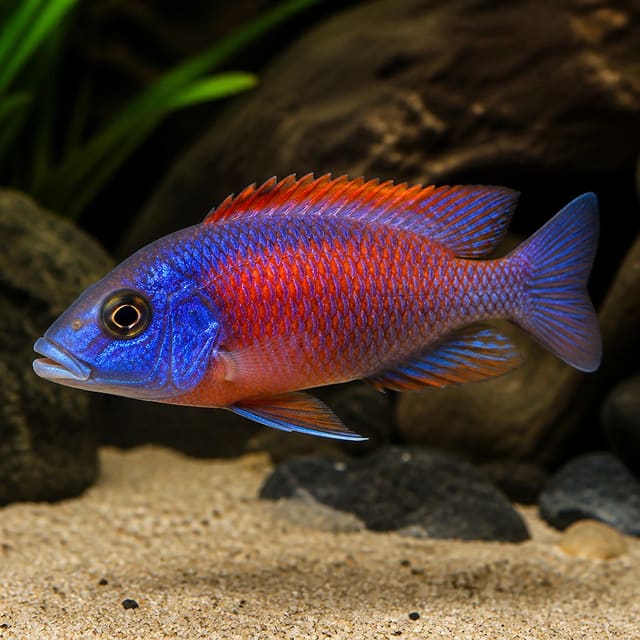
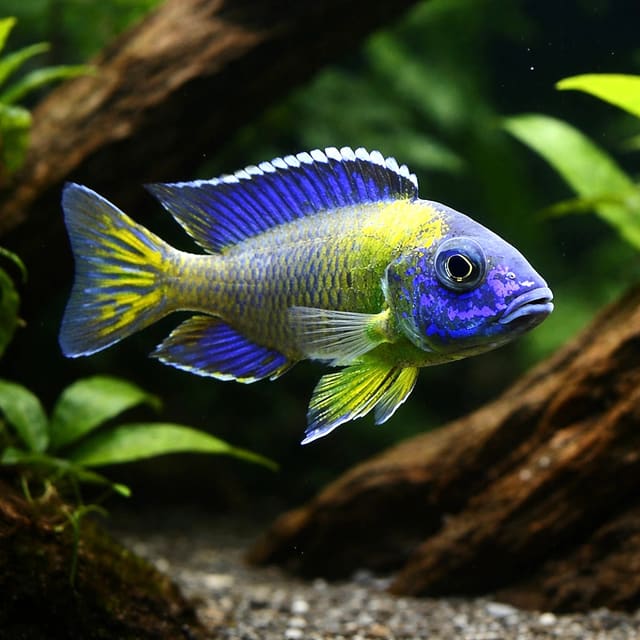
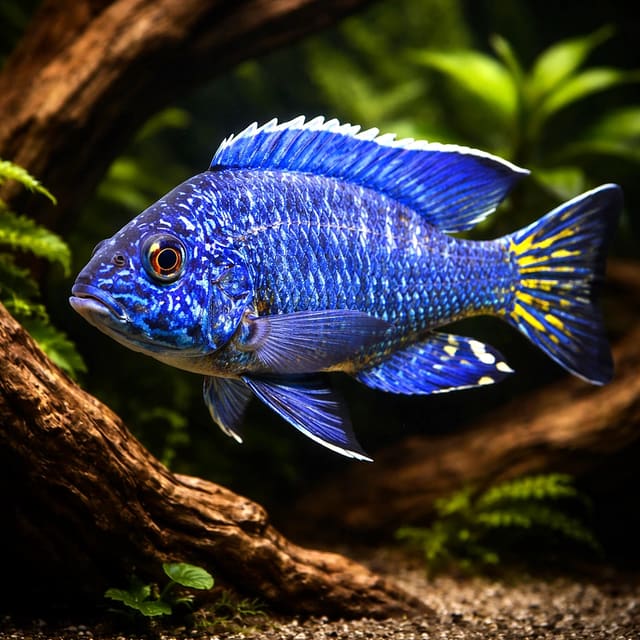
Turquoise Peacock Cichlid (Aulonocara sp.) is an unidentified Lake Malawi trade form supplied as one unsexed live fish at 4–8 cm. OATA's broad Malawi guidance is 23–27 °C, pH 8.0–8.6 and hard water, with careful cichlid compatibility planning.
Aulonocara sp.
Save when buying multiple fish. Each quantity is one fish; sex and pair formation are not guaranteed unless the selected variant explicitly states them.
Turquoise Peacock Cichlid (Aulonocara sp.) is an unidentified Lake Malawi trade form supplied as one unsexed live fish at 4–8 cm. OATA's broad Malawi guidance is 23–27 °C, pH 8.0–8.6 and hard water, with careful cichlid compatibility planning.

Cichlids are a family of roughly 1,800 accepted species, not one care type. Before buying, identify the exact species and source, then compare adult measurement, usable tank dimensions, social system, territory, tested water, diet and an exit plan. No family-wide minimum tank, water range or tank-mate list is safe.
Maintain these water conditions for optimal health and vibrant colors
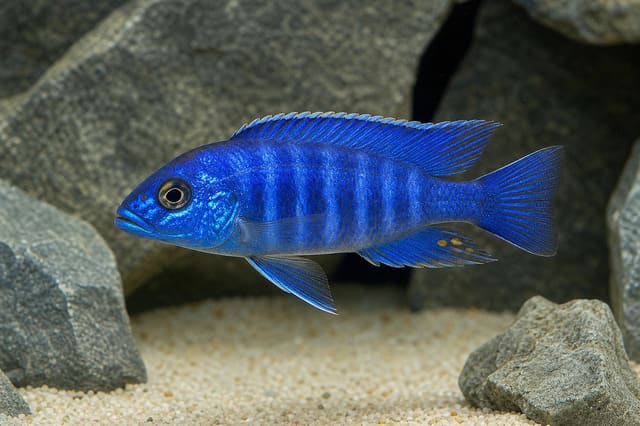
Turquoise Peacock Cichlid is the clear customer name for this Aulonocara trade form. The accepted scientific label is Aulonocara sp. because Turkis or Turquoise has not been tied to a formal species in the available identity record. The exact species has not been identified, so the care advice here follows the genus Aulonocara and its care group.
Aulonocara is a Lake Malawi cichlid genus whose members are widely known as peacock cichlids. The Aulonocara genus overview records strong sexual dichromism, but that broad biology does not tell us the sex, maturity or final colour of an individual juvenile. Plan around a Malawi cichlid's aquarium needs rather than buying on the expectation that every fish will develop one exact shade.
One purchase supplies one live fish in the chosen 4–5, 5–6, 6–7 or 7–8 cm dispatch band. The size you select is the size supplied, not the adult size. Sex is guaranteed only when the selected option explicitly states male or female. This Turquoise Peacock Cichlid listing has no sex-guaranteed option. Those offer facts should remain separate from adult biology: a larger dispatch band is not a promise of final size, sex or colour.
The buying decision should start with the adult community, even though adult size for this trade form is not verified. A 4–8 cm dispatch range describes the fish supplied today; it does not reduce the room, filtration or social planning needed for a Malawi aquarium. Ask how the new fish changes total waste production, feeding access and territorial pressure, not merely whether it fits through the current rockwork.
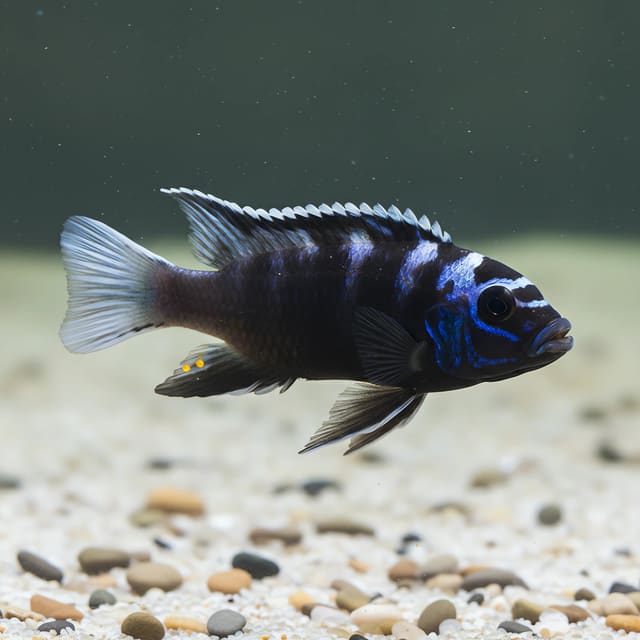
Colour also needs realistic expectations. The genus is strongly sexually dichromic, yet the retail offer is not sex-guaranteed and the gallery cannot decide the sex of the animal supplied. A young fish may change as it matures, but this page does not promise a male or a particular final turquoise pattern. Choose the animal because the Malawi set-up is suitable, then regard colour development as individual variation.
Good preparation makes this a rewarding specialist choice. Hard alkaline water, mature filtration, strong aeration, open swimming room and cautiously chosen companions form one connected plan. If any of those pieces is missing, resolve it before purchase rather than asking the fish to tolerate a temporary compromise.
| Suits | Keepers planning a mature, strongly filtered and well-aerated Lake Malawi community with hard alkaline water. |
|---|---|
| Not suited to | Soft-water mixed communities, very small aquariums or improvised stocking without a complete aggression and filtration plan. |
| Identity | Turquoise Peacock Cichlid; scientific identity retained at Aulonocara sp. |
| Sold unit | One live fish per purchase, supplied in the chosen 4–8 cm dispatch band. |
| Water context | OATA's broad Malawi guidance is 23–27 °C, pH 8.0–8.6 and 12–18 °dH. |
| Key decision | Choose the fish only as part of a complete Malawi cichlid stocking plan. |
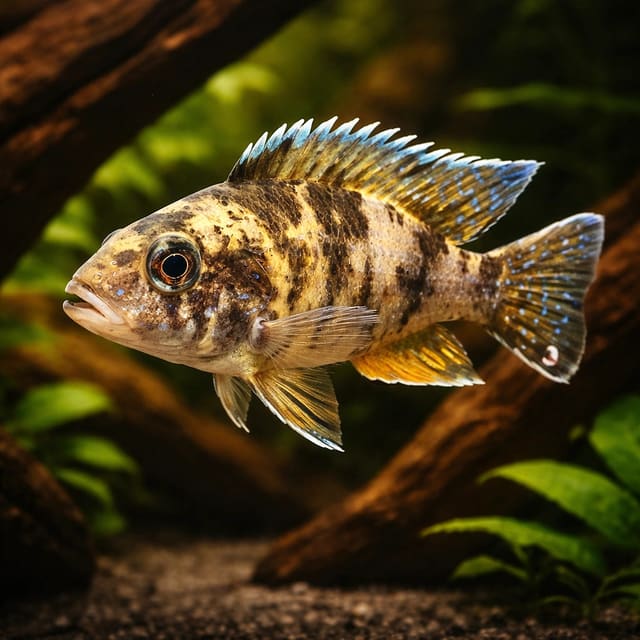
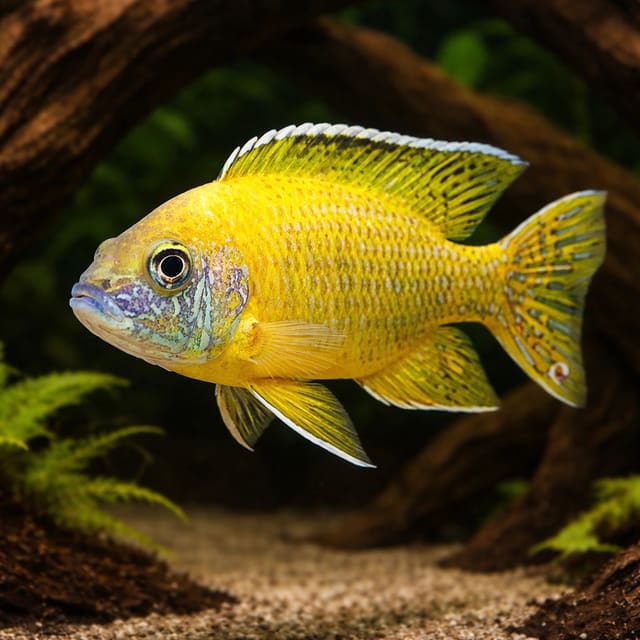
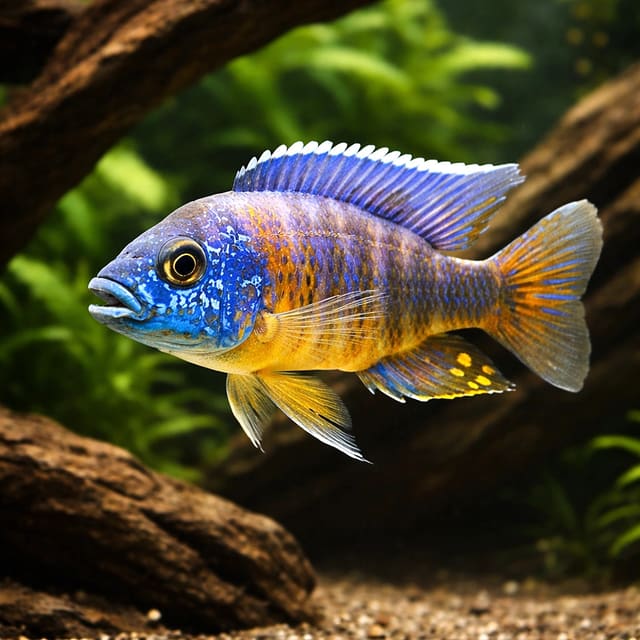
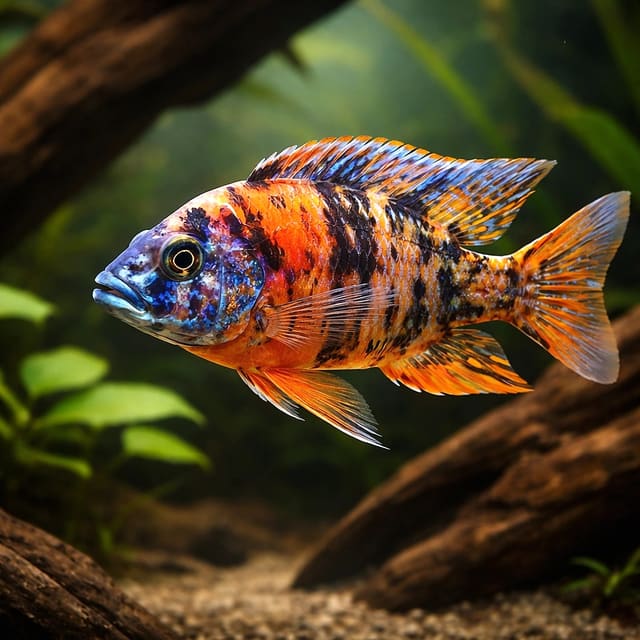
Gallery images have been digitally enhanced to improve image quality. Natural colour, pattern, size and maturity can vary between live animals.
This is an intermediate store suitability assessment. The challenge is not a secret feeding trick; it is keeping hard alkaline water stable, providing enough space and filtration for the whole community, and managing territorial cichlid interactions. The African cichlid collection can help compare different Malawi offers, but a related product is a shopping alternative rather than proof that two fish should share a tank.
Before purchase, write down the aquarium volume, dimensions, established inhabitants, filtration, measured pH and hardness. Compare those facts with the broad group guidance below and ask for advice on the whole community. That is more reliable than deciding from colour alone or trying to fit a peacock cichlid into a community designed for soft-water tropical fish.
The OATA Malawi cichlid care sheet gives 23–27 °C, pH 8.0–8.6, general hardness of 12–18 °dH and carbonate hardness of 10–15 °dKH. These are broad group-level figures, not a species-specific optimum for the unidentified Turquoise trade form. They are useful for deciding whether the aquarium is fundamentally a Malawi hard-water system; they should not be detached from that scope and presented as exact-form biology.
Measure the aquarium's actual values and look at stability over time. The water chemistry guide explains the purpose of common tests, and the water matcher provides a practical way to compare readings with stated guidance. A number written in a product field is less useful than a repeatable test result and a plan for maintaining the whole aquarium.
OATA states that ammonia and nitrite should be zero. It also advises keeping nitrate no more than 20 mg per litre above the normal tap-water level. Those measures sit within a complete husbandry routine: filtration, sensible feeding, gradual stocking, testing and regular water changes all affect the result. Do not assume clear water is safe or that hard alkaline water removes the need for biological maturity.
OATA recommends an aquarium of at least 200 litres for a reasonable-sized Malawi community, while noting that some specialist fish may need a different plan. This is broad community guidance, not a Turquoise Peacock species minimum. Aquarium dimensions, the number and temperament of all fish, filtration capacity and available territories still matter. Treat 200 litres as a general Malawi planning threshold rather than a guarantee that any proposed combination will work.
The guide recommends coral sand or a similar substrate that helps buffer the water, alongside substantial filtration and strong aeration. It also notes that Malawi cichlids dig and rearrange substrate, so delicate planting may not remain where it was placed. Build a robust layout with open swimming space, stable hardscape and areas where fish can move away from one another.
Rockwork should be stable before fish are added. Place it so maintenance remains possible and waste cannot collect in unreachable pockets. No precise rock-to-sand ratio or territory size is assigned to this trade form, so the goal is a serviceable Malawi layout rather than a decorative formula.
The OATA introduction guidance warns against increasing fish numbers too quickly because the filter's beneficial bacteria must cope with greater waste and feeding. The first tropical tank guide covers the general process of preparing and maturing filtration. For a Malawi community, apply that discipline to a hard-water cichlid plan with the correct group-level water context.
A working biological filter converts toxic ammonia through nitrite towards nitrate. The RSPCA aquarium environment guidance reinforces why filtration and maturation matter. Filter size, media volume, oxygenation and maintenance access should be considered before adding fish, not after the aquarium begins to struggle with waste.
Additions should be planned as part of the whole community rather than as isolated purchases. Review current fish sizes and temperaments, the likely effect on feeding and waste, and the amount of cover and swimming room that remains. A fish being available in a suitable dispatch band does not mean the aquarium is ready for another cichlid.
Before adding a Turquoise Peacock Cichlid, record the tank dimensions and volume, measured temperature, pH, general hardness and carbonate hardness, current ammonia, nitrite and nitrate readings, filter model or capacity, and existing livestock. This turns a vague question about whether the fish will fit into a concrete discussion about a Malawi community.
Include the size and behaviour of current cichlids, not just their names. A community can change as fish grow, and the 4–8 cm dispatch bands on this offer describe arrival size rather than the final demands of the group. If an inhabitant already controls most of the useful space or another fish is being excluded at feeding, adding a newcomer is unlikely to solve the underlying stocking problem.
Strong filtration and aeration are broad OATA recommendations for Malawi communities. Look at how the system performs before the next fish is added. Test water on ordinary days as well as after maintenance, confirm flow paths are not blocked by décor, and make sure oxygenation reaches the whole aquarium. A filter's stated capacity is only one part of the picture; actual water readings and fish behaviour show whether the system is coping.
Plan how increased feeding and waste will be handled. The filter community must adjust as biological load rises, which is why OATA warns against stocking too quickly. If ammonia or nitrite is detectable, nitrate is climbing beyond the stated group guidance, or maintenance is already difficult to keep up with, pause the purchase and correct the system first.
Malawi aquariums need open swimming room as well as stable hardscape. View the tank from the front, sides and above where possible. Check whether one fish can patrol the only passage through the rockwork, whether another can be cornered at the surface, and whether a new arrival has routes away from established territories.
Hardscape must remain stable when fish dig. Place rocks securely and keep access for a siphon or other cleaning tool. If décor may be rearranged for an introduction, decide how to do it without creating unstable piles or trapping waste. The aim is to interrupt familiar territories while retaining a safe, serviceable aquarium.
Check that heaters, air pumps and filters can be serviced without destabilising the rockwork. Make sure power interruptions, blocked intakes or reduced air flow can be noticed promptly. Keep test kits, conditioner and siphon equipment available so weekly care does not depend on an emergency shopping trip.
Observe the aquarium at feeding time and later when fish settle. Strong surface movement is useful, but circulation should also prevent stagnant pockets behind the hardscape. If one area repeatedly collects waste, improve access or flow before increasing the biological load. Practical serviceability is part of aquarium capacity.
Review how replacement water is prepared. OATA requires tap water to be treated for chlorine or chloramine and advises avoiding abrupt changes. Measure and prepare consistently, then compare the aquarium before and after routine maintenance. Stable practice is more valuable than correcting numbers sharply on the day a fish arrives.
OATA recommends introducing more peaceful species before more aggressive ones and notes that adding Malawi cichlids in groups can reduce attention on a single newcomer. Apply this only within a complete, capacity-checked plan. It does not mean that every aquarium should receive several fish or that density can replace adequate filtration and space.
Decide in advance what signs would trigger intervention. Concentrated chasing, blocked access to food, persistent hiding or altered breathing should prompt immediate assessment of compatibility and water quality. Have a practical route for separation or retailer advice rather than assuming aggression will settle by itself.
Broad group ranges are most useful when compared with stable readings. A single matching pH test does not establish readiness if hardness is unknown, the filter is immature or values swing after water changes. Test with dependable kits, keep brief records and consider the tap water as well as the aquarium.
If the aquarium is outside Malawi hard-water conditions, avoid rapid chemistry changes made solely to accommodate a new purchase. Building and stabilising the correct system first is safer than moving the fish into water that is still being adjusted. Once the aquarium is consistent, the recorded figures give a clear basis for a final stocking conversation.
OATA strongly recommends a 25% partial water change at least once every week. Carry out that percentage at least weekly, then use test results and the aquarium plan to decide whether other maintenance is needed. Test water regularly, treat replacement tap water to remove chlorine or chloramine, and match conditions carefully enough to avoid abrupt changes.
Check the filter for blockages and maintain it without exposing established biological media to chlorinated tap water. OATA advises lightly rinsing media in removed aquarium water when cleaning is needed. Keep intake guards, air supply and circulation clear, and make maintenance easy enough that it happens consistently.
Use a siphon to remove settled waste from accessible areas during water changes. Observe where debris collects and improve circulation or access if the same pocket repeatedly becomes dirty. Hardscape that looks dramatic but prevents routine cleaning can undermine the water quality the fish depend on.
The OATA sheet says Malawi cichlid diets vary. It describes smaller mbuna as more herbivorous and some larger open-water forms as more predatory, which is precisely why a genus-only Turquoise trade form should not be given a highly specific diet formula without stronger identification. Choose a quality cichlid staple appropriate to the planned community and seek exact advice before relying on richer animal foods or heavy vegetable feeding.
OATA's broad feeding advice is to offer only what the fish can eat within a few minutes, twice a day, and to avoid overfeeding because uneaten food breaks down and adds toxic waste. Watch feeding across the community so one fish is not consistently excluded and so excess food does not disappear behind rockwork. Adjust the amount to observed consumption and water quality.
Colour should come from sound husbandry and maturity, not from forcing an unbalanced diet. The genus can be strongly sexually dichromic, but this offer does not promise a male. A subdued young fish cannot be diagnosed as female from the trade name, dispatch size or gallery alone.
OATA recommends watching swimming, breathing, feeding, colour, body condition, fins and scales for changes. Those observations are most useful when paired with water tests. A fish hanging at the surface, hiding more, breathing differently or refusing food should prompt a check of ammonia, nitrite, nitrate, temperature and the behaviour of tank mates.
Keep brief notes after additions and maintenance. Record water values, water-change dates, feeding response and any chasing or exclusion. This makes it easier to see whether a change is repeating and gives a retailer useful context if advice is required.
No disease-treatment recipe is assigned to this unidentified trade form. Start with water quality, oxygenation, compatibility and an accurate description of symptoms. Avoid applying a treatment simply because it is marketed for tropical fish; obtain advice for the actual diagnosis and the other animals in the aquarium.
Confirm the aquarium is mature, the filter and aeration are running, and ammonia and nitrite test at zero. Recheck the Malawi group water context and make sure the whole stocking plan still makes sense with the incoming fish. Arrange for someone to receive the parcel because live fish cannot be left unattended.
The store asks customers to inspect livestock on the day it arrives. Begin a continuous unboxing video while the parcel is still sealed, keep the outer box visible, and show the fish inside the sealed bag before anything is disturbed. The current delivery and Live Arrival Guarantee policy contains the complete terms.
Contact Tropical Fish Co on the day of arrival if something is wrong, with the order number and continuous video. Introduction does not end when the fish leaves the bag: watch the established community and be ready to act if one animal receives concentrated aggression.
OATA advises that Malawi cichlids should be kept with other Malawi cichlids or some species of Synodontis catfish. This is a group-level boundary, not a statement that every Malawi cichlid is mutually compatible. Size, temperament, sex, available territories and introduction order still need to be considered for the entire aquarium.
The sheet describes Malawi cichlids as aggressive and recommends mixing them with caution. It suggests adding more peaceful fish before more aggressive fish and adding Malawi cichlids in groups so one newcomer does not receive all the attention. It also notes that rearranging décor can help when territories are being re-established. Use these as broad community-management principles while obtaining advice on the exact inhabitants.
The trade colour does not establish a formal species or individual temperament. Likewise, a juvenile's current colour does not prove its sex. Avoid planning a male-to-female ratio from photographs or colour assumptions because this offer has no sex-guaranteed selection.
A soft-water community is a poor fit because its water and stocking logic conflict with Malawi group guidance. Tiny fish, shrimp and unrelated community species should not be treated as casual companions. Keep the aquarium's water regime and behavioural plan coherent rather than asking one fish to live in a compromise between incompatible systems.
| Potential setting | Decision rule |
|---|---|
| Planned Malawi cichlid community | Possible with exact advice on size, temperament, stocking density and introduction order. |
| Some Synodontis catfish | OATA names the group, but the exact species and aquarium plan still need checking. |
| Soft-water tropical community | Avoid because the water regime and community plan do not match broad Malawi guidance. |
| Related products | Shopping alternatives only; they are not automatic tank-mate recommendations. |
Look at the aquarium from the perspective of a new fish. Is there open swimming room? Are there several usable areas, or only one dominant territory? Can décor be rearranged safely? Is there a realistic separation plan if aggression becomes concentrated? Answering these questions before ordering is more useful than relying on the word peacock or a general statement that one group is calmer than another.
OATA discusses larger Malawi communities and slight overstocking as ways to spread aggression, but those ideas increase filtration, oxygen and waste-management demands. They are not permission to add fish without a complete plan. Stocking density should be discussed with an experienced retailer using the exact aquarium dimensions, filtration and inhabitant list.
No. This offer is retained at Aulonocara sp. because Turquoise or Turkis is a trade name and the identity record does not tie it to a formal species. Use the trade name for the offer without adding a species epithet.
OATA's broad Malawi guidance is 23–27 °C, pH 8.0–8.6, 12–18 °dH general hardness and 10–15 °dKH carbonate hardness. These are group-level values rather than a species-specific optimum for this unidentified Turquoise trade form.
OATA recommends at least 200 litres for a reasonable-sized Malawi community, while noting that specialist fish may differ. Treat that as broad community planning guidance, not a guaranteed species minimum; dimensions, filtration and the complete stocking plan still matter.
OATA discusses groups of at least 15 and slight overstocking for Malawi communities, but this is broad group advice, not a Turquoise Peacock-specific number. It increases the demands on filtration, aeration, space and maintenance, so plan the whole community with an experienced retailer.
The store assessment is intermediate. Malawi cichlids can be undemanding once their system is right, but they require hard alkaline water, mature filtration, strong aeration and deliberate aggression management. A first-time keeper should prepare the full community before buying.
Malawi cichlid diets vary, and the exact diet of this unidentified trade form is not specified. Use a suitable quality cichlid staple for the planned community, feed only what is eaten within a few minutes and obtain exact advice before adding richer animal foods or vegetable matter.
OATA treats Malawi cichlids as aggressive fish that must be mixed cautiously. Do not use the Turquoise trade colour as a temperament guarantee. Plan territories, introduction order and a separation option around the exact fish already present.
OATA limits broad compatibility to other Malawi cichlids or some Synodontis catfish. That does not make every member of those groups suitable. Check exact species, size and temperament, and avoid turning a related product into an automatic tank-mate choice.
Tropical Fish Co uses a licensed live-animal courier. Be present. Begin continuous video with the parcel sealed before opening, then show the fish in the sealed bag. Float the sealed bag for 20–30 minutes, release without adding transport water, and contact the store the same day if something is wrong.
No reviews for this item yet. Bought one? Honest reviews only, good or bad.
What customers say about ordering from us
Easy website plenty of info on fish your buying great to pick a time slot
TRACEY DURRANT · 7 Oct 2026
Got some lovely fish thank you
Kevin Mackie · 7 Oct 2026
Reviews of our shop, collected by Judge.me, an independent third-party review collector. Newest first.