Moderate
Acei Cichlid (Pseudotropheus sp. “acei”)
24–26°C · pH 7.5–8.5 · 300L
£7.99

Red-Top Cichlid, Trewavas' (Labeotropheus trewavasae) is an algae-scraping mbuna from the rocky shallows of Lake Malawi, sold as one fish per purchase in sizes from 3–4 cm to 7–9 cm. It needs hard, alkaline water at 24–28 °C and a busy, rock-built mbuna community where its territorial temper is shared out among many fish.
Adult size is the maximum length this species reaches at full maturity (scientific sources). The livestock you receive will be younger and smaller — pick a size above for the actual shipping size. Product-photo provenance and any image-specific limitations are stated on the listing.
Labeotropheus trewavasae
Save when buying multiple fish. Each quantity is one fish; sex and pair formation are not guaranteed unless the selected variant explicitly states them.
Red-Top Cichlid, Trewavas' (Labeotropheus trewavasae) is an algae-scraping mbuna from the rocky shallows of Lake Malawi, sold as one fish per purchase in sizes from 3–4 cm to 7–9 cm. It needs hard, alkaline water at 24–28 °C and a busy, rock-built mbuna community where its territorial temper is shared out among many fish.
Adult size is the maximum length this species reaches at full maturity (scientific sources). The livestock you receive will be younger and smaller — pick a size above for the actual shipping size. Product-photo provenance and any image-specific limitations are stated on the listing.
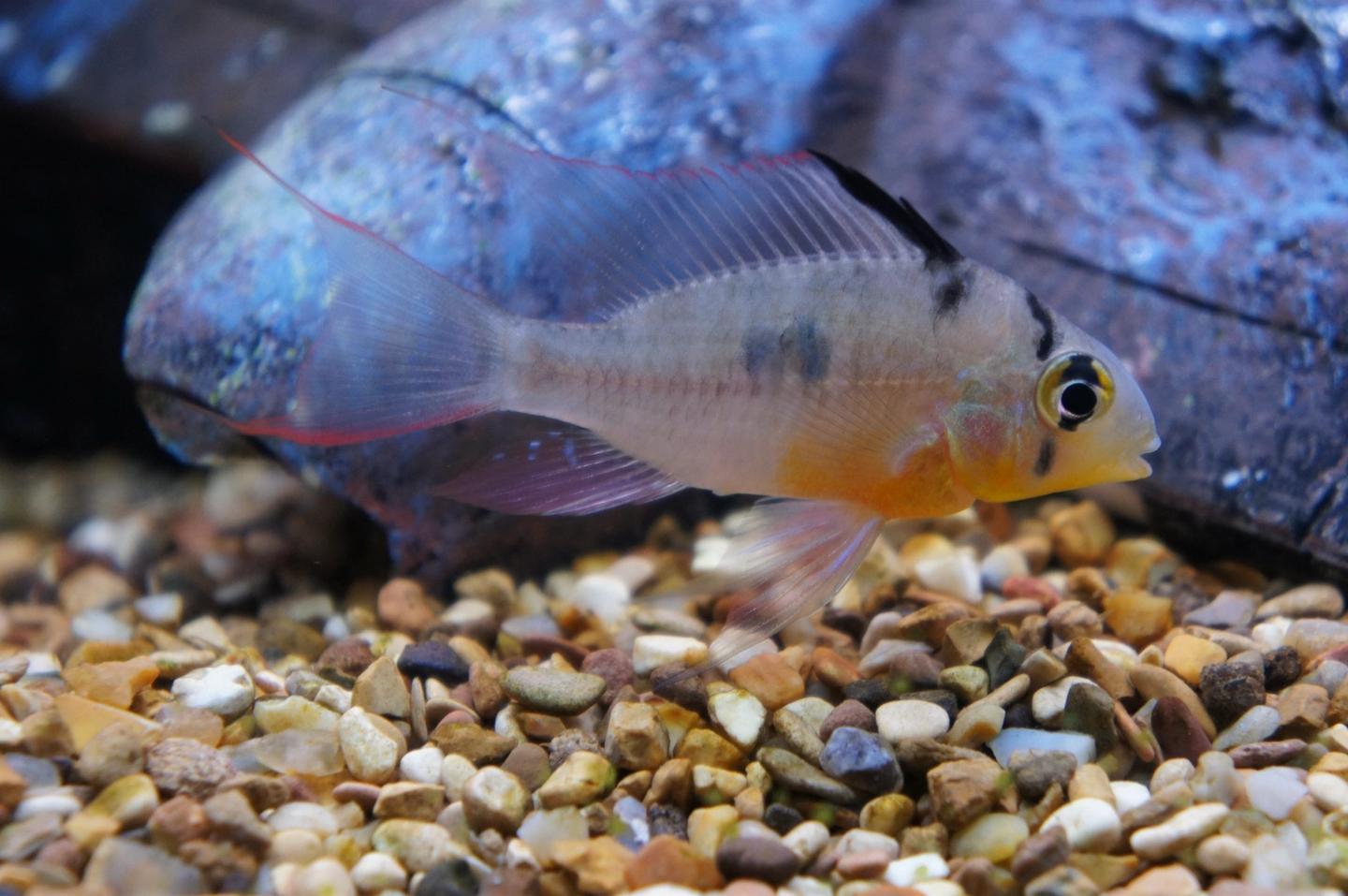
Cichlids are a family of roughly 1,800 accepted species, not one care type. Before buying, identify the exact species and source, then compare adult measurement, usable tank dimensions, social system, territory, tested water, diet and an exit plan. No family-wide minimum tank, water range or tank-mate list is safe.
Maintain these water conditions for optimal health and vibrant colors
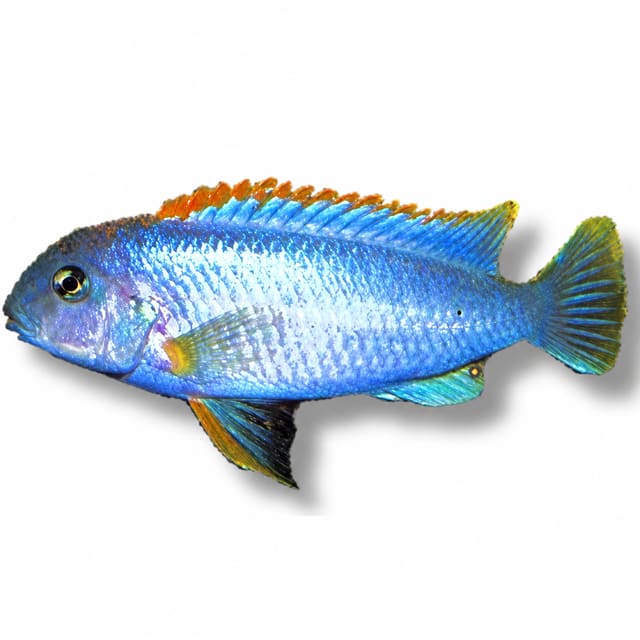
The Red-Top Cichlid, Trewavas' (Labeotropheus trewavasae) is a rock-dwelling mbuna from Lake Malawi, and nearly everything about it is built for scraping algae off stone. An overhanging snout and chisel-shaped teeth let it graze rocks in very shallow, turbulent water that other cichlids cannot work. That toughness carries into the aquarium: this is an aggressive, territorial fish for a hard-water mbuna community with heaps of rockwork and plenty of company, not a candidate for a mixed tropical tank.
Each purchase supplies one fish in the size you choose. Sizes run from 3–4 cm and 4–5 cm up to 7–9 cm, all well below the 11.7 cm total length FishBase records as the species' maximum, so plan the aquarium for the adult rather than the youngster in the bag. The size you select is the size supplied, not the adult size. You may notice 4–5 cm listed twice among the sizes; both are fish of that same size band.
| Suits | Keepers building or extending a rock-heavy Lake Malawi mbuna aquarium with hard, alkaline water |
|---|---|
| Not for | Peaceful community tanks, peacock or utaka displays, and soft planted layouts |
| Adult size | 11.7 cm total length recorded |
| Water | 24–28 °C, pH 7.6–8.8, 10–25 dGH |
| Tank | Base of at least 90 × 45 cm; 200 litres or more for a Malawi community |
| Diet | Mainly vegetable foods, with some live and frozen food |
| Temperament | Aggressive and territorial, most of all towards its own kind |
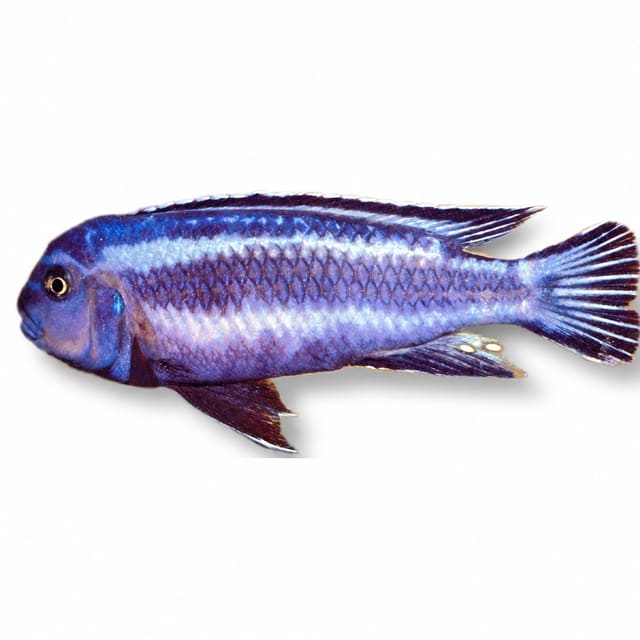
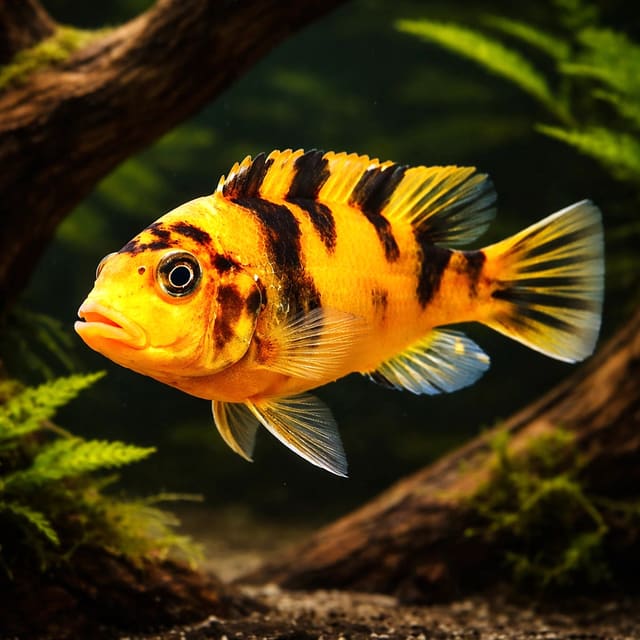
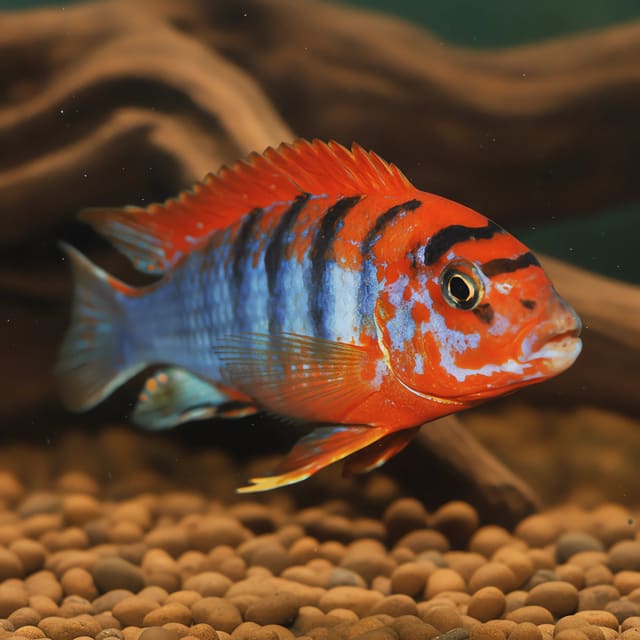
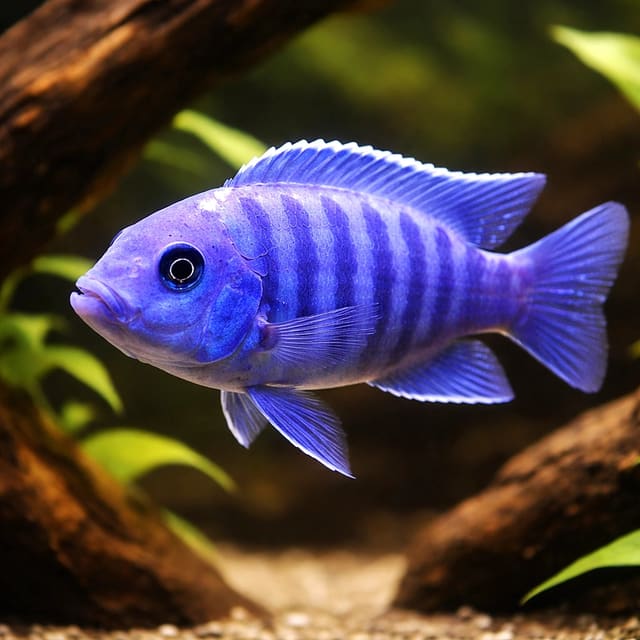
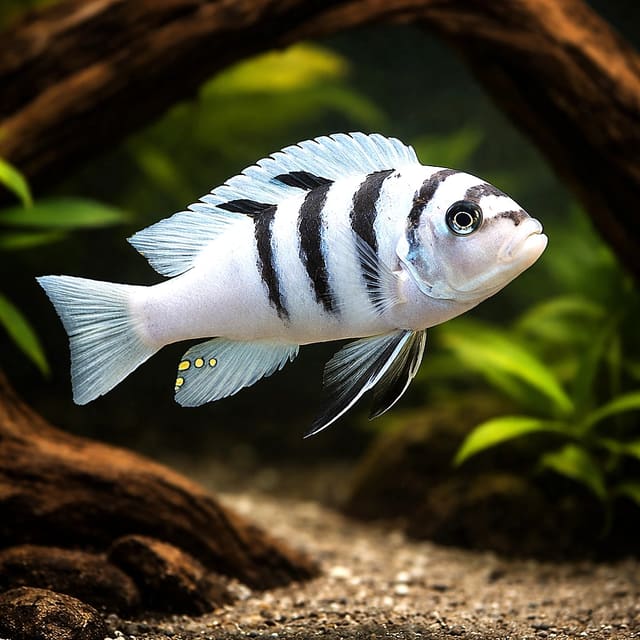
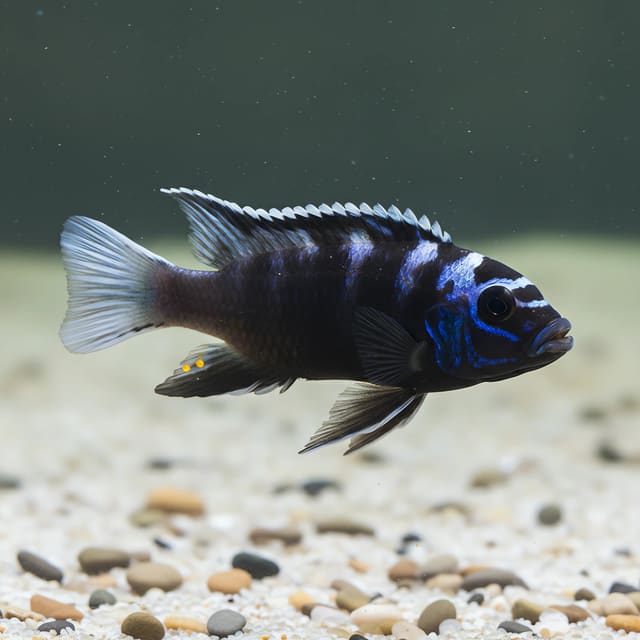
Red-Top is the trade name this fish is sold under, and it points to colour rather than to a separate species. Labeotropheus trewavasae is remarkably variable: more than 40 colour forms have been recorded in nature, the colour of the dorsal fin is especially changeable, females can be orange or orange-blotched, and the rare blue-blotched males are known to hobbyists as marmalade cats. Different forms, and the other Labeotropheus species, should not share an aquarium, so choose one form and build your group from it.
Many Malawi cichlids only show the differences between males and females once they are adult, and the main differences are colour and the egg spots on the male's anal fin. In this species females carry much fainter egg spots or none at all, so a young fish at dispatch size cannot be sexed reliably by eye. Sex is guaranteed only when the selected option explicitly states male or female. This Red-Top Cichlid, Trewavas' listing has no sex-guaranteed option.
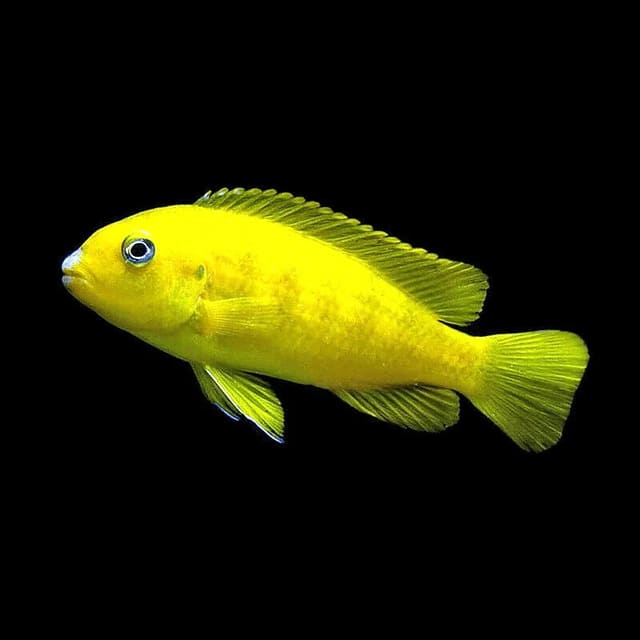
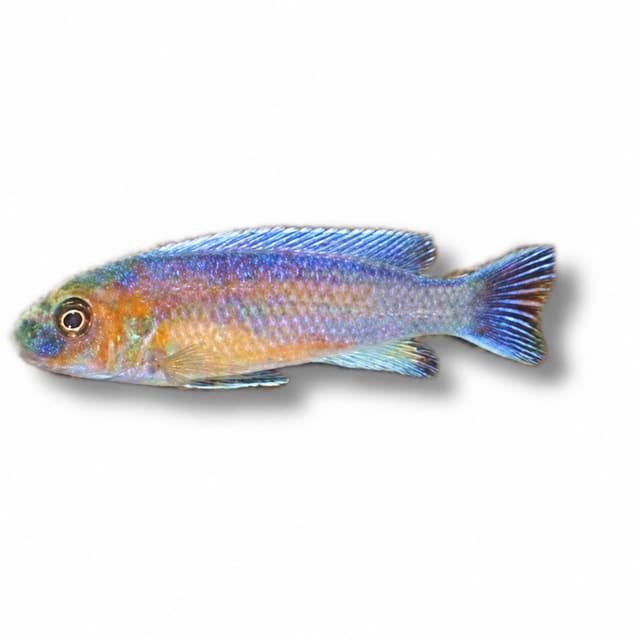
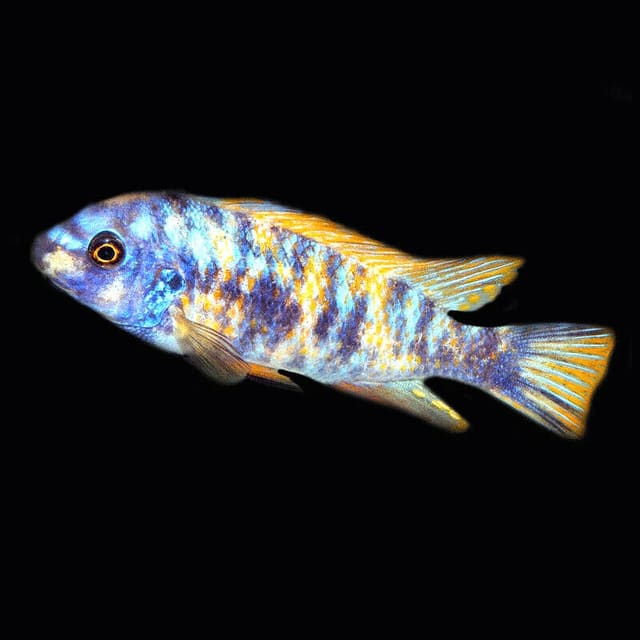
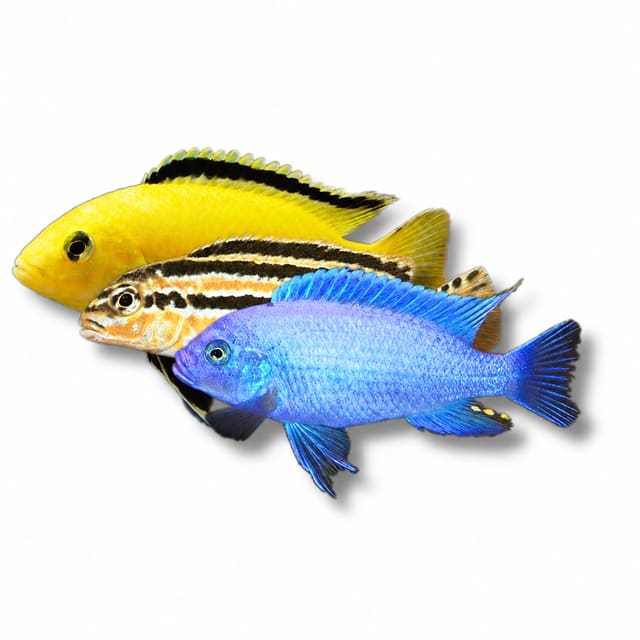
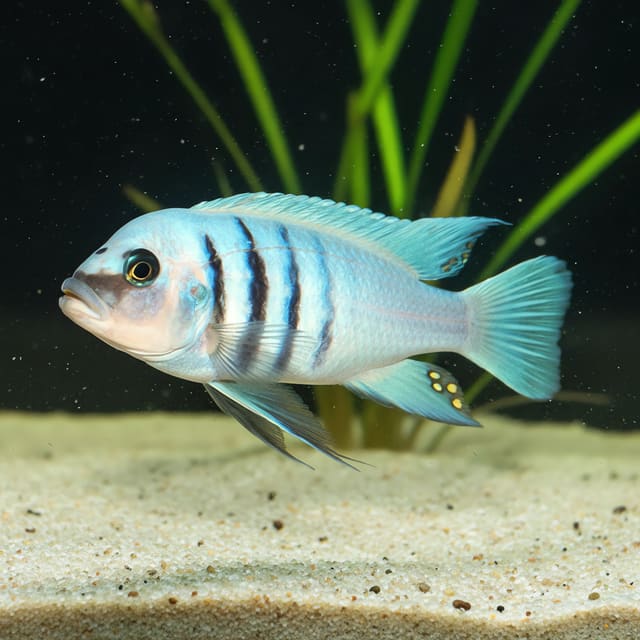
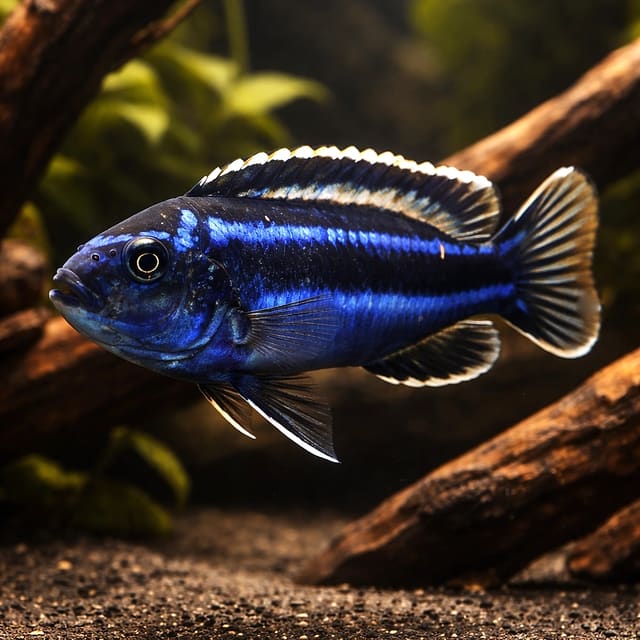
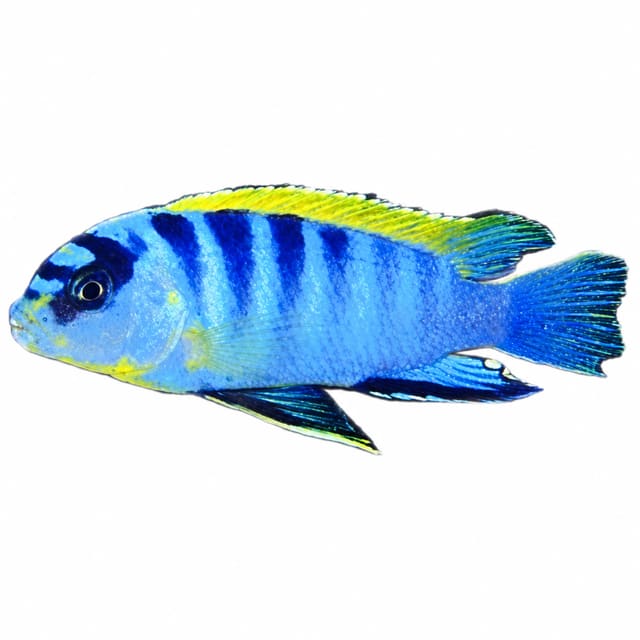
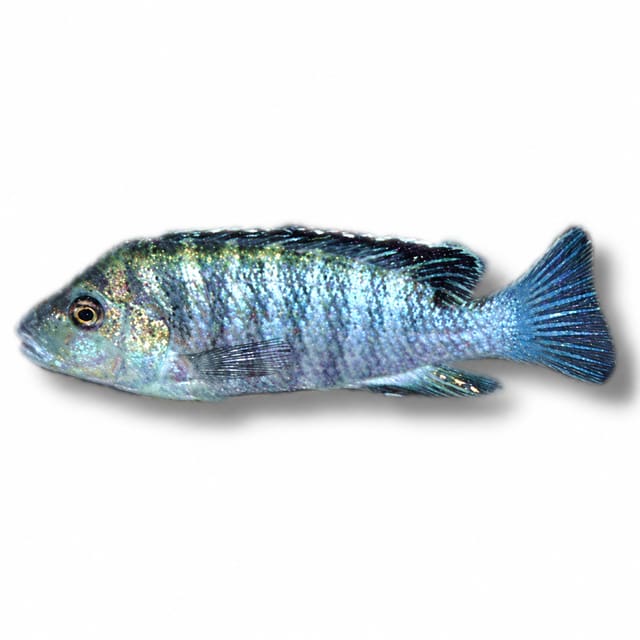
Adult colour, especially the display colour of a mature male, develops as the fish grows and settles into its group. Gallery images have been digitally enhanced to improve image quality. Natural colour, pattern, size and maturity can vary between live animals.
Run through these points before you order. If most of them match your plans, this is a rewarding grazer to watch working over the rockwork all day.
Every size needs the full adult setup from the first day, because even the largest is still growing towards 11.7 cm. The smaller sizes let a group grow up together in your aquarium. A 7–9 cm fish is much nearer adult length, so it is closer to showing the colour and egg spots that separate males from females, although its sex is still not guaranteed.
FishBase lists Labeotropheus trewavasae as a freshwater cichlid of Lake Malawi, living between the bottom and midwater at depths down to about 15 m, with a recorded maximum of 11.7 cm total length. Its conservation status is Least Concern. FishBase also gives its common name as the scrapermouth mbuna, which describes how it feeds: it scrapes algae off rocks and takes in small crustaceans and worms along the way.
Lake Malawi is one of the most biodiverse lakes in the world, and its cichlids fall loosely into two groups: the rock-dwelling mbuna and the open-water utaka. This fish is firmly mbuna, and that one fact explains most of its care.
All three Labeotropheus species share the overhanging snout that gives the genus its distinctive profile. Behind it sit chisel-shaped teeth designed for scraping algae. The position of the mouth lets the fish lie parallel to a rock surface while it feeds, so it can hold on in the turbulence of very shallow water and graze stones that other species cannot reach.
FishBase records the species' natural environment at 21–24 °C with pH 8.0 and 5–12 dH. Those figures describe the wild lake. The aquarium ranges in the water section below are the ones to keep to at home.
Seriously Fish gives a minimum tank base of 90 × 45 cm for this species, which at 38 cm deep is roughly 154 litres. Treat that as the footprint for the fish itself. Because mbuna are kept in numbers, OATA recommends an aquarium of at least 200 litres for a reasonable Malawi community and points out that the larger the aquarium, the more stable its temperature and water quality will be. For a spawning harem, Seriously Fish suggests a 48-inch aquarium.
Much of the tank should be filled with piles of rock arranged into caves, with small areas of open water between them. The caves give subordinate fish somewhere to go, the rock faces give everyone something to graze, and the broken layout stops one dominant fish from patrolling the whole tank. Malawi cichlids will often dig and rearrange the substrate, so stand heavy rockwork directly on the tank floor before adding sand, where tunnelling cannot undermine it.
A crowded mbuna community produces a lot of waste, so OATA recommends an oversized filter and vigorous aeration to keep enough dissolved oxygen in the water. Seriously Fish suggests a turnover of four to five times the tank volume an hour, which for a 154-litre tank means a filter rated around 615–770 litres per hour, and a heater of roughly 175–250 W to hold 24–28 °C in a room at about 20 °C. Larger community tanks need proportionally more. No fish should be kept without a well set-up and maintained filter, as the RSPCA stresses.
If this aquarium is new, give the filter time to mature before any fish arrive. Our guide to setting up and maturing a first tropical tank walks through that process step by step.
This is a hard-water fish. The Seriously Fish species profile gives the aquarium ranges below, and they are the figures to aim for.
| Value | Aim for |
|---|---|
| Temperature | 24–28 °C |
| pH | 7.6–8.8, with 8.0 ideal |
| General hardness | 10–25 dGH |
| Ammonia and nitrite | Zero |
| Nitrate | No more than 20 mg per litre above your tap water |
OATA's care sheet for Malawi cichlids as a group gives 23–27 °C, pH 8.0–8.6, general hardness of 12–18 °dH and carbonate hardness of 10–15 °dKH. That is broad guidance for the whole group, and it sits largely inside the species ranges above. FishBase's 21–24 °C, pH 8.0 and 5–12 dH describe the natural lake rather than a routine aquarium target. In practice, a steady 25–26 °C at a pH close to 8.0 in hard water satisfies both the species ranges and the OATA guidance, and the ammonia, nitrite and nitrate limits come from the OATA sheet.
Our guide to which water values to test and why explains pH, general and carbonate hardness in plain terms, and the water parameter matcher lets you compare your own test results with these ranges before you buy.
In the lake this fish spends its day scraping algae from rock, picking up small crustaceans and worms as it goes. In the aquarium it will accept most foods offered, which makes feeding easy but also makes it easy to get wrong. Seriously Fish says vegetable matter should form a large proportion of the diet.
OATA advises feeding Malawi cichlids only what they can eat within a few minutes, twice a day. Overfeeding leaves uneaten food to break down in the rockwork, releasing toxic waste into the water, and a crowded mbuna tank has little margin for that. Lift out any vegetables the group has not finished once feeding is over.
In a busy mbuna community the boldest fish reach the food first. Spreading each feed across the surface, rather than dropping it in one spot, gives quieter fish a fairer share and cuts down clashes over a single patch of food. Watch every feed for a few seconds to check that each fish is eating; one that never reaches the food is a sign the group balance needs attention.
A film of algae on the rocks is welcome here. It gives the fish something to graze between meals and lets you watch the scraping behaviour the species is named for.
Malawi cichlids can be stressed by even small amounts of ammonia, and a well-stocked mbuna tank produces plenty of it, so routine care is what keeps this species healthy. The OATA care sheet for Malawi cichlids sets out a simple weekly rhythm.
As the RSPCA explains, fish release ammonia, which is toxic. A working biological filter grows bacteria that convert ammonia to nitrite, which is also toxic, and then to nitrate, which is safer. In a Malawi tank stocked slightly heavy on purpose, that bacterial population is the difference between a thriving colony and a crisis.
Increase the number of fish slowly. Each addition, and each increase in feeding, asks the filter bacteria to grow to match. Stocking too quickly causes new tank syndrome, when ammonia and nitrite rise faster than the bacteria can cope and fish become ill or die. With mbuna that has to be balanced against adding fish in groups, so plan the colony in a few well-spaced stages rather than one fish at a time.
Mbuna settle best into an aquarium that is ready and waiting. Work through this list before your fish is on its way.
Your fish is hand-packed in a bag filled with pure oxygen, inside an insulated box with a heat pack when the weather calls for it, and travels with a licensed live-animal courier on a tracked service. We email your tracking number and confirmed delivery date so you know when to be in. The full terms are on our delivery and Live Arrival Guarantee page.
A newcomer is a target in an established Malawi tank. OATA advises adding Malawi cichlids in groups so no single fish takes all the attention, adding the more peaceful species first and the more aggressive ones later, and rearranging the décor when new fish go in so everyone has to find new territories. Seriously Fish describes this species as aggressive, so it usually belongs in the later stages of stocking.
Over the first days, look for the signs of a healthy fish: clear bright eyes, undamaged fins, intact scales, no ulcers or bumps, and normal swimming.
Every fish varies a little in behaviour and looks, but a few minutes of watching at feeding time will pick up most problems early. OATA lists the changes worth noticing:
In an mbuna tank, the temperament signs deserve special attention. A fish that is constantly hiding, has torn fins or is losing condition may be getting more than its share of aggression, and the answer is often more rockwork, a rearranged layout or a better balance of fish rather than medicine. Whenever you are worried, test the water first, then message us with the results so we can help.
Adult males carry clearly defined egg spots on the anal fin; in females these are much fainter or missing. Those differences only appear with maturity, so the sex of a young fish becomes clear as it grows.
This is a maternal mouthbrooder. Seriously Fish recommends spawning it in a species tank as a harem of one male with at least three females, because the male can be quite aggressive in pursuit and a harem spreads that pressure. A 48-inch aquarium furnished with rock piles, flat stones and areas of open sand works well, with pH around 8.2–8.5 and a temperature of 25–26.5 °C.
Breeding is optional. In a mixed community the priority is a stable, well-balanced group; a separate species tank is the place for planned spawning.
Seriously Fish describes this species as aggressive and territorial. It should not be kept with peace-loving species such as peacocks or utaka, but it can be combined with other mbuna, and the presence of other species helps to spread the aggression it would otherwise aim at its own kind. OATA's broader rule for Malawi cichlids points the same way: keep them only with other Malawi cichlids or some species of Synodontis catfish.
| Companion | Guidance |
|---|---|
| Other mbuna | Suitable. Mixing mbuna species spreads this fish's aggression. |
| Some Synodontis catfish | Caution. OATA names only some species as suitable Malawi companions. |
| Peacocks and utaka | Avoid. They are too peaceable for this fish. |
| Other Labeotropheus, or other forms of this species | Avoid in the same aquarium. |
| Community fish from outside Lake Malawi | Avoid. |
Choose other mbuna rather than more of the same genus, and keep to a single form of Labeotropheus trewavasae. Our African cichlid range lists the mbuna we keep, so you can compare adult size and temperament when planning a mixed group. The group-size and stocking guidance below applies to every species you add.
Malawi cichlids are not social fish in the shoaling sense, yet they are kept in numbers. OATA suggests groups of at least 15, slightly overcrowded to limit aggression, because Malawi cichlids kept in small groups will often fight. Seriously Fish goes further for this species, saying the tank should be overcrowded to reduce aggression and territory formation.
Add Malawi cichlids in groups, bring in the more peaceful species first and the more aggressive ones later, and rearrange the rockwork whenever new fish join. Crowding only works alongside strong filtration and the weekly maintenance described in the care section, so let the stocking level follow what your filter can handle.
Some chasing is normal in a Malawi tank, where mbuna are constantly settling their boundaries. What matters is whether the pressure is shared out or falls on one fish.
A badly damaged fish recovers better in a separate aquarium than in the group that injured it.
FishBase records a maximum of 11.7 cm total length for this species, and Seriously Fish gives 113 mm standard length, measured to the base of the tail. Plan the aquarium, the rockwork and the companions around an adult of about that size.
Seriously Fish gives a tank base of 90 × 45 cm, about 154 litres, for the species. Because it should live in a crowded mbuna community rather than on its own, OATA's recommendation of at least 200 litres for a reasonable Malawi community is the better starting point, and a larger tank holds temperature and water quality more steadily.
Keep several females for every male, never a lone pair, and house them inside a busy group of mixed mbuna. OATA's broad Malawi advice is groups of at least 15 fish, slightly overcrowded, because Malawi cichlids kept in small groups will often fight; Seriously Fish adds that other mbuna help spread this species' aggression towards its own kind.
It suits a keeper ready to run a dedicated Malawi aquarium, which is a different project from a first community tank. OATA describes Malawi cichlids as usually undemanding once their water is right, but they are aggressive and need careful mixing, heavy rockwork, strong filtration and steady maintenance. If this will be your first aquarium, mature the filter fully and plan the whole mbuna group before buying any fish.
In the wild it scrapes algae from rocks and also takes small crustaceans and worms. In the aquarium, make vegetable foods such as spirulina flake, an algae-based dried food and blanched spinach a large part of the diet, add some live and frozen foods, and feed only what the group clears within a few minutes, twice a day.
Seriously Fish gives 24–28 °C, pH 7.6–8.8 with 8.0 as ideal, and 10–25 dGH for the species. OATA's broad Malawi guidance of 23–27 °C, pH 8.0–8.6 and 12–18 °dH general hardness sits largely inside that, so a steady 25–26 °C in hard, alkaline water suits both.
Yes, it is aggressive and territorial, and it is hardest on its own kind. Crowding the aquarium with other mbuna, building plenty of rock caves and keeping several females per male spreads that aggression, but peaceful or timid fish are likely to be harassed and are not suitable companions.
Other mbuna, the rock-dwelling Malawi cichlids, are its natural companions, and OATA also names some Synodontis catfish as suitable. Avoid peaceful Malawi cichlids such as peacocks and utaka, other Labeotropheus species or other colour forms of this fish, and community fish from outside Lake Malawi.
Each order is hand-packed in bags filled with pure oxygen inside an insulated box, with a heat pack when the weather calls for it, and travels with a licensed live-animal courier on a tracked service. Someone must be at the address to receive it. Open and inspect the parcel the same day, filming one continuous unboxing video from the sealed box to the fish still in its bag, then float the bag for 20–30 minutes before releasing the fish and never pour the bag water into the tank. For any Live Arrival Guarantee claim, contact us the same day with your order number and that video.
No reviews for this item yet. Bought one? Honest reviews only, good or bad.
What customers say about ordering from us
I have a small group of long finned mountain minnows. So was delighted to be able to order ten of this variety to increase the genetics in my tank . The ones I recieved are healthy but it’s to early to give a verdict on wether they are of a long finned type since they are small currently.
Gordon Walker · 23 Sept 2026
100% success travel and "installation". Pleased with quality of purchase. The Siamese fighter a bit "shy" so have not yet seen him at his best yet but looking good. Happy customer. GG
George E Garratt · 21 Sept 2026
Reviews of our shop, collected by Judge.me, an independent third-party review collector. Newest first.