−12%
Moderate
Saulosi Mbuna (Chindongo saulosi)
23–27°C · pH 8–8.4
£11.43£12.99
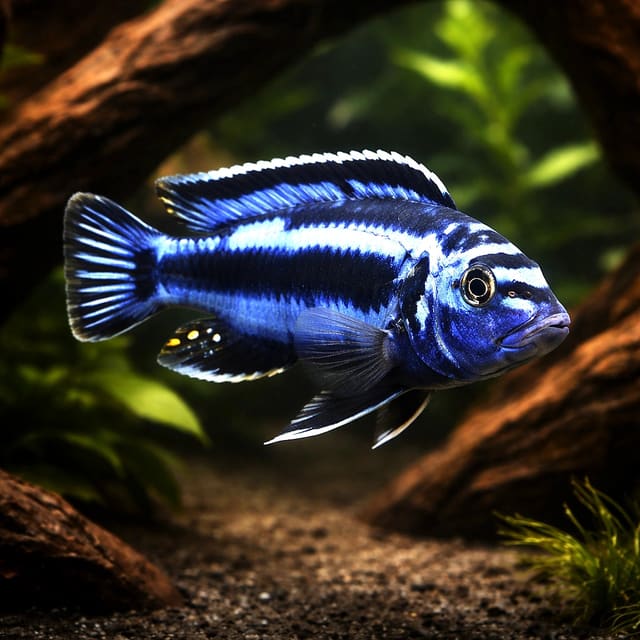
Chipokae Mbuna (Melanochromis chipokae) is a highly aggressive Lake Malawi cichlid for experienced keepers with a large, mature aquarium, secure rockwork and separation housing. Sold individually in four size grades; sex is not guaranteed.
Melanochromis chipokae
Shoaling fish: kept in a group they feel safer, stay calmer and show their best colour.
Chipokae Mbuna (Melanochromis chipokae) is a highly aggressive Lake Malawi cichlid for experienced keepers with a large, mature aquarium, secure rockwork and separation housing. Sold individually in four size grades; sex is not guaranteed.

Cichlids are a family of roughly 1,800 accepted species, not one care type. Before buying, identify the exact species and source, then compare adult measurement, usable tank dimensions, social system, territory, tested water, diet and an exit plan. No family-wide minimum tank, water range or tank-mate list is safe.
Maintain these water conditions for optimal health and vibrant colors
The Chipokae Mbuna, Melanochromis chipokae, is a Lake Malawi cichlid with bold markings and a forceful presence. Its appeal lies in watching an alert fish explore a carefully structured aquarium, but its temperament must shape the entire stocking plan. This is an exceptionally aggressive mbuna for experienced keepers with appropriate space, strong filtration and a practical way to separate fish. It is unsuitable for a peaceful community or a first attempt at keeping tropical fish.
Its wild habitat includes sandy areas among rocks. FishBase describes individuals searching those intermediate areas for larger invertebrates and possibly small fish. That is useful context for its feeding and compatibility: a striped mbuna is not automatically an algae specialist. In the aquarium, this species needs a varied diet and companions chosen with particular care. Its ability to injure other fish matters even when the animals are currently small.
One purchase supplies one live Chipokae Mbuna of the selected size. The configured size choices are 3–4 cm, 4–5 cm, 6–7 cm and 7–9 cm. The size you select is the size supplied, not the adult size. Choose the grade on the live selector and prepare adult accommodation before purchase; a smaller arrival does not make the species suitable for a small permanent tank.
Sex is guaranteed only when the selected option explicitly states male or female. This Chipokae Mbuna listing has no sex-guaranteed option. Ordering several individuals therefore does not establish a breeding group, a particular ratio or a bonded pair. This matters especially with a species whose mature males may be intolerant of one another. Make a stocking plan that can accommodate uncertainty and seek advice for the exact fish already in your aquarium.
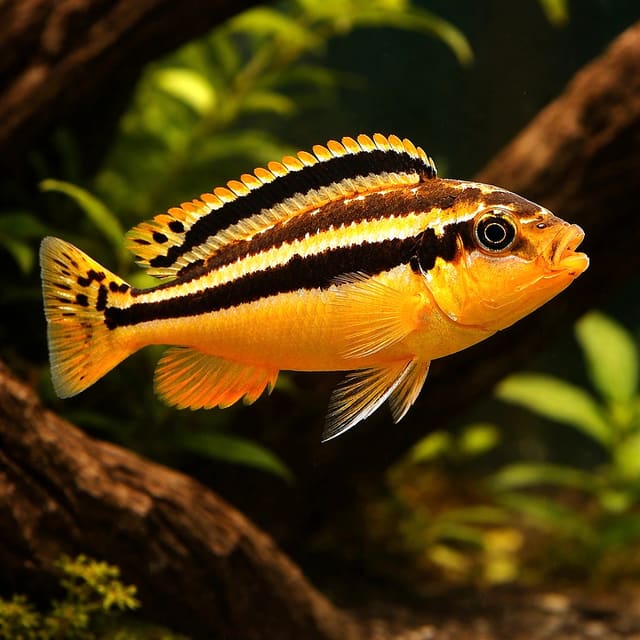
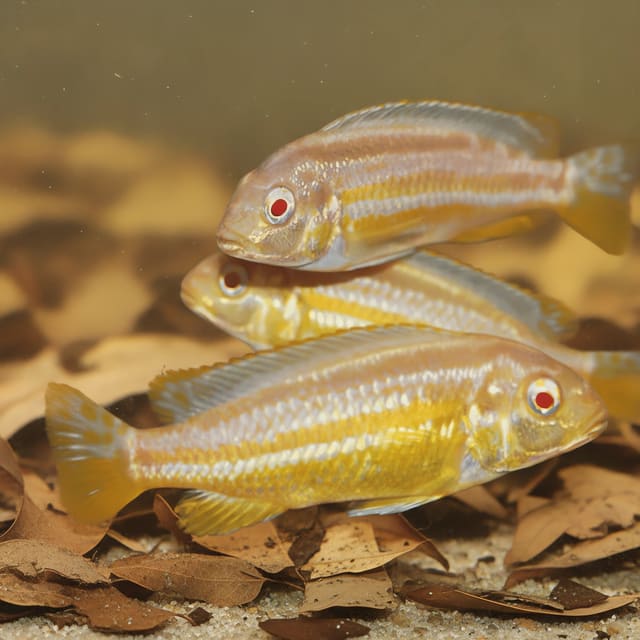
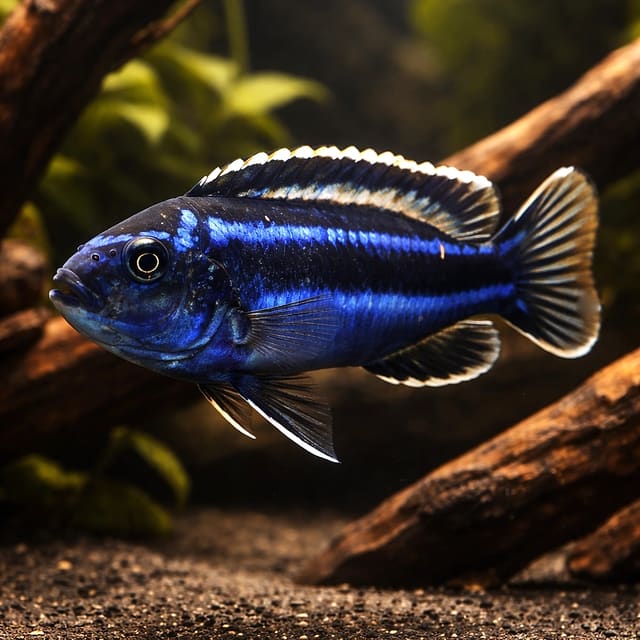
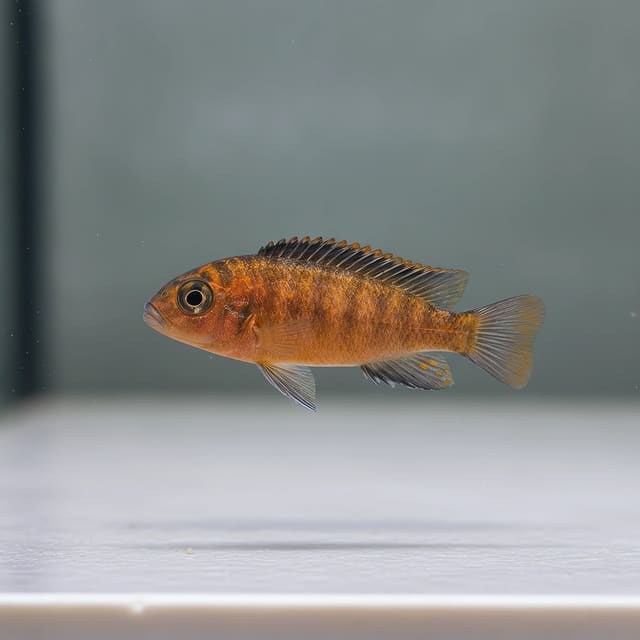
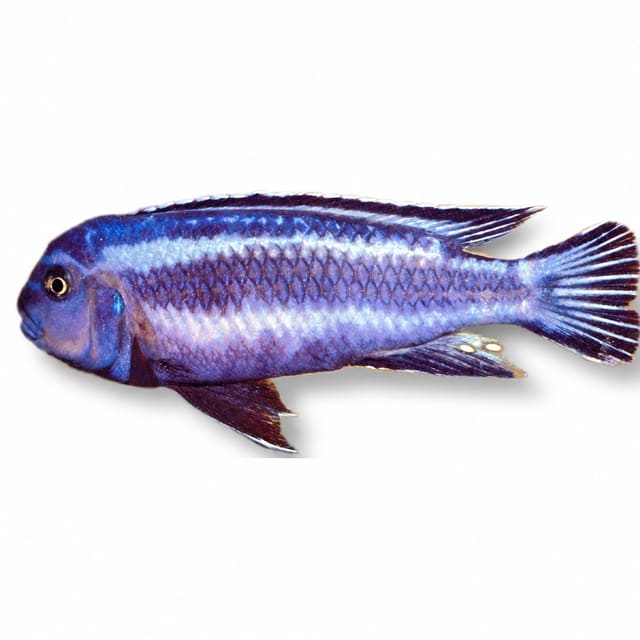
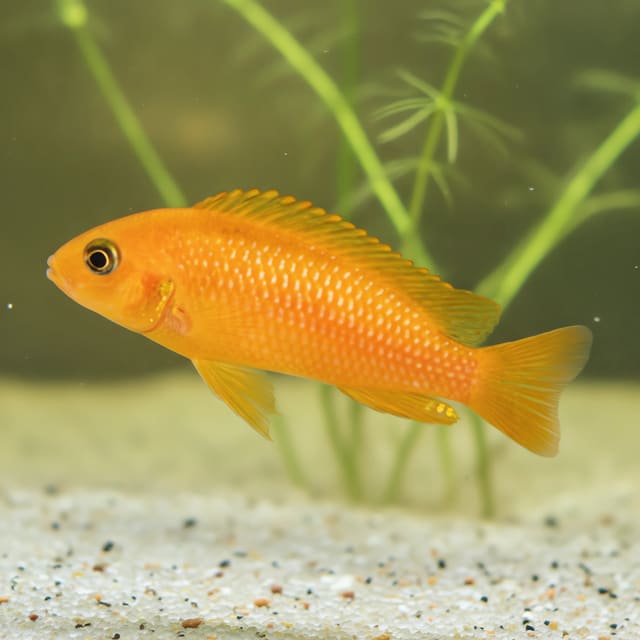
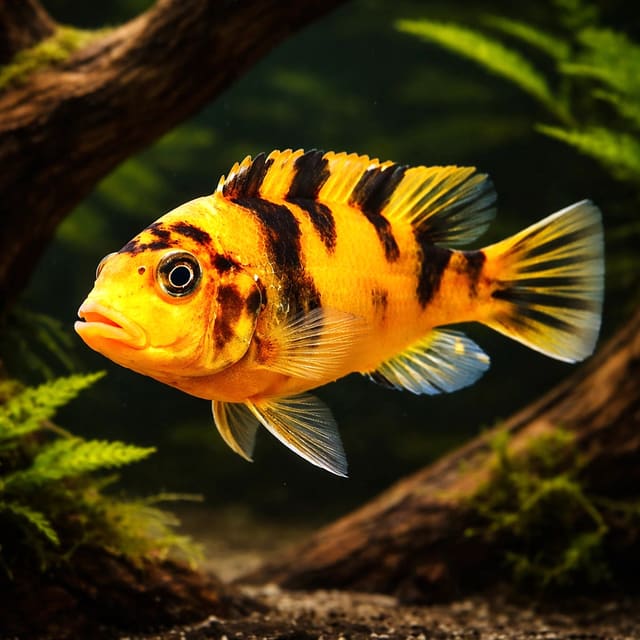
Seriously Fish describes mature males as black and blue, while females, juveniles and subordinate males can show golden colouration. Appearance can therefore change with maturity and social status. A golden fish should not be assumed to be a female, and a photograph should not be used to infer the sex of an animal you will receive. Enjoy its appearance as an individual while planning around the species' adult behaviour.
FishBase records a maximum of 12 cm standard length for male or unsexed fish. Standard length excludes the tail fin. This is a labelled scientific measurement, not a 12 cm nose-to-tail ceiling or a promise that every fish reaches the same length. Seriously Fish likewise lists 120 mm standard length. Adequate turning room, hiding places and separation between territories matter more than fitting a juvenile into a space based on its present dimensions.
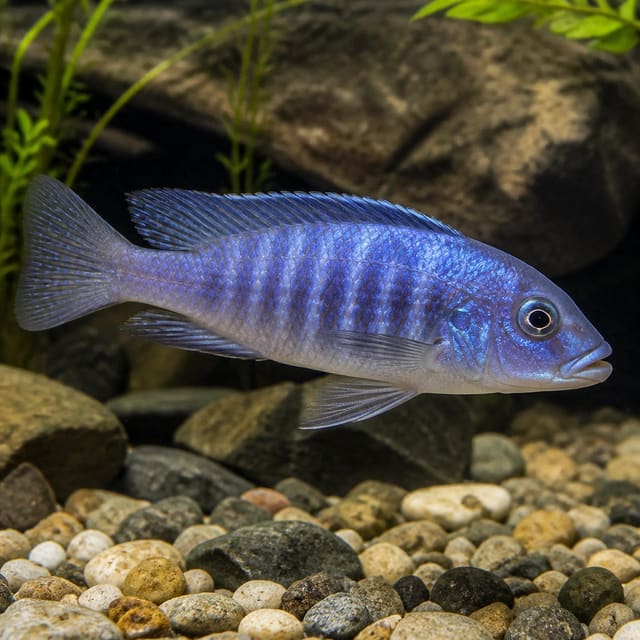
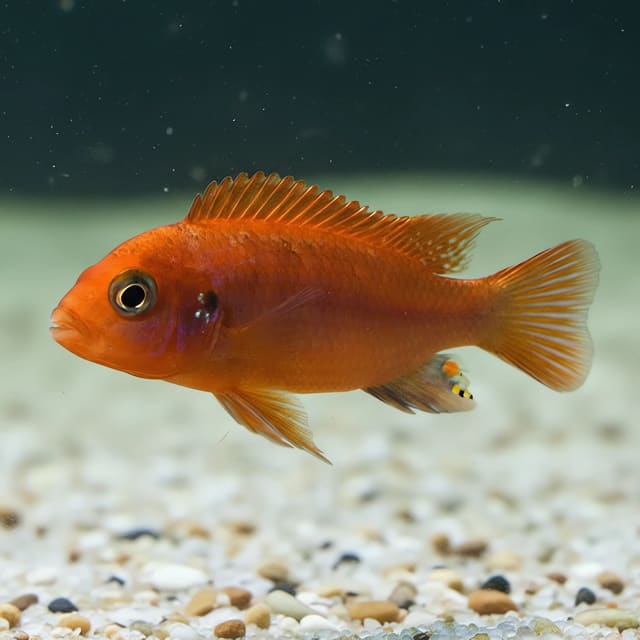
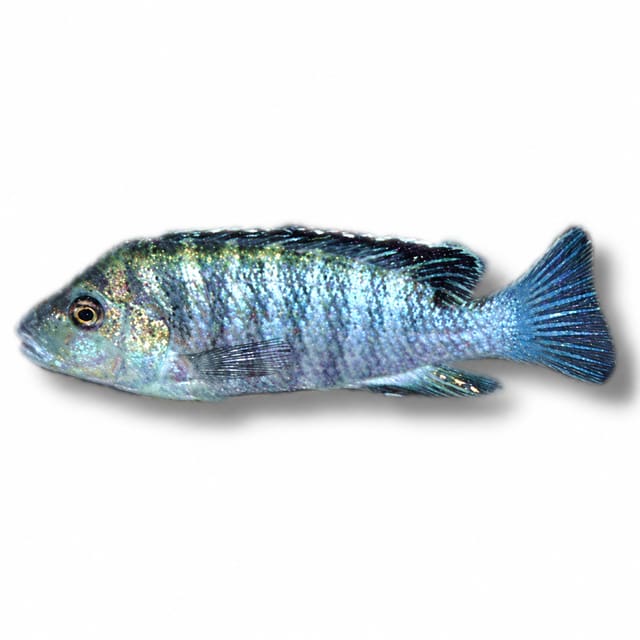
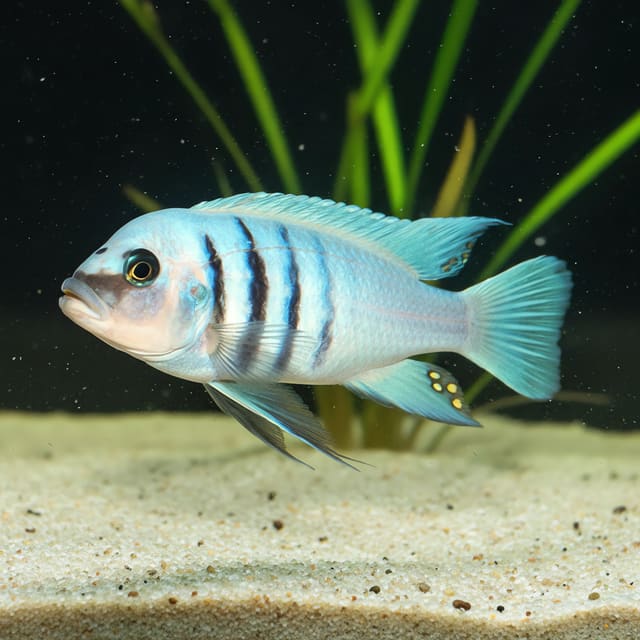
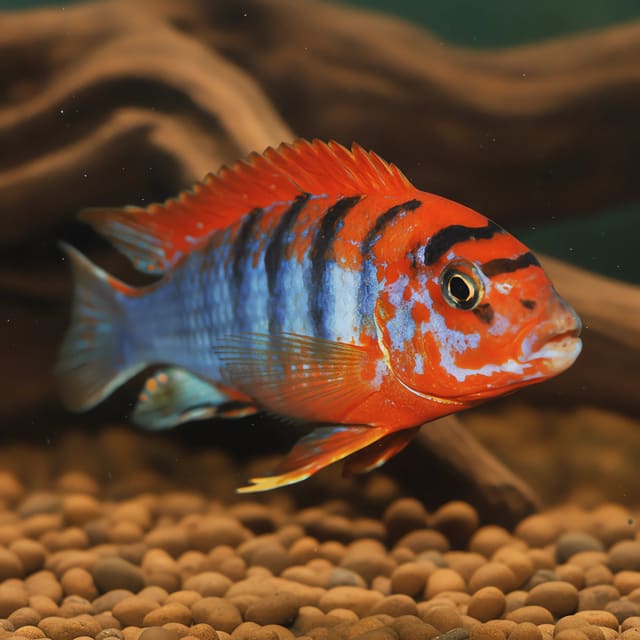
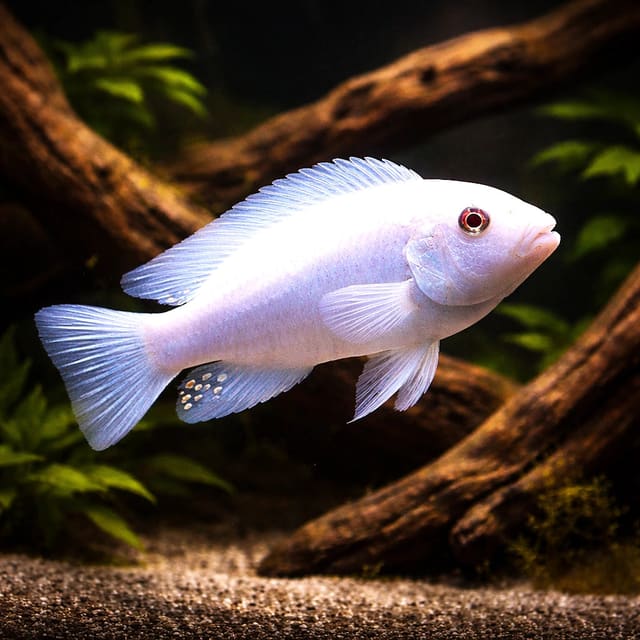
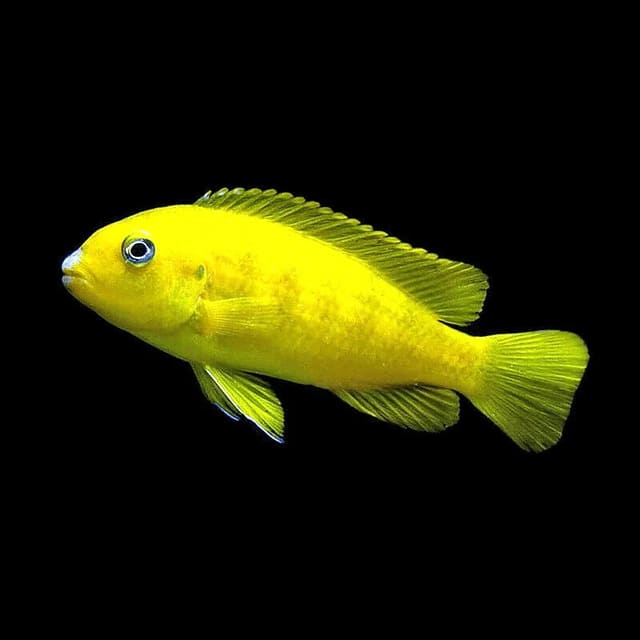
The gallery images are representative of this type of animal rather than photographs of the exact animal supplied, so colours can look slightly different from the live animal.
The species profile gives a 120 × 45 cm aquarium base and approximately 205 litres as an absolute minimum, with larger accommodation preferable. Those figures are a starting boundary for assessment, not a promise that any group will coexist inside it. A dominant individual may control much of a tank, and females or subordinate males can face severe harassment even when rockwork is plentiful.
Before committing to this species, compare other African cichlid listings against the temperament and layout you want. The Acei Cichlid is a different named option to investigate when choosing a Malawi display; read its own care and offer details. It is not a substitute name for Chipokae or an automatic tank-mate recommendation. The useful comparison is between whole aquarium plans, including adult needs, rather than simply between colours.
| A suitable direction | A reason to reconsider |
|---|---|
| Experienced management of robust Malawi cichlids | A quiet mixed community or first aquarium |
| Large mature tank with secure rockwork and escape routes | Buying a juvenile before adult housing is ready |
| Daily observation and usable separation housing | No response available if pursuit becomes damaging |
Seriously Fish lists a base of 120 × 45 cm and approximately 205 litres as an absolute minimum because of the species' aggression. A longer or larger aquarium offers more scope for separating territories, but its layout and inhabitants still determine the result. Extra height cannot replace horizontal space between fish. Measure the usable base, then consider how much remains once rocks, equipment and refuges are installed. Assess the aquarium for adult cichlids rather than the size of fish at dispatch.
The nominal volume is useful for equipment planning, but decoration and the fill level affect the actual water held. The source's example dimensions of 120 × 45 × 38 cm produce 205.2 litres before displacement. This is why its figure is approximate. A tank described by a similar litre number may have a very different shape. When comparing aquariums, keep the footprint, water capacity and access for maintenance together rather than choosing by the biggest number on a label.
OATA's broader Malawi sheet recommends at least 200 litres for a reasonable community, but that group-level advice does not override the more specific Chipokae warning. Nor does it establish how many of these fish your tank can hold. A mixed community of robust cichlids and a planned breeding arrangement present different risks. Discuss the exact adult stocking, likely sexes and separation provision before adding fish, especially if existing residents already defend territories.
Create a rocky layout containing multiple caves and hiding places with small open areas between, as recommended in the species profile. A sandy substrate suits the habitat and allows the fish to interact with the bottom. Arrange rocks securely: Malawi cichlids dig and rearrange substrate, so a stack should remain stable when sand shifts around it. Check that its weight and support are appropriate for the aquarium rather than balancing rocks on a loose mound.
Think through the routes fish will take. A single attractive cave may become a resource one fish controls; several accessible refuges and breaks in the view offer more choices. Leave passages large enough for adult fish and avoid sharp edges or spaces where an animal could become wedged. You also need to be able to see whether a refuge is occupied and whether its occupant can leave to feed. Hidden fish should not disappear from your daily observations.
Rockwork must remain maintainable. Leave a way to remove trapped waste and inspect the substrate without repeatedly dismantling the whole aquarium. OATA notes that Malawi cichlids often uproot plants while digging, so a delicate planted layout may be difficult to maintain. Shelter and territorial divisions should come from reliable structure rather than depending entirely on vegetation. Check the arrangement after significant digging or cleaning to make sure it still provides safe routes.
A decorative gallery scene is not a complete aquarium plan. The needs that matter are secure structure, suitable hard water, oxygenation and enough room for actual fish to escape persistent pursuit. If one fish controls the only open feeding area, the layout is not working simply because there are many rocks. Observe the use of the space and be ready to make a considered change or separate individuals when their welfare requires it.
The Seriously Fish aquarium profile gives 24–28°C, pH 7.6–8.8 and general hardness of 10–25 dGH for this species. Maintain suitable, stable conditions and measure them with appropriate aquarium tests. These figures are husbandry guidance; choosing one endpoint of a range does not automatically produce a good environment. Consider the source water, stability and overlapping needs of any proposed companions before setting a target.
| Water measure | Guidance and use |
|---|---|
| Temperature | 24–28°C, from the species aquarium profile; verify with an independent thermometer. |
| pH | 7.6–8.8, species aquarium guidance for alkaline conditions. |
| General hardness | 10–25 dGH, species aquarium guidance; test the minerals in the water you use. |
| Ammonia and nitrite | Zero, following OATA's Malawi care guidance. |
| Nitrate | OATA advises no more than 20 mg/L above the normal tap-water level. |
The broader OATA Malawi sheet gives 23–27°C, pH 8.0–8.6, general hardness 12–18 dGH and carbonate hardness 10–15 dKH. Those are group recommendations rather than a second set of exact requirements for this fish. The species profile is the basis of the main range on this page. General hardness, carbonate hardness and pH describe different aspects of water, so do not treat a satisfactory reading in one as proof that all three are suitable.
Test the water used for changes as well as the aquarium. A hard-water fish needs a planned water supply, not an assumption based on the region where you live. The water chemistry guide helps distinguish the measurements. Use the water matcher to compare results with stated guidance, then assess each fish in the proposed community separately. A tool cannot predict whether individual cichlids will tolerate each other.
Where minerals or buffering are needed, establish a measured preparation routine before introducing livestock. OATA discusses coral sand or similar buffering substrate for Malawi aquariums, but the water still requires testing. Avoid making large reactive changes because one result appears different from an expectation. Treat replacement tap water with an appropriate conditioner and prepare it so routine changes do not create abrupt differences in temperature or chemistry.
A large, active cichlid aquarium depends on biological filtration. Fish release ammonia, which a working biological filter helps convert through nitrite to nitrate. Ammonia and nitrite are toxic; a clear-looking tank may still contain them. Establish the filter before adding animals, verify readiness by testing and continue checking as the waste load changes. The aquarium preparation guide explains the foundations even for a keeper moving on to a more specialist setup.
OATA recommends oversized filtration and strong aeration for crowded Malawi communities, and the species profile calls for well oxygenated water. Choose equipment for the real aquarium, stocking and maintenance demands. A quoted filter flow is not proof that oxygen or waste processing will remain adequate once the media collects debris. Check the intake, outlet and water movement regularly, and make sure equipment remains accessible without destroying the territorial layout.
Increasing the number of fish also increases feeding and waste. Established bacteria are adapted to the existing load and may not immediately process a large addition. Test during stocking changes and resist adding fish simply to follow a generic crowding recipe. Any approach intended to spread aggression has to remain within the filter's capacity and a workable maintenance routine. Behavioural management and water quality are simultaneous requirements; improving one while neglecting the other is not a successful plan.
Chipokae should not be treated as an exclusively algae-grazing mbuna. FishBase describes the wild fish seeking larger invertebrates and possibly small fish; Seriously Fish also discusses predation on fry and consumption of crustaceans and algae. In captivity, that profile recommends a varied mixture of quality dried, frozen and live foods, with vegetable foods such as spirulina flake or blanched spinach as a supplement. This gives a more appropriate starting point than an algae-only diet.
Choose a suitable complete dried food and add safe aquarium foods for variety. Match particle size to the fish so it can take the food comfortably. Vegetable material can contribute to the diet without replacing every other food source. Equally, enthusiasm for animal food is not a reason to overfeed or offer a nutritionally narrow diet. The practical aim is a balanced, manageable routine that supports normal condition while preserving water quality.
OATA's general Malawi guidance suggests feeding portions eaten within a few minutes twice a day; the exact food choice needs to follow this species' requirements. Watch the whole group when food goes in. A dominant fish can appear very well fed while another misses meals or remains hidden. Present food so you can check individual access rather than making one large pile at a defendable point. Remove leftovers and reduce the portion if food repeatedly reaches the substrate uneaten.
Do not assume a predator needs live fish to be fed appropriately. The species profile offers a range of prepared and frozen choices, making a varied aquarium diet possible without using tank mates or fry as food. Feeding time should help you assess welfare: appetite, balance, breathing and body condition are useful observations. A fish that suddenly refuses food needs investigation of water and social conditions instead of repeated larger offerings that decay in the tank.
OATA recommends a 25% partial water change at least once every week and water testing at least weekly. Use that as a routine foundation, with the actual stocking and test results guiding any additional maintenance. Siphon accessible waste, prepare conditioned replacement water and check temperature before adding it. Rockwork can hide debris, so inspect the places where it collects and adjust access if cleaning repeatedly leaves the same areas untouched.
Check filters for blockage and clean them when needed. OATA advises rinsing the media lightly in aquarium water removed during a change; do not run it under the tap. The aim is to remove accumulated debris while preserving the bacteria that support biological filtration. Recheck flow after the equipment is reassembled. Keep a simple log of water results, maintenance and changes in stock so a developing problem can be traced to more than memory.
A maintenance visit is also a chance to check the structure. Look for shifted sand, unstable rocks, damaged equipment guards and refuges that have become blocked. Count the fish and compare their condition with previous observations. A quiet tank may be settled, but it may also contain a subordinate animal remaining hidden to avoid attack. Spend time observing after the disturbance of cleaning has passed, when normal territorial behaviour resumes.
OATA lists changes in swimming, breathing, colour, feeding, body condition and aggression as signs to monitor. Surface hanging, unusual balance, wounds, spots, missing scales or a sudden loss of appetite deserve attention. These observations are clues, not diagnoses. Check water quality and equipment first, then observe interactions between fish. Record the test results and visible signs before seeking advice so a retailer or fish-health professional can assess the situation more usefully.
Have safe, suitably filtered separation housing ready before there is an emergency. A fish being repeatedly attacked may need removal to protect it, while any injured animal still needs appropriate water, oxygen and observation. Do not keep returning a subordinate fish to the same harassment and assume it will settle. If health concerns persist, seek qualified advice and use treatments only with appropriate guidance for the actual problem and the other animals in the system.
Have the aquarium tested and the receiving plan ready before dispatch. Someone must be present to accept live fish. Check the current delivery and Live Arrival Guarantee policy for coverage, confirmed timing and arrival directions. Fish are hand-bagged in oxygen and packed in an insulated box, with a heat pack when weather calls for it, for transport by a licensed live-animal courier. Follow the supplied acclimatisation instructions and keep transport water out of the aquarium.
Inspect the fish on the day they arrive and observe breathing, balance and visible condition. For a Live Arrival Guarantee claim, the policy calls for same-day contact with the order number and a continuous unboxing video showing the sealed parcel being opened and the fish still in their sealed bag. This provides arrival evidence. After introduction, continue observing both the newcomer and the residents: the first quiet few minutes do not establish that a territorial community will remain safe.
Seriously Fish describes this as one of the most aggressive and territorial mbuna. A dominant male may take control of the aquarium and target other fish, including its own species. This is more serious than occasional display or a brief chase. Repeated pursuit, cornering, exclusion from food and physical injury are signs that the arrangement needs intervention. Do not wait for a fish to become badly damaged before accepting that the current combination is failing.
Large accommodation and rockwork provide management options, but they cannot promise peaceful behaviour. Watch where each animal spends time, whether it can emerge safely and whether feeding is shared. An aquarium dominated by one visible fish while the rest hide is not a successful community merely because no fight is occurring at that instant. The condition and normal activity of subordinate animals are important evidence of whether the plan is working.
Avoid peaceful cichlids such as peacocks, utaka and quieter mbuna, as the species profile advises. Small community fish and vulnerable animals are inappropriate companions for a fish with this level of aggression and predatory behaviour. Shrimp and small invertebrates are at risk, and fry may be eaten. Do not use an animal's ability to fit between rocks as proof that it can live safely with Chipokae.
Seriously Fish permits consideration of similarly sized, robust mbuna that do not resemble Chipokae in pattern. This is a conditional starting point, requiring matching water needs, ample space and observation of the actual fish. It is not a guarantee about every member of a genus or every robust-looking cichlid. Avoid other Melanochromis species because of hybridisation risk. Keep proposed alternatives separate in your thinking from verified companions: a product appearing nearby in a catalogue is not a compatibility assessment.
Both the species profile and OATA discuss increased stocking density as a way of distributing aggression in Malawi communities. OATA's group sheet mentions groups of at least 15, but that is broad community guidance, not a prescription to buy 15 Chipokae. It also requires adequate filtration and oxygenation. A fixed number of fish in a fixed litre volume cannot account for adult size, sex, territorial layout or an especially dominant individual.
The species profile recommends introducing Chipokae late in a suitable mbuna community to limit its opportunity to establish control first. Even then, it warns that the fish may become dominant. An introduction order is one consideration within a planned community, not a cure for incompatible species. Coordinate introductions with a mature filter, monitoring and an immediate separation option. Adding more fish after attacks begin can increase both the number of victims and the waste burden.
Several females per male are discussed in the species profile as a way to reduce concentrated harassment. That advice does not guarantee female safety: the source warns that males can harass females severely, especially in smaller accommodation. More than one male requires a very large aquarium and can still end in the death of subordinate males. Do not regard a small unsexed purchase as a ready-made group that will necessarily remain suitable as it matures.
Colour alone cannot resolve this plan. Mature dominant males differ from golden females, juveniles and subordinate males, so a group of similarly coloured young fish may later develop a very different social structure. Observe as the fish grow and keep the ability to change the arrangement. Buying fewer animals does not automatically solve aggression either; a single target can receive concentrated attention. Seek advice on the whole intended setup before purchase.
This species is a maternal mouthbrooder: females incubate eggs and young in the mouth. Seriously Fish describes reproduction as possible but challenging because of the aggression. Its breeding account discusses one male with at least three females, but that is a specialist breeding context, not a universal display-group minimum. Deliberate breeding requires suitable housing for adults and young, careful observation and responsible plans for any offspring.
A brooding female may stop feeding, and disturbance can affect her brood. Changes in mouth shape or appetite still need careful interpretation alongside water quality and behaviour; they should not be used as a reason to ignore an unwell fish. Seek experienced advice before moving a brooding animal or attempting specialist handling. This care page does not recommend stripping eggs or fry from the female's mouth.
Keep breeding groups away from other Melanochromis and maintain honest records of identity. Plan the eventual adult housing of young fish before encouraging reproduction. Rehoming becomes more complicated with an aggressive species, so establish suitable destinations rather than relying on spare space in a general community. Never release aquarium fish or other organisms outdoors. Responsible keeping continues through the entire life of the animals, including those produced in your care.
FishBase records 12 cm standard length for male or unsexed fish. Standard length excludes the tail fin, so this is not a 12 cm nose-to-tail maximum or a guaranteed size for every fish.
Seriously Fish gives a 120 × 45 cm base and approximately 205 litres as an absolute minimum, with larger accommodation preferable. The fish's aggression, adult stocking and rockwork still determine whether an aquarium is suitable.
There is no universal display-group number. The species profile advises several females per male but warns of severe harassment; multiple males can be dangerous even in very large aquariums. Plan the exact group with specialist advice and separation housing.
No. Its extreme territorial behaviour and potential to injure tank mates make it a specialist choice for experienced keepers who can manage a large, mature Malawi setup and separate fish promptly.
Provide varied quality dried, frozen or suitable live aquarium foods, with vegetable foods such as spirulina flake as a supplement. This species takes animal foods and should not be fed as an exclusively algae-grazing mbuna.
The species aquarium profile gives 24–28°C, pH 7.6–8.8 and 10–25 dGH. Test source and aquarium water, maintain stable suitable conditions and prepare replacement water carefully.
Yes, exceptionally so. Dominant fish may repeatedly chase or injure others, including their own species. Persistent hiding, missed feeding, cornering or damage requires intervention rather than waiting for the fish to settle.
Only consider similarly sized robust mbuna with different patterning after checking the full aquarium plan. Avoid peacocks, utaka, quieter mbuna, small vulnerable animals and other Melanochromis species; no companion is guaranteed safe.
Tropical Fish Co hand-bags fish in oxygen and uses insulated packing, with a heat pack when weather calls for it, through a licensed live-animal courier. Be present to receive the parcel, inspect the fish the same day and follow the current delivery policy and supplied arrival instructions.
FishBase: Melanochromis chipokae supports the species identity, Lake Malawi distribution and 12 cm standard-length record for male or unsexed fish. Its habitat notes describe wild ecology rather than a home-aquarium stocking formula.
Seriously Fish: species profile provides the aquarium footprint, water range, varied diet and particularly important aggression warnings. Its social and breeding guidance needs to be read with those warnings intact.
OATA's African Malawi cichlid sheet supplies broader group guidance on filtration, oxygenation, maintenance and monitoring. RSPCA aquarium environment advice explains the importance of established filtration and control of toxic waste. Apply general guidance alongside the needs of the actual species and individual fish.
No reviews for this item yet. Bought one? Honest reviews only, good or bad.
What customers say about ordering from us
Easy website plenty of info on fish your buying great to pick a time slot
TRACEY DURRANT · 7 Oct 2026
Got some lovely fish thank you
Kevin Mackie · 7 Oct 2026
Reviews of our shop, collected by Judge.me, an independent third-party review collector. Newest first.