Moderate
Acei Cichlid (Pseudotropheus sp. “acei”)
24–26°C · pH 7.5–8.5 · 300L
£7.99
Metangula Johanni Mbuna (Pseudotropheus johannii) is a territorial Lake Malawi cichlid for advanced keepers with a large, rocky, hard-water aquarium. One live fish is supplied per purchase, with three dispatch sizes and no sex guarantee.
Pseudotropheus johannii
Save when buying multiple fish. Each quantity is one fish; sex and pair formation are not guaranteed unless the selected variant explicitly states them.
Metangula Johanni Mbuna (Pseudotropheus johannii) is a territorial Lake Malawi cichlid for advanced keepers with a large, rocky, hard-water aquarium. One live fish is supplied per purchase, with three dispatch sizes and no sex guarantee.

Cichlids are a family of roughly 1,800 accepted species, not one care type. Before buying, identify the exact species and source, then compare adult measurement, usable tank dimensions, social system, territory, tested water, diet and an exit plan. No family-wide minimum tank, water range or tank-mate list is safe.
Maintain these water conditions for optimal health and vibrant colors
Metangula Johanni Mbuna (Pseudotropheus johannii) is a territorial rock-dwelling cichlid from Lake Malawi. It is offered here in 3–4 cm, 4–5 cm and 5.5–7 cm dispatch sizes, with one live fish supplied per purchase. The size you select is the size supplied, not the adult size. Seriously Fish records adults at 12 cm standard length, so choose the aquarium and community for a mature fish rather than for the compact animal that arrives.
The name has changed in scientific use. Older aquarium literature and the trade often place the species under Melanochromis johannii, sometimes misspelled “johani”. The accepted identity for this page is Pseudotropheus johannii. FishBase treats the older name as a synonym and records the species as endemic to Lake Malawi, where it occurs around rocky shoreline habitat.
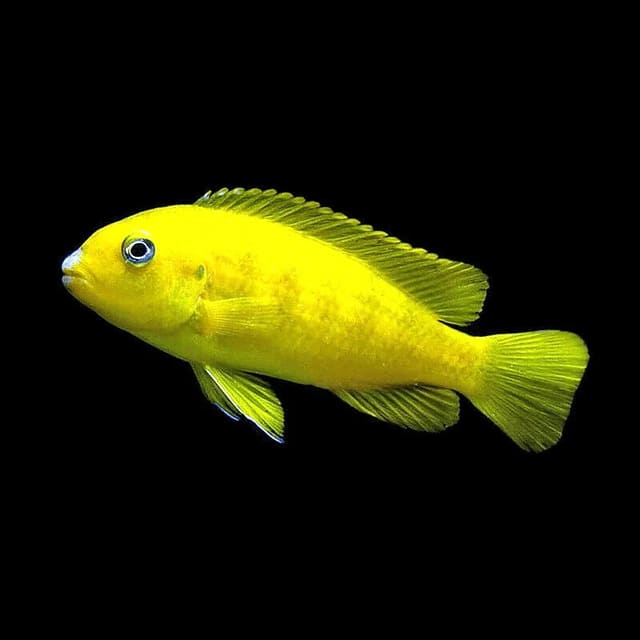
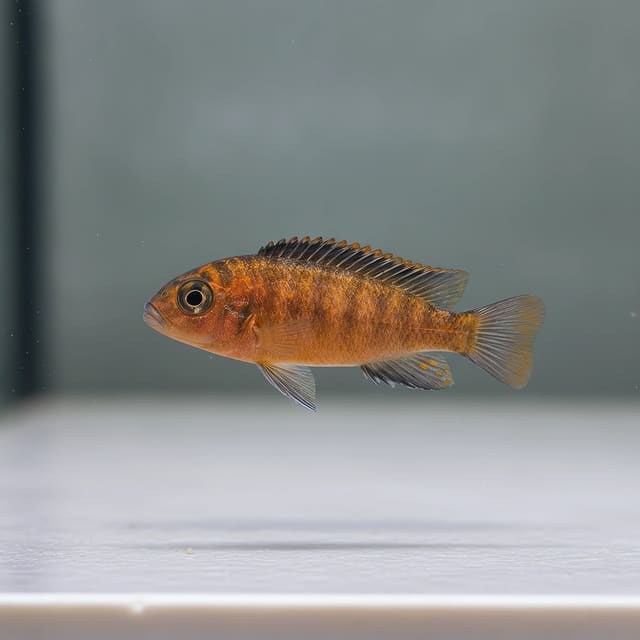
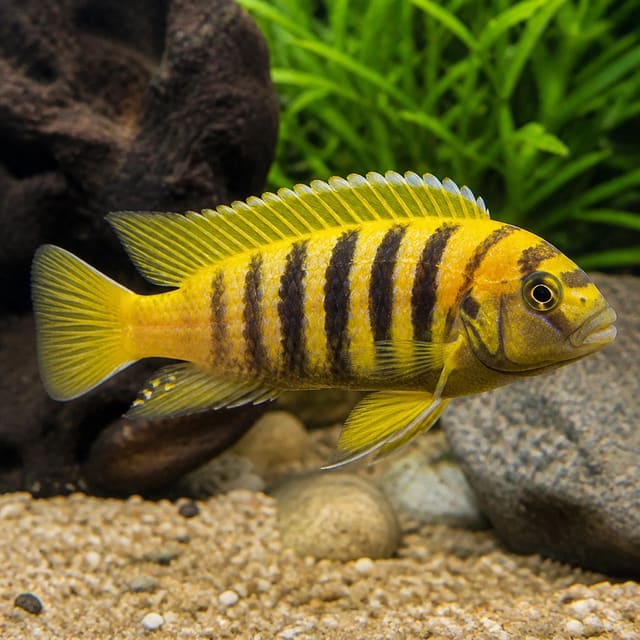
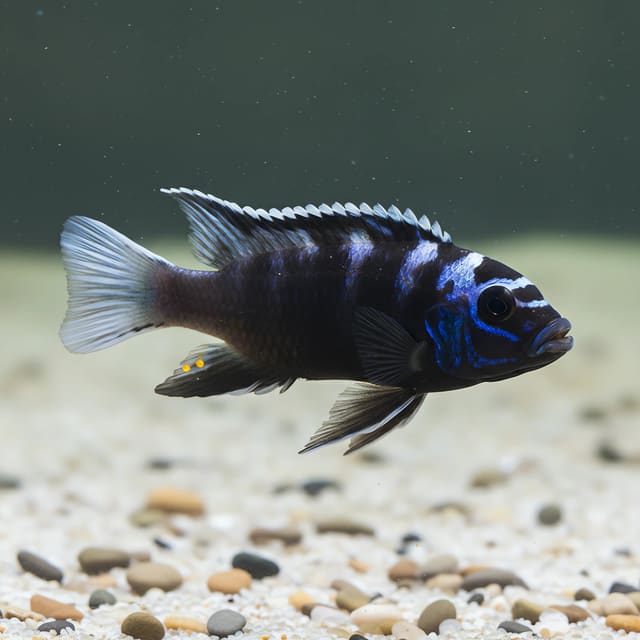
“Metangula” remains part of this offer's trade name. It identifies the offer, while collection origin, locality purity and exact adult pattern remain unspecified. Colour also changes with sex, maturity, social context and condition, so the gallery cannot guarantee the precise appearance of the fish that arrives.
| Suits | Not suited to |
|---|---|
| An experienced Malawi keeper who can plan territory, adult bioload and compatible hard-water stock | A peaceful mixed community, a soft-water aquarium or a first uncycled tank |
| A long aquarium with a 90 × 45 cm base or larger, stable rockwork, sand, strong filtration and high oxygenation | A lightly furnished tank where one dominant fish can control the whole space |
| A keeper prepared to monitor aggression as juveniles mature and to separate a fish if necessary | Someone relying on the juvenile's present colour to guarantee sex or adult temperament |
| A vegetable-rich omnivorous feeding plan matched to mbuna digestion | Frequent rich, meaty feeding or an unmeasured general community diet |
The three size labels describe dispatch length, not three different species or a final adult size. A 3–4 cm fish needs the same long-term habitat planning as the larger choices. The smaller animal may also change markedly as it matures. Preserve the label selected at purchase, but do not use it to cap future growth.
FishBase records 10 cm total length, while Seriously Fish records 120 mm standard length. Total length and standard length use different endpoints, so these figures remain separately labelled rather than being merged into one adult maximum. Choose the aquarium for a mature mbuna, not the selected dispatch size.
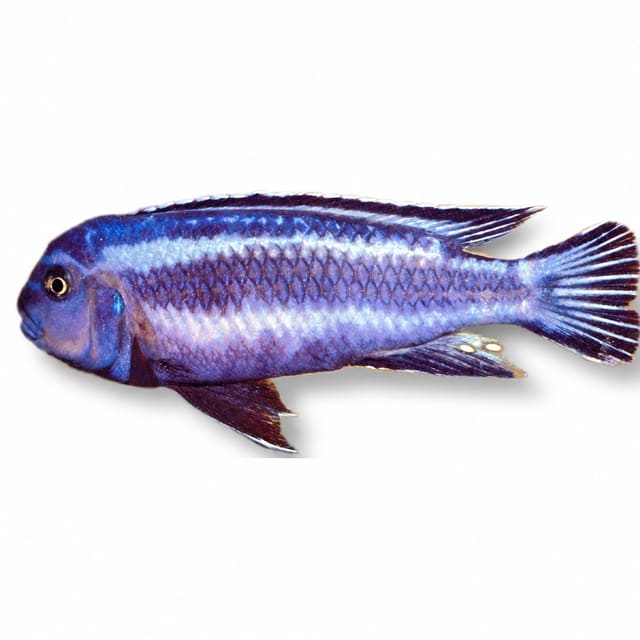
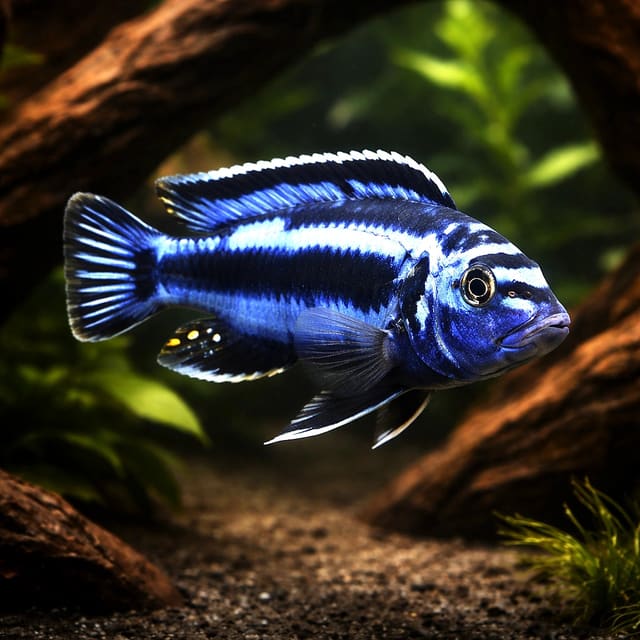
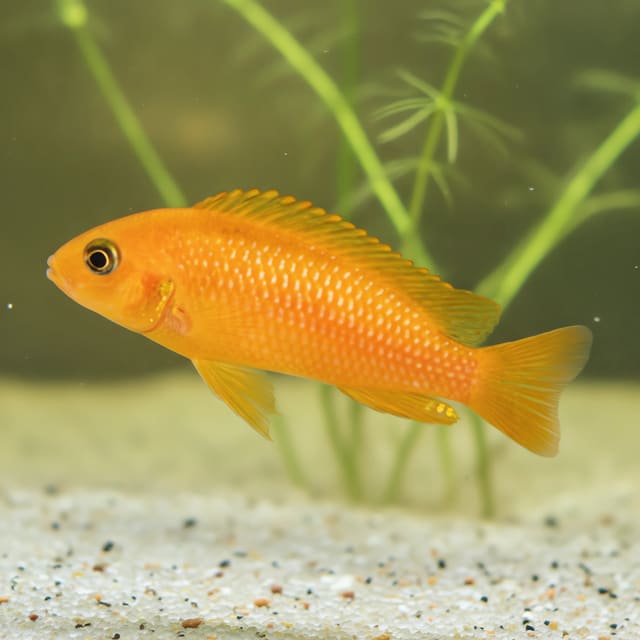
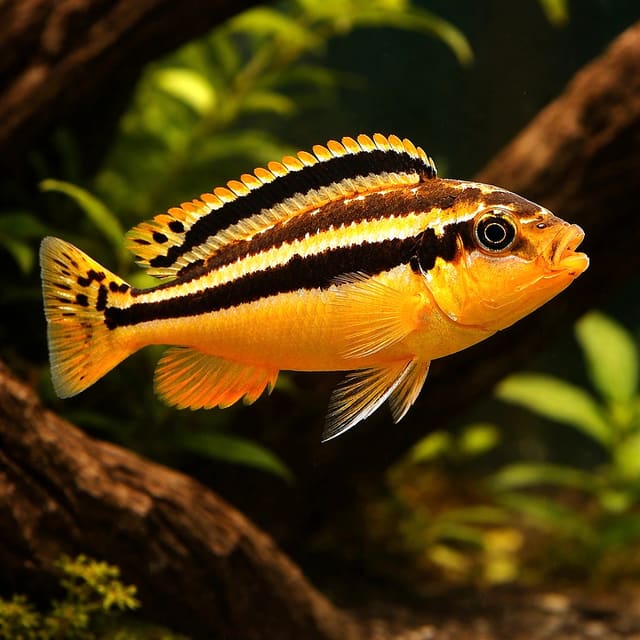
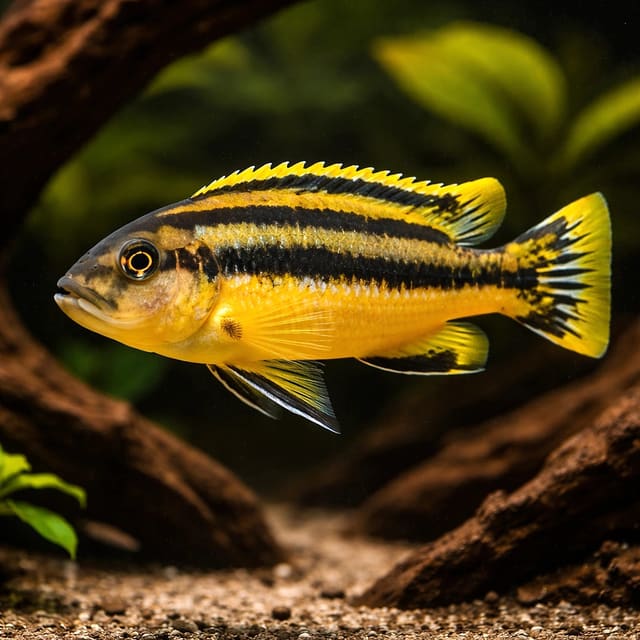
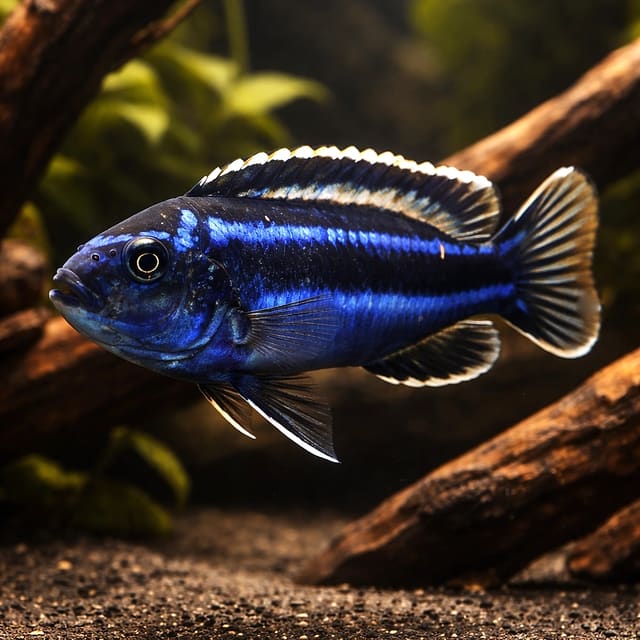
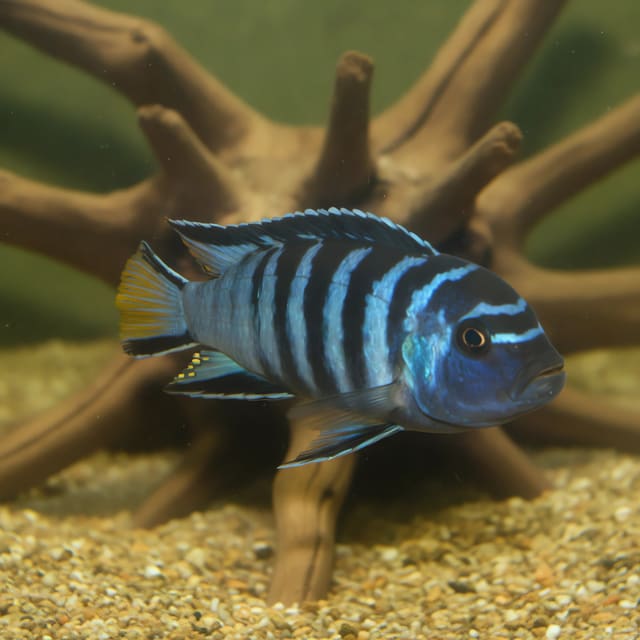
Adult males are described as blue-black with bright blue striping, while adult females are orange. That species-level sexual dimorphism does not make an unsexed juvenile order predictable. Sex is guaranteed only when the selected option explicitly states male or female. This Metangula Johanni Mbuna listing has no sex-guaranteed option.
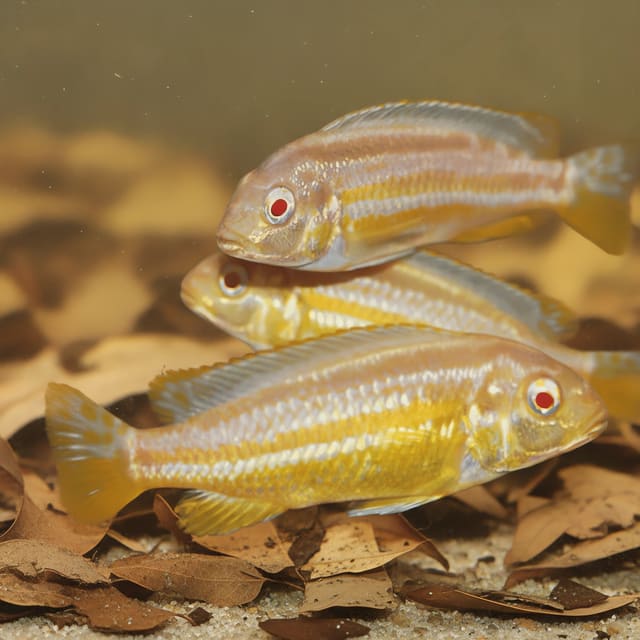
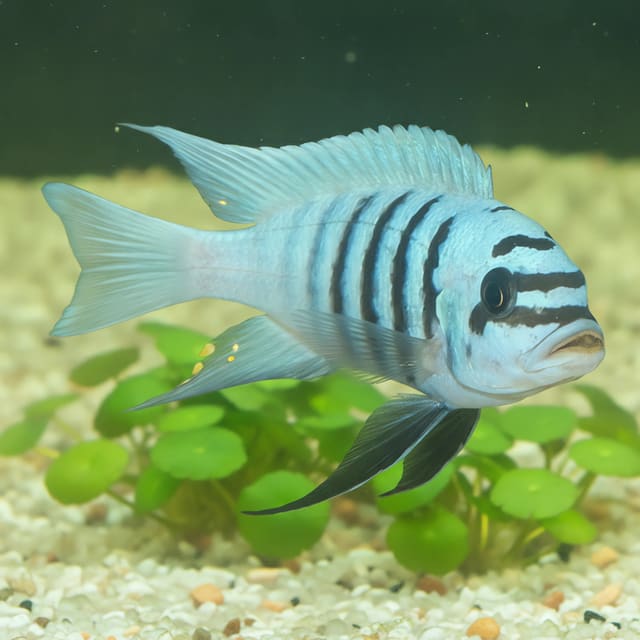
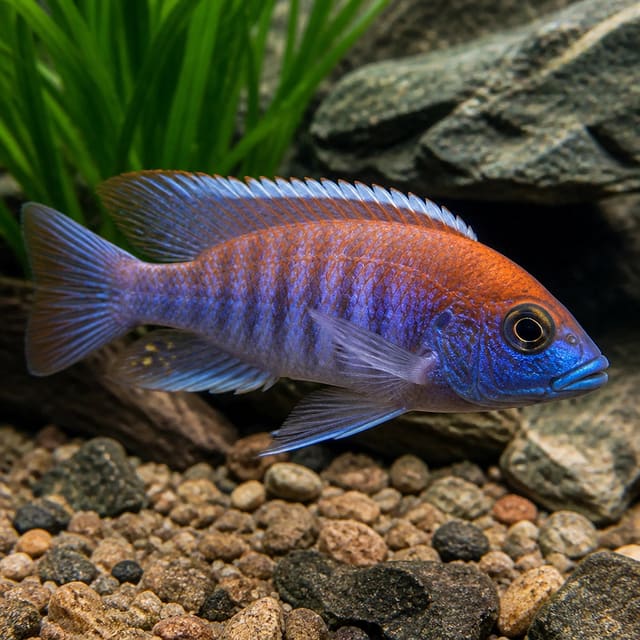
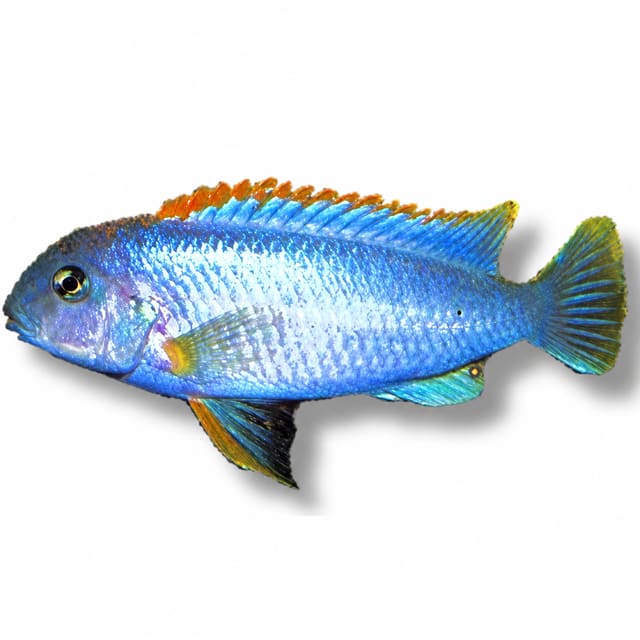
Browse the African cichlid collection to compare other offers, but treat them as alternatives rather than automatic tank mates. Gallery images have been digitally enhanced to improve image quality. Natural colour, pattern, size and maturity can vary between live animals.
Seriously Fish gives a 90 × 45 cm base and a volume of about 154 litres for this species. Use that as a starting point for one territorial fish, not as a promise that every community will fit the same aquarium. A full Malawi group needs more swimming room, more territories, more filtration capacity and a stocking plan based on every fish's adult size. OATA's Malawi guidance recommends at least 200 litres for a reasonable community, with larger aquariums preferred where multiple males or assertive species are involved.
Length matters as much as nominal litres. A tall narrow aquarium may hold the same volume while providing fewer separated territories. Prioritise a long base, then build stable rock zones with open lanes between them. Keep enough unobstructed space for fish to move without being forced through one dominant animal's cave.
Complete the aquarium and establish the filter before the fish arrives. The first tropical tank guide explains biological preparation. Malawi cichlids are often described as hardy, but that does not make ammonia or nitrite acceptable. Add livestock only after the filter is mature and both toxic waste readings are zero.
Use aquarium-safe stone arranged to create caves, shaded recesses and repeated breaks in direct view. Set heavy base rocks securely before fish begin digging. Do not balance unstable pieces on loose sand where excavation can undermine them. Test every structure by hand before filling the aquarium and leave enough clearance for maintenance.
A sandy substrate supports natural foraging and digging. Keep some open patches between rock piles so subordinate fish can move rather than becoming trapped in a dead end. Multiple entrances are more useful than one decorative cave that a dominant fish can guard completely.
Seriously Fish advises that plants should not be used because they will be eaten, while OATA notes that Malawi cichlids often dig, rearrange substrate and uproot plants. A rock-and-sand layout is therefore the reliable design. If any hardy plant is attempted, treat it as optional decor rather than a substitute for caves, territory breaks or open water.
Active cichlids in a deliberately busy community produce a substantial waste load. Size the filter for the completed adult stocking plan, not the fish's dispatch length. Seriously Fish describes turnover of roughly four to five times the aquarium volume each hour for an aquarium around 154 litres, while OATA broadly recommends oversized filtration and aggressive aeration for crowded Malawi communities.
Flow should move waste towards the filter without turning the aquarium into an exhausting current. Place returns so oxygen-rich water reaches the full tank and dead spots do not collect debris. Surface movement supports gas exchange; additional aeration can be valuable when temperature, stocking density and activity all increase oxygen demand.
The RSPCA explains the biological role of filtration: fish produce toxic ammonia, established bacteria convert it to nitrite and then to the less immediately toxic nitrate. Preserve that bacterial population. OATA advises rinsing filter media lightly in removed aquarium water rather than under the tap, where chlorine or chloramine can damage it.
The species profile gives 23–27 °C, pH 7.6–8.8 and 10–25 dGH for aquarium care. FishBase records narrower wild environmental values of 22–25 °C, pH 8.0 and 9–19 dH. OATA's OATA Malawi cichlid care sheet gives 23–27 °C, pH 8.0–8.6 and 12–18 dGH. These records overlap, but their context differs. This page uses the species-profile aquarium range while treating the group sheet as general UK guidance.
| Measure | Planning guidance |
|---|---|
| Temperature | Keep a stable 23–27 °C and verify it with a separate thermometer. |
| pH | Maintain 7.6–8.8 without abrupt chemical adjustment. |
| General hardness | Use 10–25 dGH as the species-profile range and test the aquarium itself. |
| Ammonia | Zero; any detectable result requires prompt investigation. |
| Nitrite | Zero; do not add planned livestock while it is detectable. |
| Nitrate | Monitor the trend and control it through feeding, stocking, filtration and water changes. |
UK tap water varies. Test pH and hardness rather than assuming every supply is naturally suitable for Malawi cichlids. Treat chlorine or chloramine with an aquarium conditioner. If the source water is very soft or acidic, use a planned, repeatable mineral strategy rather than making improvised corrections after the fish arrives. The water-chemistry guide explains the measures, and the water matcher helps compare the aquarium with the stated range.
Stability matters within the range. A rapid shift from pH 7.7 to 8.6 is not made safe merely because both values appear in a profile. Measure replacement water, match temperature and avoid large sudden changes in mineral content. Keep a written baseline so developing drift is visible before fish behaviour changes.
FishBase describes Pseudotropheus johannii as omnivorous, feeding on plant and animal matter. Seriously Fish adds the important captive-care detail that vegetable matter such as spirulina foods or blanched greens should form a large proportion of the diet, supplemented with appropriate live or frozen foods. The accurate summary is vegetable-rich omnivory, not strict herbivory and not a protein-heavy predator menu.
Choose a complete food formulated for mbuna or Malawi cichlids, with substantial algae or plant content, as the regular base. Offer a varied menu within the fish's digestive needs. A small portion of suitable live or frozen food can supplement the staple, but rich meaty foods should not dominate.
Feed only what the fish consume promptly. OATA's care-sheet guidance suggests small meals twice daily, but portion size still depends on food density, fish size, body condition and the number of animals competing. Watch each fish gain access without pouring in extra food to compensate for poor territory design. Remove uneaten material before it decomposes.
Observe the abdomen and body condition over time. A fish that stops feeding, becomes swollen or loses condition needs a water-quality and husbandry review before a treatment is chosen. Do not diagnose one sign from a photograph or assume every feeding problem is the same disease.
OATA strongly recommends a partial water change of 25% at least once every week for Malawi cichlids. Adjust frequency according to measured nitrate, the adult stocking load and the amount fed, while keeping replacement water close in temperature and chemistry. Condition tap water before it reaches fish or biological media.
Siphon open sand and accessible spaces between rocks, but avoid destabilising the structure. Check beneath and behind the visible rockwork for trapped waste. Inspect intake guards, air stones, surface movement and filter flow. If a cave must be moved, plan where displaced fish can retreat and monitor aggression after the layout changes.
Clean obstructed filter media gently in removed aquarium water. Keep enough mature media operating to support the biological load. Judge biological filtration by water tests and flow checks rather than by a clear canister or a strong motor sound.
Confirm temperature, pH, ammonia and nitrite before delivery. Ensure the rockwork is secure, the lid is fitted and a separation aquarium or suitable temporary option is ready if aggression appears. Be present to receive the live-animal parcel.
Do not use a juvenile's first quiet hours as proof that the community is settled. Territorial behaviour can intensify after the fish explores the rockwork or matures. Continue observation through feeding and at different times of day.
Changes in breathing, posture, appetite, swimming, colour or hiding deserve attention, but no single sign proves a diagnosis. Start with temperature, ammonia, nitrite, nitrate and pH. Review recent additions, feeding, maintenance and equipment changes. Compare the fish with its own normal behaviour and the interactions of the whole group.
Persistent chasing, a fish pinned behind equipment, torn fins, missed meals or rapid breathing may reflect social pressure, water quality, disease or more than one factor. Separate a fish when immediate safety requires it, preserve the water-test record and seek experienced aquatic help rather than combining medicines on guesswork.
Prepare the adult aquarium before selecting a dispatch size. The species profile gives a 90 × 45 cm base, about 154 litres, as a minimum starting footprint for this fish, while a mixed Malawi community generally needs a larger plan. Build the rockwork directly and securely so digging cannot undermine it. Create several caves and broken lines of sight, leave open water over sand and test that no single route can be controlled from one central position.
Confirm that the filter is mature and sized for the intended adult biological load. Ammonia and nitrite must both be zero. Record temperature, pH, hardness and nitrate before purchase, then compare them with the listing ranges instead of trying to correct unfamiliar water on delivery day. Check that surface movement and aeration remain strong after the rockscape and lid are in place.
Have a vegetable-rich complete food, conditioner, test kits, a suitable net and a secure separation option ready. Decide who will receive the parcel and who can act if aggression appears. The smaller dispatch choices still require the same adult planning, and this offer does not guarantee sex. A written baseline for water, equipment and the planned community makes later changes easier to recognise and prevents a juvenile's temporary colour or quiet behaviour from becoming the stocking plan.
Pseudotropheus johannii is not a peaceful community fish. Males are territorial towards their own kind, and the pressure can fall repeatedly on a subordinate fish when the aquarium is too small or the rockwork offers no escape route. Plan several separated rock zones, open routes between them and more hiding places than one dominant fish can guard.
Aggression cannot be solved by one rule in isolation. Aquarium length, rock placement, adult sex balance, the order of introduction, body size, species similarity, total stocking and feeding access all influence the result. A keeper must watch the actual group and be prepared to separate fish rather than waiting for injuries.
OATA broadly recommends groups of at least 15 Malawi cichlids and slight overstocking to spread aggression, alongside at least 200 litres, oversized filtration and strong aeration. This is community planning advice, not an instruction to buy 15 Johanni Mbuna of this species. A Malawi community should include compatible species selected for the finished aquarium, and the biological load must remain within the filter and maintenance capacity.
Seriously Fish recommends several females per male and warns that more than one male requires a large aquarium. This listing does not guarantee sex, so the available size choices cannot be used to order a reliable harem. If a future sex ratio matters, the keeper needs a plan for animals that mature differently from expectation.
Do not add fish simply to increase a head count. Crowding without sufficient filtration, oxygenation, territory structure and observation exchanges one risk for several others. Additions also increase the filter's biological load, so water quality must remain measurable and stable.
| Category | Decision |
|---|---|
| Similarly sized robust mbuna | Potentially suitable in a large, correctly structured Lake Malawi aquarium after comparing adult temperament, colour pattern and territory use. |
| Aulonocara | Seriously Fish names similarly sized examples, but use caution because many peacocks are less assertive than mbuna and may be outcompeted. |
| Lake Malawi Synodontis | OATA allows some species in Malawi setups; match adult size, water needs, space and nocturnal territory before choosing one. |
| Peaceful community fish | Avoid. Temperament and hard alkaline water requirements make the combination unsuitable. |
| Other Melanochromis species | Avoid because Seriously Fish warns that they may hybridise. |
| Multiple male Johanni Mbuna | High risk. Males are territorial and require a very large, carefully structured aquarium if more than one is attempted. |
These are screening categories, not a shopping list. An African-cichlid label alone is insufficient for compatibility. Research the exact species, adult size, water range, diet and social behaviour before purchase.
Adult male Johanni Mbuna are blue-black with bright blue stripes; females are orange. Similar-looking males can be treated as rivals, while juveniles may not show the final adult colour. Avoid building a plan on colour alone, and do not infer sex from the gallery image.
The species can be confused with similar striped mbuna. Keep identity records for every fish and avoid mixing animals where uncertain identity raises aggression or hybridisation risk. If a fish matures into an unexpected appearance, reassess the whole stocking plan instead of forcing it to fit the original assumption.
Respond early. Use the prepared separation option, test the water and review the stocking plan. Rearranging decor can alter territories, but it does not guarantee compatibility and may briefly intensify competition. Physical safety comes before preserving a preferred display.
Seriously Fish describes maternal mouthbrooding and a breeding harem of one male with at least three females in a species aquarium. That specialised breeding guidance cannot set the outcome of an unsexed purchase or make the same arrangement suitable for every community.
A mouthbrooding female may withdraw and need refuge from persistent attention. Breeding plans require a separate strategy for fry, holding females and preventing repeated harassment. This product page does not provide a home-breeding recipe; it explains why sex and group structure matter before the fish is ordered.
FishBase records Pseudotropheus johannii at 10 cm total length, while Seriously Fish records 12 cm standard length. These measurements use different endpoints, so retain both records separately and do not treat either as one universal adult maximum; dispatch size is not final size.
The species profile gives a 90 × 45 cm base and about 154 litres as a starting point. A Malawi community needs more planning: OATA broadly recommends at least 200 litres for a reasonable group, with enough length, rock zones, filtration and oxygenation for every adult fish.
This unsexed offer does not support a fixed species group number. OATA's Malawi guidance uses communities of at least 15 compatible cichlids, while Seriously Fish advises several females per male and a large aquarium for more than one male. Build the group from a complete adult stocking plan, not one species count.
Pseudotropheus johannii is better suited to an advanced keeper. Hard alkaline water, stable rockwork, strong filtration, vegetable-rich feeding and active aggression management all matter, and a juvenile's calm behaviour does not predict the mature community.
Use a complete mbuna or Malawi cichlid food with substantial algae or plant content as the regular base. FishBase describes plant and animal matter in the natural diet, while Seriously Fish says vegetable matter should form a large proportion of captive feeding; offer suitable live or frozen foods sparingly.
The species profile gives 23–27 °C, pH 7.6–8.8 and 10–25 dGH. Keep those values stable, well oxygenated and free of ammonia and nitrite. OATA's narrower 23–27 °C, pH 8.0–8.6 and 12–18 dGH figures are broad Malawi-group guidance.
It is territorial, especially between males and towards similar fish. Persistent chasing can injure or exclude a subordinate animal even without classic fin-nipping. Use a long rock-filled aquarium, broken lines of sight and a ready separation plan; peaceful or long-finned community fish are poor choices.
Consider only carefully matched, similarly sized robust mbuna, suitable Aulonocara or some Lake Malawi Synodontis in a sufficiently large Malawi setup. Avoid peaceful community fish and other Melanochromis species. Every candidate still needs exact adult-size, water, diet and temperament checks.
Tropical Fish Co hand-packs live fish and uses a licensed live-animal courier under the current delivery and Live Arrival Guarantee policy. Be present, record a continuous unboxing video from the sealed parcel through to the fish in its sealed bag, inspect it the same day, float the sealed bag for 20–30 minutes and contact the store promptly if anything is wrong.
The trade word Metangula identifies this offer; collection origin and locality purity remain unspecified. Adult-length records use different definitions, and Malawi community advice is not presented as an optimum for every individual. No lifespan, sex, exact adult colour, community outcome or breeding result is guaranteed.
No reviews for this item yet. Bought one? Honest reviews only, good or bad.
What customers say about ordering from us
Easy website plenty of info on fish your buying great to pick a time slot
TRACEY DURRANT · 7 Oct 2026
Got some lovely fish thank you
Kevin Mackie · 7 Oct 2026
Reviews of our shop, collected by Judge.me, an independent third-party review collector. Newest first.