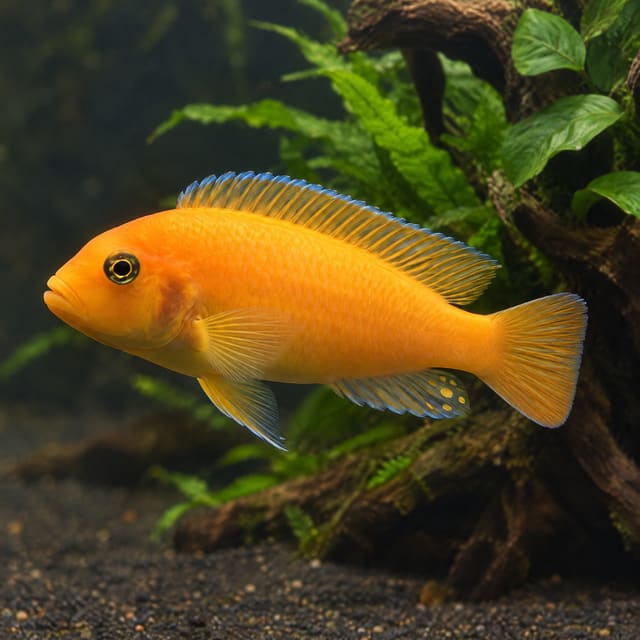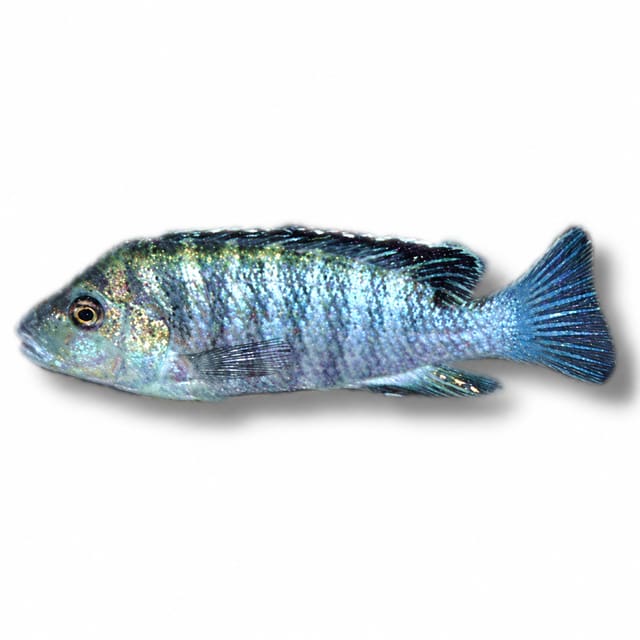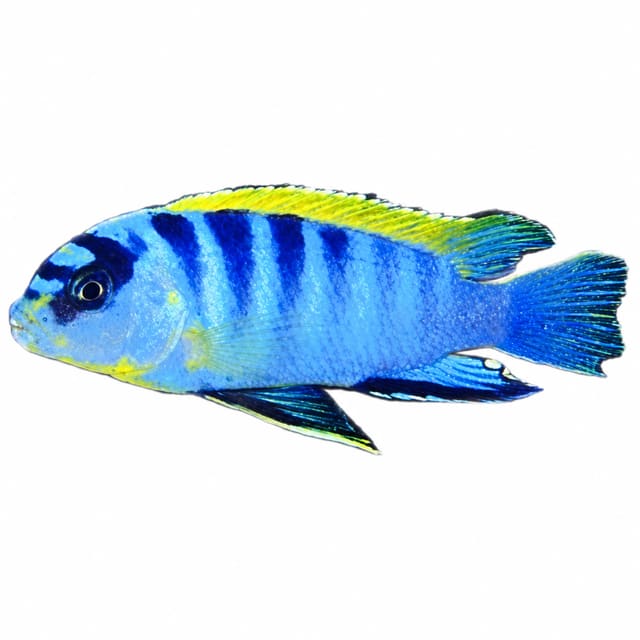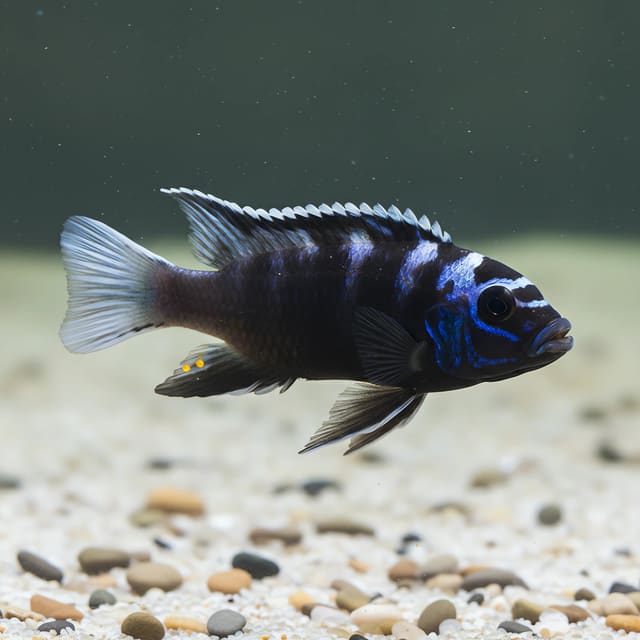
Moderate
Acei Cichlid (Pseudotropheus sp. “acei”)
24–26°C · pH 7.5–8.5 · 300L
£7.99
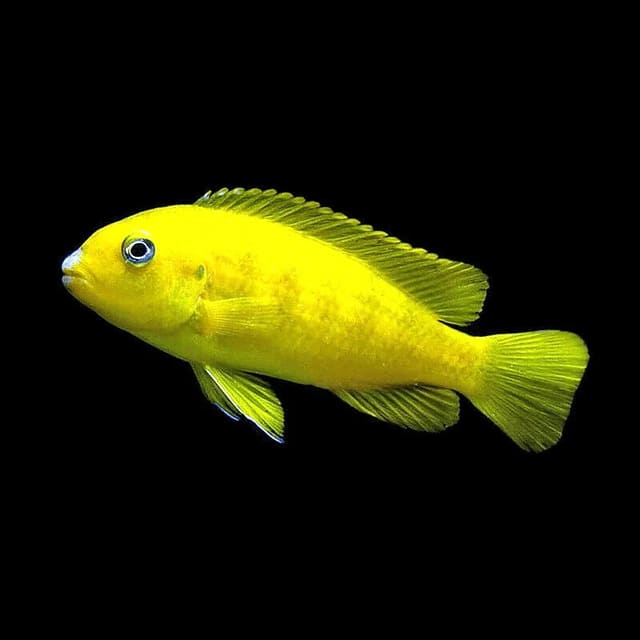
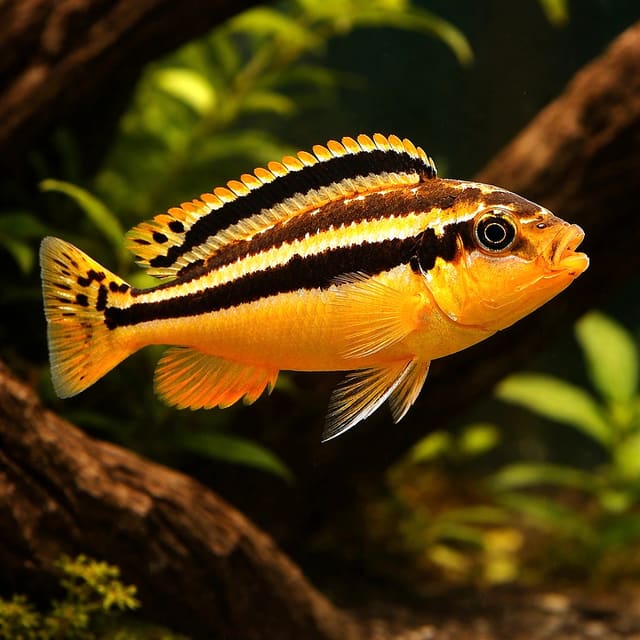
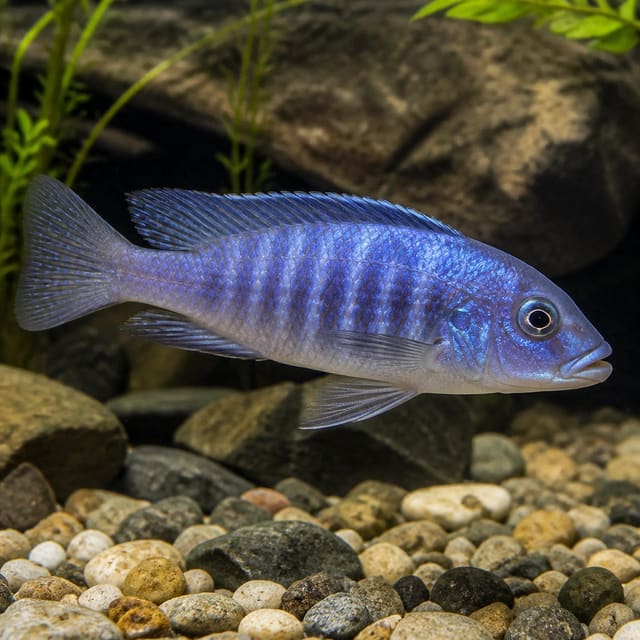
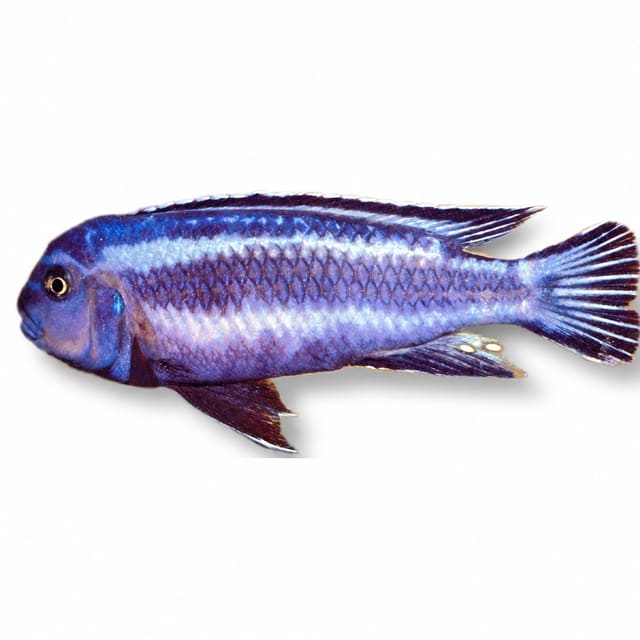
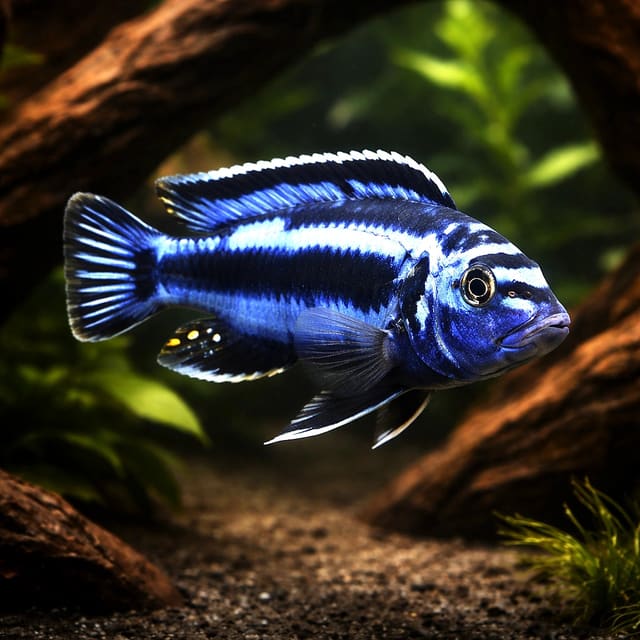
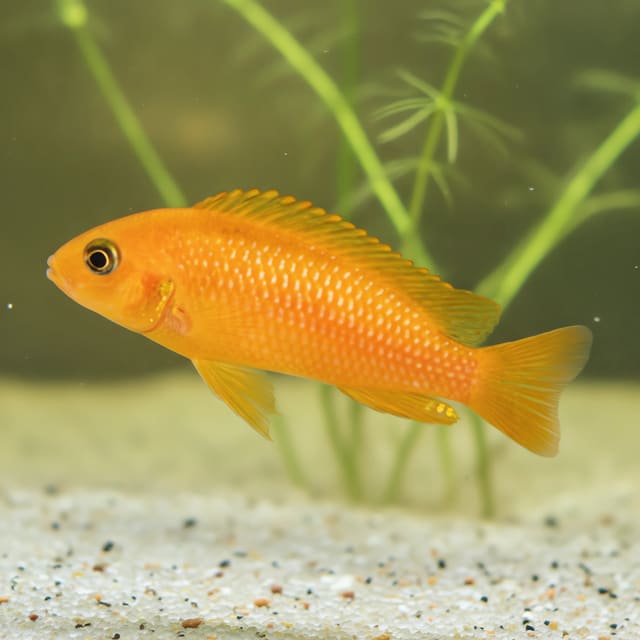
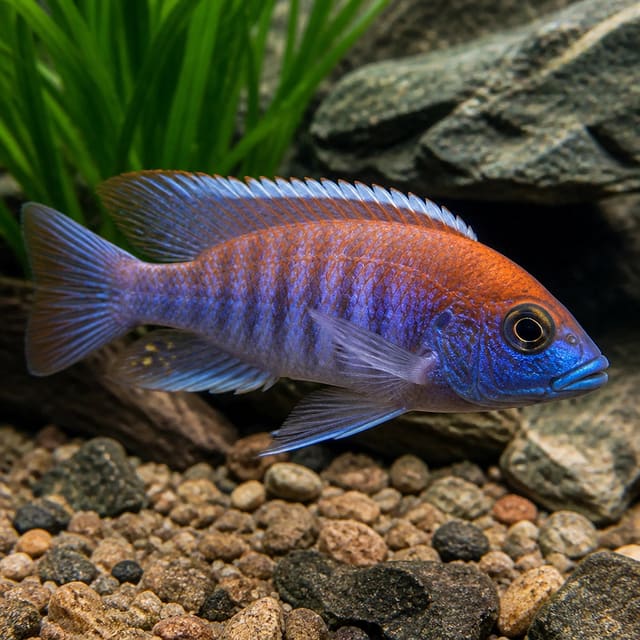
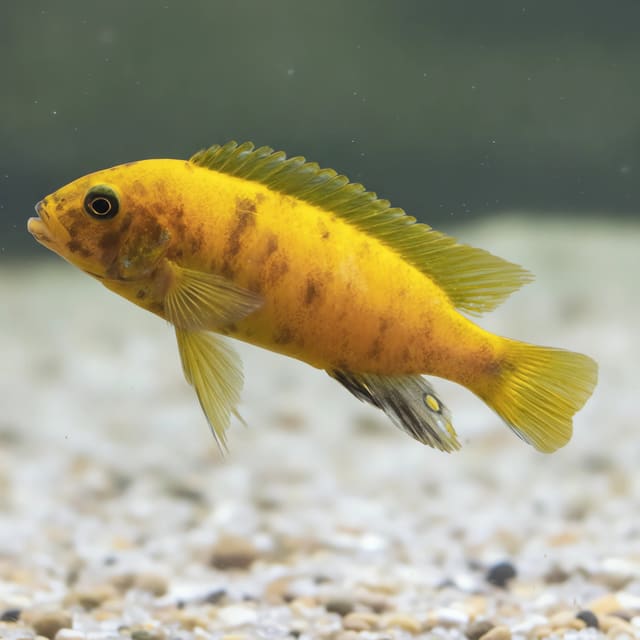
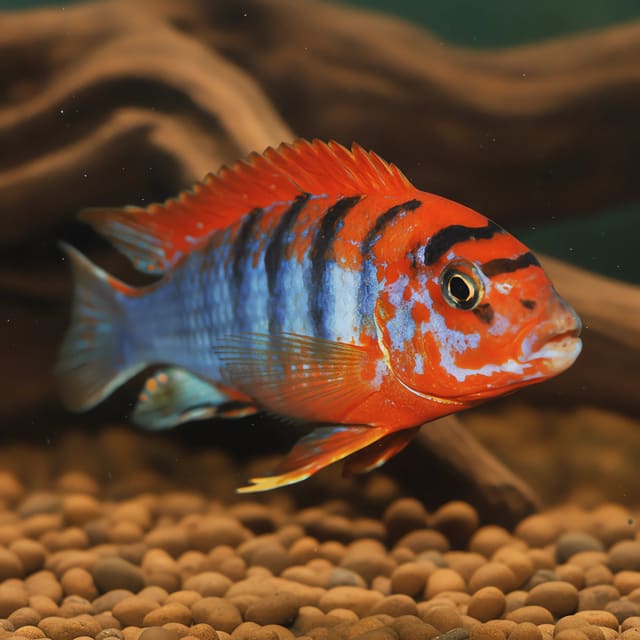
Melanochromis 'Red' (Melanochromis interuptus) is a rock-dwelling Lake Malawi mbuna for a mature, hard and alkaline cichlid aquarium. One purchase supplies one unsexed fish in the size selected. Plan the full Malawi community carefully because these colourful cichlids can be highly territorial and need robust filtration, strong aeration and substantial rockwork.
Melanochromis interuptus
Save when buying multiple fish. Each quantity is one fish; sex and pair formation are not guaranteed unless the selected variant explicitly states them.
Melanochromis 'Red' (Melanochromis interuptus) is a rock-dwelling Lake Malawi mbuna for a mature, hard and alkaline cichlid aquarium. One purchase supplies one unsexed fish in the size selected. Plan the full Malawi community carefully because these colourful cichlids can be highly territorial and need robust filtration, strong aeration and substantial rockwork.
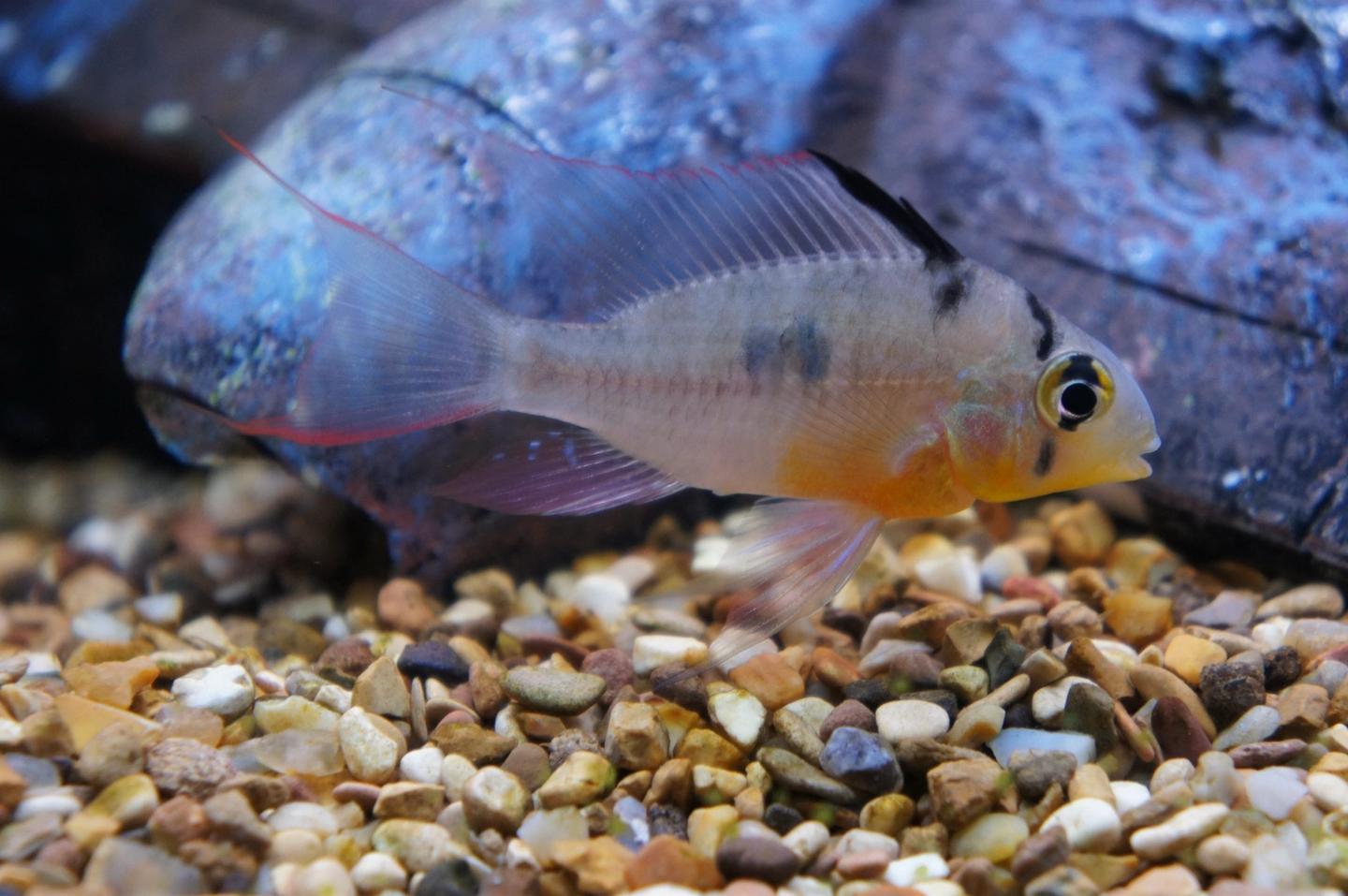
Cichlids are a family of roughly 1,800 accepted species, not one care type. Before buying, identify the exact species and source, then compare adult measurement, usable tank dimensions, social system, territory, tested water, diet and an exit plan. No family-wide minimum tank, water range or tank-mate list is safe.
Maintain these water conditions for optimal health and vibrant colors
Melanochromis 'Red' (Melanochromis interuptus) is sold as one live freshwater fish per purchase. It belongs to the Lake Malawi cichlid trade and is presented here as a rock-dwelling mbuna rather than as a general community fish. The most important buying decision is therefore not simply whether its colour appeals to you, but whether your aquarium is already planned around territorial Malawi cichlids, hard alkaline water and a comparatively heavy biological load.
This parent listing carries four recurring dispatch-size choices: 3–4 cm, 4–5 cm, 5.5–7 cm and 7–9 cm. Use the live selector for the choice offered when you order. The size you select is the size supplied, not the adult size. Dispatch measurements describe the fish at sale; they should not be read as a promise about its final length. Plan conservatively for a territorial Malawi mbuna and do not use the sale measurement as its expected final size.
Sex is guaranteed only when the selected option explicitly states male or female. This Melanochromis 'Red' listing has no sex-guaranteed option. Colour, markings or a photograph are not a safe basis for promising sex, particularly when young fish may not show dependable adult differences. Expect an unsexed fish and build flexibility into any social plan.
The scientific spelling retained across this listing is Melanochromis interuptus. Public genus-level material places Melanochromis among the haplochromine cichlids endemic to Lake Malawi and describes the genus as rock-dwelling mbuna. Detailed numerical husbandry below is labelled honestly as broad Malawi-cichlid guidance rather than a species-specific optimum. You can read the genus background for Melanochromis for that limited natural-history context.
For browsing rather than compatibility advice, the African cichlid collection shows the wider range. Products shown there are alternatives to compare, not automatic tank mates. Every candidate still needs to be checked for adult scale, aggression, diet and water requirements before it joins an established group.
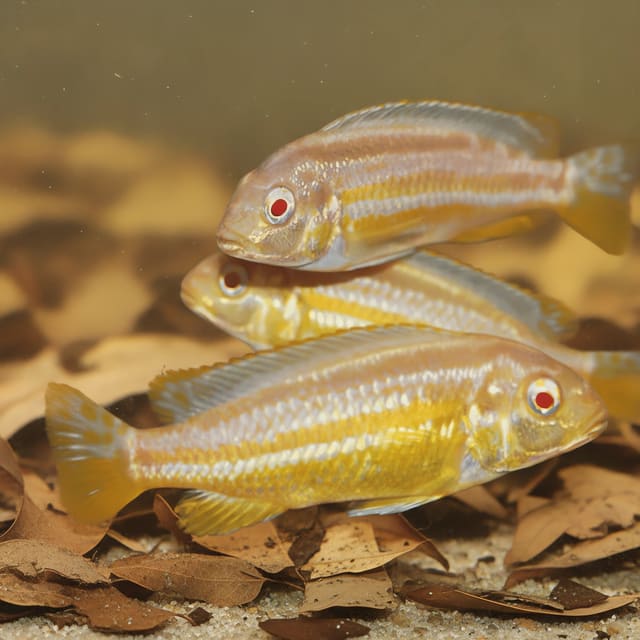
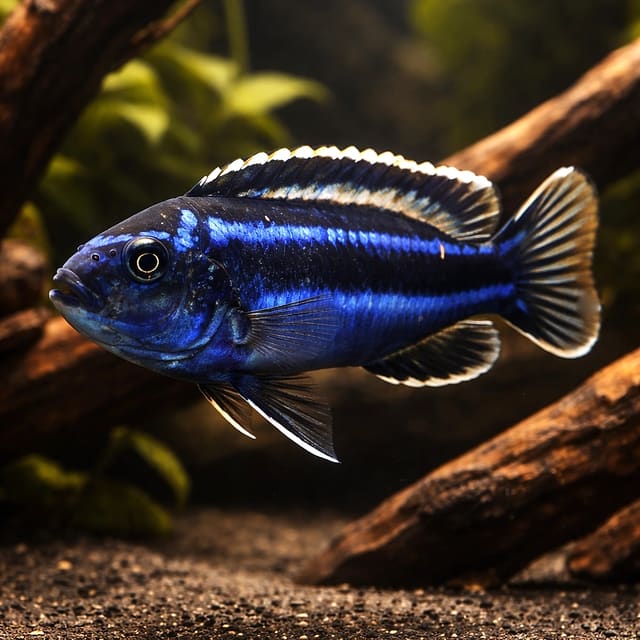
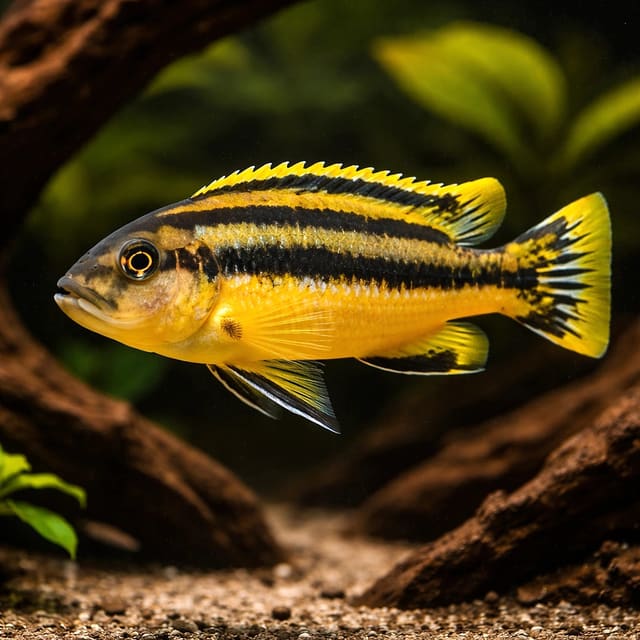
Gallery images have been digitally enhanced to improve image quality. Natural colour, pattern, size and maturity can vary between live animals.
This is a better match for a keeper who already understands a cycled aquarium and is prepared to manage the social structure of a Malawi display. Our store suitability assessment is advanced: the fish itself is not delicate in the way that some specialist species can be, but the combination of aggression, crowding strategy, hard-water requirements and waste management makes the whole system less forgiving than a peaceful mixed community.
A sensible starting point is a mature Malawi aquarium of at least 200 litres for a reasonably sized community, which is the broad planning figure given by the UK ornamental-fish trade body OATA. It is not a measured minimum for this exact species. Bigger quarters give the keeper more room for rockwork, broken sight lines and stable water, yet volume alone cannot correct a poor combination of fish. Stocking should be planned as a complete community rather than by adding an isolated individual whenever space appears available.
Before ordering, confirm that the aquarium provides hard alkaline water, a biological filter able to handle cichlid waste, vigorous oxygenation and securely placed rockwork. Check that every existing fish can cope with an assertive mbuna and that feeding will not push timid animals away. If this would be the first livestock for a new aquarium, work through the first tropical tank guide and establish the filter before adding fish. A newly filled tank is not biologically mature simply because the water looks clear.
| Suits | An established Malawi keeper with hard alkaline water, mature filtration, strong aeration, secure rockwork and a plan for territorial behaviour. |
|---|---|
| Does not suit | A new uncycled aquarium, a small peaceful community or a purchase that depends on receiving a particular sex. |
| Sold as | One live unsexed fish in the dispatch size selected on the product page. |
| Planning focus | The complete community, because volume, filtration, aquascape, diet and aggression interact. |
Think beyond the moment of delivery. Young fish may be easier to place among one another than mature territorial animals, yet their needs and relationships can change as they grow. Leave room to adapt the rockwork, strengthen filtration and separate a fish safely if the community proves unstable. That practical flexibility is more valuable than assuming the initial arrangement will remain suitable indefinitely.
Check the selector for the size you intend to buy, then compare that fish with the residents already present. A smaller arrival still needs refuge from larger established fish, while a larger arrival can alter territory immediately. Size matching is only one part of the decision, but ignoring it can concentrate aggression on the newcomer.
The OATA Malawi cichlid care sheet gives broad guidance of 23–27 °C, pH 8.0–8.6, general hardness of 12–18 °dH and carbonate hardness of 10–15 °dKH. Those figures are useful for planning this Lake Malawi setup, but they describe the group rather than a proven optimum for Melanochromis interuptus. Aim for stability inside the range instead of chasing a single decimal point. A sudden correction made with salts, buffers or large volumes of differently conditioned water can be more disruptive than a steady value that already sits within the suitable band.
Measure the water you actually have. The water chemistry guide explains the purpose of common aquarium tests, while the water matcher helps compare measured values with the stated broad range. Test source water as well as aquarium water, because carbonate hardness influences how resistant the tank is to a fall in pH. If your tap water is naturally soft, plan a repeatable mineral-management method before livestock arrives rather than making improvised changes after every test.
Ammonia and nitrite should both remain at zero. OATA advises keeping nitrate no more than 20 mg/l above the normal level in the incoming tap water. Read these values together: a low nitrate result does not make detectable ammonia acceptable, and a clear-looking aquarium can still contain invisible nitrogen waste. The RSPCA aquarium environment guidance explains why an established biological filter is essential: beneficial bacteria process toxic ammonia to nitrite and then to the less harmful nitrate that routine maintenance can control.
A crowded Malawi aquarium places a substantial demand on filtration. OATA recommends an oversized filter and aggressive aeration for these communities. Translate that into dependable turnover, strong gas exchange and enough biological media for the actual stock, while avoiding a jet that leaves fish fighting the current everywhere. Surface movement is particularly valuable because warm, busy aquaria can consume oxygen quickly. Check intakes, outlets and air delivery routinely; reduced flow is often the first sign that mechanical debris is restricting the system.
The filter needs biological continuity as well as power. When media requires cleaning, rinse it lightly in aquarium water removed during maintenance rather than under the tap. The aim is to remove clogging while retaining the living biofilm that performs the nitrogen cycle. A staged cleaning routine can make maintenance less disruptive in a heavily stocked display.
Build the aquarium around the behaviour of a rock-dwelling mbuna. Use numerous caves, crevices and broken lines of sight so that one dominant fish cannot watch the entire tank from a single position. The structure should form several routes through the aquarium, with refuge openings appropriate to the sizes being kept. Open water still matters for movement, but a bare tank removes the complexity that helps fish avoid one another.
Stability is a safety issue. Malawi cichlids will dig and rearrange substrate, so place major rocks securely rather than balancing them on loose sand that can be excavated. Check every stack before filling and leave enough clearance for maintenance and water flow around it. Coral sand or a comparable substrate can contribute to buffering in an appropriate setup, as described by OATA, but substrate should be chosen as part of an understood water-management plan rather than treated as a substitute for testing.
Plants are secondary in this kind of display. Malawi cichlids will uproot plants, and the hard alkaline conditions do not suit every aquarium plant. If you use greenery, select robust plants that tolerate the water and attach suitable species to rock or décor where practical. Do not sacrifice caves or secure stone placement merely to reproduce the look of a planted community aquarium. The fish's need for territory and refuge takes priority.
Leave access for a siphon and ensure circulation reaches behind the rockwork. Dead areas collect uneaten food and waste, which works against the clean, oxygen-rich environment these fish require. At the same time, preserve quiet pockets where smaller individuals can pause away from the strongest flow. The goal is an aquarium whose whole footprint is useful, not one dramatic pile that concentrates every fish in the same contested space.
Diet varies across Malawi cichlids. OATA says smaller mbuna are more herbivorous and appreciate specialist Malawi foods with a high algae content as well as suitable fresh vegetables, while larger open-water types may need a different balance. For this listing, that supports a cautious mbuna-oriented menu; it does not prove a unique species recipe. Use a reputable Malawi-cichlid staple whose composition suits herbivorous-leaning rock grazers, and vary it sensibly rather than improvising rich treats.
Offer only what the fish can finish promptly and remove persistent leftovers. OATA's group sheet describes twice-daily feeding, but portion control matters more than turning the schedule into permission for large meals. Uneaten food decomposes, increases the load on the filter and can undermine the water-quality work described above. Watch the whole group at meals: a dominant animal taking everything is a social-management warning, while food sinking unseen behind rockwork can become a maintenance problem.
Distribute food so that several territories receive it at once. That reduces one individual's ability to monopolise a single feeding point and lets the keeper see whether shy or newly introduced fish are eating. Match particle size to the fish being fed and avoid abrupt wholesale diet changes. Appetite should be interpreted alongside breathing, posture, colour and behaviour; a fish refusing food after previously feeding well deserves a water check and closer observation rather than repeated extra meals.
Because no species-specific source in this record establishes a special supplement, treatment food or breeding diet, this guide does not prescribe one. Keep the routine consistent, prioritise water quality and seek qualified advice if a fish loses condition or develops abnormal signs. Medication chosen from a symptom alone can delay the correct response and may affect the biological filter.
OATA strongly recommends that at least once every week, a partial water change of 25% is completed for Malawi cichlids, with regular testing at least weekly. Treat that as a baseline group-care routine and adjust carefully to the actual aquarium's waste load. Siphon accessible debris from the substrate, inspect the areas behind rockwork and condition new tap water for chlorine or chloramine before it enters the tank. Match replacement water closely enough that maintenance does not create a sudden thermal or chemical swing.
Keep a simple record of temperature, pH, ammonia, nitrite, nitrate and maintenance. Trends are often more useful than an isolated result: a gradual pH decline may point to depleted buffering, while a rising nitrate pattern can show that feeding, stocking or water-change volume needs attention. Test again after any unexplained change in behaviour. Surface hovering, bottom sitting, erratic swimming, faster or slower gill movement, unusual hiding, marked colour change, damaged fins, spots, growths or loss of appetite all justify investigation.
Start with the environment. Confirm filter flow and aeration, test ammonia and nitrite, review the most recent addition or maintenance change, and check whether aggression is preventing access to food or shelter. Contact an experienced aquatic retailer or aquatic veterinary professional when health concerns persist. A product description cannot diagnose disease or choose a medication responsibly.
Inspect rock stability during every major clean. A territory that looked safe when built may shift as substrate is excavated. Re-secure loose pieces without trapping fish, and avoid dismantling the whole layout casually because a complete rearrangement can trigger renewed competition for territory. Limited, deliberate décor changes can be useful when introducing fish, but they should be planned with the stock and structure in view.
When a reading moves outside the intended range, look for the cause before making a rapid correction. A missed water change, excess food, blocked intake, reduced aeration or a recent rise in stock can each change the system differently. Correct the husbandry problem as well as the number on the test, then retest and observe the fish. A stable recovery matters more than a brief reading produced by a large chemical adjustment.
Provide backup for foreseeable failures. A battery air pump can preserve gas exchange during a power cut, while spare conditioned water and a reliable thermometer make routine problems easier to manage. Check equipment after maintenance instead of assuming every plug, valve and air line has returned to normal operation. In a busy rock-filled aquarium, a silent pump or reduced outlet can otherwise go unnoticed until fish show distress.
Compare behaviour across the whole group. Several fish breathing rapidly points towards a system problem more strongly than one individual guarding a cave, although both deserve attention. Test the water first, confirm circulation and temperature, and look for physical damage. This sequence helps separate a broad environmental failure from a local compatibility problem without delaying action.
Observe body condition over time rather than reacting to one enthusiastic feeding response. Consistent portions make it easier to notice when one animal is steadily losing condition or when the group leaves more food than usual. If waste rises after a change of food, review portion size and mechanical maintenance before debris accumulates among the rocks. A feeding routine succeeds only when the fish receive an appropriate diet and the aquarium can process what enters it.
Watch where each fish feeds. A territorial resident may control one area so completely that another animal misses meals even though plenty of food enters the tank. Distributing small portions across several areas can expose that pattern and reduce a single contested point. It also lets the keeper see whether a newly introduced fish is confident enough to leave refuge.
Changes in appetite belong beside breathing, posture, colour, fin condition and swimming. Test water promptly when several signs change together. If an individual deteriorates, use clean dedicated equipment and seek experienced advice; medication selected from appearance alone may be inappropriate and can affect the biological filter. Product copy cannot replace a diagnosis based on the animal and its environment.
Prepare the aquarium before the parcel arrives: confirm stable temperature, zero ammonia and nitrite, unobstructed filtration and secure cover. Someone must be present to receive live fish. Tropical Fish Co hand-bags fish with oxygen, uses an insulated poly box and adds a heat pack when conditions call for it, then sends the parcel with a licensed live-animal courier. The current delivery and Live Arrival Guarantee policy explains the applicable days, tracking and claim conditions.
The unboxing video is claim evidence, so it begins before the seal is broken; it is not a reason to delay appropriate animal care after the condition has been documented. The guarantee requires the parcel to be received, opened and inspected on the day it arrives. Follow the policy page for the complete current terms rather than relying on a shortened summary.
Introduction is also a compatibility event. Adding one fish to a settled territorial hierarchy can focus attention on the newcomer. Have sufficient refuges ready, observe closely and be prepared with a safe separation plan if sustained aggression develops. Do not assume that a large tank or a few caves make every combination self-correcting.
Malawi cichlids can be highly aggressive and should be mixed cautiously. OATA's group guidance recommends keeping them with other Malawi cichlids or with some Lake Malawi Synodontis catfish, while adding more peaceful species before more aggressive ones. That is a broad starting framework, not a declaration that every fish within those groups is compatible with this Melanochromis.
Compare candidates for adult scale, temperament, water requirements, feeding behaviour and use of space. Avoid small peaceful community fish, timid species and long-finned animals that cannot withstand persistent attention. Similar-looking fish can also become targets when a territorial cichlid treats them as rivals. Where several mbuna are planned, do not base the decision on colour alone; consider how many territories the aquascape can provide and how aggression will be distributed across the complete stock.
OATA describes groups of at least 15 and slight overstocking as a common Malawi-community strategy for spreading aggression, together with oversized filtration and strong aeration. It also warns that small groups often fight. This is a system-level technique, not a simple instruction to add more fish. It must be matched to adequate volume, filter capacity, oxygen, rockwork and maintenance. Adding animals to an under-filtered or poorly structured aquarium can replace one welfare problem with another.
Where sex ratios are deliberately managed, OATA suggests more females than males of each species to reduce one female receiving continual attention. This product is unsexed, so it cannot be used to promise a planned ratio at purchase. Juvenile differences may also be unreliable. Build contingency into the stocking plan and be prepared to separate individuals if the social structure does not settle safely.
Additions should be deliberate rather than frequent. Confirm that the biological filter can support the increased feeding and waste, because beneficial bacteria need time to respond to a larger load. OATA warns that stocking too quickly can contribute to new tank syndrome, with harmful ammonia or nitrite appearing when the bacterial population cannot keep pace.
Before introduction, inspect the layout from the fish's point of view. A new resident needs more than one way out of each area. Carefully rearranging some décor can interrupt established boundaries and make residents re-evaluate territory, but avoid creating unstable piles or removing all familiar refuge at once. Add more peaceful species before more aggressive ones when planning a new community, and monitor every introduction rather than assuming the hierarchy will settle unaided.
Normal brief display is different from relentless pursuit. Look for repeated cornering, inability to leave a refuge, damaged fins, refusal to feed, rapid breathing or a fish isolated at the surface. Those signs call for prompt intervention. A divider or separate mature aquarium is safer than waiting for a badly stressed animal to recover while still exposed to the aggressor.
Do not interpret the alternative products linked elsewhere on the storefront as compatibility endorsements. They are useful comparisons within the African-cichlid range. A suitable companion can only be chosen after the exact aquarium, resident stock and sizes are considered together.
Decide the intended stocking pattern before buying additional fish. OATA's approach of a large Malawi group and slight overstocking is designed to spread aggression, but it relies on oversized filtration, aggressive aeration, suitable volume and diligent maintenance. It is not a shortcut that makes any combination safe. Exceeding the aquarium's biological capacity simply exchanges a territorial problem for a water-quality problem.
Count usable territories as well as litres. A long aquarium with several rock zones can offer more escape routes than a tall layout whose single central pile is controlled by one fish. Check that caves have more than one practical route around them and that the view across the tank is interrupted. The structure must remain secure when fish dig, so complexity never justifies unstable stones.
Observe at different times of day. A community may look calm while food is present yet become territorial around favourite caves afterwards. Make sure every fish emerges to feed and can rest without repeated interruption. Persistent cornering, fin damage, surface isolation or a fish that cannot leave cover indicates that the plan needs intervention rather than more time.
Growth and maturity can change the balance. Revisit the stock list, filter capacity and refuge layout as fish develop. Keep a safe separation option available; it is easier to move one animal promptly than to rebuild an entire display while an injured fish remains exposed.
If one of these checks fails, correct the aquarium plan before adding the fish. Compatibility is an ongoing husbandry responsibility, not a fixed label attached to either species. Growth, maturity and changes to the layout can alter a social balance that previously appeared calm.
The material available for this listing does not establish a species-specific maximum adult length. The product offers dispatch sizes from 3–4 cm to 7–9 cm, but the selected dispatch size is not the adult size. Plan it as a territorial Malawi mbuna rather than using the sale measurement as a final-length promise.
OATA recommends at least 200 litres as broad guidance for a reasonably sized Malawi-cichlid community. That is a community-planning baseline, not a proven species-specific minimum; the complete stock, footprint, rockwork, filtration and aggression pattern may require more room.
No species-specific group number is established here. OATA describes groups of at least 15 and slight overstocking for a properly planned Malawi community to spread aggression, but that approach needs adequate volume, oversized filtration, strong aeration and compatible stocking. This product is sold as one fish per purchase.
Our store assessment is advanced. A keeper needs to manage hard alkaline water, a mature biological filter, powerful aeration, secure rockwork and a territorial cichlid community. It is more appropriate once the basics of cycling, testing and fish behaviour are familiar.
Use a suitable Malawi-cichlid staple with a strong algae or vegetable component, reflecting OATA's broad advice for smaller mbuna. Offer controlled portions, distribute food so subordinate fish can feed, and remove persistent leftovers to protect water quality.
Use OATA's broad Malawi-cichlid guidance of 23–27 °C and pH 8.0–8.6, with hard water at 12–18 °dH and carbonate hardness of 10–15 °dKH. These are group-level planning values rather than a species-specific optimum, so stability and regular testing matter.
Malawi cichlids can be highly aggressive, and this rock-dwelling mbuna should be treated as territorial. Avoid timid, small or long-finned community fish, provide broken sight lines and refuges, and intervene if display becomes sustained pursuit, cornering or injury.
OATA broadly limits Malawi cichlid companions to other carefully selected Malawi cichlids and some Lake Malawi Synodontis catfish. The exact combination still needs matching for size, aggression, diet, water and available territory; no named animal is a universal tank mate.
Tropical Fish Co hand-bags fish with oxygen, uses an insulated box and a heat pack when conditions call for it, and sends them by a licensed live-animal courier. Be present to receive the parcel. If anything may be wrong, start one continuous video while the parcel is still sealed, show it being opened and the fish still in the sealed bag, then contact the store the same day with your order number.
Numerical husbandry remains within the broader Malawi care context. The guide omits an exact adult-size promise, a lifespan, treatment directions and breeding instructions.
No reviews for this item yet. Bought one? Honest reviews only, good or bad.
What customers say about ordering from us
Easy website plenty of info on fish your buying great to pick a time slot
TRACEY DURRANT · 7 Oct 2026
Got some lovely fish thank you
Kevin Mackie · 7 Oct 2026
Reviews of our shop, collected by Judge.me, an independent third-party review collector. Newest first.