Moderate
Acei Cichlid (Pseudotropheus sp. “acei”)
24–26°C · pH 7.5–8.5 · 300L
£7.99
Photo coming soon
The size, price and care details on this page are for this listing.
The Red Top Afra Cichlid (Cynotilapia afra) is a territorial Lake Malawi mbuna from the lake’s central and northern regions that reaches 10.1 cm SL. It suits keepers planning a rocky Malawi community; use 25–27°C, pH 8.0–8.5 and 15–18 dGH, the overlap of FishBase, Seriously Fish and OATA ranges, while OATA advises groups of at least 15 Malawi cichlids. Sold individually in 4–5 cm and 6–7 cm dispatch sizes.
Adult size is the maximum length this species reaches at full maturity (scientific sources). The livestock you receive will be younger and smaller — pick a size above for the actual shipping size. Product-photo provenance and any image-specific limitations are stated on the listing.
Cynotilapia afra
Save when buying multiple fish. Each quantity is one fish; sex and pair formation are not guaranteed unless the selected variant explicitly states them.
The Red Top Afra Cichlid (Cynotilapia afra) is a territorial Lake Malawi mbuna from the lake’s central and northern regions that reaches 10.1 cm SL. It suits keepers planning a rocky Malawi community; use 25–27°C, pH 8.0–8.5 and 15–18 dGH, the overlap of FishBase, Seriously Fish and OATA ranges, while OATA advises groups of at least 15 Malawi cichlids. Sold individually in 4–5 cm and 6–7 cm dispatch sizes.
Adult size is the maximum length this species reaches at full maturity (scientific sources). The livestock you receive will be younger and smaller — pick a size above for the actual shipping size. Product-photo provenance and any image-specific limitations are stated on the listing.

Cichlids are a family of roughly 1,800 accepted species, not one care type. Before buying, identify the exact species and source, then compare adult measurement, usable tank dimensions, social system, territory, tested water, diet and an exit plan. No family-wide minimum tank, water range or tank-mate list is safe.
Maintain these water conditions for optimal health and vibrant colors
The Red Top Afra Cichlid is Cynotilapia afra, a freshwater member of the cichlid family from the central and northern regions of Lake Malawi. FishBase records a maximum of 10.1 cm standard length for male or unsexed fish. It suits a keeper prepared to build a rocky, hard-water Malawi aquarium and manage territorial aggression rather than a peaceful general community. In the lake, it inhabits the upper, usually sediment-free part of the rocky biotope. Territorial males feed from the biological covering on rocks close to their home areas, while more gregarious fish feed on plankton in open water beside the rocky shoreline.
That natural behaviour explains the main aquarium decisions. Rockwork must offer separate caves and defined territories, open gaps must let fish move between rocky areas, and feeding should retain a strong vegetable and algae-based element. This is an active mbuna rather than a peaceful general-community fish. Its territorial nature affects aquarium size, stocking order and every proposed tank mate.
| Identity point | Planning meaning |
|---|---|
| Maximum length | FishBase records 10.1 cm standard length for male or unsexed fish. |
| Natural setting | Build around rock piles, caves and small open-water areas. |
| Feeding biology | Use algae-rich foods as the dietary foundation. |
| Temperament | Plan territories and the complete Malawi community before adding fish. |
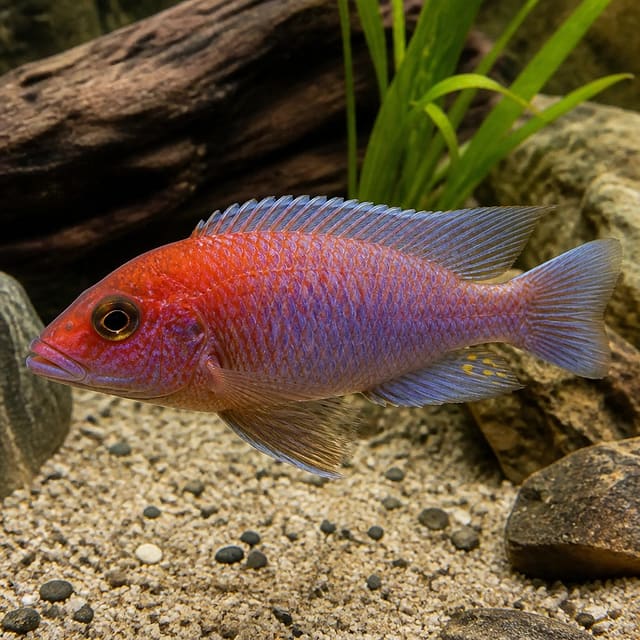
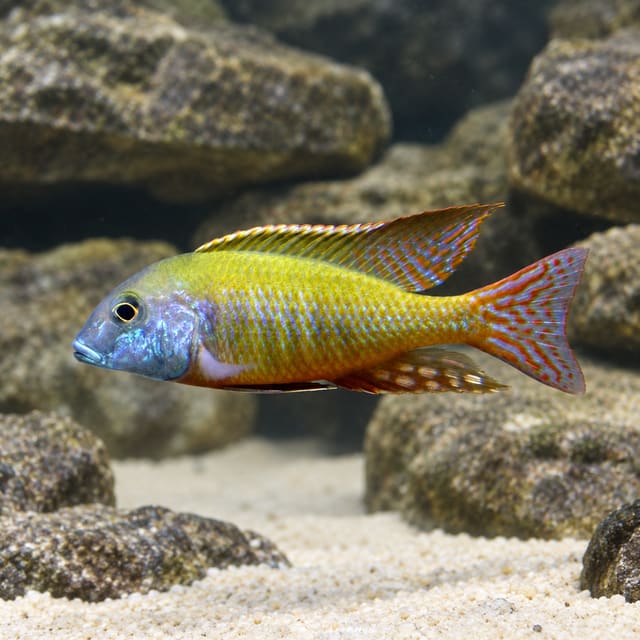
The species occurs in many natural colour forms and can change colour rapidly when stressed or disturbed. Seriously Fish describes it as one of the hardier mbuna and a possible introduction to this type of cichlid, but that suitability depends on understanding aggression, hard alkaline water and group planning from the outset.
One purchase supplies one animal of the option selected on the live size selector. The named choices are 4–5 cm and 6–7 cm. The size you select is the size supplied, not the adult size. Use the selector to choose the preferred dispatch size, then use 10.1 cm standard length when checking long-term space, rock placement and stocking.
A 4–5 cm fish is therefore not a different small-bodied form, and a 6–7 cm fish has not reached the planning maximum. For example, a cave that only accommodates a 5 cm fish cannot be treated as permanent shelter. Leave routes and cave entrances that remain usable as the fish approaches its recorded maximum.
Sex is guaranteed only when the selected option explicitly states male or female. This Red Top Afra Cichlid listing has no sex-guaranteed option.
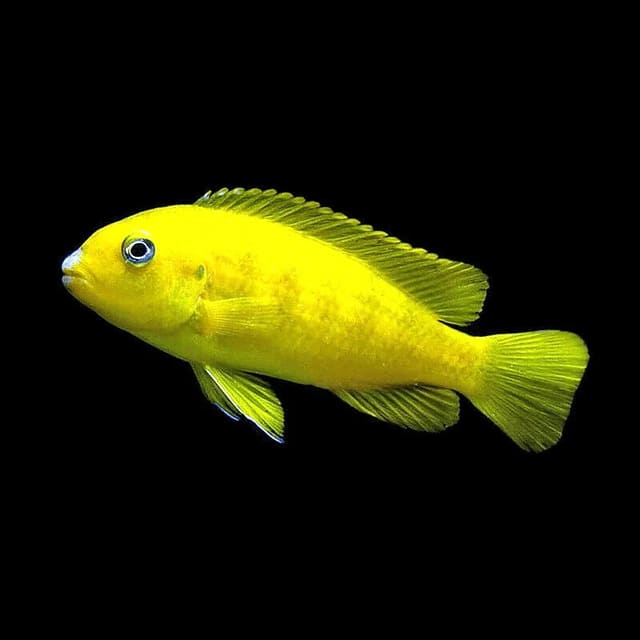
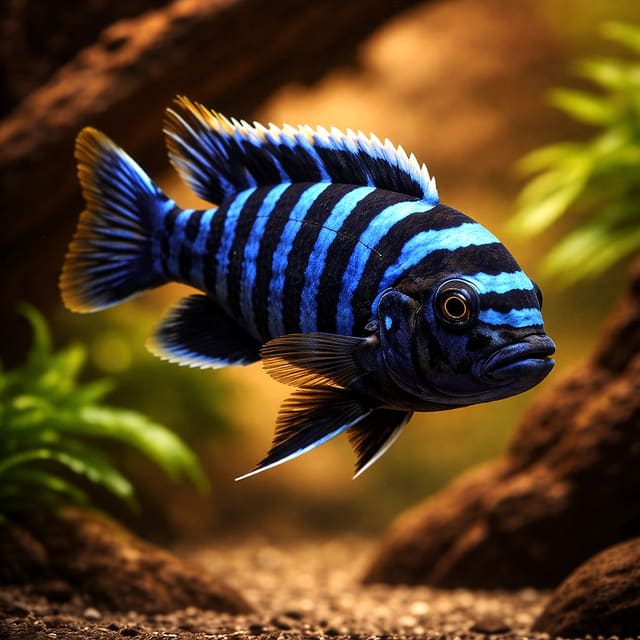
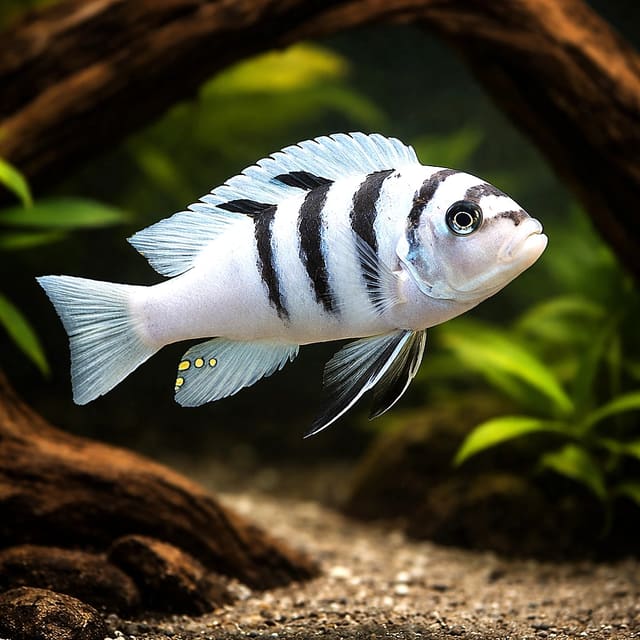
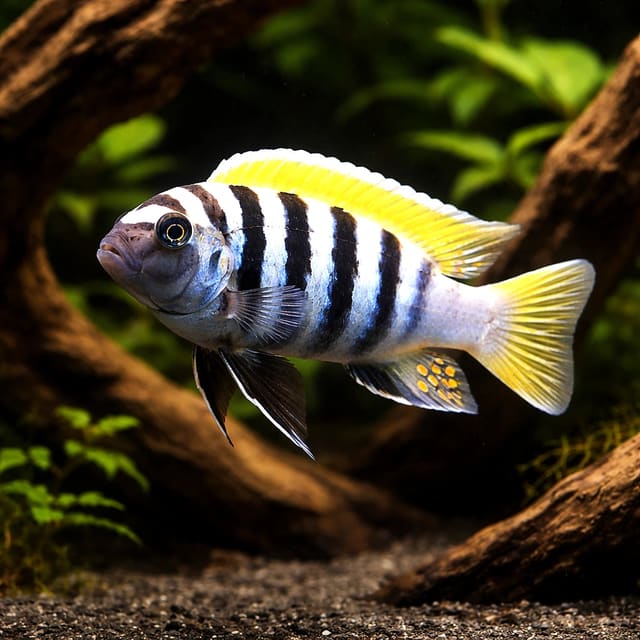
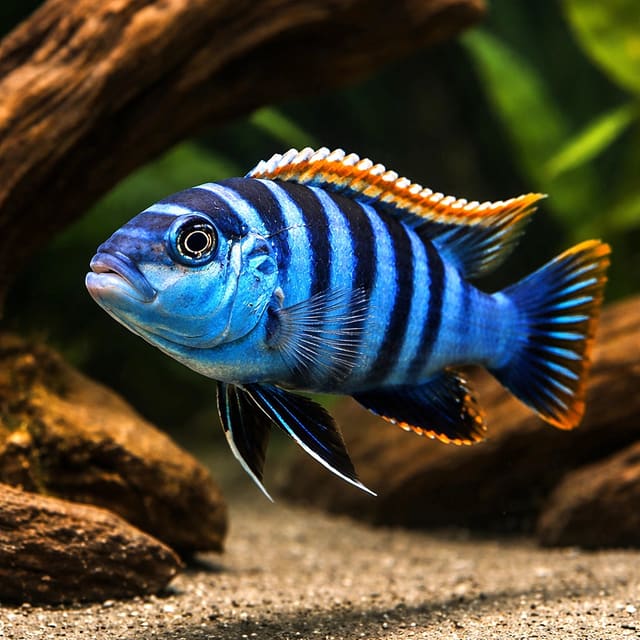
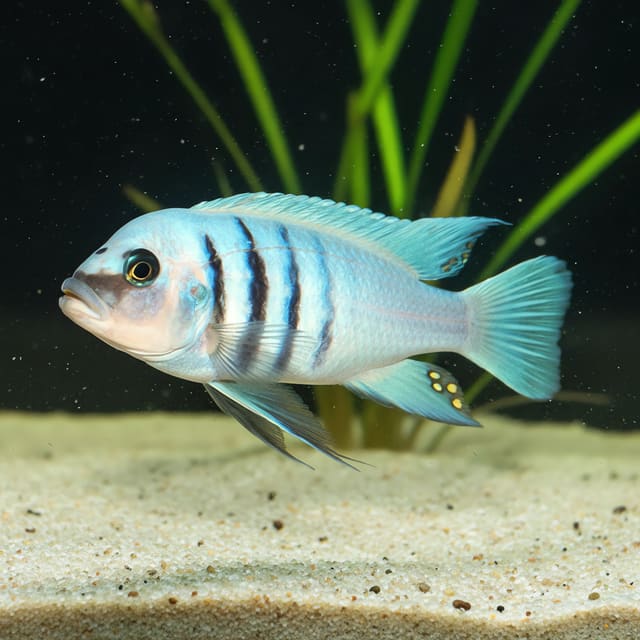
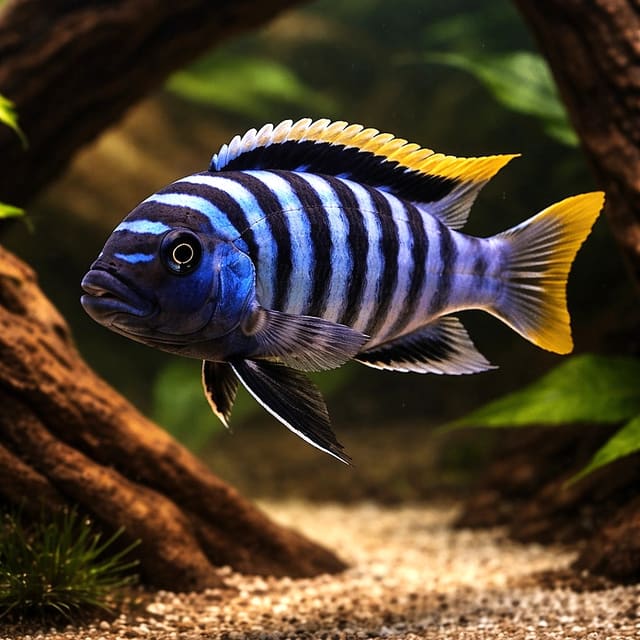
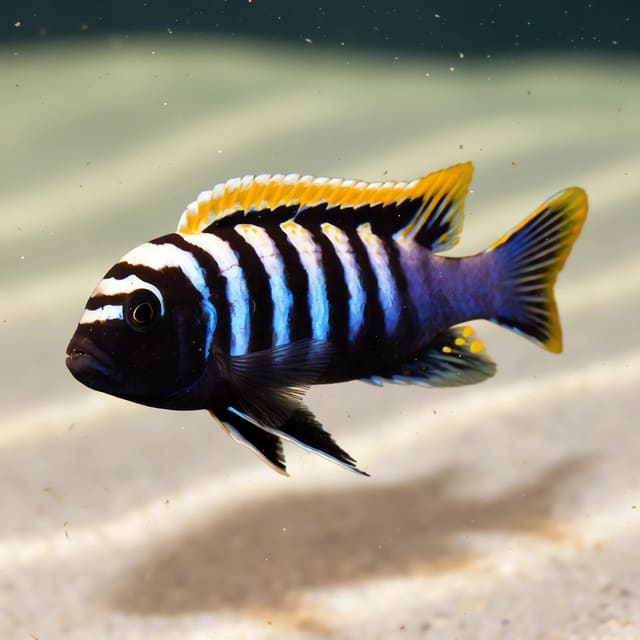
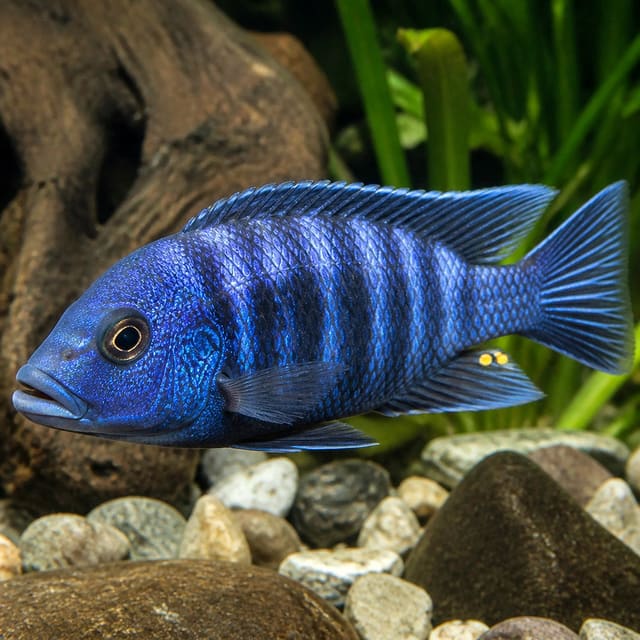
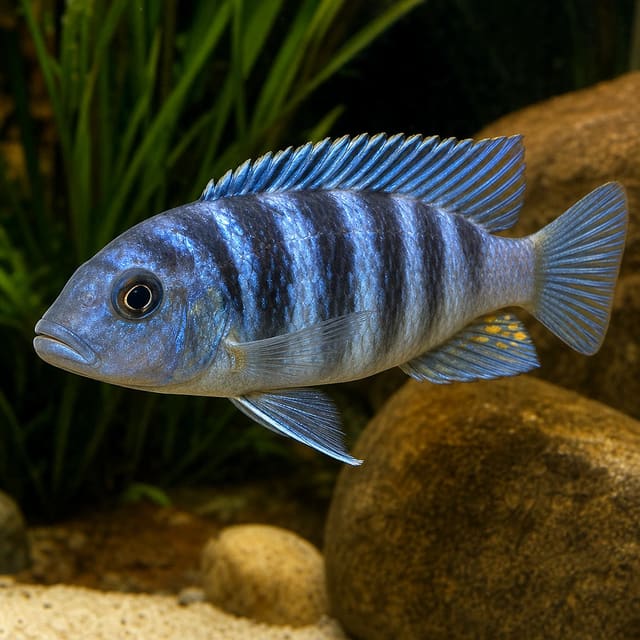
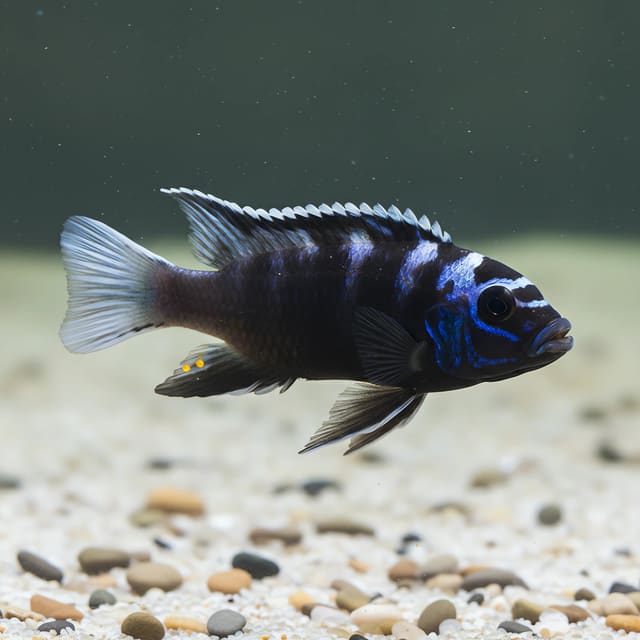
The gallery images are representative of this type of animal rather than photographs of the exact animal supplied, so colours can look slightly different from the live animal.
| Suits | Not suited to |
|---|---|
| A rocky Malawi setup with caves, sand and open gaps | A peaceful general community |
| Hard, alkaline water within the stated targets | Soft or acidic conditions outside those targets |
| A deliberately planned Malawi community | Peace-loving Peacocks or Utaka |
| A keeper prepared to manage territorial aggression | An aquarium without enough space for territories and refuge |
| Reference | How to use it |
|---|---|
| 100 × 30 cm base | The species aquarium reference from Seriously Fish; prioritise footprint rather than volume alone. |
| Approximately 90 litres | The corresponding species reference for a 100 × 30 × 30 cm aquarium. |
| At least 200 litres | OATA’s recommendation for a reasonable Malawi cichlid community. |
| 10.1 cm SL | The maximum standard length used for adult planning. |
The approximately 90-litre reference and the community recommendation answer different questions. The first describes a species setup with a 100 × 30 cm base; it is not a shortcut for placing an aggression-managed Malawi community into that volume. A community needs room for multiple territories, deliberate group stocking, strong filtration and aeration, making at least 200 litres the relevant starting point for that plan.
Check the full aquarium rather than comparing only its litre figure. Base dimensions determine how much separated rockwork and open space can be arranged. Filter capacity, water chemistry and the number and temperament of existing fish then decide whether the aquarium can carry the intended community. You can also browse the African cichlid collection while comparing animals for a deliberately planned setup.
Arrange much of the aquarium as piles of rocks with caves, leaving small areas of open water between them. A sandy substrate matches the recommended setup and accommodates the species’ regular digging. Treat the rock layout as functional territory design: use separate rocky areas rather than one continuous open face where a territorial fish can control the whole aquarium.
Plants are a secondary choice here. Constant digging tends to uproot them, and OATA likewise notes that Malawi cichlids rearrange substrate. If plants are included, regard them as additions to a rock-led layout rather than substitutes for caves and broken rocky areas.
Look through the aquarium from each end. If one central rocky area dominates the whole footprint, add or reposition rockwork to create separate territory areas. If one pile blocks all movement across the aquarium, reopen a route around it. These checks support shelter and escape while retaining the small open-water areas the fish uses.
Rearranging décor also has a role when introducing further Malawi cichlids. Changing established boundaries means resident fish must inspect the layout again rather than defending an unchanged territory against the newcomer. Make that change before release, then observe whether one fish claims an excessive portion of the base.
Because digging can alter the planned arrangement, include the rockwork in routine visual checks. Restore blocked entrances and confirm that caves remain suitable for an adult approaching 10.1 cm standard length. The aim is a durable adult layout, not a collection of small openings sized only for the dispatch fish.
Use 25–27°C, pH 8.0–8.5 and 15–18 dGH as the routine aquarium targets. FishBase places the wild fish at 23–27°C, pH 8.0–8.5 and from 15 dGH, while the species aquarium range from Seriously Fish is 25–29°C, pH 7.5–8.5 and 10–25 dGH. OATA’s freshwater Malawi cichlid sheet gives 23–27°C, pH 8.0–8.6 and 12–18 dGH as group guidance. The chosen targets sit within all three ranges rather than stretching to an outer limit used by only one of them.
| Value | Routine target |
|---|---|
| Temperature | 25–27°C |
| pH | 8.0–8.5 |
| General hardness | 15–18 dGH |
| Carbonate hardness | 10–15 dKH |
| Ammonia | Zero mg/l |
| Nitrite | Zero mg/l |
| Nitrate | Up to 20 mg/l above the normal tap-water level |
Measure the aquarium and its replacement water instead of treating hardness and pH as labels. The water chemistry guide explains which values to test and why, while the water matcher helps compare measured values with these targets.
A temperature of 26°C is inside the target, but it does not compensate for detectable ammonia. Likewise, pH 8.2 is appropriate only as part of a filtered aquarium with zero ammonia and zero nitrite. Read temperature, pH, hardness and nitrogen-waste results together before introducing fish.
Test the normal tap-water nitrate level as the baseline for the OATA limit. If tap water measures 10 mg/l, the aquarium reading should not exceed 30 mg/l under that instruction. This is a worked threshold, not a preferred target: routine partial water changes and controlled feeding should prevent waste from accumulating towards it.
A coral-sand or similar substrate can help buffer Malawi water, but continue testing rather than assuming the substrate fixes every value. Consistent measurements let you detect a change early and compare it with feeding, filter condition and maintenance performed since the previous test.
Run the aquarium with a well-established biological filter before introducing this fish. The RSPCA explains that fish release toxic ammonia; beneficial bacteria in a working biological filter convert it first to toxic nitrite and then to the safer nitrate. The aquarium is ready for livestock only when testing shows zero ammonia and zero nitrite.
If this is a new aquarium, follow the first tropical tank guide to prepare and mature the filter before livestock arrives. Maturity belongs to the biological filter and aquarium, not to a bucket of standing water. Do not use elapsed time alone as the readiness test.
| Setup decision | Filtration response |
|---|---|
| Approximately 90-litre species reference | Seriously Fish uses four to five turnovers per hour, corresponding to a filter rated around 360–450 lph. |
| Malawi community | Use an oversized filter because aggression management involves a deliberately substantial population. |
| Any aquarium | Provide strong aeration and check the filter for blockages. |
| After adding fish | Test ammonia and nitrite because the biological population must respond to the higher waste load. |
The 360–450 lph example belongs to the approximately 90-litre reference aquarium. For a larger community, choose filtration around the aquarium’s volume and intended population rather than carrying that small-aquarium figure across unchanged. OATA recommends oversized filtration and aggressive aeration for crowded Malawi communities so that waste processing and dissolved oxygen remain central to the stocking plan.
Additions must be paced around biological capacity as well as social behaviour. Introducing Malawi cichlids in a planned group can reduce the chance of one individual receiving all the aggression, but every added fish also increases feeding and waste. Confirm zero ammonia and zero nitrite before the addition, then test after it rather than assuming the filter adjusted immediately.
If either toxic reading appears, treat the water result as the immediate warning. Review the number of recent additions, feeding quantity and filter flow. Do not add further fish while the aquarium is showing that its biological capacity has been exceeded.
Make vegetable matter a large proportion of the diet. Spirulina flakes, blanched spinach and a quality algae-based dried food match the species guidance. Live and frozen foods can supplement that foundation, but they should not displace the vegetable-rich portion.
This approach also reflects how the wild fish feeds. Territorial males graze the biological covering on rocks near their home area, while gregarious individuals take plankton in open water. Aquarium feeding cannot recreate every natural feeding opportunity, but it can retain the important balance: an algae-led staple with measured supplementary foods.
The time limit is a ceiling, not an instruction to keep adding food for several minutes. Begin with a modest amount and observe how quickly it disappears. A fish that eats promptly does not need the portion repeatedly topped up; excess food adds waste and increases the burden on the biological filter.
Territorial behaviour can make a feeding event look successful while a lower-ranking fish receives little. Watch where the food lands and whether one individual excludes others from the whole feeding area. If that happens, spread a measured portion across separated open gaps so fish do not all have to enter one territory.
Reduced food intake is also a health and water-quality signal. When an individual loses interest, check ammonia, nitrite, temperature and the fish’s breathing and behaviour before changing the menu. Adding richer food will not solve a toxic-water reading or persistent harassment.
Review portions after any change in group size because the correct total depends on how much the present fish consume within a few minutes. Increase food gradually with the population and test the aquarium after additions. This connects feeding to filter capacity without turning uneaten food into a hidden source of ammonia.
Make a 25% partial water change at least once every week. Use a siphon to remove solid waste from the substrate, especially where food and debris collect between rocks. Treat replacement tap water with a conditioner that removes chlorine or chloramine before adding it to the aquarium.
| Check | Action |
|---|---|
| Ammonia and nitrite | Test at least weekly and keep both at zero mg/l. |
| Nitrate | Keep it up to 20 mg/l above the normal tap-water level. |
| Water change | Replace 25% at least once every week. |
| Filter flow | Check for blockages and any reduction in movement. |
| Rockwork | Check entrances and routes after digging. |
| Fish | Compare breathing, colour, swimming, appetite and aggression with normal behaviour. |
Clean filter media only when its condition requires it, and rinse it lightly in aquarium water removed during the partial change. If the filter needs cleaning, do not run it under the tap because any chlorine or chloramine present may kill the beneficial bacterial population established in the media.
A weekly result becomes more useful when compared with the preceding week. If nitrate rises more quickly than usual, review feeding, solid-waste removal and the current population. If filter flow drops, check for a blockage rather than compensating with extra feeding or postponing the water change.
The weekly schedule is the minimum routine. Test again after adding fish, after a noticeable change in feeding, or when behaviour and breathing alter. A result of zero ammonia last week does not replace a new test when fish are showing warning signs today.
Use the removed water efficiently: siphon waste first, reserve enough for lightly rinsing filter media if needed, then discard it. Condition the replacement water before it enters the aquarium. This sequence combines waste removal, protection of beneficial bacteria and dilution of nitrate while protecting the filter media and fish.
Finish by confirming that aeration and filter flow have restarted normally. Observe the fish once the aquarium settles and check that digging has not blocked a cave or created one dominant territory with no alternative route.
Arrange for someone to receive the parcel because live fish cannot be left unattended. Follow the current delivery and Live Arrival Guarantee policy, including its continuous-video requirement.
Prepare the aquarium before the parcel arrives so rockwork, water values, filtration and the intended stocking arrangement are already complete. After release, observe breathing, swimming and the response of resident fish.
Malawi cichlids are best introduced in planned groups so that one newcomer does not receive all the attention. At the same time, the biological filter must be able to respond to the increased waste. Add only the group assessed for the aquarium, confirm zero ammonia and zero nitrite beforehand, and test again after feeding and waste increase.
When building a mixed Malawi community, add more peaceful species before more aggressive species. Rearranging décor immediately before an addition can reduce defence of established territories because every fish must reassess the changed rock layout. Keep the caves and open gaps described in the setup plan rather than removing shelter to make observation easier.
During the first week, compare each fish’s access to caves and food. Watch for one individual being forced to the surface, held in a corner, prevented from feeding or repeatedly chased across the entire aquarium. These observations decide whether the stocking arrangement and territory map are functioning as intended.
Test water whenever behaviour changes. Hanging at the surface, altered breathing or sitting on the bottom may accompany a water-quality problem, while concentrated chasing points towards a social problem. Both can occur together after an addition, so check ammonia, nitrite, temperature and filter flow as well as watching interactions.
Learn the fish’s normal swimming, colour, breathing, appetite and level of aggression. Individual fish vary, so a change from their usual pattern is more informative than one isolated pose. Check the whole aquarium when that change persists.
| What you see | What to do first |
|---|---|
| Hanging at the surface | Test ammonia and nitrite, then check aeration and filter flow. |
| Sitting on the bottom | Check water values and look for repeated displacement by another fish. |
| Erratic swimming | Test the water and observe whether chasing triggers the movement. |
| Faster or slower gill movement | Check temperature, ammonia, nitrite, aeration and filter operation. |
| Darker or paler colour | Look for disturbance, stress and territory pressure; this species can change colour rapidly. |
| Reduced feeding | Check access to food, water quality and body condition. |
| White spots, fluffy growths or damaged scales | Record the change, test the water and contact us for health guidance. |
Do not diagnose the cause from colour alone. The species can change colour rapidly when stressed or disturbed, and natural colour forms also vary. Combine colour with breathing, swimming, feeding and the behaviour of other fish before deciding what part of the setup needs attention.
Aggression must be judged by its effect. Brief territorial displays are different from one fish losing access to food, remaining pinned in a corner or being chased across the full aquarium without refuge. Check whether the rock layout still separates territories and whether digging has closed an escape route.
Note the water-test results, the time since the last addition, any change in feeding and where the affected fish spends its time. That short sequence helps separate a whole-aquarium change from a conflict centred on one territory.
Water quality remains the first objective check. Ammonia and nitrite must be zero, nitrate must stay within the stated limit, and the filter must maintain normal flow. Correcting those fundamentals and reducing sustained harassment takes priority over adding food or choosing a treatment.
Treat the Red Top Afra as a belligerent, territorial mbuna. Avoid peace-loving species such as Peacocks and Utaka. Seriously Fish supports combining it with other mbuna, while OATA limits Malawi cichlid companions to other Malawi cichlids or some Lake Malawi Synodontis. Neither statement makes every member of those groups a universal match.
| Screen | Question to answer |
|---|---|
| Water | Can every fish be maintained at 25–27°C, pH 8.0–8.5 and 15–18 dGH? |
| Temperament | Can the proposed fish cope with a territorial mbuna without being persistently displaced? |
| Space | Does the base allow separate rock territories, caves and open gaps for the complete group? |
| Feeding | Can every fish receive its appropriate diet without one species excluding the other? |
A proposed other mbuna passes only the first category test. It must still be screened for aggression, adult space and feeding access within this particular aquarium. A proposed Synodontis needs the same species-by-species assessment because OATA refers to some species rather than the whole genus.
Use adult planning values for every animal. Comparing a 4–5 cm dispatch fish with the present size of a tank mate can hide the future conflict. Build the decision around the Red Top Afra’s 10.1 cm standard-length maximum and the corresponding adult information for the proposed companion.
The final stocking assessment depends on the aquarium’s dimensions, existing fish, filter capacity and territory map. Contact us with those details if you would like a case-by-case stocking assessment. A list of names alone cannot show whether the actual aquarium can manage aggression and waste.
Plan the Red Top Afra within a deliberate Malawi community rather than as an addition to a peaceful mixed aquarium. OATA advises groups of at least 15 Malawi cichlids and slight overstocking to spread aggression, because small groups often fight. It also recommends at least 200 litres for a reasonable community, an oversized filter and strong aeration.
These instructions belong together. The group figure is not permission to place 15 fish into the approximately 90-litre species reference. Use the 200-litre community baseline, then assess footprint, territories, adult sizes, filtration and the particular fish proposed. A larger aquarium offers greater environmental stability and more scope for a workable rock layout.
This species is very aggressive towards its own kind. The presence of other species may help spread that aggression, but heterospecific fish still require the full compatibility screen. If keeping a known-sex group, the species guidance advises several females per male to reduce harassment of one female. Do not infer that ratio from colour, size or the gallery.
Different natural forms of Cynotilapia afra may spawn with one another and produce unwanted hybrid fry. Avoid mixing Red Top Afra with other colour forms when maintaining distinct forms matters to the aquarium plan. This is a reproductive compatibility concern even when the adults share similar water and décor needs.
Watch outcomes rather than assuming the initial plan remains successful. One fish being repeatedly excluded from food, forced to the surface or chased without relief means the present territory and stocking arrangement is failing that individual. Recheck caves, separate rocky areas and group composition, and test the water because social stress and increased biological load can appear together.
FishBase records a maximum of 10.1 cm standard length for male or unsexed fish. Plan caves, swimming gaps and the complete community around that adult figure rather than the dispatch size.
Seriously Fish gives a 100 × 30 cm base and approximately 90 litres as the species reference. For a reasonable Malawi community, OATA recommends at least 200 litres, with the footprint, rock territories, filter capacity and complete adult population assessed together.
Plan this territorial fish within a Malawi community rather than a peaceful mixed aquarium. OATA advises groups of at least 15 Malawi cichlids with slight overstocking to spread aggression, using at least 200 litres, oversized filtration and strong aeration.
Seriously Fish describes Cynotilapia afra as one of the hardier mbuna and a good introduction to these fish. It still requires hard alkaline water, deliberate group planning and active management of territorial aggression.
Make spirulina flakes, blanched spinach and quality algae-based dried food a large part of the diet, supplemented with live or frozen foods. Feed only what the fish consume within a few minutes, twice daily.
Use 25–27°C, pH 8.0–8.5 and 15–18 dGH, the overlap of the FishBase wild environmental range, the Seriously Fish species aquarium range and OATA’s Malawi cichlid group guidance.
Treat it as belligerent and territorial. It is very aggressive towards its own kind, so provide separate rocky territories and monitor whether any fish is repeatedly chased, excluded from food or left without refuge.
Avoid peace-loving Peacocks and Utaka. Carefully selected other mbuna or some Lake Malawi Synodontis may suit a planned setup when their water, temperament, adult space and feeding needs pass the full compatibility screen.
Have someone present to receive it and film every delivery continuously from the sealed parcel as it is opened, showing the fish still inside the sealed bag. Float the bag for 20–30 minutes, then release the fish without pouring the bag water into the aquarium.
No reviews for this item yet. Bought one? Honest reviews only, good or bad.
What customers say about ordering from us
Easy website plenty of info on fish your buying great to pick a time slot
TRACEY DURRANT · 7 Oct 2026
Got some lovely fish thank you
Kevin Mackie · 7 Oct 2026
Reviews of our shop, collected by Judge.me, an independent third-party review collector. Newest first.