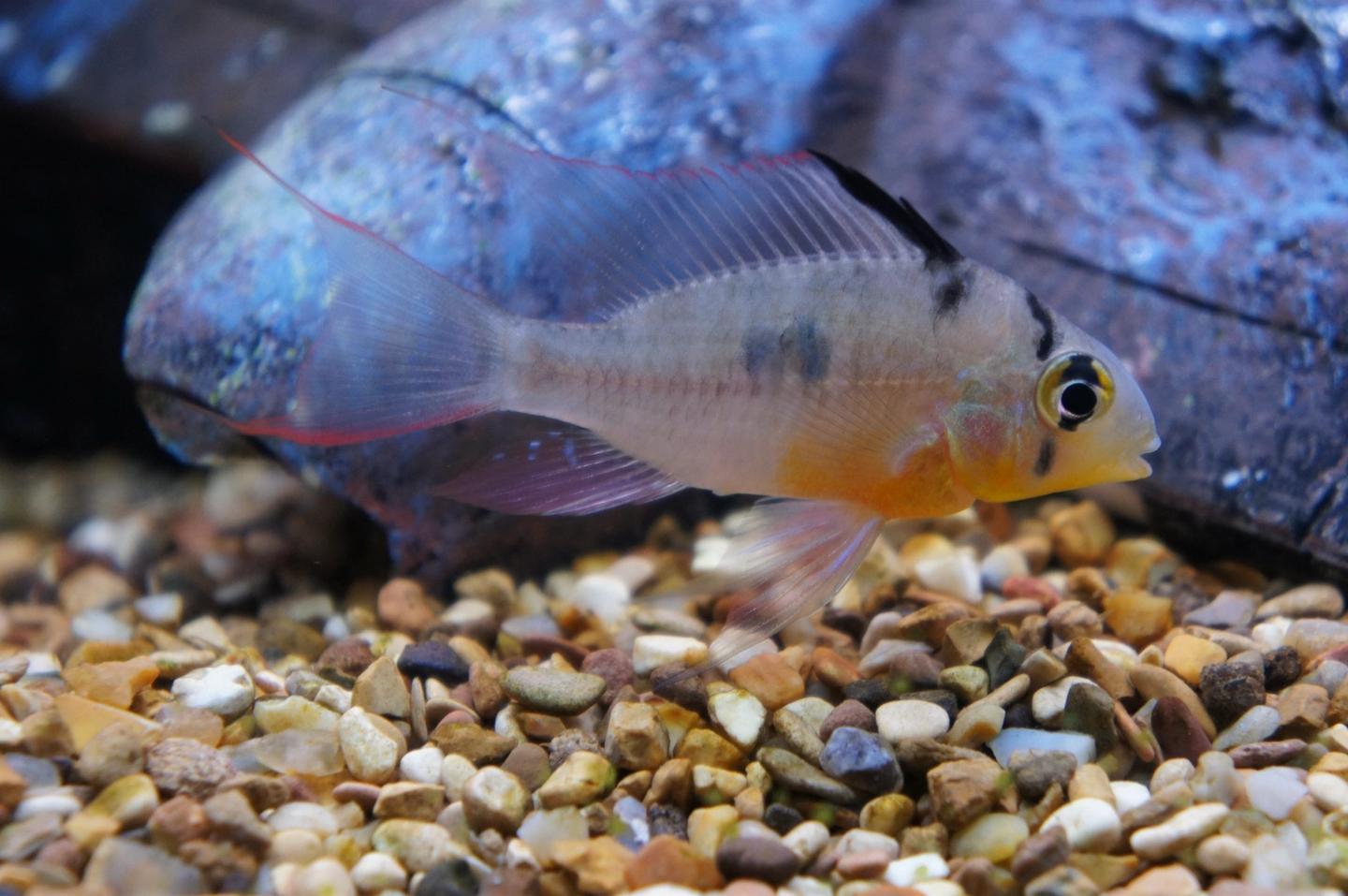
Benga Peacock Cichlid (Aulonocara baenschi) – 3–9cm & XL Sizes
25–26°C · pH 8–8.2 · 243L
£15.49
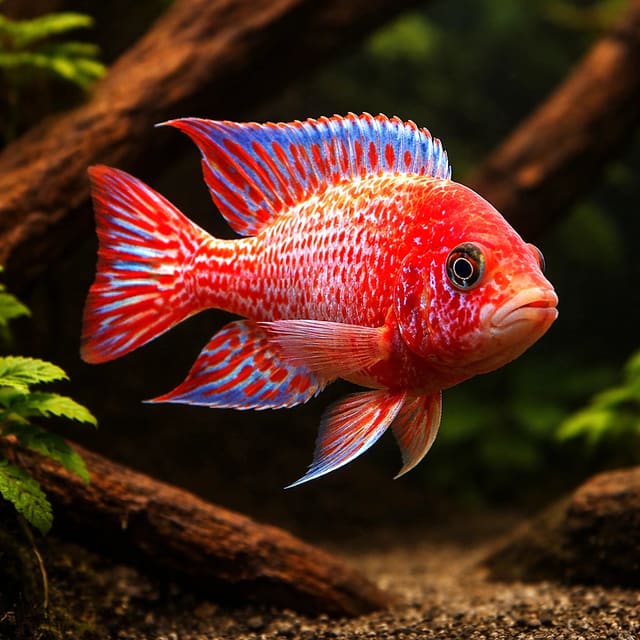
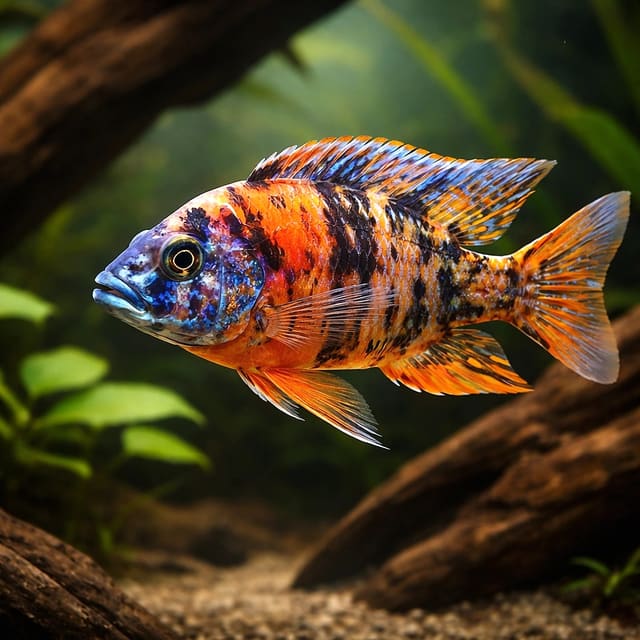
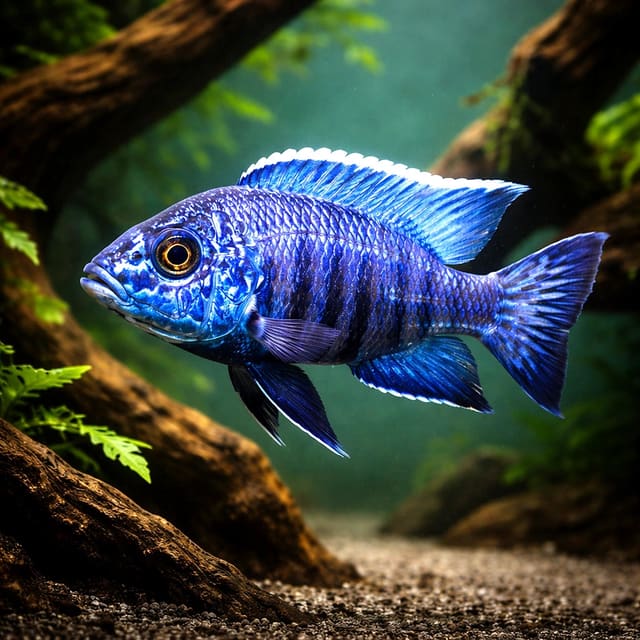
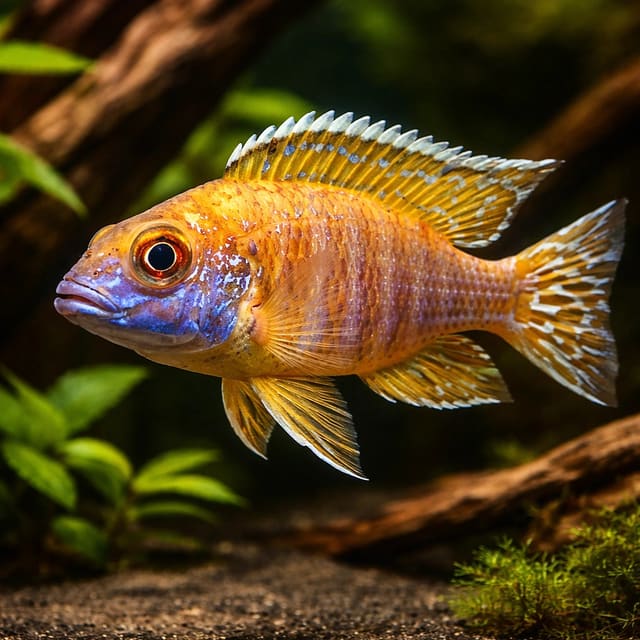
A brilliantly coloured Peacock cichlid endemic to Lake Malawi, also known as the Yellow Regal Peacock. Males develop stunning yellow and blue colouration. Semi-aggressive, ideal for Peacock community tanks. Available with live arrival guarantee.
Adult size is the maximum length this species reaches at full maturity (scientific sources). The livestock you receive will be younger and smaller. Product-photo provenance and any image-specific limitations are stated on the listing.
Aulonocara baenschi
Save when buying multiple fish. Each quantity is one fish; sex and pair formation are not guaranteed unless the selected variant explicitly states them.
Confirm your email, then we’ll send an availability message for this exact item if it returns within 180 days.
This request is only for this product—no newsletter or other promotions. A mail-provider retry may very rarely duplicate the same availability message. Unconfirmed addresses are removed after 48 hours. See our privacy policy.
A brilliantly coloured Peacock cichlid endemic to Lake Malawi, also known as the Yellow Regal Peacock. Males develop stunning yellow and blue colouration. Semi-aggressive, ideal for Peacock community tanks. Available with live arrival guarantee.
Adult size is the maximum length this species reaches at full maturity (scientific sources). The livestock you receive will be younger and smaller. Product-photo provenance and any image-specific limitations are stated on the listing.
Cichlids are a family of roughly 1,800 accepted species, not one care type. Before buying, identify the exact species and source, then compare adult measurement, usable tank dimensions, social system, territory, tested water, diet and an exit plan. No family-wide minimum tank, water range or tank-mate list is safe.
Maintain these water conditions for optimal health and vibrant colors
The Nkhomo-Benga Peacock Cichlid (Aulonocara baenschi), also known as the Yellow Regal Peacock, is a brilliantly coloured haplochromine cichlid endemic to Lake Malawi. Males develop vibrant yellow body colouration with blue highlights at maturity, making this one of the most sought-after Peacock species. Threatened in the wild by collection for the aquarium trade, captive-bred specimens are widely available.
| Scientific Name | Aulonocara baenschi |
| Family | Cichlidae |
| Origin | Lake Malawi, East Africa |
| Care Level | Moderate |
| Temperament | Semi-aggressive |
| Adult Size | 13 cm |
| Minimum Tank Size | 150 litres |
| Temperature | 24–28°C |
| pH Range | 7.5–8.5 |
| Water Hardness | 10–25 dGH |
| Diet | Cichlid pellets, frozen brine shrimp, krill, spirulina |
| Lifespan | 10 years |
| Tank Region | Middle |
| Group Size | 1 male with 3+ females |
Endemic to Lake Malawi, East Africa. Found in shallow rocky habitats where it sifts invertebrates from sandy substrates using a specialised sensory system. Males establish territories around rocks. Maternal mouthbrooder — females carry eggs and fry for approximately three weeks.
Provide a minimum of 150 litres. Maintain water between 24–28°C with pH 7.5–8.5 and hardness 10–25 dGH. Arrange rock formations for territory establishment alongside open sandy areas for natural foraging behaviour.
Omnivore. Offer cichlid pellets, frozen brine shrimp, krill, and spirulina. A varied diet promotes the best yellow colouration. Feed two to three times daily in small portions.
Good companions include other Peacock cichlids, mild Haps, and Synodontis. Avoid aggressive Mbuna, small fish, and shrimp. Browse our range including the Haplochromis Sunset Cichlid, Albino Blue Dolphin Cichlid, and Snow White Cichlid for compatible tank mates.
At Tropical Fish Co, every fish is carefully selected and shipped with care across the UK. Live arrival guarantee, expert advice, and competitive prices. Order your Nkhomo-Benga Peacock Cichlid today.
No reviews for this item yet. Bought one? Honest reviews only, good or bad.
What customers say about ordering from us
Easy website plenty of info on fish your buying great to pick a time slot
TRACEY DURRANT · 7 Oct 2026
Got some lovely fish thank you
Kevin Mackie · 7 Oct 2026
Reviews of our shop, collected by Judge.me, an independent third-party review collector. Newest first.