Fossorochromis rostratus
23–27°C · pH 8–8.6
£38.99
The Malawi sand-sifting cichlid (Taeniolethrinops furcicauda) is a freshwater cichlid endemic to Lake Malawi that reaches 21 cm. It suits keepers planning open sand and a carefully managed Malawi community; OATA’s group guidance gives 23–27°C, pH 8.0–8.6 and 12–18°dH. Sold individually in sizes from 4–5 cm to 9–11 cm.
Taeniolethrinops furcicauda
Save when buying more.
The Malawi sand-sifting cichlid (Taeniolethrinops furcicauda) is a freshwater cichlid endemic to Lake Malawi that reaches 21 cm. It suits keepers planning open sand and a carefully managed Malawi community; OATA’s group guidance gives 23–27°C, pH 8.0–8.6 and 12–18°dH. Sold individually in sizes from 4–5 cm to 9–11 cm.
Maintain these water conditions for optimal health and vibrant colors
The Malawi sand-sifting cichlid (Taeniolethrinops furcicauda) is a freshwater member of the cichlid family endemic to Lake Malawi, where it lives over open sand at depths of 5–40 metres. FishBase records a maximum length of 21 cm and describes it taking in sand, passing it through the gills and retaining insect larvae and other edible material. It suits a keeper prepared to preserve open sand, maintain hard alkaline water and manage the aggression and filtration demands of a Malawi community. It is not suited to an ordinary small-fish community or an aquarium maintained for soft, acidic water.
That feeding method should drive the aquarium design: preserve a generous area of exposed sand where the fish can forage rather than filling the whole footprint with rocks or plants. Its recorded adult length must guide the aquarium plan even when the animal supplied is much smaller.
The Wikipedia account of the species likewise places it over Lake Malawi’s sandy substrates at 5–40 metres. These wild-habitat details explain why open bottom area matters and why this fish should not be treated as a rock-dwelling mbuna simply because both belong in the wider Malawi cichlid trade.
| Suits | Not suited to |
|---|---|
| A keeper planning around a 21 cm adult | An aquarium planned only around the dispatch size |
| Hard, alkaline Malawi cichlid water | Soft, acidic water |
| A layout with extensive open sand | A footprint filled entirely with rocks or rooted plants |
| A deliberately managed Malawi community | An ordinary mixed community outside OATA’s Malawi compatibility boundary |
A properly matured biological filter, strong oxygenation and disciplined weekly maintenance are central parts of the plan because Malawi communities can place a substantial demand on filtration.
Its wild habit of occurring alone describes natural behaviour rather than a simple instruction to keep one fish alone in an aquarium. Community decisions must also account for the aggression-management guidance used for Malawi cichlids. Plan the complete aquarium population before choosing the fish, rather than trying to fit it into an established community after the layout and stocking have already been fixed.
One purchase supplies one animal of the selected size. Use the live size selector to choose between the labels 4–5 cm, 5–6 cm, 7–8 cm and 9–11 cm. The size you select is the size supplied, not the adult size. A larger dispatch size changes the size on arrival; it does not change the species’ eventual space, water or compatibility needs.
FishBase records a maximum of 21 cm total length for male or unsexed fish. Use that figure as the decisive planning length for the aquarium. For example, choosing a 4–5 cm animal leaves substantially more growth to accommodate than choosing a 9–11 cm animal, but both choices require a layout and stocking plan suitable for a fish that may reach the recorded maximum.
OATA recommends an aquarium of at least 200 litres for a reasonable-sized Malawi cichlid community. Treat this as a broad starting reference for the group, then scale the aquarium around this species’ 21 cm maximum, the footprint occupied by open sand, filtration capacity and the adult sizes of every companion. A nominal volume cannot show whether a particular aquarium has enough bottom area or whether a proposed population creates excessive competition.
Sex is guaranteed only when the selected option explicitly states male or female. This Taeniolethrinops furcicauda listing has no sex-guaranteed option.
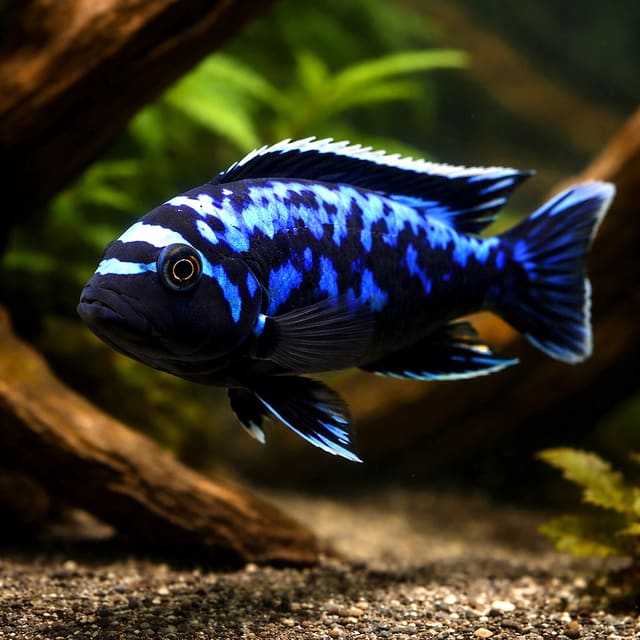
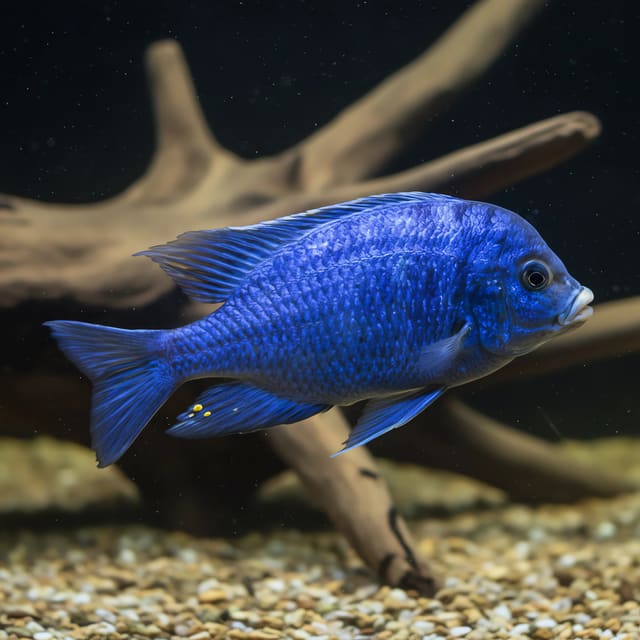
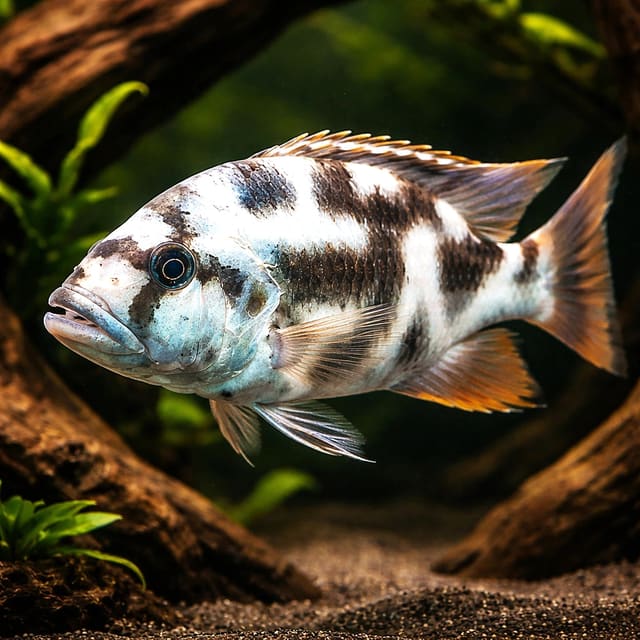
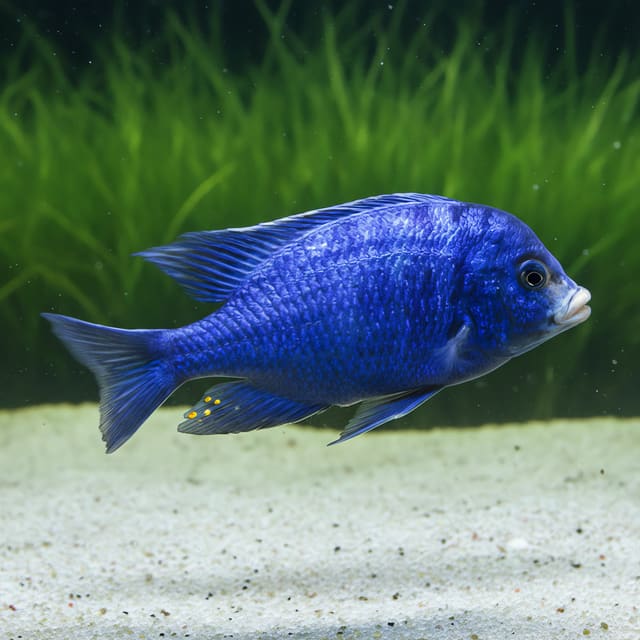
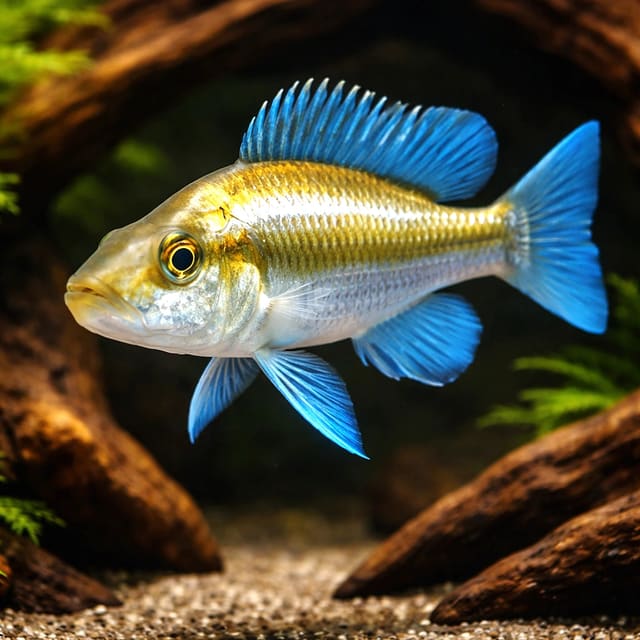
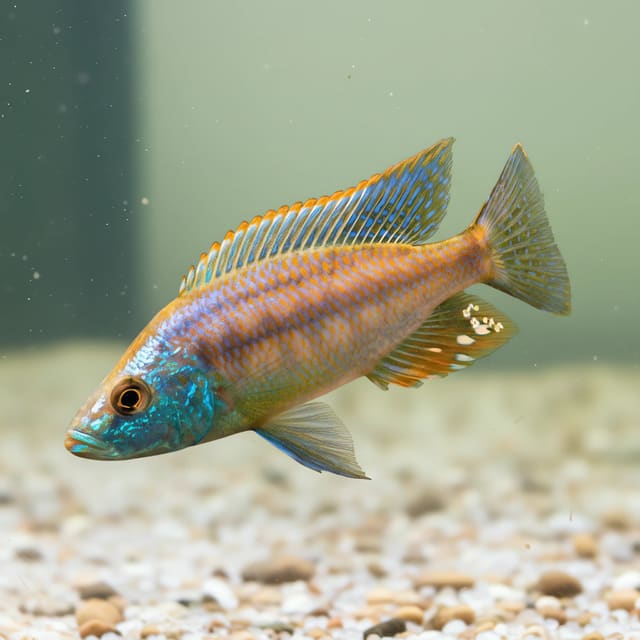
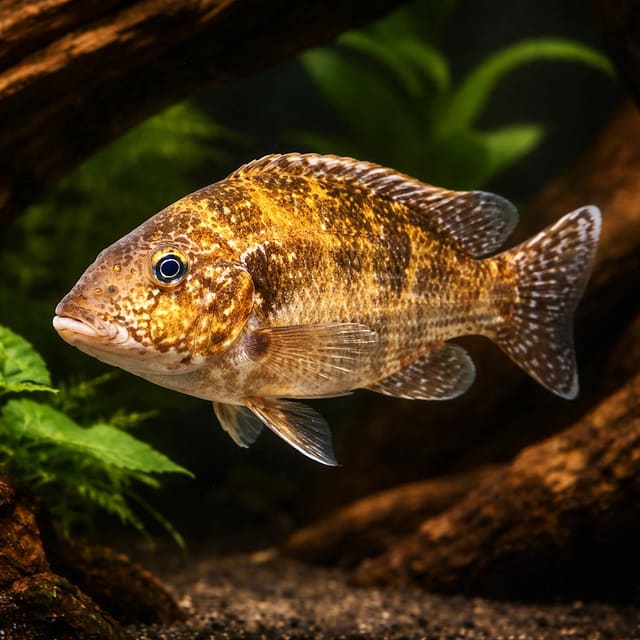
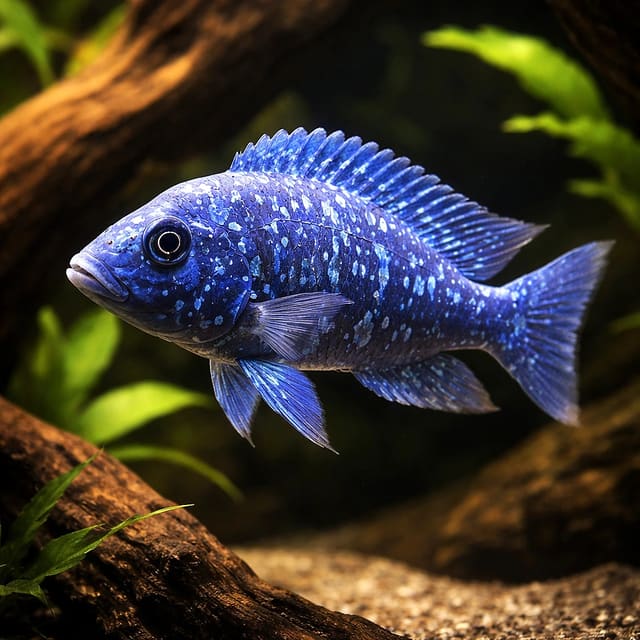
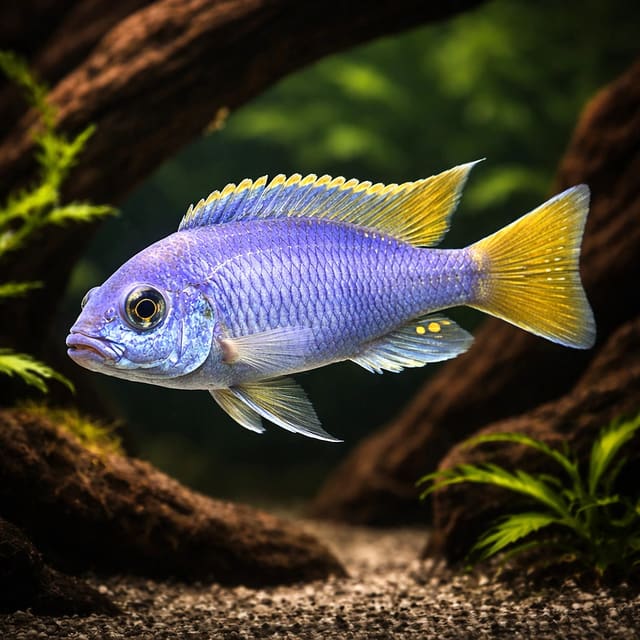
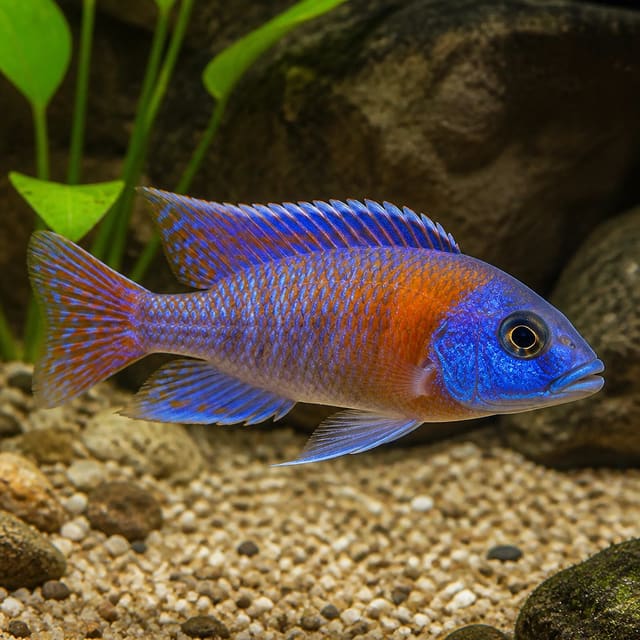
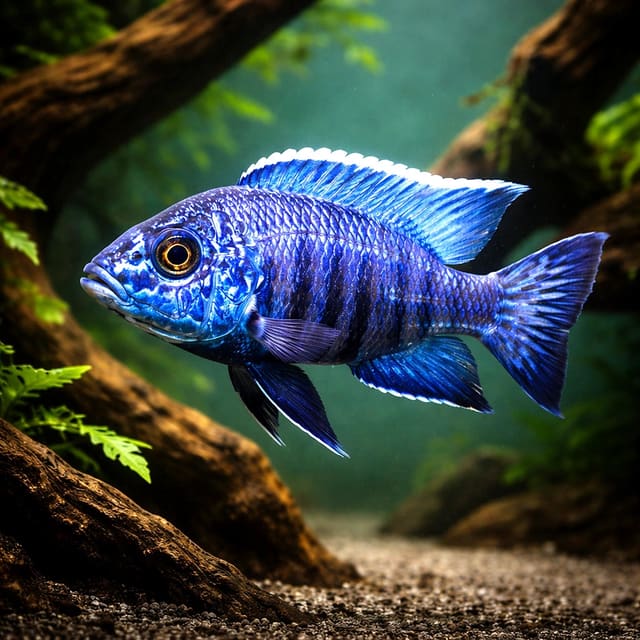
The gallery images are representative of this type of animal rather than photographs of the exact animal supplied, so colours can look slightly different from the live animal.
Keep the adult plan beside the live selector while deciding between sizes. Dispatch size answers how large the animal is when supplied; the 21 cm record, hard alkaline water and Malawi compatibility screen answer whether the aquarium remains suitable as it grows.
Make sand the functional centre of the layout. In the wild, this cichlid filters mouthfuls of sand through its gills to separate insect larvae and other edible material, so the exposed substrate is feeding and activity space rather than decoration alone. Preserve a continuous open area large enough for the fish to move and forage without repeatedly meeting rockwork or competing bottom occupants.
| Area | Job |
|---|---|
| Open sand | Provides the principal foraging and swimming zone. |
| Décor | Can be rearranged if established territories contribute to aggression. |
| Clear water path | Supports circulation and strong oxygenation throughout the aquarium. |
| Service access | Leaves room to siphon waste during weekly maintenance. |
OATA notes that Malawi cichlids often dig and rearrange substrate. Position décor so routine digging cannot easily destabilise the layout, and do not depend on rooted plants to define permanent territories. The same guidance says digging will uproot any plants present, with only the hardiest plants attached to décor being practical. An open, simple design therefore matches both the species’ sandy habitat and the maintenance needs of a Malawi aquarium.
Coral sand or a similar substrate can help buffer the water for Malawi cichlids. Buffering does not replace testing: measure pH and hardness rather than assuming the substrate has produced the required values. Keep the surface accessible for siphoning because food remnants and solid waste can settle wherever circulation is interrupted.
Every new rock or ornament takes away part of the usable sand. Before fixing the layout, view it from above and compare the open bottom area with the full adult length of 21 cm. If the fish would have to turn immediately after crossing only a short patch of sand, simplify the structure or use a larger footprint. The aim is not a bare aquarium; it is a layout in which adjustable décor does not prevent the behaviour that defines this species.
Browse the African cichlid collection only after setting these layout limits, then compare every prospective companion by adult size, water needs and use of the bottom area.
OATA’s African Malawi cichlid guidance gives 23–27°C, pH 8.0–8.6, 12–18°dH general hardness and 10–15°dKH carbonate hardness. These are group-level aquarium parameters rather than a species-specific optimum. Keep the aquarium inside all four ranges together: a suitable temperature does not compensate for soft or acidic water.
| Measurement | Working range or limit |
|---|---|
| Temperature | 23–27°C |
| pH | 8.0–8.6 |
| General hardness | 12–18°dH |
| Carbonate hardness | 10–15°dKH |
| Ammonia | 0 mg/L |
| Nitrite | 0 mg/L |
| Nitrate | Up to 20 mg/L above the normal tap-water level |
Test the aquarium and replacement tap water. Record temperature, pH, general hardness and carbonate hardness so you can see whether the water sits inside the Malawi ranges and whether it remains stable between maintenance days. Our water chemistry guide explains what the principal measurements mean, while the water matcher helps compare measured values with the target ranges.
Use numbers to guide any adjustment. For example, water at pH 7.6 falls below the stated 8.0 lower boundary even if its temperature is 25°C. Water at 14°dH is within the general-hardness range, but it still needs a carbonate-hardness check because the two measurements describe different parts of the water chemistry.
A reading near an edge is a prompt to monitor the trend rather than chase a single central number. If pH moves from 8.4 to 8.0 between weekly tests, investigate maintenance, buffering and replacement-water consistency before the next livestock addition. If ammonia or nitrite appears above zero, stop increasing the population and address biological filtration and waste loading. Record each result so a gradual change is visible before fish behaviour changes.
A functioning biological filter is essential. The RSPCA’s aquarium welfare guidance explains that fish release toxic ammonia, which filter bacteria convert first to toxic nitrite and then to the safer nitrate. Maturing the filter establishes this bacterial population before livestock waste places it under load.
Prepare and mature the aquarium before the fish arrives. Our first tropical aquarium guide gives the setup sequence, while water tests provide the decision point: ammonia and nitrite must both read 0 mg/L before the population is increased.
OATA recommends an oversized filter for the crowded conditions often used to manage aggression in Malawi communities. Base capacity on the planned adult population rather than the present size of one new fish. A filter that appears adequate for a 4–5 cm animal may become inadequate as that fish grows and further cichlids are added.
Tap water may contain chlorine or chloramine that can harm the beneficial bacteria in filter media. Treat replacement water with tap-water conditioner and preserve the established media during cleaning. The purpose is to remove obstructing debris without stripping away the biological community responsible for processing waste.
OATA also recommends aggressive aeration for Malawi aquariums so sufficient dissolved oxygen remains accessible in a heavily stocked system. Arrange filtration and aeration to move water through the aquarium rather than leaving quiet pockets behind décor. Check that output remains strong after maintenance and after any layout change. Filtration processes waste; aeration supports fish and filter bacteria. Both must continue reliably, and neither replaces weekly water testing or partial water changes.
Wild Taeniolethrinops furcicauda takes sand into the mouth, passes it through the gills and retains insect larvae and other edible material. In the aquarium, choose food that fits this animal-content feeding biology while keeping open sand accessible for normal foraging. Do not interpret sand sifting as evidence that the substrate alone will feed the fish.
OATA advises feeding Malawi cichlids twice a day, offering only what they can finish within a few minutes. For larger Malawi cichlids with more predatory diets, its examples include pellets with a higher animal content and frozen foods such as brine shrimp, prawns or cockles. Select an appropriately sized Malawi cichlid food and use the fish’s response and body condition to control the portion.
| Observation | Action |
|---|---|
| Food remains after a few minutes | Remove the excess and reduce the next portion. |
| The fish loses interest early | Stop feeding rather than adding a different food immediately. |
| Body condition decreases | Check intake, competition, behaviour and water quality. |
| Waste builds on the sand | Reduce excess feeding and remove debris during maintenance. |
Uneaten food breaks down and adds toxic waste to the aquarium. A “few minutes” is a maximum feeding window, not a target that requires food to remain present for the entire period. Begin with a controlled portion, watch it being taken and stop as soon as interest falls or food starts settling unused.
A fish may approach food but still receive too little if quicker or more assertive cichlids intercept every portion. Observe whether this animal actually takes food during both daily feeds. Spread suitable portions across the usable feeding area only when that helps each fish gain access without leaving uneaten material.
Judge the routine through three connected results: food is consumed promptly, body condition remains steady and weekly ammonia and nitrite tests stay at 0 mg/L. If one result fails, review the portion, competition and filtration together rather than increasing food automatically.
Carry out a 25% partial water change at least once every week. Use a siphon to remove solid waste from the substrate, paying particular attention to areas where debris collects around décor. Treat all replacement tap water with conditioner before adding it so chlorine or chloramine cannot harm the fish or the established filter bacteria.
A pre-change test shows what accumulated during the week. Record temperature, pH, general hardness, carbonate hardness, ammonia, nitrite and nitrate. Ammonia and nitrite must remain at 0 mg/L, while nitrate should be no more than 20 mg/L above the normal tap-water level. Testing the tap water alongside the aquarium makes the nitrate comparison meaningful.
One acceptable reading is useful; a sequence of weekly readings is more informative. If nitrate rises more each week while the routine remains unchanged, review feeding, adult stocking load, waste removal and filter performance. If pH or hardness drifts towards the edge of its range, compare the aquarium with the replacement water and check whether the buffering substrate is still supporting stable conditions.
Do not increase the population while ammonia or nitrite is detectable. OATA describes rapid stocking as a cause of new tank syndrome because the filter bacteria may not yet be numerous enough to process the additional waste. Resume stocking decisions only after the filter is coping and zero readings have been restored consistently.
A larger aquarium generally changes more slowly than a smaller one, but volume does not remove the need for maintenance. Weekly testing, a 25% water change, controlled feeding and intact biological media work together. Skipping one part makes it harder to identify whether a later problem began with water chemistry, waste, filtration or stocking pressure.
Prepare the aquarium before the parcel arrives. Confirm that the intended tank is mature, the temperature is within 23–27°C, ammonia and nitrite are both 0 mg/L, and filtration and aeration are running normally. The layout should already provide open sand so the new arrival is not placed into a tank that still needs major rearrangement.
Use the acclimatisation steps in our delivery and Live Arrival Guarantee policy. Someone must be present to receive the parcel. Start filming before the sealed parcel is opened and continue in one take while it is opened and the fish is shown inside the sealed bag. Float the bag for 20–30 minutes, then release the fish without pouring the bag water into the aquarium.
Watch whether the fish reaches the sandy area, maintains normal swimming and gains access to food. Check for persistent pursuit or a single resident preventing it from using the substrate. OATA recommends adding Malawi cichlids in groups to reduce the chance of one newcomer receiving all the aggression, but the filter must also be able to process each increase in population. Balance those two requirements in the stocking plan before delivery.
Continue the twice-daily feeding routine without compensating for arrival stress by leaving excess food in the aquarium. At the weekly checkpoint, test ammonia and nitrite, complete the scheduled 25% water change and inspect filter flow. If a new reading appears after the addition, pause further stocking and deal with the increased biological load.
Compare weekly records across the first month. Stable temperature, pH and hardness, zero ammonia and nitrite, controlled nitrate and consistent feeding provide a practical picture of how the aquarium is coping. Also note whether aggression is spreading across the community or concentrating on one animal. Use those results before deciding on another addition; do not rely on the apparent spare space around a smaller dispatch-size fish.
Learn the fish’s normal swimming, colour, breathing, feeding and use of the sandy area. A change from that baseline is the useful warning. OATA highlights hanging at the surface, sitting on the bottom, erratic swimming, darker or paler colour, increased aggression, unusual hiding, changed gill-cover movement, white spots, fluffy growths, damaged fins or scales, altered body condition and reduced feeding interest.
| If you see | Do this first |
|---|---|
| Faster or slower breathing | Test water and check filtration and aeration. |
| Surface hanging or unusual bottom sitting | Check ammonia, nitrite and equipment operation. |
| Reduced feeding | Check water, aggression, food access and body condition. |
| More hiding or pursuit | Review the stocking pattern and décor. |
| Spots, growths or physical damage | Record the change clearly and seek prompt guidance. |
Water testing is the first practical step because even small amounts of ammonia or nitrite can stress Malawi cichlids. If either reading is above 0 mg/L, stop further additions, check filter function and review waste and feeding. Make sure aeration is operating strongly and that the filter outlet has not become restricted.
Do not assume every colour or activity change has the same cause. Compare the observation with recent test results, maintenance, additions and aggression. A fish that misses food because it is being displaced needs a different response from an aquarium in which every fish is breathing rapidly.
If you are concerned about a health change, test the water and contact us with the readings and a clear description of swimming, breathing, appetite and appearance. Prompt, specific observations make it easier to distinguish a whole-aquarium water problem from pressure affecting one animal.
OATA advises keeping Malawi cichlids with other Malawi cichlids or with some species of Synodontis catfish that naturally inhabit Lake Malawi. This is a group guidance boundary, not a list of automatic companions. Each proposed combination still needs to pass checks for adult size, hard alkaline water, aggression, stocking order and competition for the open sandy area.
| Question | Required result |
|---|---|
| Can both use the same water? | All fish must suit 23–27°C, pH 8.0–8.6 and 12–18°dH. |
| Do adult sizes fit the aquarium? | Assess this fish at up to 21 cm total length. |
| Will open sand remain usable? | Bottom occupants must not eliminate or dominate its feeding area. |
| Can aggression be distributed? | No single fish should receive persistent pressure. |
| Can the filter carry the population? | Ammonia and nitrite must stay at 0 mg/L. |
Avoid ordinary community combinations outside Malawi cichlids, apart from individually assessed Synodontis species. Also avoid fish requiring soft, acidic conditions, because meeting their water needs would conflict with the stated hard, alkaline Malawi ranges. Do not use appearance, trade grouping or similar dispatch size as a substitute for matching adult requirements.
For example, two fish may both be 7–8 cm when supplied yet have very different adult lengths, aggression patterns or use of the bottom. Compare mature size and behaviour before treating them as peers. Likewise, a catfish belonging to Synodontis still needs its own water, size and space requirements checked; the genus name alone does not make every species suitable.
Temperament can vary between species and individuals, so no pairing should be treated as guaranteed. Observe whether this fish can forage, feed and move without persistent pursuit. If you want a stocking and compatibility assessment, contact us with the aquarium volume and dimensions, water readings, complete fish list and adult sizes. Those details allow the whole community to be assessed rather than judging one proposed companion in isolation.
Malawi cichlids can be aggressive, and OATA warns that small groups often fight. Its aquarium guidance uses groups of at least 15 Malawi cichlids and slight, carefully managed overstocking to spread aggression, supported by an oversized filter and strong aeration. Treat that number as a community-planning method for the group, not a requirement to keep 15 Taeniolethrinops furcicauda.
FishBase reports this species usually by itself over open sandy areas in nature. Keep that observation separate from aquarium aggression management: it describes how the wild fish occurs, while the OATA approach addresses the dynamics of a captive Malawi community. The practical decision is to plan the whole population, rather than assuming either that this species needs a same-species shoal or that one isolated fish can enter any community safely.
These steps create a genuine balancing problem: adding one fish at a time may concentrate aggression, while adding too many fish too quickly may overwhelm the filter. Resolve that conflict before purchase by preparing sufficient mature filtration and choosing a deliberate addition group. Confirm ammonia and nitrite are 0 mg/L before and after each increase.
OATA notes that rearranging décor may reduce aggression by making fish establish new territories. Use this when established boundaries cause one newcomer to be targeted, but preserve the open sandy area needed for filtering and foraging. A maze of rockwork that interrupts every stretch of sand solves one problem by creating another.
After an addition, observe where aggression occurs and who receives it. Distributed short interactions are different from repeated pursuit of one fish or exclusion from food and sand. If pressure remains concentrated, reassess the population, layout and space rather than assuming that aggression is unavoidable in every Malawi aquarium.
FishBase records a maximum adult length of 21 cm total length, so plan the aquarium around a 21 cm fish rather than its smaller dispatch size.
OATA recommends at least 200 litres for a reasonable-sized Malawi cichlid community; treat that group figure as a starting point and use a larger footprint where needed for this fish’s 21 cm adult length, open sand and the complete adult population.
FishBase records the species usually by itself in the wild, while OATA’s aquarium guidance uses communities of at least 15 Malawi cichlids to spread aggression; that community number is not a requirement to keep 15 of this species.
OATA describes Malawi cichlids as usually undemanding and easy to keep, but also aggressive; this fish suits a keeper who can maintain 23–27°C, pH 8.0–8.6, hard water, mature filtration and a deliberately planned Malawi community.
It naturally filters sand for insect larvae and other edible material; following OATA’s Malawi feeding guidance, offer appropriately sized food with suitable animal content twice daily and only as much as it finishes within a few minutes.
OATA’s African Malawi cichlid guidance gives 23–27°C, pH 8.0–8.6, general hardness of 12–18°dH and carbonate hardness of 10–15°dKH, with ammonia and nitrite at 0 mg/L.
OATA describes Malawi cichlids as aggressive and warns that small groups often fight, so watch for persistent pursuit, damaged fins, exclusion from food or loss of access to the open sand.
OATA limits Malawi cichlid companions to other Malawi cichlids or some Lake Malawi Synodontis catfish; assess every candidate for adult size, 23–27°C hard alkaline water, aggression, sand use and filtration capacity.
Someone must be present to receive it; film every delivery continuously from the sealed parcel as it is opened with the fish still inside the sealed bag, float the bag for 20–30 minutes, then release the fish without pouring the bag water into the aquarium.
No reviews for this item yet. Bought one? Honest reviews only, good or bad.
What customers say about ordering from us
Easy website plenty of info on fish your buying great to pick a time slot
TRACEY DURRANT · 7 Oct 2026
Got some lovely fish thank you
Kevin Mackie · 7 Oct 2026
Reviews of our shop, collected by Judge.me, an independent third-party review collector. Newest first.