Moderate
Acei Cichlid (Pseudotropheus sp. “acei”)
24–26°C · pH 7.5–8.5 · 300L
£7.99

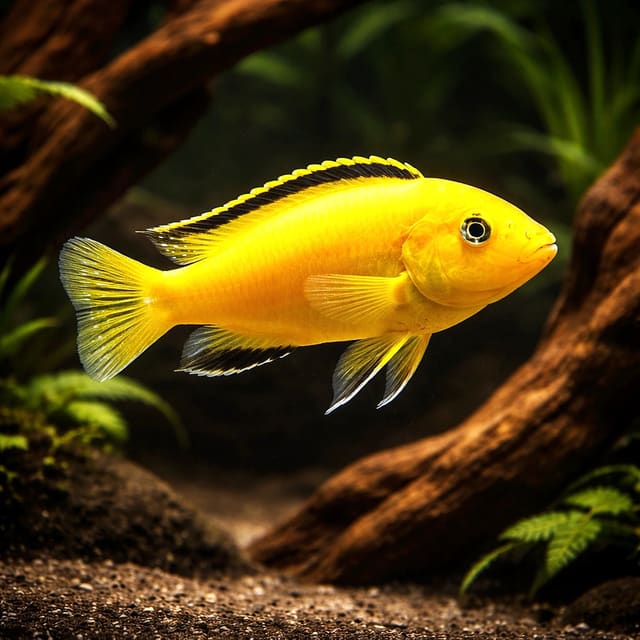
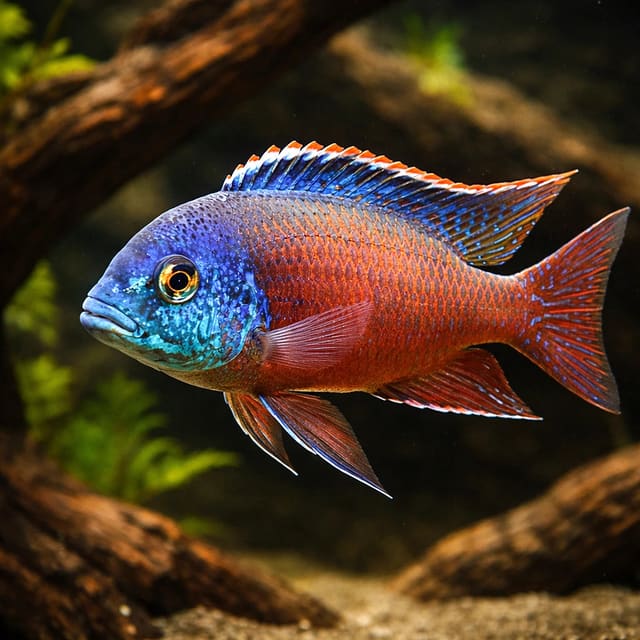
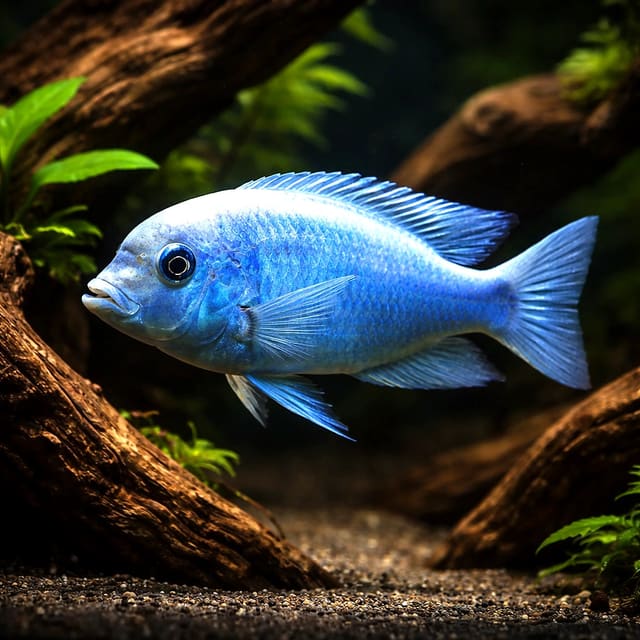
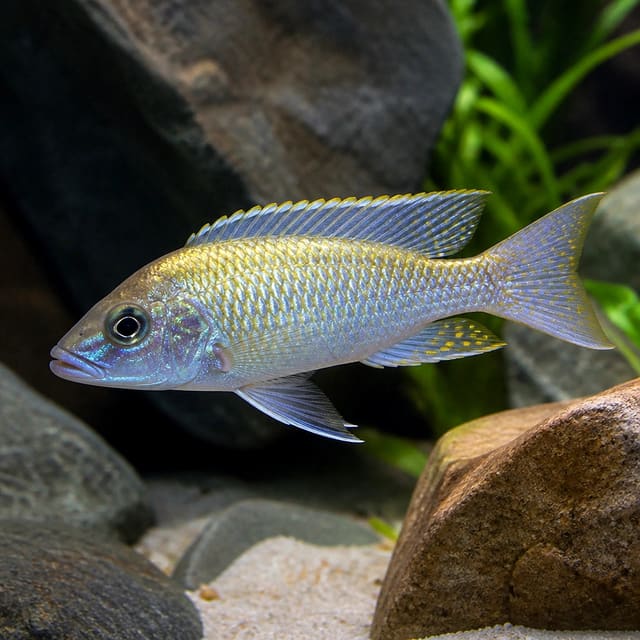
The Electra Deep-Water Hap (Cyrtocara electra) is a Lake Malawi cichlid that reaches 20 cm standard length. It suits carefully planned peaceful Malawi aquariums; breeding projects can begin with 6–8 young fish, while routine water should be 24–26°C, pH 8.0 and 12–18 dGH—the overlap of FishBase’s wild range, Seriously Fish’s species care and OATA’s Malawi guidance. Sold individually in 4 - 5 cm, S, 6 - 7 cm, 7 - 9 cm and XL sizes.
Adult size is the maximum length this species reaches at full maturity (scientific sources). The livestock you receive will be younger and smaller — pick a size above for the actual shipping size. Product-photo provenance and any image-specific limitations are stated on the listing.
Cyrtocara electra
Save when buying multiple fish. Each quantity is one fish; sex and pair formation are not guaranteed unless the selected variant explicitly states them.
The Electra Deep-Water Hap (Cyrtocara electra) is a Lake Malawi cichlid that reaches 20 cm standard length. It suits carefully planned peaceful Malawi aquariums; breeding projects can begin with 6–8 young fish, while routine water should be 24–26°C, pH 8.0 and 12–18 dGH—the overlap of FishBase’s wild range, Seriously Fish’s species care and OATA’s Malawi guidance. Sold individually in 4 - 5 cm, S, 6 - 7 cm, 7 - 9 cm and XL sizes.
Adult size is the maximum length this species reaches at full maturity (scientific sources). The livestock you receive will be younger and smaller — pick a size above for the actual shipping size. Product-photo provenance and any image-specific limitations are stated on the listing.
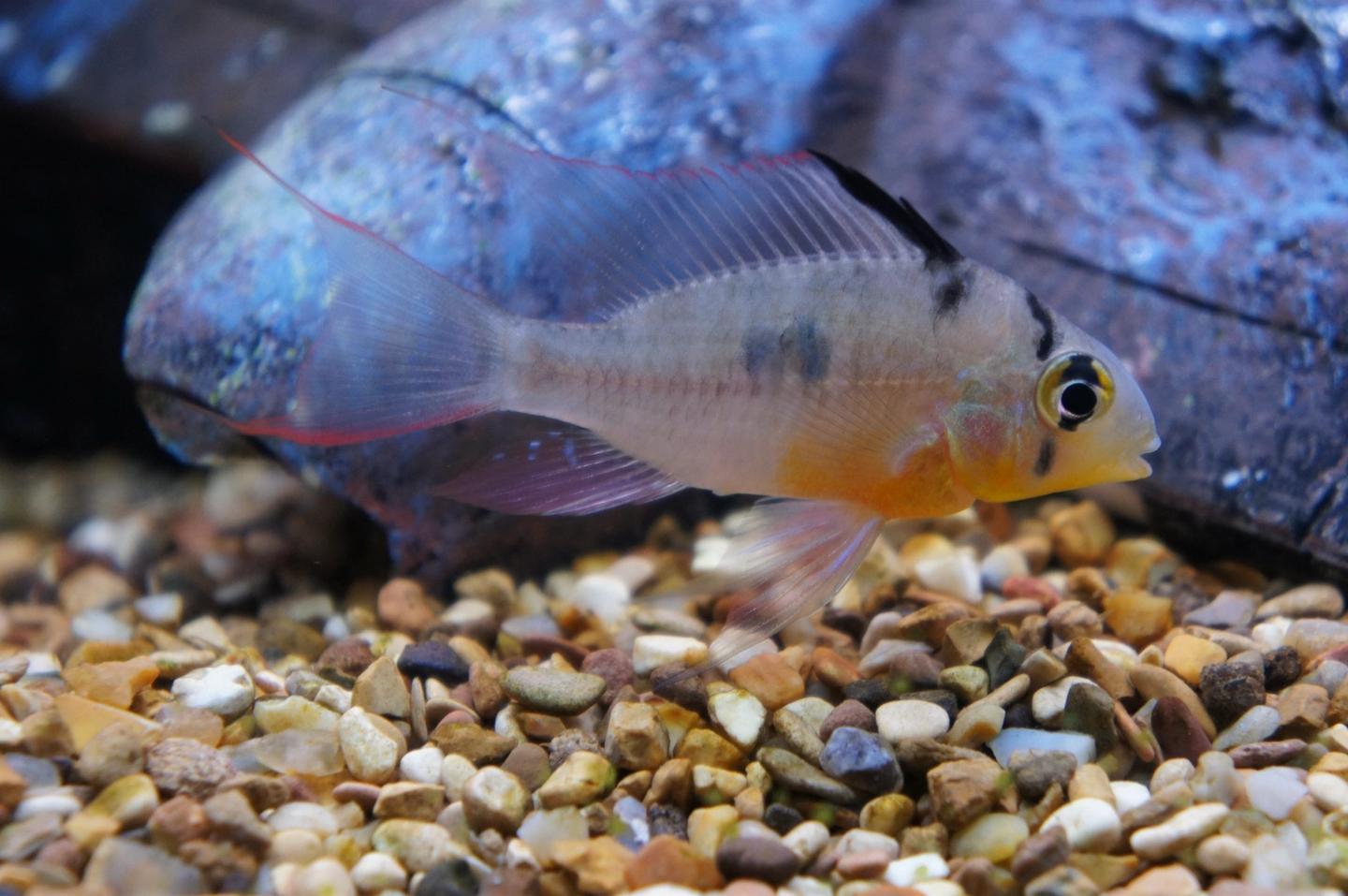
Cichlids are a family of roughly 1,800 accepted species, not one care type. Before buying, identify the exact species and source, then compare adult measurement, usable tank dimensions, social system, territory, tested water, diet and an exit plan. No family-wide minimum tank, water range or tank-mate list is safe.
Maintain these water conditions for optimal health and vibrant colors
The Electra Deep-Water Hap (Cyrtocara electra) is a freshwater cichlid from Lake Malawi in East Africa. It is endemic to the lake and occurs around Likoma Island, where it lives over sand. FishBase records a maximum of 12 cm standard length. This is an intermediate choice for a keeper who can provide a spacious sandy aquarium, hard alkaline water and a carefully screened peaceful Malawi community.
FishBase now lists it as Placidochromis electra, with Cyrtocara electra treated as a synonym. The common name Deep-water hap refers to its association with deeper water, although it may also enter shallower areas and has a stated preference for about 7 m in the lake. It is also known in the aquarium trade as the electric blue hap.
In the wild, this cichlid gathers material stirred from the sandy bottom, taking invertebrates, algae and other morsels. That feeding method makes open sand useful in the aquarium. It also explains why the aquascape should not be filled edge to edge with rockwork.
| Suits | Not suited to |
|---|---|
| Peaceful Lake Malawi communities | The hurly-burly of a mbuna community |
| A sandy floor with open areas | An aquarium without open substrate |
| Hard, alkaline water held steadily | Soft or acidic community conditions |
| Keepers able to plan around adult needs | Choosing an aquarium from dispatch size alone |
Keep this fish at 24–26°C, pH 8.0 and 12–18 dGH. These routine values are the overlap of FishBase’s wild environmental range, the Seriously Fish species guide and OATA’s Malawi-cichlid guidance. OATA’s figures apply to the wider group and are not a species-specific optimum, while the overlap gives a practical target that remains inside all three ranges.
Plan the aquarium around a base measuring 120 × 45 cm and a volume of approximately 205 litres, as used by Seriously Fish for this species. The footprint matters because the layout needs open sand as well as rock piles, caves and hiding places. More water also gives greater stability when temperature, mineral content and waste levels must remain controlled.
| Decision | Planning figure |
|---|---|
| Adult length | 12 cm standard length |
| Aquarium reference | 120 × 45 cm base; approximately 205 litres |
| Routine temperature | 24–26°C |
| Routine pH | 8.0 |
| General hardness | 12–18 dGH |
This is a very gentle Malawi cichlid, but it may become mildly territorial while breeding. It can live peacefully with its own species. When known males and females are kept together, Seriously Fish advises keeping several females per male rather than concentrating attention on one female.
One purchase supplies one Electra Deep-Water Hap. The live size selector shows the labels 4 - 5 cm, S, 6 - 7 cm, 7 - 9 cm and XL. Use the selector to match the dispatch grade to the other fish and the stocking plan you have already assessed.
The size you select is the size supplied, not the adult size. Every grade needs an aquarium planned around the same adult care, including the 120 × 45 cm footprint, approximately 205-litre volume, open sand and stable hard alkaline water. A smaller dispatch fish is not a reason to begin with a smaller aquarium.
Sex is guaranteed only when the selected option explicitly states male or female. This Electra Deep-Water Hap listing has no sex-guaranteed option.
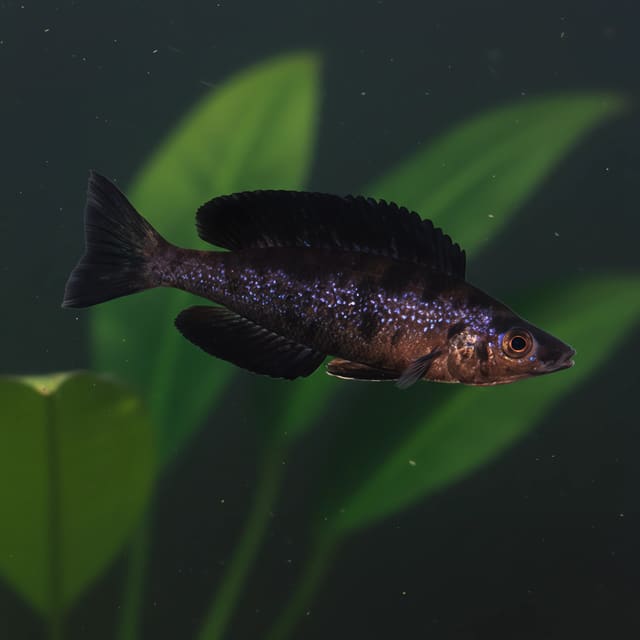
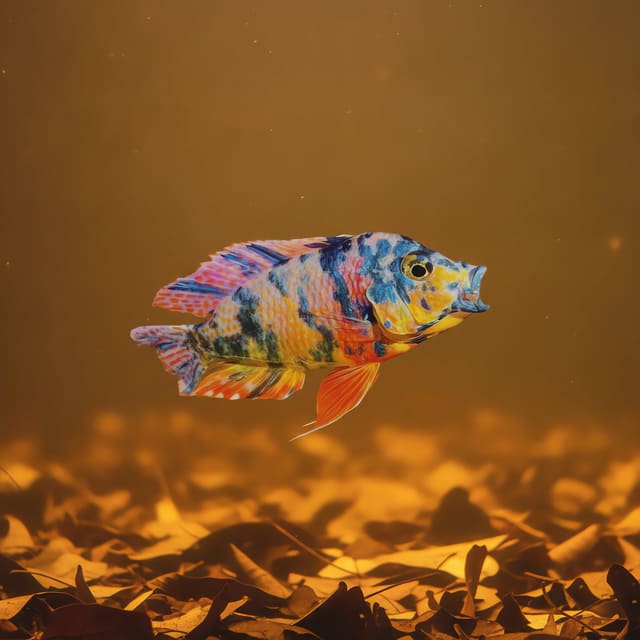
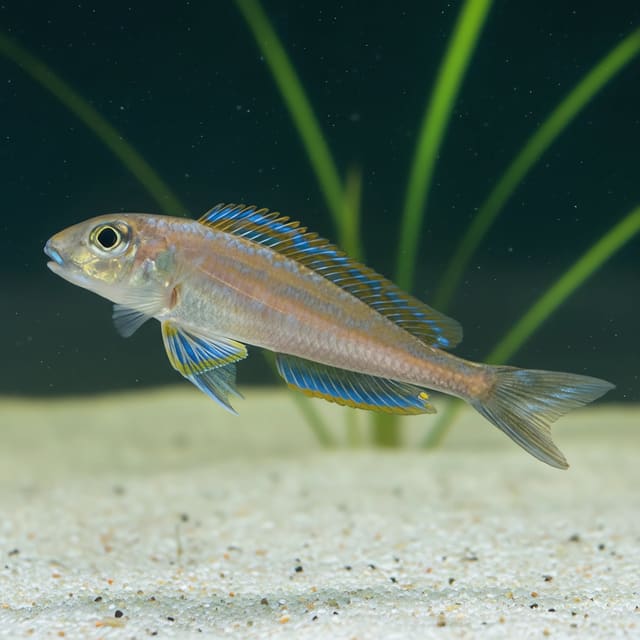
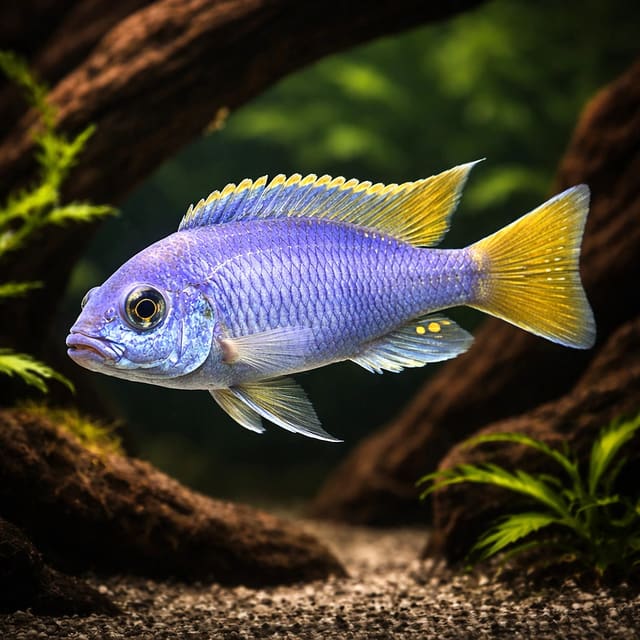
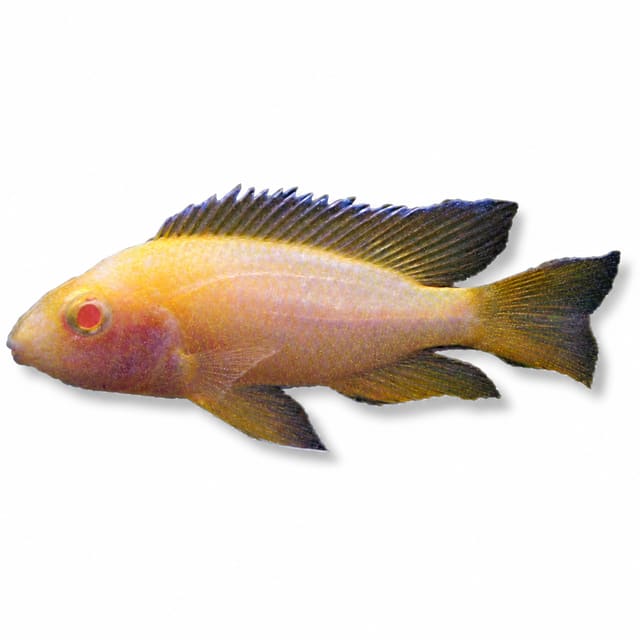
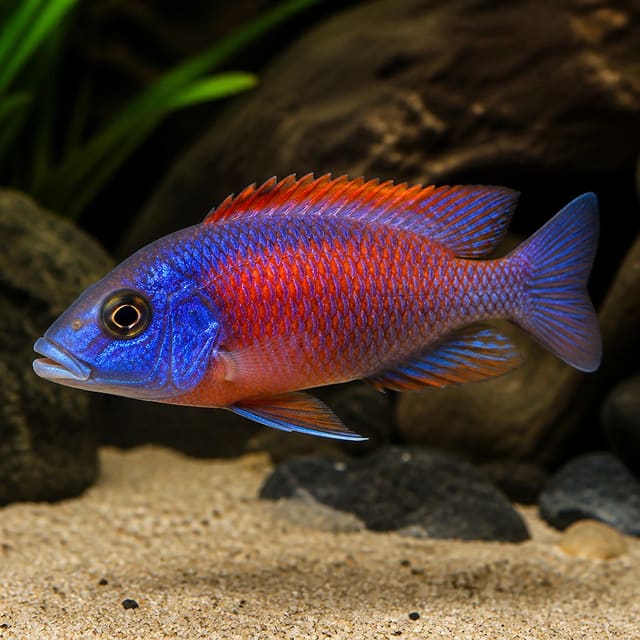
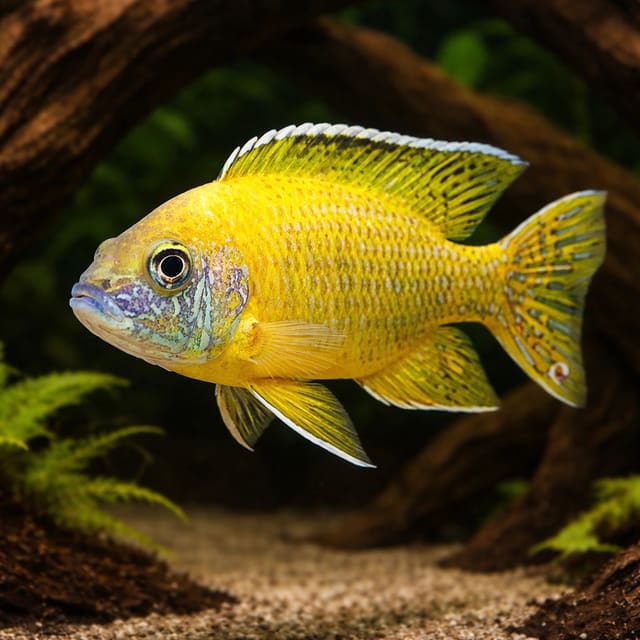
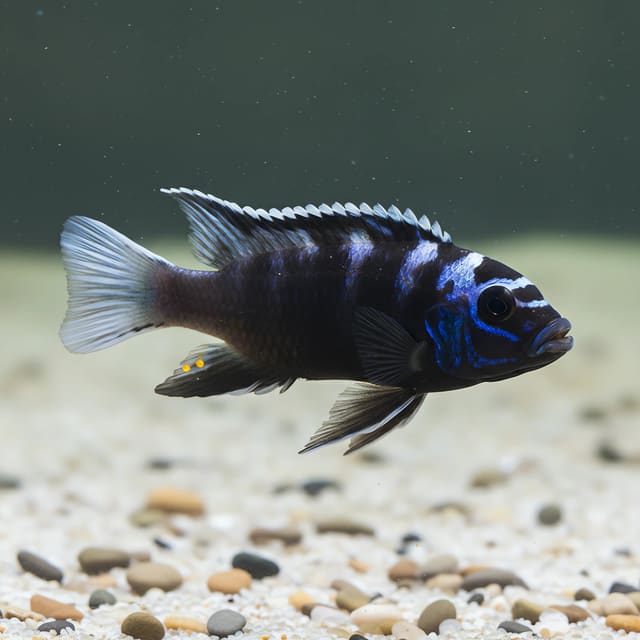
Some gallery images have been digitally enhanced to improve image quality. They show the listed type of animal rather than guaranteeing the exact markings of the individual supplied, so natural colour and pattern can vary.
Complete the aquarium and compatibility assessment before selecting a grade. Dispatch length cannot identify sex or future colour, so base the decision on space, water chemistry and the behaviour of the existing Malawi community.
Use 12 cm standard length as the consistent adult-size figure. FishBase records that maximum for male or unsexed fish. Seriously Fish uses 20 cm standard length as its aquarium-planning length, so its 120 × 45 cm base and approximately 205-litre setup remain the prudent space reference.
A 205-litre aquarium with the wrong proportions can provide less usable sand than the stated 120 × 45 cm base. Measure the internal floor before rockwork is added. Leave broad lanes and patches of open substrate between rock piles so the fish can swim, forage and move away from territorial activity.
For example, an aquarium may hold roughly the expected volume but lose much of its open floor to a solid wall of rocks. In that case, reduce the footprint of the rock structures and form separate piles with open sand between them. Do not solve the problem by removing all shelter: Seriously Fish recommends caves and hiding places as well as open substrate.
Do not use a temporary small aquarium on the assumption that the fish can be moved later. Starting with the adult layout avoids a second disruptive transfer and gives the biological filter the full water volume from the beginning.
Use the first month to compare the planned footprint with the fish’s actual access to open sand and shelter. During feeding, it should be able to approach the substrate without being confined to one corner. At quieter times, check that it can cross between open areas and withdraw into cover without passing through a single narrow route controlled by another fish.
If rock piles leave only a thin strip of sand, rebuild them as separate structures and recover a broader open area. If shelter is concentrated in one place, divide it into more than one refuge while keeping each structure stable. A useful layout provides both choices at the same time: exposed substrate for normal movement and feeding, and caves or hiding places for withdrawal.
Reassess the same points as the community changes. Adding fish increases demand on the floor area, refuges and filter even when the aquarium’s stated volume does not change. Judge any addition by the adult population and the remaining usable footprint, not by whether another small fish can physically fit into the tank on the day it arrives.
Use a sandy substrate and arrange rocks into stable piles that form caves and hiding places. Keep open areas of substrate between those piles. Seriously Fish calls sand essential for this species, matching the wild habit of living and feeding over sandy ground.
Plants are optional. Seriously Fish says they are not necessary and that this species leaves them alone. OATA notes that Malawi cichlids as a group often dig and rearrange substrate, which will uproot any plants present. If plants are included, position them so disturbed sand cannot easily loosen them and leave the required open floor intact.
Watch how the layout works after introduction rather than judging it only when empty. A fish repeatedly trapped behind one rock pile, prevented from crossing the aquarium or unable to reach food needs a layout adjustment. OATA advises that rearranging décor can help reduce aggression by making fish establish new territories.
Make changes deliberately. Move enough décor to break an established boundary, while retaining caves and open sand. Check rock stability after any rearrangement because digging fish can shift substrate around the base. The intended result is not a bare tank; it is a clear choice between open foraging space and secure cover.
| What you see | What to do |
|---|---|
| Food collects behind rocks | Open a route for cleaning and feeding access |
| One refuge controls the whole floor | Split the rocks into separate stable piles |
| Most sand is covered | Remove excess décor and restore open substrate |
| Digging exposes a rock base | Check stability before leaving the structure in place |
Carry out the same review after rearranging décor. Confirm that each pile remains stable, the caves remain usable and the central sand has not been reduced to a narrow passage. Observe from more than one position because a clear route from the front may end behind a rock where another fish can block it.
Keep the aquarium at 24–26°C, pH 8.0 and 12–18 dGH. This target is the overlap of FishBase’s wild range, Seriously Fish’s aquarium guidance and OATA’s Malawi guidance, so each value remains within every named range.
| Reference | Stated values |
|---|---|
| FishBase wild environment | 24–26°C; pH 8.0; 9–19 dH |
| Seriously Fish aquarium care | 24–28°C; pH 7.6–8.8; 10–25 dGH |
| OATA Malawi guidance | 23–27°C; pH 8.0–8.6; 12–18 dGH |
| Routine overlap | 24–26°C; pH 8.0; 12–18 dGH |
OATA also gives a carbonate-hardness range of 10–15 dKH for Malawi cichlids. Measure both general hardness and carbonate hardness rather than treating the word “hard” as a complete result. Our water chemistry guide explains what each test measures, and the water matcher lets you compare measured values with this care plan.
OATA’s targets for ammonia and nitrite are zero mg per litre. Nitrate should not exceed 20 mg per litre above the normal level in the tap water. These waste limits depend on filtration, feeding and maintenance, so treat water chemistry as an ongoing routine rather than a one-time setup task.
A temperature reading of 25°C is within the routine range, but it does not make the aquarium ready if pH is below 8.0 or ammonia is detectable. In the same way, pH 8.0 does not compensate for nitrite above zero. Check each required value and act on the one that falls outside its target.
Keep a simple weekly record of temperature, pH, general hardness, carbonate hardness, ammonia, nitrite and nitrate. Comparing readings makes gradual movement easier to spot than relying on memory. When a result changes, check it alongside recent feeding, stocking, filter flow and maintenance rather than changing several parts of the aquarium without a clear reason.
For example, if ammonia and nitrite remain at zero but nitrate rises towards the stated limit, review feeding and the water-change routine. If pH is 8.0 but general hardness sits below 12 dGH, the pH result alone does not meet the complete water plan. Restore the aquarium to the full target before adding more fish.
Run a mature, well-maintained biological filter before adding this fish. The RSPCA explains that biological filtration supports bacteria that convert toxic ammonia to nitrite and then to safer nitrate. Our first tropical aquarium guide covers preparing and maturing the setup before livestock arrives.
For an aquarium of approximately 205 litres, Seriously Fish recommends turnover of four to five times the aquarium volume each hour. That corresponds to a filter rating of about 820–1,025 litres per hour. OATA recommends an oversized filter and strong aeration for crowded Malawi communities because waste production and oxygen demand rise with stocking.
If filter media needs cleaning, do not run it under the tap. Rinse it lightly in aquarium water removed during the partial water change, reducing the loss of established bacteria.
Seriously Fish estimates roughly 125–175 W across two heaters for an aquarium of this size when the room is around 20°C. Check actual temperature with a thermometer and keep it within 24–26°C; room temperature, aquarium shape and equipment placement affect heating demand.
When flow falls, inspect the filter and intake before adding more equipment. When ammonia or nitrite rises, reduce further stocking, test promptly and restore biological filtration rather than treating clear-looking water as proof that the system is functioning.
If waste readings rise after the fish is added, do not add further livestock while the filter catches up. Check for a blockage, confirm aeration and review how much food enters the aquarium. The bacterial population must process the increased waste, so the correct response is to restore stable zero readings for ammonia and nitrite before expanding the community.
Keep filter cleaning and the partial water change linked. The removed aquarium water provides the correct place to rinse media lightly, while the replacement water must be treated separately before use. This protects the established bacteria and avoids turning routine cleaning into a sudden loss of biological capacity.
Use a varied rotation of quality dried, frozen and live foods, with vegetable matter included. FishBase describes wild Electra Deep-Water Haps collecting stirred-up invertebrates, algae and other morsels over sand. Seriously Fish recommends dried food, live and frozen foods, plus vegetable matter such as spirulina flake or blanched spinach.
Feed twice a day, offering only what the fish can eat within a few minutes. This schedule and portion rule come from OATA’s Malawi-cichlid guidance. Uneaten food breaks down and adds toxic waste, so a portion that remains after the feeding period is too large.
Watch access as well as appetite. In a community, distribute food where this gentle fish can reach it without entering the busiest territory. If one fish consistently misses meals, change the placement or distribution of food before increasing the total amount for the aquarium.
Use body condition and feeding response as practical checks. A sudden reduction in food intake, loss of condition or refusal to approach normal feeding areas can accompany a health, water-quality or social problem. Test the water first, then observe whether another fish is blocking access or whether breathing and swimming have changed.
Begin with an amount the aquarium can finish within a few minutes and watch the entire feeding period. If food reaches the substrate and remains there, reduce the next portion. If one fast fish takes most of the food while the Electra Deep-Water Hap receives little, spread the same total amount across more than one feeding point rather than simply adding extra.
Rotate dried, live, frozen and vegetable foods across the feeding plan while retaining the same twice-daily schedule. Variety means changing the food types offered, not increasing the number or size of meals. Keep spirulina flake or blanched spinach within that rotation because both animal matter and algae occur in the recorded natural diet.
Link feeding observations to the weekly water results. Repeated leftovers can raise the waste load, while reduced appetite may be an early sign that water quality or social access has changed. When feeding behaviour shifts, check ammonia and nitrite, observe breathing and swimming, and confirm that the fish can approach food without persistent chasing.
Prepare the mature aquarium and confirm its water values before the parcel arrives. Follow the current delivery and Live Arrival Guarantee policy in this order:
Keep the recording through the sealed-bag inspection. For a Live Arrival Guarantee claim, the policy requires the order number and continuous unboxing video. Contact us the same day if something has gone wrong.
Before release, the aquarium should already be at 24–26°C, pH 8.0 and 12–18 dGH, with zero mg per litre ammonia and nitrite. Those checks belong to the aquarium routine, so complete them without delaying the policy’s parcel inspection and filming sequence.
OATA advises increasing fish numbers slowly because the beneficial bacterial population must grow as stocking and feeding increase. Rapid additions can produce new tank syndrome, with ammonia and nitrite rising beyond what the biological filter can process.
Seriously Fish describes this species as very gentle and peaceful with members of its own species. Breeding males may become mildly territorial, but they are less aggressive than many other Malawi cichlids. That species-level temperament should guide the plan rather than treating every Malawi cichlid as equally forceful.
Choose the total population from the 120 × 45 cm footprint, approximately 205-litre volume, filtration capacity and the territories created by the décor. Same-species fish can live together, but unknown sex ratios need observation. When sexes are known, keeping several females per male is better than directing a male’s attention towards one female.
Seriously Fish suggests starting with a group of 6–8 young fish and using a species aquarium for the best results. Treat that number as breeding-project guidance, not as a general requirement for every display aquarium. The species is a maternal mouthbrooder, and males select and defend a spawning area over open sand.
OATA says Malawi cichlids can be kept in groups of at least 15 and slightly overcrowded to spread aggression, while small groups often fight. This is community-level planning rather than an instruction to keep 15 Electra Deep-Water Haps or to force 15 fish into approximately 205 litres. Calculate adult space, filtration and species mix before applying it.
Increase the population slowly. OATA recommends adding Malawi cichlids in groups so one newcomer does not receive all the attention, placing more peaceful species first and more aggressive species later. This fish belongs at the peaceful end of that sequence.
If aggression rises, look for persistent chasing, blocked access to food, increased hiding or a fish held at the surface or bottom. Recheck stocking and water quality, then rearrange décor to disrupt established territories while preserving caves and open sand.
| Plan | Decision |
|---|---|
| One fish in a community | Screen every companion and provide the full adult space plan |
| Same-species display | Observe interactions and use known sex information only when it is explicit |
| Breeding project | Start with 6–8 young fish and plan a species aquarium |
| Wider Malawi community | Assess the complete adult population, filtration and aggression plan |
Do not transfer the breeding-project number to a mixed display or treat the Malawi-community figure as a same-species requirement. Each number answers a different question. The aquarium must still provide the stated footprint, open sand, refuges and filtration for the actual adult population chosen.
Review the plan whenever breeding behaviour appears. A male may become mildly territorial and defend a spawning area, so check whether other fish retain access to food, open substrate and cover. If one fish is persistently displaced, revise the population or layout rather than assuming the initial plan must remain suitable.
Choose peaceful Lake Malawi companions with matching requirements for 24–26°C, pH 8.0 and 12–18 dGH. Seriously Fish names Aulonocara, Copadichromis and other peaceful Malawi species as better tankmates. OATA also permits some Synodontis catfish that naturally inhabit Lake Malawi.
| Suitable after screening | Avoid |
|---|---|
| Aulonocara | Mbuna communities |
| Copadichromis | Other colour forms of Placidochromis electra |
| Other peaceful Malawi species | Non-Malawi fish, except the stated Lake Malawi Synodontis |
| Some Lake Malawi Synodontis | Any mix that cannot share the routine water values |
Avoid a mbuna community. Seriously Fish specifically says this gentle cichlid is not suited to the hurly-burly of that setting. Also avoid mixing its different colour forms because they may hybridise.
Treat fin-nipping as an observation point rather than a promise. Watch fins, feeding access, hiding and swimming after introduction. Separate or revise the plan if one fish is persistently pursued or prevented from using the aquarium.
Browse the African cichlid collection by identity and care needs, not colour alone. Ask us to assess the complete stocking plan with the aquarium dimensions, current fish, measured water values and intended additions.
A companion that passes the initial screen still needs observation in the actual aquarium. During feeding, confirm that the Electra Deep-Water Hap can approach food and that another fish does not control every open area. Between meals, look for repeated chasing, increased hiding, damaged fins or a fish held away from the normal swimming space.
If behaviour changes, test the water before treating the issue as social alone. Ammonia and nitrite must remain at zero mg per litre, and temperature, pH and hardness must remain within the routine targets. When the water is correct but persistent pursuit continues, revise the stocking plan or rearrange décor to break territories while retaining open sand and caves.
Do not use colour, lake origin or the broad word “cichlid” as the only compatibility test. The named companions still need matching water, peaceful behaviour, sufficient adult space and a suitable introduction order. Different colour forms of this species remain an unconditional avoid because they may hybridise.
FishBase records a maximum of 12 cm standard length. Plan its aquarium around that adult figure rather than the dispatch grade selected.
Plan around a 120 × 45 cm base and approximately 205 litres, the aquarium dimensions used by Seriously Fish for this species. Preserve open sand between rock piles, caves and hiding places.
For a breeding project, Seriously Fish suggests starting with 6–8 young fish. In a display aquarium it is peaceful with its own species; when sexes are known, keep several females per male.
We class it as intermediate because it needs a spacious sandy aquarium, stable hard alkaline water and careful Malawi compatibility planning. It suits a keeper prepared to test water and manage filtration and social behaviour.
Feed quality dried, live and frozen foods with vegetable matter such as spirulina flake or blanched spinach. Offer only what it can eat within a few minutes, twice a day.
Keep it at 24–26°C, pH 8.0 and 12–18 dGH—the overlap of FishBase’s wild range, Seriously Fish’s species care and OATA’s Malawi guidance.
Seriously Fish describes it as very gentle, although males may become mildly territorial while breeding. Treat fin-nipping as an observation point and act if a fish is persistently chased, hiding or blocked from food.
Screen Aulonocara, Copadichromis, other peaceful Malawi species and some Synodontis that naturally inhabit Lake Malawi. Avoid mbuna communities, non-Malawi fish and mixing different colour forms of this species.
Start filming while the parcel is still sealed, before opening it or floating the bag. Open it in one continuous take, show the fish inside the sealed bag, inspect it that day, then float the bag for 20–30 minutes before release. Tropical Fish Co’s policy says fish are hand-bagged in pure oxygen and carried in an insulated box by a licensed live-animal courier.
No reviews for this item yet. Bought one? Honest reviews only, good or bad.
What customers say about ordering from us
I have a small group of long finned mountain minnows. So was delighted to be able to order ten of this variety to increase the genetics in my tank . The ones I recieved are healthy but it’s to early to give a verdict on wether they are of a long finned type since they are small currently.
Gordon Walker · 23 Sept 2026
100% success travel and "installation". Pleased with quality of purchase. The Siamese fighter a bit "shy" so have not yet seen him at his best yet but looking good. Happy customer. GG
George E Garratt · 21 Sept 2026
Reviews of our shop, collected by Judge.me, an independent third-party review collector. Newest first.