−14%
Advanced
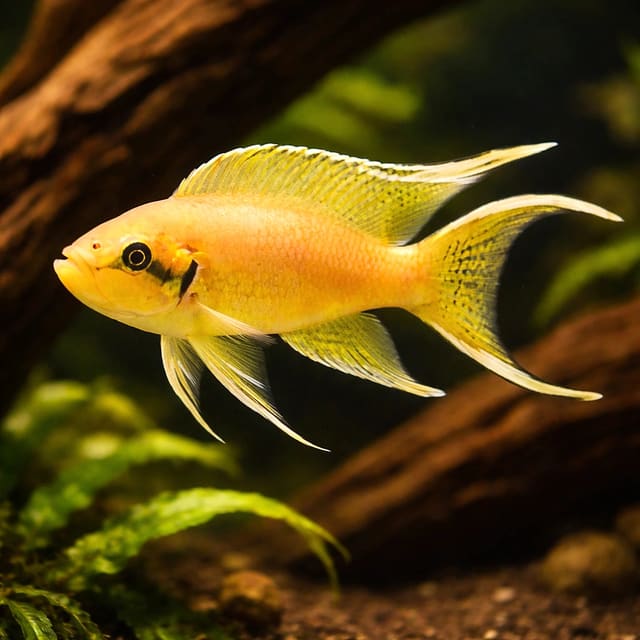
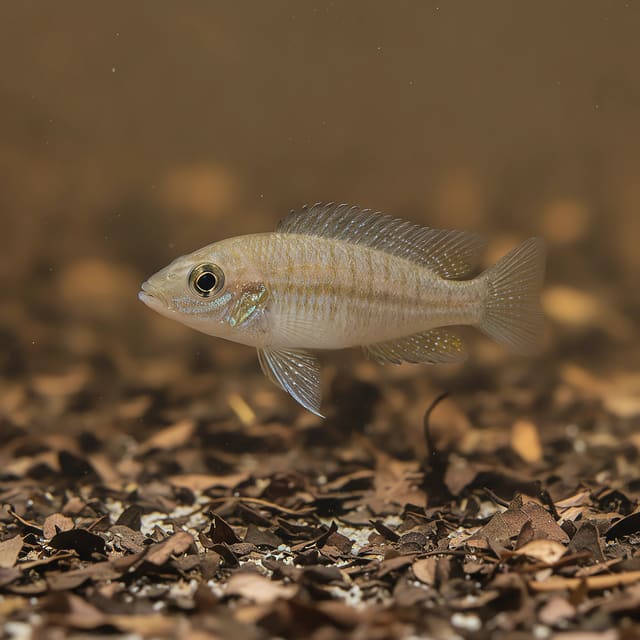
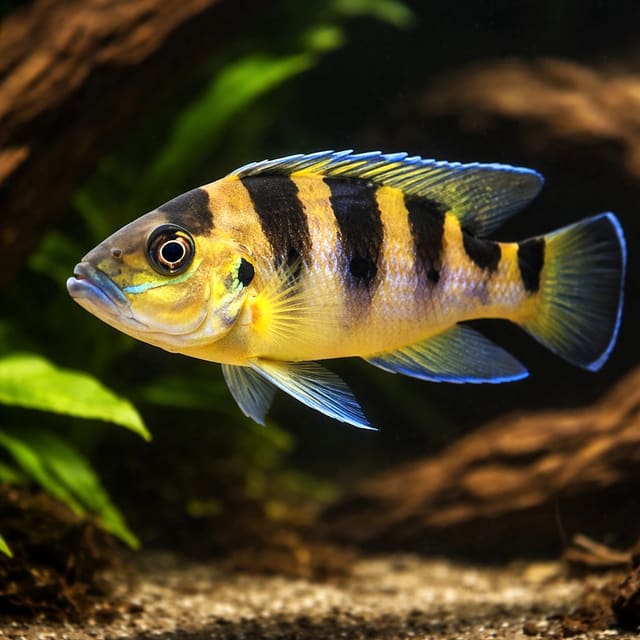
Six-Bar Cichlid (Lamprologus sexfasciatus)
23–27°C · pH 7.5–9 · 110L
£19.77£22.99

Large predatory Lake Tanganyika rock cichlid, often sold under Lamprologus elongatus. Expert-only 150cm+ hard-water aquarium; aggressive, carnivorous and unsafe with small fish.
Adult size is the maximum length this species reaches at full maturity (scientific sources). The livestock you receive will be younger and smaller — pick a size variant above for the actual shipping size. Product-photo provenance and any image-specific limitations are stated on the listing.
Lepidiolamprologus elongatus
Save when buying multiple fish. Each quantity is one fish; sex and pair formation are not guaranteed unless the selected variant explicitly states them.
Confirm your email, then we’ll send an availability message for this exact item if it returns within 180 days.
This request is only for this product—no newsletter or other promotions. A mail-provider retry may very rarely duplicate the same availability message. Unconfirmed addresses are removed after 48 hours. See our privacy policy.
Large predatory Lake Tanganyika rock cichlid, often sold under Lamprologus elongatus. Expert-only 150cm+ hard-water aquarium; aggressive, carnivorous and unsafe with small fish.
Adult size is the maximum length this species reaches at full maturity (scientific sources). The livestock you receive will be younger and smaller — pick a size variant above for the actual shipping size. Product-photo provenance and any image-specific limitations are stated on the listing.
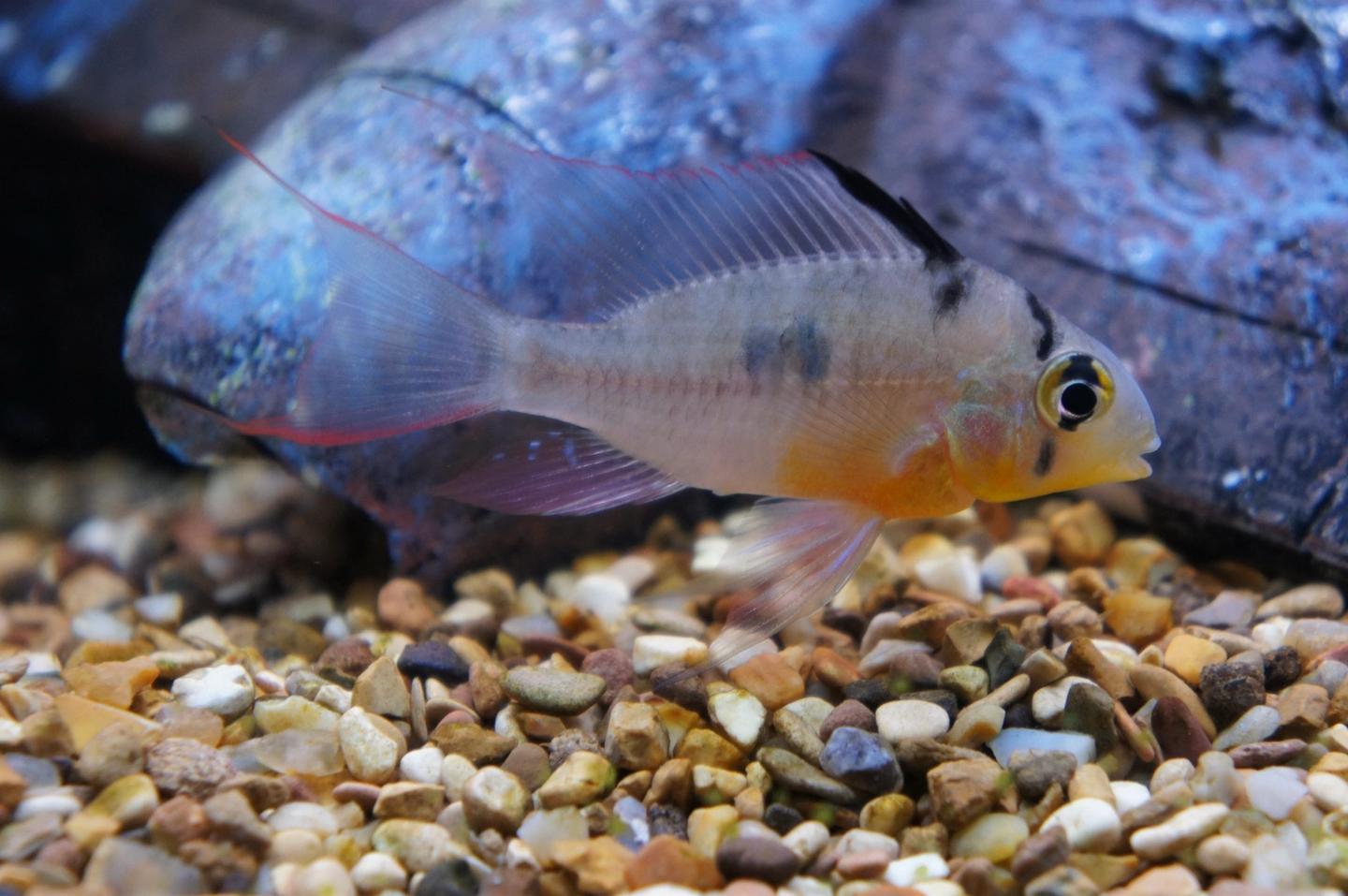
Cichlids are a family of roughly 1,800 accepted species, not one care type. Before buying, identify the exact species and source, then compare adult measurement, usable tank dimensions, social system, territory, tested water, diet and an exit plan. No family-wide minimum tank, water range or tank-mate list is safe.
Maintain these water conditions for optimal health and vibrant colors
Elongate Lamprologus (Lepidiolamprologus elongatus) is a large, predatory Lake Tanganyika rock cichlid for experienced aquarists who want a fish with real presence, territory behaviour and specialist hard-water care. our stock records list this line under the trade name Lamprologus elongatus, while FishBase and many current references use Lepidiolamprologus elongatus. This listing keeps both names visible so the Shopify product, supplier photo, scientific references and customer search terms all point to the same fish.
The most important correction is size. The 4.5-6 cm and >7 cm options are sale sizes, not adult planning sizes. FishBase records this species at up to 32.5 cm total length, and specialist aquarium sources describe dominant males reaching roughly 35 cm. That changes everything: tank size, tank mates, food choice and customer expectations. Treat this as an expert Tanganyika predator, not a small community cichlid.
| Scientific name | Lepidiolamprologus elongatus |
|---|---|
| Trade name | Lamprologus elongatus |
| Adult planning size | 30-32.5 cm; dominant males may approach 35 cm |
| Sale sizes | 4.5-6 cm and >7 cm variants, depending on stock |
| Minimum adult aquarium | 150 cm+ length; around 450 litres+ as a practical planning guide |
| Temperature | 23-27°C |
| pH and hardness | Hard alkaline Tanganyika water, about pH 7.8-9.0 |
| Temperament | Aggressive, predatory, territorial |
| Diet | Carnivorous / piscivorous; quality pellets and varied meaty frozen foods |
| Best for | Expert Tanganyika keepers, single-specimen displays or carefully managed established pairs |
Lepidiolamprologus elongatus is endemic to Lake Tanganyika, one of the African rift lakes famous for clear, mineral-rich, hard alkaline water. FishBase describes it as a rock-dweller that does not roam wide open sand, and that point matters in the aquarium. Build the display around rock structure, cave mouths, sand-rock edges and broken sight lines rather than a bare open tank.
In the lake, this species is built as a long, fast predator. It patrols around rocks, watches for prey and uses caves or rock gaps as territory. The aquarium should not try to turn it into a peaceful mixed-community fish. The right setup lets it behave naturally while keeping aggression manageable: strong filtration, stable chemistry, secure rockwork and enough space that another fish can escape its line of sight.
A 6 cm sale fish may look manageable in a holding tank, but it should be bought only by someone preparing for a much larger adult. Plan around an adult length of roughly 30 cm, with FishBase recording 32.5 cm total length. Some aquarium references describe dominant males approaching 35 cm, so the safe assumption is simple: give it a long, robust Tanganyika aquarium from the start.
A 150 cm or longer aquarium is the practical starting point for a single adult, and larger is better. Around 450 litres or more is a sensible minimum planning guide, especially if the tank is not unusually wide. Fishipedia gives a much more conservative large-volume welfare recommendation, which underlines the same message: this is a specialist large-tank fish. The footprint matters because the fish needs territory, swimming room and escape lines for any tank mates.
Use stable rockwork placed securely before adding sand, so digging or territorial movement cannot collapse the structure. Create caves, overhangs, narrow channels and visual barriers. Fine sand suits the Tanganyika look and lets debris stay easy to see and remove. Plants are optional; this fish is more about rock and open patrol routes than planted cover, although hardy plants can be used if they suit the layout.
Do not build one perfect cave and leave the rest of the aquarium empty. Multiple shelters and broken sight lines are safer because a dominant fish can claim one area without seeing every other fish all the time. Strong filtration and oxygenation are important. Large carnivorous cichlids put real load on the water, so keep mechanical media clean, remove trapped food from rock gaps and maintain regular water changes.
Keep the water hard, alkaline and stable. A practical aquarium range is 23-27°C, pH 7.8-9.0 and moderate to high hardness. FishBase gives a hard alkaline profile, AquaInfo emphasises Lake Tanganyika conditions, and Fishipedia lists 23-28°C with pH 7.8-8.8 and high hardness. Exact numbers matter less than consistency inside the right Tanganyika band.
Avoid soft acidic water and avoid rapid swings. If your tap water is soft, use a planned remineralising or Tanganyika-buffer approach rather than guessing. Test pH, hardness and nitrate, not just temperature. Good water stability is part of the animal's welfare and part of long-term colour, appetite and immune health.
This is a predatory carnivore and should be fed accordingly. Use high-quality cichlid pellets as a base, then rotate frozen mysis, krill, chopped prawn, mussel, cockle, white fish and other appropriate meaty foods. Foods should be sized to the fish, especially while it is still a juvenile sale size. Feed confidently but not heavily; a polluted Tanganyika tank is far harder to fix than a fish that needed one more modest meal.
Avoid feeder fish. They can introduce disease, encourage rough feeding behaviour and are usually a poor nutritional route. Also avoid mammal or bird meat and repeated fatty foods. The best diet is varied, aquatic, protein-rich and clean enough that uneaten pieces can be removed quickly.
Expect aggression. AquaInfo describes this species as territorial and aggressive, and FishBase notes that it is usually solitary and preys on fish. That does not mean it is a bad aquarium fish; it means it needs the right keeper and the right tank. A single adult can make an impressive specialist display. An established pair can be fascinating, but pair care is not the same as buying two random adults and hoping they behave.
Do not mix it with small peaceful fish, shell dwellers, nano species or anything that can be swallowed. In very large Tanganyika aquariums, possible companions may include robust cichlids that are not mouth-sized, suitably sized Synodontis, or open-water Tanganyika fish such as Cyprichromis where the footprint and layout are truly appropriate. Even then, watch the fish, not the theory. If one tank mate is pinned into a corner or stopped from feeding, the setup is failing.
FishBase notes that this species spawns in small caves. In the aquarium, a compatible pair may claim a cave or rock gap and defend it strongly. Breeding can be rewarding, but the aggression around pair formation and territory defence is the challenge. Provide several caves, escape routes and enough floor area that the weaker fish is not trapped in the open.
If breeding is your goal, start with a dedicated Tanganyika setup and be ready to separate fish if a pair does not settle. Fry should be raised in clean hard water and fed appropriately sized foods once free-swimming. This is not a beginner breeding project; it is a specialist cichlid project for someone who can manage territory, water quality and emergency separation.
Choose fish that hold themselves level, breathe steadily, react to surroundings and show intact fins and clear eyes. Young Elongate Lamprologus may look slimmer than stocky cichlids because of their natural body shape, but they should not look pinched, hollow or lethargic. Avoid fish with clamped fins, cloudy eyes, skin lesions, repeated scratching or laboured breathing.
Have the aquarium ready before delivery. The rockwork, heater, filter and water chemistry should already be stable. On arrival, keep the lights low, equalise temperature, acclimate patiently and release the fish near cover. Do not add it to a busy mixed tank and then rearrange everything afterwards; that puts the fish under pressure at the moment it most needs a calm territory.
Livestock orders are packed for the species, the weather window and the courier route, then sent through a live-animal courier service where live-fish shipping applies. This page uses evergreen delivery language rather than fixed dispatch-day promises because safe livestock shipping depends on fish condition, temperature and courier conditions.
Follow the receiving and acclimation instructions to keep the Live Arrival Guarantee valid. If you are ordering this species, make sure the destination aquarium is already suitable for a predatory Tanganyika cichlid. The guarantee protects arrival; long-term success depends on the tank being ready for the animal you bought.
If you like the Tanganyika rock-cichlid look but need a smaller species, compare this fish with Lamprologus sexfasciatus, Lamprologus nkambae or Lyretail Lamprologus / Fairy Cichlid. For a specialist predator with a different body form, compare Pearly Compressiceps Zaire. Always compare adult size and temperament before comparing colour.
Yes for shopping and husbandry purposes. our stock records list this line under Lamprologus elongatus, while current references commonly use Lepidiolamprologus elongatus. Both names are kept here to avoid a supplier/search mismatch.
Plan for a large adult fish. FishBase records 32.5 cm total length, and specialist aquarium sources describe dominant males approaching around 35 cm. The fish sold here are juvenile/growing sale sizes.
No. This is a predatory, territorial Tanganyika cichlid. It is not suitable for small community fish, soft-water fish, shell dwellers or peaceful nano displays.
A proven established pair can work in a large structured Tanganyika aquarium, but random adults can fight. Provide multiple caves, a long footprint and a separation plan.
A single fish in a mature 150 cm+ hard-water Tanganyika aquarium is the safest starting point. Add tank mates only if the layout, adult sizes and aggression risk all make sense.
Max adult size is the length this species reaches at full maturity (from scientific sources). The livestock you receive will be younger and smaller — pick a size variant on the buy box for the actual shipping size. Product-photo provenance and any image-specific limitations are stated on the listing.
This is a large predatory Tanganyika cichlid. Compatibility depends on adult size, territory layout and aquarium footprint, not just water parameters.
Always research specific species before adding them to your tank. Consider:
No reviews for this item yet. Bought one? Honest reviews only, good or bad.
What customers say about ordering from us
I have a small group of long finned mountain minnows. So was delighted to be able to order ten of this variety to increase the genetics in my tank . The ones I recieved are healthy but it’s to early to give a verdict on wether they are of a long finned type since they are small currently.
Gordon Walker · 23 Sept 2026
100% success travel and "installation". Pleased with quality of purchase. The Siamese fighter a bit "shy" so have not yet seen him at his best yet but looking good. Happy customer. GG
George E Garratt · 21 Sept 2026
Reviews of our shop, collected by Judge.me, an independent third-party review collector. Newest first.