−14%
Advanced
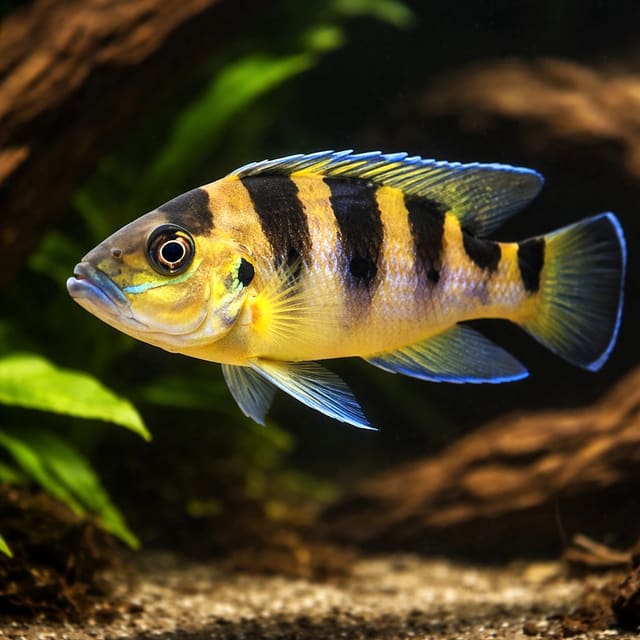
Six-Bar Cichlid (Lamprologus sexfasciatus)
23–27°C · pH 7.5–9 · 110L
£19.77£22.99

Fairy Cichlid (Neolamprologus brichardi) is a territorial Lake Tanganyika cave dweller for a mature, hard-water aquarium. One unsexed fish is supplied in the chosen size; allow a long rocky footprint for a pair or family group.
Adult size is the maximum length this species reaches at full maturity (scientific sources). The livestock you receive will be younger and smaller — pick a size above for the actual shipping size. Product-photo provenance and any image-specific limitations are stated on the listing.
Neolamprologus brichardi
Save when buying multiple fish. Each quantity is one fish; sex and pair formation are not guaranteed unless the selected variant explicitly states them.
Fairy Cichlid (Neolamprologus brichardi) is a territorial Lake Tanganyika cave dweller for a mature, hard-water aquarium. One unsexed fish is supplied in the chosen size; allow a long rocky footprint for a pair or family group.
Adult size is the maximum length this species reaches at full maturity (scientific sources). The livestock you receive will be younger and smaller — pick a size above for the actual shipping size. Product-photo provenance and any image-specific limitations are stated on the listing.

Cichlids are a family of roughly 1,800 accepted species, not one care type. Before buying, identify the exact species and source, then compare adult measurement, usable tank dimensions, social system, territory, tested water, diet and an exit plan. No family-wide minimum tank, water range or tank-mate list is safe.
Maintain these water conditions for optimal health and vibrant colors
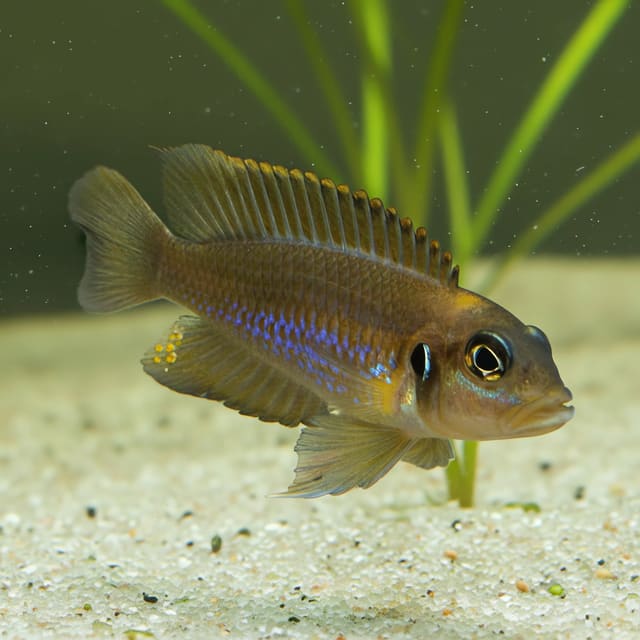
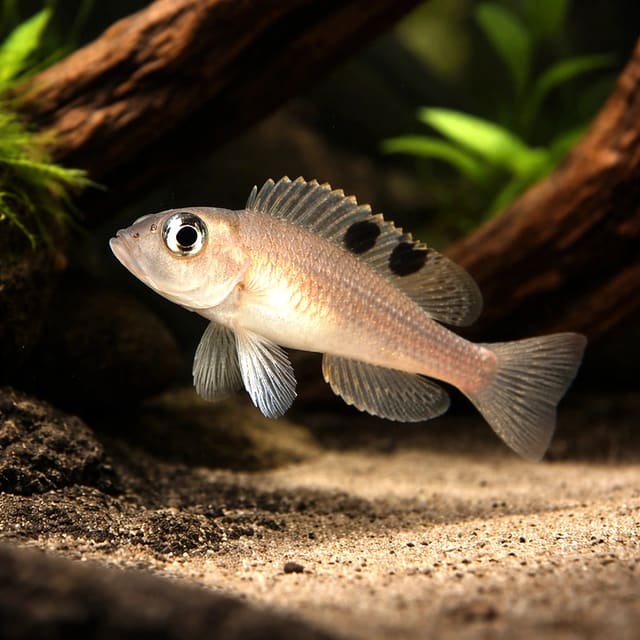
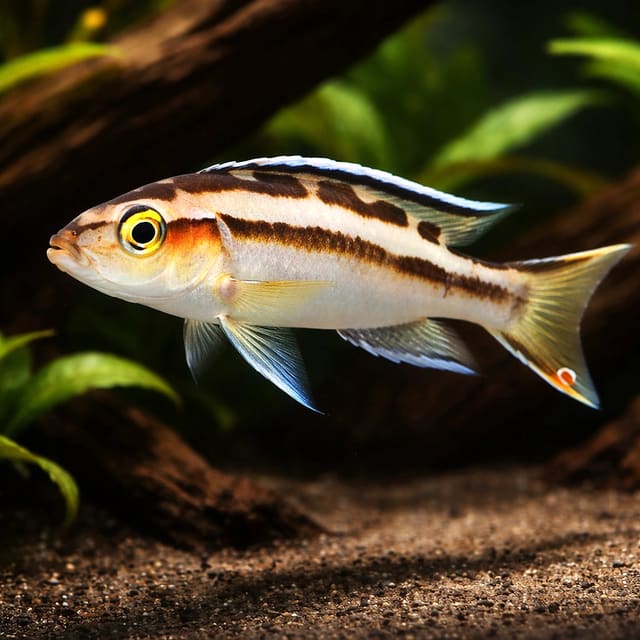
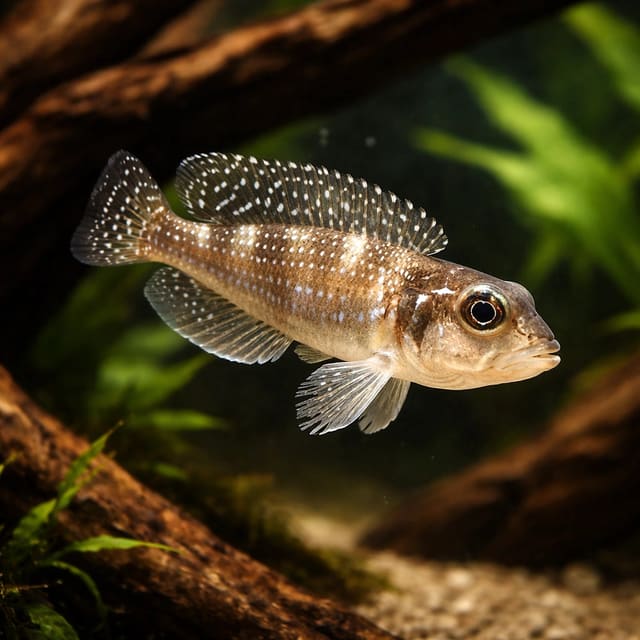
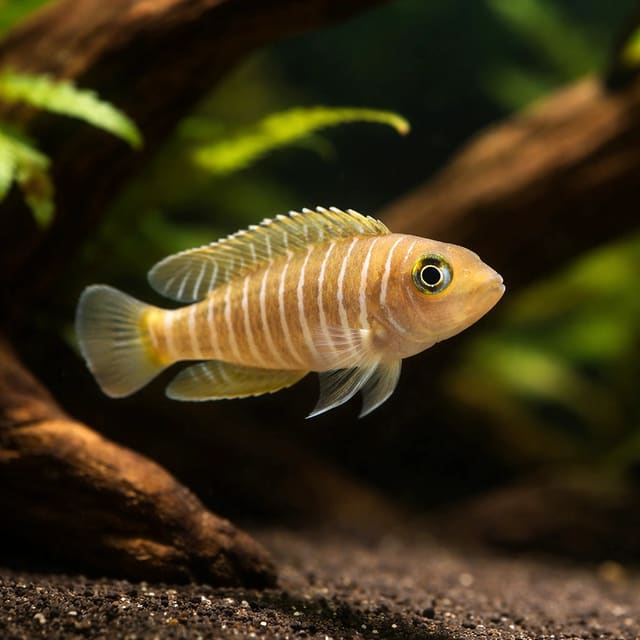
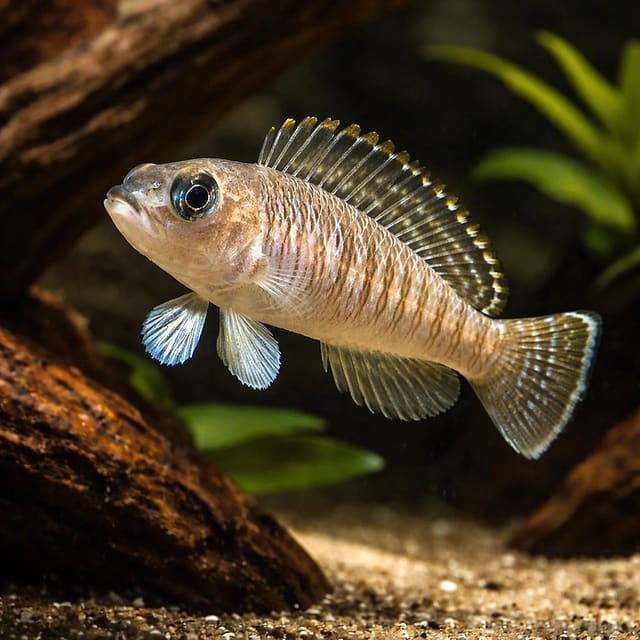
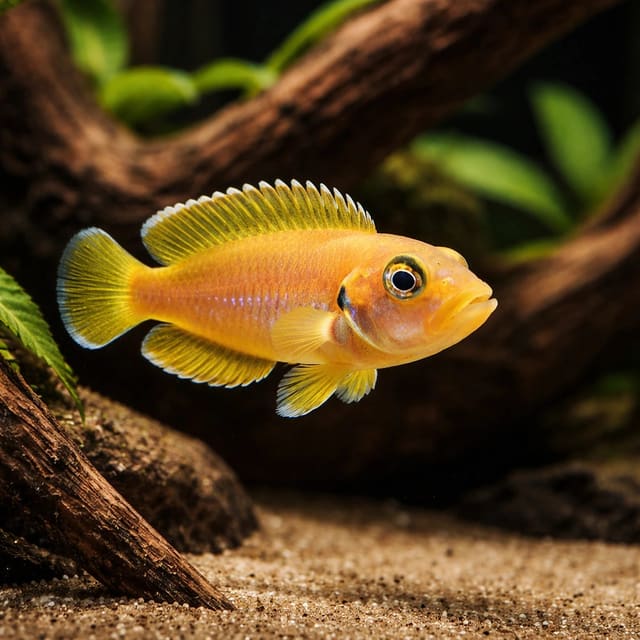
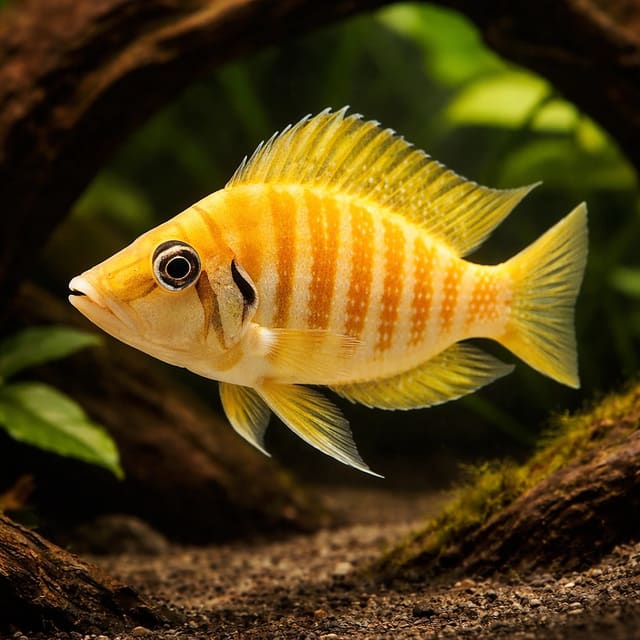
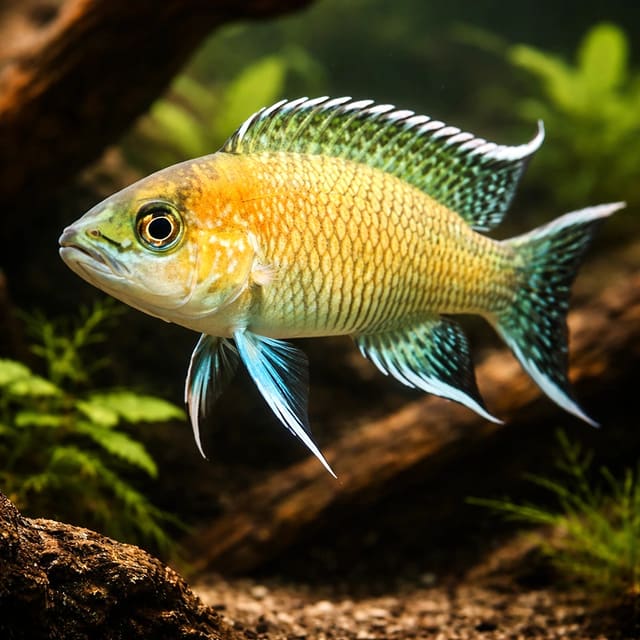
Fairy Cichlid (Neolamprologus brichardi) is a Lake Tanganyika cichlid with a slender pale body, dark cheek markings and graceful extensions to its fins. Its appeal is as much behavioural as visual: a settled pair may defend a rocky cave, and older young can remain near later broods. That family activity makes a thoughtfully planned species aquarium absorbing to watch. It also means this is a territorial cichlid, especially when young are present. A peaceful mixed community is a poor starting plan.
One purchase supplies one live fish in the size chosen: 3 - 4 cm, 4 - 5 cm, 5 - 7 cm, 7-9 cm or the supplier's XL label. These are the product's size choices, not five fish in a pack. Sex is guaranteed only when the selected option explicitly states male or female. This Fairy Cichlid listing has no sex-guaranteed option. A single purchase is not a pair. The size you select is the size supplied, not the adult size. The centimetre ranges are commercial dispatch grades. XL has no fixed centimetre promise in this description. The shop's current selection of sizes and prices can change, while the adult aquarium still needs planning before any juvenile arrives.
FishBase records a maximum of 9 cm total length for N. brichardi. Seriously Fish reports 9 cm standard length, which excludes the tail fin. Those measurements use different conventions and should not be merged into a single precise adult promise. Allow room for a mature fish, its long fin extensions and the territory it may defend. A little juvenile can become an assertive parent; the correct aquarium is determined by adult behaviour and footprint, not only the length at dispatch.
The species occurs in Lake Tanganyika in East Africa and is associated with rocky habitat. Its water is mineral-rich and alkaline. Build the aquarium around those conditions: stable rock piles with cave entrances, fine sand, mature biological filtration, good oxygenation and consistent water. A soft, acidic planted community aquarium cannot be made suitable merely by adding a rock ornament. If your existing aquarium is designed for soft-water fish, choose livestock that matches that system rather than repeatedly altering its chemistry for one cichlid.
The older trade wording Lyretail Lamprologus and Lamprologus brichardi may appear on supplier paperwork. The customer-facing scientific name here is Neolamprologus brichardi. Fairy Cichlid, Lyretail Cichlid and Princess of Burundi are established common names in the species care literature. They refer to the same species in this account, though a trade label alone never proves the identity of every similar fairy cichlid. Keep distinct members of the brichardi complex separate if breeding records matter.
An aquarium of about 120 × 30 cm base is the useful species-profile starting point when you want room to observe cooperative family behaviour. Smaller accommodation for a single fish or pair is described in the literature, but a breeding colony needs the longer footprint and careful population management. Plan from the social arrangement you actually intend to keep, with spare shelter and an immediate way to separate a rejected individual. The volume attached to one example aquarium is not a universal stocking allowance.
| A good match | Plan ahead for |
|---|---|
| A mature aquarium with consistently hard, alkaline water | Testing the actual source water and maintaining stable mineral content |
| Secure rock caves and a long usable base | Adult territory, family growth and access for cleaning |
| A keeper interested in a species display | Possible removal of extra juveniles after a pair forms |
For more examples of hard-water species, browse the African cichlid collection, then compare each fish's lake, social behaviour and adult space individually. An appealing collection neighbour is not automatically a suitable tank mate.
The useful aquascape has several stable piles and crevices, not one decorative cave in an empty tank. Place heavy rock on a secure base before surrounding it with sand; excavating fish must not be able to undermine a tower. Break the line of sight between entrances so one fish cannot inspect the whole tank from a single perch. Keep clear swimming and feeding space as well. A layout that looks full from the front can still offer poor shelter if every opening leads to the same dead end.
Fine sand is preferred in the species profile. It lets the fish investigate and reshape the edge of a cave without abrasive large gravel. Choose aquarium-safe material and avoid sharp, unstable pieces. Check after maintenance that no stone has shifted onto a fish-sized gap. Rock structures must remain accessible enough for you to remove trapped waste and inspect residents. Add shelters before introducing fish, then make small considered layout changes only when the social situation calls for them.
A bonded adult pair and a group of juveniles are different projects. Seriously Fish describes starting with at least six young fish if a bonded adult pair is unavailable, then removing extras once a pair forms. That is not a recommendation to leave six maturing cichlids indefinitely in a modest aquarium. It presumes space, close observation and another suitable home for fish that are excluded. If you cannot house or rehome surplus individuals, do not rely on this method to obtain a pair.
For natural cooperative breeding behaviour, use a base of at least about 120 × 30 cm or an equivalent usable area. Space beyond the minimum creates more cave choices and more distance between a defended brood and other residents. A tank's length, front-to-back depth and rock layout matter more to territory than nominal litres alone. The 80 cm minimum length in FishBase and the larger profile recommendation describe different contexts; the longer plan is appropriate for a developing family group. A mixed Tanganyika aquarium requires a substantially larger, carefully divided layout.
Family groups can expand as young are retained. This is fascinating when planned, but it is not self-regulating in every home aquarium. Count visible juveniles, watch where they feed and keep a plan for population management. A fish pushed to the top corner or trapped behind equipment is not participating in a healthy colony. Remove or separate it promptly rather than waiting for the group to settle itself through injuries.
For this species, Seriously Fish gives 23–27 °C, pH 8.0–9.0 and 9–25 dGH as aquarium guidance. FishBase gives a narrower 22–25 °C environmental record and 9–19 dH; those wild and database figures are not a second set of day-to-day targets. Choose a stable point within the species care range that your prepared source water and equipment can hold. Check pH together with carbonate hardness, because inadequate buffering can let pH fall even while a one-off test appears acceptable.
Test your tap or prepared water before buying; the water chemistry guide explains the measurements and the Water Parameter Matcher can help compare readings. If it is naturally soft, use a repeatable mineral preparation appropriate for Tanganyika aquaria and measure the result. Sudden large corrections with unmeasured powders can be more dangerous than a slightly imperfect but stable value. Match replacement water to the aquarium before a change, especially for temperature and mineral content. The aim is steady conditions through normal maintenance, not a dramatic adjustment on the day fish arrive.
Ammonia and nitrite should be zero in a mature aquarium. Record nitrate trends, because food lost among rocks and a growing group can increase waste quietly. OATA's general African lake cichlid sheet advises keeping nitrate no more than 20 mg/l above normal tap-water levels; that is group-level welfare guidance, not a species-specific brichardi threshold. Use your source-water baseline to interpret it. When results worsen, address feeding, filtration, stocking and water changes together rather than trusting a single chemical additive.
A working biological filter is essential. The first tropical tank guide explains how to mature and test a filter before livestock arrives. Rockwork creates sheltered dead spots where uneaten food can collect, so arrange circulation that moves waste without turning every cave into a strong jet. A surface ripple or added aeration supports oxygen exchange. Check actual outflow, intake guards and the space behind rocks: a humming motor does not prove adequate circulation. Protect small juveniles from exposed intakes and make sure they can rest out of direct flow.
Maintain filter media in stages. Rinse filter media lightly in removed aquarium water; do not run or rinse it under the tap, because chlorine or chloramine may harm the established beneficial bacteria. After adding fish or increasing food, test ammonia and nitrite more often until the system has demonstrated that it can manage the new load. The RSPCA explains why this matters: beneficial bacteria in the filter process toxic ammonia and nitrite. A visually clear aquarium can still have unsafe dissolved waste.
Weekly partial changes are a useful routine, adjusted to measured nitrate, fish numbers and the source water. OATA's broad sheet suggests around a quarter weekly for African lake cichlids. Do not make a fixed percentage into a guarantee of safety; a breeding colony may need more attention than a pair. Siphon visible debris without stripping every cave each time. Stagger filter cleaning, rock movement and water changes so fish do not face several disruptions at once.
FishBase describes the species as a plankton feeder. The specialist aquarium profile recommends a substantial share of live and frozen foods, with dried food less often and some vegetable matter such as spirulina or blanched spinach. Offer clean, appropriately sized aquatic invertebrates or prepared frozen foods, and include a quality complete dried food for balance. Rotate foods sensibly rather than assuming one rich treat is a complete diet.
A 3 - 4 cm fish needs particles it can actually take; an XL-labelled fish may accept larger pieces, but size alone does not prescribe appetite. Observe each fish swallowing, especially in a group with a dominant cave holder. Put small portions near more than one territory when needed. Subordinate individuals that never reach the feeding area can lose condition even while the group as a whole looks active. Remove persistent leftovers before they disappear into the rockwork.
Avoid large, hard items for juveniles and avoid overfeeding in an effort to draw shy fish out. For the first days after arrival, light portions let you confirm appetite while keeping water quality steady. A hidden fish may need privacy and a sheltered feeding point, not repeated large meals. If appetite changes, check breathing, social pressure and water results before interpreting the behaviour as a diet preference.
Set up the mature, hard-water aquarium and all caves before delivery. Have a thermometer, water tests and a suitable net or transfer vessel ready; avoid a major rescape at the same time. On arrival, inspect the parcel promptly. The store's delivery page asks the recipient to be present and sets out same-day inspection and video evidence for a Live Arrival Guarantee concern. Read its current terms before ordering because the current policy governs a claim.
The store advises floating the sealed bag for 20–30 minutes to equalise temperature, then acclimatising slowly. Compare source and destination water and follow current fishroom guidance for the next steps. Do not pour transport water into the aquarium. Move the fish calmly into prepared cover and let it settle. A fish exploring a cave or holding close to rock after transport is not automatically ill; assess posture, breathing and response over time.
During the first week, keep observations simple and consistent. Note whether the fish is upright, breathing evenly and able to reach food. Test water if it clamps fins, gasps, repeatedly rubs, stays exposed at the surface or is chased continuously. Keep a backup space ready before such a problem occurs. A temporary divider that leaves one side too cramped or with poor circulation is not a safe solution by itself.
Fairy Cichlids may patrol caves, flare fins and turn to face a neighbour. Brief displays can be part of boundary setting. The important question is whether every fish still has access to shelter and food. Repeated full-length pursuit, persistent hiding in an upper corner, torn fins or an individual unable to approach food means the social arrangement needs intervention. Spawning can widen the defended area quickly, even after weeks of apparent calm.
Watch the same routes at different times of day. A subordinate fish may feed when you look, yet be excluded for most of the day. If the group grows, add population management to routine maintenance. Do not increase stocking simply to dilute aggression without an evidence-based plan for the available footprint and filtration. In a small system more fish can mean more pressure and faster water deterioration.
Long fin extensions and confident display develop with maturity, but neither establishes sex in a juvenile purchase. Seriously Fish notes that adult males are usually slightly larger with longer dorsal and caudal extensions; overlap and individual variation make that a poor retail guarantee. If a buyer needs a known sex, this unsexed product cannot provide one. Introduce fish on the assumption that any youngster might need separate accommodation later.
Check body condition alongside colour. Pale or dark shifts can reflect lighting, dominance, stress or ordinary display; a stable feeding and water record is more useful than comparing a living fish with a photograph. A fish that stops eating, breathes rapidly or develops lesions needs environmental checks and qualified advice before any treatment. Keep dated observations when changes persist.
Leave a visible front area so you can count residents and inspect their fins without dismantling the cave system. Put the main rock masses where you can reach around them with a siphon. A hidden hollow that collects food and cannot be cleaned will eventually undermine otherwise good filtration. Before filling the aquarium, test the strength of each structure with gentle pressure and check that an adult fish cannot wedge itself behind a heater, filter pipe or glass brace. Recheck those spaces as the fish grow.
Lighting can be moderate. The fish need a regular day and night rhythm and access to darker retreat spaces, not a permanently dim tank. If plants are used, choose ones that tolerate the mineral-rich water and arrange them so digging cannot destabilise the roots. Plants are secondary to secure caves and usable swimming routes. A background or display photograph cannot tell you whether a particular aquarium has enough territory; observe the fish using it over time.
A written log need not be elaborate. Record temperature, pH, hardness, ammonia, nitrite and nitrate after setup and during the first weeks with fish. Add the date of feeding changes, water changes and any new resident. When a value moves, you can then distinguish a slow drift from a single odd test. Repeat an unexpected result with a sound kit before making a large correction, while treating any confirmed ammonia or nitrite as urgent.
Test replacement water as well as the display. Some tap-water sources change seasonally, and mineral mixes need consistent measuring. Sudden pH changes can occur when carbonate hardness is exhausted; a stable pH reading alone does not show how much buffering capacity remains. Make adjustments in a measured sequence, allowing fish to settle between them. It is easier to prevent a drift with routine partial changes than to rescue a tank with dramatic dosing.
Even a well-planned group can produce an incompatible individual. Identify where an extra fish would go before it is purchased: a mature second aquarium, appropriate partitioned space or a confirmed rehoming route. Keep transfer equipment ready and avoid relying on a small unfiltered container for more than emergency handling. A separated fish still needs suitable hard alkaline water, oxygen, shelter and regular monitoring.
Reassess the plan after each brood. Young fish can occupy openings that later become valuable adult territory, and a successful colony may alter the feeding hierarchy. If all fish cannot be counted and fed, reduce complexity or numbers before injuries appear. The goal is to preserve the social behaviour that attracts keepers to this species while giving every individual room to retreat.
When a cave is defended, avoid lifting its roof during ordinary cleaning. Work around the structure and change one part of the aquarium at a time so the pair can recognise its boundary. If you must move rock for safety, do it carefully with a backup container ready, then watch all residents after the change. Rearrangement can reset boundaries and may briefly increase displays or chasing. Stable construction and modest maintenance are easier on both fish and keeper than repeated complete rescapes.
The specialist species profile calls Neolamprologus brichardi aggressively territorial, particularly while protecting fry, and advises a species aquarium under most circumstances. This is more useful than a generic “semi-aggressive” label. The fish may be manageable in a planned Tanganyika community, but shared water requirements alone do not provide safe social spacing. A pair can control much of a small rock pile.
Do not add ordinary soft-water community fish as a compromise. Many tetras, rasboras and similar fish require different water, while slow or delicate fish may be chased from food and shelter. Small shrimp and fry may be eaten. Another brichardi-complex form is a poor neighbour when breeding purity matters, because the species profile warns of hybridisation. A colony of this fish is already a complete display with distinct social activity.
Seriously Fish mentions open-water Cyprichromis or shell dwellers in large Tanganyika setups because they use different parts of the aquarium. Other rock dwellers such as Julidochromis or Altolamprologus are more conditional: they need generous space, separate territories and broken sight lines. None is a universal tank mate. Adults, fry and cave placement can change the balance. Plan the whole aquarium and the eventual breeding territory before choosing any second species.
If a mixed setup is attempted, observe feeding access and retreat routes for every resident. Introduce with a mature spare tank or safe separation method available. Do not assume a fish is compatible because it survives the first afternoon. Persistent pursuit, damage or loss of access to food requires action. In a rock-filled aquarium, harm can occur behind the decor before it is obvious from the front glass.
A purchase of one fish cannot be a pair. Two random unsexed fish are not automatically bonded, even if they are similar size. Starting with several juveniles to obtain a pair is a specialist method only when surplus fish can be housed or rehomed; the species profile explicitly expects additional fish to be removed after pairing. Never strand rejected individuals in the same defended rock area.
A breeding family may retain older young and share defence, but cooperation is not a promise that every fish will remain accepted. Watch the edges of the group as well as the central cave. Allow enough cave entrances, open routes and feeding points for developing juveniles, then reassess as numbers rise. The fascinating colony behaviour is the reason to create a proper long aquarium, not a reason to ignore limits.
FishBase records 9 cm maximum total length, while the specialist care profile reports 9 cm standard length, which excludes the tail. Allow adult room and long fin extensions rather than treating either measure as an exact size promise.
For a family group, plan a base around 120 × 30 cm or larger, with stable rocks, several caves and broken sight lines. A mixed Tanganyika setup needs more usable territory; litres alone do not describe that space.
A bonded pair can form a family group. If starting with juveniles to obtain a pair, the specialist profile suggests at least six, with a prepared home for extras once a pair forms. Do not leave rejected fish trapped in the territory.
It can suit a prepared keeper beginning with Tanganyika cichlids, but it needs a mature filtered tank, stable hard alkaline water and a plan for territorial behaviour. It is unsuitable for an uncycled or soft-water community aquarium.
Offer suitable live and frozen aquatic foods as a substantial part of the diet, with quality dried food less often and some vegetable matter. Make portions small enough for the size supplied and watch that every fish gets food.
The species aquarium profile gives 23–27 °C, pH 8.0–9.0 and 9–25 dGH. Prepare stable, well-oxygenated water in that range and keep ammonia and nitrite at zero.
They defend caves and can become strongly territorial around fry. A species aquarium is the safest starting plan; monitor every fish for persistent chasing or exclusion from food.
Only a carefully planned, spacious Tanganyika setup offers conditional possibilities such as open-water Cyprichromis or shell dwellers. Other rock dwellers need extra space and separated territories. No named fish is guaranteed compatible.
Tropical Fish Co uses a licensed live-animal courier and provides the confirmed delivery details under its current delivery policy. Be present to receive the parcel, inspect it the same day and follow the policy's sealed-parcel video steps if there is an arrival concern.
FishBase provides the species identity, distribution and total-length record. Seriously Fish supplies species-level aquarium guidance. OATA and the RSPCA supply broader aquarium welfare context. See the current delivery policy for courier and arrival terms.
Max adult size is the length this species reaches at full maturity (from scientific sources). The livestock you receive will be younger and smaller — pick a size on the buy box for the actual shipping size. Product-photo provenance and any image-specific limitations are stated on the listing.
Always research specific species before adding them to your tank. Consider:
No reviews for this item yet. Bought one? Honest reviews only, good or bad.
What customers say about ordering from us
I have a small group of long finned mountain minnows. So was delighted to be able to order ten of this variety to increase the genetics in my tank . The ones I recieved are healthy but it’s to early to give a verdict on wether they are of a long finned type since they are small currently.
Gordon Walker · 23 Sept 2026
100% success travel and "installation". Pleased with quality of purchase. The Siamese fighter a bit "shy" so have not yet seen him at his best yet but looking good. Happy customer. GG
George E Garratt · 21 Sept 2026
Reviews of our shop, collected by Judge.me, an independent third-party review collector. Newest first.