Moderate
Gold Ocellatus Shell-Dweller (Neolamprologus ocellatus)
23–25°C · pH 8–9
£16.59

The Dwarf Shell-Dweller, Brevis (Lamprologus brevis) is a cichlid endemic to Africa’s Lake Tanganyika that reaches 5.5 cm. It suits keepers who can give two fish at least 40 litres and keep the FishBase, Seriously Fish and OATA overlap of 23–25°C, pH 8.0–8.6 and 12–18 dGH. Sold individually in dispatch sizes from 3–4 cm to 5–7 cm.
Adult size is the maximum length this species reaches at full maturity (scientific sources). The livestock you receive will be younger and smaller — pick a size above for the actual shipping size. Product-photo provenance and any image-specific limitations are stated on the listing.
Lamprologus brevis
Save when buying multiple fish. Each quantity is one fish; sex and pair formation are not guaranteed unless the selected variant explicitly states them.
The Dwarf Shell-Dweller, Brevis (Lamprologus brevis) is a cichlid endemic to Africa’s Lake Tanganyika that reaches 5.5 cm. It suits keepers who can give two fish at least 40 litres and keep the FishBase, Seriously Fish and OATA overlap of 23–25°C, pH 8.0–8.6 and 12–18 dGH. Sold individually in dispatch sizes from 3–4 cm to 5–7 cm.
Adult size is the maximum length this species reaches at full maturity (scientific sources). The livestock you receive will be younger and smaller — pick a size above for the actual shipping size. Product-photo provenance and any image-specific limitations are stated on the listing.
Cichlids are a family of roughly 1,800 accepted species, not one care type. Before buying, identify the exact species and source, then compare adult measurement, usable tank dimensions, social system, territory, tested water, diet and an exit plan. No family-wide minimum tank, water range or tank-mate list is safe.
Maintain these water conditions for optimal health and vibrant colors
The Dwarf Shell-Dweller, Brevis (Lamprologus brevis) is a freshwater cichlid in the family Cichlidae, endemic to Lake Tanganyika in Africa. FishBase records a maximum length of 5.5 cm total length and now lists it as Neolamprologus brevis. It suits a keeper prepared to build around hard, alkaline water, a sandy floor, numerous empty snail shells and vigorous defence of a small shell territory.
Keep it at 23–25°C, pH 8.0–8.6 and 12–18 dGH. These routine values are the overlap of FishBase’s recorded environment, the Seriously Fish aquarium range and OATA’s African lake cichlid group guidance. For a pair, use at least 40 litres with a 45 × 30 × 30 cm aquarium as the stated benchmark; a colony needs a larger aquarium.
| Suits | Not suited to |
|---|---|
| Hard, alkaline Tanganyikan water | Soft or acidic aquarium plans |
| Open sand with more shells than fish | Bare layouts without usable snail shells |
| A dedicated pair or carefully planned colony | Unplanned crowding around one shell area |
| Screened fish using other tank zones | Mixed Malawi and Tanganyikan cichlid communities |
This is a compact fish, but its small body does not remove the need for territory, stable water or a mature biological filter. Floor space and shell placement matter because the fish lives close to the substrate and organises its behaviour around a chosen shell.
In Lake Tanganyika, FishBase describes this fish as benthopelagic and plankton-feeding. In practical terms, plan for a fish associated with the lower part of the aquarium and feed it with foods that fit a plankton-based natural diet. Its home aquarium should provide open areas of sand rather than treating the bottom merely as decoration.
The shell is both shelter and the centre of a defended territory. Seriously Fish describes vigorous defence of the shell and the small area around it, with established territories usually measuring no more than 6 inches across. That compact territory still needs clear boundaries: a small aquarium can become crowded quickly when several fish choose neighbouring shells.
Several individuals kept together will form a colony, while pairs can share a shell in some circumstances. Shell sharing may or may not appear in the aquarium, depending on the number of shells provided and the individual fish.
One purchase supplies one fish of the size chosen on the live size selector. The selector labels are 3–4 cm, 4–5 cm and 5–7 cm. The size you select is the size supplied, not the adult size. Use the dispatch label to choose the length sent, then plan the aquarium around the 5.5 cm recorded maximum, the 40-litre pair benchmark and the extra space required by a colony.
Sex is guaranteed only when the selected option explicitly states male or female. This Dwarf Shell-Dweller, Brevis listing has no sex-guaranteed option. Young fish are not easy to sex, and neither colour nor a dispatch length should be used to assign a sex.
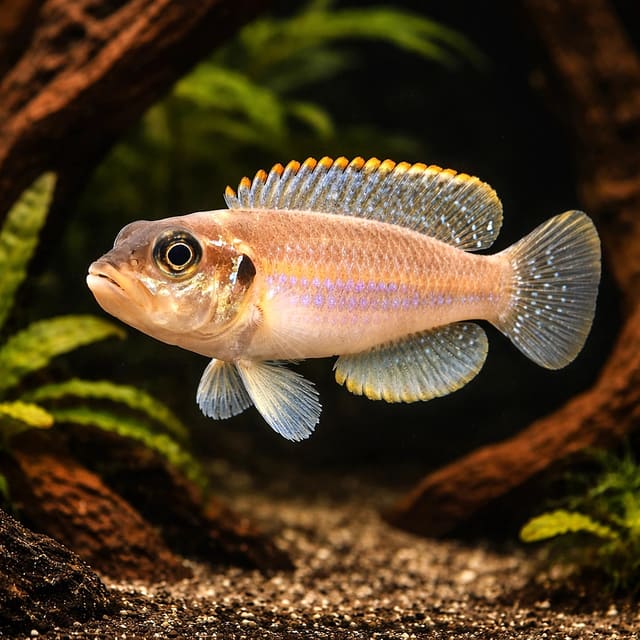
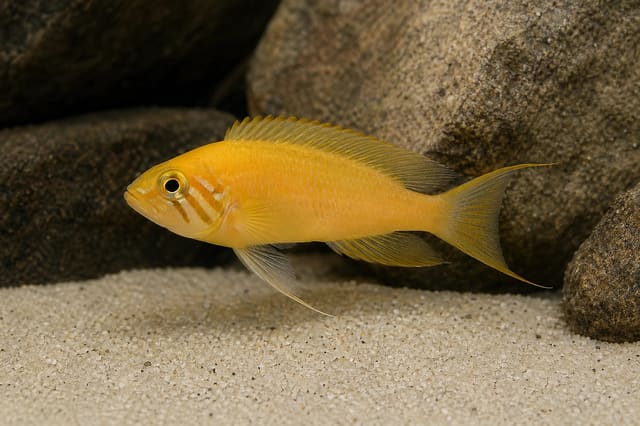
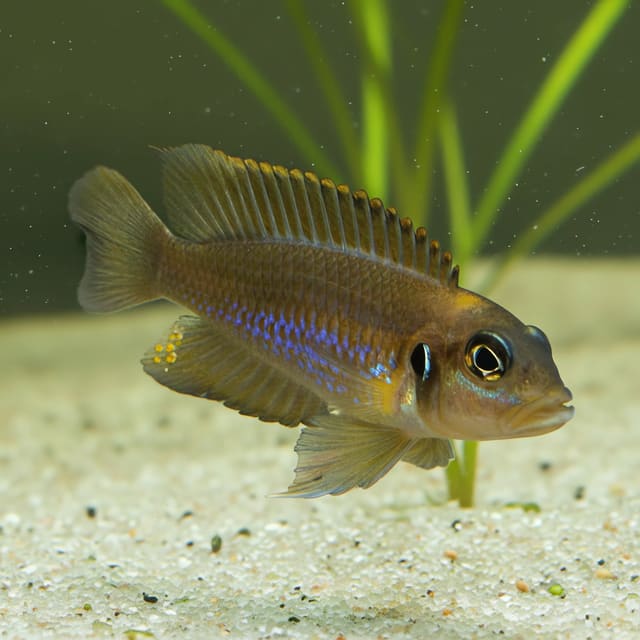
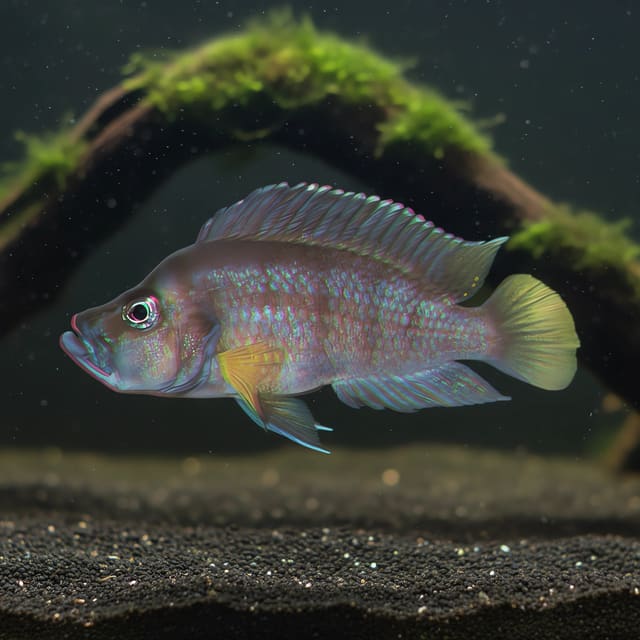
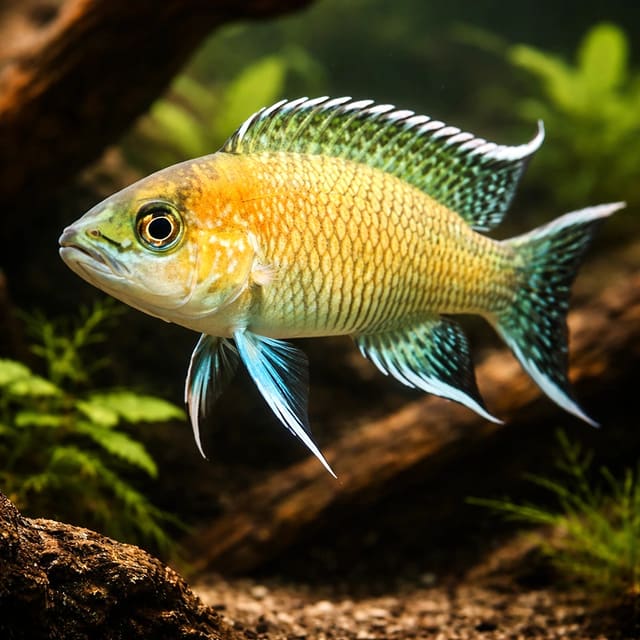
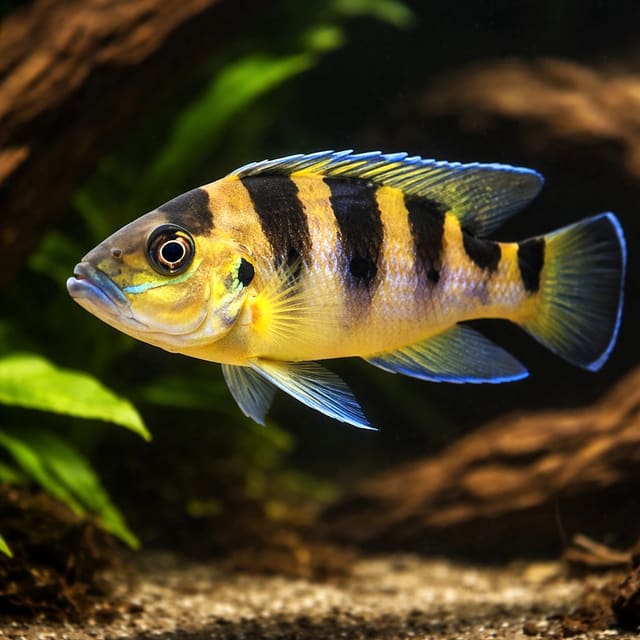
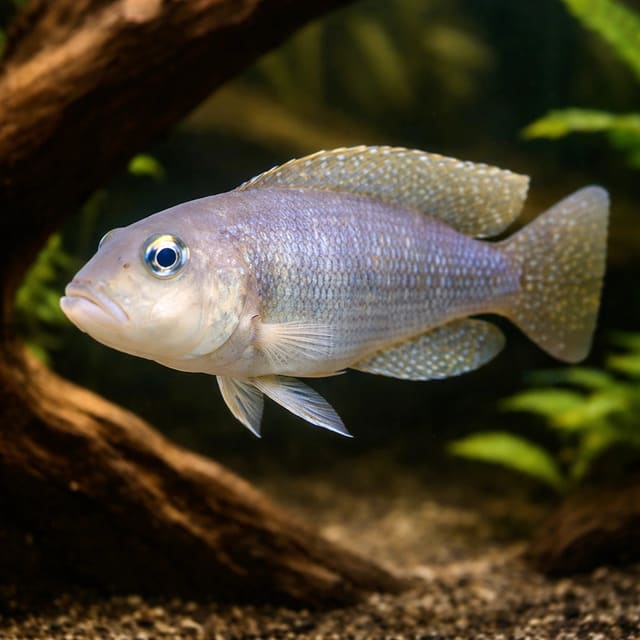
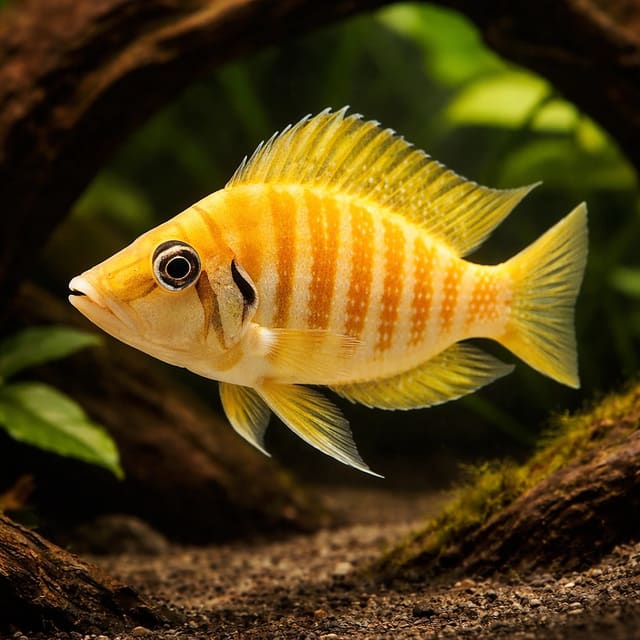
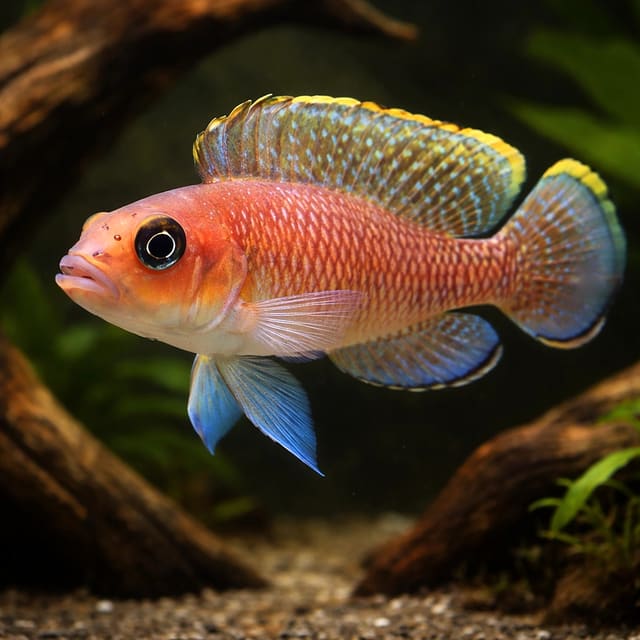
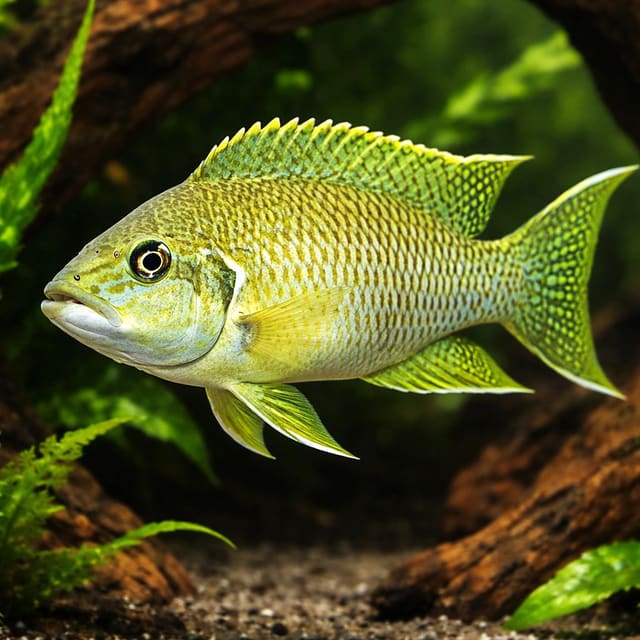
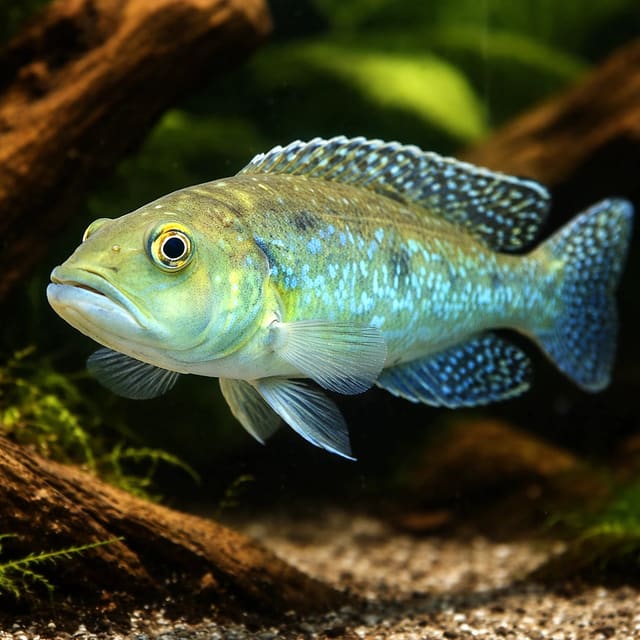
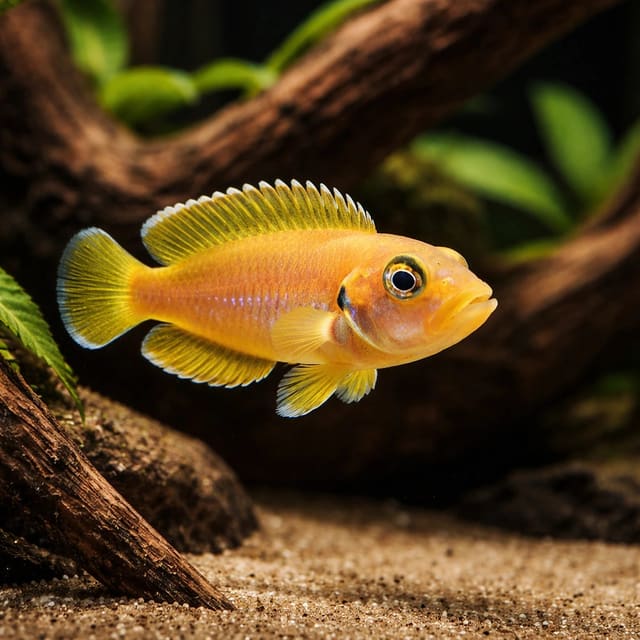
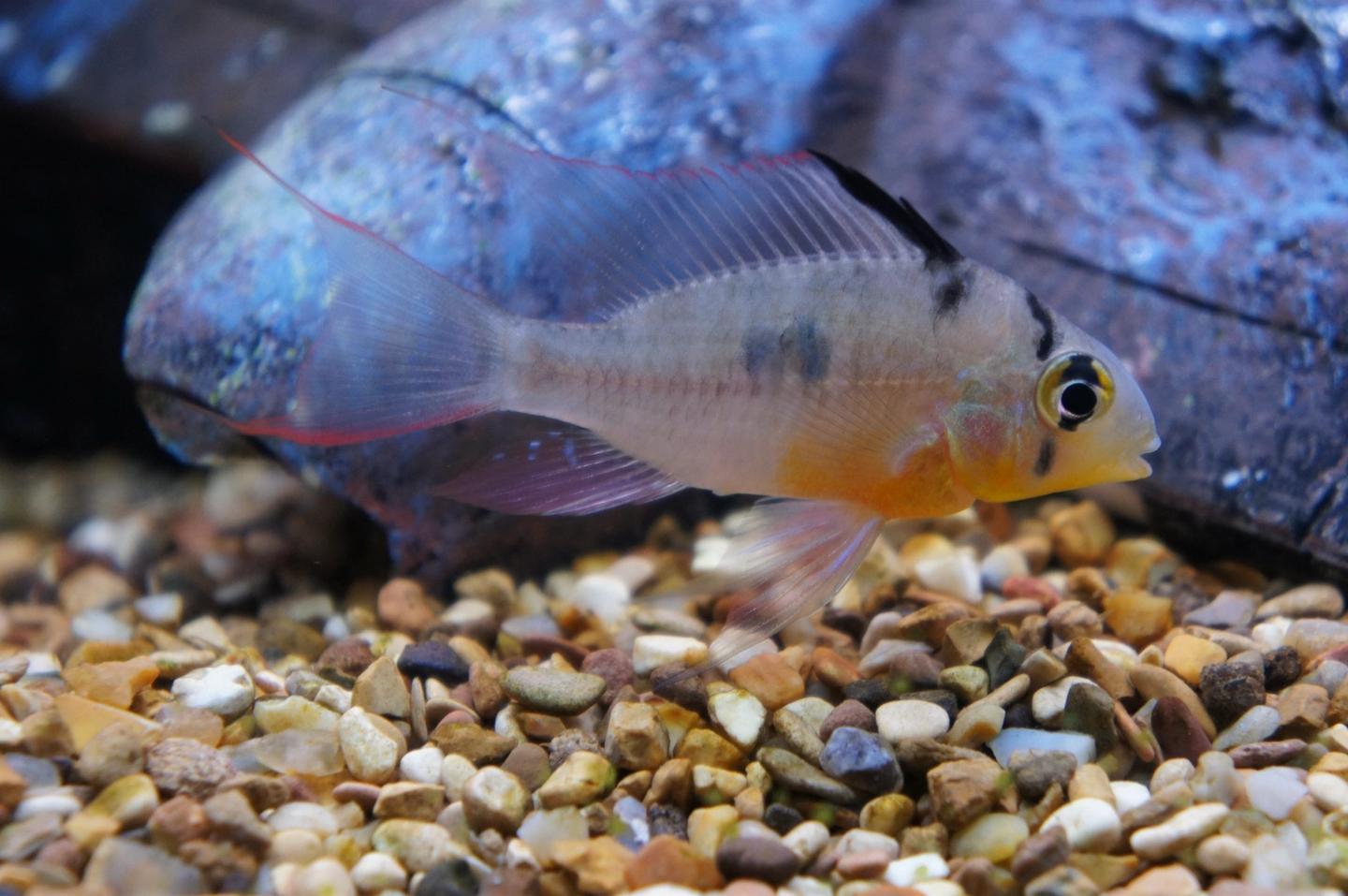
The gallery images are representative, based on reference photographs of this species, so colours can look slightly different from the live animal. One gallery scene shows two fish because it illustrates their appearance together; it does not change the purchase unit of one fish.
The dispatch measurement is an offer detail, not a life-stage or origin statement. Choose it only as a size-at-dispatch decision.
Use 5.5 cm as the recorded maximum length throughout your planning. FishBase gives that figure as total length for a male or unsexed fish. The dispatch size you choose does not change that 5.5 cm planning figure.
Seriously Fish gives an aquarium of 45 × 30 × 30 cm, around 40 litres, for a pair. Treat 40 litres as the minimum pair benchmark, not a colony allowance. A colony needs a larger aquarium so additional shells and territories can be spread across a wider floor.
| Plan | Space decision |
|---|---|
| One fish | Plan for a pair or colony instead: OATA’s African lake cichlid group guidance says very few, if any, African lake cichlids do well when kept singly, and they are likely to become stressed. |
| A pair | Use at least 40 litres and the stated 45 × 30 × 30 cm benchmark. |
| A colony | Choose a larger aquarium and increase both usable sandy floor and shell count. |
| A community | Start from the shell-dweller’s floor-space needs, then add distinct territory for species using other zones. |
Litres cannot be assessed in isolation. The same nominal volume can offer very different usable floors, and this fish’s shell-centred territory sits on the substrate. Prioritise a layout that holds open sand and separated shells without compressing every entrance into one contested patch.
Before adding more individuals, inspect the existing shell field. If every usable shell sits inside one fish’s defended area, adding another fish increases conflict without creating another territory. Expand the planned aquarium and redistribute the shell choices before increasing the colony.
Cover the aquarium floor with at least 2 inches of sand and leave large areas open. Seriously Fish describes digging as a characteristic behaviour and recommends numerous empty snail shells. Hard, alkaline water remains essential, so the entire layout should work with the water plan rather than against it.
Provide more shells than fish. Treat that as the minimum; Seriously Fish also recommends a good number of empty snail shells. For two fish, three shells meet the instruction to have more shells than fish; four or more offer additional choices. For four fish, begin with at least five. Increase the count when some shells are inaccessible, occupied or placed inside another fish’s defended area.
Count usable shells after arranging the aquarium, not while they are still in a box. A shell hidden behind inaccessible décor or trapped where the fish cannot approach it does not help distribute territory.
Observe which entrances the fish actually uses. An unused shell may simply be less attractive to that individual, so retaining several alternatives is more useful than forcing one position. If a colony begins to concentrate around a single patch, review the spacing and the larger-aquarium requirement rather than assuming the small adult length permits crowding.
Keep the aquarium at 23–25°C, pH 8.0–8.6 and 12–18 dGH. This is the overlap of FishBase’s recorded species environment, Seriously Fish’s aquarium range and OATA’s African lake cichlid values, so every routine target sits inside all three ranges.
FishBase records 23–25°C, pH 8.0–9.0 and 9–19 dH. Seriously Fish gives 23–27°C, pH 7.5–9.0 and 8–25 dGH. OATA gives African lake cichlids 23–27°C, pH 8.0–8.6 and 12–18 dGH; it also gives 10–15 dKH for carbonate hardness.
| Measurement | Routine instruction |
|---|---|
| Temperature | Hold 23–25°C. |
| pH | Keep 8.0–8.6. |
| General hardness | Keep 12–18 dGH. |
| Carbonate hardness | Use OATA’s 10–15 dKH African lake cichlid range. |
| Ammonia and nitrite | Keep both at zero mg/l. |
| Nitrate | Do not let it exceed 20 mg/l above the normal tap-water level. |
Test the aquarium at least weekly and record the result before deciding that a trend is stable. Every test should include ammonia, nitrite and nitrate as well as temperature, pH and hardness, because temperature and mineral readings cannot show whether the biological filter is processing waste.
Use our water chemistry guide to understand the measurements, then enter real test results into the water matcher. Compare the aquarium’s measured values with the full target instead of judging suitability from pH alone.
Treat replacement tap water with a suitable conditioner before adding it. Test regularly enough to spot movement away from the range, and correct the underlying water plan before increasing feeding or fish numbers.
Use a well-established and maintained biological filter. The RSPCA explains that fish release toxic ammonia and that filter bacteria convert it first to nitrite and then to safer nitrate. A filter therefore needs time to mature before livestock is added; water that looks clear is not a substitute for zero ammonia and zero nitrite.
Prepare and mature the aquarium using our first tropical tank guide. OATA recommends an oversized filter for crowded African lake cichlid communities and vigorous aeration to maintain dissolved oxygen. Match the equipment decision to the intended pair, colony or community rather than waiting for rising waste to reveal that capacity is too low.
Do not rinse filter media under the tap. Any chlorine or chloramine present may kill the beneficial bacterial population established in the media. Rinsing lightly in removed tank water reduces the amount of bacteria lost, and the filter depends on that bacterial population to process fish waste.
Increase livestock numbers slowly. OATA warns that beneficial bacteria must increase as fish numbers and feeding rise; adding too much livestock too quickly can produce new tank syndrome, with harmful ammonia and nitrite. For a colony plan, let filtration capacity and test results develop alongside the population rather than treating the full intended number as one addition.
Make live and frozen foods the main part of the diet. FishBase records plankton as the wild food of Neolamprologus brevis, while Seriously Fish recommends mainly live and frozen foods in the aquarium. Dried varieties are usually accepted, especially by tank-bred fish, but should not make up the bulk of the diet. The origin of an individual fish should not be inferred from whether it accepts dried food.
Feed only what the fish can eat within a few minutes, twice a day. This amount and frequency follow OATA’s African lake cichlid feeding guidance. Keep live and frozen foods as the staple, as Seriously Fish advises for this species.
| What you see | What to do |
|---|---|
| Food is eaten within a few minutes | Keep the portion at that level and retain the twice-daily schedule. |
| Food remains after a few minutes | Reduce the next portion so uneaten food does not break down in the aquarium. |
| Dried food is accepted | Use it as a minor part of the diet, not the main food. |
| Interest in food falls | Check swimming, breathing, appearance and water quality before offering more. |
Uneaten food adds waste that the biological filter must process. Overfeeding can therefore push ammonia, nitrite or nitrate in the wrong direction even when the chosen food is nutritionally appropriate. Portion control is part of water-quality management, not merely a way to avoid waste.
Feed where the fish can reach the food without requiring it to abandon the lower aquarium entirely. In a community, observe whether faster fish consume the ration first. A candidate using another tank zone is useful only if the shell-dweller can still feed and defend its immediate shell area without continuous competition.
Tropical Fish Co hand-packs the fish in pure oxygen inside an insulated poly box, with a heat pack when the weather calls for it. A licensed live-animal courier carries the parcel. Read the current delivery and Live Arrival Guarantee policy before the delivery date and arrange for someone to receive the parcel in person, because live fish must not be left unattended at the delivery address.
For a Live Arrival Guarantee claim, contact us the same day with the order number and continuous unboxing video showing the sealed parcel, the opening and the fish still in its sealed bag. Keep the fish in the bag until the required condition has been filmed.
OATA advises checking that ammonia and nitrite are zero before adding fish. Confirm the planned 23–25°C, pH 8.0–8.6 and 12–18 dGH range as an aquarium-care check, and make sure the filter has matured before arrival.
Add livestock slowly because feeding and waste increase the load on the bacterial population in the filter. Do not combine arrival day with a large, untested population increase. Once the fish is released, begin observing its swimming, breathing, appearance, response to food and use of shells.
Expect the fish to organise its activity around a shell and defend the small area nearby. Seriously Fish describes the territory as usually no more than 6 inches across, but says it is defended vigorously. The fish will even bite a hand or finger entering that personal space. This is normal territorial capability, not permission to ignore persistent conflict between fish.
A pair may share a shell in circumstances where shells are scarce, and the same behaviour may or may not appear in an aquarium. Continue to provide more shells than fish rather than trying to force shell sharing. This species is a shell brooder, and a female may bury a selected shell until only its entrance remains visible.
Young fish are not easy to sex. Adult males are described as considerably larger than females, but size, colour and gallery appearance should not be used to assign the sex of a selected fish.
At each of the two daily feeds, check that the fish can approach food without continuous displacement from the shell area. Keep additions slow while the filter bacteria respond to the new waste load.
Review the weekly water-test record, shell use and territorial pattern together. If behaviour, breathing, appearance or appetite changes, test water quality and contact us for further guidance. Do not choose a disease treatment from appearance alone.
Choose community candidates that use different parts of the aquarium and can share the same hard, alkaline water. Seriously Fish names small rock-dwellers such as Neolamprologus brichardi, smaller Julidochromis species and open-water Cyprichromis species as good candidates. These are conditional examples, not universal tank mates.
| Candidate kind | Screening decision |
|---|---|
| Small rock-dwellers such as N. brichardi | Provide a distinct rocky zone without removing the open sand and shell field. |
| Smaller Julidochromis species | Check aquarium size, hard alkaline water and separation from shell territories. |
| Open-water Cyprichromis species | Confirm that the aquarium provides suitable open-water space as well as the required floor area. |
| Additional N. brevis | Use a larger colony aquarium with more shells than fish and enough separated floor space. |
Match candidates against 23–25°C, pH 8.0–8.6 and 12–18 dGH before comparing temperament. A fish that occupies another zone still fails the screen if its water needs do not overlap with these routine values.
When comparing fish in our African cichlid collection, separate Lake Tanganyika candidates from Malawi community plans. OATA does not generally recommend mixing Malawi and Tanganyikan cichlids because their temperaments and behaviours differ.
Before adding any candidate, write down the aquarium dimensions, measured water values, current fish, planned shell count and intended candidate.
Seriously Fish describes it as a territorial species. This fish vigorously defends its shell and nearby space, so conflict is most likely to matter where fish need the same floor area or shell field. Do not assume that a 5.5 cm fish requires little territory simply because its body is compact.
OATA advises that rearranging décor can reduce aggression by making fish establish new territories. Use that step as part of a full reassessment of space and stocking, not as a substitute for an aquarium that is too small for the intended colony.
| Observation | Response |
|---|---|
| Brief defence close to a shell | Confirm that other fish can leave the small territory and reach their own zone. |
| One fish cannot approach a shell | Add usable shell choices and reassess how the floor has been divided. |
| Persistent chasing or hiding | Pause further additions and reassess aquarium size, territories and candidate choice. |
| Reduced feeding or physical damage | Check water quality immediately and change the stocking plan. |
FishBase records a maximum length of 5.5 cm total length. Plan the aquarium around that adult figure, not the fish’s dispatch length.
Seriously Fish gives 40 litres, with dimensions of 45 × 30 × 30 cm, for a pair and says a colony needs a larger aquarium.
Two fish are the 40-litre pair benchmark and a colony needs a larger aquarium; OATA’s African lake cichlid guidance says very few, if any, African lake cichlids do well when kept singly. Provide more shells than there are fish, and let usable floor space and territorial response limit the colony.
Choose it only if you can already maintain hard, alkaline water, a mature filter, deep sand and more shells than fish. Keep the FishBase, Seriously Fish and OATA overlap of 23–25°C, pH 8.0–8.6 and 12–18 dGH.
It feeds on plankton in nature. Offer mainly live and frozen foods, feed only what it can eat within a few minutes twice a day, and keep dried food as a minor part of the diet.
Keep it at 23–25°C, pH 8.0–8.6 and 12–18 dGH. These values are the overlap of FishBase’s recorded environment, Seriously Fish’s aquarium range and OATA’s African lake cichlid values.
It is territorial and vigorously defends its shell and the small area around it. Watch for persistent chasing, hiding or reduced feeding and reassess the combination.
Seriously Fish names small rock-dwellers such as Neolamprologus brichardi, smaller Julidochromis species and open-water Cyprichromis species as candidates that use different parts of the tank; every combination still needs space, shells and compatible water.
Tropical Fish Co hand-packs the fish in pure oxygen inside an insulated poly box, adding a heat pack when the weather calls for it, and uses a licensed live-animal courier. Receive the parcel in person, film it continuously from sealed, then float the bag for 20–30 minutes before release.
No reviews for this item yet. Bought one? Honest reviews only, good or bad.
What customers say about ordering from us
I have a small group of long finned mountain minnows. So was delighted to be able to order ten of this variety to increase the genetics in my tank . The ones I recieved are healthy but it’s to early to give a verdict on wether they are of a long finned type since they are small currently.
Gordon Walker · 23 Sept 2026
100% success travel and "installation". Pleased with quality of purchase. The Siamese fighter a bit "shy" so have not yet seen him at his best yet but looking good. Happy customer. GG
George E Garratt · 21 Sept 2026
Reviews of our shop, collected by Judge.me, an independent third-party review collector. Newest first.