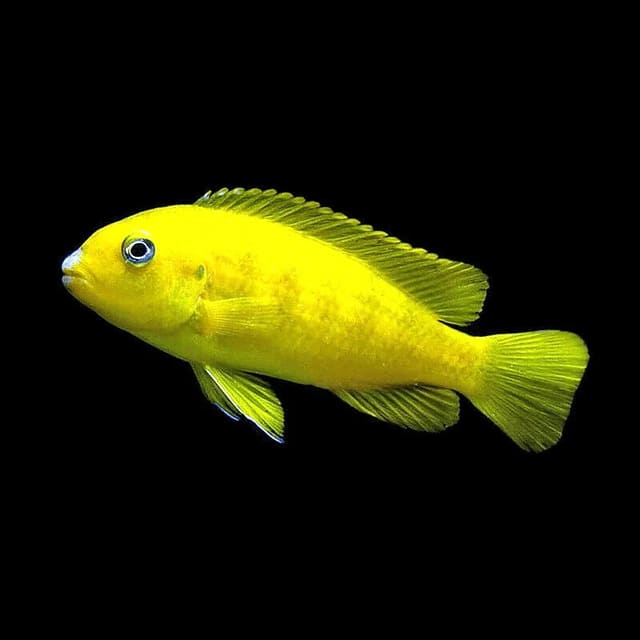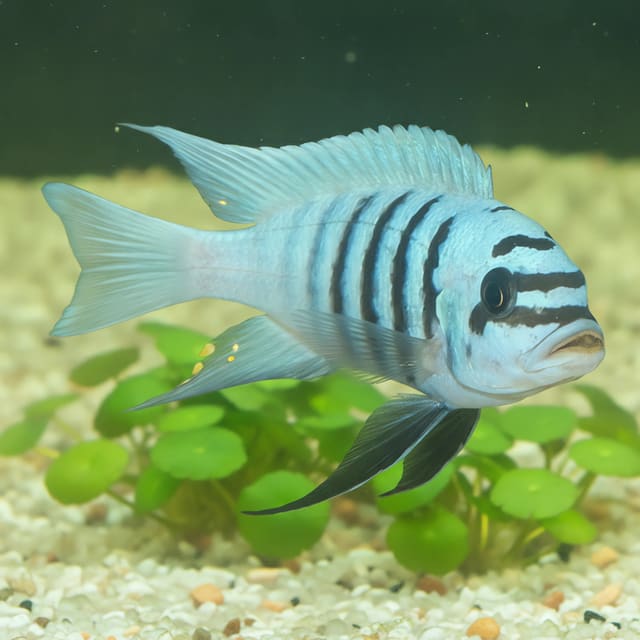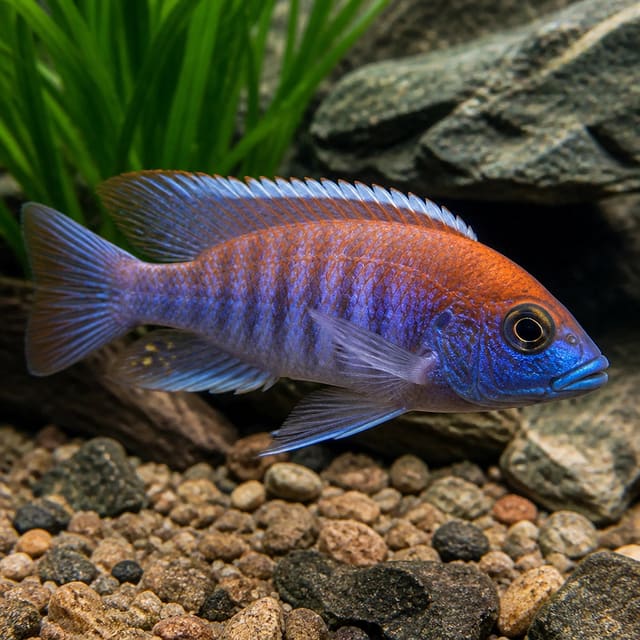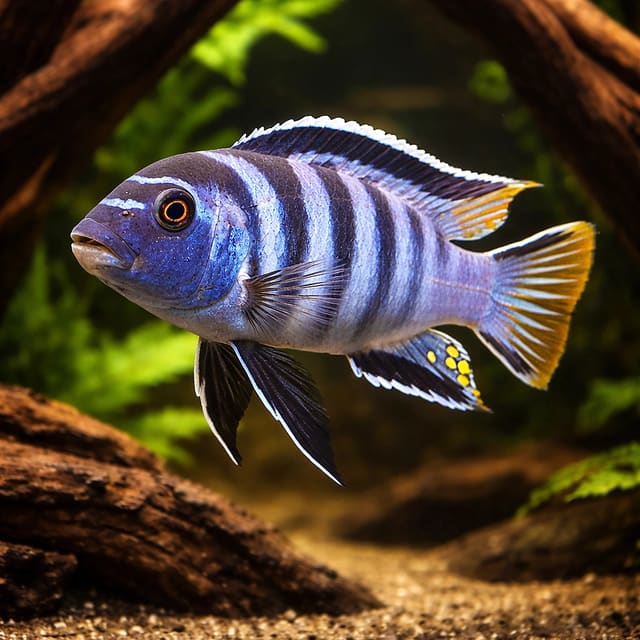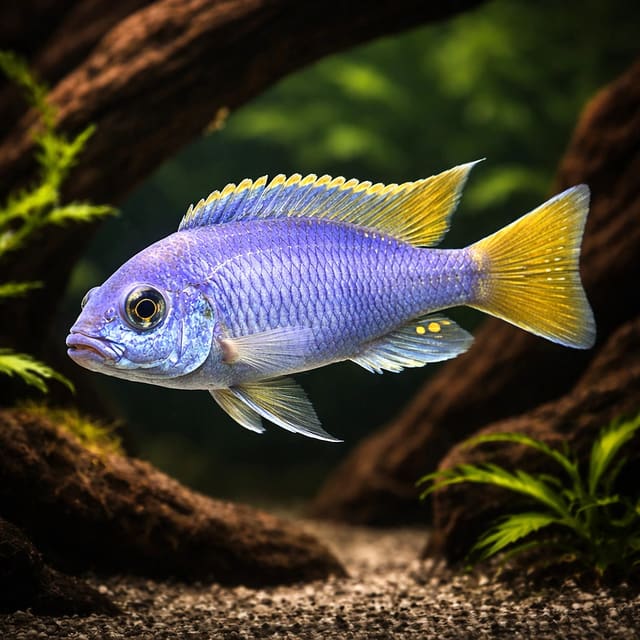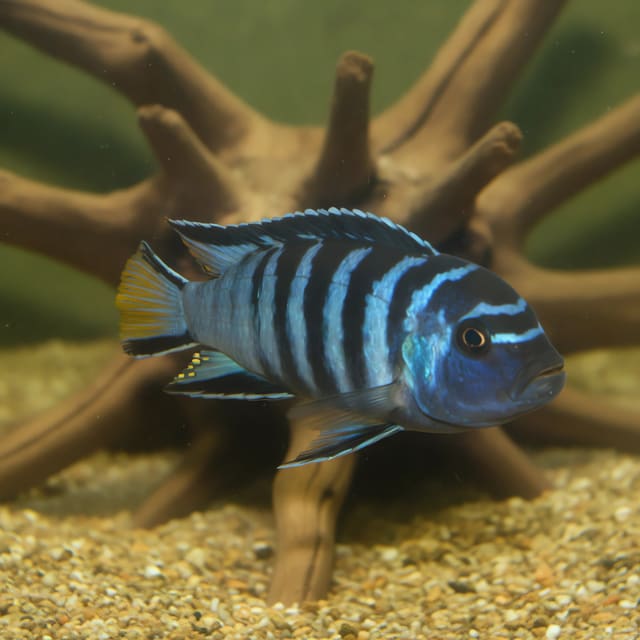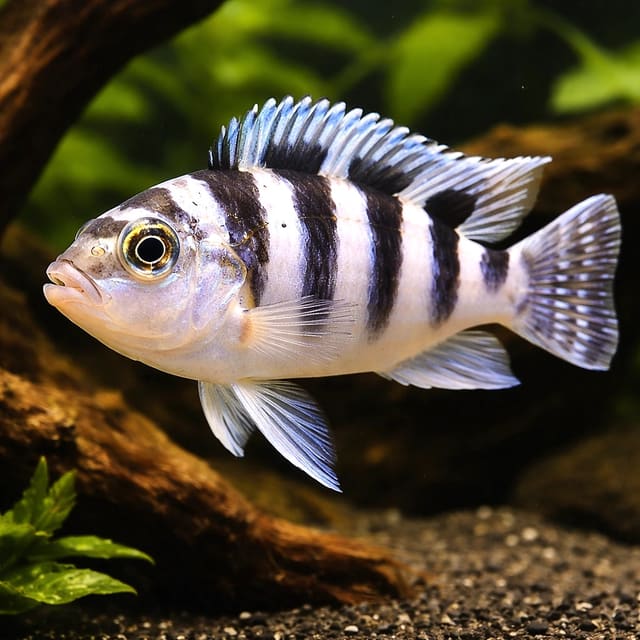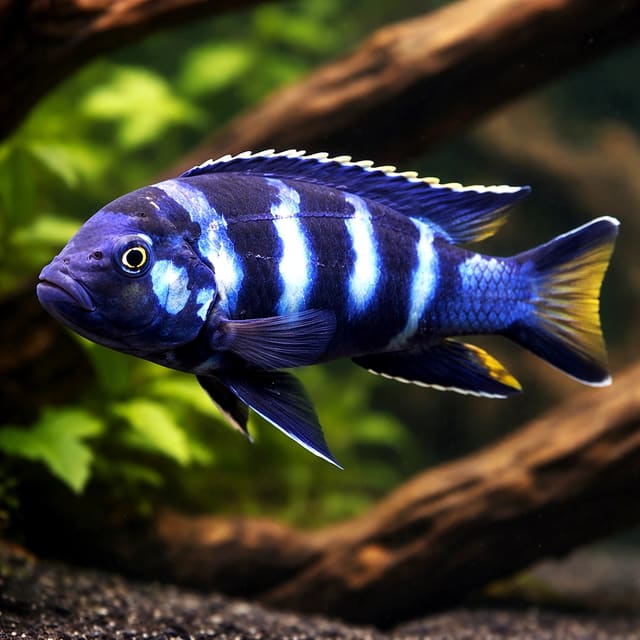
Moderate
Acei Cichlid (Pseudotropheus sp. “acei”)
24–26°C · pH 7.5–8.5 · 300L
£7.99

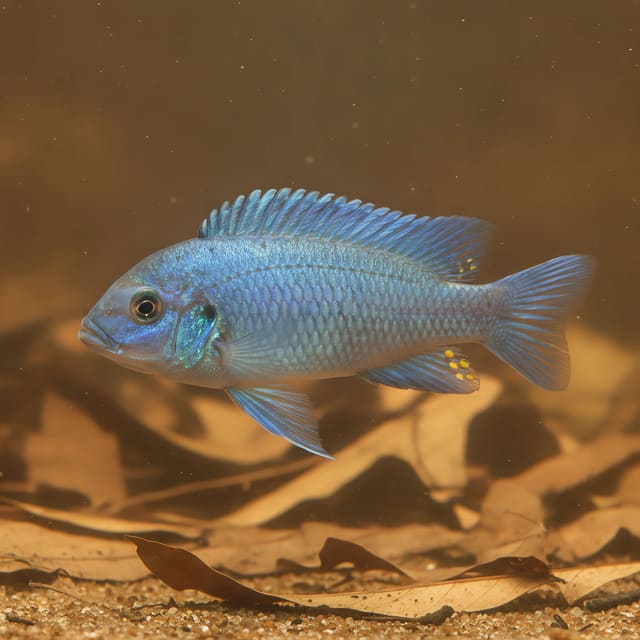
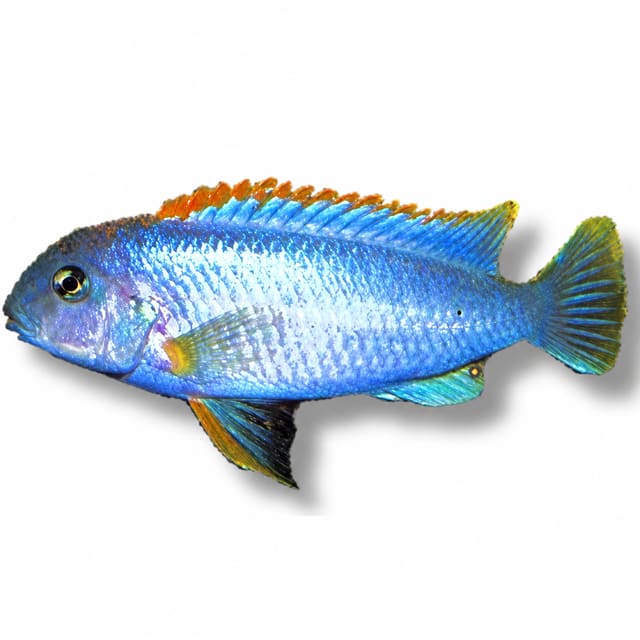
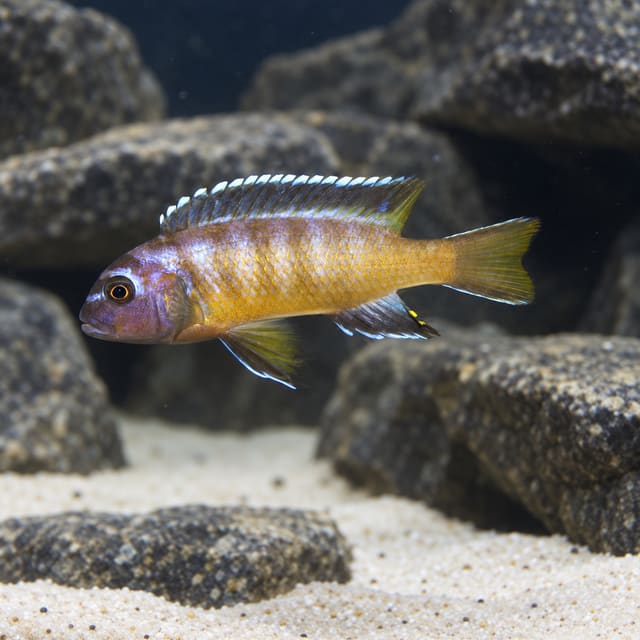
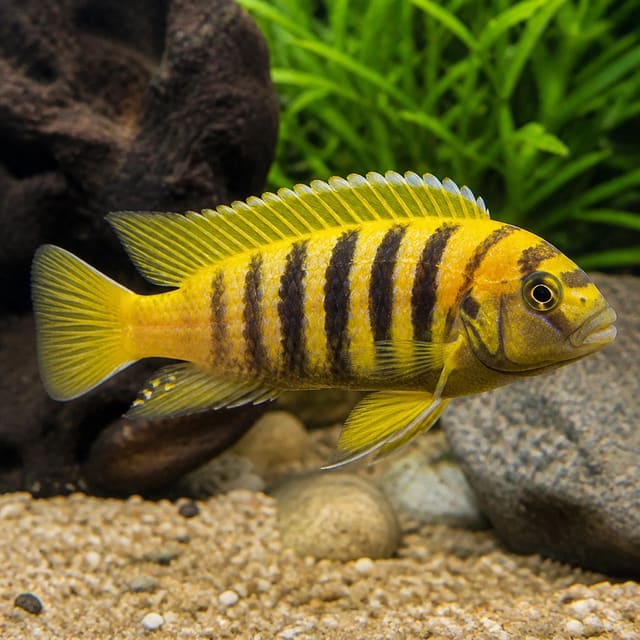
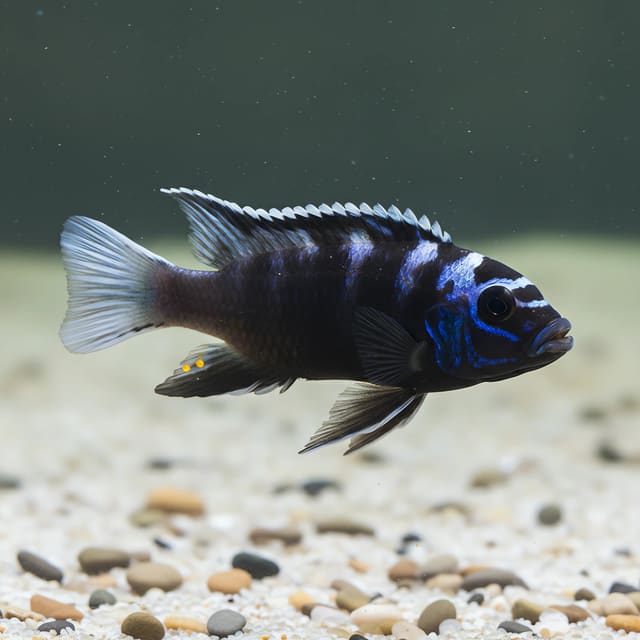
Polit Mbuna (Pseudotropheus polit) is a territorial Malawi cichlid for an established hard-water rock aquarium and an experienced keeper who can manage aggression, filtration and a plant-rich diet. One purchase supplies one live fish in the size selected: 2-3 cm or 4-5 cm; sex is not guaranteed.
Pseudotropheus polit
Save when buying multiple fish. Each quantity is one fish; sex and pair formation are not guaranteed unless the selected variant explicitly states them.
Polit Mbuna (Pseudotropheus polit) is a territorial Malawi cichlid for an established hard-water rock aquarium and an experienced keeper who can manage aggression, filtration and a plant-rich diet. One purchase supplies one live fish in the size selected: 2-3 cm or 4-5 cm; sex is not guaranteed.
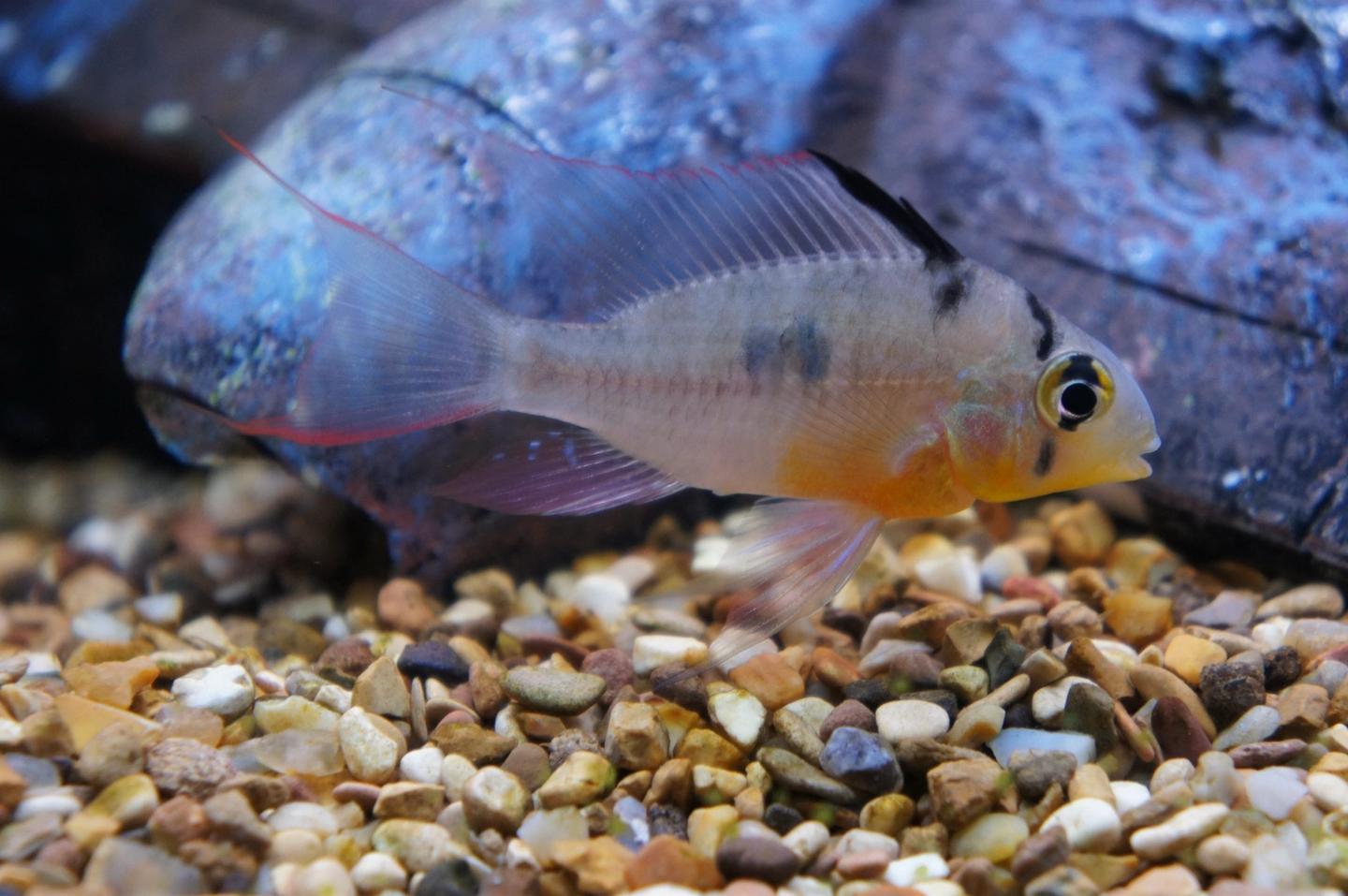
Cichlids are a family of roughly 1,800 accepted species, not one care type. Before buying, identify the exact species and source, then compare adult measurement, usable tank dimensions, social system, territory, tested water, diet and an exit plan. No family-wide minimum tank, water range or tank-mate list is safe.
Maintain these water conditions for optimal health and vibrant colors
Polit Mbuna, Pseudotropheus polit, is offered for the active, rock-focused style of aquarium associated with Lake Malawi cichlids. Pseudotropheus is a genus in the cichlid family, and the genus comprises mbuna endemic to Lake Malawi. This is not a quiet general-community fish. It belongs with a keeper who expects territorial behaviour, can build secure rockwork with many broken sight lines, and will maintain hard, alkaline water under the higher waste load of a Malawi community.
One purchase supplies one live fish. Choose either 2-3 cm or 4-5 cm. The size you select is the size supplied, not the adult size. Aquarium care planning uses an adult length of around 10 cm, while the dispatch measurements describe only the fish sent. Sex is guaranteed only when the selected option explicitly states male or female. This Polit Mbuna listing has no sex-guaranteed option. Do not try to build a male-to-female plan from juvenile colour, photographs or size labels.
The working care plan is an intermediate one: at least 200 litres, strong biological filtration, a secure rockscape, 23-27°C, pH 8.0-8.6 and hardness of 12-18 dGH. These product-care values should be held steady rather than treated as endpoints to chase. These are OATA's broad Malawi-cichlid figures, not a species-specific optimum for this exact fish.
| Planning point | Practical answer |
|---|---|
| Sold unit | One live fish in the selected 2-3 cm or 4-5 cm size |
| Adult planning size | Around 10 cm |
| Aquarium | At least 200 litres, with length and rock territories prioritised over height |
| Water | Broad Malawi guidance of 23-27°C, pH 8.0-8.6 and 12-18 dGH |
| Temperament | Aggressive and territorial; not a peaceful mixed-community choice |
| Food | Plant-rich prepared foods and vegetables in controlled portions |
This fish suits a keeper who wants visible cichlid hierarchy and is willing to manage the whole community rather than select individuals on colour alone. The aquarium must be mature before stocking, and the keeper needs enough test equipment and spare capacity to respond to rising waste, blocked filters or aggression. The fish is a poor fit for a small starter kit, soft or acidic water, delicate tank mates, an unplanned collection of cichlids, or anyone seeking a single calm show fish.
Plan all inhabitants before buying. OATA advises that Malawi cichlids are aggressive and that small groups often fight; its broad community guidance uses groups of at least 15, with more females than males where possible. Because this listing does not guarantee sex, the size selector cannot promise a sex ratio. Ask whether the complete adult community, filtration and rock layout can be supported before adding the first fish. Browse the African cichlid collection for context, but assess each animal's water needs and temperament individually.
| Question | Answer |
|---|---|
| Best suited to | Keepers prepared for a territorial, rock-dwelling Malawi community |
| Experience needed | Confident testing hard alkaline water, maintaining oversized filtration and reading cichlid aggression |
| Main design priority | Several secure rock territories with broken sight lines and usable swimming routes |
| Main routine priority | Controlled feeding, zero ammonia and nitrite, strong oxygenation and regular partial water changes |
| Buying decision | Choose the dispatch size only after the full adult community and receiving plan are ready |
The best home is deliberate from the beginning. It has mature media, measured hard alkaline water, stable rocks and a written stocking plan, plus enough time for the keeper to observe fish after every addition. This preparation lets the active behaviour remain the attraction without allowing territorial pressure or waste to become the defining feature of the aquarium.
Gallery images have been digitally enhanced to improve image quality. Natural colour, pattern, size and maturity can vary between live animals.
A territorial mbuna needs structure that allows fish to disappear from one another's view. Place stable rocks directly on the aquarium base or on a suitable protective support, then add substrate around them. If rocks sit loosely on sand, digging can undermine the stack. Test every piece by hand before filling the aquarium and leave enough clearance for cleaning and water circulation. Create several separate cave routes rather than one central pile that a dominant fish can control.
Keep open swimming lanes between territories. The aim is not to fill every litre with stone; it is to provide repeatable boundaries and escapes. A fish driven away from one cave should be able to reach another without crossing the dominant fish's full patrol route. Rock surfaces also suit normal mbuna grazing. Hardy attached plants may survive, but expect digging and do not rely on rooted plants to hold the layout together.
Use at least 200 litres and favour horizontal footprint. A litre figure alone cannot show whether the aquarium has enough territories, so consider its length, width, rock displacement and the adult community. OATA also uses 200 litres as broad guidance for a reasonable Malawi-cichlid community, while noting that larger aquariums usually provide more stable conditions. If a dominant fish can watch every shelter from one point, extra height will not solve the social problem.
Use 24-28°C, pH 7.5-8.5 and 10-25 dGH for this care plan. Measure the source water and the established aquarium before ordering. The water chemistry guide explains the main tests, while the water matcher helps compare measured values with the plan. A high pH does not by itself prove adequate hardness or buffering, and a general label such as hard water is not a substitute for numbers.
Make any adjustment by a consistent, measured method. Prepare replacement water before it enters the aquarium and avoid sudden changes in temperature, pH or mineral content. OATA also gives carbonate hardness of 10-15 dKH for Malawi cichlids. All of these water figures are broad group guidance rather than a species-specific optimum.
Temperature affects oxygen demand as well as metabolism. Use a reliable heater, protect it from rock movement and verify it with a separate thermometer. Aim the filter outlet or aeration so the surface moves strongly. OATA recommends vigorous aeration for Malawi communities, particularly where stocking and filtration demands are high.
The RSPCA explains the general aquarium cycle: fish produce toxic ammonia, established bacteria convert it to toxic nitrite, and further bacteria convert nitrite to safer nitrate. A filter that has only been switched on is not necessarily biologically mature. Follow the first tropical tank guide and confirm zero ammonia and zero nitrite on repeated tests before livestock arrives.
Choose an oversized filter with useful biological-media volume and dependable flow after media is installed. OATA recommends oversized filtration for Malawi communities. Arrange intakes and outlets so waste moves towards the filter while fish have sheltered areas away from the strongest current. Check the intake after digging and inspect the outflow daily; a sudden reduction often shows a blockage before the water test reveals the consequences.
Test at least weekly and whenever behaviour changes. OATA's broad targets are zero ammonia, zero nitrite and nitrate no more than 20 mg per litre above the level in normal tap water. That nitrate wording matters: test the source as well as the aquarium. A reading only has meaning when the test is in date, directions are followed and the result is compared with the same units.
Use a 25% weekly partial water change as OATA's broad starting routine, then let measured nitrate and stocking load inform whether the aquarium needs additional changes. Treat new tap water for chlorine or chloramine and match it closely for temperature and chemistry. Siphon trapped waste around rocks without tearing down all territories at once. Large layout changes can reset social boundaries and trigger renewed fighting.
Never rinse biological filter media under the tap. Rinse it lightly in removed aquarium water so chlorine or chloramine does not destroy the bacteria the aquarium depends on. Do not clean every media basket and deep-clean the substrate on the same day. Stagger work to preserve biological capacity, and restore normal flow before leaving the aquarium.
Keep a maintenance log with temperature, pH, hardness, ammonia, nitrite, nitrate, water-change volume and any aggression event. Patterns are more informative than memory. Rising nitrate may reveal that feeding, stocking and water-change volume no longer balance; repeated pH drift may show that the preparation method is not consistent.
Use spirulina flakes, algae wafers, suitable herbivore cichlid pellets and small portions of blanched vegetables. Offer only what the fish finish within a few minutes, twice daily, in line with OATA's broad Malawi guidance. Keep the routine plant-rich and observe digestion, appetite and waste rather than adding rich foods or making treatment assumptions.
Spread food across more than one territory. A dominant fish should not monopolise the only feeding point, and adding extra food is not a safe answer to unequal access. Watch every individual, remove leftovers and reduce the next portion if food collects behind rocks. A light natural algae coating on rocks can support grazing behaviour, but no fish replaces cleaning or water changes.
Track body condition and feeding response. A fish that repeatedly hides at meals, spits food or loses condition needs prompt investigation of water quality, bullying and the food itself. Do not diagnose a disease from one behaviour or reach automatically for medication. Test the shared environment first and seek informed help when a fish remains unwell.
Read the complete receiving conditions and claim route on the delivery and Live Arrival Guarantee page. The video must begin before the parcel is opened; it cannot be recreated after the bag has been disturbed.
Measure the aquarium and list every intended adult inhabitant. Then draw the rock territories from above. This catches a common planning error: a nominally large aquarium may have only one usable cave network, while a better layout provides several routes and prevents a single fish from seeing every shelter. Confirm the structure cannot topple when substrate is excavated and that equipment remains accessible without removing the main territories.
| Check | Ready when |
|---|---|
| Aquarium | At least 200 litres with a useful horizontal footprint |
| Rockwork | Secure on the base, with several caves and broken sight lines |
| Water | 23-27°C, pH 8.0-8.6 and 12-18 dGH held steadily |
| Cycle | Repeated tests show zero ammonia and zero nitrite |
| Community | The whole Malawi stocking plan is chosen before additions begin |
| Receiving | An adult will be present to record, inspect and introduce the fish |
Have water tests, conditioner, a fish-only bucket and siphon, a thermometer and suitable foods ready. Keep a safe separation plan for serious aggression, but remember that a bare uncycled container is not a safe emergency aquarium. Any temporary system needs heat, oxygenation and established biological filtration appropriate to its load.
Count every fish at several times of day and observe more than the feeding rush. OATA recommends watching swimming behaviour, colour, aggression or hiding, breathing, fins and scales, body condition and appetite. A change does not identify a disease on its own; it tells you to test the water, inspect the social layout and seek advice where needed.
Distinguish a brief chase from sustained exclusion. A fish that can leave a territory, settle elsewhere and feed is in a different position from one pinned behind equipment or kept at the surface. If one animal is repeatedly targeted, act before visible injury. Reassess the number of territories, size differences and introduction order rather than assuming the hierarchy will always settle without intervention.
Continue ordinary testing after apparently successful introduction. New fish increase waste and the filter bacteria need time to adjust. Feed conservatively, remove uneaten food and compare results with the pre-arrival log. Stable behaviour and zero ammonia or nitrite over repeated checks provide better reassurance than a single clear-looking day.
OATA's recommendation for at least 15 Malawi cichlids addresses aggression at community level, but it does not suspend the limits of the aquarium. More fish create more ammonia, consume more oxygen and leave more solid waste. Before increasing the group, compare the adult stocking plan with the actual filter capacity, maintenance history and open water around the rocks. If nitrate already rises quickly or oxygenation is marginal, adding fish to spread aggression is unsafe.
Increase stocking only in planned stages so the biological filter can respond. Test ammonia and nitrite after additions and reduce feeding if either becomes detectable while you investigate. Do not assume clear water is safe water: dissolved ammonia and nitrite are invisible. Conversely, do not use random chemical additives as a substitute for mature media, adequate oxygen and water changes.
The useful test of a stocking plan is whether every fish can feed, withdraw and maintain condition while the keeper can keep ammonia and nitrite at zero. If those conditions cannot be met, the answer is a different community or a larger aquarium, not more décor squeezed into the same space.
Clean around one part of the rockscape at a time. This leaves familiar shelters in place while debris is removed elsewhere. Before lifting any stone, check where fish are hiding and support the remaining structure. Never stack a rock back loosely because it seems stable while dry; water movement and digging can expose a weakness later.
If aggression increases, first identify who is chasing, who is being excluded and which route is blocked. A small adjustment that creates a second exit may help. Moving every rock can interrupt territories, but it also forces all fish to compete again. Use full rearrangement deliberately, usually alongside a planned introduction or when the old layout plainly lets one fish dominate the entire aquarium.
After any change, watch from a distance as well as close to the glass. Fish may pause aggression when a keeper approaches for food. Look again once normal activity resumes and check that subordinate fish use more than one shelter and return to feed.
| Observation | First response |
|---|---|
| Detectable ammonia or nitrite | Stop further additions, verify the test, protect water quality and examine filtration and feeding |
| Nitrate rising faster than usual | Review portion size, trapped waste, stocking load and water-change frequency |
| Reduced filter flow | Check intakes and media for blockage while preserving biological media |
| Repeated surface breathing | Check temperature, aeration, flow, ammonia and nitrite promptly |
| One fish missing meals | Map aggression and feeding access before adding more food |
| pH or hardness drifting | Compare source, prepared and aquarium water and standardise the preparation routine |
Respond to the cause, not just the visible symptom. For example, extra aeration may help immediately when fish breathe hard, but it does not remove ammonia. A water change may lower nitrate, but recurring rapid nitrate rise still needs a feeding, stocking or maintenance adjustment. Record both the result and the action so the next reading can show whether the intervention worked.
The two sale sizes are convenient dispatch choices, not different long-term care categories. Rock gaps that suit a 2-3 cm juvenile may become traps or unusable crevices as the fish grows, while territories expand as fish mature. Inspect openings during routine maintenance and keep the aquarium plan centred on an adult length around 10 cm.
Size differences also affect introductions. A much smaller newcomer may struggle to compete with established fish even when the species list appears sensible. Do not choose a size solely to save space, and do not assume a larger juvenile will automatically dominate safely. Consider the actual sizes, existing hierarchy and number of escape routes, then observe closely through the first weeks.
Long-term success is the result of repeatable work: steady water, suitable food, secure structures, careful stocking and prompt response to aggression. These routines are more valuable than chasing a perfect display on the first day.
Polit Mbuna is aggressive and territorial. The broad OATA rule is to keep Malawi cichlids with other Malawi cichlids or with some Synodontis catfish that also naturally inhabit Lake Malawi. This is group-level guidance, not a promise that any two named animals will coexist. Adult size, temperament, diet, sex balance, territory and the aquarium footprint still need checking for every proposed combination.
Avoid small peaceful fish, shrimp and soft-water community species. They do not share the same social rules or water plan and may be harassed, injured or prevented from feeding. Do not mix fish merely because a shop category calls both of them African cichlids: Lake Malawi and Lake Tanganyika communities can differ in behaviour, feeding and social structure.
| Decision | Rule |
|---|---|
| Suitable to investigate | Other robust Malawi cichlids with compatible adult size, diet and aggression |
| Use caution | Some Lake Malawi Synodontis and any fish that shares caves or feeding space |
| Avoid | Small peaceful fish, shrimp, soft-water community fish and delicate slow feeders |
| Never assume | Matching pH or a shared regional label does not establish compatibility |
OATA's broad Malawi advice says these cichlids often fight in small groups and can be kept in groups of at least 15, with more females than males where possible. Apply that as a whole-community planning principle, not a species-specific formula or permission to exceed the filtration capacity. Slightly denser stocking can spread aggression in some Malawi setups only when oxygenation, filtration and maintenance are designed for it.
This product has no sex-guaranteed choice. Do not buy several juveniles on the assumption that a particular male-to-female ratio will result. Colour and egg spots can vary with maturity, dominance and species, and no gallery image proves the sex of the fish supplied. If a stocking plan depends on a confirmed sex, use an explicitly sexed offer rather than inference.
Introduce fish in planned groups where possible and add more peaceful fish before more aggressive ones, following OATA's general advice. Rearranging some décor can interrupt established territories, but avoid repeatedly rebuilding the entire aquarium because every major change forces the hierarchy to restart. Observe closely after each addition and have a filtered separation option ready.
Warning signs include one fish being kept at the surface or behind equipment, missing repeated meals, breathing hard, losing condition or developing torn fins. A technically robust species can still be the wrong companion if its feeding speed or territory overlaps too closely. Do not compensate by flooding the tank with food; that transfers the problem to water quality.
Compatibility is dynamic as fish mature. A layout that works for 3 cm juveniles may fail when individuals approach 10 cm and territories expand. Revisit the stocking map before adding fish and whenever hierarchy changes. The goal is not the absence of every chase, but a community in which each fish can withdraw, feed and maintain normal condition without continual pressure.
Plan for an adult length of around 10 cm. The fish is supplied in a selected 2-3 cm or 4-5 cm size, and that dispatch measurement should not be mistaken for its adult size.
Use at least 200 litres and prioritise horizontal footprint, secure rock territories and broken sight lines. The adult community and the space taken by rocks matter as much as the nominal volume.
Plan the whole Malawi community rather than a tiny group of this fish. OATA's broad guidance says Malawi cichlids often fight in small groups and uses at least 15 fish for a community, with more females than males where possible; this listing does not guarantee sex, so the selector cannot promise a ratio.
It is better for an intermediate keeper who understands mature filtration, hard alkaline water and territorial cichlid behaviour. A new keeper can prepare successfully, but this is not a suitable first addition to an uncycled or general mixed aquarium.
Use a plant-rich routine based on spirulina flakes, algae wafers, herbivore cichlid pellets and small portions of blanched vegetables. Feed controlled amounts twice daily and remove leftovers rather than adding rich treats or oversized meals.
Use OATA's broad Malawi guidance of 23-27°C, pH 8.0-8.6 and hardness of 12-18 dGH, held steadily. Test the source and aquarium water, and prepare changes consistently instead of making sudden corrections.
It is aggressive and territorial. It may chase or injure unsuitable companions, so provide multiple rock territories and act if a fish is continually excluded, cannot feed or develops damaged fins.
Investigate robust Malawi cichlids of compatible size, diet and aggression, plus some Lake Malawi Synodontis with caution. Avoid small peaceful fish, shrimp, soft-water community fish and delicate slow feeders.
Tropical Fish Co hand-bags live fish in oxygen and uses an insulated box, with a heat pack when conditions call for one, then sends the parcel with a licensed live-animal courier. Be present to receive it and start a continuous video before opening the sealed parcel; inspect the fish in the sealed bag, float the bag for 20-30 minutes, then transfer the fish without adding transport water to the aquarium.
Delivery and arrival instructions use Tropical Fish Co's policy linked in the care tab. Size choices and sold quantity are kept separate from biological care claims.
No reviews for this item yet. Bought one? Honest reviews only, good or bad.
What customers say about ordering from us
I have a small group of long finned mountain minnows. So was delighted to be able to order ten of this variety to increase the genetics in my tank . The ones I recieved are healthy but it’s to early to give a verdict on wether they are of a long finned type since they are small currently.
Gordon Walker · 23 Sept 2026
100% success travel and "installation". Pleased with quality of purchase. The Siamese fighter a bit "shy" so have not yet seen him at his best yet but looking good. Happy customer. GG
George E Garratt · 21 Sept 2026
Reviews of our shop, collected by Judge.me, an independent third-party review collector. Newest first.