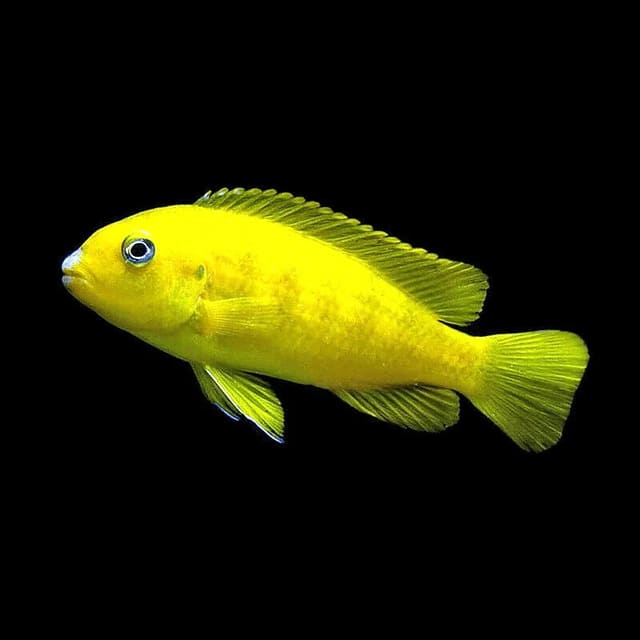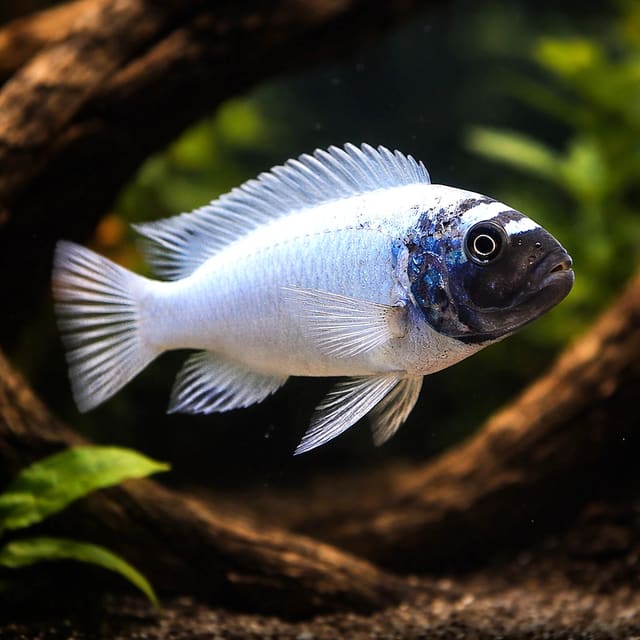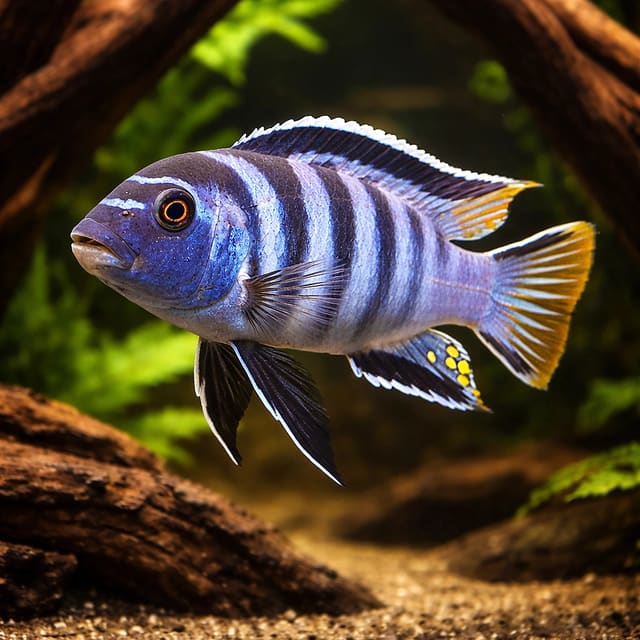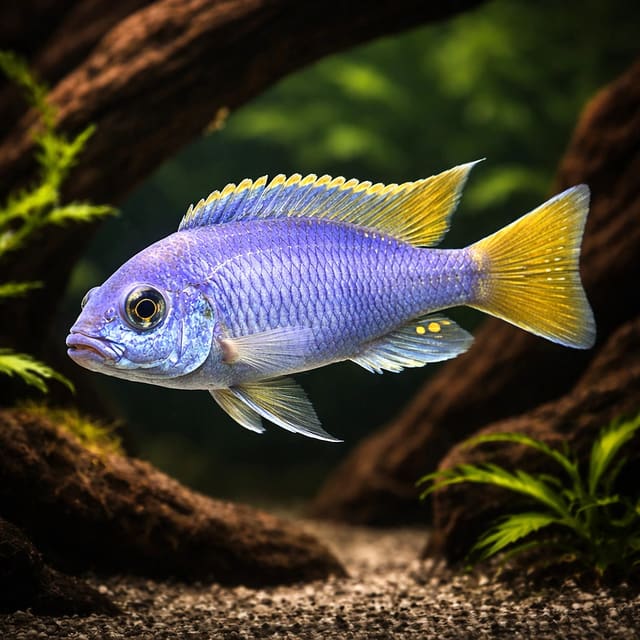
Moderate
Acei Cichlid (Pseudotropheus sp. “acei”)
24–26°C · pH 7.5–8.5 · 300L
£7.99
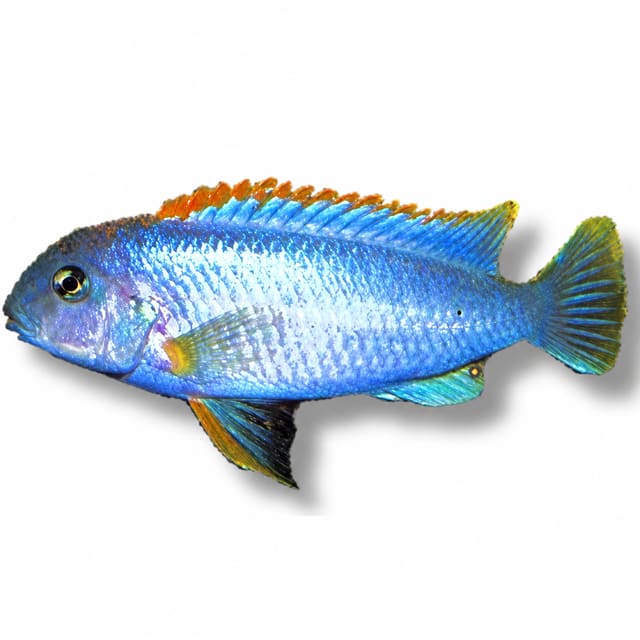
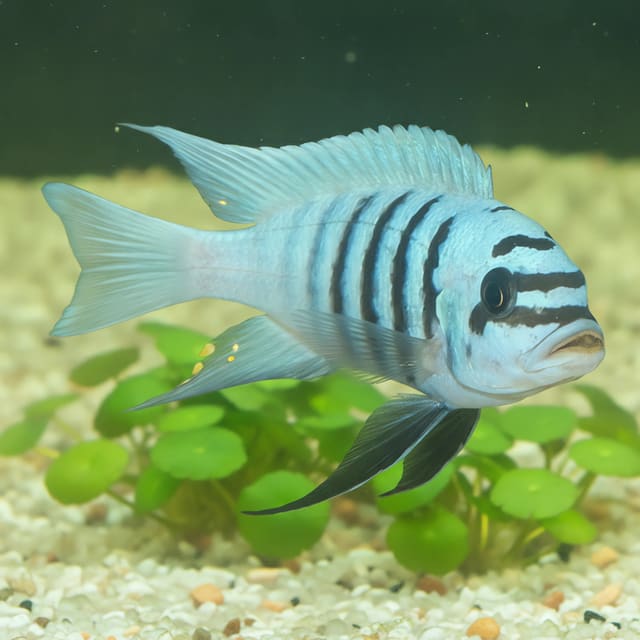
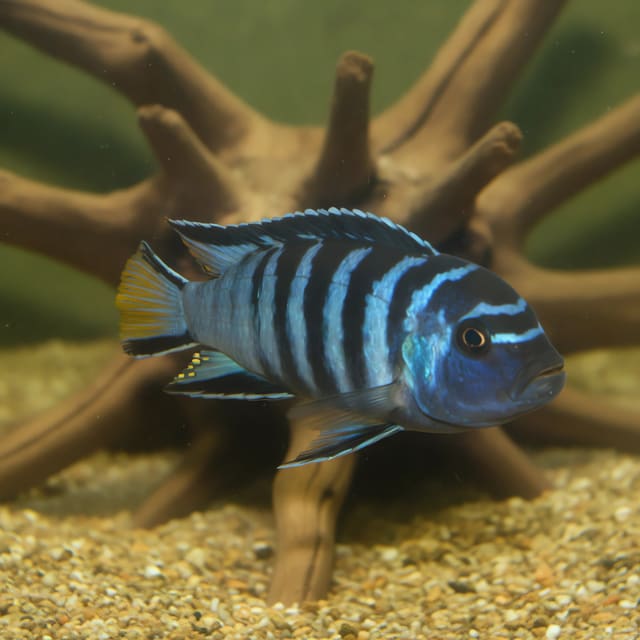
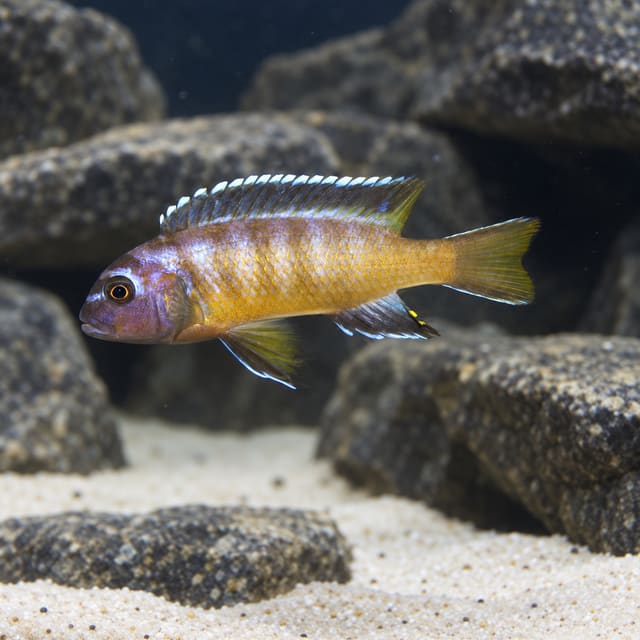
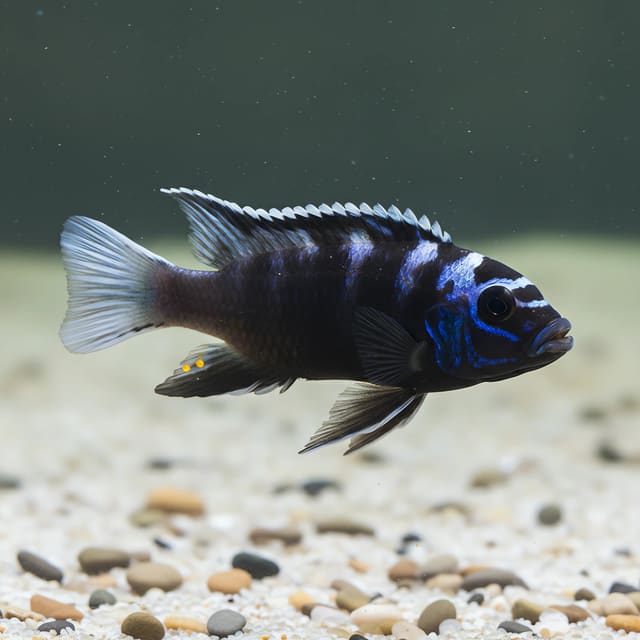
Kawanga Gold Zebra Mbuna (Pseudotropheus zebra) is an assertive Lake Malawi cichlid for advanced keepers, supplied as one unsexed fish per purchase in 4–5 cm, 5–6 cm or 7–9 cm dispatch sizes. Plan at least a 120 × 38 cm base, about 205 litres, rocks and caves, excellent filtration, 22–28°C, pH 7.6–8.6 and 10–25 dGH; use a vegetable-led diet and a carefully managed Malawi community.
Adult size is the maximum length this species reaches at full maturity (scientific sources). The livestock you receive will be younger and smaller — pick a size above for the actual shipping size. Product-photo provenance and any image-specific limitations are stated on the listing.
Pseudotropheus zebra
Save when buying multiple fish. Each quantity is one fish; sex and pair formation are not guaranteed unless the selected variant explicitly states them.
Kawanga Gold Zebra Mbuna (Pseudotropheus zebra) is an assertive Lake Malawi cichlid for advanced keepers, supplied as one unsexed fish per purchase in 4–5 cm, 5–6 cm or 7–9 cm dispatch sizes. Plan at least a 120 × 38 cm base, about 205 litres, rocks and caves, excellent filtration, 22–28°C, pH 7.6–8.6 and 10–25 dGH; use a vegetable-led diet and a carefully managed Malawi community.
Adult size is the maximum length this species reaches at full maturity (scientific sources). The livestock you receive will be younger and smaller — pick a size above for the actual shipping size. Product-photo provenance and any image-specific limitations are stated on the listing.

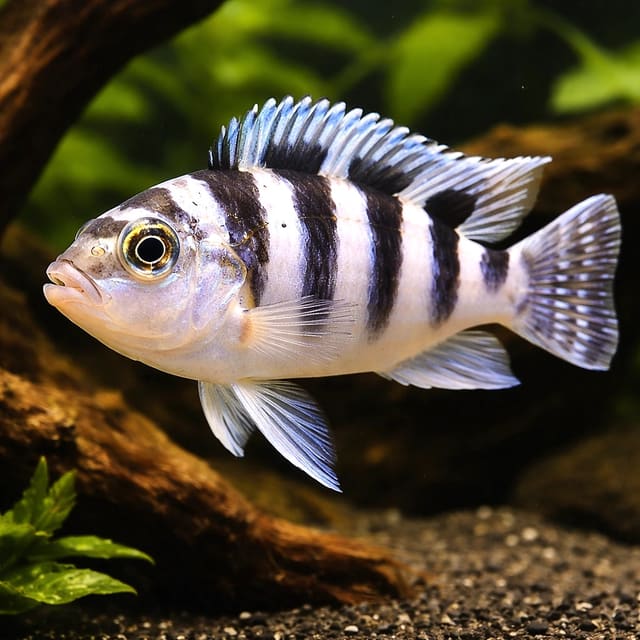
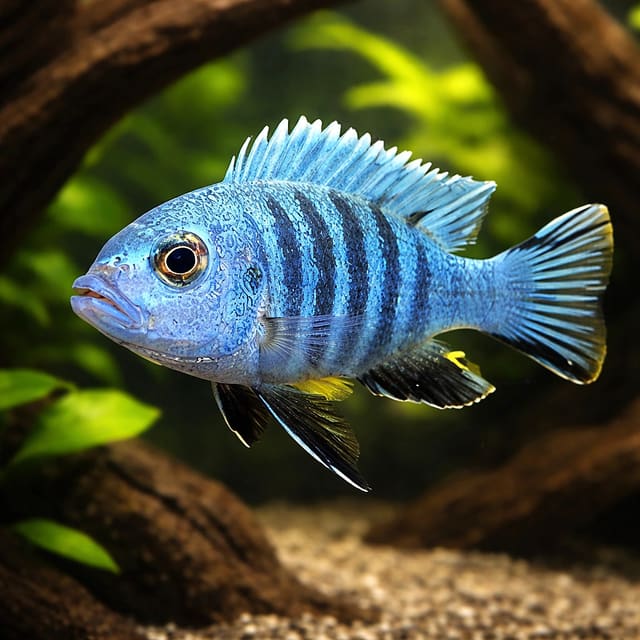
Cichlids are a family of roughly 1,800 accepted species, not one care type. Before buying, identify the exact species and source, then compare adult measurement, usable tank dimensions, social system, territory, tested water, diet and an exit plan. No family-wide minimum tank, water range or tank-mate list is safe.
Maintain these water conditions for optimal health and vibrant colors
Kawanga Gold Zebra Mbuna is the trade form offered under the long-used name Pseudotropheus zebra. FishBase treats that name as a synonym of the accepted Maylandia zebra. Both names refer to the same zebra mbuna species; the product title retains the familiar trade name, while the accepted name helps keep modern taxonomy clear.
One purchase supplies one live fish. Three dispatch sizes are offered: 4–5 cm, 5–6 cm and 7–9 cm. The size you select is the size supplied, not the adult size. The species aquarium profile reaches 15.2 cm standard length, while FishBase records 11.3 cm standard length. Using the larger figure for planning leaves room for mature growth and avoids treating a juvenile shop measurement as a finished size.
| Suits | Think again if |
|---|---|
| An advanced keeper planning a dedicated Lake Malawi rock community. | A general tropical community containing peaceful or soft-water fish. |
| A mature aquarium with a base of at least 120 × 38 cm and about 205 litres. | A small tank, sparse décor or a layout with too few separate territories. |
| Stable hard, alkaline water at 22–28°C, pH 7.6–8.6 and 10–25 dGH. | Neutral or acidic water that would be repeatedly adjusted to chase the range. |
| A keeper who can manage aggression, feeding and the full adult stocking plan. | A buyer expecting sex selection, a peaceful single centrepiece or an algae cleaner. |
Sex is guaranteed only when the selected option explicitly states male or female. This Kawanga Gold Zebra Mbuna listing has no sex-guaranteed option.
This is one of the more aggressive zebra mbuna. It is unsuitable for a general tropical aquarium and needs a deliberate Malawi plan rather than a casual mixture of attractive cichlids. Rock territories, the number and sex of fish, adult size, feeding behaviour and filter capacity all affect the result. Because this retail offer is unsexed, the husbandry ratio discussed later cannot be promised through a particular purchase.
Browse the African cichlid collection to compare specialist choices, but assess each animal independently. Similar origin does not make two products automatic companions. The taxonomy, Lake Malawi distribution and natural rocky habitat are summarised in the FishBase zebra mbuna account.
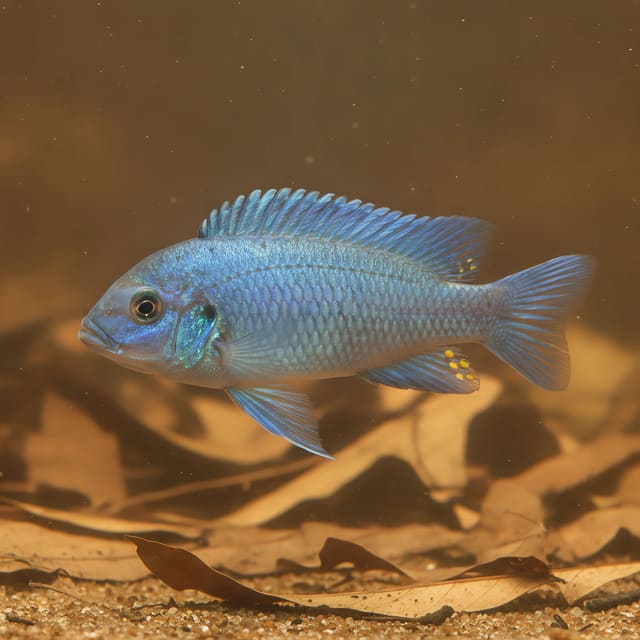
Gallery images have been digitally enhanced to improve image quality. Natural colour, pattern, size and maturity can vary between live animals.
A 120 × 38 cm base and approximately 205 litres are the species-profile starting point, not a guarantee that every Malawi combination will fit. A community with several territorial fish, multiple social groups or large Synodontis may need a longer and wider aquarium. Work from the adult livestock list backwards: mark territories, calculate biological load, decide where every fish can retreat and check that maintenance remains practical once the rockwork is installed.
The aquarium should be biologically mature before this mbuna arrives. The filter must already convert ammonia and nitrite, and water chemistry should be stable within the hard, alkaline range. If the system is new, use the first tropical tank guide to understand maturation and testing, but recognise that an assertive Malawi community is a demanding first livestock project.
Tropical Fish Co rates this fish advanced. The challenge is not a rare piece of equipment; it is coordinating aggression, sex uncertainty, rock territories, adult space, hard alkaline water, a vegetable-led diet and excellent filtration at the same time. A keeper also needs a contingency if one fish is persistently harassed. Moving a few rocks may reset territories, but a divider or second suitable aquarium can be necessary when aggression remains focused.
Wild zebra mbuna occupy rocky areas in Lake Malawi, from sediment-free shallows to deeper zones with more deposited material. They comb loose material from the biological growth on surfaces and also take plankton in open water. An aquarium cannot copy a lake, but that ecology points towards a rock-dominated layout, grazing surfaces, open sand and food built around vegetable matter rather than a rich animal-protein diet.
The species profile recommends a base of 120 × 38 cm and approximately 205 litres. Treat that volume as an approximate baseline linked to the stated footprint, then increase space when the full community, sex balance or territory plan demands it.
Floor length and front-to-back depth are valuable because they let separate rock piles create distinct zones. A tall narrow tank may hold the same litres but offers fewer boundaries and escape routes. Measure the unobstructed internal base, remember that thick backgrounds and large rock structures consume space, and leave enough open water for fish to turn and move without passing through another individual's cave mouth every time.
A typical Malawi layout uses substantial piles of rock with many caves and crevices. Place heavy rocks securely so digging cannot undermine them. Building directly on a stable protective base before adding sand is often safer than balancing heavy stone on a deep loose layer. Each structure should have more than one route around it; a single dead-end cave can become a trap when a dominant fish controls the entrance.
Use several separated rock masses rather than one small ornament that every fish must contest. Keep some open sand for feeding and movement. The species profile favours sand, and the fish may rearrange loose substrate, so rooted plants can be displaced. Hardy attached plants may survive, but the layout should not depend on delicate planting.
Excellent filtration and maintenance are essential because Rift Lake cichlids react poorly to deteriorating water. For an aquarium around 205 litres, the species profile illustrates four to five times turnover per hour, approximately 820–1,025 litres per hour. Manufacturer flow ratings fall once media, hoses and lift height are involved, so select and maintain equipment with real-world output in mind.
Turnover alone is not biological capacity. The filter needs adequate mature media and oxygenated flow, while the surface requires movement for gas exchange. Rockwork should not create stagnant debris pockets that cannot be reached with a siphon. Position intakes and outlets so waste moves towards filtration without producing a single relentless jet across every territory.
The broader OATA Malawi sheet recommends an oversized filter and strong aeration for heavily stocked communities. Apply that principle cautiously: a higher stocking density is sometimes used to distribute aggression, but it increases waste and oxygen demand. It never replaces a species-by-species plan, and it should not exceed the aquarium's biological or maintenance capacity.
The species aquarium profile for Maylandia zebra covers the core footprint, layout, filtration and behaviour guidance for this aquarium plan.
Keep the aquarium at 22–28°C, pH 7.6–8.6 and 10–25 dGH. These are the species aquarium profile values. FishBase records 22–28°C, pH 8.0 and 9–19 dH for the wild environment. OATA gives 23–27°C, pH 8.0–8.6 and 12–18 dGH as a wider Malawi-cichlid range. The ranges overlap, but they describe different scopes; the species profile is the working routine for this listing.
| Measure | Working target |
|---|---|
| Temperature | 22–28°C |
| pH | 7.6–8.6 |
| General hardness | 10–25 dGH |
| Ammonia | 0 mg/l |
| Nitrite | 0 mg/l |
Test tap water before choosing fish. Some UK supplies begin hard and alkaline, while others require a considered aquarium method to reach Lake Malawi conditions. Read the water chemistry guide for the role of pH, general hardness and carbonate hardness. Use the water matcher with measured values rather than assuming a postcode or clear-looking water gives the answer.
Choose a dependable point inside the range and keep it steady. Repeatedly adding products to move pH up and down creates instability and can leave the keeper treating a reading rather than fixing the water plan. When adjustment is necessary, use an aquarium-safe method whose effect on hardness and buffering is understood, prepare replacement water consistently and verify results with tests.
Temperature should also remain stable. Place the heater in moving water, use enough heating capacity for the aquarium and room, and check it with a separate thermometer. The profile estimates about 200–300 watts for a roughly 205-litre aquarium in a room near 20°C, but room temperature, lid, equipment and aquarium position all affect the actual requirement.
Ammonia and nitrite must be zero. The RSPCA explains that an established biological filter houses bacteria that convert toxic ammonia to nitrite and then to less harmful nitrate. This process needs time, oxygen and a steady habitat on the filter media. A crowded Malawi aquarium places a heavy demand on it, especially when feeding increases or a filter becomes blocked.
OATA strongly recommends a partial water change of 25% at least once each week for Malawi cichlids, alongside weekly testing. Treat conditioned, temperature-matched replacement water consistently. Siphon trapped debris from open sand and accessible spaces between rocks, but avoid destabilising the entire layout at once.
When fish breathe rapidly, hide more, lose appetite or show a sudden rise in aggression, test the water and inspect equipment first. If ammonia or nitrite appears, reduce the immediate waste load, make an appropriate conditioned water change and restore filtration. Look for excess food, lost flow, a dead organism or an overly rapid stocking increase. If pH or hardness shifts, compare the aquarium with the source water and repeat the test before adjusting.
The OATA Malawi cichlid care sheet supplies the UK-wide maintenance framework, while the RSPCA aquarium filtration advice explains why a mature biological filter is vital.
Zebra mbuna accept many foods, but vegetable matter should form the foundation. The species profile names Spirulina flakes, blanched spinach, nori and other green foods. An algae-based prepared food can serve as a practical staple when its pieces suit the fish's size. Rotate suitable items so the diet does not depend on one product or one nutrient profile.
Natural feeding includes combing loose material from biological growth on rocks as well as taking plankton. Aquarium grazing is useful enrichment, but it should not be treated as a complete ration. Bright lighting can encourage algae and the microorganisms within it on rock surfaces, yet the keeper still needs to provide measured food and maintain water quality.
High-protein food is not recommended as the staple for this species. The profile allows a couple of treats a week, such as live or frozen bloodworm or Artemia, while warning against excessive protein. Beefheart and other animal meat should be excluded because they interfere with the digestive system of these fish. This is a clear difference from feeding plans designed for predatory cichlids.
Overfeeding is another specific concern because the species is prone to obesity. A fish that rushes at food is not proof that another portion is needed. Offer an amount the group consumes promptly, watch whether submissive fish get access and remove persistent excess. OATA's broader Malawi advice uses small portions twice a day as a group routine; actual portions still depend on fish number, food density and what remains after each feed.
| Role | Practical choices |
|---|---|
| Staple | Spirulina or algae-based flakes and pellets appropriate to the fish's mouth. |
| Green variety | Blanched spinach, nori and other suitable vegetable foods. |
| Limited treat | Small live or frozen bloodworm or Artemia no more than a couple of times a week. |
| Exclude | Beefheart, other animal meat and routine high-protein feeding. |
| Control | Modest portions, observed access and prompt removal of uneaten food. |
Scatter food across more than one area so a dominant fish cannot guard the only feeding point. Use current and food type to place particles where different fish can reach them. Watch the least assertive individuals: a feeding method has failed if the dominant animal gains weight while another is continually excluded.
Rockwork complicates observation because food can fall into inaccessible crevices. Feed small amounts, pause, and add more only when the first portion is being eaten. Persistent food between rocks raises the waste load and can undermine the clean, oxygen-rich conditions this cichlid needs.
Observe the profile of each fish from both side and above. A gradual loss of condition, refusal to eat or stringy waste calls for water checks and experienced advice; it should not trigger indiscriminate high-protein feeding. Rapid weight gain and a thick body can point to excess energy. Adjust portion and frequency cautiously, keeping the vegetable basis intact.
The system should already be mature, heated and matched to the planned hard alkaline chemistry. Begin a continuous unboxing video while the parcel is sealed and continue through opening with the fish still in the sealed bag; this is required for any Live Arrival Guarantee claim. After recording the fish's condition, float the sealed bag for 20–30 minutes to equalise temperature. Transfer the fish without pouring transport water into the aquarium.
Observe from a distance after release. A new fish needs secure rock cover, but focused pursuit by an established dominant mbuna can become dangerous. Have a divider, isolation route or second suitable aquarium ready before introduction. The usual Malawi strategy of rearranging rockwork can interrupt established territories, but it is not a promise that an incompatible combination will settle.
Watch swimming, breathing, colour, appetite, body condition and use of shelter. The OATA sheet recommends attention to darker or paler colour, faster or slower gill movement, unusual hiding, erratic swimming, damaged fins, white spots, fluffy growths and reduced feeding. These observations point to a need for water tests and closer assessment; they do not identify a disease by themselves.
Aggression needs its own record. Note who initiates a chase, how long it lasts, whether the target can break sight and whether it still reaches food. Short territorial displays and relentless confinement are not equivalent. A fish held in one corner, repeatedly struck or prevented from feeding needs intervention rather than more waiting.
Temperature, pH, ammonia, nitrite and filter flow can be checked immediately when behaviour changes. Correct an environmental failure first and seek experienced aquatic-veterinary or retailer advice when signs persist or the diagnosis is unclear. Treatments should match an identified problem and be used according to their instructions, not added simply because colour or hiding changed.
The zebra mbuna is described as one of the more aggressive mbuna and unsuitable for a general tropical aquarium. That is more useful than a vague semi-aggressive label. It can pursue rivals, defend rock territory and overwhelm gentle fish even when temperature and pH overlap. Compatibility therefore begins with a Lake Malawi community designed around robust behaviour.
The species profile recommends three females for every male and no more than one male in an aquarium below 200 litres. This spreads male attention and reduces direct male rivalry. It is a husbandry strategy, not a promise that aggression disappears. The fish sold here is unsexed, so a purchase cannot guarantee a one-male-to-three-female group. Juveniles may also lack reliable mature differences.
That uncertainty is a central buying decision. An experienced keeper may grow a group and later adjust it as sex and hierarchy become clearer, but this requires spare capacity and a humane plan for incompatible individuals. A buyer without a way to separate or rehome fish should not assume that ordering four creates the recommended ratio.
Provide many caves and crevices, plus solid barriers that break sight across the aquarium. A target should be able to leave one territory without entering another dead end. Rearranging décor before introducing a new group can reduce the advantage of established residents because territories must be formed again. Secure every structure after a change; mbuna dig and can undermine poorly seated rocks.
OATA describes a wider Malawi-community method in which groups of at least 15 and slight overstocking spread aggression. That is broad community advice, not an automatic number for this species or every aquarium. It increases filtration, oxygen and maintenance demands. The species profile's sex ratio, adult size and single-male caution still matter, and the final plan must fit the actual footprint.
Normal display can include flaring, short chases and defence of a cave. A plan is failing when one fish cannot leave a corner, repeatedly loses scales or fins, stops feeding, darkens or pales persistently, or faces uninterrupted pursuit. Adding more random fish is not a safe emergency response. Separate the victim or aggressor using prepared equipment, review the sex balance and territory map, and decide whether the combination is sustainable.
| Observation | Response |
|---|---|
| Brief chase followed by normal feeding | Continue watching and confirm several escape routes remain open. |
| One cave causes repeated confrontation | Restructure rockwork to create more distinct territories. |
| One fish is trapped, injured or excluded from food | Separate promptly and reassess the livestock plan. |
| Two mature males dominate a sub-200-litre tank | Do not rely on décor alone; revise the male and space plan. |
| A new introduction attracts all aggression | Use the prepared divider or alternative aquarium rather than waiting for injury. |
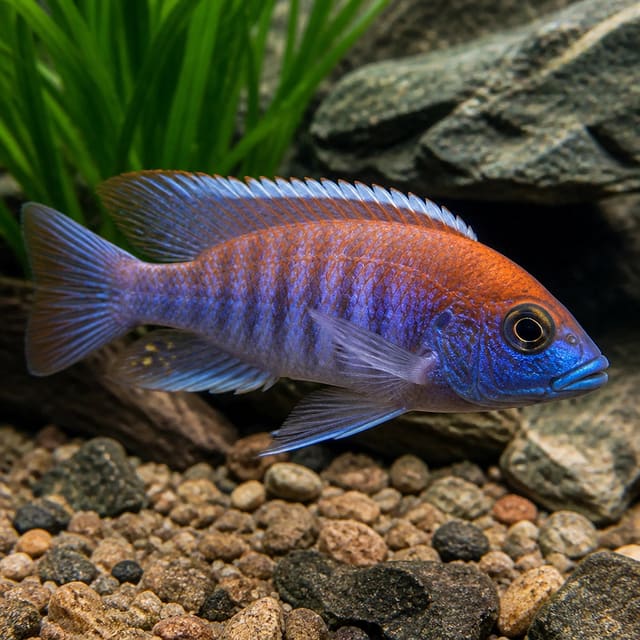
This fish belongs in a carefully planned Lake Malawi aquarium. The species profile says it can work in many Malawi communities but specifically excludes more peaceful Malawi cichlids, including Aulonocara peacocks. OATA limits Malawi cichlids broadly to other Malawi cichlids or some Synodontis species that also occur in the lake. Those are categories for further assessment, not a list of guaranteed companions.
Compare any candidate's adult size, aggression level, diet, social structure, water range and preferred zone. A predatory hap, more peaceful peacock, highly similar male colour pattern or species needing much more animal protein can each create a different conflict. One shared lake label does not erase those differences.
Kawanga Gold Zebra Mbuna needs vegetable matter as the diet foundation. A community that requires frequent rich animal-protein feeding makes it harder to meet that need. Feed placement also matters: dominant fish can intercept every portion while less assertive residents lose condition. Choose companions and a stocking density that let all fish eat the correct food without routine overfeeding.
Use 15.2 cm SL as the conservative planning figure for this species. Add the mature length and body mass of every other fish, not the dispatch measurements at purchase. Rockwork reduces open volume, and territories consume more practical space than a simple litre calculation suggests. A community that technically fits by volume can still fail because too many adults need the same caves or swimming lanes.
A potentially suitable plan uses robust Lake Malawi mbuna with overlapping water and diet needs, distinct territories and an experienced aggression strategy. Some Lake Malawi Synodontis may be considered only after checking the exact catfish's adult size, group, diet and cave needs. Use caution whenever sex cannot be confirmed or similar-looking territorial males may compete. Avoid general tropical community fish, soft-water species and more peaceful Malawi cichlids, including Aulonocara peacocks.
The species aquarium profile gives 15.2 cm standard length, while FishBase records 11.3 cm SL. Plan with the larger figure. Fish are supplied in 4–5 cm, 5–6 cm or 7–9 cm dispatch sizes, which are juvenile or subadult sale measurements rather than adult size.
Use a base of at least 120 × 38 cm and approximately 205 litres for the species. A mixed Malawi community, uncertain sex ratio or several territorial adults may require a larger footprint. Rockwork must still leave safe swimming lanes and accessible maintenance space.
The species profile uses one male with at least three females and no more than one male below 200 litres. This retail offer is unsexed, so that ratio cannot be guaranteed by ordering a particular number. Keepers need enough space and a separation or rehoming plan as sex and hierarchy become clear.
Tropical Fish Co rates it advanced. It needs hard alkaline water, a large mature rock aquarium, excellent filtration, a vegetable-led diet and active aggression management. It is a poor choice for an unprepared first community or anyone without a safe contingency for bullied fish.
Make vegetable matter the basis: use Spirulina or algae-based prepared food, blanched spinach, nori and other suitable greens. Live or frozen bloodworm or Artemia can be limited to a couple of treats weekly. Avoid beefheart, other animal meat, routine high-protein feeding and excess portions.
Keep the aquarium at 22–28°C, pH 7.6–8.6 and 10–25 dGH. Choose a stable point within all three species aquarium ranges and prepare replacement water consistently. Ammonia and nitrite must remain at zero.
It is one of the more aggressive mbuna and may chase, strike or exclude rivals from territory and food. It is unsuitable for a general tropical community. Rock barriers, a considered sex and stocking plan, close observation and a ready separation route are essential.
Consider robust Lake Malawi mbuna only after matching adult size, aggression, diet and territory needs. Avoid more peaceful Malawi cichlids, including Aulonocara peacocks. Some Lake Malawi Synodontis may be possible in a suitably large specialist set-up after the exact catfish's needs are checked.
Tropical Fish Co hand-bags live fish in pure oxygen, uses an insulated poly box and adds a heat pack when weather calls for it, then sends the parcel with a tracked licensed live-animal courier. Be present to receive it. Start one continuous unboxing video with the parcel sealed and keep filming through opening while the fish remains in the sealed bag; this is required for any Live Arrival Guarantee claim. Then float the sealed bag for 20–30 minutes, transfer the fish without adding transport water to the aquarium, and contact the shop the same day with the order number and video if there is a problem. Read the delivery and Live Arrival Guarantee policy before the delivery date.
FishBase supports the accepted Maylandia zebra name, the Pseudotropheus zebra synonym, Lake Malawi distribution, wild environment and recorded length. Seriously Fish provides the species aquarium footprint, water range, diet, aggression, sex strategy and rock layout. OATA adds UK Malawi-community maintenance and stocking context, the RSPCA explains biological filtration, and Tropical Fish Co's policy governs packing, courier, arrival and claim steps.
Trade name, accepted taxon, dispatch size and adult standard length remain separate so each answers the correct buyer question.
No reviews for this item yet. Bought one? Honest reviews only, good or bad.
What customers say about ordering from us
Easy website plenty of info on fish your buying great to pick a time slot
TRACEY DURRANT · 7 Oct 2026
Got some lovely fish thank you
Kevin Mackie · 7 Oct 2026
Reviews of our shop, collected by Judge.me, an independent third-party review collector. Newest first.