Advanced
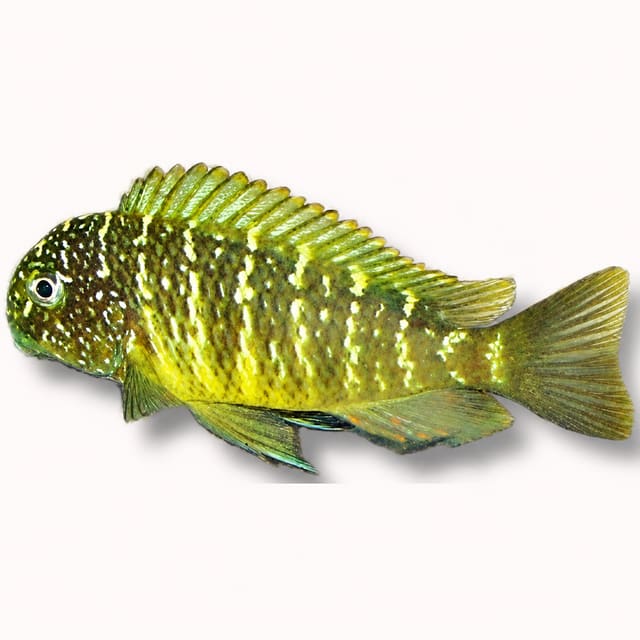
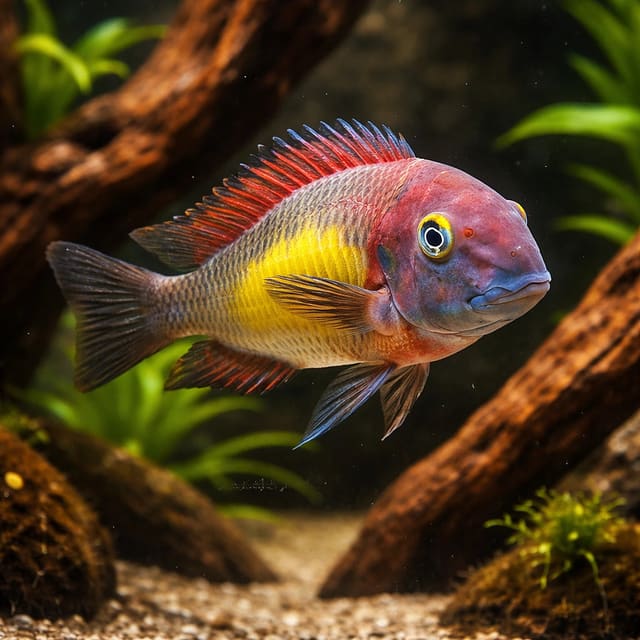
Red Rainbow Tropheus (Tropheus moorii) – 3.5–4cm & 8cm+ Sizes
23–27°C · pH 8–9.5
£78.99

Add a rare Tanganyikan showpiece to your tank with the Ikola Blunthead Cichlid. Bold, active and ideal for experienced keepers. Buy online today.
Adult size is the maximum length this species reaches at full maturity (scientific sources). The livestock you receive will be younger and smaller — pick a size above for the actual shipping size. Product-photo provenance and any image-specific limitations are stated on the listing.
Tropheus moorii
Save when buying multiple fish. Each quantity is one fish; sex and pair formation are not guaranteed unless the selected variant explicitly states them.
Confirm your email, then we’ll send an availability message for this exact item if it returns within 180 days.
This request is only for this product—no newsletter or other promotions. A mail-provider retry may very rarely duplicate the same availability message. Unconfirmed addresses are removed after 48 hours. See our privacy policy.
Add a rare Tanganyikan showpiece to your tank with the Ikola Blunthead Cichlid. Bold, active and ideal for experienced keepers. Buy online today.
Adult size is the maximum length this species reaches at full maturity (scientific sources). The livestock you receive will be younger and smaller — pick a size above for the actual shipping size. Product-photo provenance and any image-specific limitations are stated on the listing.
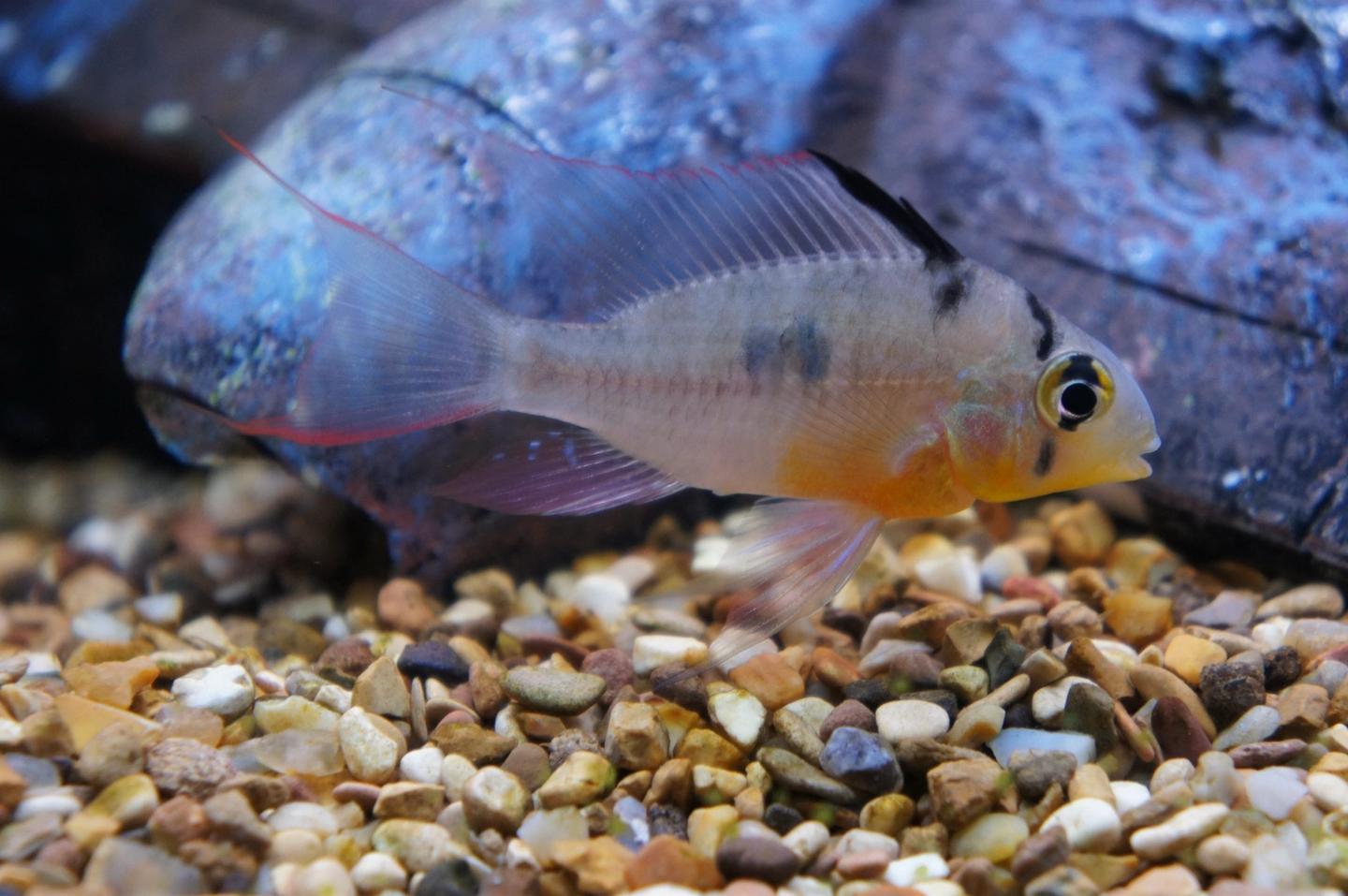
Cichlids are a family of roughly 1,800 accepted species, not one care type. Before buying, identify the exact species and source, then compare adult measurement, usable tank dimensions, social system, territory, tested water, diet and an exit plan. No family-wide minimum tank, water range or tank-mate list is safe.
Maintain these water conditions for optimal health and vibrant colors
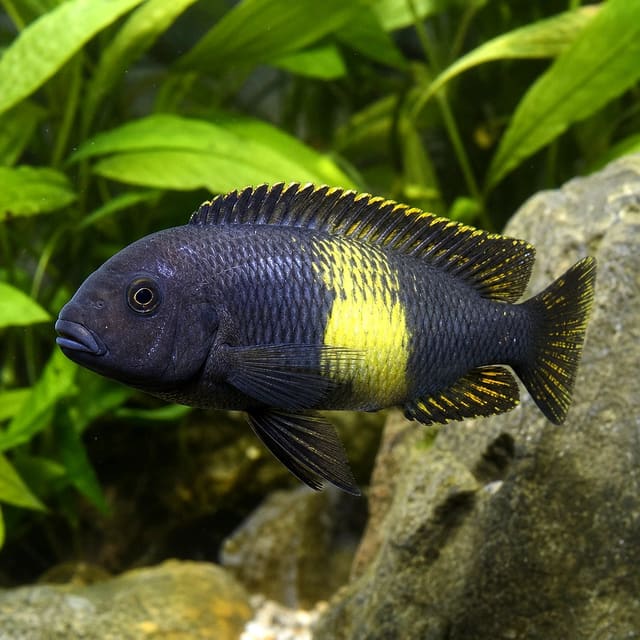
The Ikola Blunthead Cichlid, better known to many Tanganyika keepers as Tropheus moorii “Ikola”, is one of the most striking African cichlids you can add to a large hardwater aquarium. Its bold yellow band set against a dark body gives it instant impact, and its active grazing behaviour makes it fascinating to watch throughout the day. For aquarists searching for tropical fish for sale UK, this is a specialist choice rather than a casual impulse buy: it reaches around 14 cm, can live up to 10 years, and needs a carefully planned social group, stable alkaline water, and a strongly filtered tank. See our detailed photos showing the clean body shape, blunt forehead, and intense contrast that make this fish so popular among collectors of Lake Tanganyika cichlid UK species.
If you have been searching for tropical fish for sale near me, tropical fish shop near me, or want to buy live fish online uk, the Ikola is a standout option for experienced keepers who want something more characterful than standard community tropical fish uk choices. It is not a fish for tiny starter tanks, but in the right setup it delivers constant movement, social interaction, and a vivid display that few other cichlids can match. For hobbyists browsing lake tanganyika fish for sale, lake tanganyika cichlids for sale, or even comparing tropheus ikola for sale with other African cichlid lines, this species offers a rewarding long-term project with real personality.
The Ikola Blunthead Cichlid is a geographic colour form of Tropheus moorii, a famous rock-dwelling cichlid from Lake Tanganyika. In the aquarium hobby, Tropheus are prized for their social hierarchy, algae-grazing behaviour, and locality-based colour variants. The Ikola form is especially well known for its broad yellow mid-body band and is often chosen by aquarists who want an authentic Tanganyikan display rather than a mixed African setup.
The Ikola Blunthead Cichlid comes from East Africa, specifically the rocky shorelines of Lake Tanganyika, one of the oldest and deepest freshwater lakes in the world. In the wild, these fish inhabit wave-washed rock zones where oxygen levels are high and surfaces are coated with algae and biofilm. That natural environment explains much of their aquarium care: they are built for constant grazing, frequent movement, and life among other assertive cichlids rather than soft-water community fish.
When aquarists search for lake tanganyika fish for sale or tanganyika cichlids for sale uk, they are often looking for species with very specific water chemistry needs. This is not the same as keeping tetras, rasboras, or fish from a planted Amazon-style setup. The ikola blunthead cichlid Tanganyika setup should reflect hard, alkaline water, rocky shelter, and open swimming lanes. In nature, these fish spend much of the day scraping algae and microorganisms from stone surfaces, and that is why the ikola blunthead cichlid diet must stay heavily herbivorous in captivity.
Lake Tanganyika is also a useful reminder that not all African cichlids should be mixed. Hobbyists comparing lake malawi cichlids for sale uk with Tanganyikan species often assume they can be housed together, but their behaviour and dietary needs differ enough that this usually creates problems. The Ikola is best kept with its own kind or carefully chosen Tanganyikan rock-dwellers, not random mixed cichlid assortments.
Because this fish comes from an ancient, stable tropical fish tank ecosystem in the wild, it responds poorly to sudden swings in chemistry. If you are wondering why is my tropical fish tank cloudy or why does my tropical fish tank smell, those are warning signs that your system is not yet stable enough for a species like this. Keepers looking at tropical fish pond uk or even tropical fish pond royal oak style search terms should note that this is strictly an indoor heated aquarium species, not a pond fish.
Mimicking the natural rocky shoreline of Lake Tanganyika improves confidence, colour, and grazing behaviour. Use piles of stable rockwork with multiple sight breaks, and leave enough open space for the group to move as a unit.
Getting the setup right is the difference between a thriving Tropheus colony and a tank full of stress. This species has stricter needs than many fish sold under broad searches like tropical fish for beginners. If you are planning an ikola blunthead cichlid care guide level setup, focus on tank size, water movement, oxygenation, and social structure before thinking about colour alone.
The ikola blunthead cichlid minimum tank size is 250 litres, but that should be treated as a practical floor, not an ideal target. A long tank with strong footprint is far better than a tall narrow aquarium. For a proper group of 12 or more, many keepers prefer a 100cm tropical fish tank at minimum, with 120 cm or more strongly recommended. A 90cm tropical fish tank may work only for juveniles or temporary grow-out use. A 80cm tropical fish tank, 60cm tropical fish tank, or 50cm tropical fish tank is simply too small for long-term care, despite what some generic searches like what size tank for tropical fish or what size tropical fish tank may suggest.
The correct ikola blunthead cichlid tank size depends on group size and aggression management. These fish spread aggression across the colony, so keeping too few often causes one individual to be singled out. This is one reason the species is better described as ikola blunthead cichlid for large tank than as a fish for mixed community layouts.
The ideal ikola blunthead cichlid temperature is 24-27°C. If you are asking what should tropical fish tank temperature be, what temp is tropical fish tank, or what temperature should a tropical fish tank be kept at, the answer always depends on species. For this fish, the tropical fish tank ideal temperature sits around 25-26°C, with stable heat more important than chasing an exact number. The tropical fish tank temperature range should not swing sharply between day and night.
For UK keepers checking tropical fish tank temperature uk celsius, aim for 25°C as a reliable midpoint. That means using a dependable tropical fish tank heater, checking the tropical fish tank heater setting, and placing the unit where flow distributes heat evenly. Good tropical fish tank heater position is usually near the filter outflow. In practical terms, the temperature of tropical fish tank, tropical fish tank water temperature, and tropical fish tank heater temperature should all be monitored with a separate thermometer, not just the dial on the heater. If the tropical fish tank temperature too hot, Tropheus become stressed and oxygen demand rises.
pH should stay between 7.8 and 9.0, and hardness between 10 and 20 dGH. If you are researching what ph for tropical fish tank, what should tropical fish tank ph be, or what should my tropical fish tank levels be, this species needs significantly harder, more alkaline water than many common tropicals. The ikola blunthead cichlid hard water care approach is essential, not optional.
A robust tropical fish tank filter and heater combination is important because Tropheus are active, messy grazers. Use oversized biological filtration and strong circulation. A canister filter or high-capacity internal filter works well, especially when paired with surface agitation. If you are planning a tropical fish tank complete setup or asking what do you need for a tropical fish tank, filtration should be one of the biggest budget priorities.
Stable water quality also answers common maintenance questions like how to keep tropical fish tank water clear, how to keep tropical fish tank clean, and how to maintain tropical fish tank. This species does best with weekly water changes of 25-40%, regular testing, and consistent feeding. Use a quality tropical fish tank water treatment whenever adding new tap water.
Fine sand or smooth gravel works best, but rocks matter more than substrate. Build secure piles with caves and line-of-sight breaks. If you are wondering what plants for tropical fish tank, choose hardy options such as Anubias or Java fern attached to rock, though many keepers run these tanks sparsely planted. The ikola blunthead cichlid for planted aquarium idea is possible only with tough species and realistic expectations, because these cichlids may rasp surfaces and rearrange decor.
Moderate lighting is enough. A strong 90cm tropical fish tank light can help show the yellow band clearly, but avoid excessive intensity if it fuels tropical fish tank green algae or tropical fish tank hair algae. A tropical fish tank blue light can be used briefly for evening viewing, but full-spectrum daylight gives more natural colour. Algae on rock is not always a problem here; in fact, controlled growth supports natural grazing behaviour.
Always cycle the tank for 4-6 weeks before adding Tropheus. If you are learning tropical fish tank how to set up or following a tropical fish tank beginner's guide, remember that advanced cichlids should never be the first fish added to an untested system.
The ikola blunthead cichlid diet is one of the most important parts of successful care. In the wild, these fish graze algae, diatoms, and tiny organisms from rock surfaces all day. In captivity, that means they need a high-fibre, plant-based menu. This is not a species to stuff with bloodworm, beefheart, or rich meaty pellets. Doing so often leads to digestive stress and the dreaded bloat that Tropheus keepers work hard to avoid.
Use spirulina flakes, high-quality herbivore cichlid pellets, algae wafers, and vegetable-based granules as the core diet. Blanched spinach, courgette, shelled peas, and romaine lettuce can be offered in small amounts for variety. If you are asking what tropical aquarium fish eat snails, this species is not a snail hunter; it is a grazer. Likewise, it is not one of the tropical fish tank bottom feeders or tropical fish tank algae eaters sold for cleanup duties, although it will naturally browse algae from hard surfaces.
Occasional small portions of daphnia or brine shrimp can be used sparingly, but only as a supplement and not a staple. The safest route is still predominantly vegetable matter. Keepers trying to solve tropical fish tank algae, tropical fish tank brown algae, or tropical fish tank black hair algae should not rely on Tropheus as a cleaning crew. Good maintenance and balanced lighting are the answer, not overstocking herbivores.
Feed two to three small meals per day rather than one large feed. Portion control matters. Every bite should be eaten quickly, with no heavy leftovers trapped between rocks. This also helps anyone learning how to clean tropical fish tank or how to clean small tropical fish tank, because less waste means fewer nutrient spikes.
| Time | Food | Amount |
|---|---|---|
| Morning | Spirulina flakes or herbivore pellets | Small portion eaten in 30-60 seconds |
| Evening | Algae wafers or vegetable-based granules | Small portion, no leftovers |
A useful comparison species if you want another Tropheus colour form with similar herbivorous feeding needs and group behaviour.
Another Tropheus option for keepers researching locality variants and species-specific herbivore cichlid care.
Overfeeding causes ammonia spikes, poor digestion, and serious water quality issues. Rich meaty foods are a common cause of Tropheus health problems, especially in newly imported or stressed fish.
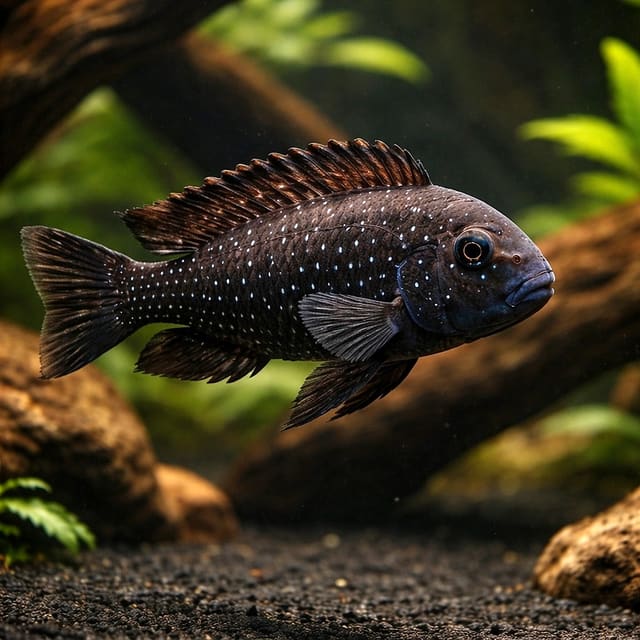
The Ikola Blunthead Cichlid Fish is famous for one thing above all: contrast. Adults develop a deep brown to near-black body crossed by a vivid yellow band through the midsection. The head has the rounded, blunt profile that gives the fish its common name, while the body is compact, muscular, and built for constant movement around rockwork. Adult size is usually around 12-14 cm, with males often appearing slightly bulkier and more assertive in posture than females.
Colour quality depends on diet, hierarchy, water stability, and lighting. Our photos show the intense banding best when fish are kept in a mature rocky setup with dark background and balanced spectrum lighting. If you are wondering why is my tropical fish tank going green, too much light and excess nutrients can dull the display by covering rocks and glass with nuisance algae, even though some natural algae film is useful for grazing.
The ikola blunthead cichlid tank size also affects appearance. In cramped tanks, subdominant fish often lose colour and show stress bars. In larger colonies, colours are usually richer because aggression is spread out. A properly lit 100cm tropical fish tank or larger display shows this species far better than a smaller setup. While a 90cm tropical fish tank light can highlight the yellow band nicely, the real secret is stable water and correct diet.
Among Tropheus keepers, the Ikola is often compared with Kiriza Yellow Cichlid - Tropheus Moorii and Orange I Blunthead Cichlid - Tropheus. If you are searching ikola blunthead cichlid or alternative species, these are natural alternatives, but each locality has its own visual appeal and collector following.
Compatibility is where many new keepers go wrong. The ikola blunthead cichlid community tank idea sounds attractive, but in practice this species is best in a species group or a carefully managed Tanganyikan rock-dweller setup. If you are searching for ikola blunthead cichlid compatible fish, ikola blunthead cichlid tank mates, or the best tank mates for ikola blunthead cichlid, think in terms of robust, fast, similarly adapted fish rather than peaceful mixed tropicals.
The safest option is a colony of its own kind. Many experienced keepers buy 12-20 juveniles and allow the hierarchy to settle. Compatible additions may include selected Tanganyikan species with similar water needs and enough confidence to handle a busy rocky tank. For keepers wanting related options, compare the Ikola with Kiriza Yellow Cichlid - Tropheus Moorii or Orange I Blunthead Cichlid - Tropheus. If you are building a broader African display, proceed carefully and avoid assuming all cichlids mix well.
This is not an ikola blunthead cichlid for community tank in the usual sense. Avoid slow, delicate fish, long-finned species, and most soft-water tropicals. Do not mix with random community tropical fish uk selections, and do not combine with Malawi species just because both are African cichlids. Searches like tetras for sale uk, tetra fish for sale uk, buy siamese fighting fish online uk, or home aquarium sharks uk reflect very different aquarium styles. Bettas, tetras, and “aquarium sharks” are not suitable tropical fish tank mates for Tropheus.
Questions like what tropical fish clean the tank, which tropical fish clean the tank, or what tropical fish can live in a small tank do not really apply here. This is a specialist setup, not a cleanup crew tank. Snails may be harassed, shrimp are usually unsafe, and most classic algae eaters prefer softer water. If you need help with maintenance, focus on filtration and husbandry rather than adding mismatched species.
| Species | Compatible? | Notes |
|---|---|---|
| Kiriza Yellow Cichlid - Tropheus Moorii | ⚠️ Caution | Similar requirements, but mixing Tropheus variants can complicate aggression and line purity. |
| Orange I Blunthead Cichlid - Tropheus | ⚠️ Caution | Possible in expert setups, but best kept as single-variant colonies. |
| Yellow Elongatus Cichlid - Chindongo Elongatus | ❌ Avoid | Different lake, different behaviour, and not recommended with Tropheus. |
| Aulonocara Sp Neon Red Calico Peacock | ❌ Avoid | Peacock cichlids have different diet and temperament balance. |
| Rubin Red Peacock Cichlid - Aulonocara | ❌ Avoid | Malawi cichlid with different feeding and social needs. |
| Aulonocara kandeense | ❌ Avoid | Not an appropriate Tanganyika companion. |
If you are using a tropical fish tank mates chart, remember that charts are only a starting point. Tropheus compatibility depends on group size, layout, and feeding strategy as much as species name. Weekly care also matters: learn how to change tropical fish tank water, how to test tropical fish tank water, and what chemicals do i need for a tropical fish tank before adding expensive cichlids. In most cases, dechlorinator, mineral support where needed, and accurate test kits are more useful than a shelf full of bottled fixes.
Always quarantine new arrivals for 2-4 weeks before adding them to an established Tropheus colony. This reduces the risk of introducing parasites and gives you time to confirm that each fish is feeding well on a herbivorous diet.
Ikola blunthead cichlid breeding is possible in captivity, but it is not beginner-level. This species is a maternal mouthbrooder, and success depends on stable social structure, excellent water quality, and careful conditioning. If you are looking for an ikola blunthead cichlid breeding pair, note that Tropheus are usually best raised in groups rather than purchased as isolated pairs. Letting a colony mature naturally gives the best chance of compatible adults.
Use a large mature tank with hard alkaline water and plenty of rockwork. If you are asking what tank do you need for tropical fish or what size tank for tropical fish, for breeding Tropheus think bigger, not smaller. Strong filtration, frequent water changes, and a calm but stable hierarchy are all important. This is one reason the species is not ideal for people asking what is tropical fish tank or just starting out.
The female lays eggs and collects them in her mouth after fertilisation. If you spot tropical fish tank eggs scattered around the tank, they are unlikely to belong to Tropheus because the eggs are usually taken up quickly. Hobbyists sometimes search for yellow eggs in tropical fish tank, but with this species the key sign is a holding female with a full throat area and reduced feeding response.
During incubation, the female may hide more and eat little or nothing. Stress can cause her to spit or swallow the brood, so avoid unnecessary chasing or netting. The fry are released as fully formed miniature fish and can take finely crushed spirulina foods almost immediately.
Fry should be raised in clean, stable water with small frequent feeds. Keep an eye on aggression from adults if the fry remain in the main tank. Anyone checking what should tropical fish tank levels be or what should my tropical fish tank levels be should understand that consistency is critical during breeding. Sudden shifts in pH, temperature, or hardness can interrupt the process.
Experienced breeders often condition a large colony on a strict spirulina-rich diet and perform regular moderate water changes rather than dramatic ones. This keeps the group stable and encourages natural courtship without triggering panic or digestive upset.
Choosing between Tropheus variants and other African cichlids depends on what kind of aquarium you want to build. If you want a true Tanganyika rock display with active grazing behaviour, the Ikola is an excellent choice. If you want a more mixed colour showcase, other cichlids may be easier. This matters for keepers comparing African cichlid UK options while searching the best place to buy tropical fish uk or the best place to buy tropical fish online.
| Feature | Ikola Blunthead Cichlid | Kiriza Yellow Cichlid |
|---|---|---|
| Max Size | 14 cm | 13-14 cm |
| Care Level | Moderate to advanced | Moderate to advanced |
| Temperature | 24-27°C | 24-27°C |
| Price | £35.80 | Varies |
| Best For | Bold yellow-band Tanganyika colony | Collectors wanting a different Tropheus locality |
| Feature | Ikola Blunthead Cichlid | Rubin Red Peacock Cichlid |
|---|---|---|
| Water Type | Hard alkaline Tanganyika | Hard alkaline Malawi |
| Diet | Herbivore | Omnivore/insectivore leaning |
| Social Setup | Large group | Harem or mixed Malawi setup |
| Temperament | Aggressive social hierarchy | Assertive but different style |
| Best For | Dedicated Tropheus keeper | General Malawi display |
Choose the Ikola if you want a specialist colony fish with strong locality identity and active group behaviour. Choose Kiriza Yellow Cichlid - Tropheus Moorii if you want a similar care profile with a different visual pattern. Choose Rubin Red Peacock Cichlid - Aulonocara or Aulonocara Sp Neon Red Calico Peacock only if you are building a Malawi-style tank instead.
The best prevention strategy for this species is consistency. A healthy Ikola Blunthead Cichlid is alert, constantly grazing or interacting with the group, holding strong colour, and breathing steadily. Clamped fins, hiding, stringy waste, colour loss, or refusal to feed are all warning signs that something is wrong.
The most feared problem in Tropheus is digestive trouble often referred to as bloat. It is usually linked to stress, poor water quality, or the wrong diet. This is why the ikola blunthead cichlid water hardness, ikola blunthead cichlid ideal temperature, and herbivorous feeding plan all matter so much. Other issues include skin parasites, bacterial infections after fighting, and stress from overcrowding without enough sight breaks.
If you are troubleshooting tropical fish tank diseases, do not medicate blindly. First check water quality, observe feeding, and isolate affected fish if needed. Learn how to test tropical fish tank water properly, because ammonia or nitrite problems can mimic disease symptoms. Many keepers asking what chemicals do you need for a tropical fish tank actually need fewer chemicals and better husbandry.
A tropical fish quarantine tank is strongly recommended for all new cichlids. Keep new arrivals in a separate heated, filtered tank for 2-4 weeks, monitor waste, appetite, and respiration, and only then move them into the main display. This is especially important with imported African cichlids.
Never use rich high-protein foods as a quick conditioning shortcut with Tropheus. Digestive collapse can happen fast, and stressed fish often stop feeding before obvious swelling appears.
The Ikola is active, social, and territorial all at once. It is not a schooling fish in the classic tetra sense, but it does rely on group structure. The ikola blunthead cichlid school size is best thought of as a colony size, with 12+ fish helping to distribute aggression. In too small a group, dominant individuals often focus on one weaker fish repeatedly.
You will usually see them grazing rock surfaces, circling the tank in loose formation, and engaging in short displays or chases. These behaviours are normal when the setup is right. A bare, under-decorated tank often makes them more aggressive because there are no visual barriers. This is another reason the ikola blunthead cichlid tanganyika setup should include layered rockwork.
Some aquarists ask whether the ikola blunthead cichlid for beginners label is fair. In truth, it is only suitable for beginners who are prepared to research deeply and set up the tank around the fish rather than the other way around. It is a far better choice for a dedicated cichlid keeper than for someone moving up from a small tropical fish tank with heater or a tropical fish tank starter kit with heater.
When you order a specialist fish like the Ikola, quality matters more than novelty. This is not the same as looking for free tropical fish or picking up whatever is available at a general aquarium fish shop near me for sale. Tropheus need to arrive in good body condition, already feeding on the correct diet, and well prepared for life in UK aquariums.
Our Ikola Blunthead Cichlids are selected for strong body shape, clear band definition, and active grazing behaviour. Before dispatch, they are observed for feeding response and general health, and they are handled with the needs of hardwater cichlids in mind. For customers searching tropical fish for sale online, buy tropical fish UK, buy live fish online uk, or aquarium fish shop near me home delivery, careful packing is essential. Fish are shipped in insulated packaging, with heat packs in cold weather and oxygenated bags to reduce travel stress.
This species also benefits from informed aftercare. If you have been comparing tropical fish for sale UK with cold water fish for sale, cold water fish for sale uk, or buy cold water fish online uk, remember that Tropheus are a completely different category. They need heated, mineral-rich, strongly filtered aquariums and should never be treated like general mixed tropicals or coldwater fish. We recommend planning the tank before ordering and reading the care notes carefully so your fish settle quickly.
For aquarists searching tanganyika cichlids for sale near me, lake tanganyika cichlids for sale, or tropical fish shop near me, ordering online can actually be the better route when the fish are packed properly and sourced with species-specific care in mind. Order your Ikola Blunthead Cichlid today with confidence if you are ready to build a true Tanganyika colony tank.
If you are building a Tanganyika or African cichlid setup, you may also want to compare Kiriza Yellow Cichlid - Tropheus Moorii for another classic Tropheus look, or Orange I Blunthead Cichlid - Tropheus if you enjoy locality variants. For a different cichlid style entirely, Thorichthys Maculipinnis - Elliot'S Cichlid and Guianacara Dacrya - South American Cichlid show how different New World cichlid care can be. If you are still comparing African options, Yellow Elongatus Cichlid - Chindongo Elongatus and Aulonocara kandeense are useful reference points, though they are not recommended tank mates for Tropheus.
No reviews for this item yet. Bought one? Honest reviews only, good or bad.
What customers say about ordering from us
I have a small group of long finned mountain minnows. So was delighted to be able to order ten of this variety to increase the genetics in my tank . The ones I recieved are healthy but it’s to early to give a verdict on wether they are of a long finned type since they are small currently.
Gordon Walker · 23 Sept 2026
100% success travel and "installation". Pleased with quality of purchase. The Siamese fighter a bit "shy" so have not yet seen him at his best yet but looking good. Happy customer. GG
George E Garratt · 21 Sept 2026
Reviews of our shop, collected by Judge.me, an independent third-party review collector. Newest first.