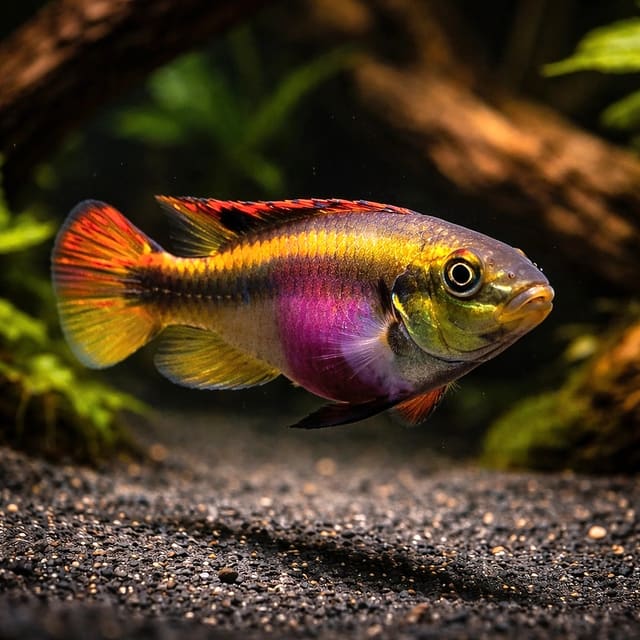
Kribensis Cichlid (Pelvicachromis pulcher)
24–27°C · pH 5–7.5 · 71L
£4.99
The Humphead Cichlid (Steatocranus gibbiceps) is a Congo River cichlid from Pool Malebo and the lower Congo that reaches 10 cm. It suits a hands-on keeper planning at least 60 litres for a pair; keep 24–27°C as the overlap between FishBase's recorded environment and OATA's dwarf-cichlid guidance, while OATA gives pH 6.0–8.0 for the group. Sold individually in dispatch sizes from 3.5–4 cm to 4–5 cm.
Adult size is the maximum length this species reaches at full maturity (scientific sources). The livestock you receive will be younger and smaller — pick a size above for the actual shipping size. Product-photo provenance and any image-specific limitations are stated on the listing.
Steatocranus gibbiceps
Save when buying multiple fish. Each quantity is one fish; sex and pair formation are not guaranteed unless the selected variant explicitly states them.
The Humphead Cichlid (Steatocranus gibbiceps) is a Congo River cichlid from Pool Malebo and the lower Congo that reaches 10 cm. It suits a hands-on keeper planning at least 60 litres for a pair; keep 24–27°C as the overlap between FishBase's recorded environment and OATA's dwarf-cichlid guidance, while OATA gives pH 6.0–8.0 for the group. Sold individually in dispatch sizes from 3.5–4 cm to 4–5 cm.
Adult size is the maximum length this species reaches at full maturity (scientific sources). The livestock you receive will be younger and smaller — pick a size above for the actual shipping size. Product-photo provenance and any image-specific limitations are stated on the listing.
Cichlids are a family of roughly 1,800 accepted species, not one care type. Before buying, identify the exact species and source, then compare adult measurement, usable tank dimensions, social system, territory, tested water, diet and an exit plan. No family-wide minimum tank, water range or tank-mate list is safe.
Maintain these water conditions for optimal health and vibrant colors
The Humphead Cichlid (Steatocranus gibbiceps) is a freshwater, bottom-associated member of the cichlid family from Pool Malebo and the lower Congo River in the Republic of the Congo and Democratic Republic of the Congo. FishBase records a maximum length of 10 cm total length and describes it as rheophilic, pair-bonding and cave spawning. It suits a keeper who can provide a mature filtered aquarium, several shelters, a mollusc-focused diet and enough room to manage territorial behaviour.
A Wikipedia overview of Steatocranus gibbiceps also places the fish in Pool Malebo and the lower Congo. Its river association and demersal way of life make the lower level of the aquarium important: shelter, feeding access and retreat routes deserve more attention than decorative open water alone.
Keep the aquarium at 24–27°C. This is the overlap between FishBase's recorded environment of 24–27°C and OATA's dwarf-cichlid guidance of 22–27°C. OATA gives pH 6.0–8.0 and general hardness of 4–12°dH for the group. Its aquarium guidance recommends at least 60 litres for a pair and at least 80 litres when dwarf cichlids are mixed with other fish.
| Suits | Not suited to |
|---|---|
| A mature, filtered freshwater aquarium | An aquarium without an established biological filter |
| A layout with sand or gravel, cover and several shelters | A bare layout with nowhere to retreat |
| A keeper prepared to watch pair and territorial behaviour | A set-and-forget community where chasing cannot be managed |
| Water maintained at 24–27°C | An aquarium kept outside the recorded temperature range |
| A mollusc-focused menu with suitable invertebrate variety | A feeding plan based on one unsuitable food alone |
Plan from the adult length, the territory around shelters and the needs of every companion. A 10 cm cichlid may be compact, but its pair-bonding and cave-spawning behaviour still makes space and layout decisive.
One purchase supplies one fish in the size selected on the live size selector. The choices are 3.5–4 cm and 4–5 cm. These measurements describe the fish at dispatch; FishBase records an adult maximum of 10 cm total length. The size you select is the size supplied, not the adult size.
The smaller and larger choices do not establish life stage, maturity, sex or pair compatibility. Choose between them according to the aquarium and the size of its intended occupants, then plan the permanent layout around the 10 cm adult length and territorial use of shelters. When introducing a fish to an established aquarium, compare its dispatch size with every resident rather than using the option label as a social guarantee.
Sex is guaranteed only when the selected option explicitly states male or female. This Humphead Cichlid listing has no sex-guaranteed option.
Pair bonding is part of this species' biology, but each order quantity adds one animal. Two fish should therefore be treated as two individuals whose behaviour must be watched, not as a pre-formed pair. Both need feeding access, cover and room to move away. If one fish is persistently excluded, respond to the behaviour rather than waiting for bonding to occur.
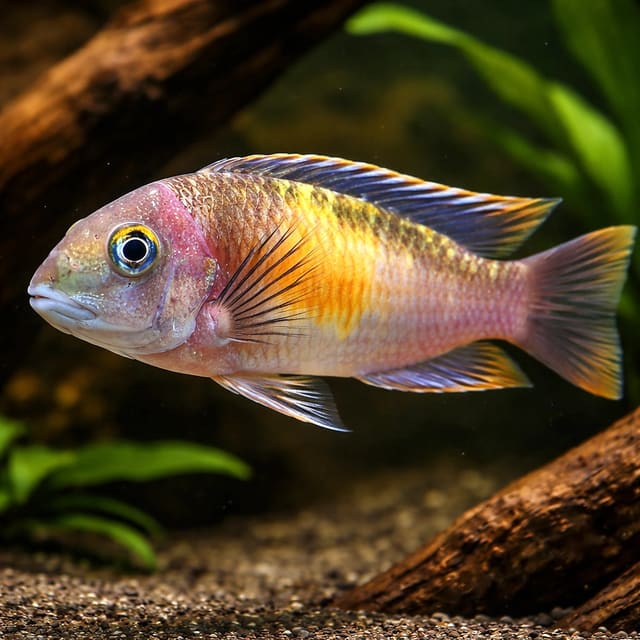
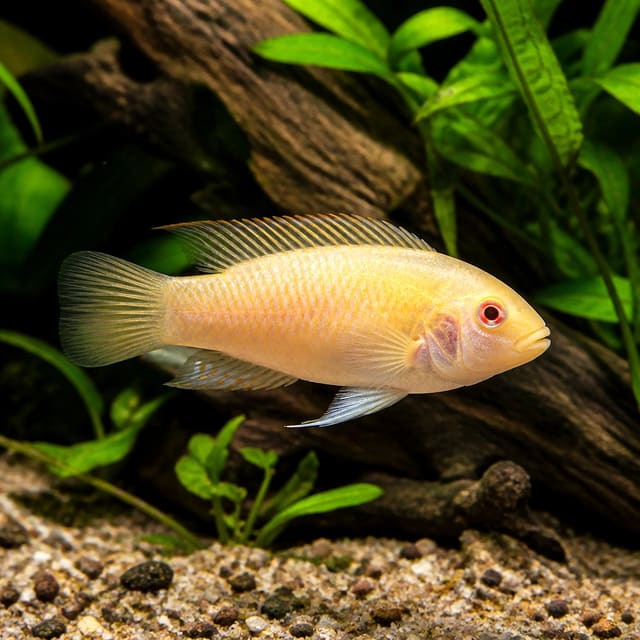
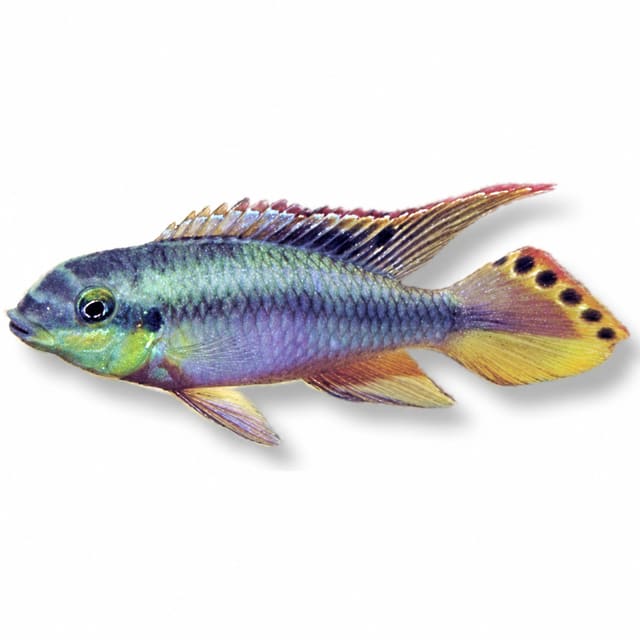
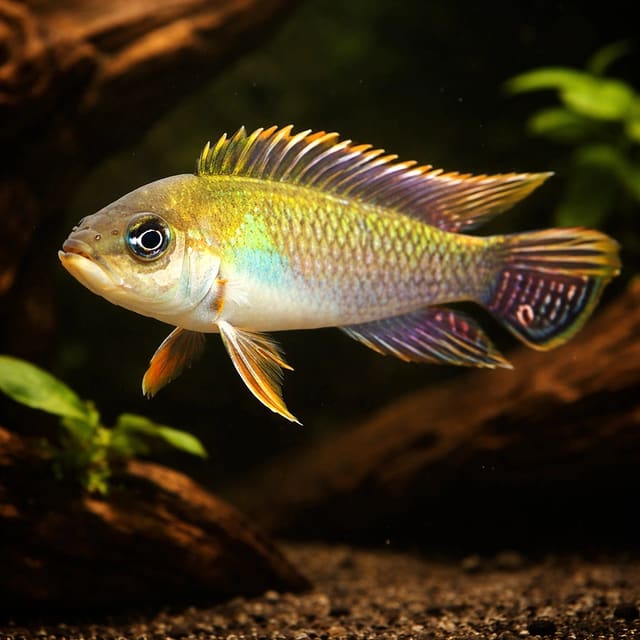
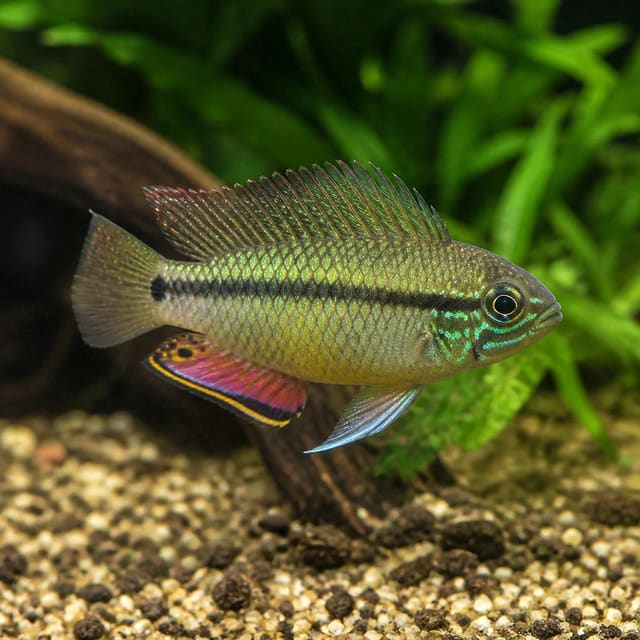
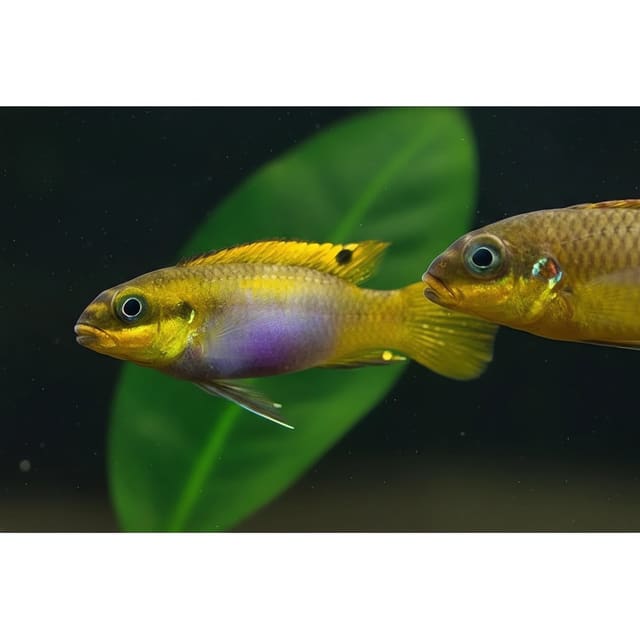
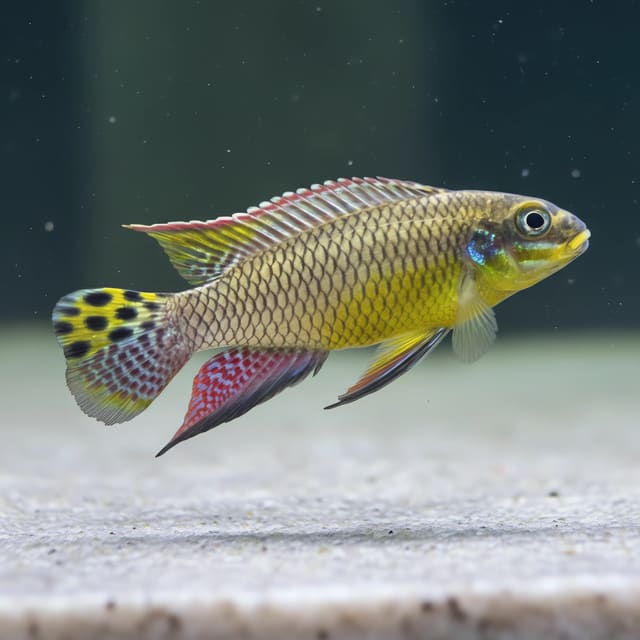
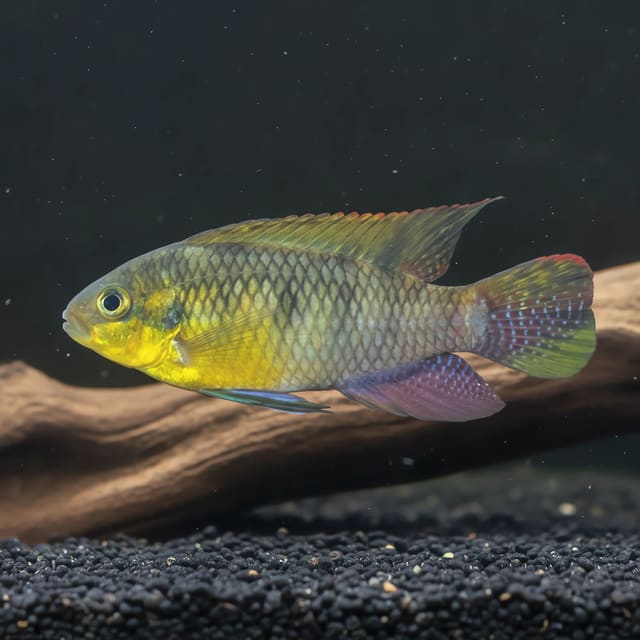
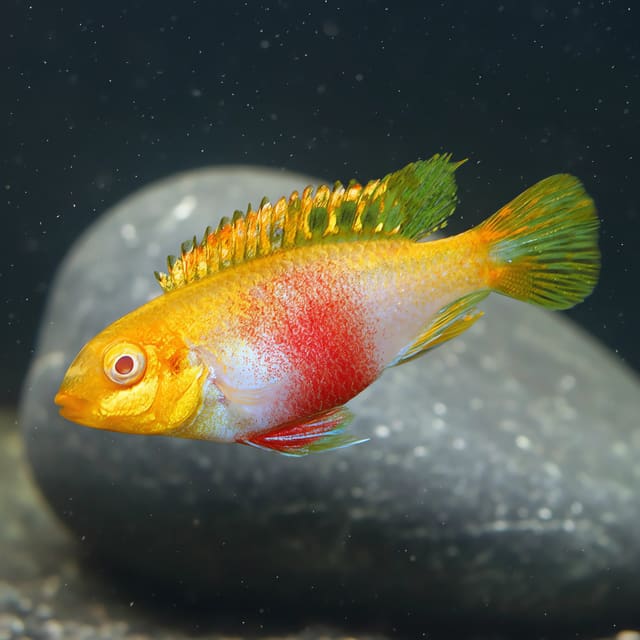
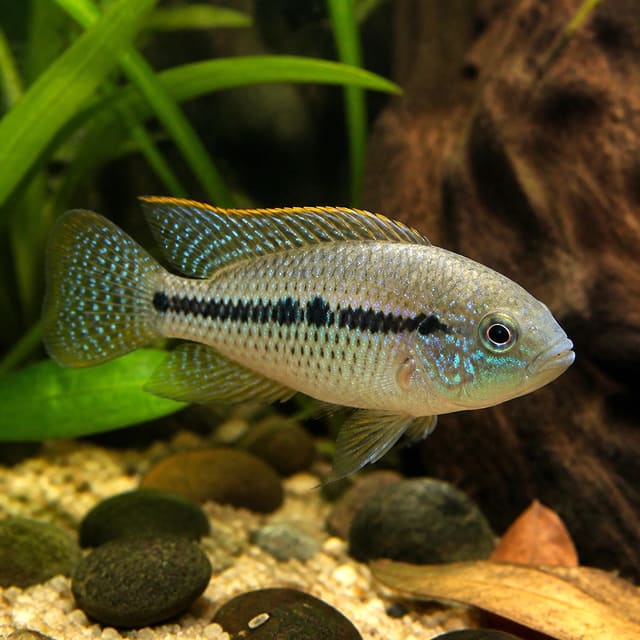
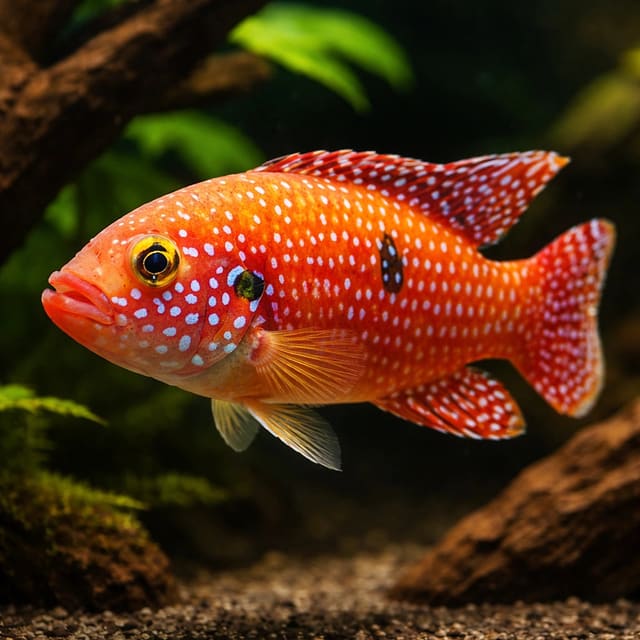
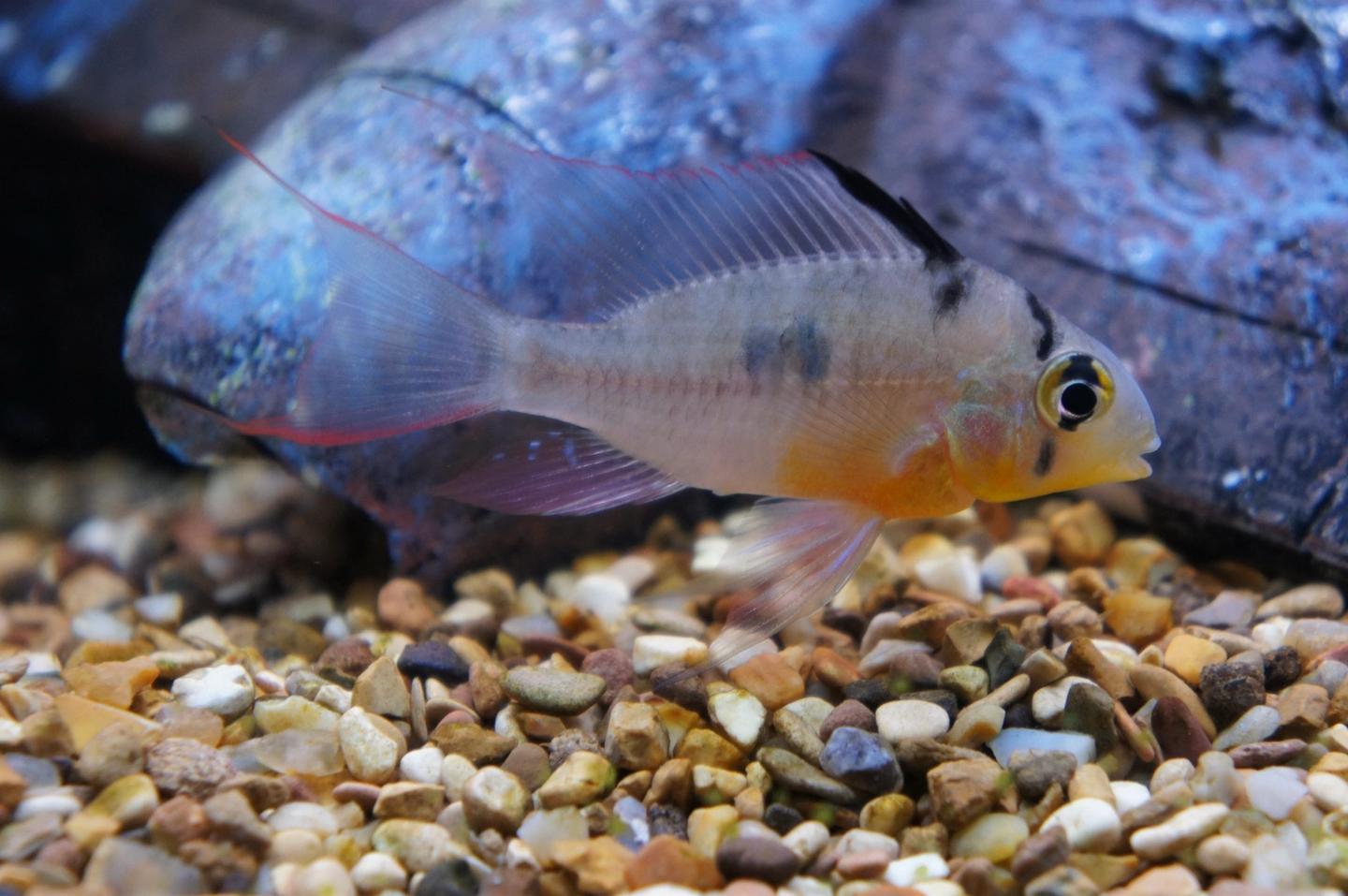
The gallery images are representative of this type of animal rather than photographs of the exact animal supplied, so colours can look slightly different from the live animal.
Before choosing more than one, decide where each fish can shelter and how you will respond if territorial pressure develops. That decision is more useful than assuming that similar size creates compatibility.
Maintain 24–27°C, pH 6.0–8.0 and general hardness of 4–12°dH. The temperature range is the overlap between FishBase's recorded environment and OATA's dwarf-cichlid range; the pH and hardness figures are OATA group guidance. Choose stable values within those limits rather than repeatedly adjusting the aquarium towards a particular decimal.
Keep ammonia at 0 mg per litre and nitrite at 0 mg per litre. OATA advises that nitrate should not exceed 20 mg per litre above the normal level in the tap water. Test the tap water as well as the aquarium so that the nitrate result has a useful baseline. The water chemistry guide explains what the principal readings mean, while the water matcher helps compare measured values with this working range.
| Reading | Action |
|---|---|
| Temperature: 24–27°C | Keep it stable within the overlap of the two ranges. |
| pH: 6.0–8.0 | Measure regularly and avoid abrupt movement. |
| General hardness: 4–12°dH | Use repeatable replacement water within the OATA range. |
| Ammonia: 0 mg/L | Act immediately if a test detects it. |
| Nitrite: 0 mg/L | Check filtration and stocking if a test detects it. |
| Nitrate | Keep it within 20 mg/L above the tap-water level. |
When a test changes unexpectedly, check the result, recent feeding and filter flow before making several adjustments at once. A sudden pH change, detectable ammonia or detectable nitrite is more urgent than choosing a different point within an acceptable range.
Treat replacement tap water with a conditioner that removes chlorine or chloramine before it enters the aquarium. Keep a record of temperature, pH, ammonia, nitrite and nitrate so gradual movement is easier to see than it would be from a single isolated test.
Use at least 60 litres when keeping a pair and at least 80 litres when mixing dwarf cichlids with other fish. These are OATA's group planning minima, so count the needs of all occupants and choose a larger aquarium whenever the intended stocking, shelter arrangement or territorial behaviour requires it.
Provide aquarium gravel or sand and include live plants where practical. Even well settled pairs will often chase each other, so providing plenty of cover is essential. Plastic plants, suitable ornaments, plant pots, model caves, wood and leaf litter can also create shelter when live plants are not used. For this cave-spawning species, several separate refuges allow an individual to withdraw without relying on the same entrance as a more assertive fish.
The litres set the starting point; the layout determines how much of that aquarium is useful. A single cave in an otherwise empty tank gives one fish something to defend but gives the other little choice. Several separated shelters make short territorial chases less likely to exclude a fish from the whole aquarium.
Pair bonding does not mean that any two selected fish will immediately share a shelter. Watch whether both individuals can occupy cover, cross the aquarium and feed. Persistent confinement to one corner, repeated pursuit or loss of feeding access calls for prompt changes to space or separation.
When companions are planned, start from the at-least-80-litre group figure and add room for their own numbers and swimming needs. Do not subtract cave territory from the space needed by mid-water fish or assume that different swimming levels prevent every conflict.
Run the Humphead Cichlid aquarium with a well-established biological filter. The RSPCA explains that aquarium filters are vital because fish release toxic ammonia; beneficial bacteria convert it first to nitrite, which is also toxic, and then to safer nitrate. A pump moving water through an immature filter does not replace that bacterial population.
Prepare and mature the aquarium before the fish arrives. The first tropical aquarium guide covers that preparation in a practical sequence. Test for 0 mg/L ammonia and 0 mg/L nitrite before adding livestock, then increase the aquarium population slowly so the filter bacteria can respond to the greater waste and feeding load.
Stocking too quickly can lead to new tank syndrome when the filter bacteria cannot process the increased waste. The practical response is prevention: mature the filter, add fish gradually, feed controlled portions and confirm water quality each week.
Clear-looking water is not enough to judge biological performance. Ammonia and nitrite are measured with tests, while reduced filter flow is found by checking the equipment. Use both observations. If ammonia or nitrite appears, reduce further additions and address the water-quality problem immediately.
A filter is part of a complete routine rather than a substitute for water changes. It processes waste compounds, but weekly partial changes and removal of accumulated solid waste are still needed.
Make appropriately sized molluscan food the defining part of the diet. FishBase records that wild Steatocranus gibbiceps feeds primarily on molluscs, especially snails. This recorded biology should shape the main menu rather than treating the fish as an undifferentiated community omnivore.
For aquarium variety, OATA advises that dwarf cichlids can take a good-quality granule and small live or frozen foods such as daphnia, brine shrimp or tubifex. Choose sizes the fish can take readily and rotate the supporting foods instead of relying on one item at every meal. The additional invertebrate foods add variety while keeping the menu consistent with the species' recorded feeding biology.
Feed once a day and offer only what the fish consume within a few minutes. This is OATA's portion and frequency guidance for dwarf cichlids. Uneaten food breaks down and adds toxic waste to the water, so a meal should finish cleanly rather than leaving material around shelters.
| What you see | What to do |
|---|---|
| Both fish approach and eat | Keep the portion within a few minutes. |
| Food remains after the meal | Reduce the next portion and check water quality. |
| One fish controls the feeding area | Use separated feeding points near different shelters. |
| Interest in food falls | Test temperature, ammonia and nitrite and inspect behaviour. |
| Waste rises after heavier feeding | Return to the controlled daily portion and complete maintenance. |
Do not respond to territorial competition simply by adding more food. Extra food increases the load on the filter and may still be taken by the dominant fish. Separating feeding locations is the more direct way to check that each individual eats.
Appetite is also a useful daily observation. Compare a change in feeding with breathing, swimming, colour and hiding behaviour, then test the water before repeatedly changing the menu.
Treat the Humphead Cichlid as a pair-bonding, cave-spawning fish whose territorial pressure may increase around breeding. FishBase establishes the pair and cave biology, while OATA warns that dwarf cichlids can become territorial, particularly when breeding. Build the aquarium so behaviour can be managed before a chase becomes continuous exclusion.
Short interactions around a refuge should be judged by their effect. The important questions are whether both fish can feed, shelter and move through the aquarium. One individual repeatedly prevented from eating or leaving a corner needs intervention even if no severe external injury is visible.
| Observation | Decision |
|---|---|
| Both fish use cover and feed | Continue daily observation without disrupting them. |
| A fish retreats briefly, then resumes normal activity | Check that several retreat routes remain open. |
| One fish is repeatedly chased across the aquarium | Add separation and reassess the space immediately. |
| One fish hides more and misses meals | Test water, inspect for damage and prevent further exclusion. |
| Territory expands around a spawning site | Protect companions from repeated disturbance. |
Do not use pair-bonding biology as a promise that two fish will coexist calmly. Compatibility is an observed relationship. Keep shelter choices separate enough that both animals are not forced into the same defended area, and maintain clear access for observation.
If breeding is intended, OATA advises avoiding tank mates that could disturb the spawning site or predate the fry. More territorial behaviour may also reduce the usable space for other fish. A mixed aquarium must therefore have room beyond the immediate cave area.
Changes in hiding, temperament, feeding or colour can be early warning signs. Respond with a water test and a review of shelter access rather than assuming every behavioural change is courtship.
Change 25% of the water at least once a week. OATA strongly recommends this partial-change schedule for dwarf cichlids and advises testing ammonia and nitrite at least weekly. Treat all replacement tap water with conditioner to remove chlorine or chloramine before adding it to the aquarium.
Use a siphon to remove solid waste from the gravel or sand, paying particular attention to areas around shelters where uneaten food and waste can collect. Work carefully enough to preserve the fish's cover while still keeping the substrate clean.
Use the pattern of changes to choose the next action. Rapid breathing across several fish makes temperature and water testing urgent. One fish hiding after repeated pursuit points towards a territorial problem, though water should still be checked. Reduced feeding combined with detectable ammonia or nitrite makes water quality the immediate priority.
Do not begin a disease treatment from one sign alone. Complete the basic checks, note every affected fish and compare breathing, appearance, swimming and feeding. If worrying changes persist after correcting water or access problems, contact us for guidance.
A written weekly record helps distinguish an isolated observation from a developing trend. Record the test readings and water-change percentage, then note any change in feeding or aggression beside them.
Have the filtered aquarium ready at 24–27°C with 0 mg/L ammonia, 0 mg/L nitrite and suitable cover before the fish arrives. OATA advises checking those toxic-waste readings before introducing fish and increasing livestock numbers slowly so the biological filter can adjust to the additional waste.
Read the current delivery and Live Arrival Guarantee policy before the journey. Each fish is hand-bagged in pure oxygen and placed in an insulated poly box, with a heat pack when the weather calls for it. Transport is handled by a licensed live-animal courier, and someone must be home to receive the parcel because live fish cannot be left unattended.
These are the store's arrival steps. Once the fish enters the aquarium, use the same concrete observations applied during routine care: swimming, breathing, shelter access and feeding response.
Add no further livestock simply because the first introduction appears calm. OATA recommends increasing fish numbers slowly so the filter's beneficial bacteria can grow with the waste load. Test ammonia and nitrite after additions as part of the regular schedule.
Before receipt, make three decisions. First, confirm which shelter the new fish can use without passing through an established territory. Second, make sure food can reach that area. Third, decide how the fish will be separated if persistent chasing prevents normal feeding or movement. Those preparations make the first observations useful and actionable.
Choose companions only after checking water requirements, adult space, swimming level and their likely interaction with cave territory. Every fish in the aquarium must fit the 24–27°C routine used for the Humphead Cichlid, and the combined stocking must remain manageable for the biological filter.
OATA suggests shoals of quick dither fish for dwarf cichlids because they may give the cichlids a sense of security and can move away if territorial behaviour develops. This is a type of companion, not a universal approval. The dither fish still need a proper shoal and enough swimming space of their own, while the cichlid needs uninterrupted access to shelter.
If breeding is intended, avoid tank mates that may disturb the spawning site or predate fry. This is the explicit OATA caution for dwarf cichlid breeding aquariums. It also gives a practical reason to reconsider companions that repeatedly investigate caves.
Compatibility remains individual and may change around spawning. Do not treat a quiet first day as a permanent result. Watch the whole group for persistent chasing, increased hiding, missed meals, damaged fins or loss of normal swimming space.
For a stocking and compatibility assessment, ask us with the aquarium dimensions, water readings, current fish and proposed numbers. You can also browse the African cichlid collection for alternatives, but a shared category does not establish that two animals should live together.
Judge territorial behaviour by whether every fish retains access to food, shelter and normal movement. OATA notes that dwarf cichlids may be territorial, especially when breeding, and that even settled pairs often chase one another. Enough cover is therefore a welfare requirement rather than decoration.
Start by mapping where the pressure occurs. Chasing concentrated around one shelter calls for more separated cover and a wider retreat route. Chasing that follows a fish across the whole aquarium means the victim cannot escape the territory and needs prompt protection or separation.
| If you see | Do this |
|---|---|
| A brief retreat followed by normal feeding | Keep observing and preserve several cover choices. |
| One fish repeatedly missing meals | Separate feeding points and stop further exclusion. |
| Persistent hiding after pursuit | Test the water, inspect the fish and provide separation. |
| Damaged fins or missing scales | Prevent continued contact and assess the injured fish. |
| Companions entering a spawning area | Remove the conflict when breeding is intended. |
More litres help only when the layout lets fish use them. An aquarium with one concentrated shelter can funnel several occupants into the same defended area. Plants, wood, leaf litter, suitable ornaments and multiple caves can provide the visual and physical cover recommended by OATA.
Do not assume that two fish are compatible because they are the same species, the same dispatch size or were introduced together. Pair bonding describes the species' biology; a workable aquarium pair is demonstrated by both fish feeding, sheltering and moving without persistent exclusion.
Review compatibility whenever stocking changes or breeding behaviour begins. A combination that was calm before cave defence may require more room or separation afterwards. Early action is preferable to waiting for appetite loss or visible damage.
FishBase records a maximum of 10 cm total length. Plan the permanent aquarium around that adult figure rather than the 3.5–4 cm or 4–5 cm dispatch measurement.
OATA's dwarf-cichlid guidance recommends at least 60 litres for a pair and at least 80 litres when mixed with other fish. Treat those as group planning minima, then provide several shelters and room to retreat.
FishBase describes the species as pair-bonding. Plan a pair setup only for two fish that coexist calmly, provide several shelters, and do not assume that two selected individuals will form a compatible pair.
It can suit a beginner prepared to mature the filter, test water weekly, provide several caves and respond promptly to territorial behaviour. It is not a set-and-forget community fish.
FishBase records a primarily molluscan diet, especially snails. Build the menu around appropriately sized molluscan food, with good-quality granules and small live or frozen daphnia, brine shrimp or tubifex for variety.
Keep it at 24–27°C, the overlap between FishBase's recorded environment and OATA's dwarf-cichlid guidance. OATA gives pH 6.0–8.0 and general hardness of 4–12°dH for the group; ammonia and nitrite should remain at 0 mg/L.
OATA warns that dwarf cichlids may be territorial, especially when breeding. Screen each combination individually and act if chasing, hiding, missed meals or damaged fins show that another fish cannot retreat.
OATA suggests shoals of quick dither fish for dwarf cichlids when the aquarium gives every fish enough space. Avoid tank mates that may disturb spawning sites or predate fry when breeding is intended.
It is hand-bagged in pure oxygen, packed in an insulated poly box with a heat pack when weather calls for it, and carried by a licensed live-animal courier. Be home to receive it; before opening, film the sealed parcel and continue through opening until the fish is shown inside the bag, then float the bag for 20–30 minutes and never pour bag water into the aquarium.
No reviews for this item yet. Bought one? Honest reviews only, good or bad.
What customers say about ordering from us
Easy website plenty of info on fish your buying great to pick a time slot
TRACEY DURRANT · 7 Oct 2026
Got some lovely fish thank you
Kevin Mackie · 7 Oct 2026
Reviews of our shop, collected by Judge.me, an independent third-party review collector. Newest first.