
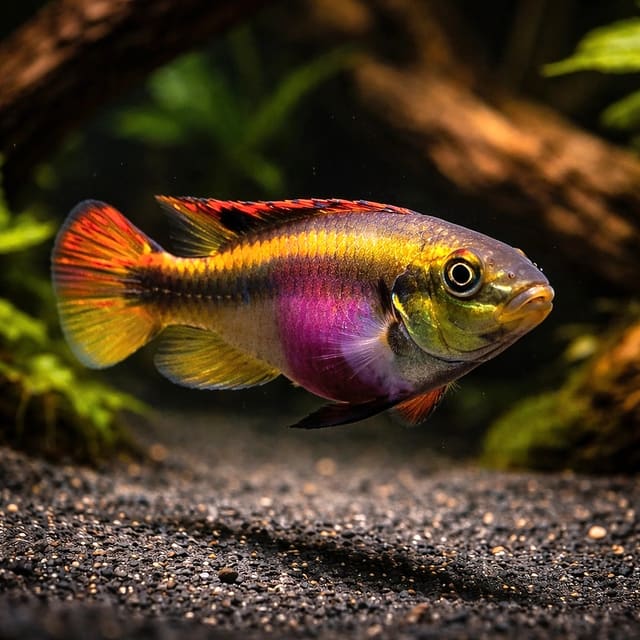
Kribensis Cichlid (Pelvicachromis pulcher)
24–27°C · pH 5–7.5 · 71L
£4.99

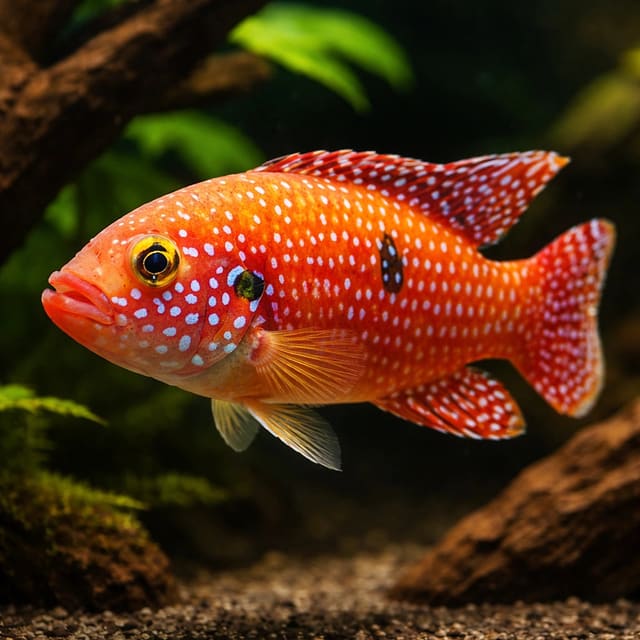
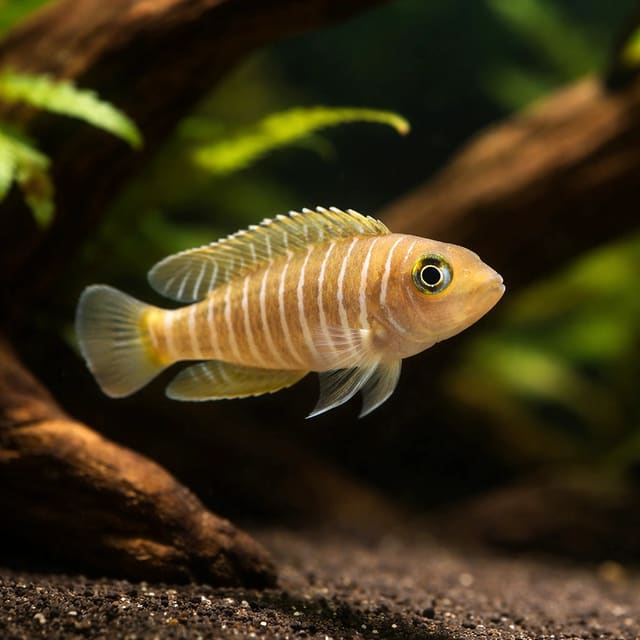
The Super Red Kribensis Cichlid (Pelvicachromis pulcher) is a cichlid from eastern Benin, southern Nigeria and western Cameroon that reaches 11 cm. It suits attentive keepers planning a pair in an aquarium at least 80 cm long, using the FishBase–Seriously Fish overlap of 24–25°C, pH 5.0–7.5 and 5–12 dGH. Sold individually in 4–5 cm and 5–7 cm dispatch sizes.
Adult size is the maximum length this species reaches at full maturity (scientific sources). The livestock you receive will be younger and smaller — pick a size variant above for the actual shipping size. Product-photo provenance and any image-specific limitations are stated on the listing.
Pelvicachromis pulcher
Save when buying multiple fish. Each quantity is one fish; sex and pair formation are not guaranteed unless the selected variant explicitly states them.
The Super Red Kribensis Cichlid (Pelvicachromis pulcher) is a cichlid from eastern Benin, southern Nigeria and western Cameroon that reaches 11 cm. It suits attentive keepers planning a pair in an aquarium at least 80 cm long, using the FishBase–Seriously Fish overlap of 24–25°C, pH 5.0–7.5 and 5–12 dGH. Sold individually in 4–5 cm and 5–7 cm dispatch sizes.
Adult size is the maximum length this species reaches at full maturity (scientific sources). The livestock you receive will be younger and smaller — pick a size variant above for the actual shipping size. Product-photo provenance and any image-specific limitations are stated on the listing.
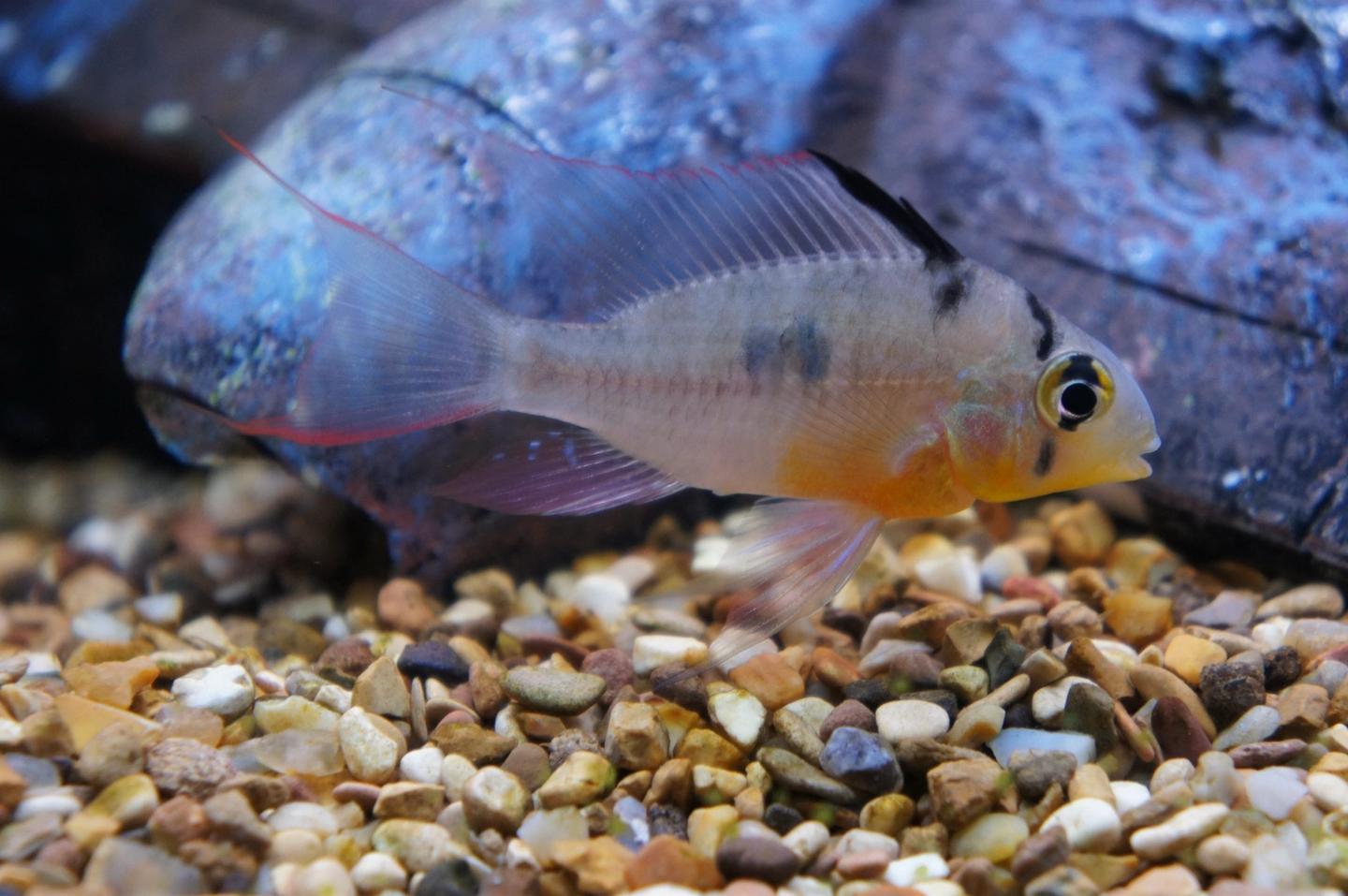
Cichlids are a family of roughly 1,800 accepted species, not one care type. Before buying, identify the exact species and source, then compare adult measurement, usable tank dimensions, social system, territory, tested water, diet and an exit plan. No family-wide minimum tank, water range or tank-mate list is safe.
Maintain these water conditions for optimal health and vibrant colors
The Super Red Kribensis Cichlid (Pelvicachromis pulcher) is a member of the cichlid family from eastern Benin, southern Nigeria and western Cameroon. FishBase records freshwater and brackish environments, a bottom-associated way of life and a maximum adult length of 11 cm. This fish suits an attentive newcomer to cichlids or an experienced community keeper who can provide a pair with caves, cover and enough floor space for breeding territory.
Wild adults eat worms, crustaceans and insects. In Nigeria’s River Sombreiro it was observed to feed mainly on diatoms, algae, higher plants and detritus, so this is a flexible feeder rather than a narrowly specialised predator or grazer. FishBase also describes pair bonding, cave spawning and substrate brooding. Those behaviours shape the aquarium plan: shelter and territorial boundaries matter as much as water volume.
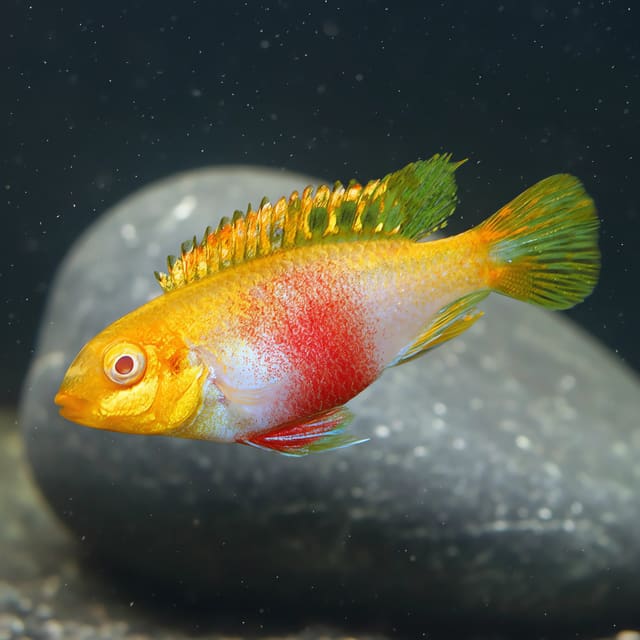
“Super Red” is the trade-form label attached to this Pelvicachromis pulcher. Base care follows the species rather than relying on colour as a guide to sex, maturity or temperament. Kribensis and Krib are also established hobby names for the fish.
Its manageable adult size does not make it a nano-aquarium species. Plan for an adult pair from the beginning, maintain stable water and leave room around the chosen cave. Seriously Fish regards the species as a good choice for newcomers to cichlids, while also warning that it becomes very territorial when breeding. That combination makes thoughtful layout and companion screening essential.
Choose this fish when you want to observe pair bonding, cave use and active territorial behaviour in a structured tropical aquarium. A single pair is the clearest plan. FishBase says to keep the species in pairs and gives a minimum aquarium length of 80 cm; Seriously Fish says a 71-litre aquarium measuring 60 × 37.5 × 30 cm is suitable for a single pair. Use at least the longer 80 cm footprint so the pair has more horizontal room around its shelter.
| Suits | Not suited to |
|---|---|
| A pair-led aquarium at least 80 cm long | A cramped layout without room around a cave |
| Caves, roots, driftwood and planted cover | An aquarium without hiding places or spawning shelter |
| A screened community of compatible fish | Very vigorous or large companions |
| Keepers prepared for stronger breeding territory | More than one pair without a large aquarium |
| Stable tropical water and regular maintenance | An immature or unfiltered aquarium |
A community can work because Seriously Fish names small characins, barbs, danios, rasboras, Corydoras, gouramis and Loricariids as possible companions. These are candidates for assessment, not automatic matches. Aquarium dimensions, cave placement, the number of territories and each fish’s behaviour decide whether a particular combination is sensible.
If you are comparing this fish with other African cichlids, browse the African cichlid collection before mixing different types. Lake cichlids and West African dwarf cichlids can have different water, social and community requirements, so a shared regional label is not enough to establish compatibility.
One purchase supplies one fish in the size chosen from the live selector. The choices are 4–5 cm and 5–7 cm. These labels describe the fish’s dispatch size and do not change its 11 cm adult planning figure.
The size you select is the size supplied, not the adult size. Prepare the permanent aquarium around the adult pair and its territory rather than using a smaller temporary setup for the shorter dispatch grade. Both grades still require gradual introduction, stable water and access to a proper cave.
Sex is guaranteed only when the selected option explicitly states male or female. This Super Red Kribensis Cichlid listing has no sex-guaranteed option.
The gallery images are representative of this type of animal rather than photographs of the exact animal supplied, so colours can look slightly different from the live animal.
Because no option guarantees sex, two fish bought from this listing may not be a male and a female, and Seriously Fish warns that even a male and female may not form a compatible pair and an unwilling partner may be killed.
Use 11 cm as the adult planning size. FishBase records that maximum as total length for a male or unsexed specimen. Seriously Fish gives 10 cm as standard length, a different measurement from FishBase’s total length; keep 11 cm as the consistent planning figure.
For one pair, use an aquarium at least 80 cm long. FishBase gives 80 cm as its minimum aquarium size, while Seriously Fish says a 71-litre aquarium measuring 60 × 37.5 × 30 cm is suitable for a single pair. The longer 80 cm footprint is the stronger planning decision because this bottom-associated cichlid needs room around caves and potential spawning sites.
Litres still matter for stability, but volume alone can hide an unsuitable shape. A tall aquarium may hold the same water as a longer one while offering less usable territory along the substrate. Check length, width and the placement of hardscape rather than relying on the litre label alone.
A community needs enough space for companions to remain outside the pair’s defended area. OATA’s dwarf-cichlid sheet gives at least 80 litres when members of the group are mixed with other fish, while Seriously Fish requires a large aquarium if more than one pair is kept. Treat those as starting points for layout decisions, not permission to crowd a measured volume.
Map the intended cave at one end or within a clearly divided area. Leave an open route around it and give other fish cover elsewhere. If several caves all face the same narrow corridor, they do not create separate territories; spreading shelter among roots, plants and wood gives fish more ways to avoid one another.
Provide several hiding places and potential spawning sites. Seriously Fish specifically recommends clay pots, caves, roots and pieces of driftwood. Plants are optional, but their additional cover is appreciated. Use sand or fine gravel because the fish excavate pits when breeding.
OATA’s dwarf-cichlid guidance also recommends gravel or sand, ideally with live plants. Where live plants are not used, plastic plants and suitable ornaments such as plant pots, model caves, wood and leaf litter can provide shelter. This is group guidance, and it reinforces the species-specific emphasis on cover.
A useful layout separates three functions: a sheltered cave zone, a route through the aquarium and a quieter refuge beyond the main territory. Avoid placing every food drop, resting place and hiding site immediately outside one cave. When all resources overlap, companions may have to enter the defended area repeatedly.
Look along the tank close to the substrate. If you can see uninterrupted from one end to the other, add a root, plant group or piece of wood to break that view. Then check that no fish can be trapped in a dead end. Cover should create escape routes rather than narrow pockets with only one entrance.
Leave room to siphon exposed substrate and reach the filter without dismantling the territory every week. A maintainable layout helps keep waste from accumulating around caves while preserving the shelter that makes the fish feel secure.
Keep the aquarium at 24–25°C, pH 5.0–7.5 and 5–12 dGH. These routine values are the species-level overlap of FishBase’s recorded environment and the Seriously Fish aquarium range. FishBase gives 24–25°C, pH 5.0–8.0 and 5–19 dGH; Seriously Fish gives 24–27°C, pH 5.0–7.5 and 0–12 dGH.
The overlap gives a direct target without stretching beyond either source. A reading of 24°C, pH 7.0 and 8 dGH, for example, sits within the FishBase values, the Seriously Fish range and their overlap. A temperature of 26°C fits Seriously Fish but falls outside FishBase’s recorded 24–25°C band, so use 24–25°C for the routine setting.
Measure your aquarium rather than estimating from local tap-water reputation. Our water chemistry guide explains the values to test, and the water matcher lets you compare measured results with the target range.
OATA’s dwarf-cichlid guidance requires ammonia at zero mg/l and nitrite at zero mg/l. It says nitrate should not exceed 20 mg/l above the normal tap-water level. These waste readings are active care limits: a suitable pH or temperature does not compensate for detectable ammonia or nitrite.
Avoid sudden attempts to move pH or hardness. Keep replacement water prepared consistently, record the readings and respond to trends while they are still small.
Run a well-established biological filter at all times. The RSPCA explains that fish release toxic ammonia, which filter bacteria convert first to toxic nitrite and then to safer nitrate. The filter must be set up, matured and maintained before it can process the waste produced by fish and food.
If this is your first aquarium, prepare and mature it using our first tropical tank guide before livestock is introduced. OATA warns that adding fish too quickly can outpace the beneficial bacteria, causing unhealthy ammonia or nitrite levels associated with new tank syndrome.
If filter media needs cleaning, rinse it lightly in aquarium water removed during the partial change. Do not rinse it under the tap, because chlorine or chloramine may kill beneficial bacteria established in the media. Clean only as much as needed to restore flow; the filter is a living waste-processing system rather than a surface that must look unused.
Detectable ammonia or nitrite calls for prompt water-quality action. Test again, remove uneaten food, check filter flow and make an appropriate partial water change with conditioned replacement water. Do not add more fish while the biological filter is struggling with the present waste load.
Record test results alongside maintenance dates. A short sequence of readings shows whether nitrate is gradually rising, whether a filter clean changed performance and whether the aquarium remains stable after feeding or stocking changes.
Use a good-quality cichlid pellet as the staple and add regular small portions of live or frozen food. Seriously Fish recommends this combination for Pelvicachromis pulcher. It fits the broad wild diet recorded by FishBase, which includes worms, crustaceans, insects, diatoms, algae, higher plants and detritus.
OATA’s dwarf-cichlid feeding guidance supplies the schedule: feed once a day and offer only what the fish can eat within a few minutes. Its group advice also names good-quality flake or granules and small live or frozen items such as daphnia, brine shrimp and tubifex.
| Food role | How to use it |
|---|---|
| Quality cichlid pellet | Use as the regular staple |
| Quality flake or granule | Use as a suitable dried alternative |
| Daphnia, brine shrimp or tubifex | Offer as small live or frozen additions |
Watch the whole pair during feeding. A fast fish taking every item does not show that both fish have eaten. Spread a small portion across more than one point when territory or cover prevents the quieter fish from approaching the same place.
Stop when the food has been consumed within a few minutes. Uneaten food breaks down and releases toxic waste, increasing pressure on the biological filter. Adding extra food to encourage colour or growth is counterproductive when the surplus settles beside wood or inside a cave.
Reduced food intake or a loss of interest in food is one of OATA’s signs to monitor. Check water quality and compare the fish’s swimming, breathing, colour and hiding with its usual pattern. Remove leftovers promptly rather than repeatedly offering larger meals.
Keep feeding changes gradual and use foods the fish can take comfortably. The goal is regular consumption, variety and clean water, not the largest possible portion.
Prepare the aquarium before the parcel arrives. Confirm 24–25°C, pH 5.0–7.5, 5–12 dGH, zero ammonia and zero nitrite, then check that the filter is working and at least one proper cave is accessible.
The current delivery and Live Arrival Guarantee policy gives the full packing, receiving, video and claim requirements. Keep the continuous unboxing video with your order number. If anything has gone wrong, contact us the same day your fish arrive with your order number and the unboxing video.
Allow the fish to use the prepared cover and judge its behaviour against the signs OATA recommends monitoring: swimming position, colour, breathing rate, changes in aggression or hiding, visible spots or growths, body condition and interest in food. A cave-dwelling fish may use shelter, so look for a change from its developing normal pattern rather than treating every period out of view as a problem.
If its breathing, swimming, appearance or appetite changes, test water quality promptly. Check ammonia, nitrite, temperature and filter flow, correct any water issue and contact us if the concern continues.
Plan to keep Pelvicachromis pulcher as a pair. FishBase describes pair bonding, cave spawning and substrate brooding, while Seriously Fish says the species should be kept in pairs. A pair means two fish, but Seriously Fish warns there is no guarantee that a male and female will form a compatible pair, and an unwilling partner may be killed.
Do not interpret proximity at introduction as an established pair. Observe whether both fish can use shelter, reach food and move through the aquarium. OATA’s dwarf-cichlid sheet notes that even well-settled pairs often chase each other, so plenty of cover is essential.
Seriously Fish warns that the species becomes very territorial when breeding. The chosen cave and the space around it may become a defended zone, changing a previously calm community. This is normal cichlid biology, but companions still need enough room to withdraw.
Seriously Fish requires a large aquarium if more than one pair is kept. Do not divide the minimum 80 cm aquarium into several nominal cave zones and assume that each will be accepted. Multiple pairs create multiple territorial relationships and need substantially more room for boundaries.
Males and females can differ in size, fin shape and breeding-condition appearance, but those biological tendencies do not guarantee the sex of an individual fish selected from this offer. Base husbandry decisions on observed compatibility, access to resources and the ability of each fish to leave a defended area.
If breeding is not your aim, retain the same cave and territory plan. The fish may still pair and defend shelter, so removing preparation does not remove the behaviour.
A community is possible, but every companion needs screening for size, vigour and use of territory. Seriously Fish recommends the species for a general community while warning against very vigorous or large fish because the Kribensis is generally shy and retiring outside its territorial breeding response.
Seriously Fish names small characins, barbs, danios, rasboras, Corydoras, gouramis and Loricariids as good tank-mate groups. It also permits other cichlids, with West African dwarf cichlids described as the ideal type, only when enough space is provided for territory formation.
These names begin the assessment rather than ending it. Check the adult size, activity and water requirements of the exact companion. Then map where it feeds, rests and shelters. A fish from a named group may still be unsuitable if it is very large, exceptionally vigorous or forced through the Kribensis cave area.
| Screening question | Decision |
|---|---|
| Is the companion very vigorous or large? | Avoid the combination |
| Can it remain outside the cave territory? | Proceed only with adequate space |
| Do its water needs fit 24–25°C, pH 5.0–7.5 and 5–12 dGH? | Use only a genuine overlap |
| Will more than one pair be present? | Use a large aquarium with distinct territories |
OATA says dwarf cichlids are best kept with shoals of “dither fish”, which give the cichlids a sense of security and are quick enough to swim away if the cichlids become territorial. Apply that group advice only after checking the exact fish against the species-level warning about vigour and size.
FishBase records crustaceans in the wild adult diet, so assess any proposed shrimp separately before adding it. For a stocking assessment based on your aquarium dimensions and present livestock, ask us with those details.
Avoid very vigorous or large species. Seriously Fish gives that direct restriction because Pelvicachromis pulcher is generally shy and retiring. When breeding is intended, OATA also advises avoiding tank mates that might disturb spawning sites or predate on fry.
Do not place Corydoras or Loricariids under a blanket ban merely because they use the lower aquarium; Seriously Fish specifically includes both among good tank-mate groups. Instead, give them separate shelter and enough floor area to avoid repeated entry into the defended cave zone.
A combination that appears calm before pair formation can change when a cave is claimed. Increased aggression or hiding more than normal are OATA warning signs. Look across the whole aquarium: one fish remaining visible does not show that every companion can still reach its normal refuge.
OATA advises increasing fish numbers slowly because the beneficial bacteria in the filter must grow as waste and feeding increase. Additions also alter territory. Introduce only after confirming zero ammonia and nitrite, suitable water values and enough unclaimed shelter.
For more than one Kribensis pair, use a large aquarium and design genuinely separate areas before introducing the fish. Decide the aquarium size from its footprint, the visual boundaries you can build and the ability of every fish to withdraw.
The practical rule is simple: use the named companion groups as candidates, avoid very vigorous or large species, and reassess the community whenever breeding behaviour changes how the pair uses space.
FishBase records a maximum of 11 cm total length, which is the size to plan the aquarium around.
For a pair, use an aquarium at least 80 cm long: FishBase gives 80 cm as the minimum. Seriously Fish also says 71 litres (60 × 37.5 × 30 cm) is suitable for a single pair, so prioritise the 80 cm footprint.
Keep them as a pair, meaning two fish. This listing does not guarantee sex, so two fish bought here may not be a male and a female, and Seriously Fish warns that even a male and female may not form a compatible pair and an unwilling partner may be killed. Watch the two fish closely, separate them if one cannot get away, and use a large aquarium for more than one pair.
Seriously Fish identifies it as a good newcomer’s cichlid. Beginners still need a mature filtered aquarium, caves, stable water and a plan for stronger territorial behaviour when breeding.
Feed a quality cichlid pellet as the staple, with regular live or frozen additions such as daphnia, brine shrimp or tubifex. Feed once daily and only as much as it eats within a few minutes.
Keep it at 24–25°C, pH 5.0–7.5 and 5–12 dGH; these values are the overlap of FishBase and Seriously Fish.
Seriously Fish says it becomes very territorial when breeding. Watch for increased aggression or hiding more than normal, and separate the fish if one cannot leave the defended area.
Screen small characins, barbs, danios, rasboras, Corydoras, gouramis and Loricariids for matching water, size and space. Avoid very vigorous or large species, and allow room around the breeding territory.
The Tropical Fish Co policy says the fish is hand-bagged in oxygen and placed in an insulated box, with a heat pack when the weather calls for it. Someone must receive the parcel; start a continuous video while it is still sealed, inspect it that day, float the bag for 20–30 minutes, then release the fish without pouring bag water into the aquarium.
Max adult size is the length this species reaches at full maturity (from scientific sources). The livestock you receive will be younger and smaller — pick a size variant on the buy box for the actual shipping size. Product-photo provenance and any image-specific limitations are stated on the listing.
Always research specific species before adding them to your tank. Consider:
No reviews for this item yet. Bought one? Honest reviews only, good or bad.
What customers say about ordering from us
I have a small group of long finned mountain minnows. So was delighted to be able to order ten of this variety to increase the genetics in my tank . The ones I recieved are healthy but it’s to early to give a verdict on wether they are of a long finned type since they are small currently.
Gordon Walker · 23 Sept 2026
100% success travel and "installation". Pleased with quality of purchase. The Siamese fighter a bit "shy" so have not yet seen him at his best yet but looking good. Happy customer. GG
George E Garratt · 21 Sept 2026
Reviews of our shop, collected by Judge.me, an independent third-party review collector. Newest first.
24–27°C · pH 5–7.5 · 71L
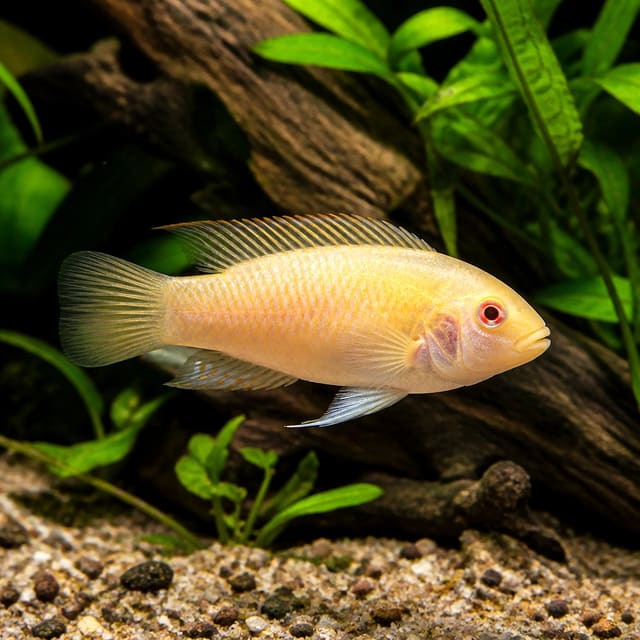
24–27°C · pH 5–7.5 · 71L
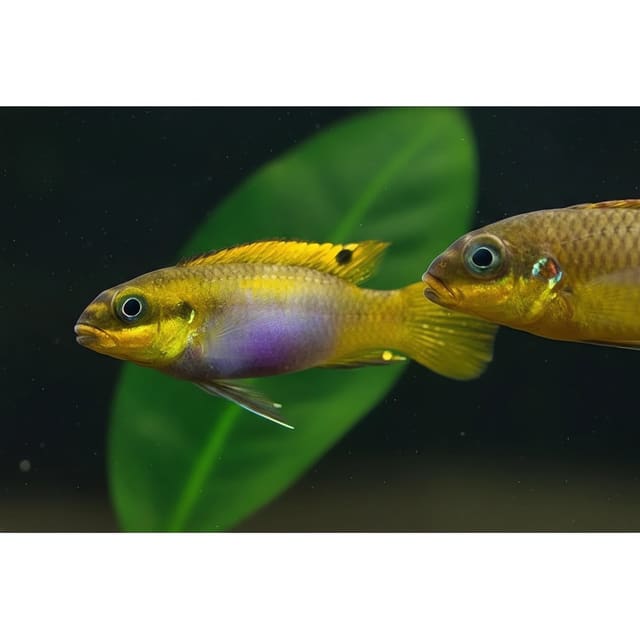
22–26°C · pH 5–7.5 · 71L
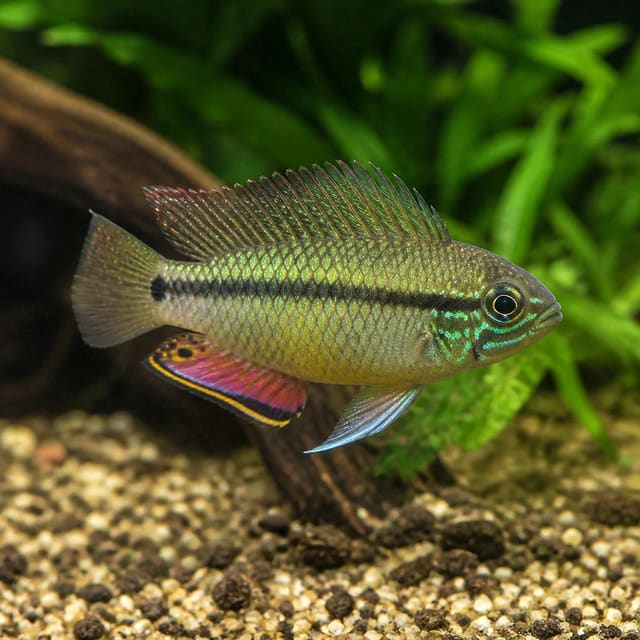
23–25°C · pH 6–7.5 · 100L
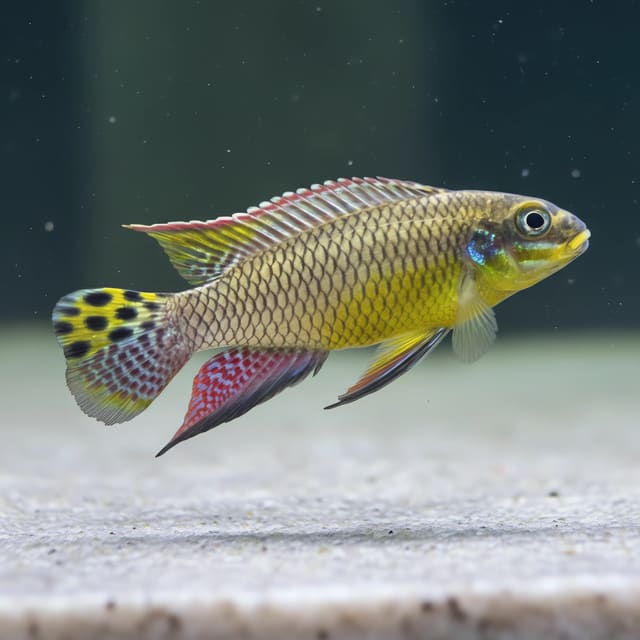
22–26°C · pH 6–7.5 · 71L
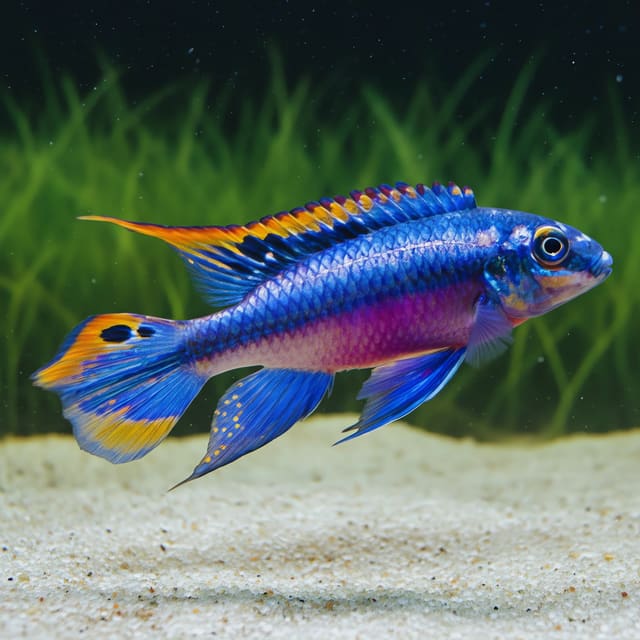
24–27°C · pH 5–7.5
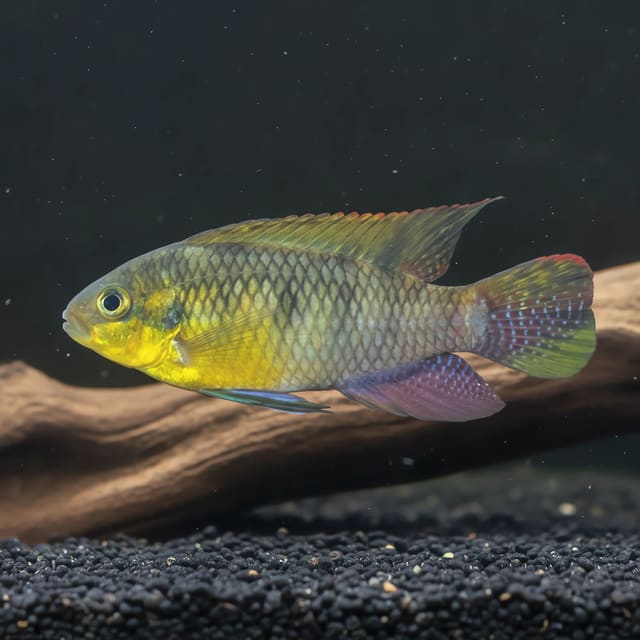
22–27°C · pH 6–7.5 · 80L
24–27°C · pH 5–7.5
24–27°C · pH 6–8
24–28°C · pH 6–7.5 · 75L
23–25°C · pH 8–9 · 75L
23–25°C · pH 8–9
23–25°C · pH 8–9 · 150L
24–27°C · pH 7.5–9 · 40L

22–28°C · pH 7–8 · 41L

21–25°C · pH 5–7

24–27°C · pH 6.5–6.5
24–29°C

22–27°C · pH 6–8 · 72L
24–27°C · pH 6.5–8 · 200L

23–27°C · pH 5.5–7 · 60L

22–27°C · pH 6–8