Advanced
Rubricatochromis guttatus
£6.99
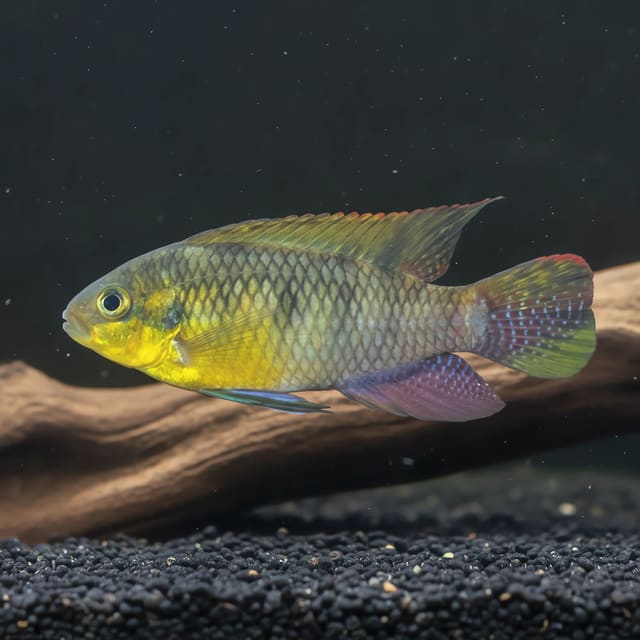
Rubricatochromis exsul is a freshwater cichlid from Lake Turkana, recorded to 10 cm standard length. It suits an experienced keeper prepared to confirm its exact water and feeding needs, provide mature filtration, structured space and a separation plan. One purchase supplies one live, unsexed fish in the selected 3–8 cm size band.
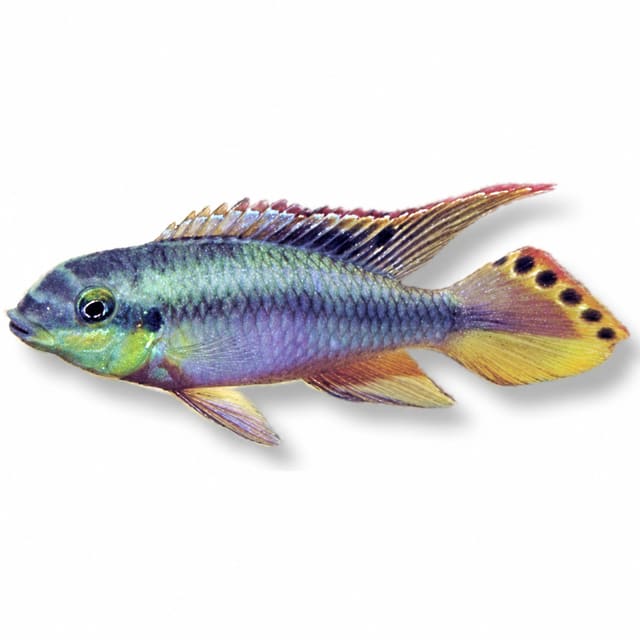
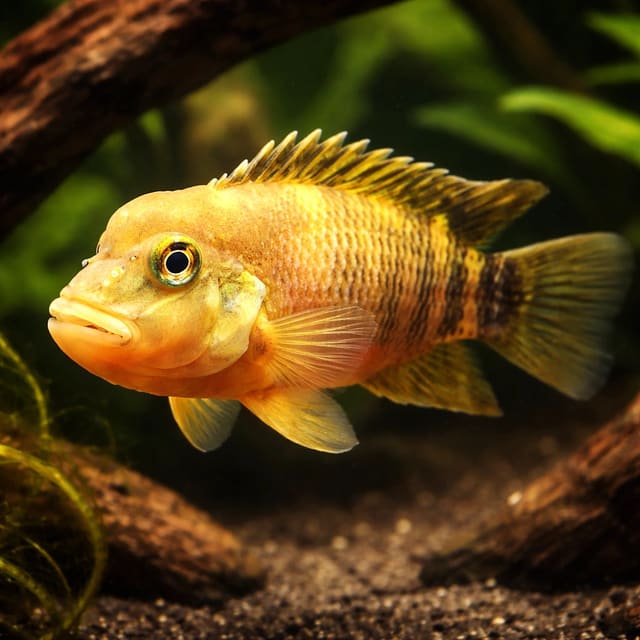
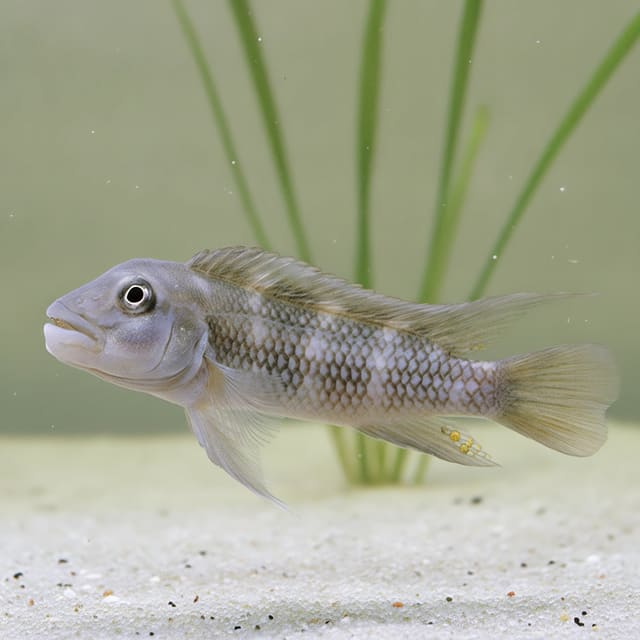
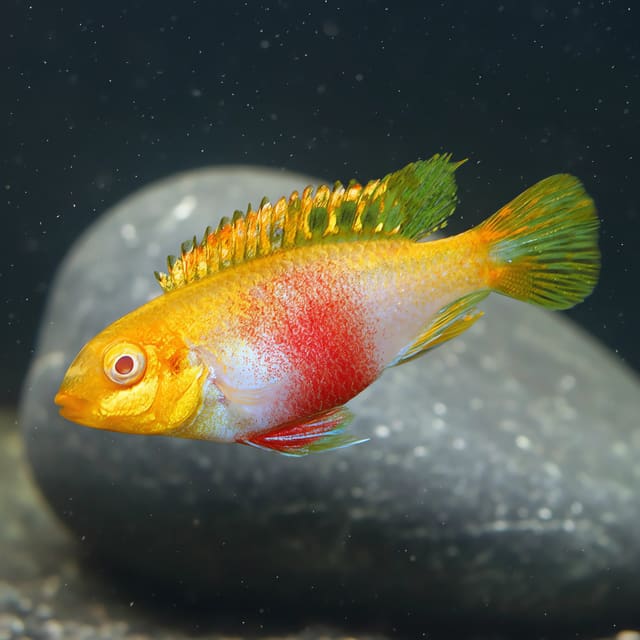
Adult size is the maximum length this species reaches at full maturity (scientific sources). The livestock you receive will be younger and smaller — pick a size above for the actual shipping size. Product-photo provenance and any image-specific limitations are stated on the listing.
Rubricatochromis exsul
Save when buying multiple fish. Each quantity is one fish; sex and pair formation are not guaranteed unless the selected variant explicitly states them.
Rubricatochromis exsul is a freshwater cichlid from Lake Turkana, recorded to 10 cm standard length. It suits an experienced keeper prepared to confirm its exact water and feeding needs, provide mature filtration, structured space and a separation plan. One purchase supplies one live, unsexed fish in the selected 3–8 cm size band.
Adult size is the maximum length this species reaches at full maturity (scientific sources). The livestock you receive will be younger and smaller — pick a size above for the actual shipping size. Product-photo provenance and any image-specific limitations are stated on the listing.

Cichlids are a family of roughly 1,800 accepted species, not one care type. Before buying, identify the exact species and source, then compare adult measurement, usable tank dimensions, social system, territory, tested water, diet and an exit plan. No family-wide minimum tank, water range or tank-mate list is safe.
Rubricatochromis exsul is a freshwater cichlid from Lake Turkana in East Africa. FishBase records a maximum length of 10 cm standard length, so it should be planned as a compact but fully formed cichlid rather than judged only by the juvenile fish dispatched. The listing offers four size bands from 3–4 cm to 6–8 cm. One purchase supplies one live fish in the chosen band. The size you select is the size supplied, not the adult size.
This is a more specialist purchase than the familiar rams, kribensis and Apistogramma often grouped under the broad “dwarf cichlid” label. Lake Turkana origin and a 10 cm adult record are useful fixed points, but they do not make the general water figures, pair recommendations or community advice written for those other fishes transferable to this species. A successful decision starts with a stable, biologically mature aquarium, a clearly recorded water target for R. exsul, adequate structured space and a practical way to separate fish if interactions become difficult.
| Suits | Think carefully if |
|---|---|
| An experienced keeper who can verify the intended water values before purchase and keep them stable. | You need a simple community fish with a ready-made universal companion list. |
| A mature, filtered aquarium whose layout can provide retreats, visual breaks and open movement space. | The aquarium is newly started, its filter is still developing, or water readings fluctuate. |
| A keeper willing to observe feeding and behaviour closely and retain a separation option. | You are relying on colour, size or a sales photograph to guarantee sex, temperament or social role. |
| A species-focused project where the fish can be assessed on its own requirements. | You want to copy a temperature, pH, hardness, tank volume or group number from an unrelated dwarf cichlid. |
The accepted scientific name used here is Rubricatochromis exsul. The name Hemichromis exsul remains relevant because the FishBase species record reaches the accepted entry through that synonym, and the established product handle also retains it. This is a taxonomic update, not a different fish being substituted. FishBase places the species in Cichlidae, records it as freshwater and benthopelagic, and gives Lake Turkana as its distribution. Its page records the species as Least Concern, but that conservation assessment does not predict ease of aquarium care.
The broader jewel-cichlid naming history explains why both generic names may appear in books and search results. Traditionally, Hemichromis contained two noticeably different groups, with the true jewel cichlids sometimes recognised separately as Rubricatochromis. The useful customer point is simple: search both names when comparing references, but match the complete species name exsul rather than applying advice for jewel cichlids as a whole.
The available grades are 3–4 cm, 4–5 cm, 5–6 cm and 6–8 cm. They let you choose the size supplied; they are not four forms, life-stage guarantees or sexed lines. A smaller juvenile may need more deliberate observation at feeding time, while a larger fish takes up more of the adult space immediately. Either way, plan the aquarium around the 10 cm standard-length record from the start. Standard length is measured to the base of the tail fin, so it is a biological measurement rather than the full nose-to-tail display length a casual ruler check may suggest.
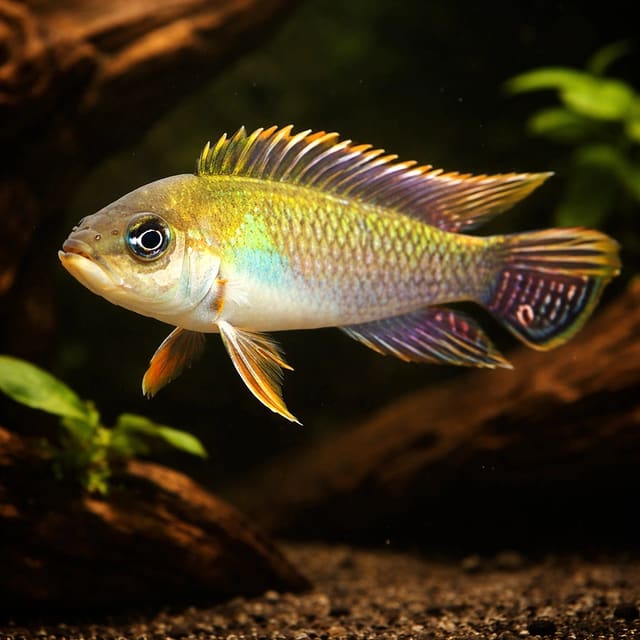
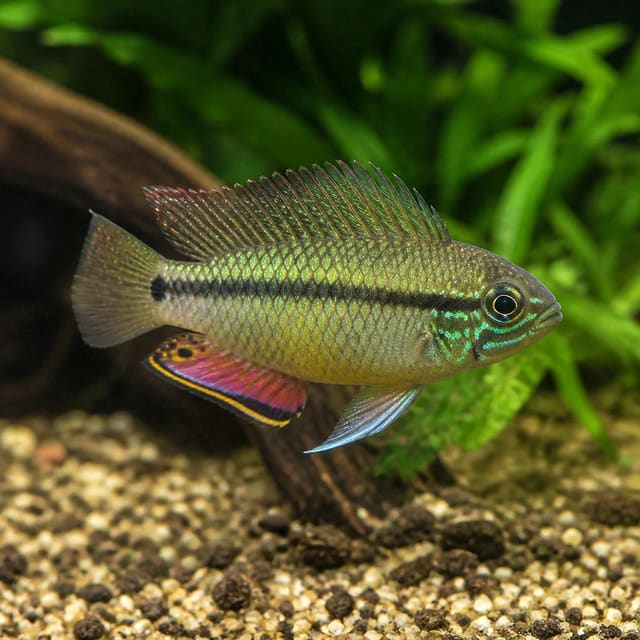
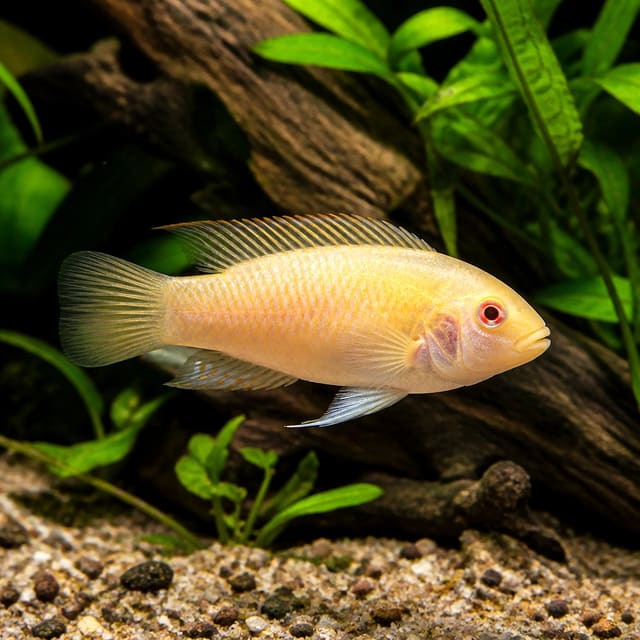
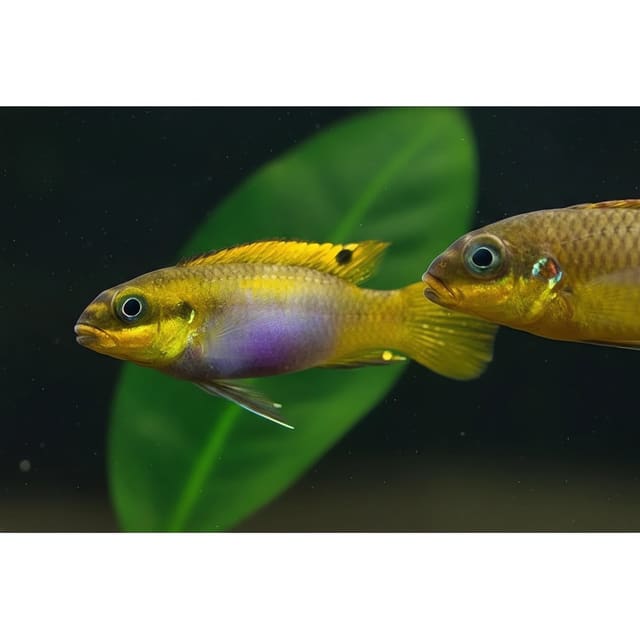
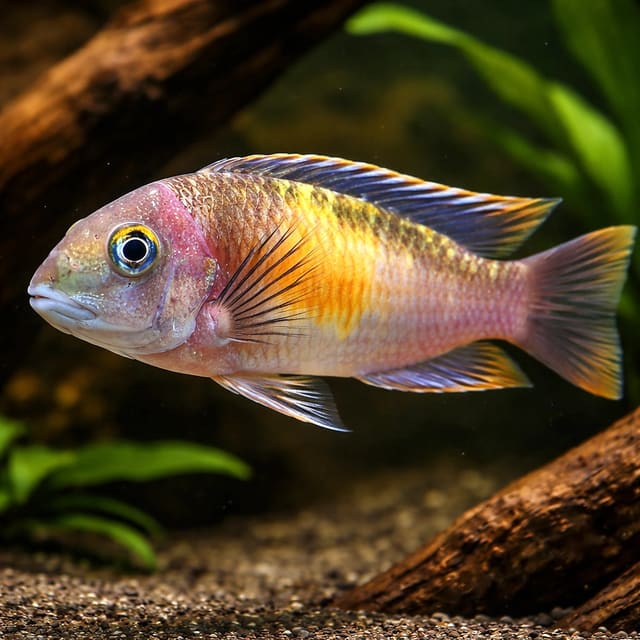
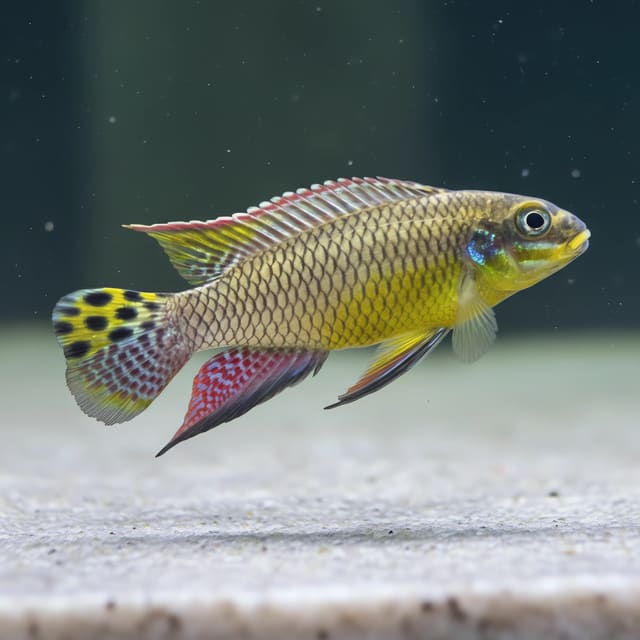
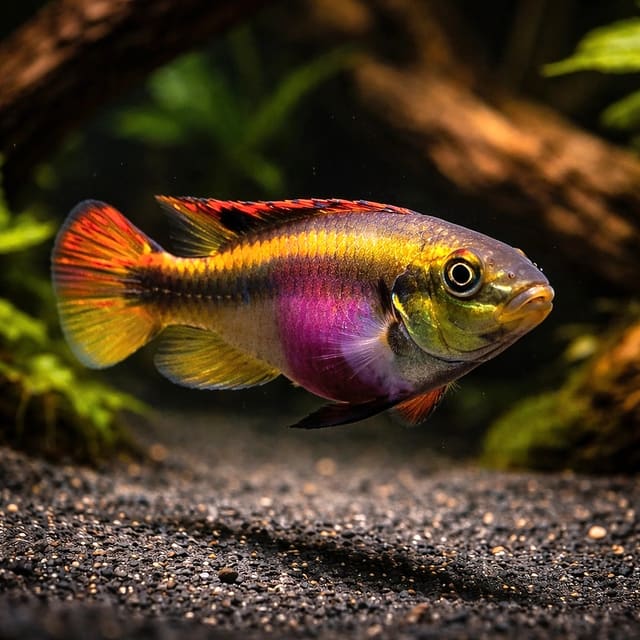
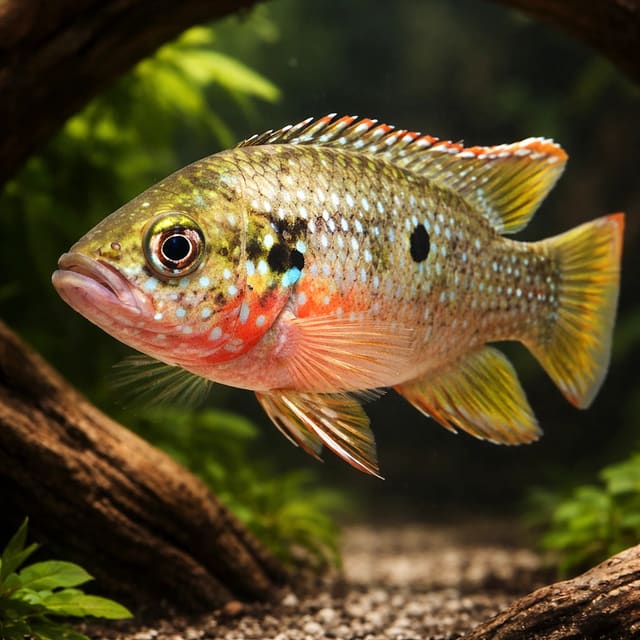
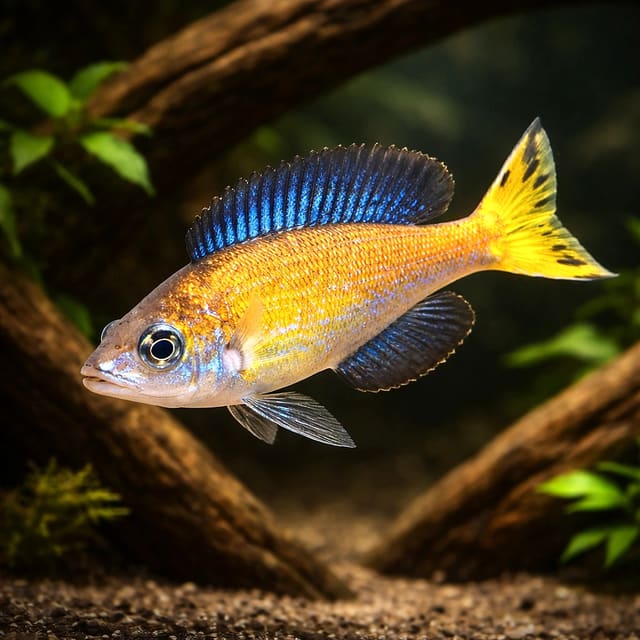
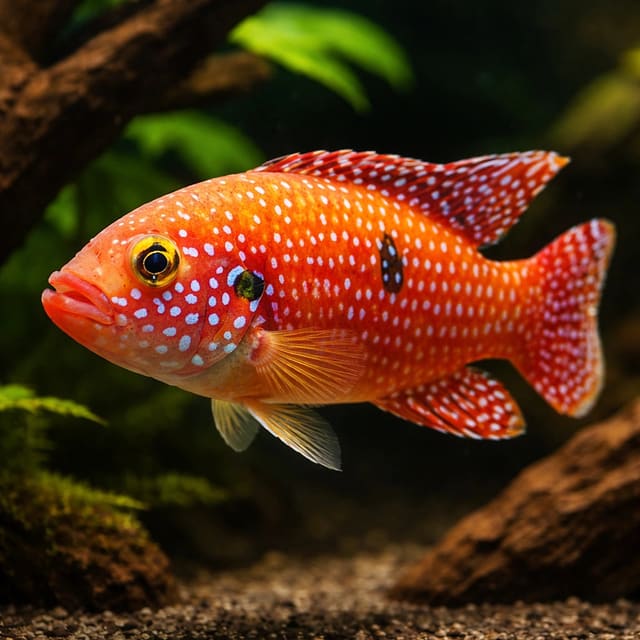
Sex is guaranteed only when the selected option explicitly states male or female. This Hemichromis exsul listing has no sex-guaranteed option. Colour, body depth, fin shape and intensity in a photograph are therefore not promises of sex or reproductive status. Gallery images have been digitally enhanced to improve image quality. Natural colour, pattern, size and maturity can vary between live animals.
For wider browsing, the African cichlid collection is useful for comparing different offers. Products shown there are alternatives to consider, not automatic tank mates for this fish.
The care plan for Rubricatochromis exsul should be built in a deliberate order: confirm the intended water conditions, mature the filter, decide the adult layout, establish a maintenance record and arrange a fallback space. Doing those jobs before purchase is more reliable than trying to make a new arrival fit an aquarium that was designed around a generic dwarf-cichlid profile.
Record the aquarium’s temperature, pH and general hardness, then compare them with a current reference written for this exact species. Keep the chosen values stable rather than moving repeatedly between the outer edges of a range. Lake Turkana origin is not enough on its own to calculate an aquarium setting, and the wide 22–27°C, pH 6.0–8.0 and 4–12 dGH figures commonly printed for dwarf cichlids are not used as R. exsul targets here. Those broad values cover unrelated African and South American fishes with different ecological histories.
If you are still preparing the aquarium, follow the first tropical tank guide to establish the system before livestock is added. The water chemistry guide explains what the main readings mean, while the water matcher helps organise a comparison once you have both measured aquarium values and a dependable target. These tools help with preparation; they do not replace the need to identify the fish correctly.
| Check | Practical decision |
|---|---|
| Temperature | Choose one appropriate target for R. exsul, verify it with a separate thermometer and avoid abrupt movement. |
| pH | Measure the actual aquarium after it has settled; consistency matters more than chasing a convenient generic figure. |
| General hardness | Test the source water and planned aquarium rather than guessing from region, substrate or marketing labels. |
| Ammonia and nitrite | Confirm the biological filter is processing waste before purchase and investigate any detectable reading promptly. |
| Nitrate and maintenance | Track the direction between water changes so the schedule is based on the aquarium’s real load. |
A working biological filter is essential. Fish release ammonia, which is toxic; established filter bacteria convert it first to nitrite, also toxic, and then to the less immediately harmful nitrate. The RSPCA aquarium environment guidance describes this basic filtration chain and the need for a properly set up, maintained filter. A pump merely moving water is not proof that enough bacteria are present to handle a new fish.
Use repeatable tests and write the results down. Test after changes that alter biological load or flow, such as adding livestock, cleaning equipment or finding that the filter intake has slowed. Look for a stable pattern, not a single reassuring result. A mature system also needs good oxygen exchange and dependable circulation through the filter media; place décor so it does not create stagnant debris traps or block inspection of the intake.
Preserve the useful bacteria when servicing the filter. Treat replacement tap water with a suitable conditioner before it enters the aquarium, and lightly rinse dirty biological media in removed aquarium water rather than chlorinated tap water. Clean enough to restore flow without stripping every surface at the same time. Check pipes, impellers and intakes for obstruction, then confirm the system has restarted correctly before walking away.
No litre figure is presented as a rule for this species. Choose the aquarium from its 10 cm adult record, the cichlid-style need for structured territory management, the number and adult size of every resident, and the capacity of the filter. Footprint and layout matter alongside nominal volume. An aquarium can hold many litres yet still offer poor usable space if a narrow base, oversized ornaments or competing territories leave no clear route between shelter and open water.
Build the hardscape so the fish can move out of view without being trapped in a dead end. Aquarium-safe rock, wood, robust planting or purpose-made caves can create visual breaks; retain open areas for normal movement and a clear route for maintenance. Secure anything that could shift. The décor is there to manage choice and reduce constant exposure, not to claim an exact recreation of Lake Turkana’s habitat.
Before adding water, sketch where the filter intake, outlet, heater, thermometer and test access will be. Check that a resting fish cannot be pinned against an intake and that heated water circulates throughout the tank. Leave enough clearance to siphon accumulated waste and examine the edges of retreats. If the plan includes other bottom- or structure-oriented fishes, count the places they will all need at the same time rather than assuming they will take turns.
Measure the usable base after décor is positioned, not only the empty glass dimensions printed on the aquarium. A scale sketch helps reveal whether two shelters open into the same contested area, whether a fish can pass behind the main structure, and whether maintenance equipment can reach accumulated debris. Review the drawing at the 10 cm adult scale and include the body size of every proposed resident. If the layout only works while all animals remain at dispatch size, it is not an adult plan. Leave enough flexibility to move one item without collapsing the whole arrangement, but keep heavy structures independently stable so normal digging or maintenance cannot undermine them.
Begin with the food the fish is already accepting and obtain the current routine before dispatch. That gives a new arrival a familiar starting point without turning a general dwarf-cichlid menu into a species claim. Use pieces suited to the mouth and watch the individual actually take them. A food entering the tank is not the same as this fish eating it, especially where quicker residents reach every item first.
Change foods gradually after the fish is settled and keep notes on acceptance, body condition and waste. Feed with enough light to observe, but avoid leaving excess food to decay around caves or wood. If appetite falls, check water quality, respiration, posture, social pressure and access to shelter before simply adding more. A sudden change is information about the animal or its environment, not an invitation to keep increasing the ration.
Base the water-change interval on test results, feeding, fish load and debris accumulation. Replacement water should be conditioned and reasonably matched to the aquarium so that maintenance improves stability rather than creating a sharp swing. Vacuum accessible waste while leaving the layout secure. Inspect the heater, thermometer and filter during the same routine, then record what was changed and how the fish responded.
General dwarf-cichlid material can still help with broad housekeeping when its limits are kept clear. The OATA dwarf cichlid care sheet covers filtration, conditioned replacement water, cover and visual health checks. Its numerical water ranges, pair volumes, dither-fish advice and feeding programme should not be treated as instructions for this Lake Turkana jewel cichlid.
Learn the fish’s ordinary posture, colour, breathing rhythm, swimming route and response at feeding time. Then look for changes: unusually rapid gill movement, persistent surface hanging, prolonged bottom sitting, erratic movement, a marked colour shift, damaged fins, missing scales, white spots, fluffy growths, swelling, weight loss or withdrawal from food. None of these signs identifies a cause by itself, but each justifies an immediate check of water readings and equipment.
Observe from a distance before approaching the glass. A fish that hides from a person may behave normally once the room is quiet, whereas a fish being excluded by another resident may repeatedly emerge and be driven back. Check both sides of the body and watch turns as well as straight swimming. Use photographs taken under similar lighting to track a real change instead of relying on memory.
If a problem appears, separate observation from treatment. First verify temperature, filter operation and water quality, then review recent maintenance, new livestock, feeding changes and social interactions. Use an appropriately prepared separate aquarium when isolation is necessary. Medication choices depend on an accurate diagnosis and the product instructions; avoid treating the display tank on guesswork.
Delay purchase if you cannot yet write down the intended temperature, pH and hardness for R. exsul, if the filter has not demonstrated that it can process the aquarium’s waste, or if the adult layout only works by assuming the fish stays at its dispatch size. The same applies when a proposed mixed aquarium has no spare refuge, no way to watch each animal eat, or no prepared place for separation. Postponing at that stage protects both the newcomer and the established residents.
Delivery day also needs attention. Choose a date when someone can receive the parcel, record the opening, inspect the fish and complete the introduction without leaving the bag unattended. Avoid arranging arrival immediately before travel, major filter maintenance or a planned change to the aquarium’s water chemistry. A settled system and an available observer make it much easier to distinguish normal caution from a genuine problem.
On the first settled days, note the measured water values, food accepted, usual retreat, normal breathing and the times the fish emerges. Add one clear photograph from each side when the opportunity arises. This small baseline helps later: a change in posture, body condition or space use is easier to recognise when it can be compared with the fish’s own recent pattern rather than with a different animal online. Record maintenance and additions on the same page so environmental changes can be matched to behaviour.
Finish the aquarium and test it before dispatch day. Make sure someone can receive the parcel, have the thermometer and tests ready, and clear enough time to inspect the fish without rushing. The store policy says live animals are hand-packed in oxygenated bags inside an insulated box, with a heat pack when weather calls for it, and sent by a licensed live-animal courier.
Record every delivery continuously from the still-sealed parcel through opening to the fish inside its sealed bag; retain that video if a Live Arrival Guarantee claim is needed. Inspect the delivery the same day. The policy says to float the closed bag for 20–30 minutes before release and not to pour transport water into the aquarium. Keep claim evidence and order details together so any concern can be reported promptly.
Compatibility for Rubricatochromis exsul should be treated as a design exercise, not a list of guaranteed companions. The record establishes a 10 cm Lake Turkana cichlid, but it does not justify calling every individual peaceful, aggressive, community-safe, pair-forming or fin-nipping. Start with a species-focused aquarium as the cautious default. Add another animal only after water needs, adult space, behaviour and resource use have been checked together.
| Situation | Decision rule |
|---|---|
| Species-only aquarium | The clearest starting point because water, layout and observation can be centred on R. exsul. |
| One fish with established residents | Proceed only after checking full adult size, water overlap, space and a method of separation. |
| More than one R. exsul | Do not infer a pair or social minimum from the size bands; provide independent cover and a fallback tank. |
| Very active or structure-dominant residents | Treat as high caution because speed and territory use can prevent feeding or retreat even without visible injury. |
| Breeding project | Do not buy unsexed fish on the assumption that colour or size will produce a compatible pair. |
Each quantity adds one animal. The four dispatch grades are size choices, not a recommendation to buy four fish and not evidence for a pair or shoal. There is no sex-guaranteed choice on this product. If you intend to keep more than one, the aquarium must be able to support each fish as an adult and allow physical separation without waiting for injuries or chronic hiding.
Size matching cannot guarantee social acceptance. Two similarly sized fish may compete for the same refuge, while a smaller newcomer may be unable to hold a feeding position. Introduce only when the layout provides more than one usable route and retreat. Observe at quiet periods as well as feeding time, because displacement may show as repeated avoidance, faded colour or failure to emerge rather than obvious chasing.
Look for reciprocal space use rather than one fish controlling the whole aquarium. Healthy caution around a new environment should ease; persistent exclusion from shelter or food calls for action. Warning patterns include repeated pursuit, cornering, blocked access to a retreat, damaged fins, rapid breathing after encounters and one animal remaining hidden while another patrols nearby.
Act early by using the separation arrangement prepared before purchase. Rearranging décor can create different visual breaks, but it is not a substitute for enough room or a safe spare space. Keep water conditions consistent between display and fallback systems so that moving a fish does not add avoidable physiological stress.
“Jewel cichlid” is a broad group name, not a shortcut to a universal temperament. Its members have varied species histories. Similarly, catalogue placement among African dwarf cichlids cannot make ram, kribensis or Apistogramma husbandry applicable. Dither-fish advice from a general sheet is not carried into this listing, and no named fish, shrimp or snail is promised as a safe companion.
The two related products shown elsewhere on the page are browsing alternatives only. They are not endorsements for a shared aquarium. For this fish, a good compatibility choice is one you can explain in terms of measured water, adult footprint, feeding access, retreat use and a tested fallback—not one based on a shared sales category.
These answers cover the decisions that can be made confidently before purchase. For current courier days, receiving requirements and guarantee terms, read the delivery and Live Arrival Guarantee policy.
FishBase records a maximum of 10 cm standard length for Rubricatochromis exsul. Standard length runs from the snout to the base of the tail fin. The 3–4 cm, 4–5 cm, 5–6 cm and 6–8 cm bands describe the fish supplied, so plan the aquarium around the adult record rather than the dispatch grade.
Choose an adult cichlid aquarium with enough footprint for secure retreats, visual breaks, open movement space, filtration and a separation plan. Determine capacity from the completed layout and every resident at adult size rather than applying a pair-volume figure written for unrelated dwarf cichlids. Litres alone cannot describe usable territory or escape routes.
There is no fixed pair or group number for this product. One purchase supplies one unsexed fish. A species-focused aquarium with one individual is the cautious starting point; keeping more than one requires adult space for each fish, independent shelter, close observation and somewhere ready to separate them if the arrangement fails.
Tropical Fish Co classifies it as advanced. A keeper should be comfortable confirming exact water targets, maintaining a mature biological filter, reading cichlid behaviour, checking that the fish eats and separating animals promptly. It is a poor match for a newly cycled aquarium or for someone who wants a guaranteed community temperament.
Begin with the food and routine the fish is already accepting, then change gradually after it has settled. Use an appropriate particle size and watch the individual take food rather than assuming it has eaten. A generic dwarf-cichlid flake, frozen-food and once-daily programme is not an exact Rubricatochromis exsul menu.
Confirm a current temperature, pH and hardness target written for Rubricatochromis exsul before purchase, measure the aquarium and hold the chosen values steady. The wide figures used for rams, kribensis and Apistogramma are deliberately not repeated as this species’ aquarium range. Lake Turkana origin alone is not a substitute for an exact captive-care reference.
Individual cichlid behaviour must be assessed in the actual aquarium rather than reduced to an aggressive, peaceful or fin-nipping label. Use structured space, careful observation and a separation option. Repeated chasing, cornering, blocked access to shelter or food, damaged fins and persistent hiding are reasons to intervene promptly.
Use a species-focused aquarium as the safest default. Consider another animal only when its exact water requirements overlap and the completed layout gives both adults adequate space, shelter and feeding access. Related cichlids displayed as shopping alternatives are not automatically compatible tank mates.
Tropical Fish Co hand-packs live fish in oxygenated bags inside an insulated box, adding a heat pack when conditions call for it, and uses a licensed live-animal courier. Record every delivery continuously from the sealed parcel through opening to the fish still in its sealed bag, inspect it the same day, and retain the video and order number in case a Live Arrival Guarantee claim is needed.
The references below have different jobs. Species identity and maximum length come from the scientific record; general welfare pages explain aquarium processes; the store policy governs packing and claims. Broad material is not used to manufacture a precise numerical care range for this Lake Turkana species.
Scientific identity can change as classifications are revised, which is why both Rubricatochromis exsul and the synonym Hemichromis exsul appear on this page. The accepted name is used for the title and stable structured fields.
No reviews for this item yet. Bought one? Honest reviews only, good or bad.
What customers say about ordering from us
Easy website plenty of info on fish your buying great to pick a time slot
TRACEY DURRANT · 7 Oct 2026
Got some lovely fish thank you
Kevin Mackie · 7 Oct 2026
Reviews of our shop, collected by Judge.me, an independent third-party review collector. Newest first.