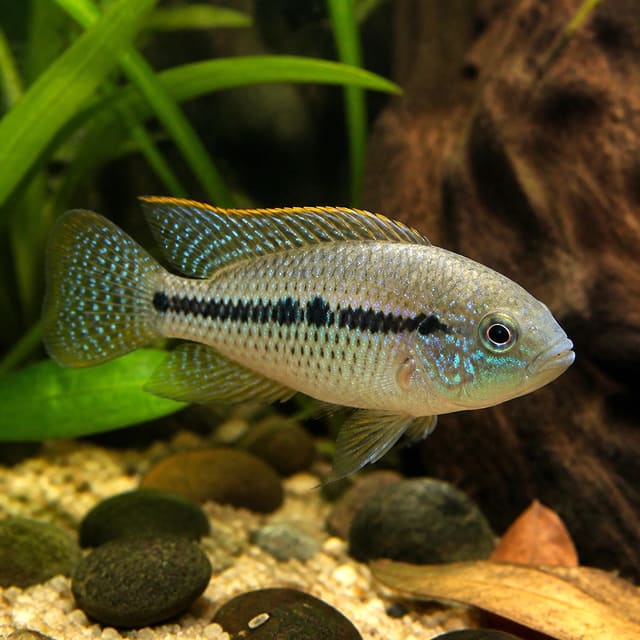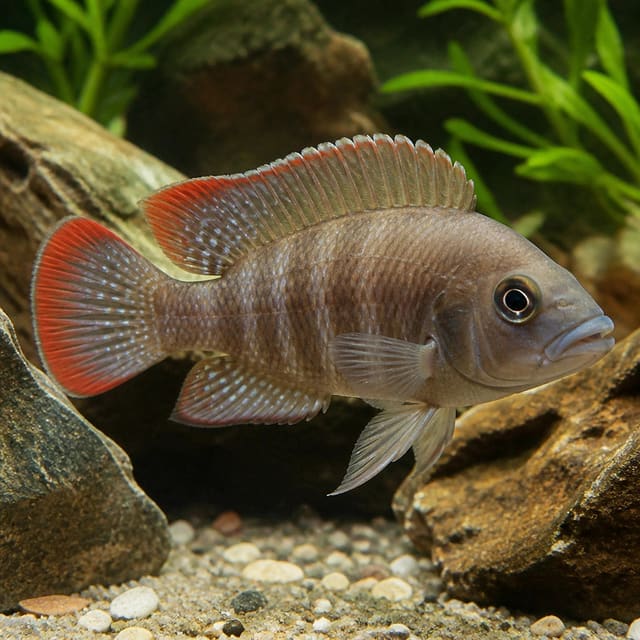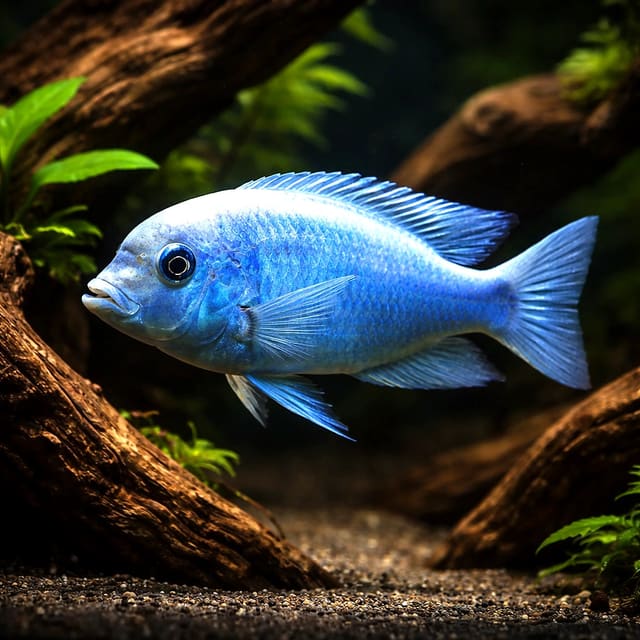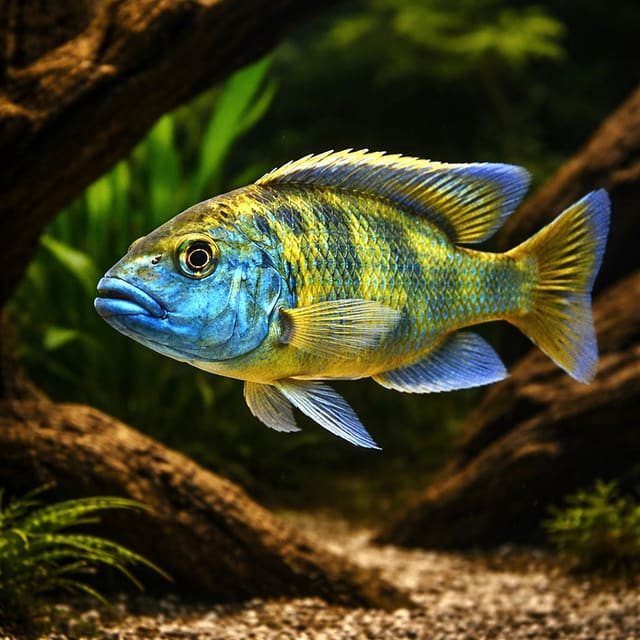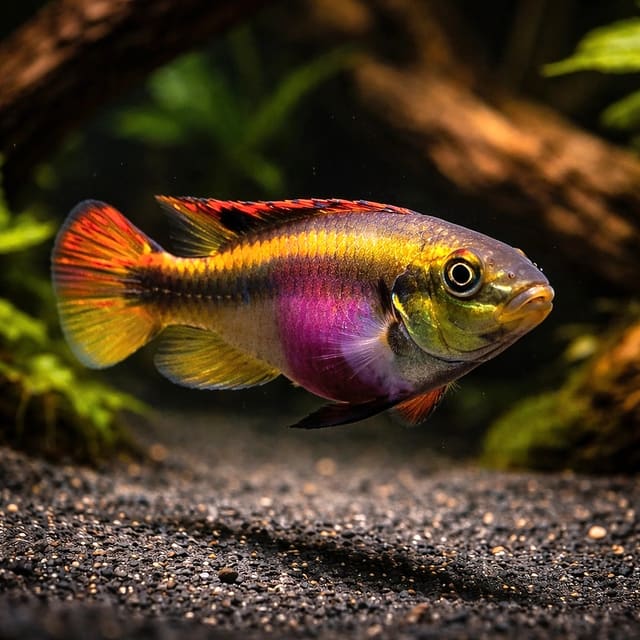
Kribensis Cichlid (Pelvicachromis pulcher)
24–27°C · pH 5–7.5 · 71L
£4.99

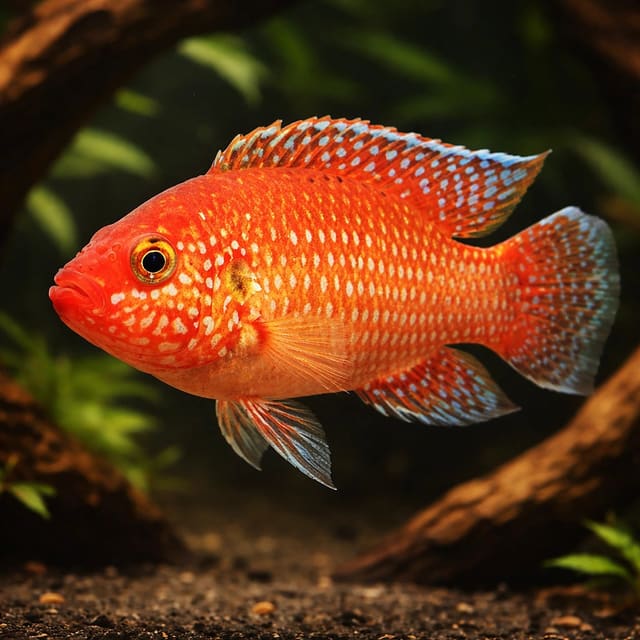
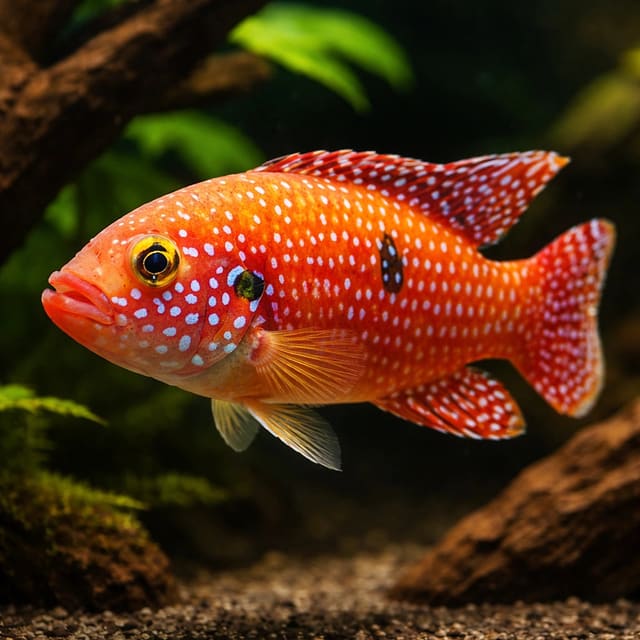
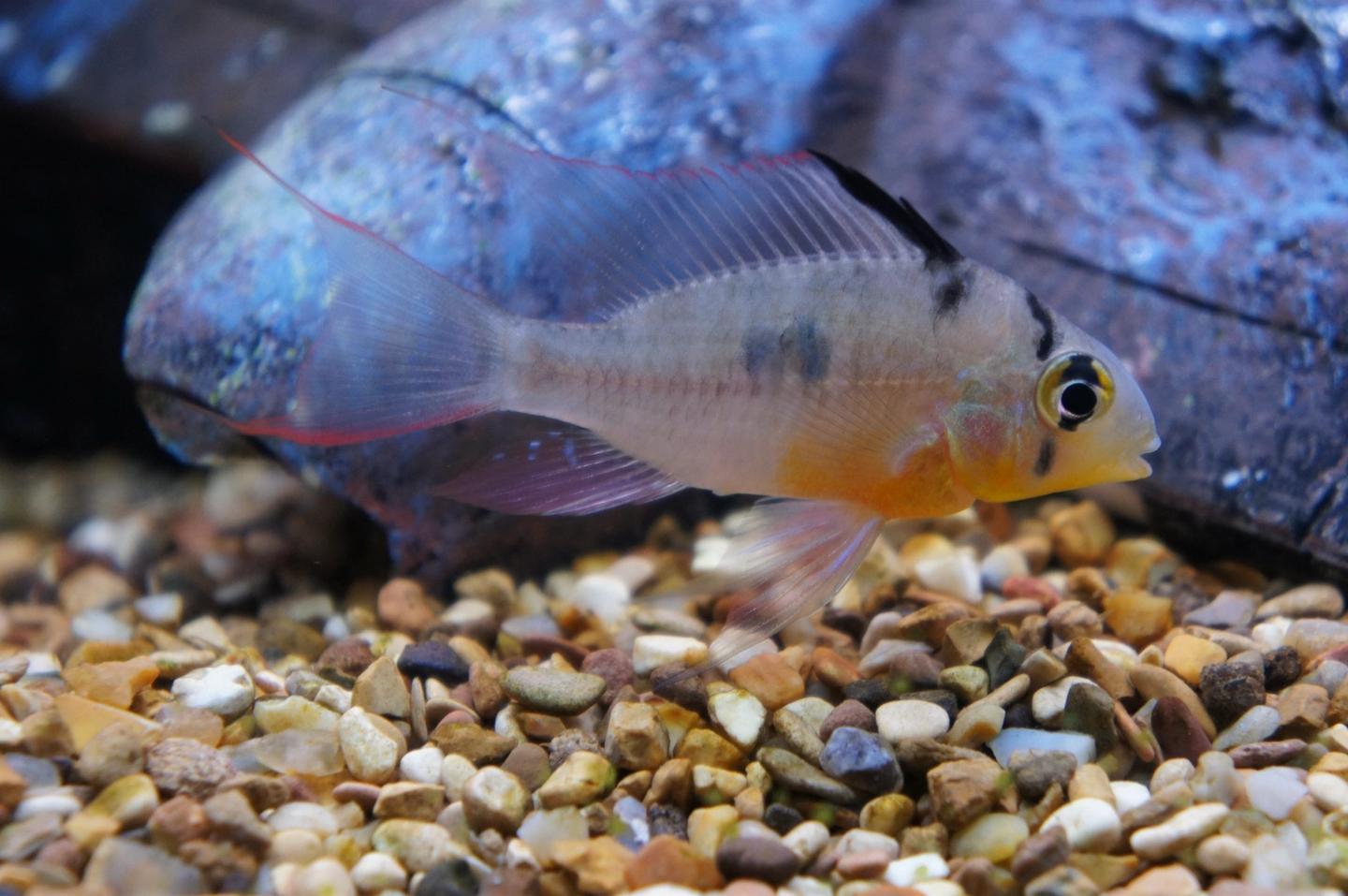
Red Jewel Cichlid (Rubricatochromis bimaculatus) is a territorial West African cichlid suited to an experienced keeper with a structured aquarium. One purchase supplies one fish in the selected 4–5 cm, 5–7 cm or 7–10 cm dispatch size. Plan around a 120 × 30 cm base, approximately 108 litres, 22–27°C water and the potential for intense aggression when a pair spawns.
Adult size is the maximum length this species reaches at full maturity (scientific sources). The livestock you receive will be younger and smaller — pick a size variant above for the actual shipping size. Product-photo provenance and any image-specific limitations are stated on the listing.
Rubricatochromis bimaculatus
Save when buying multiple fish. Each quantity is one fish; sex and pair formation are not guaranteed unless the selected variant explicitly states them.
Minimum of 2 per order.
Red Jewel Cichlid (Rubricatochromis bimaculatus) is a territorial West African cichlid suited to an experienced keeper with a structured aquarium. One purchase supplies one fish in the selected 4–5 cm, 5–7 cm or 7–10 cm dispatch size. Plan around a 120 × 30 cm base, approximately 108 litres, 22–27°C water and the potential for intense aggression when a pair spawns.
Adult size is the maximum length this species reaches at full maturity (scientific sources). The livestock you receive will be younger and smaller — pick a size variant above for the actual shipping size. Product-photo provenance and any image-specific limitations are stated on the listing.
Cichlids are a family of roughly 1,800 accepted species, not one care type. Before buying, identify the exact species and source, then compare adult measurement, usable tank dimensions, social system, territory, tested water, diet and an exit plan. No family-wide minimum tank, water range or tank-mate list is safe.
Maintain these water conditions for optimal health and vibrant colors
Red Jewel Cichlid, also known as Jewelfish or Red Cichlid, is Rubricatochromis bimaculatus. Older aquarium literature may place the same fish under Hemichromis bimaculatus. FishBase places it in the cichlid family Cichlidae and records a West African distribution associated with forested areas. Wild fish occur in mud-bottomed and sand-bottomed canals, including sites some distance inland from the coast.
This is a behaviour-led choice rather than a general community fish. FishBase describes aquarium behaviour as aggressive and pair-oriented, while the detailed husbandry profile reports that territorial pressure can become exceptionally strong during spawning. Choose it if you enjoy observing territory patrols, pair interaction and rapid changes in social behaviour, and can act promptly when one fish is being driven away.
We class the care level as advanced. The routine feeding and water care are straightforward, but managing pairing, aggression and tank mates requires judgement, spare separation capacity and close observation. A peaceful mixed aquarium is the wrong starting point. A species-focused arrangement or a large, carefully structured cichlid aquarium gives you far more control.
Browse our African cichlid collection if you are comparing this fish with cichlids that demand a different social plan. Compare adult dimensions, water requirements and territorial behaviour rather than colour alone.
One purchase supplies one animal of the size selected on the live selector. The size labels are 4–5 cm, 5–7 cm and 7–10 cm; use the selector to see which choice can be ordered. The size you select is the size supplied, not the adult size.
Dispatch length must not be used to infer age, sex, origin or social compatibility. A smaller fish still needs an aquarium planned around adult dimensions, while a larger dispatch grade does not establish that two independently chosen fish will form a compatible pair.
Sex is guaranteed only when the selected option explicitly states male or female. This Red Jewel Cichlid listing has no sex-guaranteed option.
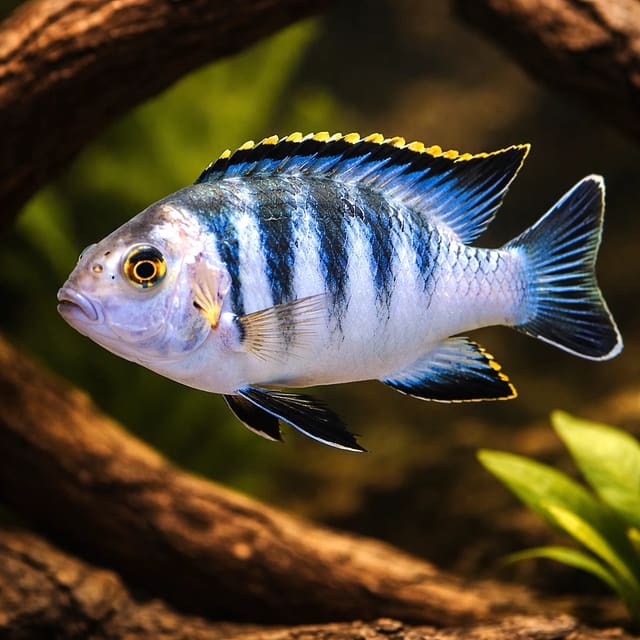
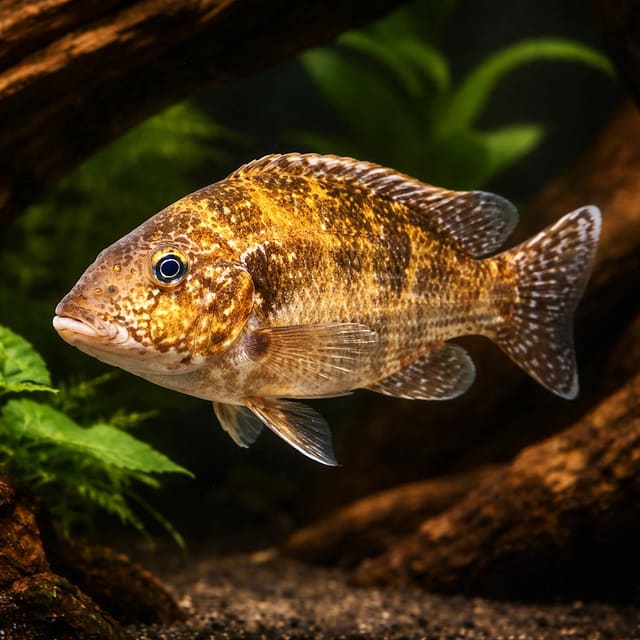
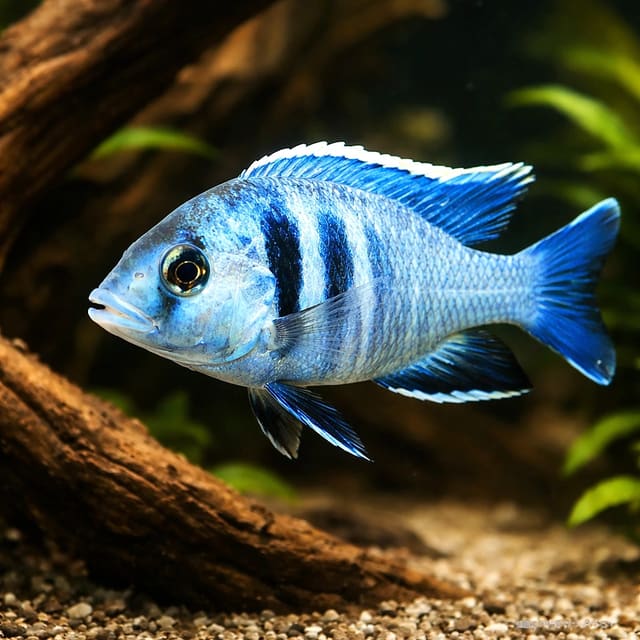
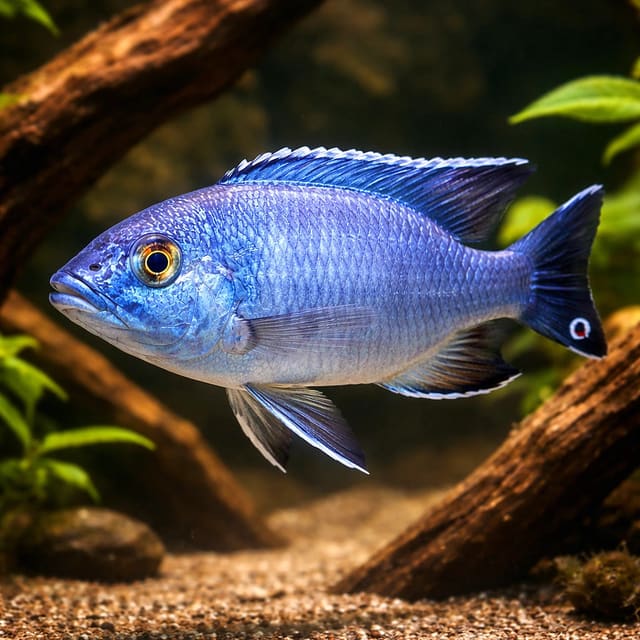
Some gallery images have been digitally enhanced to improve image quality. They show the listed type of animal rather than guaranteeing the exact markings of the individual supplied, so natural colour and pattern can vary.
| Choice | What it means |
|---|---|
| 4–5 cm | One fish within this dispatch-size band |
| 5–7 cm | One fish within this dispatch-size band |
| 7–10 cm | One fish within this dispatch-size band |
| Adult plan | Allow for a fish approaching 15 cm standard length |
Plan for a robust medium-sized cichlid rather than the selected dispatch measurement. FishBase records a maximum length of 13.6 cm standard length and also notes up to 12 cm in captivity. Seriously Fish uses 15 cm standard length for aquarium planning, so allowing for a fish approaching 15 cm is the safer practical decision.
Tank footprint matters because aggression is managed horizontally. FishBase gives a minimum aquarium length of at least 100 cm. The detailed species profile recommends a 120 × 30 cm base, approximately 108 litres at 120 × 30 × 30 cm. Use the 120 cm footprint as the practical baseline, especially if you intend to manage a pair. More water without enough length does not create the same escape distance or room for separate territories.
Set the routine aquarium range at 22–27°C, pH 6.0–7.8 and 4–12 dGH. These values sit within the species aquarium profile and use the narrower upper temperature and hardness limits from UK dwarf-cichlid group guidance. Keep ammonia and nitrite at zero, and prevent nitrate from rising more than 20 mg per litre above the normal tap-water level.
| Suits | Not suited to |
|---|---|
| Stable aquarium water maintained at 22–27°C and pH 6.0–7.8 | Water outside 22–27°C and pH 6.0–7.8 |
| A single fish in a species-focused aquarium | A routine peaceful community aquarium |
Start with the 120 × 30 cm base and divide it into usable zones. Provide as many hiding places as the footprint allows, using rockwork arranged into caves, aquarium-safe wood, clay flower pots and areas of dense planting. The purpose is to let a pressured fish leave the dominant fish’s view rather than remain visible from one end of the tank to the other.
| Layout feature | Job it performs |
|---|---|
| Caves and pots | Create enclosed retreats and potential territorial centres |
| Wood and rock | Interrupt long sight lines across the aquarium |
| Dense planting | Add cover around boundaries and escape routes |
| Open passage | Lets fish move without entering every claimed shelter |
Red Jewel Cichlids dig, so choose strongly rooted plants or keep them in pots. Check that rocks, wood and pots remain stable if substrate is moved around their bases. Decorative cover only works when a fish can enter it and leave by a route that is not controlled by another fish.
Before introducing livestock, look along the front glass from both ends. If every cave is visible from every other cave, add another barrier. In a 120 cm aquarium, a central wood or rock feature can divide the footprint into two broad visual areas while smaller retreats create local cover. Preserve swimming room around the barriers; packing every gap with hardscape can trap a subordinate fish instead of protecting it.
Cover is particularly important for a pair because even settled partners will often chase one another. Inspect the layout again whenever aggression changes. Move a barrier only when doing so solves a clear problem, since repeated wholesale rearrangement also removes familiar refuge points.
The species aquarium profile gives 22–28°C, pH 6.0–7.8 and 4–18 dGH. OATA’s dwarf-cichlid group guidance gives 22–27°C and 4–12 dGH, so use 22–27°C, pH 6.0–7.8 and 4–12 dGH as the routine target. This keeps every value within the species limits while choosing the narrower UK group range for temperature and hardness.
Use our water chemistry guide to understand what each reading means, then compare your measurements with the target through the aquarium water matcher. Base the decision on measured aquarium water rather than an assumed local-water value.
For example, an aquarium at 25°C, pH 7.2 and 9 dGH sits within the routine range. If a later test shows pH 7.2 but ammonia at 0.25 mg per litre, the urgent problem is toxic waste, not pH. Pause further stocking, check the biological filter and use water changes to restore safe conditions.
Avoid sudden chemical adjustment merely to reach the middle of a range. Stability inside the range is more useful than repeatedly moving pH or hardness. Match replacement water closely for temperature, treat it for chlorine or chloramine and make changes in controlled steps.
A biological filter is essential. RSPCA aquarium welfare guidance explains that fish release toxic ammonia, which filter bacteria convert first to toxic nitrite and then to safer nitrate. The filter must therefore be mature, continuously operating and large enough for the aquarium’s biological load.
For the approximately 108-litre example aquarium, the species profile recommends turnover of four to five times the aquarium volume per hour. That corresponds to a filter rated around 430–540 litres per hour. Treat the rating as a starting point: media condition, pipework and the completed layout can reduce real flow. Arrange the outlet so water circulates around barriers without forcing the fish to remain in a harsh current.
Our first tropical aquarium guide explains how to prepare and mature the system before livestock enters it. A new or recently disrupted filter can develop unhealthy ammonia and nitrite levels when feeding and waste rise faster than the bacterial population.
Check the filter for blocked intakes, slowing flow and trapped debris. If the filter needs cleaning, do not run it under the tap because chlorine or chloramine may kill the beneficial bacteria established in the media. Rinse it lightly in aquarium water removed during a water change, and avoid replacing all mature media at once.
Feed once a day and offer only what the fish can finish within a few minutes. OATA’s feeding guidance for dwarf cichlids recommends a good-quality flake or granule, supported by small live or frozen foods such as daphnia, brine shrimp or tubifex. The species profile also calls for a quality dried food and an algae-based component, with vegetable matter such as spirulina flake or blanched spinach.
| Food role | Supported choices |
|---|---|
| Routine dried food | Quality flake or granule |
| Vegetable component | Spirulina flake or blanched spinach |
| Live or frozen variety | Daphnia, brine shrimp or tubifex |
Variety means rotating appropriate foods, not adding every food to one oversized meal. If granules form the main portion on one day, use a modest algae-based component on another and a small live or frozen item on a later day. Live food may help enhance colour, but clean water and low social stress remain essential to normal appearance and behaviour.
Watch the fish eat. Food should be taken promptly and the meal should end within a few minutes. Remove visible leftovers before they break down. If food reaches caves or dense plants uneaten, reduce the next portion rather than relying on the filter to process the excess.
A useful portion check is the aquarium after feeding: there should not be a layer of food on the substrate, repeated fragments circulating through the filter intake or food left inside an unoccupied retreat. Reduced appetite is also a health or stress signal, so pair the feeding observation with a water test and a check for bullying rather than adding richer food immediately.
At least once every week, change 25% of the water. Siphon solid waste from accessible substrate, but preserve the caves and visual barriers that fish rely on. Treat replacement tap water with a conditioner that removes chlorine or chloramine before it enters the aquarium, and match its temperature closely enough to avoid an abrupt swing.
Testing before the water change shows what happened during the week. Testing only afterwards can hide a rising waste trend. If ammonia or nitrite is detected, treat that as an immediate water-quality problem: stop adding fish, check filter operation, reduce excess feeding and use partial water changes to return both readings to zero.
Nitrate should not rise more than 20 mg per litre above the normal tap-water value. For example, if treated tap water measures 10 mg per litre nitrate, keep the aquarium at no more than 30 mg per litre. This comparison is more useful than treating the aquarium result as though the incoming water began at zero.
Inspect hardscape after siphoning because digging can expose the base of a rock or pot. Keep heavy items stable and restore any escape route blocked by moved substrate. Avoid dismantling all territories during routine cleaning; work around the established structure unless a safety or aggression problem requires a deliberate redesign.
Learn the fish’s normal swimming, feeding, breathing, colour and use of cover. Individual behaviour varies, but a change from the established pattern is useful because it can reveal water-quality stress or social pressure early.
| What you see | What to do first |
|---|---|
| Hanging at the surface | Test water and check filter flow and circulation |
| Sitting on the bottom | Check water, breathing and whether another fish controls the open area |
| Erratic swimming | Test ammonia and nitrite and inspect for active chasing |
| Faster or slower gill movement | Check water quality and circulation immediately |
| Darker or paler colour | Look for stress, hiding and territorial exclusion |
| Reduced feeding | Test water and assess aggression before changing the diet |
Also watch for damaged fins, missing scales, white spots, fluffy growths, ulcers, bumps or a clear change in body condition. These signs do not all have the same cause, so avoid choosing a treatment from appearance alone. Test the water first and separate a fish immediately when continued attack is causing injury.
A subordinate fish that remains hidden, cannot reach food or is repeatedly pinned into one corner needs a physical safety response. Use a secure divider or separate aquarium rather than waiting for the pair to resolve the conflict. Cover is helpful only while the pressured fish can still move, feed and rest without repeated pursuit.
If water readings are in range but abnormal behaviour, breathing or visible damage continues, contact us for health guidance. Record the readings, recent maintenance, feeding response and social changes so the next decision is based on the whole pattern.
Arrange for someone to receive the fish. Start filming before the sealed parcel is opened, keep the outer box visible and record one continuous take showing the fish inside the sealed bag before anything is disturbed. Follow our delivery and Live Arrival Guarantee policy, including any claim requirements shown there. Float the bag for 20–30 minutes before releasing the fish, and never pour transport water into the aquarium.
Confirm that the aquarium temperature is stable and the filter is operating normally, then keep disturbance low while the fish locates cover and boundaries. Observe its balance, breathing and whether another fish immediately blocks access to shelter.
During the first week, test ammonia and nitrite frequently enough to detect any rise after the biological load increases. Both must remain at 0 mg per litre. Check that the fish emerges to feed, can reach more than one part of the aquarium and is not confined to a corner by a resident fish.
At the end of the first week, compare appetite, breathing, colour and swimming with the first-day pattern. A fish that remains hidden may be using cover normally, but constant hiding combined with missed meals or repeated chasing calls for a social intervention. Add a sight barrier or separate the aggressor and target rather than adding more fish to dilute the behaviour.
Across the first month, keep the weekly 25% water-change routine, record nitrate before each change and inspect digging around hardscape. Do not add further livestock quickly. Every addition increases feeding and waste while also changing territory boundaries, so allow the filter and social structure to settle before making another stocking decision.
Seriously Fish describes this species as best kept in pairs, but two fish purchased and placed together are not automatically a compatible pair. Introducing two adults as a presumed pair may result in the weaker fish being killed. Pair planning therefore requires observation, separation equipment and enough space to prevent one fish controlling the complete footprint.
A recognised approach is to begin with five or six young fish in a species aquarium and allow a pair to form naturally. This listing supplies one fish per purchase, and a dispatch-size label does not establish life stage. Anyone using the group method must provide space for the complete group and be ready to remove the remaining fish as soon as a pair becomes clear, because they may be attacked.
Spawning greatly increases territorial aggression. The pair may claim a hard surface and defend eggs or fry against every other fish in the aquarium. If a pair begins guarding a site, reassess all occupants immediately rather than relying on behaviour seen before spawning.
A single fish avoids the hazards of forced pairing, but it remains territorial and still needs the full adult footprint, cover and careful companion screening. Do not reduce the aquarium plan simply because only one fish is kept. The tank must still accommodate adult length, active movement and a defensible retreat without turning the whole aquarium into one exposed space.
Avoid treating this as a routine addition to a peaceful community aquarium. The species profile specifically warns that Red Jewel Cichlids are not recommended for the general community tank and may become incredibly aggressive while spawning. Avoid keeping other fish with an actively spawning pair unless they can be moved before serious pursuit begins.
The profile reports conditional success with larger Alestiid tetras such as Congo tetras, Synodontis catfish, loricariids and, in a sufficiently large aquarium, African cichlids such as Steatocranus. These examples are screening starting points, not universal companions. Individual behaviour, footprint, refuge access and breeding condition can change the outcome.
| Question | Required decision |
|---|---|
| Is the aquarium larger than the 120 × 30 cm pair baseline? | Use extra footprint for mixed stocking |
| Can each fish leave the cichlid’s line of sight? | Add real barriers and separate retreats |
| Can the companion feed without entering the defended site? | Change the plan if access can be blocked |
| Can you remove a fish immediately? | Prepare separation before introduction |
| Has spawning behaviour begun? | Move other fish before aggression escalates |
Introduce companions only to a mature, filtered aquarium with ammonia and nitrite at zero. Observe access to food and cover rather than judging success from the absence of an immediate attack. Territorial pressure may rise after a pair forms or begins spawning.
Ask us for one stocking and compatibility assessment before mixing this cichlid with an established aquarium. Include the tank dimensions, measured water values, species and sizes already present, number of retreats and your separation plan. Honest uncertainty remains because no layout guarantees that independently selected fish will tolerate one another.
Rubricatochromis bimaculatus is its accepted scientific name. Older aquarium literature may place the same fish under Hemichromis bimaculatus, while Jewelfish and Red Cichlid are established common names.
One purchase supplies one fish of the selected size. A pair or group requires a separate purchase quantity for each animal, and independently selected fish are not guaranteed to form a compatible pair.
The live selector uses 4–5 cm, 5–7 cm and 7–10 cm labels. These are dispatch sizes rather than adult lengths; plan for a fish approaching 15 cm standard length.
Use a 120 × 30 cm base, approximately 108 litres, with caves, wood, rock and broken sight lines. FishBase gives an aquarium length of at least 100 cm, but the longer species-profile footprint provides more room for territorial management.
A single fish or an established compatible pair can be planned for. Two fish placed together may fight, while a pair can become intensely aggressive during spawning, so prepare a divider or separate mature aquarium before attempting pairing.
Maintain 22–27°C, pH 6.0–7.8 and 4–12 dGH, with ammonia and nitrite at 0 mg per litre. Keep nitrate no more than 20 mg per litre above the normal tap-water level.
Feed once daily with only what it finishes within a few minutes. Use quality flake or granules, include spirulina flake or blanched spinach, and rotate small live or frozen foods such as daphnia, brine shrimp or tubifex.
Start filming before the sealed parcel is opened, keep the outer box visible and record one continuous take showing the fish inside the sealed bag. Then float the bag for 20–30 minutes before release and do not pour bag water into the aquarium.
It is not suited to a routine peaceful community aquarium. Larger Alestiid tetras, Synodontis catfish, loricariids and some African cichlids are conditional possibilities only in a large, structured aquarium with close observation and immediate separation capacity.
Max adult size is the length this species reaches at full maturity (from scientific sources). The livestock you receive will be younger and smaller — pick a size variant on the buy box for the actual shipping size. Product-photo provenance and any image-specific limitations are stated on the listing.
Always research specific species before adding them to your tank. Consider:
No reviews for this item yet. Bought one? Honest reviews only, good or bad.
What customers say about ordering from us
I have a small group of long finned mountain minnows. So was delighted to be able to order ten of this variety to increase the genetics in my tank . The ones I recieved are healthy but it’s to early to give a verdict on wether they are of a long finned type since they are small currently.
Gordon Walker · 23 Sept 2026
100% success travel and "installation". Pleased with quality of purchase. The Siamese fighter a bit "shy" so have not yet seen him at his best yet but looking good. Happy customer. GG
George E Garratt · 21 Sept 2026
Reviews of our shop, collected by Judge.me, an independent third-party review collector. Newest first.