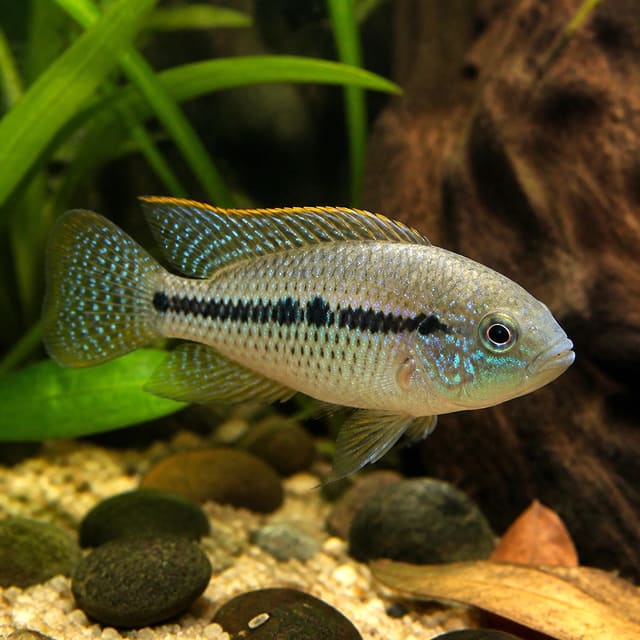
Advanced
Rubricatochromis exsul
£12.99

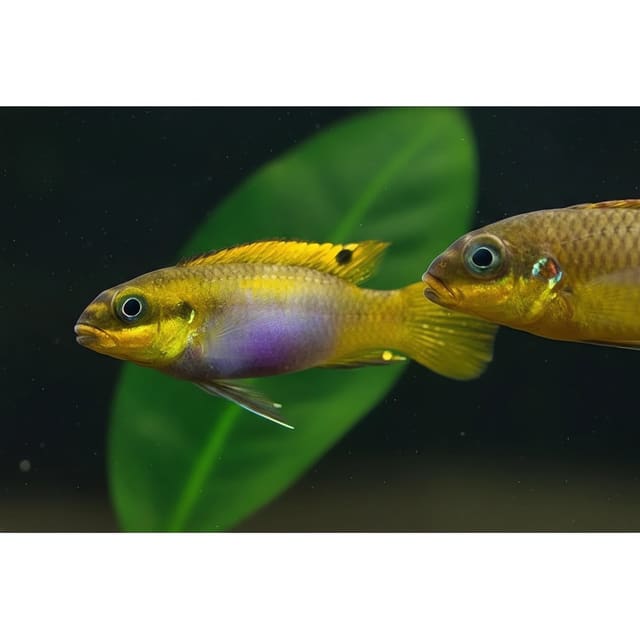
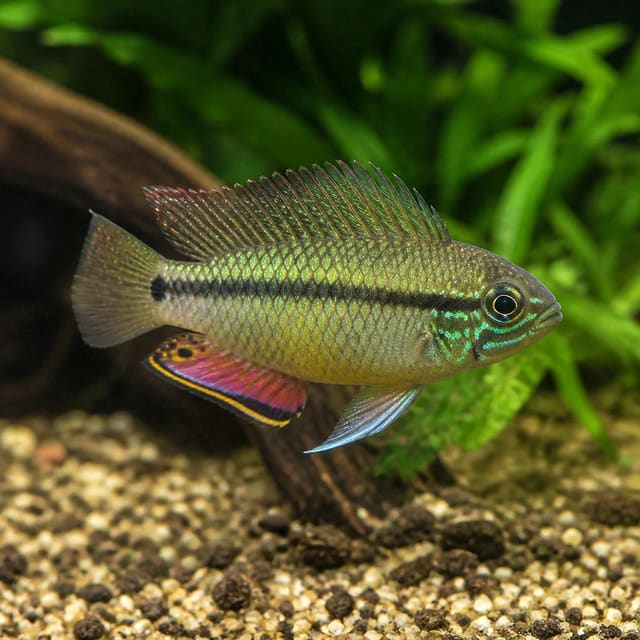
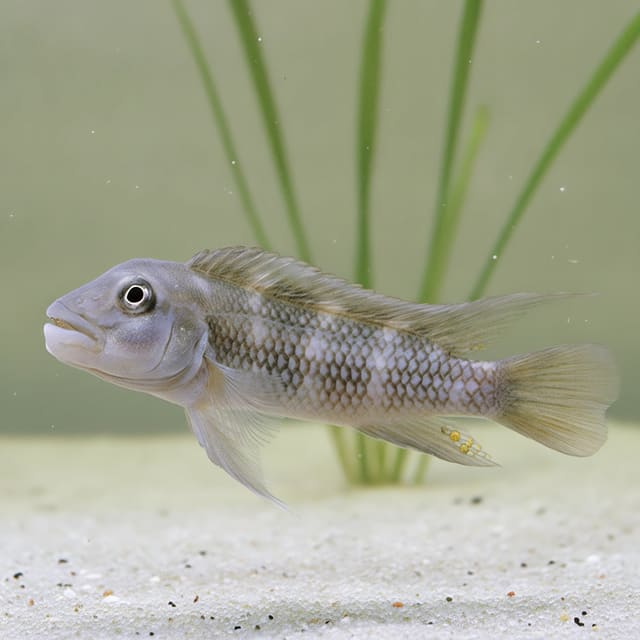
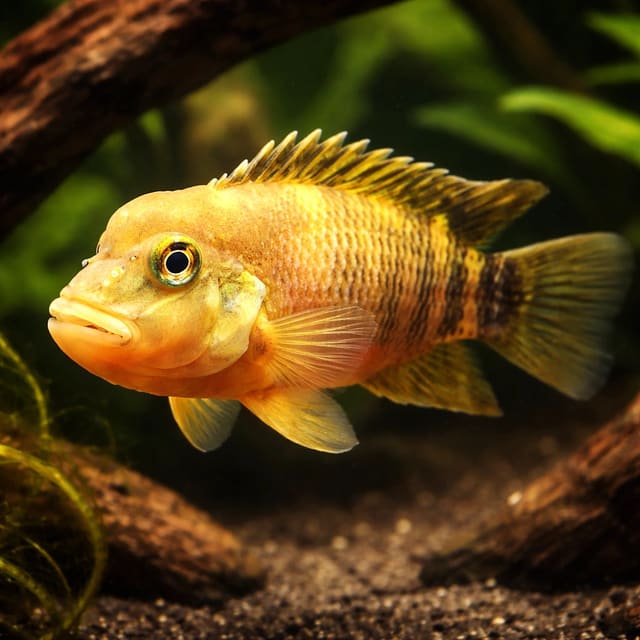
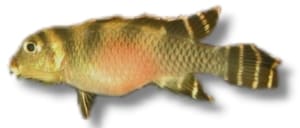
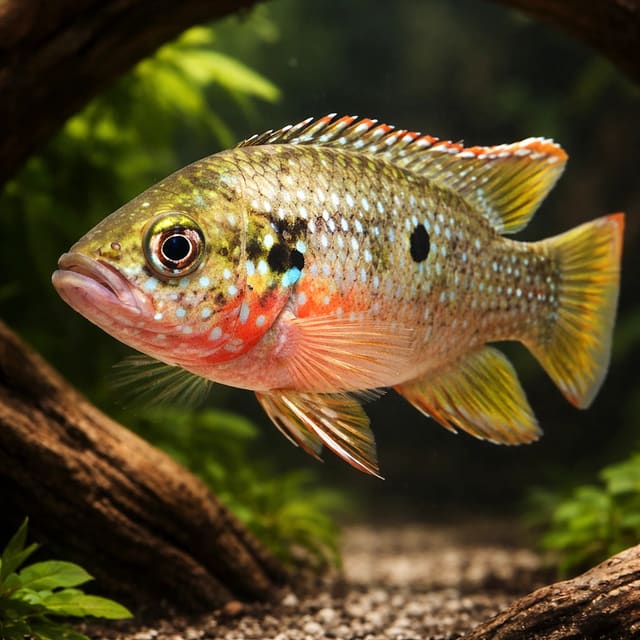
Rubricatochromis guttatus is a vivid West African jewel cichlid recorded to 12 cm standard length. It is an intelligent, territorial omnivore for experienced keepers who can provide a mature aquarium, substantial territory and a carefully judged social plan. One live fish is supplied in the size selected.
Adult size is the maximum length this species reaches at full maturity (scientific sources). The livestock you receive will be younger and smaller — pick a size above for the actual shipping size. Product-photo provenance and any image-specific limitations are stated on the listing.
Rubricatochromis guttatus
Save when buying multiple fish. Each quantity is one fish; sex and pair formation are not guaranteed unless the selected variant explicitly states them.
Rubricatochromis guttatus is a vivid West African jewel cichlid recorded to 12 cm standard length. It is an intelligent, territorial omnivore for experienced keepers who can provide a mature aquarium, substantial territory and a carefully judged social plan. One live fish is supplied in the size selected.
Adult size is the maximum length this species reaches at full maturity (scientific sources). The livestock you receive will be younger and smaller — pick a size above for the actual shipping size. Product-photo provenance and any image-specific limitations are stated on the listing.
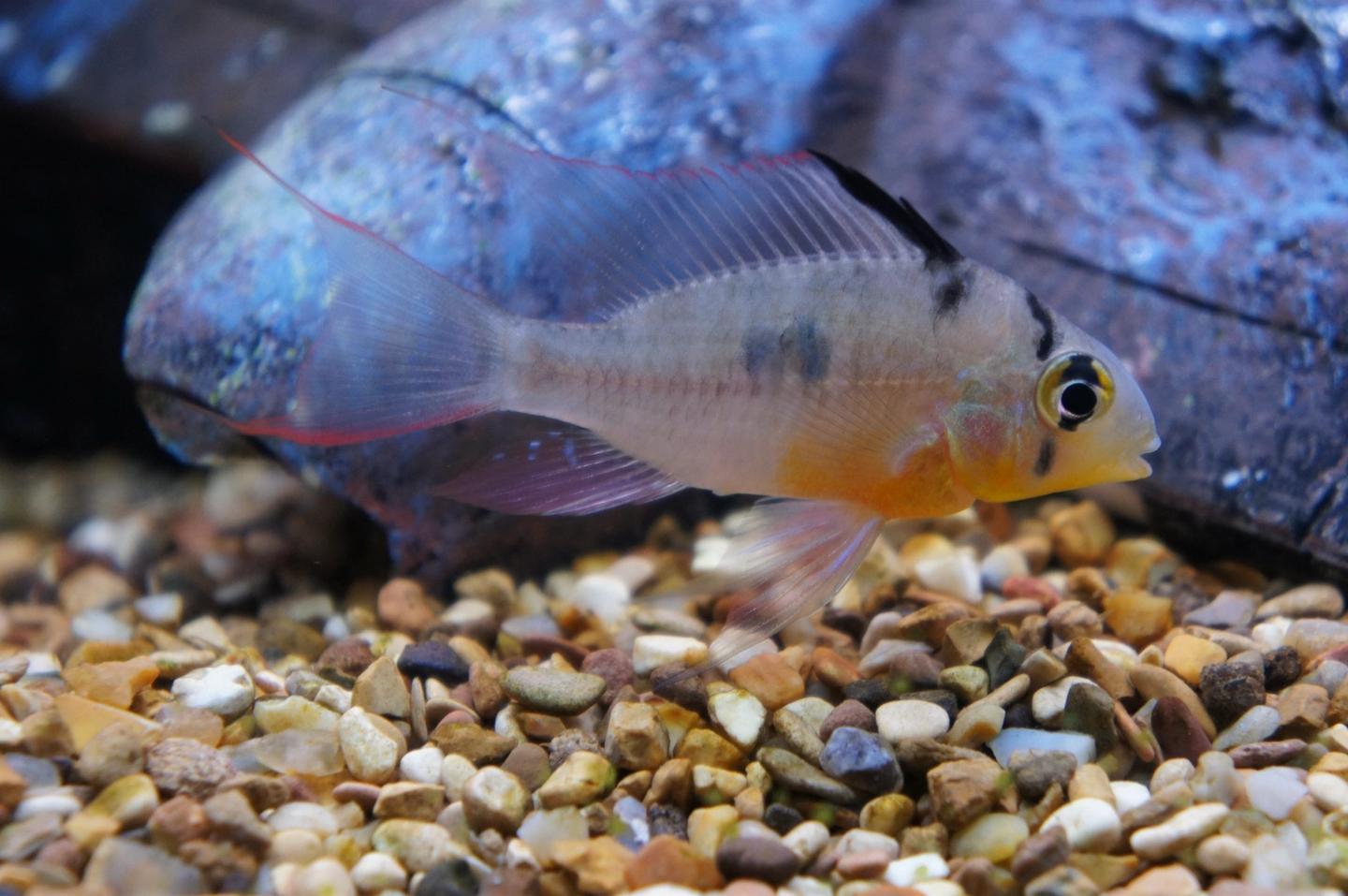
Cichlids are a family of roughly 1,800 accepted species, not one care type. Before buying, identify the exact species and source, then compare adult measurement, usable tank dimensions, social system, territory, tested water, diet and an exit plan. No family-wide minimum tank, water range or tank-mate list is safe.
Rubricatochromis guttatus is the accepted scientific name for the West African fish long sold in the aquarium trade as Hemichromis guttatus. The jewel cichlid genus overview explains the older trade grouping, while the accepted name distinguishes the true jewel-cichlid branch. It belongs to the cichlid family: compact, strongly marked fish whose colour and purposeful behaviour can make them the centre of a carefully planned aquarium. This is not a background community species. Its adult footprint, territorial nature and pair-forming behaviour deserve attention before the fish comes home.
One purchase supplies one live fish. Two recurring dispatch sizes are represented on this listing: 3.5–5 cm and 5–7 cm. The size you select is the size supplied, not the adult size. The FishBase species summary records a maximum of 12.0 cm standard length for a male or unsexed fish. Standard length is the measurement reported by that record; it should not be confused with either dispatch grade or an exact promise about the length of an individual adult.
| Suits | Think again if |
|---|---|
| An experienced keeper who enjoys observing cichlid territories and can respond calmly if relationships change | You want a placid addition that can be placed into a lightly furnished mixed aquarium without a contingency plan |
| A mature, filtered aquarium with room for an adult fish, defined areas and abundant shelter | The available aquarium is being chosen only from the present dispatch size |
| A keeper prepared to judge each companion by size, speed, temperament and access to retreat | You need a guaranteed community combination or want to protect very small, slow or delicate animals |
| Someone comfortable feeding an omnivorous cichlid a varied staple diet without overfeeding | You are looking for a specialist predator that should receive an all-meat menu |
The natural record places this species in African coastal drainages from Sierra Leone to Cameroon, excluding the Lower Volta basin. It is associated especially with vegetated, quieter water: shallow sections of larger rivers, small lateral tributaries, oxbow lakes and swampy habitats. Freshwater and brackish occurrences are both recorded, but a wild environmental record is not an instruction to add salt or to imitate every extreme in an aquarium. The practical aim is stable, clean water and a layout that lets a territorial cichlid use cover.
FishBase describes R. guttatus as aggressive, omnivorous, pair-bonding and a substrate brooder. Those four facts explain much of its appeal and much of the work involved. A settled individual is alert and engaging; a breeding pair can organise the aquarium around a defended spawning area. Space must therefore be judged as usable territory rather than litres alone. Cover, caves, wood, plants and open feeding room all have a part, but every feature must leave the keeper able to observe both fish and intervene if chasing becomes relentless.
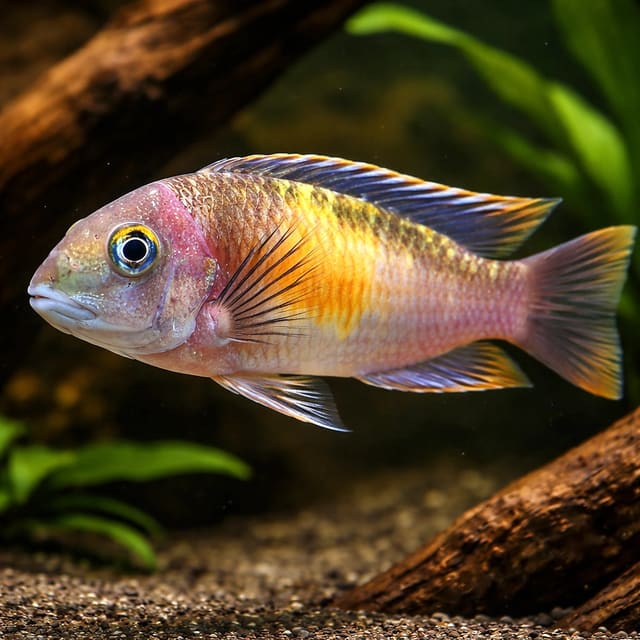
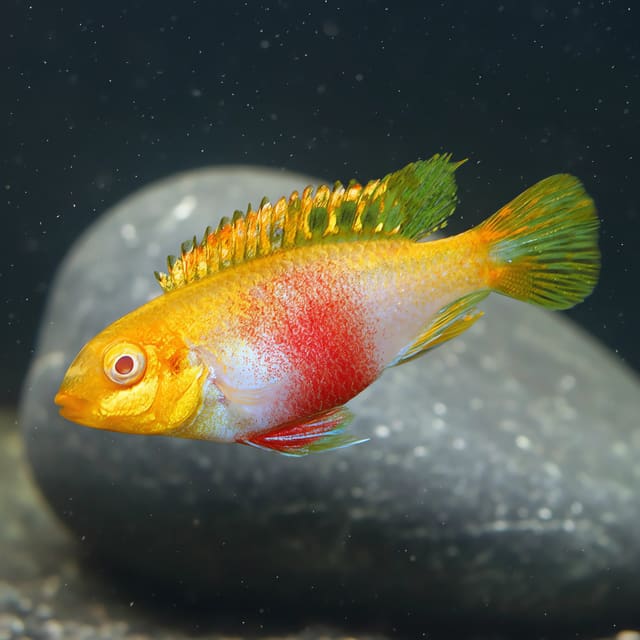
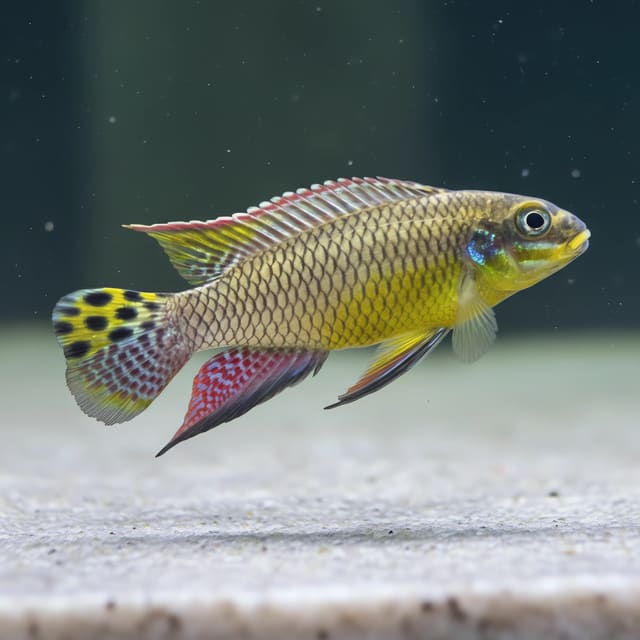
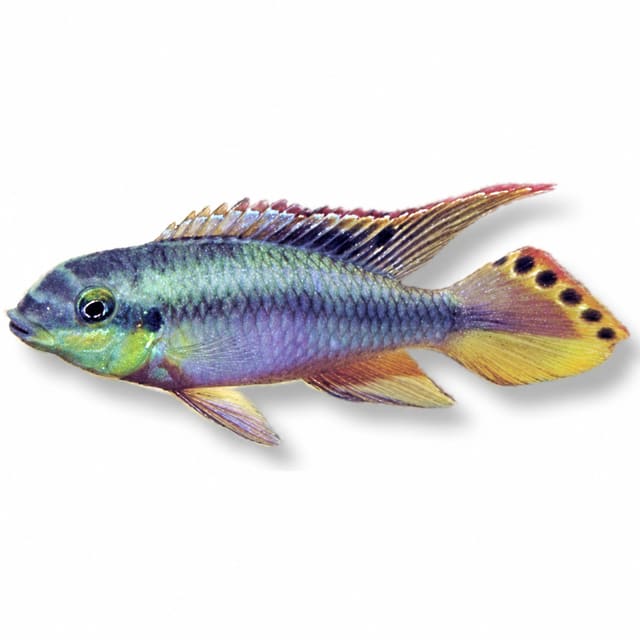
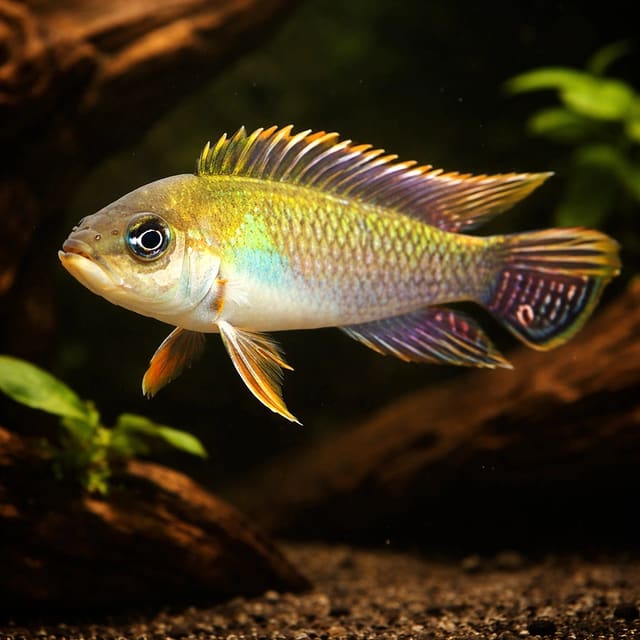
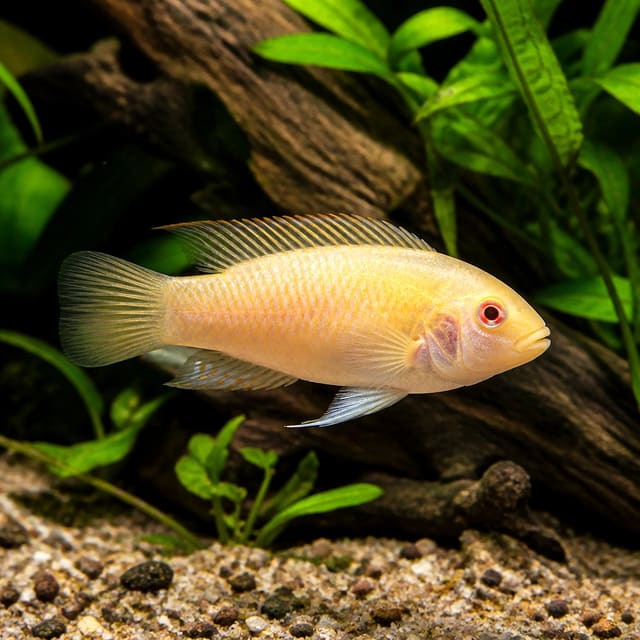
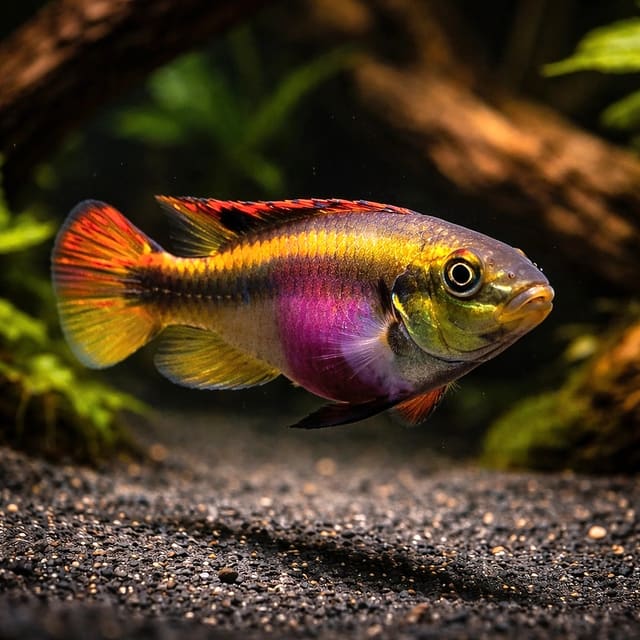
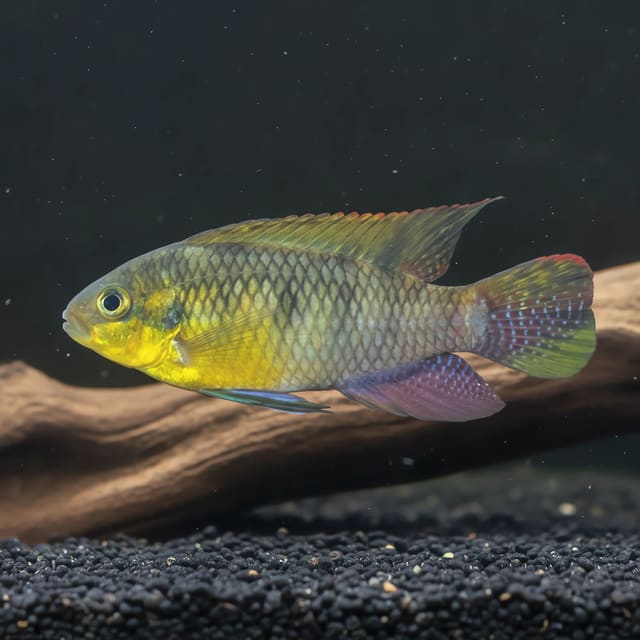
Sex is guaranteed only when the selected option explicitly states male or female. This Hemichromis guttatus listing has no sex-guaranteed option. Colour, markings, size and maturity vary naturally, and a photograph is not a reliable promise of sex or of the exact adult appearance. Gallery images have been digitally enhanced to improve image quality. Natural colour, pattern, size and maturity can vary between live animals.
Before choosing this fish, compare the adult plan with the current African cichlid collection and decide whether you want a species-focused display, a carefully managed pair, or a larger mixed layout with a genuine fallback. The right question is not simply whether another fish fits today; it is whether every inhabitant will retain feeding access and a safe route away when a jewel cichlid claims space.
A dispatch length of 3.5–5 cm or 5–7 cm describes the animal at supply, not the finished aquarium requirement. Begin with the 12 cm SL record, then allow for a cichlid that creates and defends territory. Floor area, the position of cover and the relationship between open and sheltered zones matter more than an attractive empty volume figure. A long aquarium offers more scope for separate areas than a tall, narrow one of similar litres, while a clear front view helps you notice when normal displaying turns into persistent exclusion.
If this will be your first aquarium, mature the biological filter before livestock arrives. The first tropical tank guide explains the sequence from setup to a functioning aquarium. A filter is not only a device that moves water. The RSPCA aquarium welfare guidance explains that beneficial bacteria convert toxic ammonia first to nitrite and then to the safer nitrate. A newly installed filter or one whose bacterial population has been damaged cannot be assumed to handle a full waste load immediately.
The species record associates R. guttatus with stands of emergent or submerged plants and with shallower, quieter habitats rather than rapids. In the aquarium, combine sheltered places with clear feeding and swimming room. Wood, robust planting, stable stones and cave-like structures can divide the floor into recognisable areas. Every item should be aquarium-safe, secure against digging and positioned so waste and the fish remain visible.
Cover has two purposes. It gives a subordinate fish somewhere to pause outside the most valuable area, and it gives a keeper visible clues about how space is being used. A fish that chooses shelter but still emerges to feed is different from one pinned into a corner and repeatedly attacked whenever it moves. Do not let dense decoration hide a worsening relationship for days. Inspect behind wood and around cave entrances during routine observation.
Plants may help create a calmer, more complex layout, but no plant can make an unsuitable social combination safe. Choose robust planting and accept that an active substrate-brooding cichlid may disturb the floor around a preferred site. Keep heater guards, filter intakes and sharp edges in mind when arranging enclosed spaces. A retreat must have an exit that the fish can actually use; a narrow ornament that allows one animal to trap another is counterproductive.
For this product, focus on mature biological filtration and stable conditions you can measure rather than a borrowed range. The wild record includes freshwater and brackish occurrences, but that describes habitat rather than prescribing salt for the aquarium. The water chemistry guide explains the main measurements, while the water matcher helps compare products that carry published care values. This fish still needs a plan based on its own adult size and territorial behaviour.
A mature, maintained biological filter is essential. The RSPCA aquarium welfare guidance explains that fish waste produces toxic ammonia, beneficial bacteria convert it to toxic nitrite and the filter ultimately produces the safer nitrate. Check ammonia and nitrite whenever behaviour changes or filtration has been interrupted, and do not assume clear water proves that the aquarium is biologically ready.
Aggressive cichlids can create extra waste by scattering food or disturbing the substrate. Remove uneaten food, siphon accessible debris and watch whether flow still reaches the places where waste accumulates. The best filter is one sized and maintained for the real stocking load, with outlets arranged so that the fish can use both sheltered and more open water. The species occurs in quieter habitats, so there is no need to turn the whole aquarium into a torrent simply to increase turnover.
FishBase records R. guttatus as omnivorous. Choose a complete food intended for omnivorous cichlids, use a particle size the supplied fish can take and follow the product directions. Judge the amount from condition, feeding response and uneaten food rather than pushing an intensive schedule or an all-meat menu.
Offer an amount the fish can finish without leaving food to decay. Watch who actually eats: a dominant fish taking the first food does not prove that a quieter fish has received enough. Spread the suitable portion across more than one point only when needed, then remove leftovers rather than compensating with a large excess. An established fish that abruptly stops feeding deserves a water-quality check and closer inspection.
A growing dispatch-size fish needs consistent nutrition, but fast growth is not a reason to push oversized meals. Condition is judged over time by a full but not distended body, purposeful behaviour and steady feeding response. Avoid promising that any particular food will create the intense breeding colour seen in some jewel-cichlid imagery. Genetics, maturity, social state, lighting and individual condition all affect appearance.
Changes in swimming, colour, temperament, breathing, body condition, skin, fins and appetite are useful prompts to inspect the aquarium. With a territorial species, a social problem may first appear as hiding, missed meals, damaged fins or a fish hovering in an unusual place. Test ammonia and nitrite whenever several animals change together, and inspect pursuit and feeding access when one fish alone loses its normal routine.
Do not medicate merely because colour darkens or a fish hides after a change. Those signs have many possible causes. Check water, temperature, recent maintenance and social interactions, document what you see and seek appropriate aquatic-veterinary or specialist help where necessary. A treatment choice, dose and duration are beyond the evidence for this listing.
Be at the address for the confirmed delivery and prepare the aquarium before the parcel arrives. The store's current delivery and Live Arrival Guarantee policy says the parcel should be opened and inspected on the day it arrives. If a claim is needed, the evidence must be a continuous video beginning with the parcel still sealed, showing the outer box, the opening and the fish still in the sealed bag. Record that sequence before opening the fish bag or starting acclimatisation.
Keep the first observation calm. A newly moved cichlid may initially choose cover, but it should not be introduced into an aquarium where an established territorial fish can attack it immediately. The social plan should already include a low-stress introduction and a separation option. Delivery policy, acclimatisation and later husbandry are different questions: the first protects the animal through transfer, while the second sustains it for the months and years ahead.
Before routine maintenance, observe where the fish rests, which route it uses to feed and whether another animal changes course to avoid it. Inspect filter flow and test the aquarium if behaviour has changed. Remove accessible waste without dismantling every shelter, because repeated wholesale rearrangement can alter territorial boundaries. If filter material needs attention, preserve the beneficial bacteria and confirm that the filter restarts correctly.
This checklist turns a visually appealing fish into a practical decision. A mature aquarium and accurate tests handle the environmental side; layout, observation and separation capacity handle the social side. Neither can compensate for the absence of the other. It is easier to leave extra room at the beginning than to create it after a cichlid has established the whole aquarium as its territory.
Jewel cichlids are valued for vivid appearance, yet colour alone is a poor health diagnosis and a poor sex test. Lighting, background, maturity, social state and individual variation can all alter what the keeper sees. Compare the fish with its own recent baseline: appetite, breathing, posture, fin condition and use of space provide more useful information than trying to match a gallery image shade for shade.
Breeding condition can coincide with stronger colour and more determined territorial defence. That does not prove the sex of a newly arrived fish, nor does it guarantee a compatible pair. If colour changes alongside rapid breathing, clamped fins, lost appetite or hiding, test the water and inspect social interactions. If the only change is a brighter fish guarding a substrate while both animals remain in good condition, prepare for the possibility of spawning behaviour and review the compatibility plan.
FishBase calls R. guttatus aggressive and says it requires sufficient space to build territories. That is the starting point for compatibility, not a footnote added after choosing companions. A fish can appear tolerant while young, unsettled or outside breeding condition and still become much more forceful later. Long-term planning must therefore consider the adult fish and the possibility of a defended spawning area.
No named species can be guaranteed as a universal companion from the evidence here. Similar water values are only one part of compatibility. Size, speed, body shape, feeding style, confidence and use of the same part of the aquarium all matter. A fish that shares the right pH may still be unable to leave a cichlid's territory, while an otherwise robust fish may constantly challenge it.
| Question | Why it matters |
|---|---|
| Can every fish reach food without crossing the defended area? | Territorial control often shows first at feeding time. |
| Does each fish have more than one usable shelter or route? | A single cave can become an ownership dispute rather than shared cover. |
| Will a companion remain large and confident enough as the cichlid matures? | Planning from a juvenile dispatch size can underestimate the adult mismatch. |
| Can fish be separated immediately? | Individual relationships can change, especially around spawning. |
A single fish removes pair conflict and breeding-territory escalation, but it does not make every community combination safe. It still needs an aquarium designed around its adult size and territorial behaviour. A pair is not created simply by placing two unsexed fish together. The listing has no sex-guaranteed choice, and neither colour nor a photograph establishes sex.
FishBase describes the species as pair-bonding and a substrate brooder. A compatible pair may defend eggs and young vigorously. Watch both partners rather than assuming that a bond prevents aggression between them. If one fish loses feeding access, remains hidden or collects damage, the keeper must be ready to separate them.
Breeding information is useful because it predicts behaviour; it is not an invitation to produce fry without a destination and sufficient rearing space. FishBase reports that spawning can involve up to 300 eggs, with hatching after about two days and young free-swimming after about five. Those observations explain why parental defence can intensify quickly. The practical lesson is to leave room around a preferred substrate and avoid crowding the breeding territory with animals that will repeatedly approach eggs or fry.
If attempting a mixed layout, choose the aquarium and stocking order conservatively. Avoid combinations in which a small, slow or delicate animal must pass the cichlid's shelter to eat. Avoid long-term overcrowding disguised as a way to diffuse aggression. Observe after feeding, after maintenance and whenever the layout is moved, because each event can change which area is valued.
Related products shown elsewhere on the page are alternatives to consider, not a compatibility endorsement. A different cichlid may suit a keeper's aims better, but two individually appealing products should not be combined without a separate assessment. Compare adult size, water, territory and social behaviour for each animal on its own merits.
The best compatibility outcome is not an aquarium that merely avoids fighting while someone is watching. It is one in which every animal continues to feed, rest, swim and use shelter normally over time. A jewel cichlid that owns one area while other fish retain the rest may be workable; one that patrols the full aquarium and excludes another fish is telling you the plan has failed.
Compatibility is not decided once. Review it as the fish grows through its dispatch size, after major maintenance, when a pair begins to guard a surface and whenever a new animal is introduced. The important comparison is not whether chasing exists at all, but whether every fish can end an encounter, recover, feed and use shelter. Brief displays across a boundary carry different risk from repeated pursuit through the entire aquarium.
When separation is needed, move deliberately and protect water stability. The backup space should be mature enough to receive a live fish, heated appropriately and covered where necessary. Separation is not a failure; it is a normal welfare tool for an animal whose individual relationships cannot be guaranteed. The failed approach is recognising that a fish has lost access to the aquarium and leaving it there because the original combination looked attractive.
FishBase records a maximum of 12.0 cm standard length for a male or unsexed fish. That is the adult biological record, while 3.5–5 cm and 5–7 cm are dispatch sizes. Individual growth and total length can differ, so plan for the recorded adult fish rather than the size arriving.
Plan the aquarium from FishBase's 12 cm standard-length record and its descriptions of aggression and the need for sufficient territorial space. Allow adult territory, cover, feeding access and a mature separation space. A generic litre figure cannot decide whether those needs are met for this fish.
FishBase describes the species as pair-bonding, but this unsexed listing does not guarantee a compatible pair. One fish avoids pair conflict; two require close observation, ample cover and an immediate separation option. Do not assume that two juveniles will become a stable adult pair.
It is better suited to an experienced keeper. The core filtration and maintenance are familiar freshwater tasks, but territorial aggression, adult planning and changing pair behaviour demand confident observation and a practical response when one fish loses space or feeding access.
FishBase records Rubricatochromis guttatus as omnivorous. Choose a complete food intended for omnivorous cichlids, use a particle size the supplied fish can take and follow the food manufacturer's directions. Watch that every fish feeds and remove leftovers rather than relying on an all-meat menu.
Use a mature, biologically filtered aquarium with stable, measured conditions. The wild species record is habitat context, so do not turn its freshwater and brackish occurrences into a salt instruction or borrow a care range written for another cichlid group.
FishBase describes the species as aggressive and territorial. Chasing and injury risk can rise around a defended substrate or spawning site. The record centres aggression and territorial defence rather than a separate routine fin-nipping habit, so judge actual behaviour and act if another fish is excluded, damaged or unable to feed.
No universal tank mate is supported. Judge any proposed companion by whether both animals can retain feeding access, shelter and a route away from the defended territory as the cichlid matures. Keep a mature separation space ready and act if another fish is excluded, damaged or unable to feed.
Tropical Fish Co hand-packs live fish in oxygen with insulation and a heat pack when weather calls for it, then uses a tracked licensed live-animal courier on the confirmed delivery day. Be present, record a continuous video from the sealed parcel before opening, inspect the fish that day and contact the store the same day if a Live Arrival Guarantee claim is needed.
The accepted identity, recorded adult length, distribution, habitat, diet, aggression and breeding biology come from the FishBase species summary for Rubricatochromis guttatus. The older trade-name context is also outlined in the jewel cichlid genus overview.
The need for an established biological filter and the ammonia-to-nitrite process are supported by the RSPCA aquarium environment guidance. Store-specific packing, courier, acclimatisation and claim steps follow Tropical Fish Co's current delivery policy linked in the care section.
No reviews for this item yet. Bought one? Honest reviews only, good or bad.
What customers say about ordering from us
I have a small group of long finned mountain minnows. So was delighted to be able to order ten of this variety to increase the genetics in my tank . The ones I recieved are healthy but it’s to early to give a verdict on wether they are of a long finned type since they are small currently.
Gordon Walker · 23 Sept 2026
100% success travel and "installation". Pleased with quality of purchase. The Siamese fighter a bit "shy" so have not yet seen him at his best yet but looking good. Happy customer. GG
George E Garratt · 21 Sept 2026
Reviews of our shop, collected by Judge.me, an independent third-party review collector. Newest first.