Moderate
Nigerian Green Kribensis (Pelvicachromis taeniatus)
23–25°C · pH 6–7.5 · 100L
£18.99
Photo coming soon
The size, price and care details on this page are for this listing.
Pelvicachromis taeniatus molive is the Moliwe form of a shy West African dwarf cichlid that reaches about 8 cm and spawns in caves. It suits a calm community with sand, plenty of cover and soft to medium water at 22–26 °C, kept as a pair. Each purchase is one fish of the size you choose, and sex is not guaranteed.
Adult size is the maximum length this species reaches at full maturity (scientific sources). The livestock you receive will be younger and smaller — pick a size above for the actual shipping size. Product-photo provenance and any image-specific limitations are stated on the listing.
Pelvicachromis taeniatus
Save when buying multiple fish. Each quantity is one fish; sex and pair formation are not guaranteed unless the selected variant explicitly states them.
Pelvicachromis taeniatus molive is the Moliwe form of a shy West African dwarf cichlid that reaches about 8 cm and spawns in caves. It suits a calm community with sand, plenty of cover and soft to medium water at 22–26 °C, kept as a pair. Each purchase is one fish of the size you choose, and sex is not guaranteed.
Adult size is the maximum length this species reaches at full maturity (scientific sources). The livestock you receive will be younger and smaller — pick a size above for the actual shipping size. Product-photo provenance and any image-specific limitations are stated on the listing.

Cichlids are a family of roughly 1,800 accepted species, not one care type. Before buying, identify the exact species and source, then compare adult measurement, usable tank dimensions, social system, territory, tested water, diet and an exit plan. No family-wide minimum tank, water range or tank-mate list is safe.
Maintain these water conditions for optimal health and vibrant colors
Pelvicachromis taeniatus molive is a small West African dwarf cichlid that lives near the bottom and breeds in caves. It is a locality form of Pelvicachromis taeniatus, and the label molive corresponds to the form usually written Moliwe. You receive one live fish of the size you select. Adults reach about 8 cm, and the key to keeping one well is a calm, fully cycled community aquarium with soft to medium water and plenty of caves.
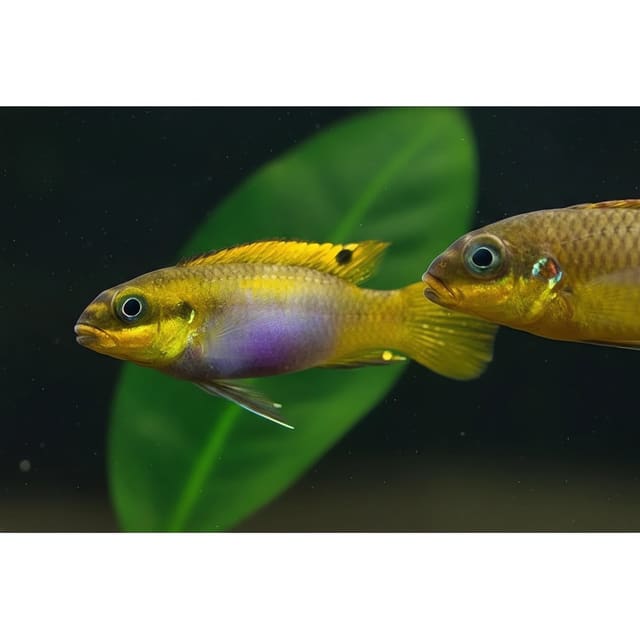
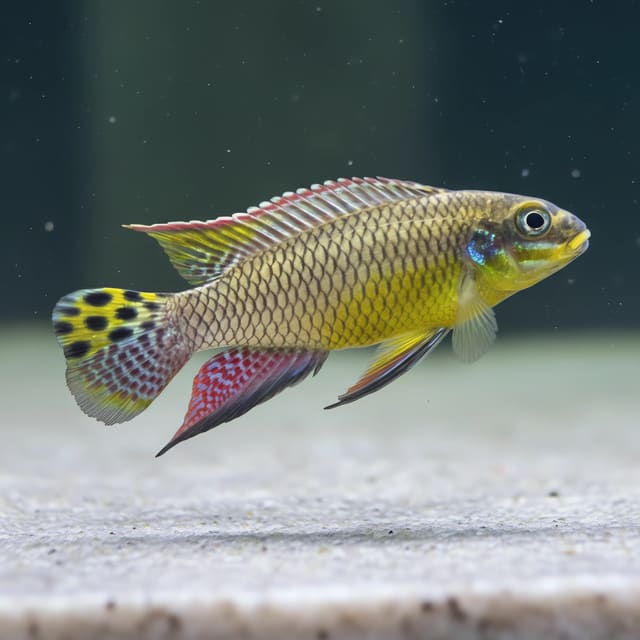
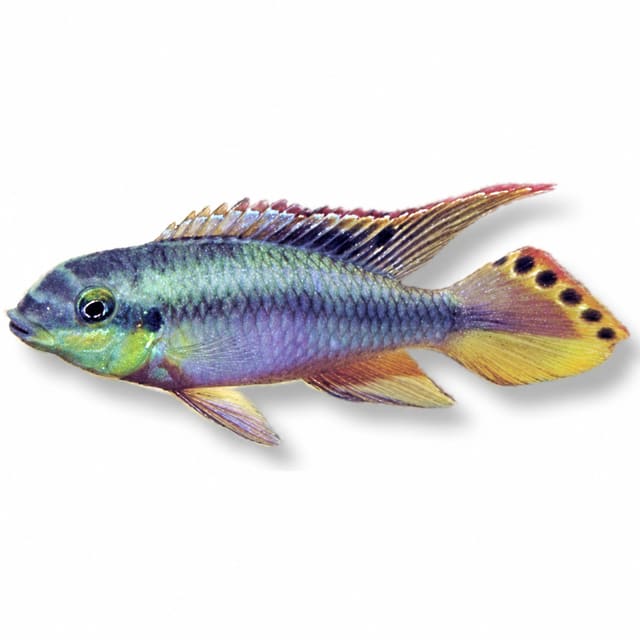
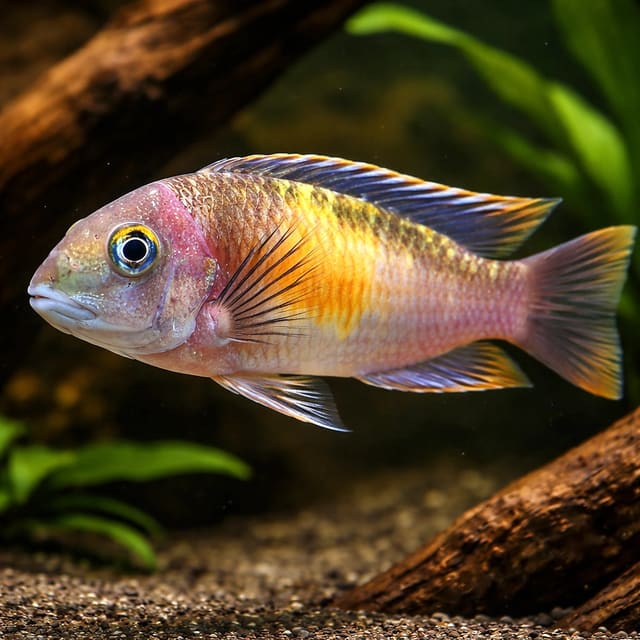
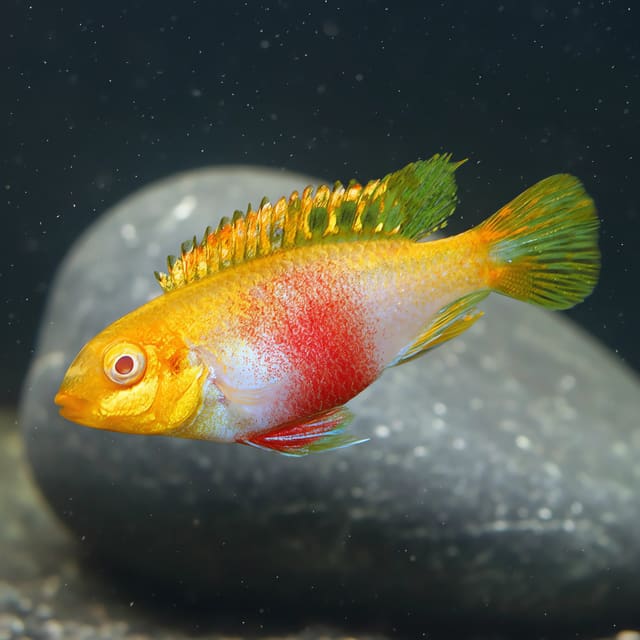
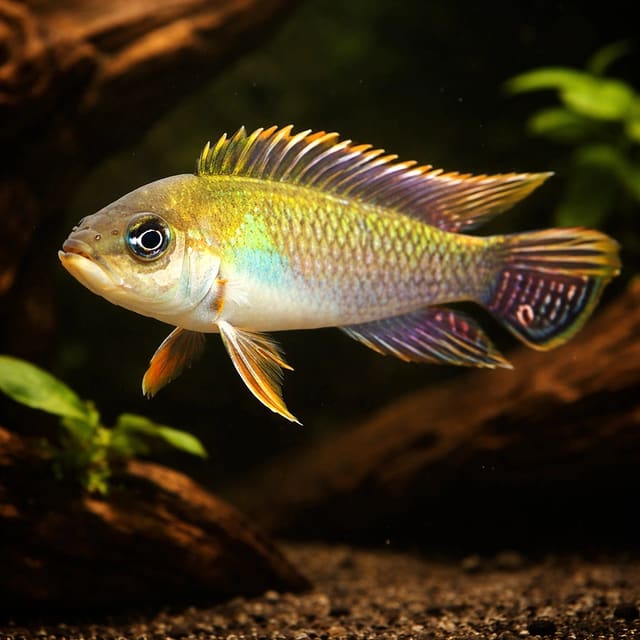
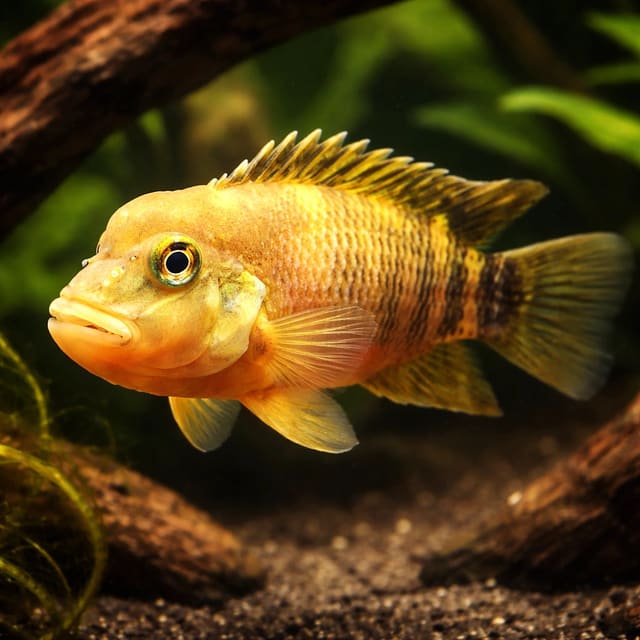
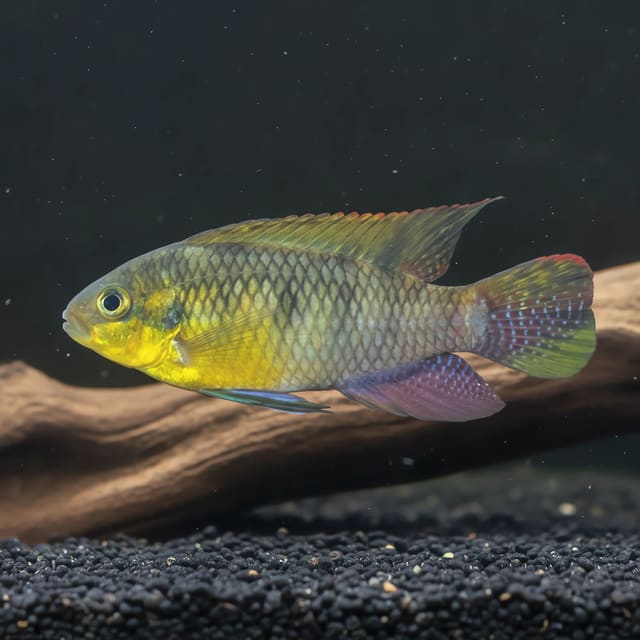
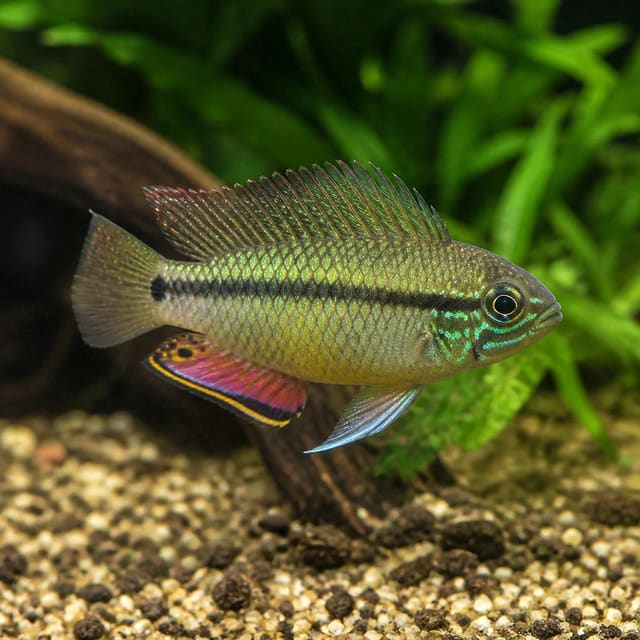
This is one of the few members of its genus in which both sexes colour up strongly. Seriously Fish notes that males rival females for colour, and the species can be picked out by its pronounced upper lip, which is often bright yellow. Males also show strongly outlined scales and a rounded, rather than spade-shaped, tail fin. It is generally shy and retiring, so it suits keepers who enjoy watching a fish claim a cave, patrol the floor of the tank and, in time, pair up.
| Suits | Think twice if |
|---|---|
| A settled community of small, peaceful fish | Your tank holds very vigorous or large species |
| A sandy or fine-gravel floor with several caves | The aquarium is new and still cycling |
| Soft to medium water held steady at 22–26 °C | You need a guaranteed male and female from one order |
| A keeper who wants to raise a pair and possibly breed it | You plan to mix different P. taeniatus localities |
| Family | Cichlidae |
| Recorded range | Coastal fresh waters from east Benin to Nigeria, including the Niger delta |
| Adult size | About 8 cm standard length |
| Water | 22–26 °C, pH 6.0–7.5, 5–12 dGH |
| Keeping | As a pair, near the bottom, with caves |
| Temperament | Shy and retiring; territorial when breeding |
| Conservation status | Least Concern on the IUCN Red List |
Each purchase supplies one live fish, so a basket quantity of two brings two fish. Two grades are offered: 4–5 cm and XL, the larger of the two. The XL grade is sold by its label rather than by a centimetre range, so contact us before ordering if you would like an idea of its length. The size you select is the size supplied, not the adult size. A 4–5 cm fish still has some growing to do before it approaches the 7–8 cm recorded for adults.
Sex is guaranteed only when the selected option explicitly states male or female. This Pelvicachromis taeniatus molive listing has no sex-guaranteed option. That matters for a species that lives in pairs. If you hope to breed, see the pairing advice further down this page before deciding how many fish to buy.
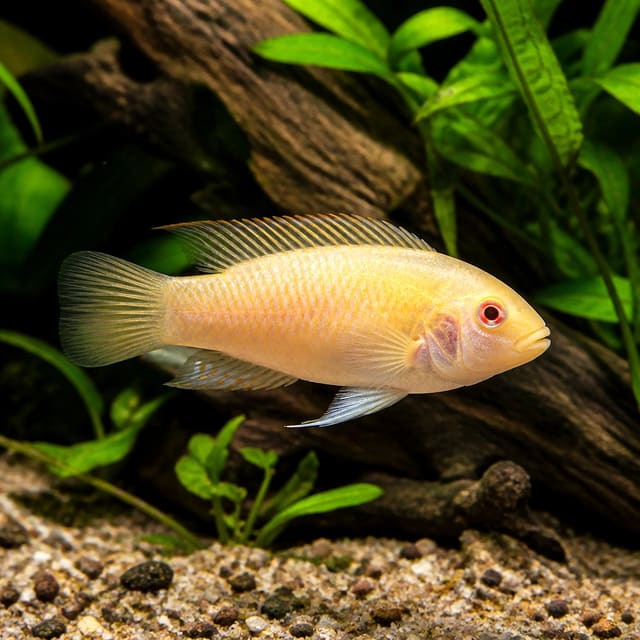
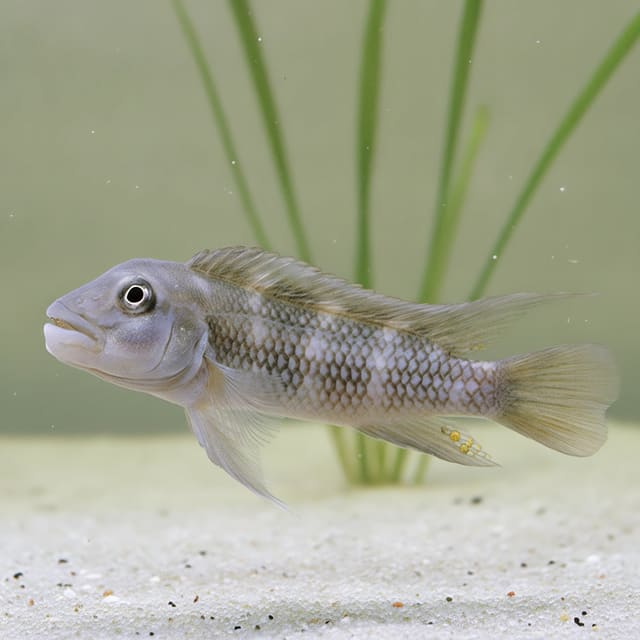
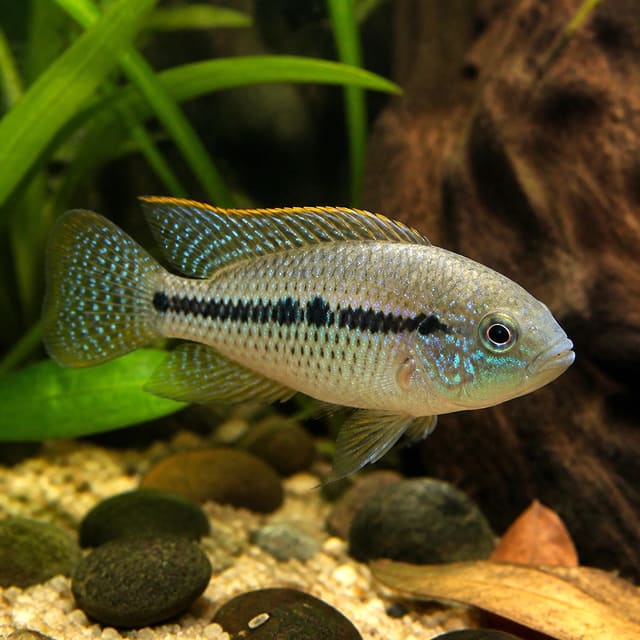
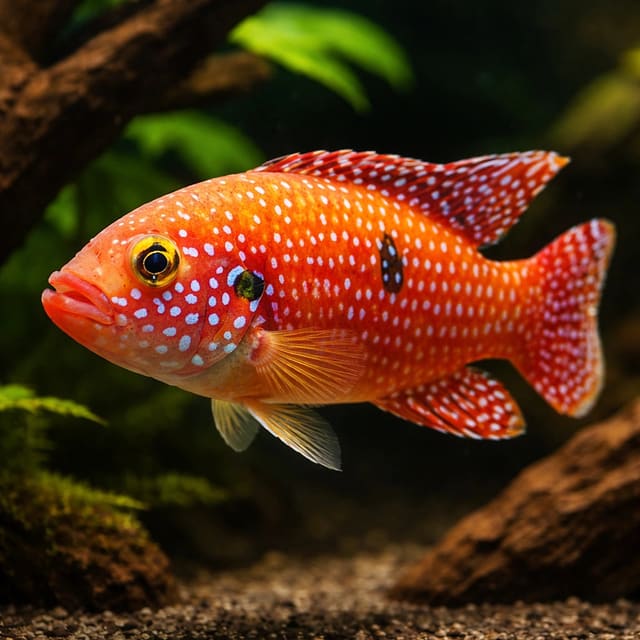
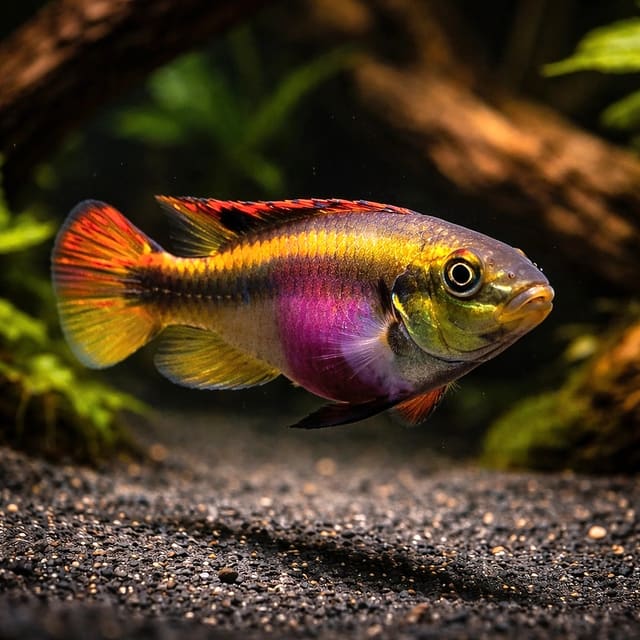
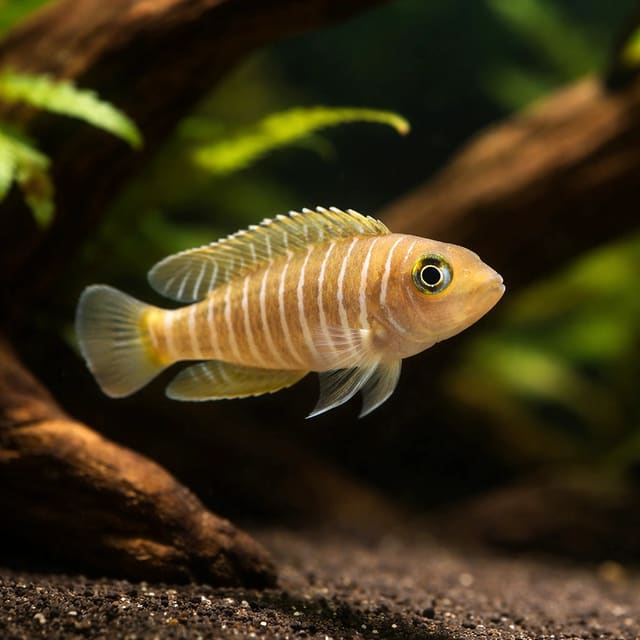
Gallery images have been digitally enhanced to improve image quality. Natural colour, pattern, size and maturity can vary between live animals. Breeding colour, such as the pink flush a female shows on her flanks when in spawning condition, appears only in mature fish.
The 4–5 cm grade suits keepers who want to grow young fish on together and let a pair form, which is the route Seriously Fish recommends for this species. The XL grade suits a keeper who would rather start with a bigger fish. Either way, the fish is heading for the same adult size of about 8 cm, and neither grade is sold as a particular sex.
Pelvicachromis taeniatus is traded under many locality names. Seriously Fish lists more than a dozen forms of P. taeniatus, including Dehane, Moliwe, Kienke, Lobe, Wouri, Nigeria Red and Calabar, and advises that males and females of different forms should not be cross-bred, so that each line stays pure.
FishBase records P. taeniatus from coastal fresh waters between east Benin and Nigeria and assigns records from Cameroon and Bioko to the related Pelvicachromis kribensis. For a keeper, the practical rule is the same either way: pair a Moliwe fish only with another Moliwe fish.
If you are still comparing species, the African cichlids collection shows the other cichlids we stock from the continent, from dwarf species to lake cichlids with very different needs. Check each one’s water and temperament before putting any of them together.
Use this list to check that the aquarium is ready before you order. Each point is explained in more detail further down the page.
If anything on the list is missing, sort it out first. A shy dwarf cichlid introduced into a settled, well-furnished aquarium has a far easier start than one added to a tank that is still being finished.
FishBase describes P. taeniatus as a demersal freshwater cichlid, meaning it lives near the bottom. Its recorded range is restricted to the freshwater parts of coastal regions between east Benin and Nigeria, including the Niger delta. That bottom-living habit is the key to the set-up: the floor of the aquarium, rather than open water, is where this fish needs space, caves and a soft substrate.
The figures below come from three reputable references and describe different situations:
For most homes, an 80 cm community tank is the comfortable choice. Floor space matters more than height for a fish that lives near the bottom and defends a cave, because a long tank lets a pair hold one area while other fish use the rest. OATA’s general rule is to buy as large an aquarium as is reasonable: the larger the volume, the more stable the temperature and water quality.
Use sand or fine gravel. Seriously Fish points out that these fish dig pits when breeding, so a soft, fine floor lets them behave naturally. Give them plenty of hiding places and potential spawning sites: clay pots, caves, roots and pieces of driftwood all work. Plants are not essential, but the fish appreciate the extra cover.
Cover is not decoration for this species. OATA notes that even well-settled pairs will often chase each other, so plenty of cover is essential. If you prefer not to grow live plants, OATA suggests plastic plants and ornaments such as plant pots, model caves, wood and leaf litter to give the fish shelter.
A filter is never optional. The RSPCA explains that fish release ammonia, which is toxic, and that a working biological filter grows beneficial bacteria which convert ammonia into nitrite and then into the safer nitrate. That colony of bacteria takes time to establish, so set the aquarium up and mature it before any fish arrive. Our guide to setting up and maturing a first tropical tank walks through the process step by step.
If you plan to raise fry, Seriously Fish prefers gentle filtration, for example an air-powered sponge filter, because fry may be sucked into a power filter.
These are the everyday targets for this fish:
| Measure | Target |
|---|---|
| Temperature | 22–26 °C |
| pH | 6.0–7.5 |
| General hardness | 5–12 dGH |
| Carbonate hardness | 3–10 dKH, from OATA’s dwarf cichlid guidance |
| Ammonia and nitrite | Zero |
| Nitrate | No more than 20 mg per litre above your tap water |
The Seriously Fish species profile gives 22–26 °C, pH 5.0–7.5 and 5–12 dGH for aquarium keeping. FishBase records the species’ natural waters at 22–25 °C, pH 6.0–8.0 and 5–12 dH; those are field values rather than tank settings. A pH between 6.0 and 7.5 sits within both ranges, which is why it is the target above. OATA’s care sheet for dwarf cichlids as a whole suggests 22–27 °C, pH 6.0–8.0 and soft to medium water of 4–12 °dH, which is consistent with the narrower species figures.
Test your tap water and your mature aquarium before the fish arrives. The guide to aquarium water parameters explains what each test tells you, and the water parameter matcher compares your own readings with the targets above, so you can see how well your water suits this fish before you buy.
The OATA dwarf cichlid care sheet describes these fish as usually undemanding of water chemistry. In practice that means steady conditions within the range above matter more than chasing one exact number.
Pelvicachromis taeniatus accepts most foods, but Seriously Fish advises that live and frozen varieties should form the bulk of its diet. OATA describes dwarf cichlids as omnivores that take most food types and benefit from small items of live or frozen food, such as daphnia and brine shrimp, alongside a good-quality flake or granule.
Variety is the aim: live and frozen foods as the bulk, as Seriously Fish advises, with a dry food alongside to make feeding easy to manage on busy days. Keep portions small: a few pieces for each fish is easier to judge than a large pinch.
If food is still lying on the sand a few minutes after feeding, the portion was too large. Offer less next time and siphon out the leftovers, because uneaten food breaks down into toxic waste.
A shy, retiring fish that lives near the floor can lose out to quick mid-water companions. Watch the Moliwe at every feed for its first few weeks. Some food that drifts down past the faster fish, or a portion offered near the caves, helps it eat without leaving cover.
Appetite is also one of the most useful health checks you have. OATA lists reduced intake or lack of interest in food among the early signs of a problem, so a fish that stops coming out to feed deserves a water test and a closer look.
Every order is hand-packed by our team: bagged in pure oxygen, placed in an insulated poly box, with a heat pack when the weather calls for it, and carried by a licensed live-animal courier with tracking. We email you the tracking number and your confirmed delivery date so you know when to be in. The full policy is on our delivery and Live Arrival Guarantee page, which also has short clips from our own fishroom on unpacking and acclimatising. You can follow the parcel once tracking is active.
The parcel needs to be opened and inspected on the day it arrives. If anything has gone wrong, contact us the same day with your order number and the unboxing video, which should show the sealed parcel, the opening and the fish still in the bag. WhatsApp is the fastest way to reach us, and we will arrange a replacement or refund.
Once the video is running and the bag is visible, take a good look at the fish before floating it. OATA describes a healthy fish as having clear bright eyes, undamaged fins and intact scales, with no ulcers or bumps. Anything that worries you should be reported the same day, with the video, so it can be dealt with quickly.
Check that ammonia and nitrite read zero before the fish goes in. Introduce new fish gradually: OATA explains that the beneficial bacteria in the filter need to increase each time more fish are added and feeding increases. Adding too many fish, or adding them too quickly, can cause new tank syndrome, where ammonia and nitrite rise to levels that may make fish ill or kill them.
Expect a newly introduced Moliwe to stay close to cover while it learns the tank. That is normal for a shy, retiring species. Keep the surroundings calm, feed lightly, and give it time to find a cave of its own before you judge its colour or behaviour.
Uneaten food can collect around the caves, out of sight, so include those areas when you siphon. OATA stresses that good husbandry is essential for dwarf cichlids, and a regular, unhurried routine is the simplest way to keep ammonia from building up.
Seriously Fish describes this species as generally shy and retiring, so some time spent in or near a cave is part of normal life. OATA lists hiding more than normal as a warning sign, and the words that matter are “more than normal”. Learn your fish’s usual pattern in its first few weeks. A fish that suddenly stops coming out to feed, or hides while breathing faster than usual, needs a water test straight away.
| When | What to do |
|---|---|
| Every day | Feed once, check the temperature and watch each fish at feeding time |
| Every week | Change 25% of the water and test ammonia and nitrite |
| As needed | Rinse filter media in removed tank water and siphon waste from the substrate |
| Before adding fish | Confirm zero ammonia and nitrite and enough space for another territory |
Every fish varies a little, but OATA lists these changes as early warnings:
A healthy fish has clear bright eyes, undamaged fins and intact scales, with no ulcers or bumps. If you are concerned, test your water quality first and then ask us for advice with your readings to hand.
Seriously Fish describes the adult differences clearly. Males grow larger than females and develop pointed dorsal and anal fins. Females are rounder-bodied and develop a characteristic pink flush on their flanks when they are in spawning condition. Because males of this species rival females for colour, colour alone is a poor guide. These are adult features, so they are of limited help with small fish.
The fish form monogamous pairs. According to Seriously Fish, the best way to obtain a pair is to buy a group of six or more young fish and grow them on together, letting pairing happen naturally. There are no guarantees that simply putting a male and a female together will produce a compatible pair, and it may end in the death of an unwilling partner.
Seriously Fish rates breeding as relatively easy and describes the species as a cave spawner; FishBase lists it as a cave-spawning substrate brooder. For breeding, Seriously Fish suggests the set-up described above with a temperature of 23–25 °C and pH 6.0–7.0, plenty of caves as potential spawning sites, and gentle filtration. Upturned clay flowerpots with a small piece of the rim removed work particularly well.
Once a pair has chosen a cave, expect it to become territorial. OATA advises that if you intend to breed dwarf cichlids, it is worth avoiding tank mates that might disturb spawning sites or eat the fry. Keep the line pure as well: males and females of different P. taeniatus forms should not be cross-bred.
Seriously Fish recommends Pelvicachromis taeniatus for the general community tank, with one important point: the fish become territorial when breeding. The rest of the time this is a shy and retiring species, so the main risk is companions that are too lively for it rather than the other way round.
Seriously Fish names these kinds of fish as good tank mates:
Within each group, choose species that are neither very vigorous nor large. OATA adds that dwarf cichlids are best kept with shoals of dither fish, which give them a sense of security and are quick enough to swim away if the cichlids become territorial. A shoal of small mid-water fish from the groups above can fill that role.
| Tank mate | Verdict |
|---|---|
| Small characins, danios, rasboras | Good dither fish when small and not boisterous |
| Corydoras and loricariids | Good, provided the floor has room beyond the pair’s cave |
| Barbs and gouramis | Named by Seriously Fish; choose calm, small species |
| Other West African dwarf cichlids | Only with enough space for separate territories |
| Very vigorous or large species | Avoid |
| Other P. taeniatus localities | Do not mix males and females of different forms |
Think of the aquarium in layers. The pair spends most of its time near the floor, around its caves. A shoal of small characins, danios or rasboras in mid-water acts as dither fish, giving the cichlids the sense of security OATA describes. Corydoras or a small loricariid can share the floor, provided the tank is long enough for them to feed away from the pair’s cave.
The species can be kept with other cichlids, and Seriously Fish names West African dwarf species as the ideal choice, provided enough space is given for territory formation. OATA makes the same point for dwarf cichlids in general: every tank mate needs enough space should the cichlids start breeding. A second pair of P. taeniatus needs a large tank.
Seriously Fish is clear that a large tank is required if more than one pair is to be kept. Each pair needs its own territory, with caves far enough apart that the pairs are not constantly meeting. In a standard community tank, one pair of P. taeniatus is the realistic plan.
Although it comes from Africa, this is not one of the lake cichlids. OATA notes that some African lake species, such as shell dwellers, are also sometimes called dwarf cichlids, yet they have specific care requirements and are not suitable for community aquaria. Take this fish’s water values and tank mates from this page rather than from lake-cichlid guidance.
Even well-settled pairs will often chase each other, so some chasing within a pair is normal. Watch instead for a fish that hides constantly, loses fin tissue or is kept away from food. OATA lists more hiding and changes in aggression among its early warning signs. More caves, plants or wood give a chased fish somewhere to go, which is why plenty of cover matters so much for this species.
FishBase records a maximum of 7.1 cm standard length for the species and Seriously Fish gives 80 mm, so plan for an adult of about 8 cm. A 4–5 cm fish is well short of that and still has growing to do.
Seriously Fish considers a 60 × 37.5 × 30 cm tank of about 71 litres suitable for a single pair, and FishBase gives 80 cm as the minimum aquarium size. To keep a pair with other fish, OATA says an aquarium of at least 80 litres will be needed, so an 80 cm community tank is the comfortable choice. For this bottom-living fish, a longer tank matters more than a taller one.
Keep them as a pair. Buying one male and one female does not guarantee a compatible pair, so Seriously Fish suggests growing on a group of six or more young fish and letting a pair form. A large tank is required for more than one pair.
It can suit a careful newcomer whose aquarium is fully cycled and stable. Seriously Fish recommends it for the general community tank, but it is shy, becomes territorial when breeding and, like other dwarf cichlids, can be stressed by even the smallest amounts of ammonia. Test the water weekly and add companions gradually.
It accepts most foods, but live and frozen varieties should form the bulk of the diet. Small foods such as daphnia and brine shrimp work well, with a good-quality flake or granule alongside, fed once a day in amounts eaten within a few minutes.
Keep it at 22–26 °C, pH 6.0–7.5 and 5–12 dGH. Those figures follow the Seriously Fish species profile, with pH kept inside the range FishBase records for the species. Ammonia and nitrite should always read zero. For breeding, Seriously Fish suggests 23–25 °C and pH 6.0–7.0.
Not usually. It is a shy, retiring fish that is recommended for community tanks, but it becomes territorial when breeding and even settled pairs will often chase each other, so give it plenty of caves and cover.
Seriously Fish names small characins, barbs, danios, rasboras, Corydoras, gouramis and loricariids as good companions, and other West African dwarf cichlids where there is space for separate territories. Avoid very vigorous or large species, and do not mix males and females of other P. taeniatus localities.
We hand-pack it in a bag of pure oxygen inside an insulated box and send it by a licensed live-animal courier with tracking. Someone must be in to receive it. Open it the same day while recording one continuous unboxing video from the sealed parcel to the fish still in its bag, then float the bag for 20–30 minutes before releasing the fish.
The care advice on this page draws on these public references:
No reviews for this item yet. Bought one? Honest reviews only, good or bad.
What customers say about ordering from us
Easy website plenty of info on fish your buying great to pick a time slot
TRACEY DURRANT · 7 Oct 2026
Got some lovely fish thank you
Kevin Mackie · 7 Oct 2026
Reviews of our shop, collected by Judge.me, an independent third-party review collector. Newest first.