Moderate
Nigerian Green Kribensis (Pelvicachromis taeniatus)
23–25°C · pH 6–7.5 · 100L
£18.99
A colorful, cave-breeding West African dwarf cichlid that is attractive, personable, and best kept as a bonded pair. Moderate care, semi-aggressive. 24-26C, pH 6.0-7.5.
Adult size is the maximum length this species reaches at full maturity (scientific sources). The livestock you receive will be younger and smaller — pick a size above for the actual shipping size. Product-photo provenance and any image-specific limitations are stated on the listing.
Pelvicachromis rolofi
Save when buying multiple fish. Each quantity is one fish; sex and pair formation are not guaranteed unless the selected variant explicitly states them.
Confirm your email, then we’ll send an availability message for this exact item if it returns within 180 days.
This request is only for this product—no newsletter or other promotions. A mail-provider retry may very rarely duplicate the same availability message. Unconfirmed addresses are removed after 48 hours. See our privacy policy.
A colorful, cave-breeding West African dwarf cichlid that is attractive, personable, and best kept as a bonded pair. Moderate care, semi-aggressive. 24-26C, pH 6.0-7.5.
Adult size is the maximum length this species reaches at full maturity (scientific sources). The livestock you receive will be younger and smaller — pick a size above for the actual shipping size. Product-photo provenance and any image-specific limitations are stated on the listing.
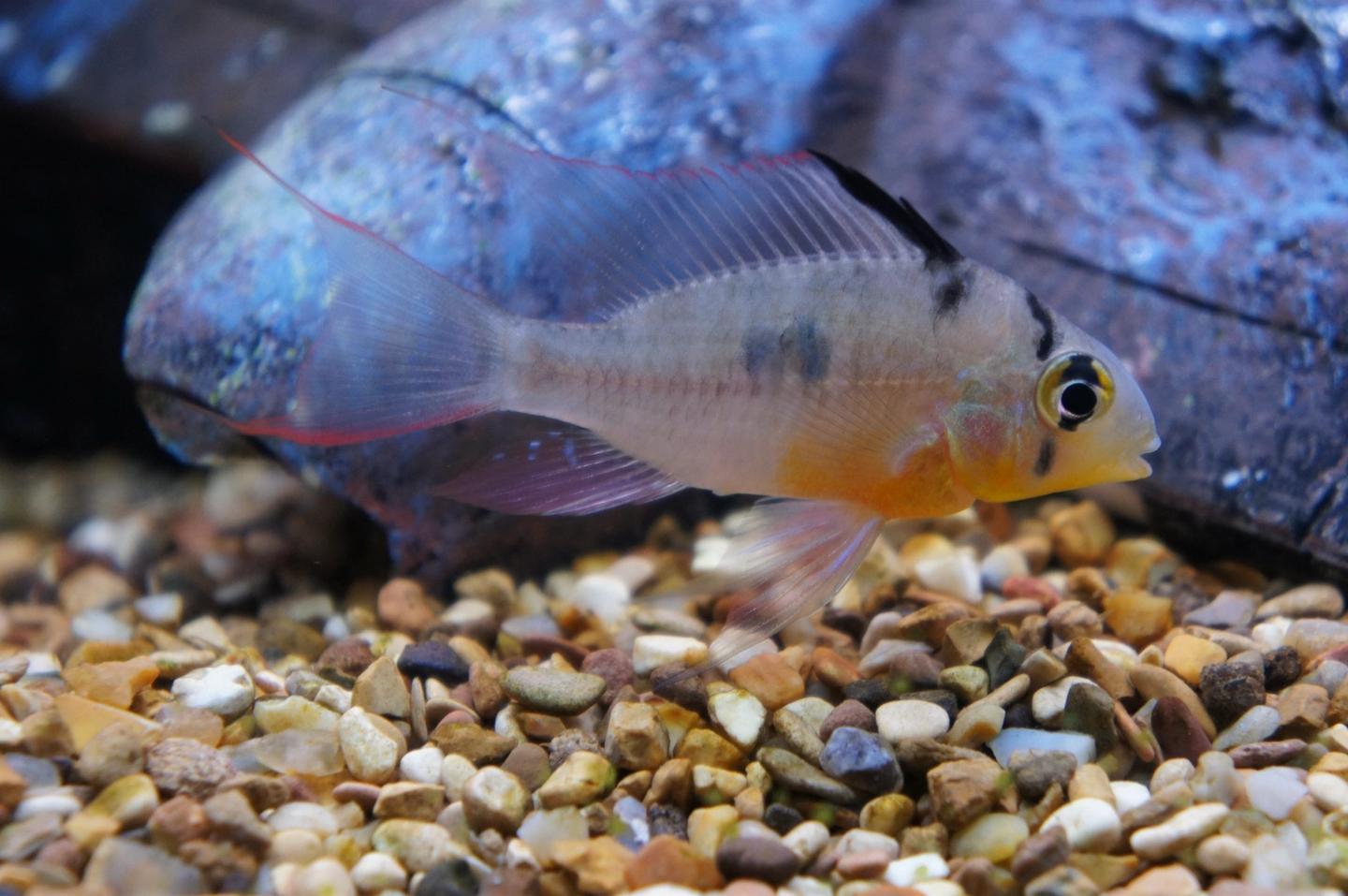
Cichlids are a family of roughly 1,800 accepted species, not one care type. Before buying, identify the exact species and source, then compare adult measurement, usable tank dimensions, social system, territory, tested water, diet and an exit plan. No family-wide minimum tank, water range or tank-mate list is safe.
Maintain these water conditions for optimal health and vibrant colors
Pelvicachromis rolofi, known as Roloff's cichlid, represents one of West Africa's most attractive and personable dwarf cichlids, offering aquarists vibrant coloration, fascinating cave-breeding behavior, and manageable size. This moderate-care species exemplifies the remarkable diversity found in West African coastal drainages, where colorful cave-spawning cichlids have evolved distinct behavioral patterns and striking sexual dimorphism. Now available as freshwater fish for sale UK with specialist guidance, this beautiful West African dwarf brings exceptional color, devoted parental care, and engaging personality to properly maintained aquariums. Whether establishing a dedicated West African biotope or adding centerpiece interest to a peaceful community, P. rolofi rewards knowledgeable keepers with spectacular breeding displays and vibrant coloration. This species offers an excellent introduction to dwarf cichlid keeping for aquarists ready to provide the proper care these specialized fish require.
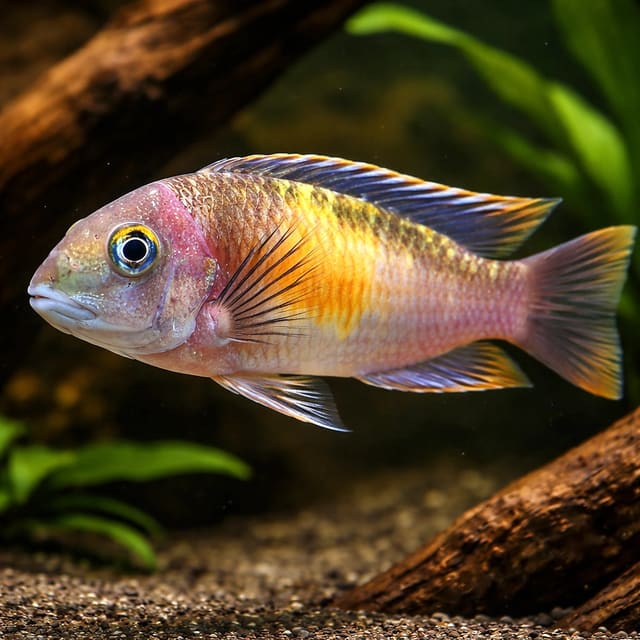
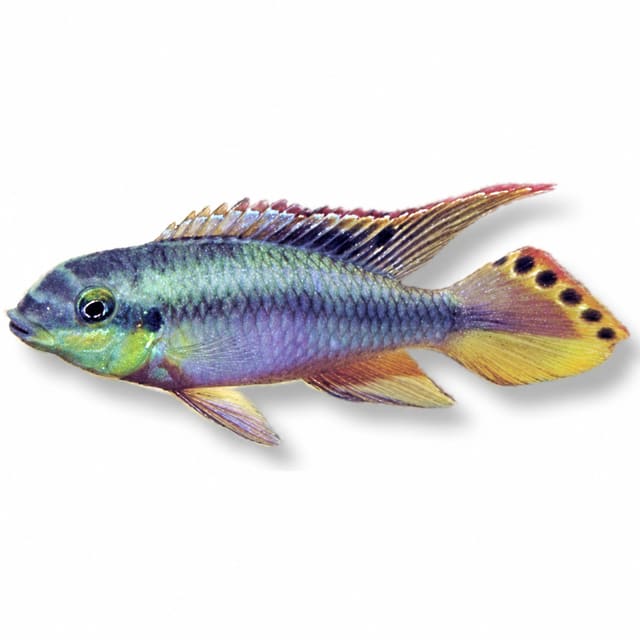
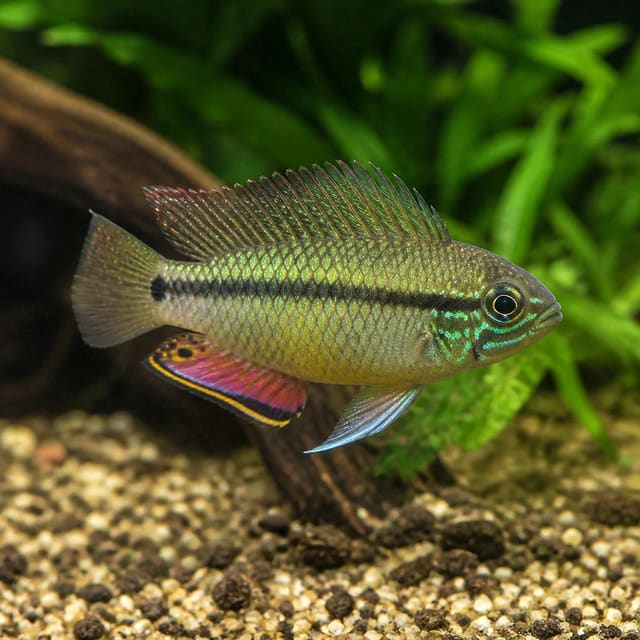
Pelvicachromis rolofi displays remarkable coloration with pronounced sexual dimorphism. Males develop striking patterns featuring red-orange coloration across the upper body, metallic blue-green highlights on the flanks, and distinctive eyespots on the dorsal fin. The body shape is elongated and streamlined compared to the more compact P. pulcher, with adult males reaching approximately 4.5cm. Females typically remain slightly smaller with more rounded body profiles and spectacular coloration of their own—breeding females display intense cherry-red ventral regions and vibrant pink-purple tones across the belly that intensify when spawning. Both sexes feature the characteristic large eyes and slightly upturned mouths typical of Pelvicachromis species. Finnage is well-proportioned with males showing extended dorsal and caudal fin rays creating elegant profiles. The caudal fin often displays distinctive patterning with dark outer margins and lighter centers. Color intensity varies with mood, breeding condition, and dominance status, reaching peak brilliance during courtship and spawning. Healthy specimens display extended fins, vibrant coloration, and alert, active behavior throughout daylight hours.
Endemic to West Africa, specifically the lower Congo River basin and adjacent coastal drainages, Pelvicachromis rolofi inhabits slow-moving streams, tributaries, and flood pools with dense vegetation and abundant cover. The natural environment features shallow waters with sandy or muddy substrates overlaid with leaf litter and fallen branches. Submerged roots and undercut banks provide countless caves and hiding places where pairs establish breeding territories. Water conditions are typically soft to moderately hard with slightly acidic to neutral pH, though these fish demonstrate adaptability to varied chemistry compared to many dwarf cichlids. The habitat features stained water from decomposing organic matter with subdued lighting due to overhead vegetation and tannin coloration. Wild populations occupy areas with minimal water movement, hiding among roots and vegetation during daylight and emerging to forage. This habitat—combining structural complexity from natural materials, moderate water chemistry, and abundant shelter—creates manageable requirements that can be accurately replicated in home aquariums with proper planning and setup.
A minimum of 80 litres provides adequate space for a bonded pair with additional tank mates, though pairs can be maintained successfully in smaller dedicated tanks of 40-60 litres. The aquarium should feature multiple caves and hiding places created using coconut shells, ceramic tubes, slate caves, or driftwood arranged to form enclosed spaces with narrow entrances. Position caves in corners or against tank sides where fish feel secure. Use fine to medium sand substrate 3-5cm deep allowing natural foraging behavior. Include moderate planting with robust species such as Java fern, Anubias, or Amazon swords providing additional cover without excessive maintenance demands. Add some driftwood and optionally Indian almond leaves to release beneficial tannins creating natural water conditions. Lighting should be subdued to moderate as these fish evolved in shaded forest streams. Filtration should provide gentle to moderate water movement—avoid strong currents that stress these still-water inhabitants. Water chemistry proves relatively flexible with these adaptable fish tolerating soft to moderately hard conditions, though slightly acidic to neutral pH is preferred. The aquarium design should balance functional territory definition with aesthetic appeal, creating distinct zones that reduce conflict in community setups.
This omnivorous species accepts varied foods readily but requires balanced nutrition for optimal health and breeding condition. High-quality sinking cichlid pellets or small granules should form the dietary foundation. Supplement regularly with frozen and live foods including bloodworms, brine shrimp, daphnia, and small insect larvae. Offer occasional vegetable matter such as spirulina flakes, blanched spinach, or algae wafers providing fiber. Live foods provide excellent conditioning for breeding pairs—blackworms, mosquito larvae, and small earthworms are particularly beneficial. Feed small portions 2-3 times daily, adjusting quantity based on consumption to prevent overfeeding. Remove uneaten food promptly, particularly in warmer water where decomposition accelerates. Avoid exclusively meaty diets—incorporate vegetable components for digestive health. Variety prevents nutritional deficiencies and maintains vibrant coloration. Condition breeding pairs with increased protein offerings before spawning attempts. Observe feeding behavior as territorial pairs may prevent tank mates from accessing food—distribute across multiple locations if needed. These fish demonstrate enthusiastic feeding responses and will quickly learn to recognize feeding times, often greeting keepers at the glass in anticipation.
Pelvicachromis rolofi exhibits semi-aggressive temperament with territorial behavior intensifying dramatically during breeding periods. Outside spawning, these fish remain relatively peaceful and can coexist with appropriate community members. Bonded pairs develop strong relationships with coordinated territory defense and remarkable parental cooperation. Males establish and defend territories while females focus on nest site selection and brood care. Activity levels are moderate with fish alternating between active swimming, territory patrol, and resting in caves or under plants. The species displays considerable intelligence with complex courtship rituals, dedicated parental care, and problem-solving abilities. Courtship involves elaborate displays with both partners participating—females display breeding coloration to attract males while males perform displaying movements with extended fins. Post-spawning, both parents participate in brood care though females assume primary egg-guarding duties. Pairs become remarkably defensive when guarding eggs or fry, with even small females attacking much larger fish approaching the territory. The species demonstrates strong site attachment with pairs occupying the same cave for multiple spawning cycles. Outside breeding, territorial aggression remains manageable in appropriately sized aquariums with proper structure.
Suitable companions include peaceful small fish that occupy different water zones and tolerate similar water chemistry. Small tetras such as black neon tetras, silvertip tetras, or bloodfin tetras make good dither fish providing activity without territorial competition. Small peaceful rasboras work well in the upper water levels. Corydoras catfish occupy the bottom without territorial conflicts with the cave-dwelling Pelvicachromis. In larger aquariums, other peaceful West African species may coexist if territories are well-defined. Avoid other bottom-dwelling territorial cichlids in smaller aquariums as conflicts over cave territories become inevitable. Very aggressive cichlids will constantly harass or injure these relatively peaceful fish. Fin-nipping species damage fins and cause stress. Tiny fry or very small shrimp face predation particularly from breeding pairs. Overly boisterous or much larger tankmates intimidate and stress these fish. Hard-water species like African rift lake cichlids require incompatible chemistry. The key to successful community building involves selecting peaceful fish occupying different ecological niches, providing multiple distinct territories with visual barriers, and avoiding species that compete for caves or bottom territory. Breeding pairs often benefit from dedicated species tanks where parental care can proceed without interference and fry survival improves dramatically.
Pelvicachromis rolofi breeds readily in appropriate conditions, displaying typical cave-spawning behavior with devoted biparental care. Males court females through elaborate displays involving color intensification, fin spreading, and ritualized movements near potential spawning caves. The female selects a preferred cave after inspecting multiple options, often choosing sites with narrow entrances barely large enough for her body. Spawning occurs within the cave with females depositing 50-150 eggs on the ceiling or walls depending on size and condition. The female immediately assumes intensive brood care, fanning eggs continuously and rarely leaving the cave. The male defends the broader territory, preventing other fish from approaching. Eggs hatch in 2-3 days with fry becoming free-swimming after approximately one week. Both parents then lead fry on foraging expeditions, maintaining tight supervision. Initial fry foods include infusoria or liquid fry foods, progressing quickly to newly hatched brine shrimp and micro worms. Fry grow rapidly under parental care with adults often spawning again while previous broods still inhabit the territory. Successful breeding requires appropriate caves, stable water chemistry, excellent conditioning with varied foods, and low disturbance. In community setups, fry survival proves low unless removed to dedicated grow-out tanks. These fish can breed every 4-6 weeks under optimal conditions, making them prolific and providing regular opportunities to observe fascinating parental behavior.
Pelvicachromis rolofi proves moderately hardy when maintained in appropriate conditions but faces several potential health challenges. Water quality sensitivity demands consistent maintenance as these fish evolved in relatively pristine forest streams. The species tolerates varied water chemistry better than many dwarf cichlids but performs best in slightly acidic to neutral, moderately soft water. These fish cannot tolerate copper-based medications, requiring alternative treatments for parasitic infections. Territorial aggression during breeding can cause stress to tank mates if aquarium size or structure proves inadequate. Overfeeding combined with warm temperatures can lead to digestive issues—feed moderately and maintain good water quality. The species can suffer from typical cichlid ailments including bacterial infections if water quality deteriorates. Breeding females exhibit high energy demands and should be well-conditioned between spawns to prevent health decline from repeated breeding. Inadequate territory or excessive harassment prevents successful breeding and causes chronic stress. Regular observation reveals behavioral changes indicating problems—loss of appetite, clamped fins, faded coloration, or labored breathing signal issues requiring prompt attention. With proper setup, compatible tank mates, quality varied nutrition, and consistent maintenance, these attractive dwarf cichlids provide years of enjoyment and regular breeding success for aquarists willing to meet their moderate care requirements.
Tropical Fish Co specializes in West African cichlids with comprehensive expertise in Pelvicachromis species. Our Pelvicachromis rolofi specimens are sourced from quality suppliers who maintain proper water conditions and understand dwarf cichlid requirements. Each fish undergoes health screening and quarantine before being offered for sale, ensuring robust individuals arrive ready to thrive in your aquarium. We provide detailed guidance on West African biotope setup, water chemistry management, community planning, and breeding protocols tailored specifically to Pelvicachromis requirements. As specialist aquarium retailers serving dedicated hobbyists, we understand the nuances of dwarf cichlid care and offer ongoing support as you develop your collection. Our packaging employs proven techniques for safe transport of small cichlids, with insulated containers and optimized conditions ensuring excellent arrival condition. We can advise on cave selection, spawning preparation, and fry raising techniques to help you successfully breed these fascinating fish. When you buy live fish online UK from Tropical Fish Co, you receive not merely specimens but comprehensive knowledge enabling long-term success and breeding achievement. Our commitment to customer education and focus on quality over volume makes us the preferred choice for aquarists seeking beautiful West African dwarf cichlids. With nationwide delivery and expert support, we ensure your Pelvicachromis rolofi arrives safely and thrives, bringing the colorful beauty and engaging behavior of West African streams into your home aquarium.
No reviews for this item yet. Bought one? Honest reviews only, good or bad.
What customers say about ordering from us
Easy website plenty of info on fish your buying great to pick a time slot
TRACEY DURRANT · 7 Oct 2026
Got some lovely fish thank you
Kevin Mackie · 7 Oct 2026
Reviews of our shop, collected by Judge.me, an independent third-party review collector. Newest first.