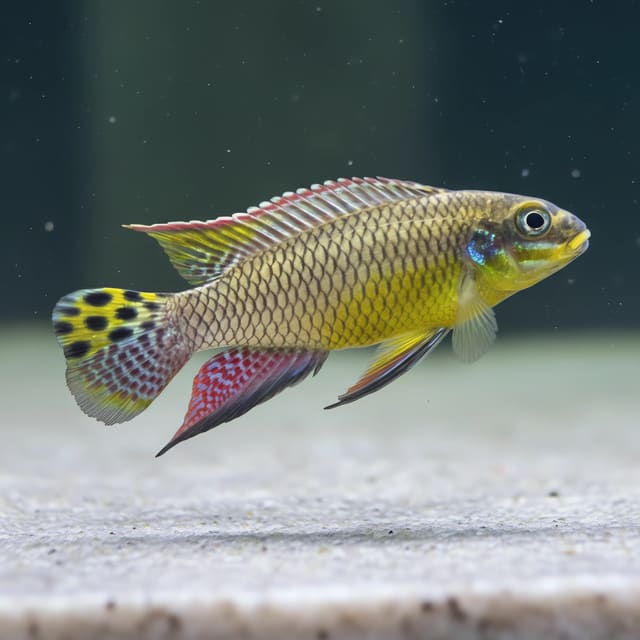
Super Red Kribensis Cichlid (Pelvicachromis pulcher)
24–25°C · pH 5–7.5
£18.99

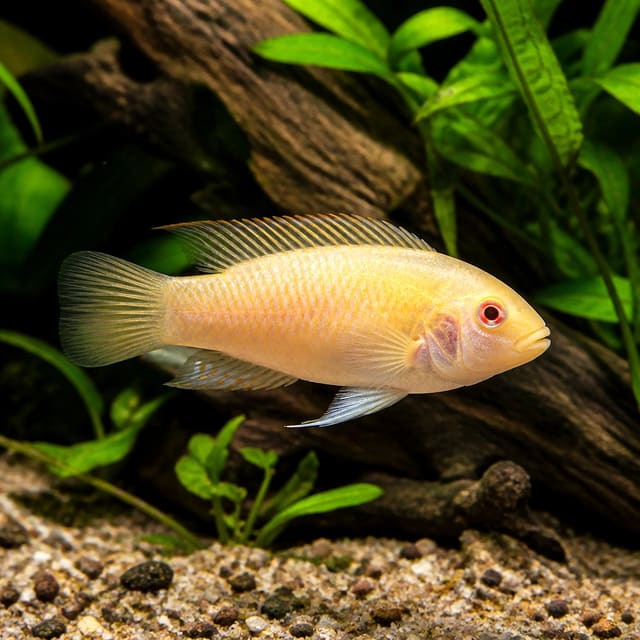
Buy Electric Blue Acara for sale in the UK. A striking moderate-care cichlid with vivid blue colour, ideal for spacious community tanks. Order today!
Adult size is the maximum length this species reaches at full maturity (scientific sources). The livestock you receive will be younger and smaller — pick a size above for the actual shipping size. Product-photo provenance and any image-specific limitations are stated on the listing.
Hemichromis letourneuxi
Save when buying multiple fish. Each quantity is one fish; sex and pair formation are not guaranteed unless the selected variant explicitly states them.
Confirm your email, then we’ll send an availability message for this exact item if it returns within 180 days.
This request is only for this product—no newsletter or other promotions. A mail-provider retry may very rarely duplicate the same availability message. Unconfirmed addresses are removed after 48 hours. See our privacy policy.
Buy Electric Blue Acara for sale in the UK. A striking moderate-care cichlid with vivid blue colour, ideal for spacious community tanks. Order today!
Adult size is the maximum length this species reaches at full maturity (scientific sources). The livestock you receive will be younger and smaller — pick a size above for the actual shipping size. Product-photo provenance and any image-specific limitations are stated on the listing.
Cichlids are a family of roughly 1,800 accepted species, not one care type. Before buying, identify the exact species and source, then compare adult measurement, usable tank dimensions, social system, territory, tested water, diet and an exit plan. No family-wide minimum tank, water range or tank-mate list is safe.
Maintain these water conditions for optimal health and vibrant colors
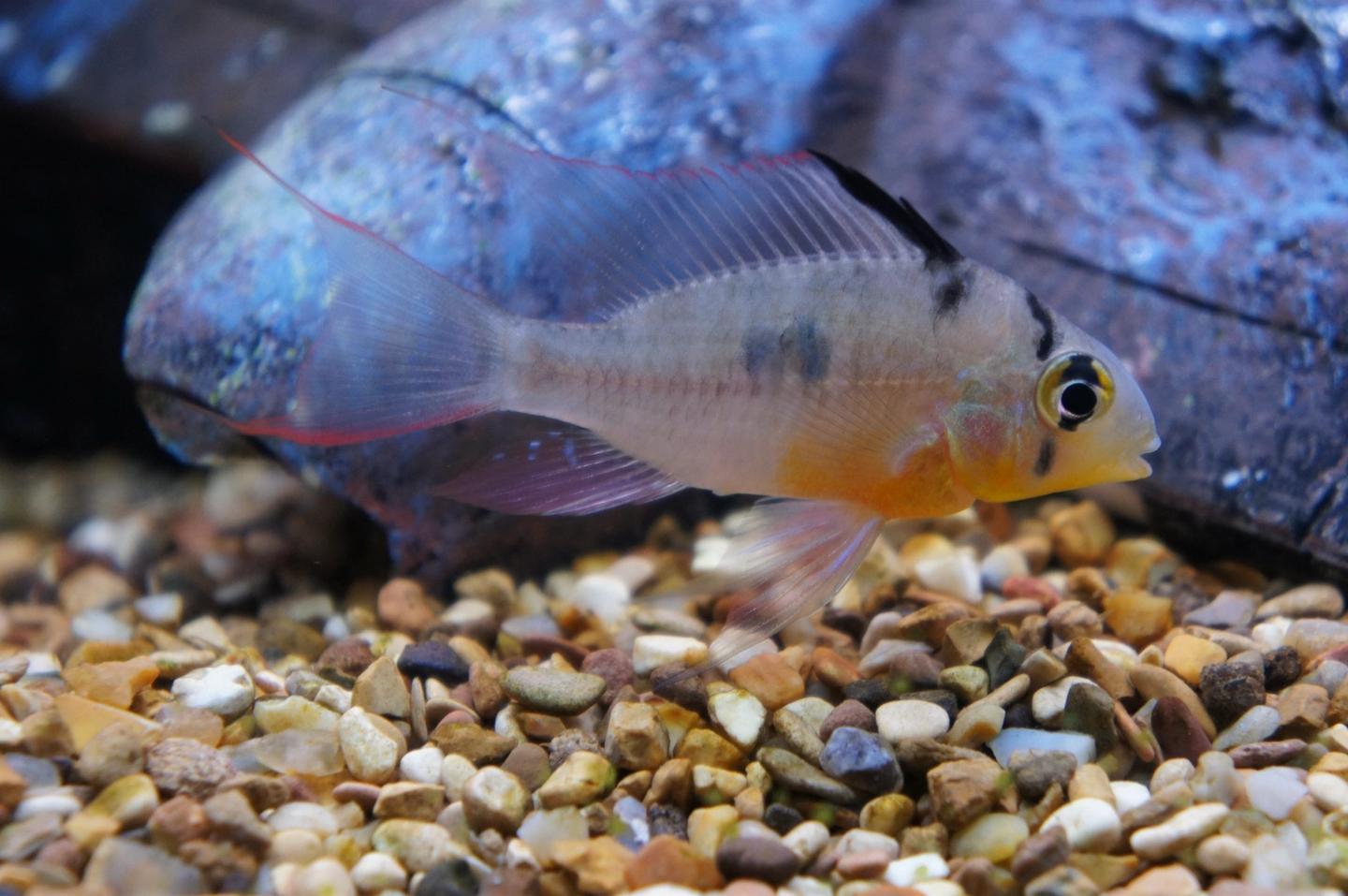
The Dragon Jewel Cichlid is an African jewel cichlid trade form sold under Hemichromis letourneuxi sp. Dragon. It is a colourful, confident cichlid for keepers who want strong behaviour, breeding interest and a fish with real presence, not a gentle community centrepiece.
It is currently out of stock, but the care guide is kept live so you can plan the right aquarium before the next availability update.
Plan a mature aquarium of around 150-200 litres or larger for a pair, and go bigger if the tank will include other robust fish. Use rockwork, wood, caves and broken lines of sight so each fish can claim space without seeing every tank mate at once. Jewel cichlids are substrate-spawning cichlids, so a flat stone, cave roof or sheltered hard surface may become a breeding site.
Plants can be used, but choose tough rooted plants, epiphytes on wood, or protected planting areas. During territorial displays and breeding preparation, jewel cichlids may dig around the chosen site and can disturb delicate stems.
Use warm, stable tropical water. Our stock records for this Dragon Jewel Cichlid give 23-32°C, pH 6.0-8.0 and 5-30 dGH, with an adult size around 12 cm. FishBase also lists Hemichromis letourneuxi as a tropical African species found in freshwater and brackish habitats, with pH from around 6.0 and hardness from around 5 dH. Stability matters more than chasing an exact number.
Good filtration is important because jewel cichlids feed well and defend territory strongly. Keep nitrate controlled with regular water changes, avoid sudden temperature swings, and quarantine new tank mates before adding them to the display aquarium.
This is not a peaceful community cichlid. Jewel cichlids are territorial and can become much more assertive when a pair forms or when eggs and fry are present. Suitable companions, if used, should be fast, robust and too large to be swallowed. Avoid tiny tetras, fancy long-finned fish, slow bottom dwellers, dwarf shrimp and very shy species.
The safest display is often a species-focused aquarium or a carefully planned robust cichlid setup with plenty of space and cover. Watch behaviour closely after any change to the aquascape, stocking or pair bond.
Feed a varied cichlid diet: quality pellets or granules as the base, supported with frozen foods such as bloodworm, brine shrimp, mysis and chopped meaty foods. Offer small portions that are eaten quickly. A varied diet helps colour, condition and breeding readiness without overloading the filter.
When available, this product is supplied as live tropical fish through our UK live-fish courier process and covered by our Live Arrival Guarantee. Because the current stock count is zero, the page is written as a planning and care reference rather than a hard-sell page.
No reviews for this item yet. Bought one? Honest reviews only, good or bad.
What customers say about ordering from us
I have a small group of long finned mountain minnows. So was delighted to be able to order ten of this variety to increase the genetics in my tank . The ones I recieved are healthy but it’s to early to give a verdict on wether they are of a long finned type since they are small currently.
Gordon Walker · 23 Sept 2026
100% success travel and "installation". Pleased with quality of purchase. The Siamese fighter a bit "shy" so have not yet seen him at his best yet but looking good. Happy customer. GG
George E Garratt · 21 Sept 2026
Reviews of our shop, collected by Judge.me, an independent third-party review collector. Newest first.