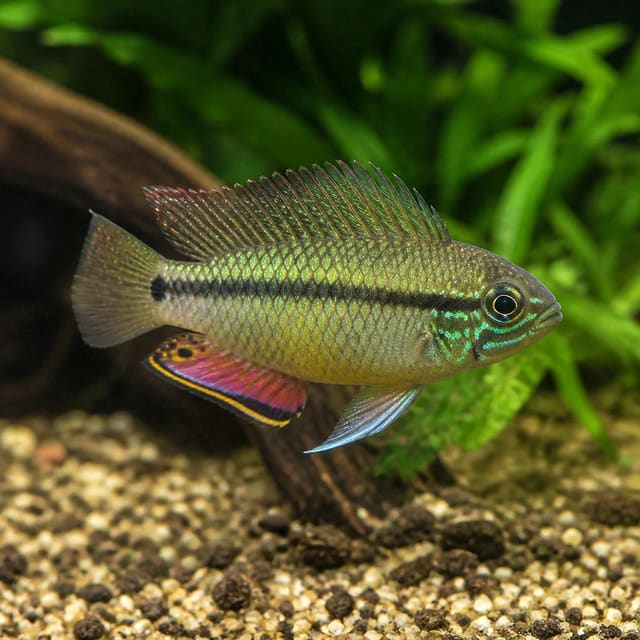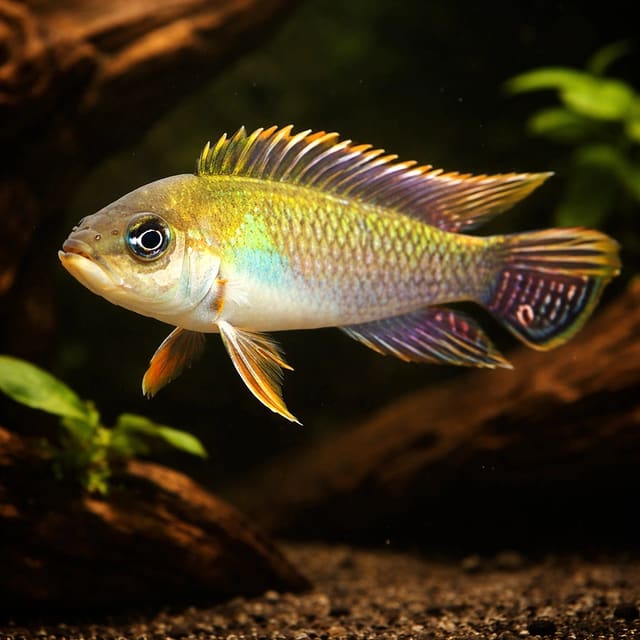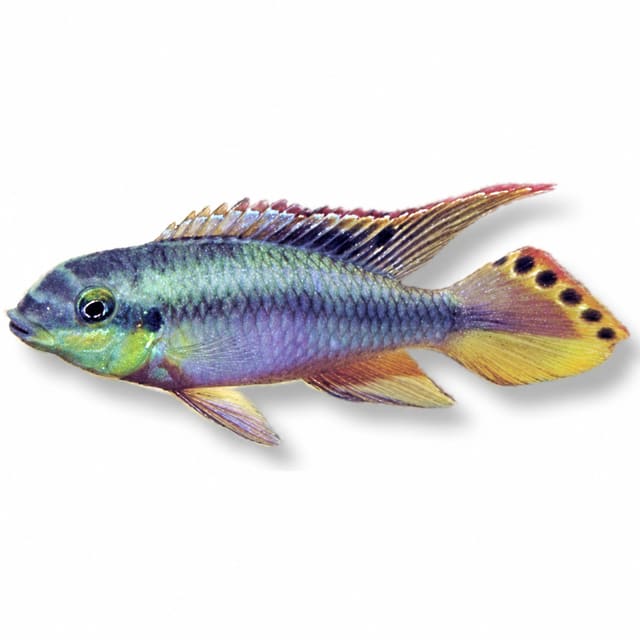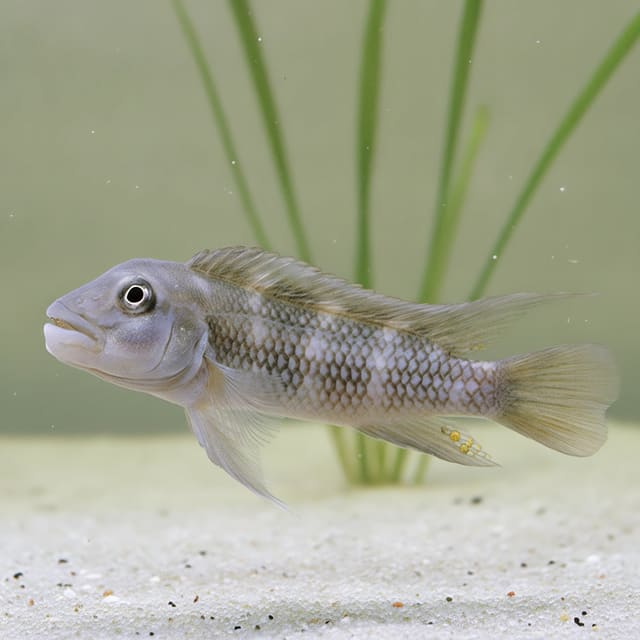
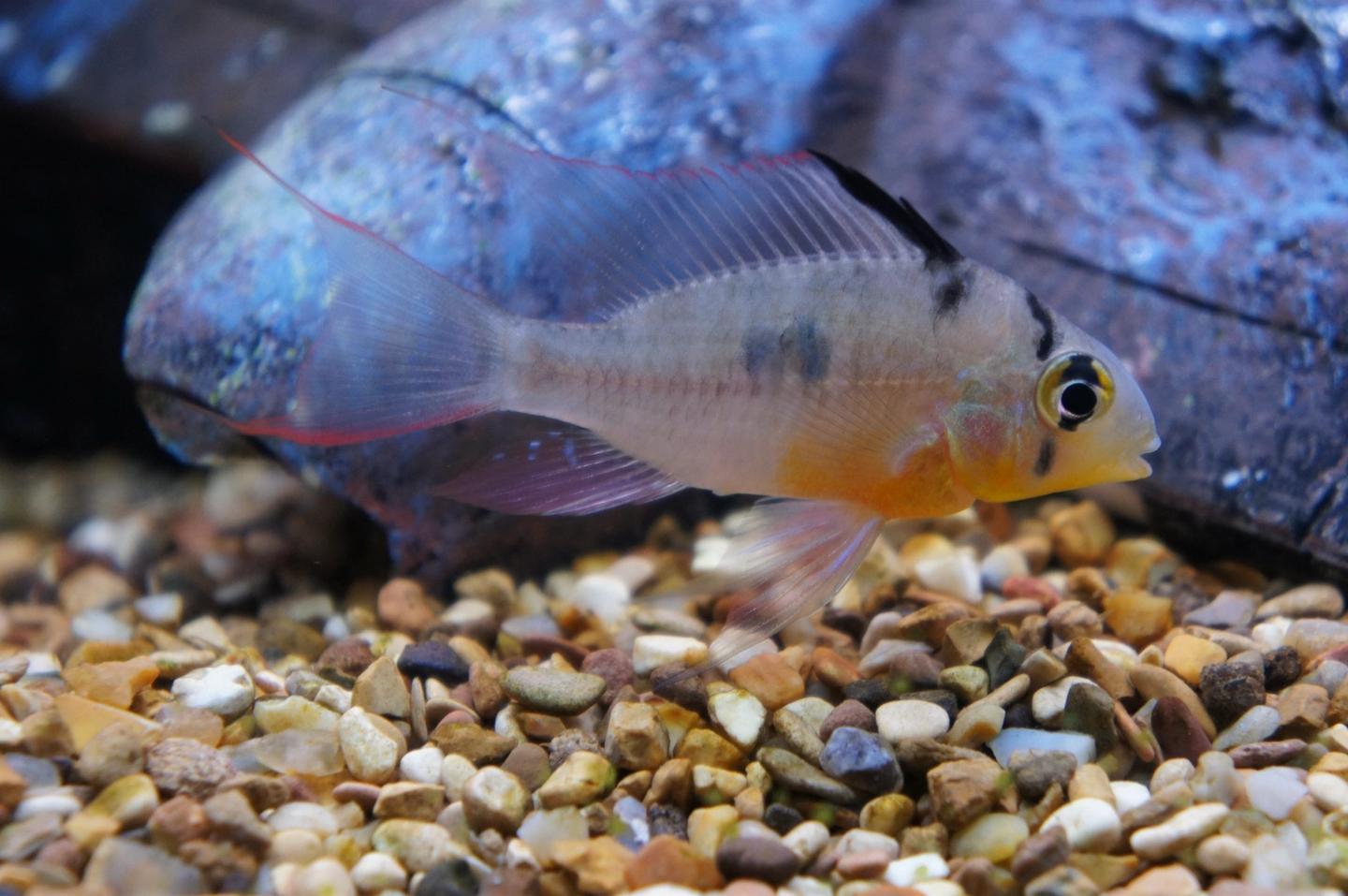
Humphead Cichlid (Steatocranus gibbiceps)
24–27°C · pH 6–8
£19.99

A compact, attractive West African dwarf cichlid with engaging behavior and rewarding breeding potential. Moderate care, semi-aggressive. 23-25C, pH 6.0-7.0.
Adult size is the maximum length this species reaches at full maturity (scientific sources). The livestock you receive will be younger and smaller. Product-photo provenance and any image-specific limitations are stated on the listing.
Nanochromis dimidiatus
Save when buying multiple fish. Each quantity is one fish; sex and pair formation are not guaranteed unless the selected variant explicitly states them.
Confirm your email, then we’ll send an availability message for this exact item if it returns within 180 days.
This request is only for this product—no newsletter or other promotions. A mail-provider retry may very rarely duplicate the same availability message. Unconfirmed addresses are removed after 48 hours. See our privacy policy.
A compact, attractive West African dwarf cichlid with engaging behavior and rewarding breeding potential. Moderate care, semi-aggressive. 23-25C, pH 6.0-7.0.
Adult size is the maximum length this species reaches at full maturity (scientific sources). The livestock you receive will be younger and smaller. Product-photo provenance and any image-specific limitations are stated on the listing.
Cichlids are a family of roughly 1,800 accepted species, not one care type. Before buying, identify the exact species and source, then compare adult measurement, usable tank dimensions, social system, territory, tested water, diet and an exit plan. No family-wide minimum tank, water range or tank-mate list is safe.
Maintain these water conditions for optimal health and vibrant colors
The Nanochromis dimidiatus is a compact, attractive West African dwarf cichlid with engaging behavior and rewarding breeding potential. Native to the Congo River basin in Central Africa, this diminutive species reaches only around 3 cm in adult length and has earned a loyal following among aquarists who appreciate its blend of manageable size, subtle coloration, and fascinating territorial behavior. Now available for sale UK from Tropical Fish Co, N. dimidiatus represents an excellent choice for aquarists seeking a rare, peaceful-to-semi-aggressive dwarf cichlid for planted or biotope aquariums.
Adult Nanochromis dimidiatus are small, slender fish with subtle but attractive coloration. Males typically display olive-grey to brown body coloration with iridescent blue or green highlights on the flanks and gill covers, particularly visible under appropriate lighting. Females are generally smaller and more rounded, often developing a plump belly when carrying eggs. Both sexes may show subtle vertical barring or blotches, with coloration intensifying during courtship and breeding. Finnage is relatively modest compared to some dwarf cichlids, but males often display slightly elongated dorsal and anal fins. Juveniles are pale grey or brown with minimal patterning, developing adult coloration as they mature.
The Congo River basin is one of the largest and most biodiverse river systems in the world, home to hundreds of unique fish species. Nanochromis dimidiatus inhabits slow-moving, shaded sections of rivers and streams with sandy or muddy substrates, submerged roots, fallen leaves, and dense aquatic vegetation. Water conditions in these habitats are typically warm, soft, slightly acidic, and stained with tannins from decaying organic matter. The natural environment is characterized by low to moderate flow, dappled light, and abundant hiding places among roots, leaf litter, and vegetation. Replicating these conditions is essential for the health, coloration, and breeding success of N. dimidiatus in captivity.
A minimum tank size of 40 litres is sufficient for a bonded pair of Nanochromis dimidiatus, though larger tanks (60+ litres) are recommended if tankmates are planned. The aquascape should include plenty of hiding places such as small caves, driftwood tangles, rock crevices, and dense planting to break lines of sight and reduce territorial aggression. A sandy or fine gravel substrate is ideal, and the addition of dried leaf litter (Indian almond leaves, oak leaves) will help replicate the natural habitat and provide beneficial tannins. Subdued lighting and floating plants will help create the shaded, secure environment this species prefers. Moderate filtration and regular water changes (20-30% weekly) are essential to maintain excellent water quality.
Nanochromis dimidiatus is primarily carnivorous, feeding on small invertebrates, insect larvae, worms, and microorganisms in the wild. In captivity, provide a varied diet based on high-quality small cichlid pellets or micro-granules, supplemented with frozen or live foods such as bloodworms, daphnia, brine shrimp, grindal worms, and other small meaty foods. Feed small portions two to three times daily, ensuring all food is consumed promptly to maintain water quality. A varied, protein-rich diet will promote vibrant coloration, healthy growth, and conditioning for breeding. Well-fed pairs are more likely to spawn and successfully raise fry.
Nanochromis dimidiatus is classified as semi-aggressive, with territorial behavior most pronounced during breeding. Outside breeding periods, individuals are relatively peaceful and can coexist with other small, calm West African species. Males establish and defend small territories around caves or hiding places, particularly when courting females or guarding eggs. Females are generally more tolerant but can become defensive when guarding fry. This species is best kept as a bonded breeding pair with plenty of hiding places to reduce stress and allow subordinate individuals or tankmates to retreat when needed. Observing the pair bonding, courtship displays, and cooperative parental care is one of the great rewards of keeping this species.
Top Tip: Provide multiple small caves or terracotta pots as spawning sites for Nanochromis dimidiatus. The female will choose a preferred cave and guard it fiercely during breeding, while the male defends the surrounding territory. A well-structured tank with multiple retreats will reduce aggression and encourage natural breeding behavior.
Ideal tankmates for Nanochromis dimidiatus include other small, calm West African fish of similar size and temperament, such as Pelvicachromis species (in larger tanks), small peaceful tetras, rasboras, and peaceful bottom-dwelling fish such as Corydoras species or small Synodontis catfish (if they are not easily bullied). Avoid housing with very small fish or fry (which may be eaten), slow long-finned fish, highly aggressive cichlids, large predatory fish, and overly boisterous tankmates. The goal is to create a peaceful West African biotope community with species that share similar water requirements and temperaments.
Nanochromis dimidiatus is typically a cave or crevice spawner that forms a strong pair bond. Breeding is triggered by excellent water quality, stable soft slightly acidic water, warm temperatures (24-25°C), and a varied, protein-rich diet. Provide a bonded pair with multiple small caves or terracotta pots as spawning sites. The female typically lays eggs on the roof or walls of a cave, and she guards the eggs and fry while the male defends the territory. Eggs hatch in 2-3 days, and fry become free-swimming within a week. Feed fry on newly hatched brine shrimp, microworms, or finely crushed flake. Remove fry to a separate rearing tank if you wish to maximize survival, as tankmates and even the parents may predate on free-swimming young once they leave the cave.
Maintain excellent water quality with stable, soft, slightly acidic conditions, as Nanochromis dimidiatus is sensitive to elevated nitrates and poor water chemistry. Regular water changes and gentle filtration are essential to replicate the pristine conditions of the species' natural habitat. This species is generally hardy when kept in stable conditions, but remains susceptible to common ailments such as ich, fungal infections, and bacterial issues if stressed or kept in poor conditions. Quarantine new arrivals, maintain consistent temperature and pH, and provide a varied, balanced diet to support immune health and coloration. Tankmates must be chosen carefully to avoid harassment or predation, as this is a small, territorial species that can be bullied by overly aggressive tankmates.
Tropical Fish Co is the UK's trusted specialist in rare, healthy, and ethically sourced West African cichlids and dwarf species. Every Nanochromis dimidiatus is carefully selected for health, coloration, and vitality, and shipped with expert care to ensure safe arrival. We provide detailed care guidance, ongoing support, and a live arrival guarantee on all livestock orders. Our commitment to quality, conservation, and customer satisfaction makes us the best choice for aquarists seeking unique, rewarding dwarf cichlids. Order your Nanochromis dimidiatus today and enjoy the engaging behavior and subtle beauty of this charming West African species.
No reviews for this item yet. Bought one? Honest reviews only, good or bad.
What customers say about ordering from us
I have a small group of long finned mountain minnows. So was delighted to be able to order ten of this variety to increase the genetics in my tank . The ones I recieved are healthy but it’s to early to give a verdict on wether they are of a long finned type since they are small currently.
Gordon Walker · 23 Sept 2026
100% success travel and "installation". Pleased with quality of purchase. The Siamese fighter a bit "shy" so have not yet seen him at his best yet but looking good. Happy customer. GG
George E Garratt · 21 Sept 2026
Reviews of our shop, collected by Judge.me, an independent third-party review collector. Newest first.