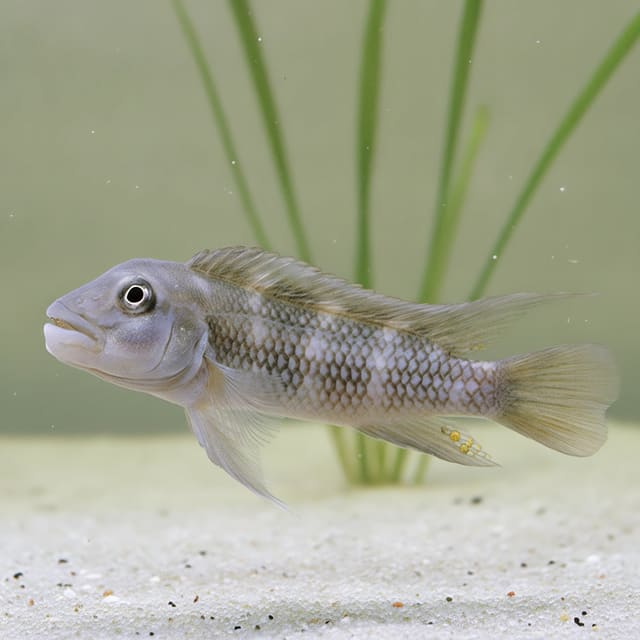
Humphead Cichlid (Steatocranus gibbiceps)
24–27°C · pH 6–8
£19.99

Compact Congo river cichlid with lionhead/buffalohead profile, bottom-hugging movement, cave-spawning pair behaviour and a need for clean, well-oxygenated water.
Adult size is the maximum length this species reaches at full maturity (scientific sources). The livestock you receive will be younger and smaller — pick a size above for the actual shipping size. Product-photo provenance and any image-specific limitations are stated on the listing.
Steatocranus casuarius
Save when buying multiple fish. Each quantity is one fish; sex and pair formation are not guaranteed unless the selected variant explicitly states them.
Compact Congo river cichlid with lionhead/buffalohead profile, bottom-hugging movement, cave-spawning pair behaviour and a need for clean, well-oxygenated water.
Adult size is the maximum length this species reaches at full maturity (scientific sources). The livestock you receive will be younger and smaller — pick a size above for the actual shipping size. Product-photo provenance and any image-specific limitations are stated on the listing.
Cichlids are a family of roughly 1,800 accepted species, not one care type. Before buying, identify the exact species and source, then compare adult measurement, usable tank dimensions, social system, territory, tested water, diet and an exit plan. No family-wide minimum tank, water range or tank-mate list is safe.
Maintain these water conditions for optimal health and vibrant colors
Lionhead / Buffalohead Cichlid is a compact Congo river cichlid best known for its rounded head profile, strong cave attachment and bottom-hugging movement. In the trade it may also appear as Flathead Cichlid, African Blockhead Cichlid or Lumphead Cichlid, but the species name is Steatocranus casuarius. Use those names as identity clues rather than separate fish: the care requirement is the same, with clean oxygen-rich water, rockwork, caves and a settled pair-friendly layout.
This is a compact but very characterful Congo river cichlid. It is famous for the rounded forehead on mature males, a bottom-hugging style of movement and strong cave-focused behaviour. Unlike many open-water cichlids, this species is adapted to current and rocky cover. It suits aquarists who enjoy watching territory, pair bonds, cave use, grazing and the unusual hopping movement that comes from its reduced swim-bladder adaptation.
| Customer name | Lionhead Cichlid / Buffalohead Cichlid |
|---|---|
| Scientific name | Steatocranus casuarius |
| Other trade names | Flathead Cichlid, African Blockhead Cichlid, Lumphead Cichlid |
| Current size options | 4-5 cm, 5.5-6 cm and larger 8 cm+ variants when available |
| Adult planning size | FishBase records up to 10 cm total length |
| Care level | Moderate; best for keepers who can provide strong oxygenation and a structured rocky setup |
| Temperature | 24-28C |
| pH / hardness | FishBase records pH 6.0-8.0 and dH 5-19 |
| Minimum aquarium | FishBase aquarium note: keep in pairs, minimum aquarium size 80 cm; 100 litres is a sensible home target |
| Temperament | Semi-aggressive, territorial around caves, stronger when paired or spawning |
| Diet | Algae-focused grazer with omnivorous aquarium feeding; use sinking foods, aufwuchs-style grazing support and small frozen foods |
FishBase lists the common name as Lionhead Cichlid. In the aquarium trade, the same fish is often searched as Buffalohead Cichlid, African Blockhead Cichlid, Lumphead Cichlid or occasionally Flathead Cichlid. The supplier wording on this row appears to have truncated "Buffalohead" into "Buffalohe", so the new page keeps the synonym context without putting the typo in the title.
Using both Lionhead and Buffalohead once in the title is intentional. It helps customers who know the FishBase/common-name version and customers who use the aquarium-trade name, while avoiding the old pattern of repeating broad phrases such as generic cichlid sales terms. The scientific name is kept visible because Steatocranus species can look similar at a glance and need different expectations from mainstream Malawi, Tanganyika or South American cichlids.
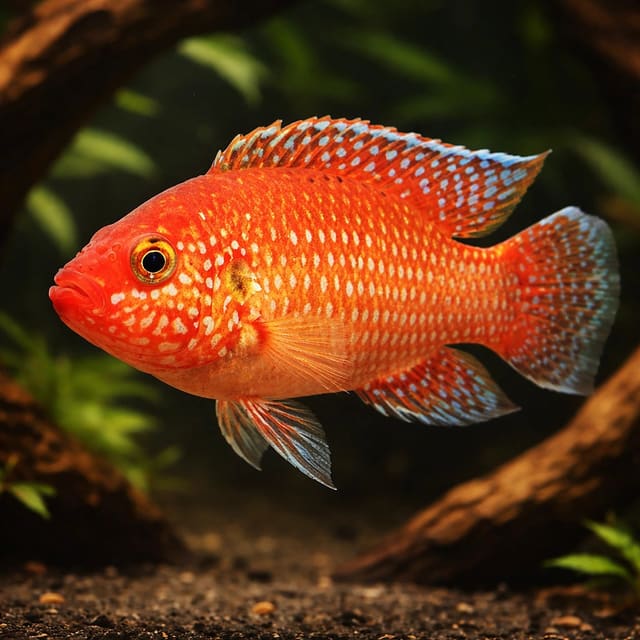
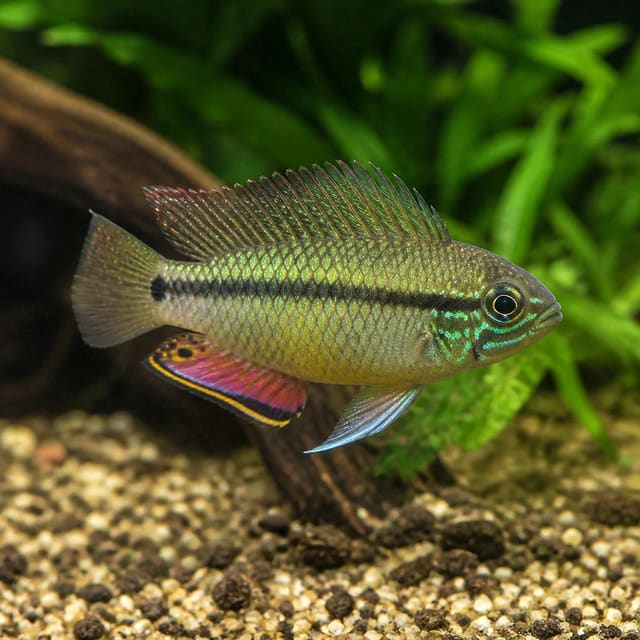
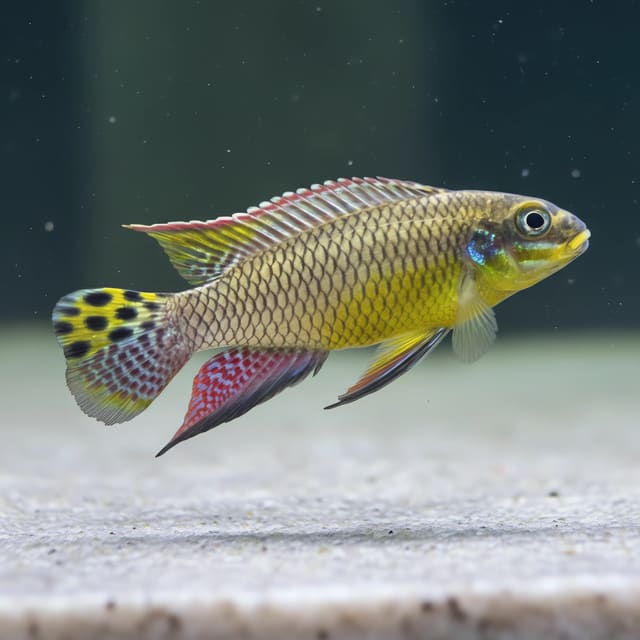
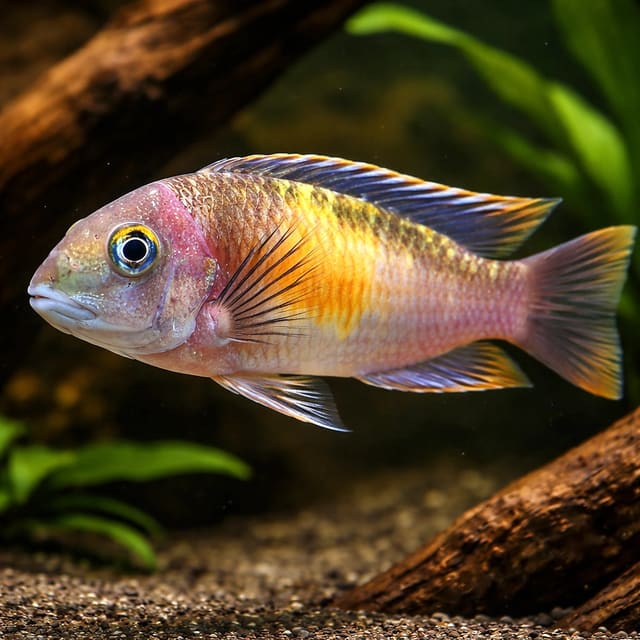
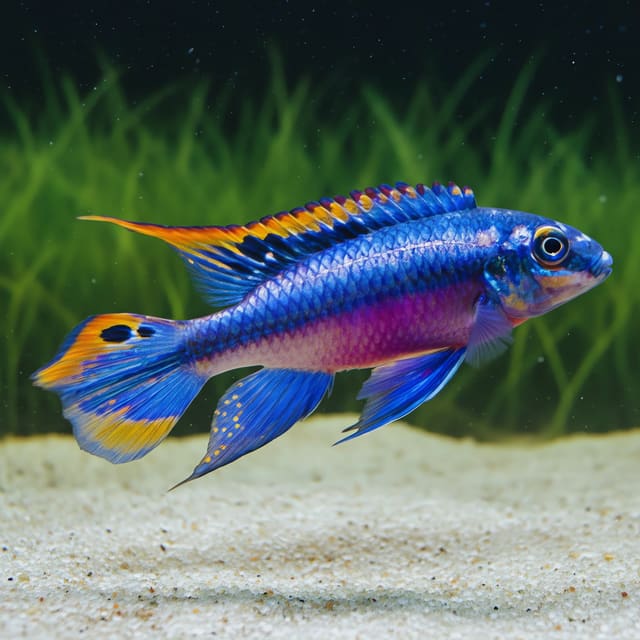
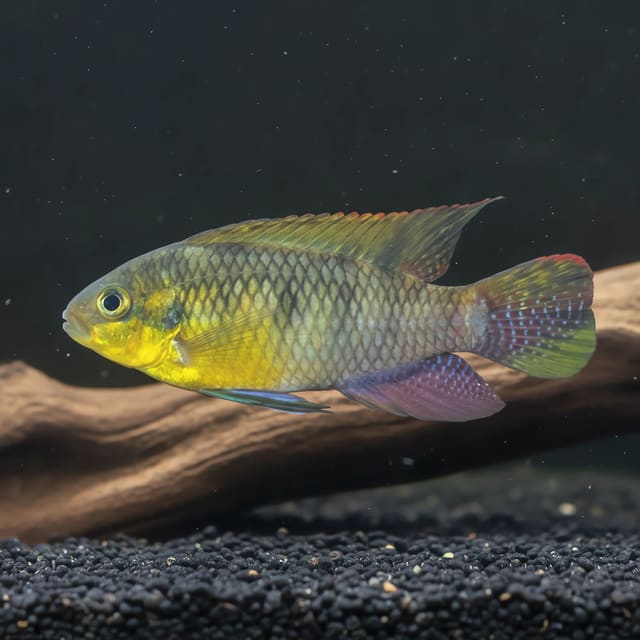
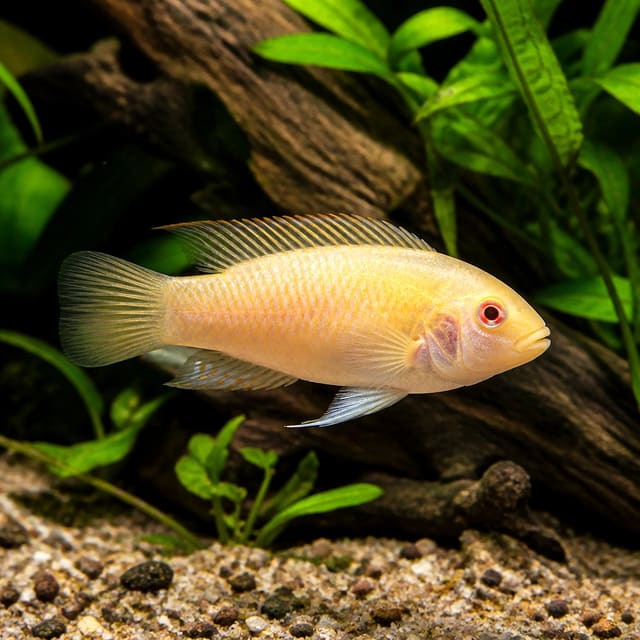
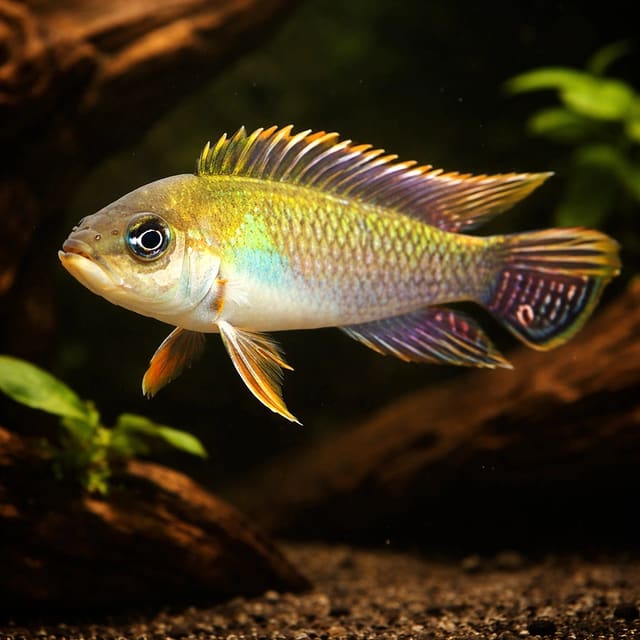
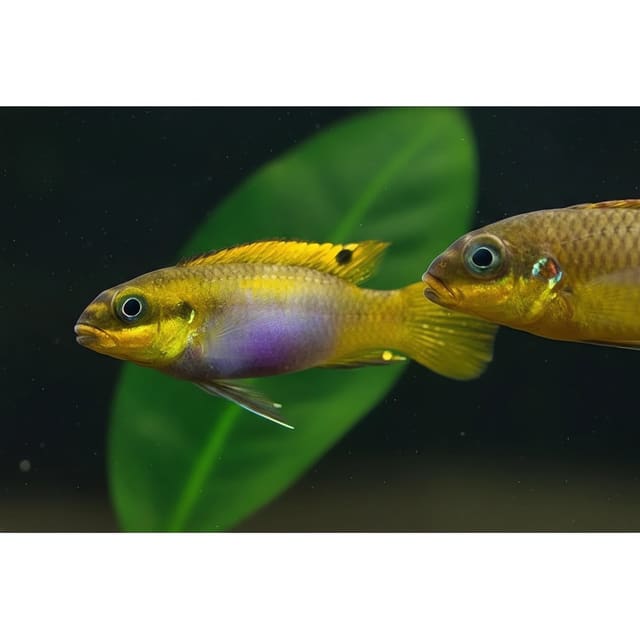
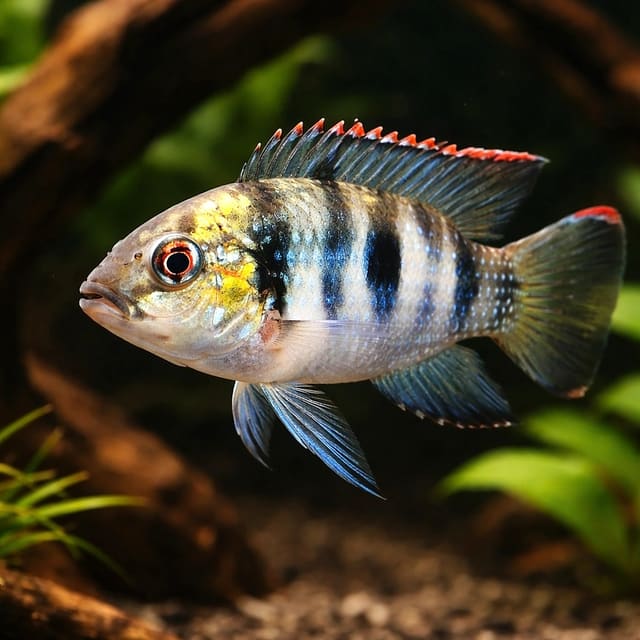
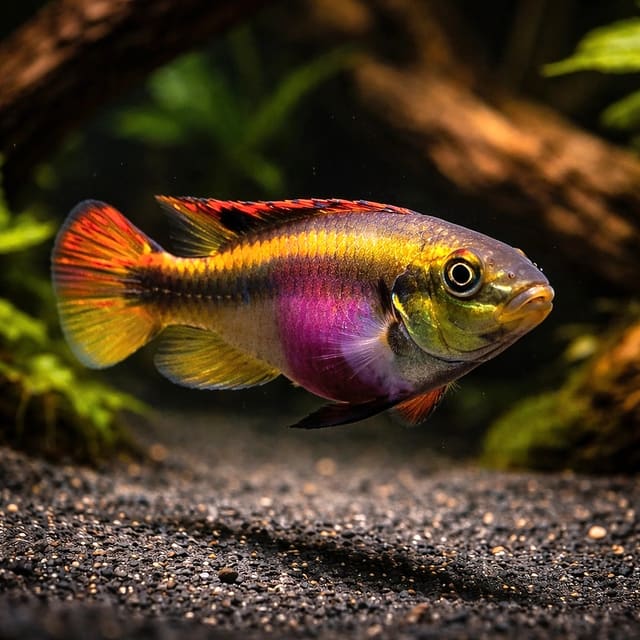
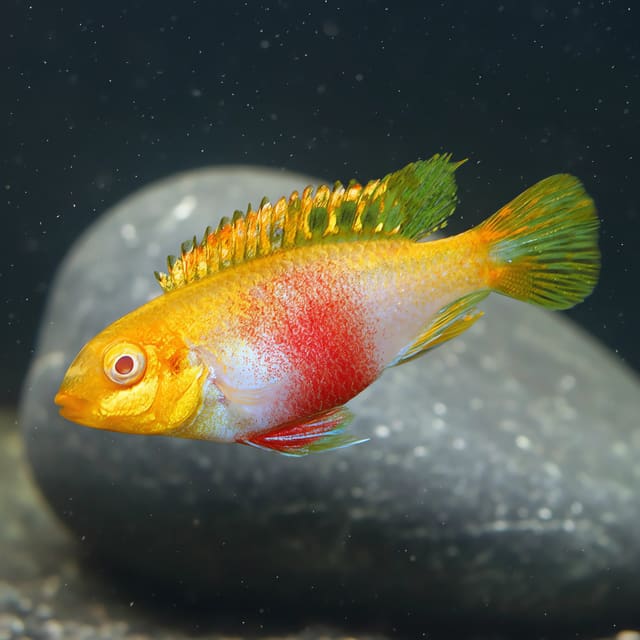
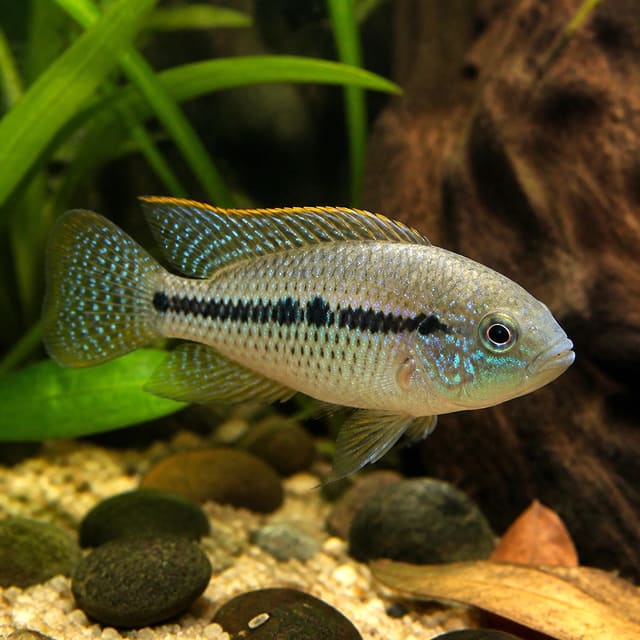
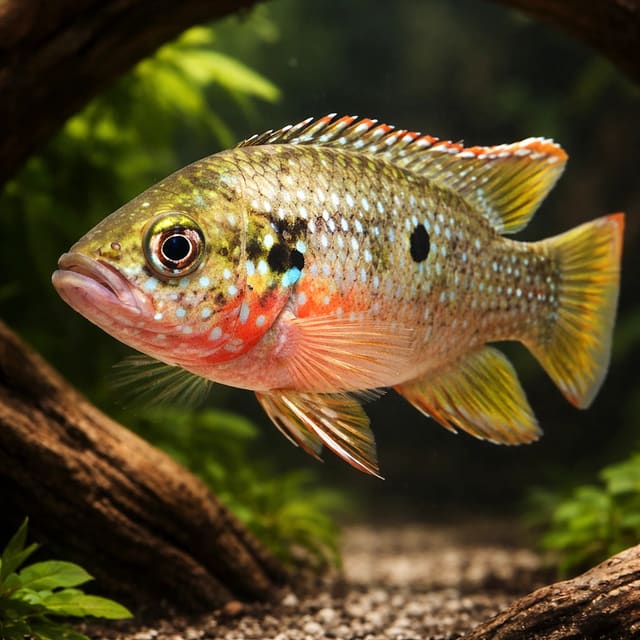
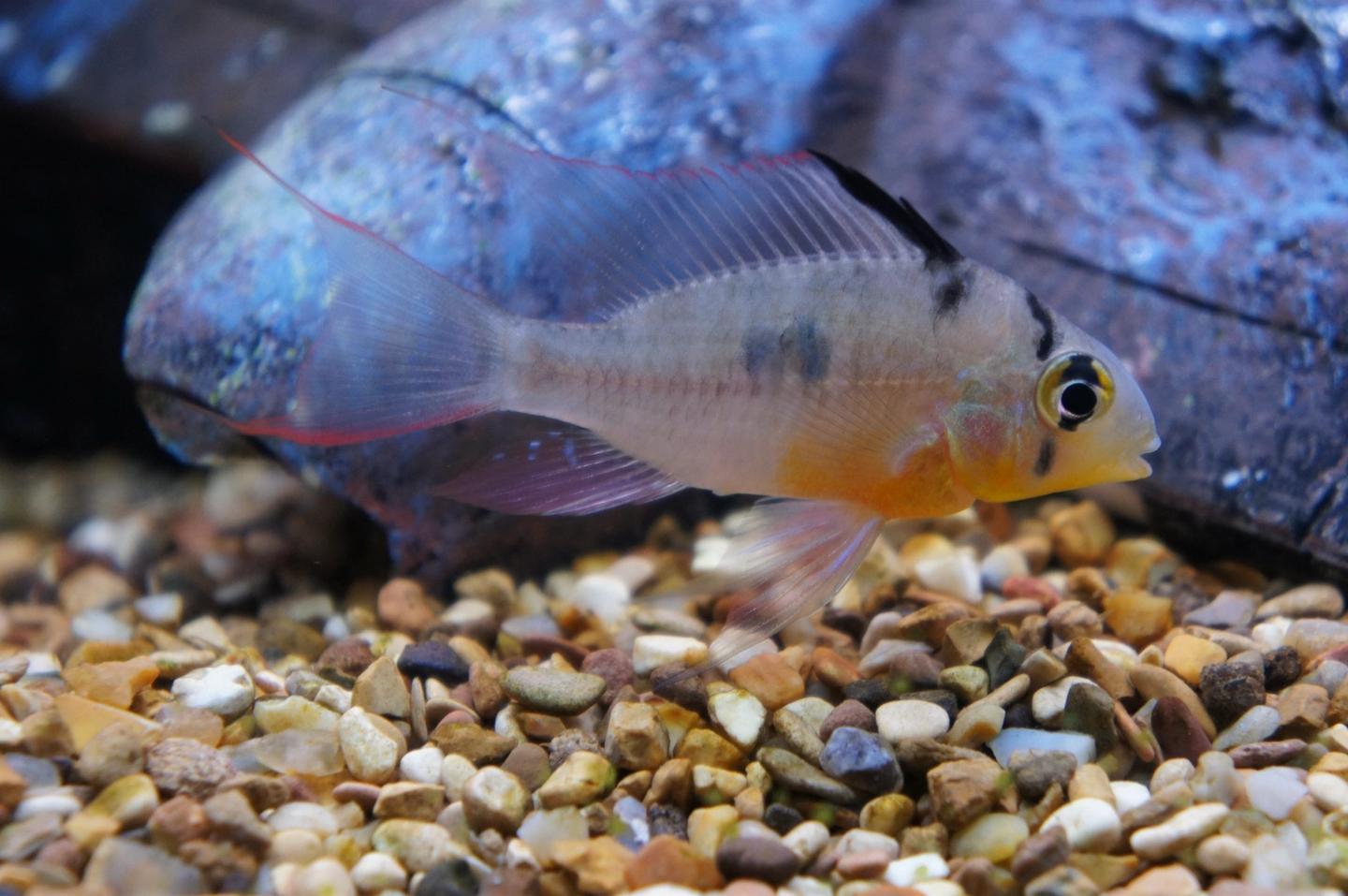
The visual appeal is unusual rather than flashy. Mature males develop a rounded nuchal hump that gives the fish its lionhead or buffalohead look. Colour is usually warm tan, yellow-gold, brown or grey with darker barring, mottling and a stronger orange wash around the lower face and throat on some individuals. The body is compact and powerful, with a broad head, strong fins and an alert expression that makes the fish look permanently engaged with its surroundings.
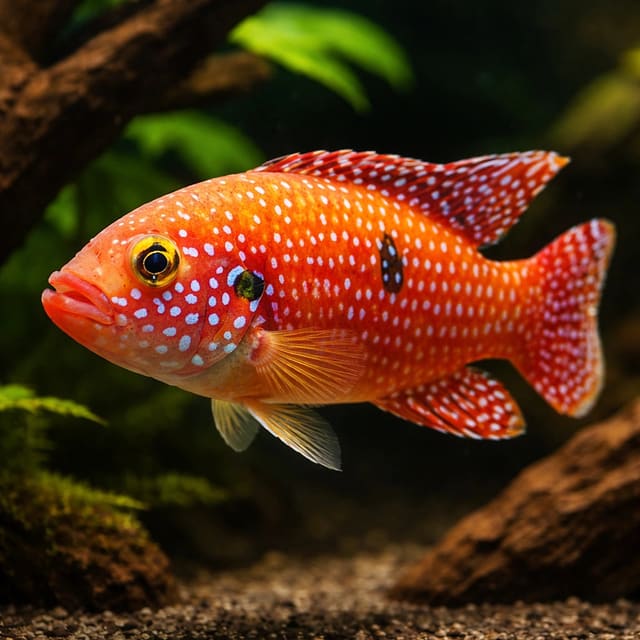
The gallery should show both practical and atmospheric views: the original reference image gives a clean side-profile reference, while the aquarium views provide context for how the fish can look against wood, plants, rockwork and darker substrate. The images are retained as supporting visual material, but the exact source image is being added so the page has a true supplier/reference photo as well.
FishBase records Steatocranus casuarius from Pool Malebo, also known historically as Stanley Pool, and the lower Congo River in the Republic of Congo and Democratic Republic of the Congo. It is a freshwater, demersal and rheophilic cichlid, meaning it is associated with bottom areas and flowing water. The habitat notes matter in the aquarium: this fish is not built for stagnant, low-oxygen water or a bare tank with no secure cave.
In nature, a Lionhead / Buffalohead Cichlid uses rocky areas, current breaks, caves and surfaces where algae and small food items can be picked over. FishBase notes that it feeds primarily on algae and is a pair-bonding cave-spawning species. That combination explains much of its home-aquarium behaviour: it wants surfaces to graze, shelter to claim, oxygen-rich water to sit in and a defended cave when a pair is ready to breed.
Start with a mature, well-filtered aquarium rather than a new setup. FishBase gives an 80 cm minimum aquarium note for pair keeping, and a 100-litre or larger aquarium is a sensible practical target for a pair-focused display. If you want tank mates, use a larger footprint so territories can be separated and weaker fish are not trapped in one line of sight.
Build the layout around rocks, caves, stable wood, open foreground patches and current breaks. Smooth stones and secure rock piles work well, but make sure every heavy piece is stable before the fish arrives. This species spends a lot of time close to the bottom and around caves, so unsafe hardscape is not a small detail. Use sand or fine rounded gravel, and attach hardy plants such as Anubias or Java fern to wood or stone if you want greenery without relying on delicate rooted planting.
Strong filtration and oxygenation are important. Aim for clean water, good surface movement and a directional flow area without turning the whole tank into a stressful blast zone. The fish should be able to choose between flow and shelter. Airstones, spray bars or carefully positioned outlets can all help, but the best setup is one where the fish can perch, hop, graze and retreat naturally.
FishBase records pH 6.0-8.0, dH 5-19 and a tropical temperature range of 24-28C. The older Tropical Fish Co care row used pH 6.0-7.5 and 5-15 dGH, which sits safely inside that broader source range. For home care, stability is more important than chasing a narrow number. Keep ammonia and nitrite at zero, keep nitrate controlled with maintenance, and avoid sudden chemistry swings.
Because this is a rheophilic species, low oxygen and dirty water show quickly as stress. Heavy breathing, hanging near the surface, clamped fins or refusal to feed should trigger water tests and an oxygenation check before reaching for medication. Weekly water changes, moderate stocking, sensible feeding and a mature filter are the foundation.
FishBase notes that the species feeds primarily on algae, so do not treat it as a pure meat-eating predator. In the aquarium, offer quality sinking cichlid granules or pellets, algae wafers or spirulina-rich foods, and occasional frozen foods such as brine shrimp, daphnia, mysis or bloodworm. Small portions are better than heavy feeds because the fish works close to the substrate and leftover food can quickly spoil the exact oxygen-rich conditions it prefers.
Natural grazing behaviour is part of the charm. Mature rockwork, wood and biofilm give the fish surfaces to inspect between meals. If the aquarium is very sterile, feeding becomes the only activity and territorial behaviour can feel sharper. A richer but clean environment encourages more natural movement and helps the fish show its best character.
The most distinctive behaviour is the short hopping or walking movement over the bottom and across rocks. This is normal for Steatocranus and is linked to its life in current. Rather than cruising constantly in mid-water, the fish often rests, pushes forward, darts between cover and investigates caves. It can look almost like it is patrolling a rocky riverbed in miniature.
Temperament is semi-aggressive. A single fish can hold a cave, and a bonded pair can defend a breeding site with real determination. Give it room, hardscape and visual barriers. Do not expect it to behave like a peaceful community cichlid, but do not overstate it as a monster either. In the right layout, its territorial behaviour is manageable and fascinating.
The safest plan is a species-focused aquarium or a carefully chosen pair. If tank mates are used, choose robust fish that enjoy similar warm, well-oxygenated water and are not small enough to be treated as food or weak enough to be harassed constantly. Larger Synodontis catfish and other sturdy Central or West African-style companions may work in spacious aquariums, but every mix needs observation.
Avoid dwarf shrimp, tiny tetras, delicate long-finned fish, shy nano fish, very aggressive cichlids and overcrowded community tanks. If a pair forms and starts guarding eggs, even previously tolerated fish may need to be separated. A spare tank, divider or rehoming plan is good practice with any cave-spawning cichlid.
FishBase describes Steatocranus casuarius as a pair-bonding, cave-spawning species and records 20-150 eggs. In aquariums, a pair may choose a cave, crevice or sheltered surface, then guard eggs and fry closely. The behaviour can be one of the most rewarding parts of keeping the species because both the cave focus and parental defence are easy to observe.
If breeding is the goal, provide multiple caves and keep the tank calm. Avoid constant rearranging, sudden water changes or busy tank mates that force the pair to defend every minute. Fry are small and need appropriate first foods once free swimming. If breeding is not the goal, still plan for the possibility that a pair may form and become more territorial than expected.
Choose this fish when the aquarium is already cycled, covered, heated and mature. On arrival, dim the lights, acclimate slowly and allow the fish to find cover. It may not show full colour or confidence immediately after transport. Watch breathing, balance, fin position and feeding response over the first few days rather than judging the fish only by colour on day one.
The Live Arrival Guarantee applies to eligible livestock orders when the delivery and acclimation instructions are followed. For this species, the best aftercare is quiet: stable temperature, clean water, strong oxygenation, no aggressive tank reshuffles and light feeding until it is settled.
Lionhead / Buffalohead Cichlid is a strong choice for aquarists who want a smaller African cichlid with unusual movement, cave behaviour and real personality. It is especially suited to a Congo-style rocky setup with flow, wood, stones and shaded shelters. It is less suitable for a peaceful planted nano community or a tank where every fish must be visible in open water all day.
If you enjoy fish with behaviour rather than only colour, this species is quietly spectacular. The key is to set up for what it is: a current-loving, bottom-oriented, cave-spawning cichlid that rewards stable water and thoughtful aquascaping.
Max adult size is the length this species reaches at full maturity (from scientific sources). The livestock you receive will be younger and smaller — pick a size on the buy box for the actual shipping size. Product-photo provenance and any image-specific limitations are stated on the listing.
Semi-aggressive and cave-territorial; aggression rises around pair bonding and spawning.
Always research specific species before adding them to your tank. Consider:
No reviews for this item yet. Bought one? Honest reviews only, good or bad.
What customers say about ordering from us
I have a small group of long finned mountain minnows. So was delighted to be able to order ten of this variety to increase the genetics in my tank . The ones I recieved are healthy but it’s to early to give a verdict on wether they are of a long finned type since they are small currently.
Gordon Walker · 23 Sept 2026
100% success travel and "installation". Pleased with quality of purchase. The Siamese fighter a bit "shy" so have not yet seen him at his best yet but looking good. Happy customer. GG
George E Garratt · 21 Sept 2026
Reviews of our shop, collected by Judge.me, an independent third-party review collector. Newest first.