Easy
Common Krib Gold-Albin (Pelvicachromis pulcher)
24–27°C · pH 5–7.5 · 71L
£13.99
Photo coming soon
The size, price and care details on this page are for this listing.
Pelvicachromis taeniatus niger. red (Pelvicachromis taeniatus) is a dwarf cichlid from coastal freshwater regions between eastern Benin and Nigeria that reaches 8 cm standard length. It suits a mature aquarium with plenty of cover; keep a pair at the FishBase, Seriously Fish and OATA overlap of 22–25°C, pH 6.0–7.5 and 5–12 dGH. Sold individually in 3–4 cm and 5.5–6 cm dispatch sizes.
Adult size is the maximum length this species reaches at full maturity (scientific sources). The livestock you receive will be younger and smaller — pick a size above for the actual shipping size. Product-photo provenance and any image-specific limitations are stated on the listing.
Pelvicachromis taeniatus
Save when buying multiple fish. Each quantity is one fish; sex and pair formation are not guaranteed unless the selected variant explicitly states them.
Pelvicachromis taeniatus niger. red (Pelvicachromis taeniatus) is a dwarf cichlid from coastal freshwater regions between eastern Benin and Nigeria that reaches 8 cm standard length. It suits a mature aquarium with plenty of cover; keep a pair at the FishBase, Seriously Fish and OATA overlap of 22–25°C, pH 6.0–7.5 and 5–12 dGH. Sold individually in 3–4 cm and 5.5–6 cm dispatch sizes.
Adult size is the maximum length this species reaches at full maturity (scientific sources). The livestock you receive will be younger and smaller — pick a size above for the actual shipping size. Product-photo provenance and any image-specific limitations are stated on the listing.

Cichlids are a family of roughly 1,800 accepted species, not one care type. Before buying, identify the exact species and source, then compare adult measurement, usable tank dimensions, social system, territory, tested water, diet and an exit plan. No family-wide minimum tank, water range or tank-mate list is safe.
Maintain these water conditions for optimal health and vibrant colors
Pelvicachromis taeniatus niger. red (Pelvicachromis taeniatus), often called the Nigeria Red form or a striped krib, is a freshwater dwarf cichlid in the family Cichlidae. FishBase places its native range in coastal freshwater regions from eastern Benin to Nigeria, including the Niger delta. Reports from Cameroon and Bioko are assigned to Pelvicachromis kribensis, so they should not be used to extend this fish’s range. It suits a keeper who can provide caves, visual cover, stable water and enough room for a pair to establish a territory.
Plan for an adult length of 8 cm standard length, as recorded by Seriously Fish. This is a compact fish, but its space requirement is set by pair behaviour and breeding territoriality rather than body length alone. A 71-litre aquarium measuring 60 × 37.5 × 30 cm is described as suitable for one pair, while FishBase gives a minimum aquarium length of 80 cm. Meeting both benchmarks means choosing a tank of at least 71 litres with a length of at least 80 cm.
Keep routine aquarium water at 22–25°C, pH 6.0–7.5 and 5–12 dGH. These values are the overlap of FishBase’s recorded environment, Seriously Fish’s aquarium range and OATA’s dwarf-cichlid figures. OATA’s figures are group guidance, while the other two references give values for P. taeniatus. The overlap gives a practical target that remains inside all three ranges.
This is a cave-spawning substrate brooder. It can fit a carefully planned community, but it is generally shy and retiring and may become territorial when breeding. The best keeper is prepared to observe interactions, protect access to cover and change the stocking plan if one fish prevents another from feeding or resting normally.
Choose this fish for a mature, filtered freshwater aquarium where a pair can use caves, roots and planting as visual barriers. It is a strong candidate for keepers who enjoy observing pair behaviour but do not want a large cichlid. Its compact adult length does not remove the need for territory space, especially when a spawning site is claimed.
| Suits | Not suited to |
|---|---|
| A mature, filtered freshwater aquarium | An unfiltered or newly stocked aquarium |
| One pair with several hiding places | A sparse layout with nowhere for a chased fish to withdraw |
| Water held at 22–25°C and pH 6.0–7.5 | Water outside the stated temperature or pH range |
| A screened community of suitably sized, calm fish | Very vigorous or large species |
| A keeper prepared for breeding territoriality | Several pairs crowded without distinct territories |
A pair needs more than one enclosed retreat so that the fish are not forced to compete for a single refuge. Seriously Fish recommends plenty of hiding places and potential spawning sites, including clay pots, caves, roots and driftwood. Plants are optional, but their additional cover can make the layout more suitable for this shy fish.
Community planning should begin with the adult fish and the usable footprint, not simply the aquarium’s stated volume. An aquarium of at least 80 litres is required when dwarf cichlids are mixed with other fish. Combine that volume with the 80 cm minimum aquarium length recorded by FishBase, then check whether decorations leave enough open routes between territories.
Browse our African cichlid collection to compare body size, water needs and behaviour before combining cichlids. Shared regional or family labels do not make two fish automatically compatible; the decisive checks are water overlap, activity, adult size and the room each fish needs.
One purchase supplies one fish in the size selected on the live size selector. The named choices are 3–4 cm and 5.5–6 cm. These measurements describe the dispatch size and do not change the aquarium, water or compatibility plan for the adult fish.
The size you select is the size supplied, not the adult size. Whichever label you choose, prepare for an adult length of 8 cm standard length and provide the same long-term space, caves and water conditions. Do not use the larger dispatch grade as a substitute for checking whether the aquarium can house the adult pair.
Sex is guaranteed only when the selected option explicitly states male or female. This Pelvicachromis taeniatus niger. red listing has no sex-guaranteed option. A purchase should therefore be planned as one fish without assuming its sex from dispatch size, colour or the gallery. Keeping a pair remains the husbandry target, but ordering two fish does not by itself establish a compatible or male-and-female pair.
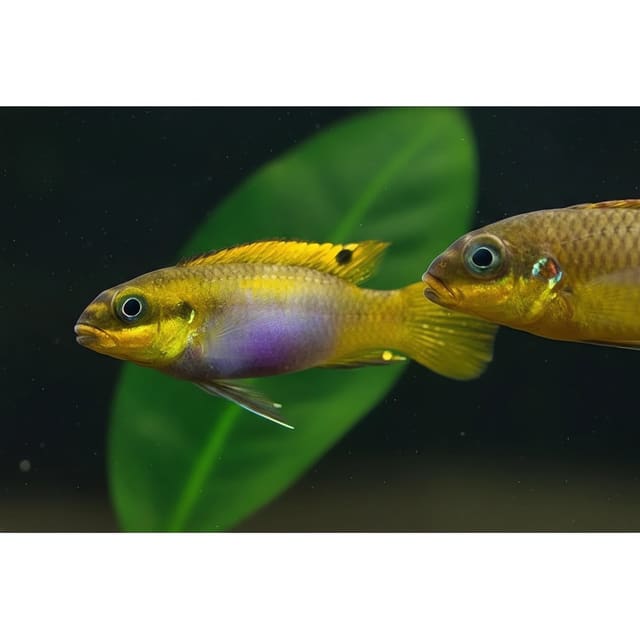
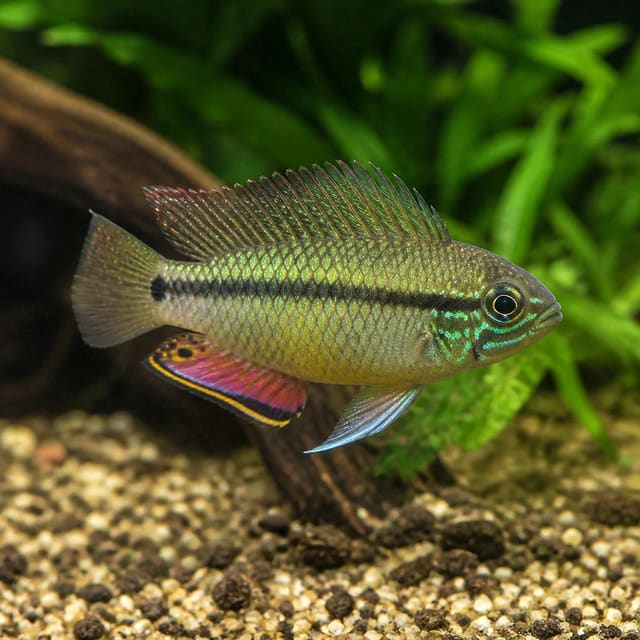
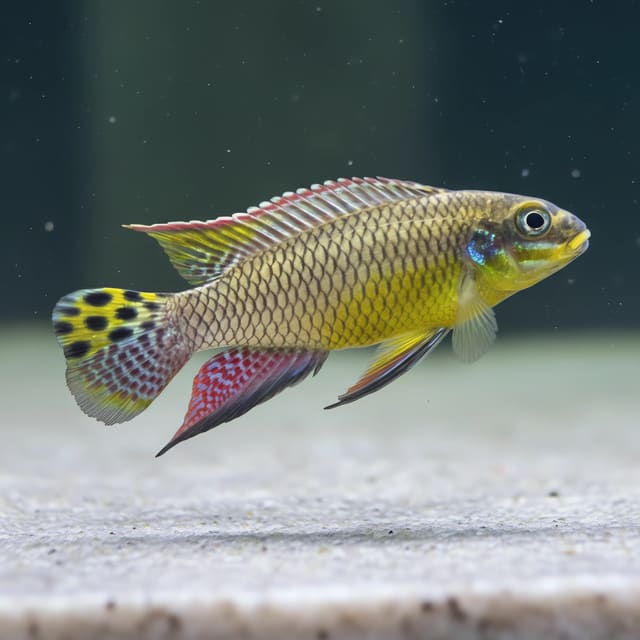
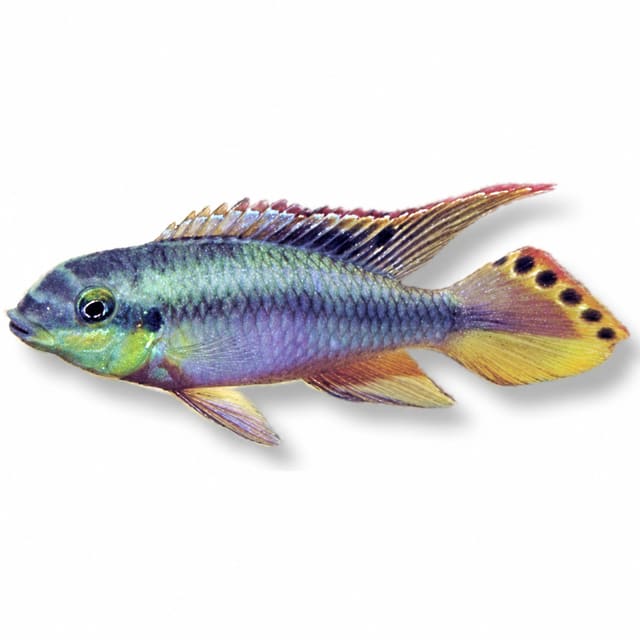
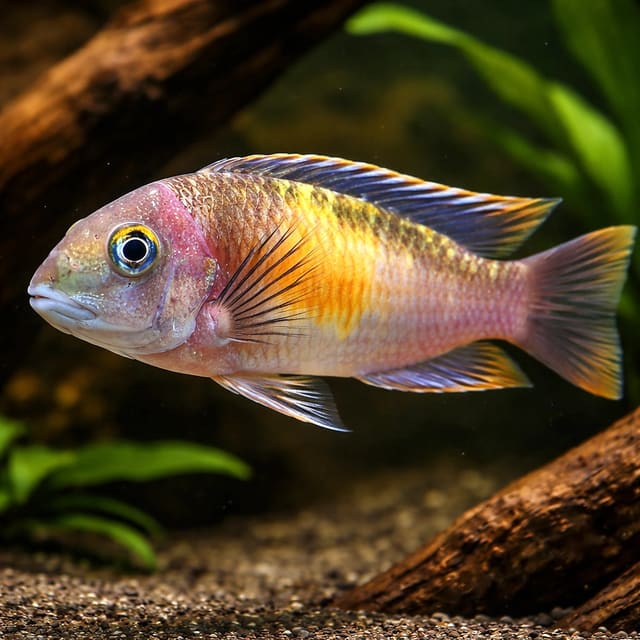
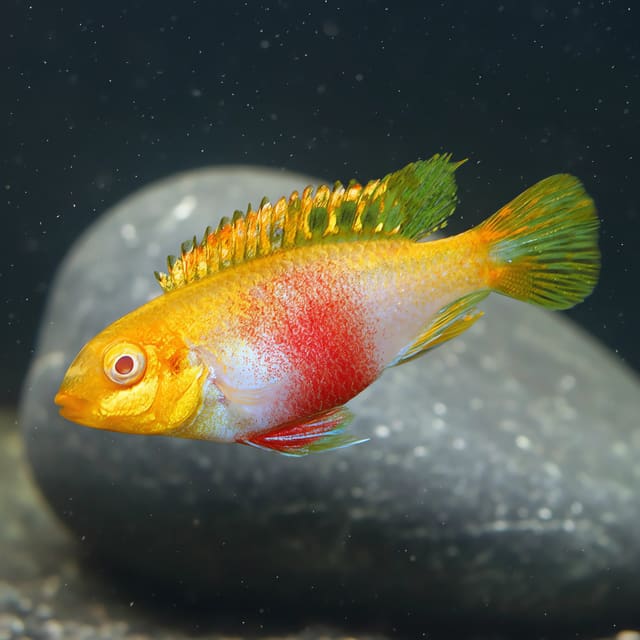
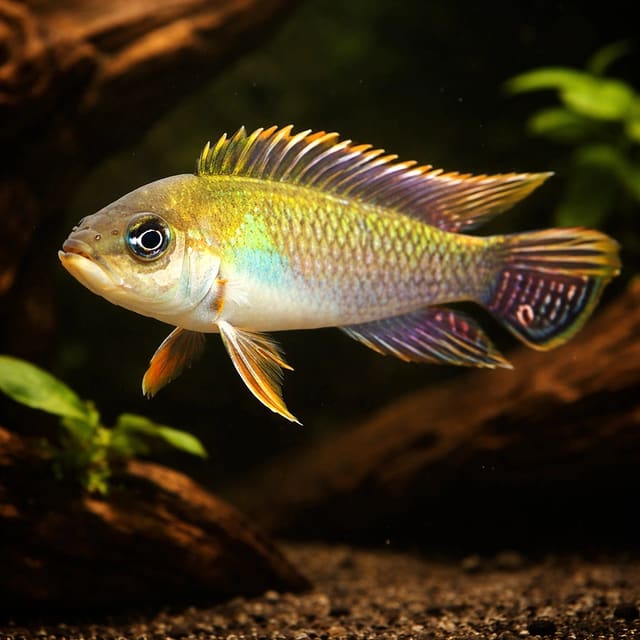
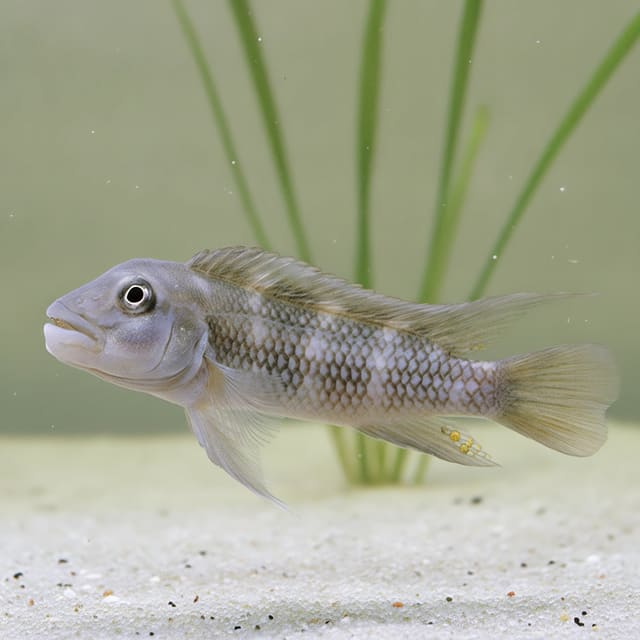
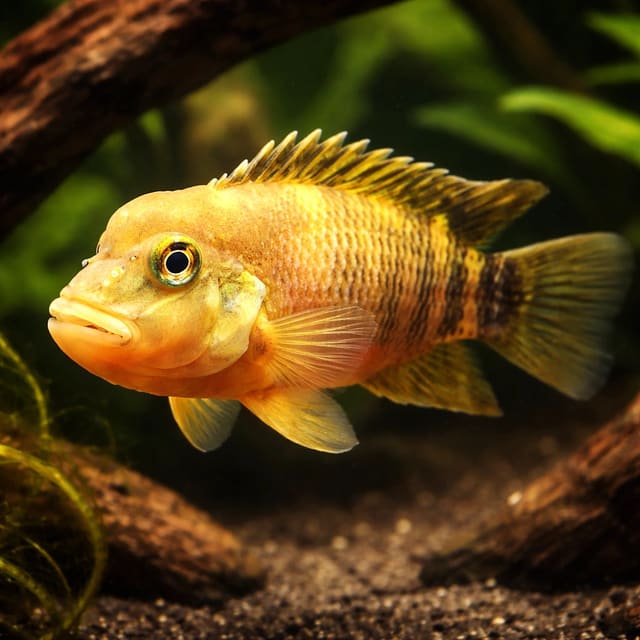
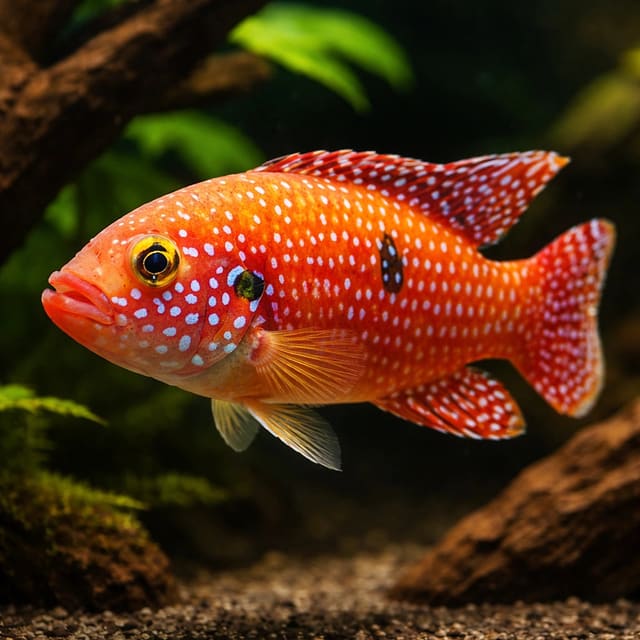
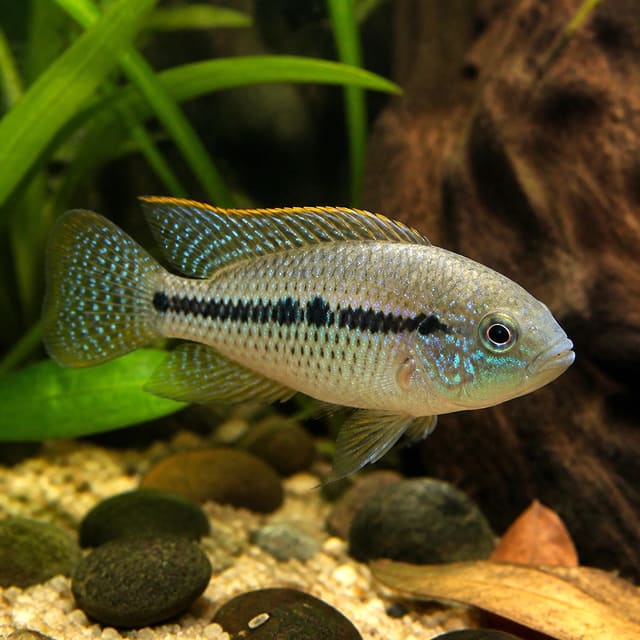
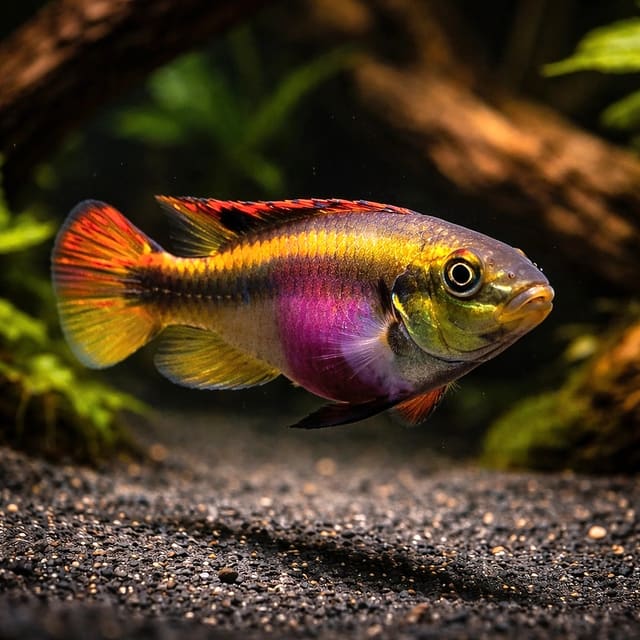
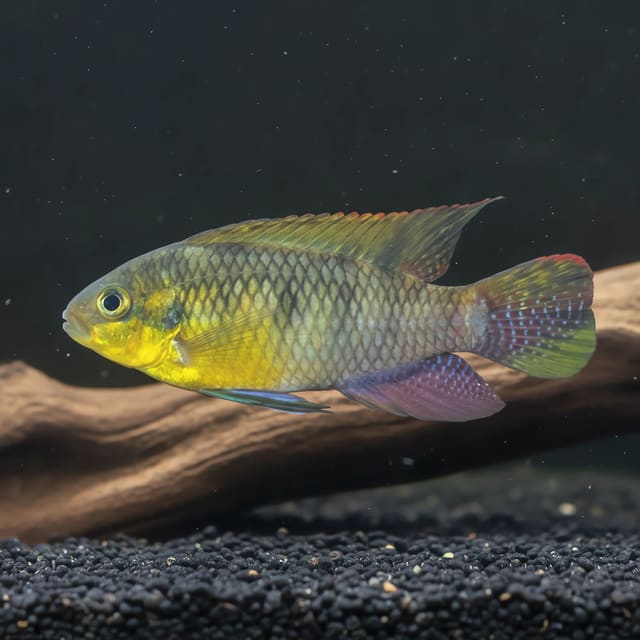
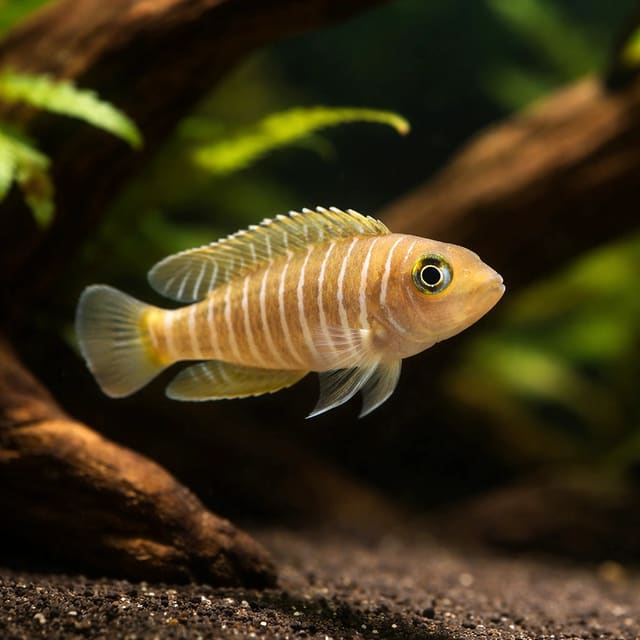
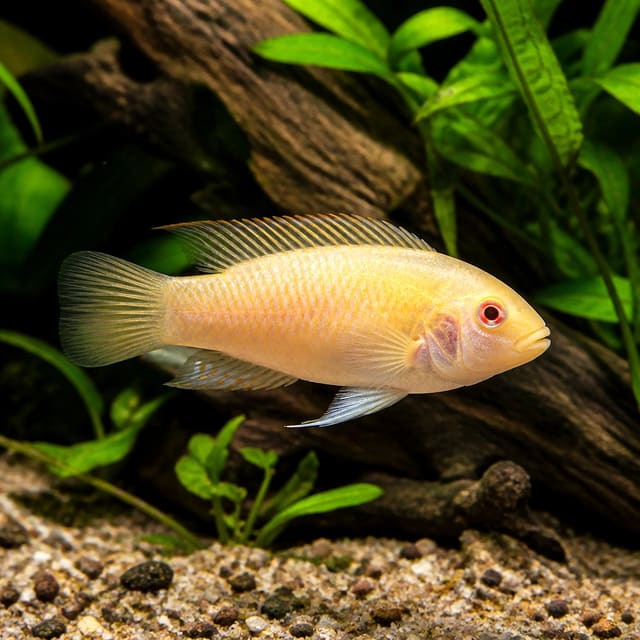
The gallery images are representative of this type of animal rather than photographs of the exact animal supplied, so colours can look slightly different from the live animal. Colour, fin shape and body condition can also vary with the individual and its behaviour. Use the gallery to recognise the general form, while basing the care plan on the adult measurements and behavioural requirements stated here.
Have the mature aquarium ready before choosing a dispatch size. The smaller fish still needs stable water and safe cover immediately, while the larger fish still needs time to settle and establish access to food and shelter. Observe the individual rather than assigning a life stage or sex from its measurement.
Use 8 cm standard length as the adult planning figure. Seriously Fish records 80 mm standard length for Pelvicachromis taeniatus. FishBase records a different maximum of 7.1 cm standard length for male or unsexed fish; the 8 cm figure is used consistently here so that the aquarium plan does not shrink around the lower measurement.
For one pair, apply the volume and length requirements together: choose at least 71 litres and at least 80 cm in length. For a community, begin at 80 litres and retain the 80 cm length benchmark. These are starting constraints, not permission to fill every part of the aquarium with fish. Roots, caves and plants reduce uninterrupted swimming space but create the visual separation this cichlid needs, so both open routes and sheltered areas matter.
Do not scale the home around the fish’s arrival measurement. A 3–4 cm fish and a 5.5–6 cm fish both grow towards the same adult planning figure. Decorations should also leave enough clearance for the adult fish to enter and leave its refuges without becoming trapped.
When comparing two tanks of similar volume, favour the one that satisfies the length benchmark and allows several separated cave positions. A taller but short aquarium may hold the same number of litres while offering less horizontal territory. If more than one pair is planned, interpret “large” through the proposed layout and the ability to form separate territories.
Create a structured aquarium with several hiding places and potential spawning sites. Seriously Fish names clay pots and caves, roots and pieces of driftwood as suitable features. Place them so that a fish using one retreat is not exposed directly to every other part of the aquarium. This gives a shy individual somewhere to withdraw and helps divide the footprint into usable areas.
Plants are not essential to the species, but the additional cover is useful. Position planting around the edges of routes rather than sealing every gap. The fish should be able to move between food, shelter and open water without repeatedly passing another fish’s cave entrance.
Check every ornament for stability before filling the aquarium. Excavation can shift loose substrate around a cave, so rest substantial pieces in a position that remains secure when nearby sand or fine gravel is moved. The practical aim is a retreat that stays accessible and a structure that does not depend on a loose mound for support.
A worked layout for one pair might place one cave towards each end, a root between them to break the view, and a third retreat behind planting. This does not assign a refuge to either fish; it simply creates choices. If one individual occupies the central area, the second can still reach another sheltered zone without crossing the same doorway.
Observe how the fish uses the structure after introduction. Repeated hiding is one of OATA’s signs to watch, while chasing can occur even between settled pairs. If one route is constantly blocked, rearrange the visual barriers while retaining multiple caves and the required open space. The purpose of the layout is not decorative density but safe access to several distinct resting places.
Keep the aquarium at 22–25°C, pH 6.0–7.5 and 5–12 dGH. This is the overlap of FishBase’s recorded environment, Seriously Fish’s aquarium values and OATA’s dwarf-cichlid range. Holding the aquarium inside the overlap avoids choosing a value that falls outside one of those three references.
| Measurement | Routine target |
|---|---|
| Temperature | 22–25°C |
| pH | 6.0–7.5 |
| General hardness | 5–12 dGH |
| Ammonia | 0 mg/l |
| Nitrite | 0 mg/l |
| Nitrate | Not more than 20 mg/l above the normal tap-water level |
OATA also gives 3–10 dKH for dwarf cichlids. Use this as a carbonate-hardness reference when assessing how readily pH may shift, while keeping pH within 6.0–7.5. Read our water chemistry guide for an explanation of each test and why ammonia, nitrite, nitrate, pH and hardness need separate measurements.
Test the aquarium rather than relying on the heater setting or a previous tap-water report. Measure temperature in the aquarium, test pH and hardness from the water the fish will inhabit, and confirm that ammonia and nitrite are both zero before introduction. The water matcher can compare those measured values with the stated range.
A practical example is an aquarium measuring 24°C, pH 7.0 and 8 dGH: every value sits inside the shared range. An aquarium at 26°C does not, even though 26°C appears in the wider Seriously Fish range, because it is above FishBase’s 25°C recorded maximum. Similarly, pH 5.5 falls within the wider Seriously Fish range but outside the 6.0 lower boundary shared with FishBase and OATA.
Aim for consistency after selecting the target. Sudden changes in source water can alter pH or hardness even when the heater remains steady, so test replacement water when its character may have changed. Correct the cause of a drift rather than repeatedly moving the aquarium from one edge of the range to the other.
Use a well-established and maintained filter in every aquarium housing this fish. The RSPCA explains that fish release toxic ammonia. A working biological filter supports beneficial bacteria that convert ammonia to nitrite and then to the safer nitrate, allowing waste to be processed continuously.
Prepare the aquarium and establish its biological filtration before the fish arrives. Our first tropical aquarium guide covers the preparation and maturation sequence. Do not treat clear-looking water as proof that the filter can process waste; ammonia and nitrite require tests.
OATA warns that stocking too quickly can lead to new tank syndrome when too few nitrifying bacteria are present to cope with increased waste. That can raise ammonia and nitrite to harmful levels. The response is prevention: mature the filter, introduce fish gradually and test as the aquarium’s biological load changes.
A larger aquarium can make environmental conditions such as temperature and water quality more stable, but volume never removes the need for filtration. Likewise, an established filter does not make unrestricted stocking safe. Each added fish and each increase in feeding adds waste that the bacterial population must process.
During the first weeks after adding this cichlid, compare test results with the pre-arrival baseline. If ammonia or nitrite rises above zero, treat that as a water-quality problem requiring prompt corrective maintenance and reduced pressure on the system. Do not add further fish while either remains detectable.
Feed a varied diet in which live and frozen foods form the bulk. Seriously Fish states that Pelvicachromis taeniatus accepts most foods but gives live and frozen varieties the leading role. OATA’s dwarf-cichlid advice names small items such as daphnia, brine shrimp and tubifex and permits a good-quality flake or granule alongside them.
Start with a small portion and watch whether the fish can reach it. A shy individual may hang back if a tankmate dominates the feeding area, so spread a modest portion across more than one accessible point when necessary. The goal remains the same total amount: everything should be consumed within a few minutes.
Use behaviour to adjust the next portion rather than adding repeated food immediately. If food remains after the feeding period, the amount was too large or access was poor. Uneaten food breaks down and releases waste, placing extra pressure on the filter and making zero ammonia and nitrite harder to maintain.
When feeding a pair in a community, confirm that both cichlids eat. One fish taking the whole portion does not demonstrate that the pair has been adequately fed. Observe each individual’s access without turning the meal into a long series of additions, because continual extra feeding can conceal a social problem while raising the waste load.
A first-week feeding check should answer three questions: did the fish approach food, did it swallow food, and did the aquarium clear within a few minutes? Reduced intake or loss of interest in food appears on OATA’s list of warning signs. If appetite changes, test water quality before assuming the issue is food preference.
At least once every week, change 25% of the aquarium water. OATA recommends that frequency and amount for dwarf cichlids. Use a siphon to remove solid waste from the substrate, especially around caves and sheltered areas where debris can settle without being obvious from the front of the aquarium.
If filter media needs cleaning, do not rinse it under the tap. Rinse it lightly in aquarium water removed during the partial water change. This reduces the loss of beneficial bacteria that chlorine or chloramine may otherwise kill.
Make each observation about the individual fish rather than comparing colour alone with a gallery image. OATA advises watching for altered swimming, including hanging at the surface, sitting on the bottom or moving erratically. Also note darker or paler colour, increased aggression, more hiding, faster or slower gill movement, white spots, fluffy growths, lost fins or scales, changed body condition and reduced feeding.
Use a short “test, observe, act” sequence when something changes. First test ammonia, nitrite, nitrate, temperature and pH. Next check whether both fish can reach food and cover without persistent interference. Then correct any measurable water or maintenance problem. If abnormal behaviour or appearance continues after the water checks, contact us for health guidance rather than attempting an unspecified treatment.
Keep a simple record of weekly readings and maintenance. A sequence such as 24°C, pH 7.0, 8 dGH, zero ammonia and zero nitrite gives a useful baseline. A later change is easier to recognise when it can be compared with measurements taken while the fish was feeding and behaving normally.
The first month should show stable zero ammonia and nitrite, predictable feeding and access to more than one retreat. Increased hiding or aggression deserves attention even when the water tests remain normal, because pair and community pressure may require a layout or stocking response rather than a change to water chemistry.
Prepare the mature aquarium and check its temperature and water tests before the parcel arrives. Then follow the steps in the Tropical Fish Co delivery and Live Arrival Guarantee policy without opening the parcel first. The fish is hand-bagged in pure oxygen inside an insulated box, with a heat pack when the weather calls for it.
Filming begins before the parcel is opened on every arrival. This preserves the complete sequence needed if a Live Arrival Guarantee claim becomes necessary. Do not pause the recording between the sealed parcel, opening the box and showing the unopened fish bag.
The 20–30 minute instruction applies to floating the bag. Keep the wording literal: float the bag, then release the fish without adding its transport water to the aquarium. Do not extend the store’s arrival sequence with extra steps that could obscure which actions form part of the policy.
After release, use the established observation routine: confirm that the fish can reach shelter, then check feeding and behaviour at the next appropriate daily feed. Water-quality tests and aquarium checks belong to normal husbandry and should already have been completed before arrival rather than being left until the parcel is opened.
This fish can live in a carefully planned general community, but breeding may make it territorial. Seriously Fish describes it as generally shy and retiring and says not to keep it with very vigorous or large species. Those exclusions remain firm even when the proposed fish shares the same temperature or pH range.
Seriously Fish names small characins, barbs, danios, rasboras, Corydoras, gouramis and loricariids as good tankmates. Treat these as conditional categories rather than automatic combinations. Check the exact animal’s adult size, water requirements, activity and use of space, then confirm the aquarium has enough cover and footprint for every occupant.
| Potential combination | Decision rule |
|---|---|
| Small characins, barbs, danios or rasboras | Use calm, suitably sized fish and preserve room around the cichlid’s territory. |
| Corydoras or loricariids | Ensure all fish can reach shelter and food without crowding the cave area. |
| Gouramis | Check water overlap, adult size, activity and the aquarium’s usable space. |
| Other cichlids | Provide enough room for separate territories; West African dwarf cichlids are the preferred cichlid category named by Seriously Fish. |
OATA describes shoals of dither fish as useful for dwarf cichlids because they may offer a sense of security and can move away when territorial behaviour begins. That does not override the species-level warning about very vigorous tankmates. Choose fish that meet both requirements: able to use the community safely without being so active that they intimidate this shy cichlid.
Compatibility remains a behaviour-and-space assessment. Watch whether each fish can feed, rest and move between cover without being repeatedly displaced. Damaged fins, increased hiding and changed aggression are warning signs. Reassess the combination promptly if those signs appear rather than assuming a named category guarantees a peaceful result.
Keep Pelvicachromis taeniatus as a pair and allow one pair a defined, well-covered territory. Both FishBase and Seriously Fish give pair keeping as the aquarium arrangement. A large aquarium is required if more than one pair is kept because each pair needs space for territory formation.
Pair keeping is a husbandry goal, not a promise that any two fish will accept one another. Seriously Fish warns that simply obtaining a male and female does not guarantee a compatible pair and may place an unwilling partner at serious risk. This offer does not guarantee sex, so do not infer a pair from the number ordered, dispatch sizes, colour or fin shape.
Some chasing can occur even between well-settled pairs, according to OATA. The useful distinction is whether both fish retain access to the aquarium’s resources. A brief movement away from a cave is different from persistent pursuit that prevents feeding, resting or normal swimming.
This species is a cave-spawning substrate brooder, and territorial behaviour may become stronger when breeding. Keep the cave entrances away from the busiest community route where possible. If breeding is intended, avoid fish that may disturb the site or predate fry. If breeding is not the aim, the same territory planning remains necessary because the fish may still claim a cave.
Seriously Fish names Nigeria Red among more than a dozen P. taeniatus morphs and advises against cross-breeding males and females from different morphs so their lines remain distinct. Do not combine this form with another P. taeniatus morph as part of a breeding project.
When planning more than one pair, no numerical minimum is attached to the instruction for a large tank. Use separate cave clusters, broken lines of sight and clearly divided footprints, then observe whether each pair can retain a territory. If the layout cannot achieve that separation, keep one pair rather than relying on decorative density to manage conflict.
It reaches 8 cm standard length. Plan the aquarium, caves and community around that adult figure rather than the fish’s dispatch measurement.
A 71-litre aquarium measuring 60 × 37.5 × 30 cm is suitable for one pair, while FishBase gives a minimum aquarium length of 80 cm. Choose at least 71 litres and at least 80 cm in length; An aquarium of at least 80 litres is required when dwarf cichlids are mixed with other fish.
Keep them as a pair. More than one pair requires a large aquarium with enough room for separate territories, and ordering two fish does not guarantee their sex or compatibility.
It can suit a prepared beginner who can mature and maintain a filtered aquarium, keep ammonia and nitrite at 0 mg/l, provide several caves and respond to breeding territoriality. It is not suited to a keeper who cannot monitor water quality and pair behaviour.
Make suitable live and frozen varieties the bulk of its diet. Daphnia, brine shrimp and tubifex are named examples, while quality flake or granule can add variety. Feed once daily and offer only what it can consume within a few minutes.
Use the FishBase, Seriously Fish and OATA overlap of 22–25°C, pH 6.0–7.5 and 5–12 dGH. Keep ammonia and nitrite at 0 mg/l and test the aquarium regularly.
The established concern is territorial behaviour when breeding. Watch for persistent chasing, damaged fins, increased hiding or a fish being kept away from food, and separate an unsafe pairing or community combination.
Seriously Fish names small characins, barbs, danios, rasboras, Corydoras, gouramis and loricariids as possible tankmates. Screen the exact combination for adult size, activity, water overlap and territory space, and avoid very vigorous or large species.
Tropical Fish Co’s policy says the fish is hand-bagged in pure oxygen inside an insulated box, with a heat pack when weather calls for it. Be present to receive it, start a continuous video before opening the sealed parcel, float the bag for 20–30 minutes and release the fish without adding bag water. If a claim is needed, contact us the same day with the order number and video.
No reviews for this item yet. Bought one? Honest reviews only, good or bad.
What customers say about ordering from us
Easy website plenty of info on fish your buying great to pick a time slot
TRACEY DURRANT · 7 Oct 2026
Got some lovely fish thank you
Kevin Mackie · 7 Oct 2026
Reviews of our shop, collected by Judge.me, an independent third-party review collector. Newest first.